Category Archives: Uncategorized

the-best-pneumonia-treatment-is-at-dr-raos-hospital

The best pneumonia treatment is at Dr Raos hospital

The best pneumonia treatment is at Dr Raos hospital

Pneumonia Treatment is crucial for saving lives. Pneumonia Treatment plays a vital role in reducing child mortality. November 12th is considered world pneumonia day. Every 43 sec, a child dies of pneumonia. Pneumonia is a severe lung infection that can be deadly. It is essential to be aware of the causes, symptoms, and treatment of pneumonia and how to prevent it. World Pneumonia Day is an annual event that raises awareness of this disease and its impact on people worldwide. Dr Raos hospital is the best neurocritical care hospital treats the pneumonia.

Pneumonia is caused by bacteria, viruses, or fungi. The most common cause is bacteria, which can be spread through coughing or sneezing. Viruses, such as the flu, can also cause pneumonia. Fungi can cause pneumonia in people with weakened immune systems.

Symptoms of pneumonia include coughing, chest pain, shortness of breath, rapid breathing, sweating, and fever. Pneumonia can be diagnosed with a physical exam, chest x-ray, or CT scan. Treatment typically involves antibiotics and rest.

Precautions that can be taken to prevent pneumonia include getting vaccinated, washing your hands often, and avoiding close contact with people who are sick. If you think you have pneumonia, it is vital to see a doctor right away.

Who is at risk for pneumonia?

Anyone can get pneumonia. However, the following groups are at the highest risk:

  • Adults ages 65 and older
  • Children younger than age 2
  • People with certain medical conditions
  • People that smoke

Simple ways to prevent pneumonia

For infants breastfeeding

keeping hygienic surroundings

Get Pneumococcal shot

Cut down on smoking and alcohol

Practice a healthy lifestyle

keep the air around clean

When to worry about pneumonia?

Experience difficulty in breathing

Develop bluish lips or fingertips

chest pain

high fever

symptoms do not improve in 5 days

Key points about pneumonia:

  • Pneumonia is an infection of one or both of the lungs caused by bacteria, viruses, or fungi.
  • There are more than 30 different causes of pneumonia, and they’re grouped by the cause. The main types of pneumonia are bacterial, viral, and mycoplasma pneumonia.
  • A cough that produces green, yellow, or bloody mucus is the most common symptom of pneumonia. Other symptoms include fever, shaking chills, shortness of breath, low energy, and extreme tiredness.
  • Pneumonia can often be diagnosed with a thorough history and physical exam. Tests used to look at the lungs, blood tests, and tests done on the sputum you cough up may also be used.
  • Treatment depends on the type of pneumonia you have. Antibiotics are used for bacterial pneumonia. It may also speed recovery from mycoplasma pneumonia and some special cases. Most viral pneumonias don’t have a specific treatment and just get better on their own. Other treatment may include a healthy diet, more fluids, rest, oxygen therapy, and medicine for pain, cough, and fever control.
  • Most people with pneumonia respond well to treatment, but pneumonia can cause serious lung and infection problems. It can even be deadly.
  • Dr Raos hospital is the best neurocritical care hospital treats the pneumonia and contact us @ 9010056444 or 9010057444.
dr-mohana-rao-patibandla-is-the-best-brain-and-spine-neurosurgeon-in-india

Dr Mohana Rao Patibandla is the best brain and spine neurosurgeon in India

Dr Mohana Rao Patibandla is the best brain and spine neurosurgeon in India

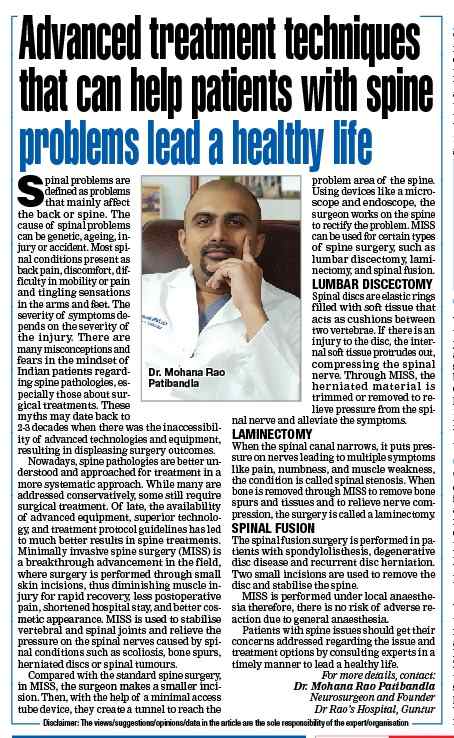
Dr. Rao is considered one of the best neurosurgeons in India for spine and brain surgery. He has performed countless successful surgeries and has helped many patients recover from serious injuries. What makes him different from other neurosurgeons is his experience, his skills, and his dedication to his patients. Dr Rao provides services at Dr Raos hospital, Guntur, Andhra Pradesh, India.


Dr. Mohana Rao Patibandla, M. Ch (NIMS), iFAANS (USA), FESBSS (USA), FPNS (UCD, USA), FEVNS (UVA, USA), FNSORS (UVA, USA), FMINS (OSU, USA), FPNS (UCD, USA)

Best spine doctor in Guntur, CMD, and Chief Neurosurgeon at Dr.  Rao’s Hospital (Neurosurgeon)

21 Years Of Experience with 8000 + minimally invasive keyhole Successful Surgeries.


The best neurosurgeon in India is Dr.  Mohana Rao Patibandla. He finished his M. Ch Neurosurgery in NIMS, Hyderabad, and later moved to the USA. Then, Dr. Mohana Rao Patibandla went abroad for further training. There he gained training in several subspecialties, including Fellowship in minimally invasive skull base surgery, Ohio, USA; Fellowship in Pediatric neurosurgery, Colorado, USA; Fellowship in Pediatric neurosurgery and minimally invasive neurosurgery, Ohio, USA; Fellowship in Neuro-oncology, Functional and Stereotactic Radiosurgery, Virginia, USA; Fellowship in Endovascular and Cerebrovascular, Virginia, USA. He specialized in every subspecialty of Neurosurgery. His Google rating is 4.9 with 850 plus patients reviewed, the maximum of any neurosurgeon in India.


Dr. Rao’s Experience

Dr. Rao has over 20 years of experience as a neurosurgeon. He has worked in some of the best hospitals in India and has performed surgeries on patients of all ages. He has a wealth of knowledge and experience that other neurosurgeons do not have. This makes him uniquely qualified to handle even the most complex cases. He had 8 years of USA experience in different fields of neurosurgery that makes him unique.


Dr. Rao’s Skills

Dr. Rao is a highly skilled neurosurgeon. He has an excellent bedside manner and can put his patients at ease. He is also meticulous in his work, resulting in very few complications from his surgeries. His skills are truly unmatched.


Dr. Rao’s Dedication

Dr. Rao is very dedicated to his patients. He always puts their needs first and strives to provide them with the best possible care. He is always available to answer any questions or concerns that they may have. His dedication to his patients is one of the things that makes him so successful.


Conclusion:

Dr. Rao is the best neurosurgeon in India for both spine and brain surgery. His experience, skills, and dedication to his patients are unmatched. If you are in need of neurosurgery, you can be confident that you will receive the best possible care from Dr. Rao.

the-best-bells-palsy-treatment-at-dr-raos-hospital

The best bell’s palsy treatment at Dr Raos hospital

The best bell’s palsy treatment at Dr Raos hospital

Introduction:

Are you searching for the best hospital for Bell’s palsy treatment in Guntur, Andhra Pradesh, or India? Look no further than Dr Raos hospital. Dr Raos hospital is not only the best in India but is also renowned for its neurocritical care. In this article, we will discuss why Dr Raos hospital is the best choice for Bell’s palsy treatment and neurocritical care.


Bell’s palsy is a type of facial paralysis that can occur at any age. The cause is unknown, but it is believed to be due to a viral infection. There are two types of Bell’s palsy: complete and incomplete. The symptoms include weakness or paralysis of the muscles on one side of the face, drooping of the eyelid, and drooling. The risk factors include diabetes, pregnancy, and viral infections. The diagnosis is made based on the symptoms and a physical examination. Treatment includes corticosteroids, antiviral drugs, and physical therapy. Most people with Bell’s palsy recover completely, but some may have residual paralysis.


Complete vs. Incomplete Bells Palsy

There are two types of Bell’s palsy: complete and incomplete. Complete paralysis means that all the muscles on one side of the face are affected. Incomplete paralysis means that only some of the muscles are affected.


Symptoms

The symptoms of Bell’s palsy include weakness or paralysis of the muscles on one side of the face, drooping of the eyelid, and drooling. Paralysis can range from mild to severe.


Risk Factors

The risk factors for Bell’s palsy include diabetes, pregnancy, and viral infections.

Diagnosis

The diagnosis of Bell’s palsy is made based on the symptoms and a physical examination. The examination includes checking for facial symmetry and muscle strength.

Treatment

The treatment for Bell’s palsy includes corticosteroids, antiviral drugs, and physical therapy. Corticosteroids are used to reduce inflammation. Antiviral drugs are used to treat the underlying viral infection. Physical therapy is used to help the muscles regain strength.

Living with Bells Palsy

Most people with Bell’s palsy recover completely, but some may have residual paralysis. Paralysis can range from mild to severe. There are a few precautions that can be taken to prevent Bell’s palsy, such as avoiding exposure to viruses and maintaining good hygiene.

Conclusion

Dr Raos hospital is the best for the Bell’s palsy treatment and is best in neurocritical care in India. The hospital has the latest technology and equipment to provide the best care for its patients. The staff is highly trained and experienced in treating all neuro conditions and neurocritical care. The hospital has a high success rate in treating septicemia and neurocritical care. Contact us @9010056444 or 9010057444.

the-best-septicemia-and-neurocritical-care-treatment-at-dr-raos

The best septicemia and neurocritical care treatment at Dr Raos

The best septicemia and neurocritical care treatment at Dr Raos

Are you in search of the best hospital for septicemia treatment in India? Look no further than Dr Raos hospital. Dr Raos hospital is not only the best in India but is also renowned for its neurocritical care. In this article, we will discuss why Dr Raos hospital is the best choice for septicemia treatment and neurocritical care, along with the types of septicemia, and briefly about it.

Septicemia is a severe infection that can occur anywhere in the body. It is often caused by bacteria but can also be caused by viruses, fungi, or other organisms. Septicemia can lead to sepsis, which is a life-threatening condition. There are many types of septicemia, and it can be classified into four main categories: gram-positive, gram-negative, fungal, and viral. Symptoms of septicemia include fever, chills, rapid breathing, fast heart rate, and low blood pressure. Septicemia can be diagnosed with blood tests, cultures, or other tests. Treatment typically involves antibiotics but may also include surgery, IV fluids, or other measures. Septicemia can be deadly, but early diagnosis and treatment are essential. There are many things that people can do to prevent septicemia, including washing their hands regularly, getting vaccinated, and avoiding contact with people who are sick.

Gram-Positive Septicemia

Gram-positive septicemia is caused by gram-positive bacteria. These bacteria are often found in the respiratory tract, skin, or gastrointestinal tract. Symptoms of gram-positive septicemia include fever, chills, rapid breathing, fast heart rate, and low blood pressure. Gram-positive septicemia can be diagnosed with blood tests, cultures, or other tests. Treatment typically involves antibiotics but may also include surgery, IV fluids, or other measures.

Gram-Negative Septicemia

Gram-negative septicemia is caused by gram-negative bacteria. These bacteria are often found in the respiratory tract, skin, or gastrointestinal tract. Symptoms of gram-negative septicemia include fever, chills, rapid breathing, fast heart rate, and low blood pressure. Gram-negative septicemia can be diagnosed with blood tests, cultures, or other tests. Treatment typically involves antibiotics but may also include surgery, IV fluids, or other measures.

Fungal Septicemia

Fungal septicemia is caused by fungi. These fungi are often found in the respiratory tract, skin, or gastrointestinal tract. Symptoms of fungal septicemia include fever, chills, rapid breathing, fast heart rate, and low blood pressure. Fungal septicemia can be diagnosed with blood tests, cultures, or other tests. Treatment typically involves antibiotics but may also include surgery, IV fluids, or other measures.

Viral Septicemia

Viral septicemia is caused by viruses. These viruses are often found in the respiratory tract, skin, or gastrointestinal tract. Symptoms of viral septicemia include fever, chills, rapid breathing, fast heart rate, and low blood pressure. Viral septicemia can be diagnosed with blood tests, cultures, or other tests. Treatment typically involves antibiotics but may include surgery, IV fluids, or other measures.

Conclusion

Dr Raos hospital is the best for the septicemia treatment and is best in neurocritical care in India. The hospital has the latest technology and equipment to provide the best care for its patients. The staff is highly trained and experienced in treating septicemia and neurocritical care. The hospital has a high success rate in treating septicemia and neurocritical care. Contact us @9010056444 or 9010057444 for your loved ones neurocritical care or septicemia or sepsis.

Dr Raos hospital is the best for brain cancer – National cancer awareness day November 7.

Dr Raos hospital is the best for brain cancer – National cancer awareness day November 7

Cancer is a leading cause of death worldwide, with over 18 million new cases diagnosed each year. Early detection and treatment of cancer can save lives, so it’s important to be aware of the signs and symptoms of the disease. National Cancer Awareness Day is observed on November 7th each year to promote public awareness of cancer and to encourage early detection and treatment.

There are many different types of cancer, but some of the most common include breast cancer, lung cancer, colon cancer, and skin cancer. Signs and symptoms of cancer vary depending on the type, but can include fatigue, weight loss, pain, and changes in appearance. If you experience any of these symptoms, it’s important to see a doctor for a diagnosis. Dr Raos hospital is the best for brain cancer treatment.

Early detection and treatment of cancer is the best way to improve your chances of survival. There are many different treatment options available, including surgery, radiation therapy, and chemotherapy. Your doctor will work with you to develop a treatment plan that is right for you.

No one should have to face cancer alone. There are many organizations that provide support and resources for cancer patients and their families. These organizations can offer information and assistance with treatment, financial assistance, and emotional support.

Dr Raos hospital is the best for brain cancer treatment.

Conclusion:

National Cancer Awareness Day is an important day to promote public awareness of cancer and to encourage early detection and treatment. Cancer is a leading cause of death worldwide, so it’s important to be aware of the signs and symptoms of the disease. Early detection and treatment of cancer is the best way to improve your chances of survival. There are many different types of cancer, but some of the most common include breast cancer, lung cancer, colon cancer, and skin cancer. If you experience any of the signs or symptoms of cancer, it’s important to see a doctor for a diagnosis. No one should have to face cancer alone. There are many organizations that provide support and resources for cancer patients and their families. These organizations can offer information and assistance with treatment, financial assistance, and emotional support.

do-you-see-radiation-sickness-with-x-rays-and-ct-scans

Do You See Radiation Sickness with X-rays and CT scans?

Do You See Radiation Sickness with X-rays and CT scans

Simply the answer is NO. Radiation sickness is a condition that can occur when a person is exposed to high levels of ionizing radiation. It is damage to the body caused by exposure to a hefty radiation dose; generally, you don’t see it with diagnostic tests that use low energy. The absorbed dose is nothing but the amount of radiation absorbed by the body that determines how sick you’ll be.

The most common cause of radiation sickness is exposure to radioactive materials, which can also occur after radiation from X-rays, gamma rays, and other sources. 

The initial symptoms of radiation sickness are usually nausea and vomiting. The time between exposure and onset of symptoms is a clue to how much radiation is absorbed. Symptoms of radiation sickness include fatigue, nausea, vomiting, diarrhea, loss of appetite, hair loss, skin irritation, and more. The severity of symptoms depends on the amount of radiation exposure and the person’s overall health. 

Risk factors for radiation sickness include:

  • Working with radioactive materials.
  • Living in areas with high levels of background radiation.
  • Having specific medical procedures. 

Diagnosis of radiation sickness is typically made by measuring the person’s exposure to radiation and considering their symptoms. 

Radiation sickness treatment aims to prevent radioactive contamination, treat life-threatening injuries like burns and trauma, treat symptomatic treatment, and manage pain. Treatment of radiation sickness is typically supportive, such as providing fluids and rest. Treatment of bonemarrow suppression is with Filgastrim. End-of-life care for radiation sickness typically includes hospice care and support for the person’s symptoms. 

When to see a doctor for radiation sickness depends on the person’s symptoms and exposure.

Complications of radiation sickness can include organ damage, cancer, and even death. 

Prevention of radiation sickness includes avoiding exposure to high levels of ionizing radiation and using protective clothing and equipment when working with radioactive materials.

We do X-rays, CT scans and stereotactic radiosurgery but we rarely find the radiation sickness at Dr Raos Hospital.

the-best-ards-treatment-in-guntur-is-dr-raos-hospital

The best ARDS treatment in Guntur is Dr. Raos Hospital

The best ARDS treatment in Guntur is Dr. Raos Hospital

ARDS treatment (Acute respiratory distress syndrome) is a life-threatening lung condition when the lungs cannot provide adequate oxygen to the body. The cause of ARDS is typically a viral or bacterial infection, but it can also be caused by other conditions such as trauma, sepsis, or pneumonia. In a recent mayoclinic. 

ARDS can occur in people of any age but is most common in adults. Age and severity of the illness increase the death rate. Most of the people who develop ARDS don’t survive. Many who survive will have long-lasting symptoms. Are you looking for the best Acute respiratory distress syndrome care? Please visit Dr. Raos hospital Guntur for your well-being.

Symptoms

Symptoms of ARDS include shortness of breath, rapid breathing, low blood pressure, and chest pain. The symptoms and signs of ARDS can vary in intensity; depending on its severity and cause, the presence of lung or heart disease will increase the severity.

Causes

Damage to the alveolar membrane leads to ARDS

  1. Sepsis. The most common cause 
  2. Inhalation of harmful substances – smoke, chemical fumes, aspirating vomit, or near-drowning episodes.
  3. Severe pneumonia. 
  4. Head, chest, or another significant injury. Accidents to the lungs or to the brain that controls breathing
  5. COVID-19
  6. Pancreatitis 
  7. massive blood transfusions
  8. burns.

 Diagnosis

  1. No specific test to diagnose
  2. The physical exam is the most important
  3. SPo2
  4. Chest X-ray
  5. Computerized tomography (CT)
  6. Lab tests – CRP, check for signs of infection or anemia
  7. Electrocardiogram.
  8. Echocardiogram

Treatment

  1. The first goal in treating ARDS is to improve oxygen levels in your blood. Without oxygen, your organs can’t function properly. Treatment of ARDS typically involves mechanical ventilation and supplemental oxygen. 
  2. Fluids – strict Input output measurement to prevent either pulmonary fluid overload or shock
  3. Relieve pain and discomfort
  4. Prevent and treat infections
  5. Minimize gastric reflux
  6. Prevent blood clots
  7. Sedate

When should you see a doctor for your respiratory ARDS illness?

If you experience any of the symptoms of ARDS, you should see a doctor immediately. ARDS can lead to severe complications, such as organ failure, and can be fatal, including Blood clots in your legs and pulmonary embolism, Collapsed lung (pneumothorax), Infections, and Scarring (pulmonary fibrosis)

Do survivors will get rid of all the symptoms?

Survivors of ARDS will have Breathing problems, Depression, Problems with memory and thinking clearly, Tiredness, and muscle weakness.

What should you do following the ARDS recovery?

  1. Lifestyle and home remedies
  2. Quit smoking. If you smoke, seek help to quit, and avoid secondhand smoke whenever possible.
  3. Get vaccinated. The yearly flu (influenza) shot and the pneumonia vaccine every five years can reduce your risk of lung infections.

Conclusion

Acute respiratory distress syndrome (ARDS) is a life-threatening lung condition when the lungs cannot provide adequate oxygen to the body. The cause of ARDS is typically a viral or bacterial infection, but it can also be caused by other conditions such as trauma, sepsis, or pneumonia. 

ARDS can occur in people of any age but is most common in adults. Age and severity of the illness increase the death rate. Most of the people who develop ARDS don’t survive. Many who survive will have long-lasting symptoms. Are you looking for the best Acute respiratory distress syndrome care? Your choice is Dr. Raos hospital Guntur for the best neurocritical in India. Call 9010056444 or 9010057444 for the appointment.

how-to-choose-a-best-neurosurgeon-in-2024

How to choose a best neurosurgeon in 2022

How to choose a best neurosurgeon in 2022

Choosing the right neurosurgeon is a critical decision. There are many factors to consider, and it is important to do your research to find the best possible doctor for your needs. Here are some tips to help you choose the right neurosurgeon.

  1. Consider Your Needs:

The first step in choosing a neurosurgeon is to consider your needs. What type of surgery do you need? What are your goals for surgery? What are your health concerns? Once you have a good understanding of your needs, you can start to narrow down your options.

  1. Research Neurosurgeons in Your Area:

Once you know what you are looking for in a neurosurgeon, you can start to research doctors in your area. Look for neurosurgeons who have experience with the type of surgery you need. Read reviews and check ratings to get a sense of each doctor’s reputation.

Finally what you need to see in a good neurosurgeon are

  1. Get Referrals. Start with the google search list.
  2. Research the Neurosurgeon’s Credentials.
  3. Consider the Neurosurgeon’s Experience.
  4. Consider the quality of education he or she has.
  5. Research Hospital Quality.
  6. Evaluate Communication Style.
  7. Read Patient Reviews.
  8. Know What Your Insurance Covers.
  9. Consider neurosurgeons commitment towards his neurosurgery field
  10. Consider his awards
  11. Look for the neurosurgeons success rate
  1. Schedule Consultations:

After you have narrowed down your options, schedule consultations with each of the neurosurgeons you are considering. This is a great opportunity to ask questions and get to know the doctor. pay attention to how you feel during the consultation. Do you feel comfortable with the doctor? Do they seem knowledgeable and experienced?

  1. Make Your Decision:

After you have done your research and met with the neurosurgeons you are considering, it is time to make your decision. Choose the doctor who you feel is the best fit for your needs.

Conclusion:

Choosing the right neurosurgeon is a critical decision. There are many factors to consider, but if you do your research and ask the right questions, you can find the perfect doctor for you. Dr Raos hospital is the best neurosurgery hospital and Dr Rao is the best neurosurgeon in India with Vast Experience, Fond of knowledge, extensive education, international education, years of multiple fellowship experience all these make Dr Rao is the best neurosurgeon in your area. According to mid-day

Dr Raos hospital is the best in Stroke treatment

Dr Raos hospital is the best in Stroke treatment

Stroke awareness is emphasized on World Stroke Day is observed annually on October 29th. The day is significant as it serves to raise awareness about stroke and its prevention. It also provides an opportunity for people to learn how to identify the signs and symptoms of stroke, as well as the immediate treatments and precautions that need to be taken.

There are many risk factors for stroke, but there are also many things that can be done to prevent it. Some of the key prevention measures include maintaining a healthy lifestyle, controlling blood pressure, and avoiding smoking. Dr Raos hospital is the best comprehensive stroke neurology and neurosurgery hospital in Guntur, Vijayawada, Rajahmundry, Vishakhapatnam, Nellore, Hyderabad, Andhra Pradesh and India to provide the best comprehensive stroke care including artificial intelligence aided stroke perfusion, mechanical thrombectomy and other needed procedures under one roof. Contact us @ Dr Raos hospital hotline 9010056444 or 9010057444 for appointment.

One of the most important things to know about stroke is how to identify it. The signs and symptoms of stroke can be divided into two categories: those that occur suddenly and those that develop gradually.


The sudden onset of symptoms is often the most obvious sign that someone is having a stroke. Some of the most common sudden onset symptoms include:

Sudden weakness or numbness in the face, arm, or leg (usually on one side of the body)

Sudden confusion or trouble speaking

Sudden trouble seeing in one or both eyes

Sudden trouble walking, dizziness, or loss of balance

Sudden severe headache with no known cause


Gradual onset symptoms are not as immediately obvious, but they can still be indicative of a stroke. Some of the most common gradual onset symptoms include:

Gradually worsening weakness or numbness in the face, arm, or leg (usually on one side of the body)

Gradually worsening confusion or trouble speaking

Gradually worsening trouble seeing in one or both eyes

Gradually worsening trouble walking, dizziness, or loss of balance

Gradually worsening headache

If you experience any of these symptoms, it is important to seek medical help immediately as time is of the essence when it comes to stroke treatment.


There are many things that can be done to treat and prevent stroke. Some of the key treatment measures include:

Prompt medical attention: If you think someone is having a stroke, it is important to call 911 or get to a hospital as soon as possible. Time is of the essence when it comes to stroke treatment, and the sooner someone gets medical attention, the better their chances are of recovery.

Medications: There are many different medications that can be used to treat stroke, including clot-busting drugs, blood thinners, and blood pressure medications.

Surgery: In some cases, surgery may be necessary to remove a blockage or repair damage caused by a stroke.


There are also many things that can be done to prevent stroke. Some of the key prevention measures include:

Maintaining a healthy lifestyle: Eating a healthy diet, exercising regularly, and maintaining a healthy weight can help reduce your risk of stroke.

Controlling blood pressure: High blood pressure is a major risk factor for stroke, so it is important to keep it under control. This can be done through lifestyle changes and/or medication.

Avoiding smoking: Smoking is a major risk factor for stroke, so quitting (or never starting) is one of the best things you can do to reduce your risk.


Conclusion:

World Stroke Day is an important day to raise stroke awareness and highlight the importance of prevention. There are many risk factors for stroke, but there are also many things that can be done to prevent it. Promoting stroke awareness helps people understand the signs, risks, and necessary actions to reduce stroke incidence. Some of the key prevention measures include maintaining a healthy lifestyle, controlling blood pressure, and avoiding smoking. If you think someone is having a stroke, it is important to seek medical help immediately, as time is of the essence when it comes to treatment. By spreading stroke awareness, we can help save lives and improve outcomes for stroke patients. Dr Raos hospital is the best neurosurgery hospital in Guntur, Vijayawada, Rajahmundry, Vishakhapatnam, Nellore, Hyderabad, Andhra Pradesh and India to provide the best comprehensive stroke care including artificial intelligence aided stroke perfusion, mechanical thrombectomy and other needed procedures under one roof. Contact us @ Dr Raos hospital hotline 9010056444 or 9010057444 for appointment.

say_its_a_stroke dr-raos-hospital-is-best-in-stroke-awareness-in-guntur

The best Awake neurosurgery hospital in Guntur Dr. Raos

The best Awake neurosurgery hospital in Guntur, Dr. Raos

Dr. Raos hospital routinely uses local, regional and spinal anesthesia when performing most of the minimally invasive brain and spinal surgeries. There will be less post-operative pain and a shorter duration of surgery with the awake local and spinal anesthesia procedures compared to general anesthesia. 

“This is a real swift in neurosurgery following awake surgeries,” says Dr. Rao, a renowned neurosurgeon from Guntur in India. “Our studies and experience show that spinal and regional anesthesia are safe and offer real patient benefits.”

Dr. Raos Hospital’s regional anesthesia and spinal anesthesia protocols are used for selected individuals undergoing minimally invasive spinal surgeries like laminectomy, discectomy, or transforaminal lumbar interbody fusion (MIS-TLIF). These procedures are completed within 2 to 3 hours, the typical duration of spinal anesthesia or regional anesthesia.

There have been many myths about awake surgery regarding pain and not being able to stay still for the whole time, but those are not true in selected patients. 

Documenting the benefits for patients with awake surgery

General anesthesia has several disadvantages for individuals undergoing brain or spinal surgery, including nausea, vomiting, memory loss, and temporary impairment of motor and sensory functions. “General anesthesia might affect cognition in older individuals, which is one of the main concerns,” Dr. Rao says.

The specific advantages of regional or spinal anesthesia include the following:

· total operating room time will be decreased by 25%

· Lower overall and maximum pain in the first six hours after surgery

· Ambulation on an average 8 hours earlier than general anesthesia

· Shorter hospital stays of at least one day

Awake brain and spinal surgery is a multidisciplinary effort. “It requires mutual understanding of neurosurgeons and anesthesiologists who are experts in respective fields and should work together,” Dr. Rao says.

The minimally invasive spine surgeries are performed with patients in either a supine or prone position. Dr. Raos Hospital avoids spinal anesthesia for patients with a BMI over 35 or with obstructive sleep apnea due to carbon dioxide retention in the body.

Generally, we use awake brain surgery in tumor cases, DBS, and all kinds of minimally invasive brain surgeries on cooperative patients. The procedure we employ in the spine in almost all short, minimally invasive spine surgeries. We used motorized screws to enhance the speed of the procedure.

During all minimally invasive brain and spinal surgeries, patients wear listening devices like earphones and listen to their favorite music. “we are in constant communication with the patient, and we make sure that they are comfortable and doing well throughout the procedure,” Dr. Rao says.

“The dominance of general anesthesia is mostly due to a lack of exposure to regional scalp block and spinal anesthesia,” Dr. Rao says. At Dr. Raos hospital, we are committed to innovating our approaches in ways that help patients; we always strive to get the best to our patients.

If you are looking for awake neurosurgery with fewer disadvantages for your minimally invasive brain or spine surgery, please consult Dr Raos Hospital, the best neurosurgery hospital in India with the best minimally invasive keyhole neurosurgeon. Contact us @ 9010056444 or 9010057444