Best Neurologist in Guntur: How Advanced Neurosciences Are Transforming Regional Healthcare in India
India’s healthcare landscape is undergoing a remarkable transformation. For decades, patients suffering from complex neurological disorders often traveled hundreds or even thousands of kilometers to metropolitan cities seeking specialized care. Today, however, advanced neurological and neurosurgical services are increasingly becoming available closer to home, especially in emerging healthcare hubs across regional India.
One of the strongest examples of this transformation is taking place in Guntur, Andhra Pradesh. Through the efforts of internationally trained specialists, cutting-edge technology, and patient-centered healthcare systems, access to world-class neuroscience care is becoming a reality for thousands of patients. This shift is helping establish Guntur as a destination for advanced neurological treatment and reinforcing its reputation among patients searching for the best neurologist in Guntur.
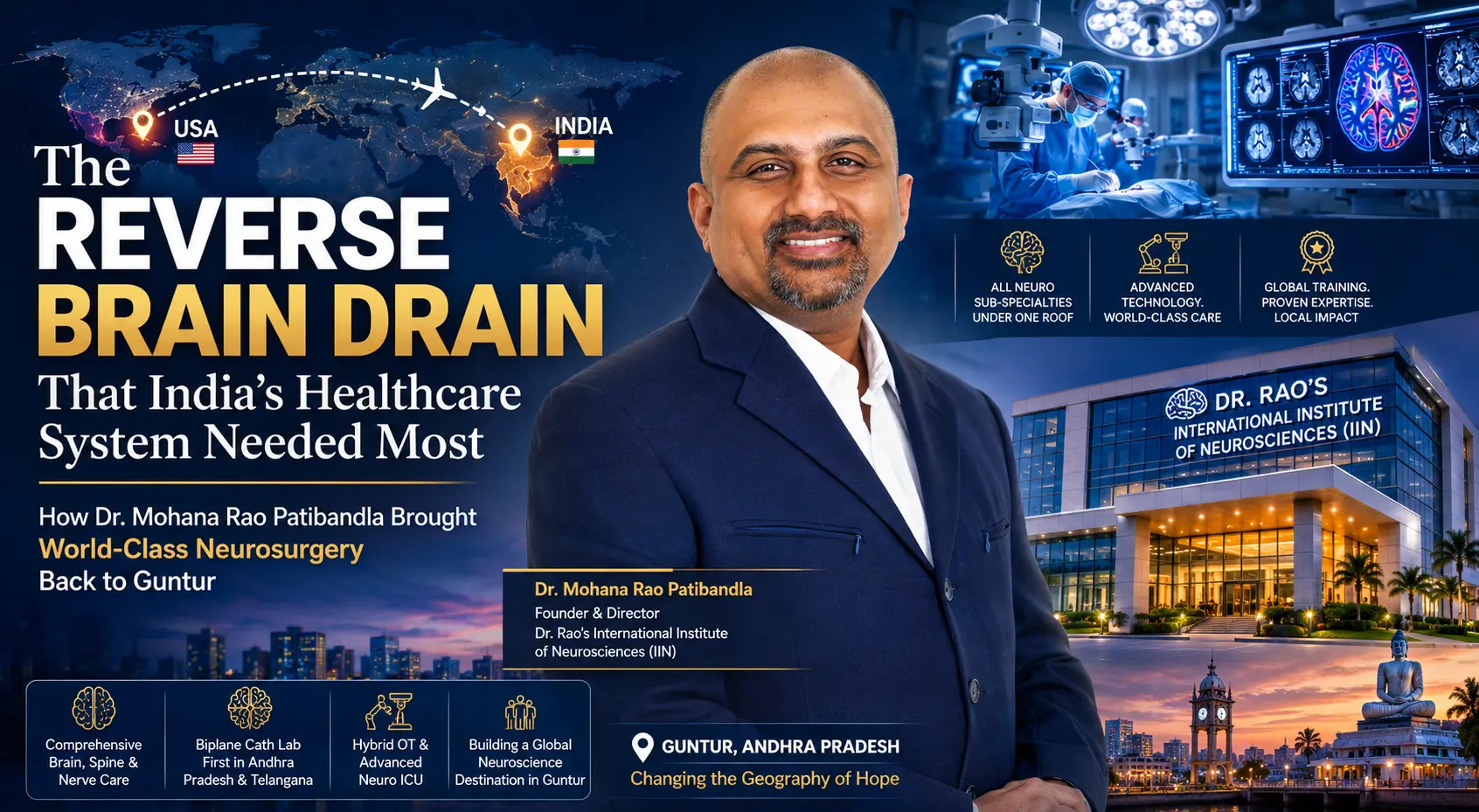
A recent feature published by Hans India highlighted the growing importance of regional healthcare development and the role of globally trained specialists returning to India to build advanced medical institutions. The article emphasized how expertise, innovation, and infrastructure can significantly improve access to specialized neurological care outside traditional metropolitan centers.
Why Neurological Disorders Require Specialized Care
Neurological disorders affect the brain, spinal cord, peripheral nerves, and muscles. These conditions can profoundly impact a person’s mobility, memory, speech, cognition, and overall quality of life.
According to the World Health Organization (WHO), neurological conditions are among the leading causes of disability and death globally. More than one billion people worldwide are affected by neurological disorders, making access to expert neurological care a public health priority.
Source: World Health Organization
Common Neurological Conditions
- Stroke
- Brain tumors
- Epilepsy
- Parkinson’s disease
- Alzheimer’s disease and dementia
- Peripheral neuropathy
- Multiple sclerosis
- Migraine and chronic headaches
- Spinal cord disorders
- Traumatic brain injury
Many neurological disorders require rapid diagnosis and timely treatment. Delays can result in permanent disability, loss of independence, or even death. This is why access to experienced specialists and modern healthcare infrastructure is so critical.
The Evolution of Regional Healthcare in India
Historically, India’s most advanced neurological services were concentrated in major cities such as Delhi, Mumbai, Chennai, Bengaluru, and Hyderabad. Patients from smaller cities often faced significant challenges when seeking specialized treatment.
Traveling to metropolitan centers involved financial burdens, emotional stress, accommodation expenses, prolonged waiting times, and disruptions to family life. Follow-up care was often equally challenging, particularly for elderly patients and those requiring long-term rehabilitation.
The emergence of advanced neuroscience centers in regional cities is changing this reality. Today, patients increasingly expect high-quality care to be available closer to their homes, enabling faster diagnosis, easier access to treatment, and improved continuity of care.
The Hans India feature highlighted how the development of advanced neuroscience institutions in Tier-2 cities can help address healthcare inequalities while improving patient outcomes and strengthening local healthcare ecosystems.
Why Neurosciences Matter More Than Ever
The burden of neurological disease continues to grow worldwide. Factors such as aging populations, increasing life expectancy, sedentary lifestyles, diabetes, hypertension, and road traffic accidents contribute significantly to neurological morbidity.
Stroke remains one of the leading causes of death and disability globally. Brain tumors continue to require increasingly sophisticated surgical and medical treatments. Degenerative spine disorders are becoming more common due to lifestyle changes and increased longevity.
At the same time, advances in neuroscience have dramatically improved treatment possibilities. Conditions once considered untreatable can now be effectively managed using modern surgical techniques, precision diagnostics, and multidisciplinary care approaches.
Major Advances in Neurosciences
- Minimally invasive brain surgery
- Endoscopic skull base surgery
- Advanced stroke interventions
- Endovascular neurosurgery
- Neuronavigation systems
- Functional neurosurgery
- Stereotactic radiosurgery
- Microscopic spine surgery
- Artificial intelligence-assisted diagnostics
- Advanced neuroimaging technologies
These innovations are improving surgical precision, reducing complications, shortening hospital stays, and enhancing patient outcomes.
What Defines the Best Neurologist in Guntur?
When patients search online for the best neurologist in Guntur, they are often looking for much more than a medical degree. They seek expertise, experience, technology, accessibility, trust, and compassionate care.
Several factors distinguish leading neurological specialists and institutions:
| Factor | Why It Matters |
|---|---|
| Clinical Experience | Improves diagnostic accuracy and treatment planning |
| International Training | Provides exposure to advanced techniques and global best practices |
| Modern Technology | Enhances diagnostic and surgical precision |
| Multidisciplinary Care | Ensures comprehensive treatment and rehabilitation |
| Emergency Services | Critical for stroke and neurotrauma patients |
| Patient-Centered Approach | Improves outcomes and patient satisfaction |
The best neurological care combines evidence-based medicine, advanced technology, personalized treatment planning, and long-term support for patients and families.
The Impact of International Training on Indian Healthcare
One of the most significant developments in modern Indian healthcare is the return of specialists who have trained internationally and chosen to build institutions in India.
International fellowships expose physicians to advanced healthcare systems, innovative technologies, multidisciplinary care models, research methodologies, and patient safety frameworks.
When these specialists establish advanced healthcare facilities in regional India, patients gain access to expertise that was previously available only in select metropolitan institutions.
The Hans India article notes that institution-building, rather than individual achievement alone, represents one of the most meaningful contributions such specialists can make to healthcare transformation.
Advanced Neurology Services Available in Guntur
Modern neuroscience centers now offer a comprehensive range of neurological services that were once available only in large metropolitan hospitals.
Stroke Care
Stroke treatment requires rapid intervention. Every minute matters when blood flow to the brain is interrupted.
Comprehensive stroke care includes:
- Emergency neurological evaluation
- Advanced brain imaging
- Thrombolytic therapy
- Mechanical thrombectomy
- Neurocritical care
- Stroke rehabilitation
Brain Tumor Treatment
Brain tumors require multidisciplinary management involving neurosurgeons, neurologists, neuro-oncologists, radiologists, and rehabilitation specialists.
Modern treatment options may include:
- Microsurgical tumor removal
- Minimally invasive approaches
- Image-guided surgery
- Neuro-oncology support
- Radiation therapy coordination
- Long-term surveillance
Epilepsy Management
Many patients with epilepsy can achieve excellent seizure control through proper diagnosis and treatment. Advanced epilepsy centers provide EEG monitoring, medication management, and surgical evaluation when necessary.
Advanced Spine Surgery and Comprehensive Spine Care
Spinal disorders are among the most common reasons patients seek neurological and neurosurgical consultation. As life expectancy increases and lifestyles become more sedentary, conditions affecting the spine are becoming increasingly prevalent across India.
Back pain, neck pain, sciatica, spinal instability, degenerative disc disease, spinal tumors, and spinal trauma can significantly impact quality of life. Fortunately, advances in modern spine surgery have transformed treatment outcomes for many patients.
Common Spine Conditions Treated
- Herniated disc
- Cervical spondylosis
- Lumbar canal stenosis
- Sciatica
- Spinal deformities
- Spinal cord compression
- Spinal tumors
- Spinal fractures
- Degenerative disc disease
- Failed back surgery syndrome
Modern spine surgery increasingly emphasizes minimally invasive approaches that reduce tissue damage, minimize blood loss, shorten hospital stays, and accelerate recovery.
Learn more about advanced spine care at: Spine Surgery Department
Artificial Intelligence and the Future of Neurology
Artificial Intelligence (AI) is rapidly transforming healthcare worldwide. Neurology and neurosurgery are among the specialties benefiting significantly from AI-driven innovations.
AI technologies are helping clinicians detect disease earlier, analyze imaging more accurately, improve treatment planning, and enhance patient outcomes.
Applications of AI in Neurology
- Stroke detection and triage
- Brain tumor imaging analysis
- Neurodegenerative disease prediction
- Clinical decision support systems
- Surgical planning assistance
- Predictive analytics for patient outcomes
- Remote neurological monitoring
- Advanced neuroimaging interpretation
According to the National Institutes of Health (NIH), AI technologies have the potential to significantly improve diagnostic accuracy and healthcare delivery while supporting clinicians in managing increasingly complex neurological conditions.
Source: National Institutes of Health (NIH)
The Role of Technology in Modern Neurosurgery
Technology continues to reshape the field of neurosciences. Today’s neurosurgical procedures are safer and more precise than ever before.
Key Technologies Driving Neurosurgical Excellence
- Neuronavigation systems
- Intraoperative imaging
- Microsurgical platforms
- Endoscopic neurosurgery
- Intraoperative neuromonitoring
- 3D surgical planning
- Advanced neurovascular imaging
- Robotic-assisted surgical systems
These technologies allow surgeons to operate with greater precision while preserving healthy tissue and minimizing complications.
The Hans India feature highlighted that innovation, infrastructure, and technology will play critical roles in shaping the future of neurological care across India.
Why Institution Building Matters in Healthcare
Healthcare transformation is not solely about individual physicians. Sustainable progress requires strong institutions capable of delivering high-quality care consistently over decades.
The Hans India article emphasizes that the long-term impact of healthcare leaders often lies in creating systems, training future professionals, introducing advanced technologies, and building organizations that continue serving patients for generations.
Regional centers of excellence can:
- Improve healthcare accessibility
- Reduce treatment delays
- Create employment opportunities
- Promote medical education
- Encourage research and innovation
- Reduce migration for treatment
- Strengthen local healthcare ecosystems
Why Patients Choose Dr. Rao’s Hospital – International Institute of Neurosciences (IIN)
Patients seeking the best neurologist in Guntur, best neurosurgeon in Guntur, or best spine surgeon in Guntur increasingly seek comprehensive neuroscience centers that provide advanced diagnostics, specialized treatment, and compassionate patient care.
Dr. Rao’s Hospital – International Institute of Neurosciences (IIN) has emerged as a leading destination for neurological, neurosurgical, spine, and neurovascular care in Andhra Pradesh.
Internal Links
- Dr. Rao’s Hospital Official Website
- Neurosurgery Department
- Spine Surgery Services
- Neurology Services
- Contact Dr. Rao’s Hospital
- About Dr. Mohana Rao Patibandla
Authoritative Medical Sources
AEO-Optimized Frequently Asked Questions
Who is considered the best neurologist in Guntur?
The best neurologist in Guntur is typically identified by extensive experience, advanced training, access to modern technology, patient outcomes, and comprehensive neurological care capabilities.
When should I consult a neurologist?
You should consult a neurologist if you experience persistent headaches, seizures, weakness, numbness, memory problems, dizziness, balance difficulties, or other neurological symptoms.
What conditions do neurologists treat?
Neurologists diagnose and treat stroke, epilepsy, Parkinson’s disease, Alzheimer’s disease, migraines, neuropathy, multiple sclerosis, and many other disorders affecting the nervous system.
What is the difference between a neurologist and a neurosurgeon?
A neurologist primarily treats neurological conditions using medications and non-surgical therapies, while a neurosurgeon performs surgical procedures involving the brain, spine, and nervous system.
Why is early diagnosis important for neurological disorders?
Early diagnosis often improves treatment outcomes, reduces complications, preserves neurological function, and enhances quality of life.
Why choose Dr. Rao’s Hospital for neurological treatment?
At Dr. Rao’s Hospital, led by Dr. Mohana Rao Patibandla, Founder of Dr. Rao’s Hospital – International Institute of Neurosciences (IIN), Guntur, patients receive advanced brain, spine, and nerve care using cutting-edge technologies and minimally invasive treatment approaches.
Conclusion
India’s healthcare future will increasingly depend on strong regional centers of excellence capable of delivering advanced, affordable, and accessible care. The growing availability of world-class neuroscience services outside metropolitan cities represents one of the most important developments in modern Indian healthcare.
As highlighted in the Hans India feature, the return of globally trained specialists, investment in healthcare infrastructure, adoption of advanced technologies, and commitment to institution building are helping transform patient care across regional India. These developments are ensuring that patients no longer need to leave their communities to access sophisticated neurological treatment.
For patients seeking the best neurologist in Guntur, the best neurosurgeon in Guntur, or the best spine surgeon in Guntur, access to comprehensive neuroscience care has never been better. Modern healthcare institutions are bringing advanced diagnosis, treatment, rehabilitation, and long-term support closer to home, improving outcomes and transforming lives.
Call to Action
If you or a loved one is experiencing symptoms of a neurological disorder, seeking expert evaluation early can make a significant difference. Whether you need treatment for stroke, brain tumors, epilepsy, spine disorders, neurovascular conditions, or complex neurological diseases, timely care matters.
If you’re searching for the best neurologist in Guntur, the best neurosurgeon in Guntur, or expert care for complex brain and spine conditions, visit
Dr. Rao’s Hospital – International Institute of Neurosciences (IIN).
Follow Dr. Rao’s Hospital
Primary Source:
The Return of Talent: Dr. Mohana Rao Patibandla’s Mission to Transform Regional Healthcare – Hans India