Tag Archives: best neurologist in Guntur

back surgeons in India

Expert Brain, Spine & Endovascular Care at Dr. Rao’s Hospital

Expert Brain, Spine & Endovascular Care at Dr. Rao’s Hospital


Introduction: Excellence in Brain and Spine Care at Dr. Rao’s Hospital

When it comes to specialized care in brain and spine health, finding the right medical professionals and facilities is paramount. In India, Dr. Rao’s Hospital in Guntur is a beacon of hope for patients requiring top-tier treatment. The hospital has become synonymous with cutting-edge neurosurgery, spine surgery, and endovascular procedures under the direction of renowned neurosurgeon Dr. Mohana Rao Patibandla. This comprehensive blog explores the key services and specialties offered at Dr. Rao’s Hospital, including minimally invasive techniques, and highlights why it is a leading destination for medical tourism. According to The Times of India coverage.


Rao’s Brain and Spine: A Center of Excellence

Dr. Rao’s Hospital, often called Rao’s Brain and Spine Center, is renowned for its cutting-edge neurological and spinal care approach. The hospital provides a full spectrum of services, from diagnosis to post-operative care, ensuring patients receive the highest standard of treatment. Dr. Rao’s expertise in brain and spine surgery has made the hospital a preferred choice for patients in Andhra Pradesh, across India, and internationally.


Brain & Spine Specialist: Expertise You Can Trust

At the heart of Dr. Rao’s Hospital is a team of highly qualified specialists who are dedicated to treating complex brain and spine conditions. As a Brain & Spine Specialist, Dr. Rao is known for his precision, skill, and patient-centric approach. He has successfully performed thousands of surgeries, utilizing the latest technology to achieve optimal outcomes. Whether it’s a brain tumor, spinal deformity, or a vascular disorder, Dr. Rao’s vast experience ensures that every patient receives personalized and effective care.


Guntur Brain and Spine Hospital: State-of-the-Art Facilities

Guntur Brain and Spine Hospital, part of Dr. Rao’s Hospital, is equipped with the latest medical technology, including advanced imaging systems, neuro-navigation, and minimally invasive surgical tools. This infrastructure supports various procedures, from routine surgeries to highly complex interventions. The hospital’s commitment to maintaining the highest standards in patient care has earned it a reputation as one of the leading centers for brain and spine surgery in India.


Spine Dr Name: Dr. Rao: A Leader in Spine Surgery

When discussing top spine surgeons, one name stands out—Dr. Rao. As a spine surgeon, Dr. Rao has pioneered several minimally invasive spine surgery techniques, significantly improving recovery times and reducing patient complications. His deep understanding of spinal anatomy and ability to address even the most challenging conditions make him a trusted name in spine care. Patients worldwide seek his expertise and confidence in his ability to deliver successful surgical outcomes.


Neuroscience Specialist: Cutting-edge Treatment for Complex Conditions

As a Neuroscience Specialist, Dr. Rao’s expertise extends beyond traditional neurosurgery. He is also a leading figure in the field of interventional neurology, offering treatments for conditions like stroke, aneurysms, and arteriovenous malformations (AVMs). His holistic approach to patient care, including a thorough understanding of the neurological system, allows for comprehensive treatment plans that address the symptoms and underlying causes of various neurological disorders.


Top Ranked Spine Surgeons: Global Recognition

Dr. Rao is recognized among the Top Ranked Spine Surgeons globally, a testament to his skill and dedication to advancing the field of spine surgery. His innovative techniques and commitment to patient safety have earned him accolades from peers and patients. This recognition is reflected in the numerous international conferences where Dr. Rao has been invited to share his expertise, solidifying his standing as a world-class surgeon.


Neuro Specialists: A Multi-Disciplinary Approach

The team at Dr. Rao’s Hospital includes a wide range of Neuro Specialists, each bringing their expertise to ensure comprehensive care. This multi-disciplinary approach means that patients benefit from the combined knowledge of neurologists, neurosurgeons, spine surgeons, and endovascular specialists. The collaboration among these experts allows for more accurate diagnoses, innovative treatment plans, and better overall patient outcomes.


Brain and Spine India: A Hub for Neurosurgical Excellence

India is emerging as a hub for advanced neurosurgical procedures, and Brain and Spine India centers like Dr. Rao’s Hospital are at the forefront of this transformation. With a focus on providing world-class care at affordable costs, Dr. Rao’s Hospital attracts patients from across the globe. The hospital’s emphasis on using minimally invasive techniques ensures that patients receive the most effective treatment with the least disruption to their lives. According to dnaindia


Brain and Spine Hospital OSU: A Benchmark for Quality

Dr. Rao’s training and collaboration with leading institutions such as the Brain and Spine Hospital at OSU (Ohio State University) have significantly influenced the level of care provided at his hospital. Integrating best practices from such prestigious institutions ensures that patients at Dr. Rao’s Hospital receive treatment that meets international standards. This commitment to excellence is one of the reasons why Dr. Rao’s Hospital is considered one of the best places for brain and spine surgery in India.


Neuro Spine Surgeon: Precision in Surgery

As a Neuro Spine Surgeon, Dr. Rao’s ability to perform highly precise and complex surgeries has transformed the lives of countless patients. His focus on minimally invasive techniques reduces the risk associated with surgery and accelerates the recovery process. Patients treated by Dr. Rao benefit from his meticulous approach, which ensures that every procedure is tailored to the individual’s specific needs.


Top 10 Spine Surgeons in the World: Dr. Rao’s Global Standing

Dr. Rao’s inclusion among the Top 10 Spine Surgeons in the World reflects his outstanding contributions to spine surgery. His innovative approaches and consistent track record of successful surgeries have set a new benchmark in spine care. Patients worldwide travel to Guntur to benefit from his expertise, knowing they are in the hands of one of the best surgeons globally.

Dr. Rao the best neurosurgeon in Guntur, Andhra Pradesh, India and World

Dr. Rao is the best neurosurgeon in Guntur, Andhra Pradesh, India, and World


Neurology Hospital Near Me: Accessible and Advanced Care

Dr. Rao’s Hospital in Guntur offers a convenient and highly advanced option for those searching for a Neurology Hospital Near Me. The hospital’s location, with its state-of-the-art facilities and expert medical staff, makes it an ideal choice for patients needing neurological and spine care. Whether you’re dealing with a complex neurological disorder or a spinal condition, Dr. Rao’s Hospital is equipped to provide the necessary care.


Neuro Hospital Near Me: Comprehensive Neurosurgical Services

When searching for a neuro hospital near me, it is essential to find a facility that offers comprehensive care. Dr. Rao’s Hospital provides full services, from diagnostics to postoperative care, ensuring patients receive the best possible treatment. The hospital’s focus on minimally invasive procedures and patient-centered care has made it a leader in neurosurgery and spine surgery.


Dr Neurologist Near Me: Expert Care Close to Home

For those seeking a Dr. Neurologist Near Me, Dr. Rao’s Hospital is an excellent choice. Dr. Rao’s expertise as a neurologist and neurosurgeon ensures that patients receive expert care close to home. His patient-centric approach and the latest medical technology make Dr. Rao’s Hospital a top choice for those needing neurological care in Andhra Pradesh and beyond.


Top Rated Spine Surgeons Near Me: Quality Care You Can Trust

Regarding finding the Top Rated Spine Surgeons Near Me, Dr. Rao’s Hospital stands out for its exceptional care and successful outcomes. Patients who have undergone surgery under Dr. Rao’s care consistently report high satisfaction levels, thanks to the hospital’s focus on minimally invasive techniques and comprehensive post-operative support. Whether you’re dealing with a herniated disc, spinal stenosis, or any other spinal condition, Dr. Rao’s Hospital offers the expertise you need for a successful recovery.


Dr. Rao: Neurosurgeon, Spine Surgeon & Endovascular Surgeon

Dr. Rao is not just a neurosurgeon but also a leading spine and endovascular surgeon. This unique combination of skills allows him to offer a wide range of treatments, from complex brain surgeries to minimally invasive spine procedures and advanced endovascular interventions. His ability to integrate these disciplines into a cohesive treatment plan ensures that patients receive the most effective care possible.


Best Interventional Neurologist in Andhra Pradesh: Dr. Rao’s Expertise

As the Best Interventional Neurologist in Andhra Pradesh, Dr. Rao is at the forefront of treating complex vascular conditions. His expertise in interventional neurology allows him to offer non-surgical treatments for conditions like aneurysms and strokes, providing patients with less invasive options that come with fewer risks and shorter recovery times. This focus on interventional techniques makes Dr. Rao’s Hospital a leader in neurological care.


Best Endovascular Neurosurgeon in Andhra Pradesh: Advanced Care at Dr. Rao’s Hospital

Dr. Rao is also recognized as the Best Endovascular Neurosurgeon in Andhra Pradesh, a title that reflects his advanced training and extensive experience in this specialized field. Endovascular neurosurgery is a rapidly evolving area, and Dr. Rao’s expertise ensures that patients have access to the latest and most effective treatments. Whether it’s a brain aneurysm or a stroke, Dr. Rao’s skill in endovascular procedures offers patients the best chance for a successful outcome.


Minimally Invasive Neurosurgery: Advanced Techniques for Better Outcomes

One of the hallmarks of Dr. Rao’s Hospital is its focus on Minimally Invasive Neurosurgery. These advanced techniques reduce the physical trauma of surgery, leading to quicker recovery times and less post-operative pain. Dr. Rao’s expertise in minimally invasive procedures ensures that patients receive the most effective treatment with the least disruption to their lives, making it a preferred choice for those seeking neurosurgical care.


Minimally Invasive Spine Surgery: Precision and Care

Minimally Invasive Spine Surgery is another area where Dr. Rao’s Hospital excels. These procedures, which involve smaller incisions and less damage to surrounding tissues, allow patients to recover more quickly and with fewer complications. Dr. Rao’s extensive experience in minimally invasive spine surgery means that patients benefit from his technical skills and commitment to achieving the best possible outcomes.


Affordable Medical Tourism: World-Class Care at Competitive Prices

Affordable medical tourism is a significant advantage for international patients who are choosing Dr. Rao’s Hospital. The hospital offers world-class care at prices often lower than in Western countries without compromising quality. This combination of affordability and excellence makes Dr. Rao’s Hospital a top destination for medical tourists seeking advanced brain and spine care.


Dr. Rao’s Hospital Guntur – The Best Brain, Spine, and Endovascular Center

In conclusion, Dr. Rao’s Hospital Guntur is the best brain, spine, and endovascular center in Andhra Pradesh. The hospital’s commitment to excellence, combined with Dr. Rao’s unparalleled expertise, ensures that patients receive the highest standard of care. Whether you’re dealing with a brain tumor, spinal condition, or vascular disorder, Dr. Rao’s Hospital is equipped to provide the comprehensive treatment you need for a successful recovery.


Conclusion: Why Choose Dr. Rao’s Hospital?

Choosing the right brain and spine surgery hospital is crucial, and Dr. Rao’s Hospital in Guntur stands out as a leading choice. With a focus on minimally invasive techniques, a team of top specialists, and a commitment to affordable medical tourism, Dr. Rao’s Hospital offers patients the best possible care. Whether you’re local to Andhra Pradesh or from abroad, you can trust Dr. Rao’s Hospital to provide the expert treatment you need for a successful outcome.

Dr. Rao’s Contact Information:

Dr Rao performs epilepsy surgery using ECOG at Dr. Rao's Hospital

Top Brain, Spine, and Epilepsy Care with Affordable Treatment at Dr. Rao’s Hospital, Guntur

Top Brain, Spine, and Epilepsy Care with Affordable Treatment at Dr. Rao’s Hospital, Guntur


Best Hospitals for Epilepsy

Epilepsy is a neurological disorder that requires specialized care, and finding the best hospital for treatment is crucial for effective management. Dr. Rao’s Hospital in Guntur is a leading institution in this field, offering cutting-edge technology and a dedicated team of specialists. The hospital provides comprehensive epilepsy care, including advanced diagnostic tools, personalized treatment plans, and minimally invasive neurosurgery options. This approach ensures patients receive the most effective care with minimal discomfort and faster recovery times.

Name of Spine Specialist

When dealing with spine-related issues, the expertise of the specialist you choose is paramount. Dr. Mohana Rao Patibandla, a renowned spine specialist at Dr. Rao’s Hospital, has a remarkable track record in handling complex spine surgeries. His experience and the hospital’s state-of-the-art facilities ensure that patients receive world-class care. Whether minimally invasive spine surgery or more complicated procedures, Dr. Rao’s Hospital provides top-notch care tailored to individual patient needs.

Center for Neurology & Spine

Dr. Rao’s Hospital is not just a medical facility; it’s a comprehensive center for neurology and spine care. The hospital offers a wide range of services, from diagnosing and treating neurological disorders to advanced spine surgeries. The center is equipped with the latest technology, including minimally invasive surgical options, which reduce recovery times and improve outcomes. The team at Dr. Rao’s Hospital is dedicated to providing holistic care, ensuring that every patient receives the best possible treatment.

Top Brain Surgeons in the US

While the United States is home to many top brain surgeons, India quickly becomes a hub for neurosurgical excellence due to affordable, high-quality care. Dr. Rao’s Hospital in Guntur is at the forefront of this trend, attracting patients worldwide seeking top-tier brain surgery at a fraction of the cost. The hospital’s surgeons are trained in the latest techniques, including minimally invasive neurosurgery, ensuring that patients receive care that is on par with the best hospitals in the US.

Neuro Physician Near Me

If you’re searching for a “neuro physician near me,” look no further than Dr. Rao’s Hospital in Guntur. The hospital’s team of neuro physicians is highly skilled in diagnosing and treating a wide range of neurological conditions. From chronic migraines to more severe disorders like Parkinson’s disease, the team at Dr. Rao’s Hospital provides compassionate care focusing on improving the quality of life for every patient. The hospital also offers teleconsultation services, making it easier for patients from across the globe to access expert advice.

Best Spine Surgery Hospitals in the World

Dr. Rao’s Hospital in Guntur is emerging as one of the best spine surgery hospitals in the world. The hospital’s commitment to using the latest technology and surgical techniques, such as minimally invasive spine surgery, sets it apart. Patients worldwide choose Dr. Rao’s Hospital for its excellent outcomes, shorter recovery times, and affordable care. The hospital’s reputation is built on years of successful surgeries and satisfied patients who have regained mobility and quality of life.

Spinal Cord Specialist Near Me

Finding a spinal cord specialist near you who can offer the best care is essential for spine and spinal cord conditions. Dr. Rao’s Hospital in Guntur is home to some of the top specialists in the field. The hospital offers a full spectrum of care, from diagnosis to treatment and rehabilitation. Whether it’s a spinal cord injury, degenerative condition, or complex spinal surgery, the specialists at Dr. Rao’s Hospital use minimally invasive techniques to provide effective treatment with minimal disruption to the patient’s life.

Top Back Surgeons Near Me

For those looking for the “top back surgeons near me,” Dr. Rao’s Hospital in Guntur offers a world-class team of experts. The hospital’s back surgeons are leaders in the field, known for their expertise in treating complex back issues using minimally invasive techniques. Compared to traditional surgery, these procedures offer patients quicker recovery times, less pain, and reduced scarring. With a focus on patient-centric care, Dr. Rao’s Hospital ensures that every patient receives the highest standard of treatment.

Vascular Neurosurgeon Near Me

Vascular neurosurgery is a highly specialized field that requires the expertise of a seasoned professional. Dr. Rao’s Hospital in Guntur is proud to have some of the best vascular neurosurgeons in the region. These specialists are skilled in treating conditions such as aneurysms, arteriovenous malformations (AVMs), and other vascular issues affecting the brain and spinal cord. Using advanced imaging and minimally invasive techniques, the vascular neurosurgeons at Dr. Rao’s Hospital provide life-saving treatments focusing on precision and safety.

Top Spine Doctors

The top spine doctors at Dr. Rao’s Hospital in Guntur are recognized for their excellence in surgical and non-surgical treatments of spine conditions. Whether dealing with herniated discs, spinal stenosis, or scoliosis, the team at Dr. Rao’s Hospital offers comprehensive care tailored to each patient’s individual needs. The hospital’s commitment to minimally invasive spine surgery ensures that patients experience less pain and faster recovery, allowing them to return to their daily activities sooner.

Affordable Medical Tourism at Dr. Rao’s Hospital, Guntur

India has become a global destination for affordable medical tourism, and Dr. Rao’s Hospital in Guntur is leading the way. The hospital offers world-class care at a fraction of the cost compared to Western countries, making it an attractive option for international patients. With top specialists in neurology, spine surgery, and brain surgery, Dr. Rao’s Hospital provides a full range of services under one roof. Patients worldwide come to Dr. Rao’s Hospital for its reputation of excellence, affordability, and patient-focused care.

Conclusion

Dr. Rao’s Hospital in Guntur is a beacon of excellence in neurology, spine, and brain surgery. With a focus on minimally invasive procedures, world-class specialists, and affordable care, it is an ideal destination for patients seeking the best possible outcomes. Whether you are dealing with epilepsy, spine issues, or complex brain conditions, Dr. Rao’s Hospital offers comprehensive care that is both effective and accessible.

For more information or to schedule a consultation, visit the hospital’s website at www.drraoshospitals.com or call +91 9010056444 / +91 9010057444.

Dr. Rao’s Contact Information:

Back Surgeons Near Me - Dr. Rao at Dr. Rao's Hospital

Top 20 Neurologists in India – Dr. Rao at Dr. Rao’s Hospital

Top 20 Neurologists in India – Dr. Rao at Dr. Rao’s Hospital

India is home to many highly skilled and renowned neurologists who are making significant strides in the field. Among them, Dr. Mohana Rao Patibandla, the founder of Dr. Rao’s Hospital, stands out as a leader. This blog highlights the top 20 best neuro specialist doctor in india, with Dr. Rao at the forefront.

1. Dr. Mohana Rao Patibandla – Dr. Rao’s Hospital, Guntur

Dr. Mohana Rao Patibandla is a distinguished neurosurgeon and best neuro specialist doctor in india renowned for his expertise and dedication to advancing neurological care, widely recognized as the best neurologist in India. He founded Dr. Rao’s Hospital in Guntur, Andhra Pradesh, a state-of-the-art facility specializing in brain, spine, and nerve care, where patients also benefit from the expertise of the best neurologist in Guntur. Dr. Rao’s extensive training in India and abroad has equipped him with unparalleled skills in various subspecialties, including minimally invasive skull base surgery, pediatric neurosurgery, and neuro-oncology.

Dr. Rao’s Contact Information:

2. Dr. K. Radhakrishnan – Amrita Institute of Medical Sciences, Kochi

Dr. K. Radhakrishnan is a leading best neuro specialist doctor in india with significant contributions to epilepsy research and treatment. He is associated with the Amrita Institute of Medical Sciences and has been instrumental in developing advanced epilepsy care in India.

3. Dr. Nirmal Surya – Bombay Hospital, Mumbai

Dr. Nirmal Surya is a renowned best neuro specialist doctor in india in epilepsy and neurorehabilitation. He is the founder of the Epilepsy Foundation India and has made significant contributions to neurological research and patient care.

4. Dr. V. P. Singh – Medanta – The Medicity, Gurgaon

Dr. V. P. Singh is a highly respected neurosurgeon with expertise in brain tumors and cerebrovascular surgery. He is currently associated with Medanta – The Medicity and has a vast experience in treating complex neurological conditions.

5. Dr. S. D. Nair – Apollo Hospitals, Chennai

Dr. S. D. Nair is a leading neurologist at Apollo Hospitals, Chennai, with extensive experience in treating multiple sclerosis, epilepsy, and other neurological disorders. He is known for his patient-centric approach and innovative treatment methods.

6. Dr. P. N. Renjen – Indraprastha Apollo Hospitals, Delhi

Dr. P. N. Renjen is a senior consultant neurologist at Indraprastha Apollo Hospitals, Delhi. With over three decades of experience, he specializes in stroke, epilepsy, and neurorehabilitation.

7. Dr. V. M. Thomas – Aster Medcity, Kochi

Dr. V. M. Thomas is a highly skilled neurologist at Aster Medcity, Kochi. His expertise lies in treating Parkinson’s disease, multiple sclerosis, and other movement disorders. He is also involved in clinical research and education.

8. Dr. A. B. Taly – National Institute of Mental Health and Neurosciences (NIMHANS), Bangalore

Dr. A. B. Taly is a distinguished neurologist and professor at NIMHANS, Bangalore. He is well-known for his research in neurorehabilitation and movement disorders. His contributions to neurology have been widely recognized both nationally and internationally.

9. Dr. Manjari Tripathi – All India Institute of Medical Sciences (AIIMS), Delhi

Dr. Manjari Tripathi is a renowned neurologist at AIIMS, Delhi, specializing in epilepsy and neurodegenerative disorders. She is actively involved in research and has published numerous papers in prestigious medical journals.

10. Dr. Nitin S. Walia – Fortis Hospital, Gurgaon

Dr. Nitin S. Walia is a leading neurologist at Fortis Hospital, Gurgaon, with expertise in stroke management, epilepsy, and neuromuscular disorders. He is known for his compassionate patient care and advanced treatment techniques.

11. Dr. Vinay Goyal – Max Super Speciality Hospital, Delhi

Dr. Vinay Goyal is a senior consultant neurologist at Max Super Speciality Hospital, Delhi. He specializes in stroke, epilepsy, and movement disorders, and has a keen interest in clinical research.

12. Dr. S. N. Prasad – Manipal Hospital, Bangalore

Dr. S. N. Prasad is a respected neurologist at Manipal Hospital, Bangalore, with extensive experience in treating neurological disorders such as multiple sclerosis, epilepsy, and neuromuscular diseases. He is also involved in medical education and research.

13. Dr. Madhuri Behari – Fortis Hospital, Delhi

Dr. Madhuri Behari is a leading neurologist at Fortis Hospital, Delhi, specializing in movement disorders, Parkinson’s disease, and multiple sclerosis. She has made significant contributions to neurology through her clinical practice and research.

14. Dr. P. Sarat Chandra – AIIMS, Delhi

Dr. P. Sarat Chandra is a distinguished neurosurgeon at AIIMS, Delhi, with expertise in brain tumors, epilepsy surgery, and spine surgery. He is known for his advanced surgical techniques and patient-centric approach.

15. Dr. Atma Ram Bansal – Medanta – The Medicity, Gurgaon

Dr. Atma Ram Bansal is a prominent neurologist at Medanta – The Medicity, specializing in epilepsy and neurophysiology. He is actively involved in research and has published several papers in renowned medical journals.

16. Dr. Rajesh Benny – Aster CMI Hospital, Bangalore

Dr. Rajesh Benny is a leading neurologist at Aster CMI Hospital, Bangalore, with expertise in stroke management, epilepsy, and neurorehabilitation. He is known for his compassionate patient care and innovative treatment methods.

17. Dr. Chandran Gnanamuthu – Manipal Hospital, Bangalore

Dr. Chandran Gnanamuthu is a renowned neurologist at Manipal Hospital, Bangalore, specializing in multiple sclerosis, epilepsy, and neuromuscular disorders. He has made significant contributions to neurological research and education.

18. Dr. R. S. Jain – SMS Medical College, Jaipur

Dr. R. S. Jain is a respected neurologist at SMS Medical College, Jaipur, with extensive experience in treating stroke, epilepsy, and movement disorders. He is also involved in medical education and research.

19. Dr. P. S. S. Bedi – Fortis Hospital, Mohali

Dr. P. S. S. Bedi is a leading neurologist at Fortis Hospital, Mohali, with expertise in stroke management, epilepsy, and neuromuscular disorders. He is known for his patient-centric approach and advanced treatment techniques.

20. Dr. A. K. Srivastava – Sanjay Gandhi Postgraduate Institute of Medical Sciences (SGPGIMS), Lucknow

Dr. A. K. Srivastava is a distinguished neurologist at SGPGIMS, Lucknow, specializing in neurodegenerative disorders, stroke, and epilepsy. He is actively involved in clinical research and has published numerous papers in renowned medical journals.

These top neurologists in India are recognized for their exceptional skills, dedication, and contributions to the field of neurology. Among them, Dr. Mohana Rao Patibandla at Dr. Rao’s Hospital stands out as a leader, making significant strides in advancing neurological care and improving patient outcomes.

Dr. Rao the best neurosurgeon and spine surgeon in India

The Best Neurologist in Guntur: Dr. Mohana Rao Patibandla at Dr. Rao’s Hospital

The Best Neurologist in Guntur: Dr. Mohana Rao Patibandla at Dr. Rao’s Hospital

Regarding neurological care in India, a few names stand out as prominently as Dr. Mohana Rao Patibandla. Renowned for his expertise and dedication, Dr. Rao is considered the best neurologist in Guntur and across India. His work at Dr. Rao’s Hospital has set new standards in neurology, neurosurgery, and spine surgery, making it a beacon of hope for patients seeking top-notch neurological care.

A Legacy of Excellence

Dr. Mohana Rao Patibandla’s journey in the medical field is nothing short of inspiring. After earning his MBBS from Andhra Medical College, Visakhapatnam, in 2002, Dr. Rao pursued a specialization in Neurosurgery from Nizam’s Institute of Medical Sciences, Hyderabad, completing it in 2013. His quest for knowledge and excellence didn’t stop there. He further specialized in Skull Base and Epilepsy Surgery in Hyderabad. Then he expanded his expertise internationally with fellowships in minimally invasive skull base surgery, pediatric neurosurgery, neuro-oncology, and endovascular and cerebrovascular neurosurgery from renowned institutions in the USA.

A Multidisciplinary Approach

Dr. Rao’s diverse training and extensive experience allow him to approach neurological disorders from a comprehensive, multidisciplinary perspective. This approach is reflected in the services offered at Dr. Rao’s Hospital, which caters to a wide range of neurological and neurosurgical needs, including:

  • Brain Surgery: Advanced surgical techniques for tumors, aneurysms, and other brain conditions.
  • Spine Surgery: Minimally invasive procedures for spinal disorders, ensuring quicker recovery times and better outcomes.
  • Pediatric Neurosurgery: Specialized care for neurological disorders in children.
  • Neuro-Oncology: Cutting-edge treatments for brain and spinal cord tumors.
  • Functional and Stereotactic Radiosurgery: Precision treatments for epilepsy, Parkinson’s disease, and other functional disorders.
  • Endovascular and Cerebrovascular Procedures: Advanced techniques for stroke and other vascular conditions of the brain.

State-of-the-Art Facility

Located in the heart of Guntur, Dr. Rao’s Hospital is an independent state-of-the-art facility designed to provide the best brain, spine, and nerve care. The hospital is equipped with the latest technology and adheres to international standards, ensuring patients receive the highest quality of care. From diagnosis to treatment and rehabilitation, every aspect of patient care is meticulously planned and executed to deliver optimal results.

Commitment to Patient Care

What truly sets Dr. Rao apart is his unwavering commitment to patient care. His compassionate approach, coupled with his technical expertise, ensures that patients feel supported and confident throughout their treatment journey. Dr. Rao believes in personalized care, taking the time to understand each patient’s unique needs and crafting treatment plans tailored to their specific conditions.

Recognized as the Best in India

Dr. Mohana Rao Patibandla’s contributions to the field of neurology have not gone unnoticed. He is widely recognized as the best neurologist in India, a testament to his dedication, skill, and pioneering work. Under his leadership, Dr. Rao’s Hospital has become synonymous with excellence in neurological care, attracting patients from across the country and beyond.

Contact Information

For those seeking world-class neurological care, Dr. Rao’s Hospital is conveniently located at:

Address:
12-19-67, Old Bank Road, Kothapet, Opposite Sravani Hospital, Guntur, Andhra Pradesh

Phone: 090100 56444

Website: Dr. Rao’s Hospital

Email: info@drraoshospitals.com

In conclusion, Dr. Mohana Rao Patibandla stands as a beacon of hope for patients seeking the best neurological care in India. His expertise, compassionate approach, and the state-of-the-art facility at Dr. Rao’s Hospital make him the top choice for anyone needing specialized neurological treatment.

Dr. Rao the best neurosurgeon in Guntur, Andhra Pradesh, India and World

Top 10 Neurologist Doctors in India – Dr Rao

Top 10 Neurologist Doctors in India – Featuring Dr. Mohana Rao Patibandla at Dr. Rao’s Hospital

India is home to some of the finest medical professionals in the world, particularly in neurology. The advancements in neurological treatments and research in India have been monumental, making it a hub for top-tier neurological care. Here, we spotlight the top 10 neurologists in India, with Dr. Mohana Rao Patibandla of Dr. Rao’s Hospital leading the list.

1. Dr. Mohana Rao Patibandla, Dr. Rao’s Hospital, Guntur

Dr. Mohana Rao Patibandla is a luminary in neurology and neurosurgery and is widely regarded as one of the best neurologist in India. He founded Dr. Rao’s Hospital in Guntur, Andhra Pradesh, renowned for its state-of-the-art facilities and cutting-edge brain, spine, and nerve care treatments, making it a preferred destination for patients seeking care from the best neurologist in Guntur.

Dr. Rao’s extensive training includes specializations in skull base and epilepsy surgery, minimally invasive neurosurgery, pediatric neurosurgery, neuro-oncology, functional and stereotactic radiosurgery, and endovascular and cerebrovascular neurosurgery. His commitment to excellence and patient care has set a benchmark in the field.

2. Dr. Ashish Gupta, Artemis Hospital, Gurgaon

Dr. Ashish Gupta is a highly respected neurosurgeon with a rich background in treating complex neurological disorders. His expertise spans minimally invasive spine surgery, neuro-oncology, and pediatric neurosurgery. At Artemis Hospital, Dr. Gupta is known for his innovative techniques and compassionate approach to patient care.

3. Dr. V. P. Singh, Medanta – The Medicity, Gurgaon

With decades of experience, Dr. V. P. Singh is a pioneer in neurosurgery. He specializes in brain tumors, spinal disorders, and vascular neurosurgery. Dr. Singh’s contributions to neurosurgical techniques and his dedication to patient outcomes have made him a revered figure at Medanta – The Medicity.

4. Dr. K. Raghavendra, Apollo Hospitals, Chennai

Dr. K. Raghavendra is a distinguished neurologist with a focus on stroke, epilepsy, and neurodegenerative diseases. His work at Apollo Hospitals in Chennai has earned him a reputation for excellence in clinical practice and academic research.

5. Dr. S. N. Singh, AIIMS, Delhi

At the prestigious All India Institute of Medical Sciences (AIIMS) in Delhi, Dr. S. N. Singh is known for his groundbreaking work in neuroimmunology and multiple sclerosis. His research and clinical expertise have significantly advanced the understanding and treatment of complex neurological disorders.

6. Dr. P. Sarat Chandra, AIIMS, Delhi

Another prominent figure from AIIMS, Dr. P. Sarat Chandra, excels in neurosurgery, and has a particular focus on spine surgery, functional neurosurgery,, and epilepsy surgery. His innovative approaches and surgical precision have greatly benefited numerous patients.

7. Dr. Sudhir Dubey, Medanta – The Medicity, Gurgaon

Dr. Sudhir Dubey is celebrated for his skills in minimally invasive neurosurgery and endoscopic brain surgery. His work at Medanta – The Medicity has revolutionized the treatment of brain tumors and cerebrovascular diseases, offering patients less invasive treatment options with excellent outcomes.

8. Dr. N. K. Venkataramana, Brains Hospital, Bangalore

Dr. N. K. Venkataramana is the founder of Brains Hospital in Bangalore and a leading brain and spine surgery expert. His contributions to neurosurgical education and pioneering work in advanced neurosurgical techniques have made him a key figure in the field.

9. Dr. Chandran Gnanamuthu, Fortis Hospital, Bangalore

With over four decades of experience, Dr. Chandran Gnanamuthu is a veteran neurologist specializing in multiple sclerosis, stroke, and movement disorders. His compassionate approach and extensive knowledge have made him a trusted name at Fortis Hospital in Bangalore.

10. Dr. Rajendra Prasad, Indraprastha Apollo Hospital, Delhi

Dr. Rajendra Prasad is a highly esteemed neurosurgeon with expertise in spinal surgery, brain tumors, and trauma surgery. His work at Indraprastha Apollo Hospital in Delhi has been instrumental in advancing neurosurgical care in India.

Conclusion

The contributions of these top neurologists have significantly impacted the field of neurology and neurosurgery in India. Leading this esteemed group is Dr. Mohana Rao Patibandla of Dr. Rao’s Hospital, whose dedication to excellence continues to inspire and elevate the standards of neurological care. Whether through groundbreaking surgeries, innovative research, or compassionate patient care, these professionals are at the forefront of their field, making India a global leader in neurological health.

For more information about Dr. Mohana Rao Patibandla and the exceptional care provided at Dr. Rao’s Hospital, visit Dr. Rao’s Hospital or contact them at info@drraoshospitals.com.

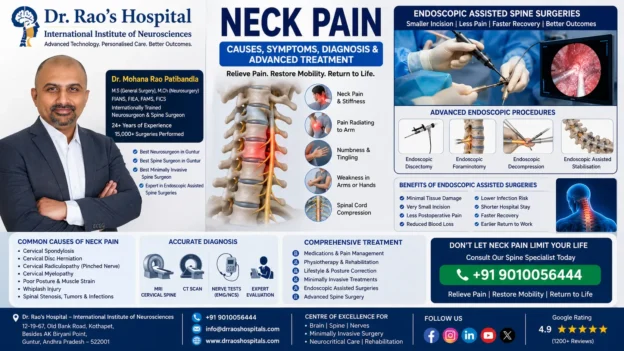
Dr. Mohana Rao Patibandla with advanced endoscopic-assisted spine surgery illustration for neck pain treatment, cervical disc herniation, cervical spondylosis, and minimally invasive spine surgery at Dr. Rao's Hospital – International Institute of Neurosciences, Guntur.

Best Minimally Invasive Spine Surgery (Neck Pain and Back Pain) Hospital In Guntur

Best Minimally Invasive Spine Surgery Hospital In Guntur


Neck Pain: Causes, Symptoms, Diagnosis, Treatment and Prevention


Neck pain is one of the most common musculoskeletal complaints worldwide and affects millions of people every year. While many episodes of neck pain resolve with rest and conservative treatment, persistent or progressive pain can significantly impact daily activities, work productivity, sleep, and overall quality of life. In some individuals, neck pain may indicate an underlying cervical spine disorder requiring specialized evaluation and treatment.


Modern lifestyles characterized by prolonged computer use, smartphone dependency, poor posture, sedentary habits, and increasing stress have contributed to a dramatic rise in cervical spine disorders across all age groups. Neck pain is no longer considered a condition affecting only older adults; it is increasingly seen in young professionals, students, healthcare workers, and individuals who spend extended hours using digital devices.


Fortunately, advances in spinal diagnostics, minimally invasive spine surgery, rehabilitation, and evidence-based treatment have significantly improved outcomes for patients with cervical spine disorders. Early diagnosis and appropriate management remain the key to preventing chronic pain and permanent neurological complications.


At Dr. Rao’s Hospital – International Institute of Neurosciences, Guntur, patients benefit from comprehensive cervical spine care provided by an experienced multidisciplinary team led by internationally trained neurosurgeon and spine surgeon Dr. Mohana Rao Patibandla. The hospital offers advanced diagnostic imaging, minimally invasive spine surgery, cervical disc replacement, microsurgical decompression, rehabilitation, and personalized treatment plans designed to restore function while preserving spinal mobility.


According to the World Health Organization (WHO), neck pain is among the leading causes of disability globally, emphasizing the importance of early diagnosis, rehabilitation, and appropriate specialist care.


Understanding the Cervical Spine


The cervical spine, commonly known as the neck, consists of seven vertebrae (C1–C7) that support the head, protect the spinal cord, and allow a wide range of movements including bending, rotation, and extension. Between these vertebrae are intervertebral discs that function as shock absorbers, while muscles, ligaments, tendons, facet joints, and nerves work together to provide stability and mobility.


The cervical spinal cord carries vital nerve signals between the brain and the rest of the body. Nerve roots exiting the cervical spine control sensation and movement in the shoulders, arms, and hands. Because of this complex anatomy, disorders affecting the cervical spine may produce symptoms extending far beyond the neck itself.


What Is Neck Pain?


Neck pain refers to discomfort arising from the cervical spine or surrounding soft tissues. It may be acute, developing suddenly after an injury or muscle strain, or chronic, persisting for more than three months. Pain can range from mild stiffness to severe, disabling discomfort associated with neurological symptoms.


Patients may experience:

  • Dull aching pain
  • Sharp stabbing pain
  • Muscle tightness
  • Reduced neck movement
  • Pain radiating into the shoulder or arm
  • Headaches originating from the neck
  • Numbness or tingling
  • Weakness in the upper limbs


The pattern of symptoms often provides valuable clues regarding the underlying cause and guides further evaluation.


Common Causes of Neck Pain


Neck pain may result from numerous conditions affecting bones, discs, muscles, ligaments, nerves, or joints. The most common causes include:

  • Muscle strain due to poor posture
  • Prolonged computer or smartphone use
  • Cervical spondylosis (age-related degeneration)
  • Cervical disc prolapse (slipped disc)
  • Cervical spinal stenosis
  • Cervical radiculopathy (pinched nerve)
  • Cervical myelopathy (spinal cord compression)
  • Whiplash injury
  • Trauma or fractures
  • Osteoporosis-related instability
  • Inflammatory arthritis
  • Spinal infections
  • Primary or metastatic spinal tumors
  • Congenital cervical spine abnormalities


Although many causes are benign and self-limiting, persistent pain or neurological symptoms require prompt evaluation by a spine specialist.


Risk Factors for Developing Neck Pain


Several factors increase the likelihood of cervical spine disorders:

  • Prolonged desk work
  • Excessive smartphone use (“Text Neck”)
  • Poor workstation ergonomics
  • Heavy lifting
  • Smoking
  • Obesity
  • Lack of exercise
  • Advancing age
  • Previous neck injury
  • Repetitive occupational activities
  • Psychological stress


Maintaining good posture, regular exercise, ergonomic workstations, and a healthy lifestyle can substantially reduce the risk of chronic neck pain.


Why Early Diagnosis Matters


Ignoring persistent neck pain may allow underlying cervical spine disorders to progress. Conditions such as cervical disc herniation or cervical myelopathy can gradually compress nerve roots or the spinal cord, leading to irreversible neurological damage if left untreated.


Early evaluation allows physicians to identify the underlying cause before permanent nerve injury develops. Modern diagnostic tools—including MRI, CT scans, digital X-rays, and neurophysiological testing—enable accurate diagnosis and personalized treatment planning.


International guidelines from organizations including the North American Spine Society (NASS) recommend timely assessment of patients with persistent neck pain, arm weakness, gait disturbance, bowel or bladder symptoms, or progressive neurological deficits.


Why a Multidisciplinary Spine Team Improves Outcomes


Modern cervical spine care extends beyond surgery alone. Successful treatment often requires collaboration among spine surgeons, neurologists, neuroradiologists, physiotherapists, pain specialists, rehabilitation experts, anesthesiologists, and nursing teams.


At Dr. Rao’s Hospital, each patient’s condition is evaluated individually to determine the most appropriate treatment strategy. Many patients improve with conservative management, while others may benefit from minimally invasive procedures or advanced cervical spine surgery. The goal is always to relieve pain, preserve neurological function, restore mobility, and enable patients to return safely to their normal lives.


Symptoms of Neck Pain


Neck pain can present in many different ways depending on the underlying condition. While some patients experience only localized discomfort, others develop symptoms involving the shoulders, arms, hands, spinal cord, or even balance and walking. Understanding these symptoms helps determine the severity of the problem and whether urgent medical attention is required.


Common symptoms include:

  • Persistent pain in the neck
  • Neck stiffness and reduced range of motion
  • Pain radiating to the shoulders
  • Arm pain
  • Numbness or tingling in the fingers
  • Weakness in the hands or arms
  • Difficulty lifting objects
  • Headaches originating from the neck (cervicogenic headaches)
  • Muscle spasms
  • Pain while turning the head
  • Difficulty sleeping due to neck discomfort
  • Loss of coordination in advanced spinal cord compression


Some symptoms indicate involvement of the spinal cord or nerve roots and require immediate evaluation by a spine specialist.


Warning Signs That Should Never Be Ignored


While many episodes of neck pain improve with conservative treatment, certain symptoms—commonly known as “red flag symptoms”—may indicate serious spinal disease requiring urgent medical attention.


Seek immediate medical evaluation if neck pain is associated with:

  • Progressive weakness in the arms or legs
  • Difficulty walking or loss of balance
  • Loss of bowel or bladder control
  • Persistent numbness affecting both hands
  • Sudden paralysis
  • History of significant trauma
  • Fever associated with severe neck pain
  • Unexplained weight loss
  • Night pain that disturbs sleep
  • Known history of cancer
  • Severe pain following an accident


These symptoms may suggest cervical spinal cord compression, spinal infection, fracture, tumor, or other serious neurological disorders that require prompt diagnosis and treatment.


Cervical Spondylosis: The Most Common Cause of Chronic Neck Pain


Cervical spondylosis refers to age-related wear and tear affecting the cervical spine. Over time, the intervertebral discs lose water content and elasticity, resulting in disc degeneration, bone spur formation (osteophytes), thickening of ligaments, and narrowing of the spinal canal.


Although cervical spondylosis becomes more common with advancing age, modern lifestyle factors such as prolonged computer work, poor posture, and repetitive neck strain may accelerate degenerative changes.


Symptoms include:

  • Chronic neck pain
  • Morning stiffness
  • Neck cracking sounds
  • Shoulder pain
  • Occasional headaches
  • Reduced flexibility


Many patients improve with physiotherapy, posture correction, medications, and lifestyle modifications. However, advanced degeneration causing nerve or spinal cord compression may require surgical intervention.


Cervical Disc Herniation (Slipped Disc)


The cervical intervertebral discs function as cushions between the vertebrae. Injury, degeneration, or excessive mechanical stress can cause the soft inner portion of a disc to protrude through its outer layer, compressing nearby nerve roots or the spinal cord.


Common symptoms include:

  • Sudden neck pain
  • Sharp pain radiating into the arm
  • Numbness in the fingers
  • Weakness of the hand or arm
  • Difficulty gripping objects
  • Pain aggravated by coughing or sneezing


Most patients initially receive conservative treatment. Persistent neurological deficits or severe compression may require minimally invasive cervical spine surgery.


Internal Link: Minimally Invasive Spine Surgery


Cervical Radiculopathy (Pinched Nerve)


Cervical radiculopathy occurs when one of the cervical nerve roots becomes compressed by a herniated disc, bone spur, or narrowing of the neural foramen. Because each nerve root supplies specific muscles and areas of skin, symptoms vary according to the affected level.


Typical symptoms include:

  • Radiating arm pain
  • Burning sensation
  • Tingling
  • Hand numbness
  • Loss of grip strength
  • Reduced reflexes
  • Muscle weakness


Early treatment often prevents permanent nerve damage and improves recovery.


Cervical Myelopathy: A Surgical Emergency in Many Patients


Unlike cervical radiculopathy, which affects individual nerve roots, cervical myelopathy results from compression of the spinal cord itself. It is one of the most serious cervical spine disorders and frequently requires surgical decompression to prevent permanent neurological deterioration.


Symptoms may include:

  • Hand clumsiness
  • Difficulty buttoning clothes
  • Poor handwriting
  • Loss of balance
  • Frequent falls
  • Difficulty walking
  • Leg stiffness
  • Weakness in all four limbs
  • Bowel or bladder dysfunction (advanced cases)


Because spinal cord damage may become irreversible, early diagnosis is critical. International guidelines recommend timely referral to an experienced spine surgeon when cervical myelopathy is suspected.


External Reference: American Association of Neurological Surgeons (AANS)


Whiplash Injury


Whiplash is a soft tissue injury caused by sudden forward and backward movement of the neck, most commonly following motor vehicle accidents. Although many patients recover completely, some develop persistent pain and chronic disability.


Symptoms include:

  • Neck pain
  • Stiffness
  • Headache
  • Dizziness
  • Shoulder pain
  • Reduced neck movement


Most patients improve with conservative management including pain control, physiotherapy, posture correction, and gradual return to activity.


How Neck Pain Is Diagnosed


Accurate diagnosis begins with a detailed medical history and comprehensive neurological examination. The physician evaluates pain characteristics, neurological symptoms, muscle strength, reflexes, gait, balance, and cervical spine mobility.


Depending on the clinical findings, investigations may include:

  • Digital X-rays
  • MRI Cervical Spine
  • CT Scan
  • CT Myelography (selected patients)
  • Electromyography (EMG)
  • Nerve Conduction Studies (NCS)
  • Laboratory investigations when infection or inflammatory disease is suspected


Magnetic Resonance Imaging (MRI) remains the gold standard for evaluating cervical discs, spinal cord compression, nerve root impingement, tumors, infections, and degenerative changes.


At Dr. Rao’s Hospital – International Institute of Neurosciences, advanced imaging and multidisciplinary evaluation help identify the precise cause of neck pain, allowing treatment plans to be tailored to each patient’s condition, lifestyle, and long-term goals.


Non-Surgical Treatment for Neck Pain


Fortunately, most patients with neck pain improve without surgery. Modern evidence-based treatment focuses on relieving pain, reducing inflammation, restoring mobility, strengthening the cervical spine, and preventing recurrence. Early intervention combined with patient education often leads to excellent outcomes and helps patients avoid chronic disability.


At Dr. Rao’s Hospital – International Institute of Neurosciences, treatment plans are individualized based on the underlying diagnosis, severity of symptoms, occupation, age, activity level, and patient expectations.


Conservative treatment options include:

  • Short-term activity modification
  • Pain-relieving medications
  • Anti-inflammatory medicines (when appropriate)
  • Muscle relaxants
  • Physiotherapy
  • Posture correction
  • Ergonomic workplace modifications
  • Heat or cold therapy
  • Home exercise programs
  • Lifestyle modification


The majority of patients experience significant improvement within a few weeks when conservative treatment is started early.


The Role of Physiotherapy


Physiotherapy plays a central role in the management of cervical spine disorders. A structured rehabilitation program not only reduces pain but also restores flexibility, strengthens supporting muscles, improves posture, and minimizes the risk of future episodes.


A comprehensive physiotherapy program may include:

  • Gentle stretching exercises
  • Cervical stabilization exercises
  • Postural correction
  • Shoulder strengthening
  • Range-of-motion exercises
  • Core muscle strengthening
  • Manual therapy when appropriate
  • Home exercise education


Patients are encouraged to continue prescribed exercises even after symptoms improve, as ongoing strengthening helps protect the cervical spine over the long term.


Lifestyle Changes That Reduce Neck Pain


Modern lifestyle habits are among the leading contributors to chronic neck pain. Small daily adjustments can significantly reduce stress on the cervical spine.


Helpful recommendations include:

  • Maintain good sitting posture
  • Keep computer monitors at eye level
  • Avoid prolonged smartphone use
  • Take stretching breaks every 30–45 minutes
  • Sleep with appropriate cervical support
  • Exercise regularly
  • Maintain a healthy body weight
  • Stop smoking
  • Practice stress reduction techniques


These simple modifications often prevent recurrent episodes of neck pain and improve overall spinal health.


Interventional Pain Management


For patients whose symptoms persist despite medications and physiotherapy, minimally invasive pain management procedures may provide relief while avoiding major surgery.


Depending on the diagnosis, options may include:

  • Cervical epidural steroid injections
  • Selective nerve root blocks
  • Facet joint injections
  • Medial branch blocks
  • Radiofrequency ablation for chronic facet pain


These procedures should be performed only after careful clinical evaluation and appropriate imaging to ensure the correct diagnosis.


When Is Surgery Necessary?


While most patients recover without surgery, certain cervical spine disorders require operative treatment to prevent permanent neurological damage or persistent disability.


Surgery may be recommended when patients have:

  • Persistent pain despite adequate conservative treatment
  • Progressive arm or hand weakness
  • Cervical myelopathy
  • Significant spinal cord compression
  • Large cervical disc herniation with neurological deficit
  • Spinal instability
  • Tumors affecting the cervical spine
  • Certain fractures or traumatic injuries


The primary goals of surgery are to decompress the spinal cord or nerves, relieve pain, preserve neurological function, restore spinal stability, and improve quality of life.


Minimally Invasive Cervical Spine Surgery


One of the most significant advances in spine surgery has been the development of minimally invasive techniques. These procedures use specialized instruments, operating microscopes, high-definition visualization, and smaller surgical corridors to minimize tissue disruption.


Potential advantages include:

  • Smaller skin incisions
  • Reduced muscle injury
  • Less blood loss
  • Reduced postoperative pain
  • Lower infection risk
  • Shorter hospitalization
  • Faster recovery
  • Earlier return to work


At Dr. Rao’s Hospital, minimally invasive techniques are used whenever appropriate, allowing many patients to recover more quickly while maintaining excellent surgical outcomes.


Internal Link: Minimally Invasive Spine Surgery


Anterior Cervical Discectomy and Fusion (ACDF)


Anterior Cervical Discectomy and Fusion (ACDF) remains one of the most commonly performed procedures for cervical disc disease, cervical radiculopathy, and selected cases of cervical myelopathy.


During the procedure:

  • The damaged disc is removed.
  • Pressure on the spinal cord or nerve roots is relieved.
  • A bone graft or spacer is inserted.
  • The vertebrae are stabilized using a plate and screws when necessary.


ACDF has demonstrated excellent long-term outcomes in carefully selected patients and remains the gold standard for many cervical spine disorders.


Cervical Artificial Disc Replacement


For selected patients, cervical disc replacement offers an alternative to fusion. Instead of permanently joining two vertebrae, the damaged disc is replaced with an artificial implant that preserves motion at the treated level.


Potential benefits include:

  • Preservation of neck movement
  • Reduced stress on adjacent discs
  • Earlier return to activity
  • Excellent pain relief
  • Maintenance of normal spinal biomechanics


Not every patient is a candidate for cervical disc replacement. Careful clinical and radiological evaluation helps determine the most appropriate procedure.


Posterior Cervical Spine Surgery


Certain cervical spine conditions are better treated through a posterior (back of the neck) approach.


These procedures may include:

  • Posterior cervical decompression
  • Laminectomy
  • Laminoplasty
  • Foraminotomy
  • Posterior cervical instrumentation and fusion


The choice of surgical approach depends upon spinal alignment, number of affected levels, location of compression, spinal stability, and the patient’s overall condition.


Recovery After Cervical Spine Surgery


Recovery varies depending on the procedure performed and the patient’s overall health. Most individuals are encouraged to begin walking shortly after surgery under medical supervision.


Recovery focuses on:

  • Pain control
  • Early mobilization
  • Wound care
  • Physiotherapy
  • Strengthening exercises
  • Posture correction
  • Gradual return to work
  • Long-term spinal protection


Patients who actively participate in rehabilitation generally experience faster recovery and better long-term functional outcomes.


According to the North American Spine Society (NASS) and the American Academy of Orthopaedic Surgeons (AAOS), individualized rehabilitation programs following cervical spine surgery improve mobility, reduce pain, and enhance overall quality of life.


Preventing Neck Pain: Protect Your Cervical Spine


Although not every cervical spine disorder can be prevented, many cases of neck pain are related to posture, repetitive strain, poor ergonomics, and unhealthy lifestyle habits. By adopting preventive measures, individuals can significantly reduce their risk of developing chronic neck pain and degenerative cervical spine disease.


Healthy cervical spine habits include:

  • Maintain proper posture while sitting and standing.
  • Keep computer monitors at eye level.
  • Avoid prolonged smartphone use (“Text Neck”).
  • Take frequent stretching breaks every 30–45 minutes.
  • Use an ergonomically designed workstation.
  • Sleep with a supportive cervical pillow.
  • Exercise regularly to strengthen neck and shoulder muscles.
  • Maintain a healthy body weight.
  • Avoid smoking, which accelerates disc degeneration.
  • Seek early medical evaluation for persistent symptoms.


Preventive care remains one of the most effective ways to maintain spinal health and avoid unnecessary surgery.


Why Choose Dr. Rao’s Hospital for Neck Pain Treatment in Guntur?


Neck pain may appear simple, but identifying its underlying cause requires specialized expertise. At Dr. Rao’s Hospital – International Institute of Neurosciences, every patient undergoes a comprehensive neurological and spinal evaluation before treatment recommendations are made.


Under the leadership of internationally trained neurosurgeon and spine surgeon Dr. Mohana Rao Patibandla, the hospital offers evidence-based cervical spine care using internationally accepted protocols and advanced technologies.


Patients benefit from:

  • Internationally trained spine surgeon
  • Comprehensive neurological evaluation
  • High-resolution MRI and CT imaging
  • Advanced cervical spine diagnostics
  • Microscope-assisted spine surgery
  • Neuronavigation-guided spinal procedures
  • Minimally invasive cervical spine surgery
  • Cervical Artificial Disc Replacement
  • Anterior Cervical Discectomy and Fusion (ACDF)
  • Posterior cervical decompression procedures
  • Neurophysiological monitoring during surgery
  • Dedicated Neuro ICU
  • Comprehensive rehabilitation and physiotherapy
  • Patient-centered multidisciplinary spine care


Our goal is not only to relieve pain but also to restore function, preserve spinal mobility whenever possible, and help patients return to work and daily life safely and confidently.


Conclusion


Neck pain is one of the most common reasons people seek medical attention, yet it should never be dismissed as a routine inconvenience when symptoms persist or worsen. While many cases are related to muscle strain or poor posture, others may indicate serious cervical spine disorders such as cervical disc herniation, cervical radiculopathy, cervical myelopathy, spinal stenosis, tumors, or traumatic injuries.


Fortunately, advances in diagnostic imaging, minimally invasive spine surgery, cervical disc replacement, microsurgical techniques, rehabilitation, and multidisciplinary spine care have transformed outcomes for patients with cervical spine disorders.


Early diagnosis, timely specialist evaluation, and personalized treatment remain the cornerstones of successful management. If neck pain is associated with arm pain, numbness, weakness, gait disturbance, or balance problems, consultation with an experienced spine specialist should not be delayed.


At Dr. Rao’s Hospital – International Institute of Neurosciences, our commitment is to deliver comprehensive, evidence-based, and patient-centered cervical spine care using advanced technology and internationally accepted treatment protocols to help every patient achieve the best possible outcome.


Frequently Asked Questions (FAQs)

1. What is the most common cause of neck pain?

The most common causes include muscle strain, poor posture, cervical spondylosis, cervical disc degeneration, and prolonged use of computers or smartphones.


2. Can neck pain cause arm numbness?

Yes. Compression of cervical nerve roots due to a herniated disc or cervical spondylosis can cause pain, numbness, tingling, and weakness that radiates into the shoulder, arm, or hand.


3. When is surgery recommended for neck pain?

Surgery may be necessary when conservative treatment fails or when patients develop progressive neurological deficits, cervical myelopathy, significant spinal cord compression, spinal instability, or severe cervical disc herniation.


4. What is cervical disc replacement?

Cervical disc replacement is a motion-preserving surgical procedure in which a damaged cervical disc is replaced with an artificial implant instead of performing spinal fusion.


5. Is minimally invasive spine surgery safe?

When performed by experienced spine surgeons in appropriately selected patients, minimally invasive spine surgery is a safe and effective technique associated with smaller incisions, less postoperative pain, reduced blood loss, and faster recovery.


6. How can I prevent neck pain?

Maintaining proper posture, exercising regularly, avoiding prolonged smartphone use, improving workplace ergonomics, and seeking early medical attention for persistent symptoms are among the most effective preventive measures.


Related Articles


Authoritative References


Contact Us

Dr. Rao’s Hospital – International Institute of Neurosciences
12-19-67, Old Bank Road,
Kothapet, Besides AK Biryani Point,
Guntur, Andhra Pradesh – 522001

📞 Phone: +91 9010056444

📧 Email: info@drraoshospitals.com

🌐 Website: https://drraoshospitals.com/

Schedule a consultation with our spine specialists for comprehensive evaluation, advanced imaging, minimally invasive cervical spine surgery, cervical disc replacement, rehabilitation, and personalized treatment for neck pain and cervical spine disorders.


Follow Us

Facebook | Instagram | LinkedIn | YouTube | X (Twitter) | Google Maps


Neck Pain Treatment in Guntur, Best Spine Surgeon in Guntur, Best Neurosurgeon in Guntur, Best Neurologist in Guntur, Cervical Spondylosis Treatment, Cervical Disc Herniation, Cervical Radiculopathy, Cervical Myelopathy, Cervical Spine Surgery India, Minimally Invasive Spine Surgery, Endoscopic Spine Surgery, Cervical Disc Replacement, ACDF Surgery, Neck Pain Specialist India, Spine Hospital in Guntur, Slipped Disc Treatment, Cervical Spine Disorders, Text Neck Syndrome, Spine Rehabilitation, Chronic Neck Pain, Neck Pain Causes, Neck Pain Symptoms, Neck Pain Prevention, Advanced Spine Care, Dr Mohana Rao Patibandla, Dr Rao’s Hospital, International Institute of Neurosciences


There are many different causes of neck pain, especially among adults and those who have spent a lot of time in front of a computer or phone. Consult the best spine doctor in Guntur, Dr. Mohana Rao Patibandla, who finished minimally invasive spine surgery fellowship in the USA, for a diagnosis and treatment plan for your neck pain.


Neck pain is caused by strain on your neck muscles and ligaments that occurs when you work out, lift objects, play sports, or do any other activities that require flexion.
Neck pain can occur from headaches.


As you may know, if you’re like most people, the tension in the nerves of your head often causes headaches. This can be caused by many factors including stress and depression but also by sleeping at odd times causing poor alignment.


Causes Of Neck Pain


These issues can cause neck pain as well:


A lot of people also suffer from persistent neck pain, which can be caused by several reasons such as accidents (such as whiplash), injuries at work, or degenerative diseases. Degenerative diseases include osteoarthritis and inflammatory diseases include Rhematoid Arthritis. While this type of chronic neck pain cannot be cured, it can be treated and managed so you can keep working and doing the things you enjoy. The spine surgeon in Guntur at Dr. Rao’s hospital, the best spine surgery hospital, best minimally invasive spine surgery hospital in Guntur, can help you with the treatment.


7 Reasons for Neck Pain


Sleeping in an awkward position due to sickness, pain or injury.

Poor posture for the same reason as above.

Stress, poor eating habits, alcohol and cigarettes because of mental problems.

Spinal disc damage from back injuries: slips or falls from height or sports such as basketball and soccer; wrestling; weightlifting; car accidents; etc.;

Degenerative diseases such as arthritis and osteoarthritis. Also known as “wear and tear”.

Muscle or nerve injuries, either from lifting heavy objects; sports injuries;

Trauma is caused by accidents such as a whiplash injury or a car accident.


Neck pain can be the result of any number of things. One of the most common reasons is poor posture, especially among those who sit at a desk all day. If you’re working out and lifting weights, the strain on your neck muscles can also cause neck pain.


Another common cause is sleeping at odd postures causing poor alignment. A bad night’s sleep or lack of sleep can also cause neck pain. This is especially true for those who are depressed and stressed out.


How is neck pain diagnosed?


The best Spine specialist Dr. Mohana Rao Patibandla at the best spine minimally invasive surgery hospital, Dr. Rao’s hospital in Guntur will take your history and examine it to determine the cause of your neck pain. This includes a careful and physical exam, physical examination of the spine and function of the autonomic nervous system, blood tests to measure levels of various hormones, nerve conduction studies (NCS), Magnetic Resonance Imaging (MRI). The doctor also may order a computed tomography (CT or CAT scan) or ultrasound to see what is causing the problem.


How to relieve neck pain at home?


The best way to relieve neck pain is to follow the Best minimally invasive or key hole spine surgeon’s (Dr. Mohana Rao Patibandla) instructions. These may include:


  • Maintain good posture. Remember, your neck is a complex piece of machinery. When you change something in one part of it, you are more likely to affect other parts in the process. – — Your head could be on the wrong side, for example, if you sleep at an odd angle during the night or relax too much when lifting weights or playing sports.


  • When lifting objects, keep your back flat and maintain good handgrip strength by gripping your object firmly.


  • If bending your head back is painful, it’s probably better to avoid trying to lift something heavy by bending your head down.


Treatment Of Neck Pain


In most cases, no treatment is necessary. But if you have persistent neck pain that doesn’t respond to conservative measures, you should consider consulting a Spine specialist in Guntur, Dr.  Mohana Rao Patibandla at Dr. Rao’s hospital, the best spine surgery hospital, a healthcare provider. who had extensive trainging in treating the spine disorders. There are many causes of neck pain, and difficulty discerning which specific cause caused your pain can be frustrating.


Sleep disorders: sleeping at odd times or too much can cause misalignment and contribute to neck pain. Staying awake all night can also trigger neck pain or stiffness in the morning.


Car accidents: whiplash injuries often cause neck pain. If you’ve been in a serious car accident, be sure to see a doctor as soon as possible if you have neck pain after the accident.


Back injuries: if you spend a lot of time bending your head back, tilting your head forward or lifting heavy objects which are difficult for your spine muscles to hold, this can strain your neck muscles or ligaments and can cause neck pain.


Weak muscles: if your neck muscles are weak, you may be more prone to back injury or strain. A good way to strengthen your neck muscles is to focus on the upper back.


Nerve injuries: muscle and nerve damage around the neck area can cause a lot of pain if they aren’t treated properly.


When Is Spine Surgery Needed?


Many non-surgical options for treating a patient’s pain are available through interventional pain treatment. Physical therapy, medicines, anti-inflammatories, and lifestyle changes are among the most common treatments. It is virtually always a good idea to explore more conservative non-surgical methods before considering spine surgery. 


At Dr. Rao’s Hospital, one of the best neurology hospital in Guntur, Andhra Pradesh, proficient spine surgeons can often aid when these therapeutic choices fail to offer relief. Epidural steroid injections, nerve blocks, nerve ablations, regenerative medicine (i.e., PRP and stem cell treatments), and spinal cord stimulation (SCS) are some of the treatments available.


If non-surgical treatments fail to relieve the back discomfort, our surgeons may recommend surgery. Our well-qualified and seasoned surgeons aim to provide the best spine surgery treatment in Guntur, Andhra Pradesh. Patients with ruptured discs, spondylolisthesis, spinal fractures, and degenerative disc disease are good candidates for surgery. The severity of your back surgery is determined by the type of surgery you had, Traditional open surgery or minimally invasive spine surgery (MISS) .  Minimally invasive surgery has many advantages over the traditional surgery like less post operative pain, less blood loss, less scarring, less hospital stay, less time to resume work. 


Besides, it is worth noting that, even in these cases, surgery should only be considered if the particular source of the discomfort has been identified, for example, herniated disc, scoliosis, or spinal stenosis. You may be a candidate for spinal surgery if the source of your pain has been identified and non-surgical treatments have failed.


If you have any neck pain or back pain you have the best neurosurgeon, spine surgeon or spine specialist available in Guntur, call 9010056444 or 9010057444 for appointment.