Tag Archives: craniovertebral junction surgery

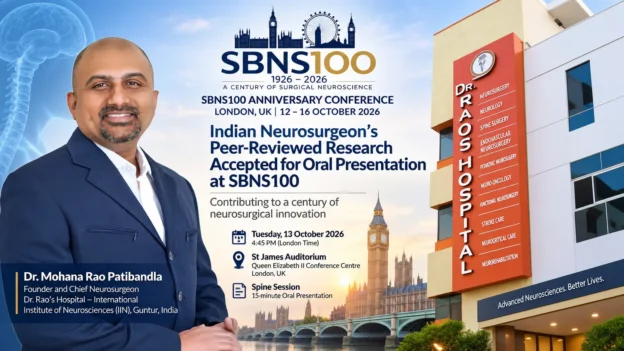
Dr. Mohana Rao Patibandla presenting peer-reviewed spine neurosurgery research at the SBNS100 100th Anniversary Conference in London, UK, representing Dr. Rao's Hospital, Guntur.

SBNS100 London 2026: Dr. Mohana Rao Patibandla’s Research Joins the Scientific Programme of British Neurosurgery’s Centenary Meeting

SBNS100 London 2026: An Indian Neurosurgeon’s Research Joins the Scientific Programme of British Neurosurgery’s Centenary Meeting

GUNTUR, Andhra Pradesh | September 9, 2026

When the Society of British Neurological Surgeons (SBNS) marks its centenary in London this October, one of the scientific presentations in the conference’s spine programme will come from India.


News Feature


Dr. Mohana Rao Patibandla, a neurosurgeon based in Guntur, Andhra Pradesh, has had his peer-reviewed scientific work accepted for oral presentation at the SBNS100 Anniversary Conference, the 100th anniversary scientific meeting of the Society of British Neurological Surgeons. The conference will be held at the Queen Elizabeth II Conference Centre in Westminster, London, bringing together neurosurgeons and neuroscience specialists from around the world to discuss advances across cranial, spinal, vascular, pediatric, functional, and neuro-oncology surgery.


The conference programme confirms that Dr. Patibandla will present his research during the Spine Session on October 13, 2026, as part of the meeting’s final scientific programme.


For Indian academic neurosurgery, the milestone is less about attending an international conference and more about contributing original clinical research to one of the world’s longest-running neurosurgical scientific forums.


A Scientific Meeting That Marks a Century of Neurosurgery


The Queen Elizabeth II Conference Centre in Westminster - Stock Image - Everypixel

Welcome to your professional home — Royal College of Surgeons of England

Panoramic view of Westminster Bridge and Westminster Palace with Big Ben at dusk


Founded in 1926, the Society of British Neurological Surgeons is among the oldest national neurosurgical societies globally. Over the past century, it has played an influential role in neurosurgical education, research, professional standards, and international collaboration across the United Kingdom.


The SBNS100 Anniversary Conference has been designed as both a historical celebration and a forward-looking scientific congress. According to the conference programme, discussions span every major subspecialty in modern neurosurgery, including spine surgery, cerebrovascular neurosurgery, skull base surgery, pediatric neurosurgery, neuro-oncology, functional neurosurgery, neurocritical care, and emerging technologies such as artificial intelligence in surgical practice.


Unlike regional scientific meetings, SBNS100 has been positioned as an international multidisciplinary neuroscience conference involving surgeons, neurologists, neuroradiologists, neuro-anesthetists, neuro-intensive care physicians, researchers, trainees, and allied neuroscience professionals.


From Peer Review to the Final Scientific Programme


Scientific presentations at major international conferences typically undergo an independent review process before being allocated oral presentation slots.

Dr. Patibandla’s research has now progressed through that process into the final SBNS100 scientific programme, with a confirmed oral presentation schedule.


Presentation Details Confirmed by the Conference


Scientific Programme

SBNS100 Spine Session


Date

Tuesday, 13 October 2026

Time

4:45 PM (London)

Session

Spine Session

Format

15-minute Oral Scientific Presentation

Venue

St James Auditorium, QEII Conference Centre, London

Presentation Title

Transnasal Endoscopic Odontoidectomy for Failed Posterior Craniovertebral Fusion: Salvage Decompression and Outcomes in 6 Complex Cases


The acceptance means the work will be presented within a peer-reviewed scientific session dedicated to spine surgery and craniovertebral junction disorders.


Why Craniovertebral Junction Surgery Is Among Neurosurgery’s Most Complex Fields


EPOS™

EPOS™

Upper Cervical Spine Disorders: Anatomy of the Head and Upper Neck


The craniovertebral junction (CVJ) is the anatomical transition where the skull meets the upper cervical spine and where the brainstem continues into the spinal cord. Even small structural abnormalities in this region can produce significant neurological symptoms because of the density of critical neural pathways.

Conditions affecting this area include congenital instability, trauma, inflammatory disorders, tumors, basilar invagination, and complex revision cases following previous surgery.


Posterior stabilization procedures are widely accepted for treating many craniovertebral junction instabilities. However, a minority of patients continue to experience persistent ventral compression of the cervicomedullary junction despite posterior fixation, creating one of the more challenging scenarios in spine surgery.

It is this clinical problem that forms the basis of Dr. Patibandla’s accepted presentation.


A Modern Endoscopic Solution to a Difficult Surgical Problem


Abordagem Endoscópica Endonasal Ampliada | Clínica Osaka

Rhinology Fellowship · UW Otolaryngology Head & Neck Surgery

Dr. Mehdi Zeinalizadeh - professor in brain surgery and cranial base - irantreatments - Plastic Surgery in Iran


The presentation explores the role of transnasal endoscopic odontoidectomy as a salvage decompression strategy in patients who continue to have ventral brainstem compression after posterior craniovertebral fusion.


Historically, access to the odontoid process was obtained through a transoral approach. Advances in skull base endoscopy have expanded minimally invasive endonasal corridors that provide direct access to selected lesions at the craniovertebral junction.


Rather than proposing a universal surgical solution, the presentation focuses on:


  • Patient selection.

  • Surgical indications.

  • Technical considerations.

  • Operative strategy.

  • Neurological recovery.

  • Radiological outcomes.


The study is based on six complex clinical cases, reflecting real-world experience in revision craniovertebral junction surgery.


Why Conference Presentations Matter in Academic Medicine


WFNS首日精彩回顾!凌锋教授专访:WFNS持续致力于促进全球神外医生同质化,期待中国年轻神外医生既能脚踏实地,又能有家国情怀 - 脑医汇

Congratulations and well wishes to my senior and mentor, Mr.Mohamed Qureshi on his election as Second -Vice President of the World Federation of Neurosurgical Societies(WFNS)! | Prof.Edwin Kimaiga Mogere

Basma Mohamed, MBChB, Recognized as a 2023 Quality Hero » Department of Anesthesiology » College of Medicine » University of Florida


Scientific conferences occupy a unique role in medicine.


Unlike journal publications, conferences provide an opportunity for clinicians to present emerging research, discuss complex cases with peers, receive expert feedback, and compare experiences across institutions and countries.


Acceptance into a peer-reviewed conference programme indicates that a scientific committee considered the submitted work suitable for presentation within the conference’s academic agenda. It does not imply endorsement of the findings by the organizing society, but it recognizes the work as a contribution to scientific discussion.


For surgeons working in highly specialized areas such as craniovertebral junction surgery, these meetings also become forums for refining operative techniques and discussing uncommon clinical scenarios.


A Growing International Presence for Indian Neurosurgery


Had a great time at the International Federation of Neuroendoscopy (IFNE) meeting in Singapore connecting with mentors and friends. International Federation of Neuroendoscopy (IFNE) Stanford… | Harminder Singh, MD. MBA. FACS. FAANS.

AANS Philadelphia Report | WFNS

Case study: Medicine 2023 | Latest News | RCP Events


Indian neurosurgeons have increasingly contributed to international scientific meetings through original research, innovation, and collaboration across subspecialties.

Participation at conferences such as SBNS100 reflects the growing visibility of clinical research originating from India in areas including skull base surgery, minimally invasive spine surgery, cerebrovascular interventions, pediatric neurosurgery, and neuro-oncology.


For clinicians practicing outside India’s largest metropolitan academic centers, international scientific presentations also demonstrate how specialized research can emerge from regional neuroscience institutes serving diverse patient populations.


The Broader Scientific Themes at SBNS100


Houston Methodist surgeon one of few U.S. doctors who dares perform marathon brain tumor removal

Aneurysmen | Radiologie | Uniklinik Köln

UCLA live-tweets surgery to implant brain pacemaker while patient strums guitar | UCLA


The SBNS100 programme reflects several evolving priorities in contemporary neurosurgery.


Among the conference’s major themes are:


Scientific Area


Focus of Discussion


Spine Neurosurgery

Craniovertebral junction surgery, deformity, minimally invasive techniques, revision surgery.

Cerebrovascular Neurosurgery

Stroke, aneurysms, AVMs, bypass surgery, and endovascular advances.

Skull Base Surgery

Endoscopic approaches and complex cranial pathology.

Neuro-Oncology

Precision surgery and evolving treatment strategies for brain tumors.

Pediatric Neurosurgery

Congenital and acquired neurological disorders in children.

Artificial Intelligence

Imaging, surgical planning, robotics, and decision-support systems.

The breadth of the programme illustrates how neurosurgery increasingly overlaps with imaging science, intensive care, rehabilitation, computational medicine, and engineering.


A Surgeon’s Perspective


Speaking ahead of the conference, Dr. Mohana Rao Patibandla said:


“The craniovertebral junction remains one of the most technically demanding areas in spine surgery. International scientific meetings create opportunities to discuss uncommon clinical problems, exchange experience with colleagues from different healthcare systems, and continue improving evidence-based neurosurgical practice.”


The statement reflects the educational purpose of scientific conferences rather than the promotion of any single institution or procedure.


About the Researcher


Dr. Mohana Rao Patibandla is a neurosurgeon based in Guntur, Andhra Pradesh, India, and the Founder and Chief Neurosurgeon of Dr. Rao’s Hospital – International Institute of Neurosciences (IIN). His clinical interests include craniovertebral junction surgery, skull base neurosurgery, minimally invasive brain and spine surgery, cerebrovascular neurosurgery, pediatric neurosurgery, neuro-oncology, and functional neurosurgery.


He has completed fellowship training in multiple neurosurgical subspecialties in India and the United States and continues to participate in international scientific meetings focused on advances in neurological surgery.


Why This Story Is Newsworthy


The significance of this announcement lies in the scientific milestone, not institutional marketing.


The news is that a peer-reviewed clinical study from India has been incorporated into the final scientific programme of the SBNS100 Anniversary Conference, where it will be presented before an international audience during the centenary meeting of one of the world’s oldest neurosurgical societies.


That distinction makes it relevant to the broader conversation about India’s growing contribution to global academic neurosurgery.


Author


Dr. Mohana Rao Patibandla, M. Ch (NIMS), FESBSS (KIMS), FAANS (USA), FMINS (OSU, USA), FEVNS (UVA, USA), FPNS (UCD, USA), FNOSRS (UVA, USA).


Dr. Rao’s Hospital / Patibandla Narayana Swamy Neurosciences LLP

12-19-67, Old Bank Road, Kothapet, Besides AK Khan Biryani point, Guntur, Andhra Pradesh, India 522001

Phone: +91 9010056444

Email: info@drraoshospitals.com; drpatibandla@gmail.com;

Website: https://drraoshospitals.com


YouTube

Facebook

Instagram

Google Business Page

LinkedIn

X / Twitter


BRAIN SURGERY LINKS


Functional Neurosurgery Internal Links


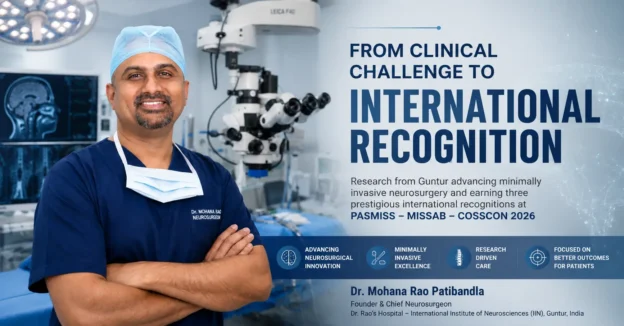
Dr. Rao, neurosurgeon at Dr. Rao’s Hospital in Guntur, standing in a modern operating room with a surgical microscope and brain imaging, representing research and international recognition in minimally invasive neurosurgery.

Guntur Neurosurgical Research Gains International Recognition | Dr. Rao


<br /><br /> Guntur Neurosurgical Research Gains International Recognition | Dr. Rao<br /><br />


From Clinical Challenge to International Recognition: How Research from Guntur Is Advancing Minimally Invasive Neurosurgery


A difficult craniovertebral junction problem led to research that received recognition from PASMISS, MISSAB and COSSCON—highlighting the growing role of research-driven neurosurgery in India.


Some of the most important advances in medicine begin with a difficult patient and a simple question:


Can we find a safer or more precise way to solve this problem?


In neurosurgery, that question can be particularly important when a condition involves the delicate region where the brain meets the upper spine.


This area, known as the craniovertebral junction, contains critical neurological structures and major blood vessels. Surgery in this region can therefore require highly specialised anatomical knowledge, meticulous planning and advanced technology.


For Dr. Mohana Rao Patibandla, Founder and Chief Neurosurgeon of Dr. Rao’s Hospital – International Institute of Neurosciences (IIN), Guntur, one such clinical challenge became the starting point for research into minimally invasive surgery for complex craniovertebral junction disorders.


The research was subsequently presented at the PASMISS–MISSABCON–COSSCON 2026 scientific meeting in Chennai and received three scientific recognitions:


  • PASMISS Best Free Paper Award
  • MISSAB Best Free Paper Award
  • COSSCON Best Paper Gold Medal

The significance of this achievement, however, goes beyond the medals.


It represents a journey from clinical problem → research question → surgical innovation → scientific presentation → independent recognition.


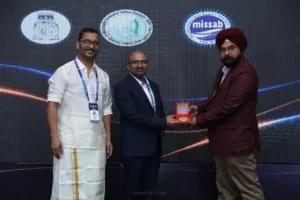
Dr. Rao receiving the COSSCON 2026 Best Paper Gold Medal during the PASMISS–MISSABCON–COSSCON scientific meeting in Chennai, with conference organisers on stage.

Dr. Rao receives the COSSCON 2026 Best Paper Gold 


Medal in recognition of his scientific research presentation at the PASMISS–MISSABCON–COSSCON 2026 meeting in Chennai.


When a Difficult Patient Becomes a Research Question


Neurosurgery is constantly evolving because surgeons encounter problems that do not always have straightforward solutions.


The craniovertebral junction is one of the most challenging areas because the anatomy is crowded with structures that are essential for life and neurological function.


The lower brainstem, upper spinal cord, nerves and important blood vessels lie within a relatively confined anatomical region.


Patients with disorders in this area may therefore require highly individualised treatment.


The challenge can become even greater when a patient has undergone previous surgery and continues to have a structural or neurological problem.


In such situations, the surgeon must consider several questions:


What is causing the persistent problem?


What is the safest route to reach it?


Can the surgical corridor be improved?


Can unnecessary disruption of normal tissue be reduced?


These questions are at the heart of modern minimally invasive neurosurgery.


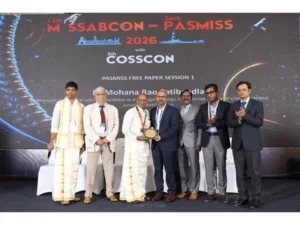
Dr. Rao standing with fellow neurosurgeons on stage after receiving a scientific award for his research presentation at the PASMISS–MISSABCON–COSSCON 2026 conference in Chennai.

Dr. Rao receives scientific recognition for his research presentation at the PASMISS–MISSABCON–COSSCON 2026 meeting in Chennai, highlighting his contribution to minimally invasive neurosurgical research.


What Does “Minimally Invasive” Really Mean in Neurosurgery?


The term minimally invasive surgery is sometimes misunderstood.


It does not simply mean making a smaller incision.


The real objective is to achieve the necessary surgical treatment while minimising unnecessary disruption of healthy tissues, when the patient’s condition and anatomy make such an approach appropriate.


Modern minimally invasive neurosurgery may involve carefully designed surgical corridors, endoscopic techniques, advanced imaging, neuronavigation and intraoperative monitoring.


The technology helps.


But technology is only one part of the equation.


Patient selection, anatomical understanding, surgical experience and scientific evidence remain fundamental.


That is particularly important in complex craniovertebral junction surgery.


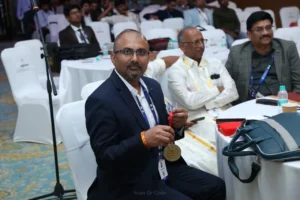
Dr. Rao holding and showing the COSSCON 2026 Best Paper Gold Medal to the press at the PASMISS–MISSABCON–COSSCON scientific meeting in Chennai.

Dr. Rao displays the COSSCON 2026 Best Paper Gold 


Medal to the press following the scientific recognition of his neurosurgical research at the PASMISS–MISSABCON–COSSCON 2026 meeting in Chennai.


The Role of Endoscopic Surgery


Endoscopic techniques have changed the way surgeons think about access to certain areas of the skull base and craniovertebral junction.


Instead of always approaching a problem through a large external exposure, surgeons can, in carefully selected situations, use natural anatomical corridors to reach specific areas.


An endoscopic transnasal approach is one example of this evolution.


Through the nasal corridor, an appropriately selected surgical target at the front of the craniovertebral junction can potentially be approached without creating a traditional external surgical pathway.


However, this is not an approach suitable for every patient.


Detailed imaging and careful anatomical assessment are essential.


The decision must consider the patient’s pathology, anatomy, previous operations, stability of the craniovertebral junction and the overall treatment objective.


The goal is never simply to use a minimally invasive technique.


The goal is to select the right technique for the right patient.


From the Operating Room to the Scientific Conference


Clinical experience becomes valuable to the wider medical community when it is systematically studied and shared.


That is the role of clinical research.


A difficult surgical case can generate an observation.


The observation can become a question.


The question can lead to systematic evaluation.


The findings can then be presented to other specialists for scientific discussion.


That process allows individual clinical experience to become part of the broader body of medical knowledge.


The research from Guntur followed this path.


It was presented during the PASMISS–MISSABCON–COSSCON 2026 scientific meeting in Chennai, where neurosurgeons and spine specialists discussed contemporary developments in minimally invasive spine and neurosurgical treatment.


Three Scientific Recognitions

The research subsequently received recognition from three professional scientific organisations.

PASMISS Best Free Paper Award

The Pacific and Asian Society of Minimally Invasive Spine Surgery (PASMISS) recognised the research with its Best Free Paper Award.

MISSAB Best Free Paper Award

The Minimally Invasive Spine Surgeons Association of Bharat (MISSAB) also recognised the scientific presentation with its Best Free Paper Award.

COSSCON Best Paper Gold Medal

The research additionally received the COSSCON Best Paper Gold Medal.


Together, these recognitions provide an important distinction.


This was not simply a professional or lifetime-achievement honour.


The recognition was associated with scientific research presented at a specialist meeting.


For a clinician-researcher, that makes the recognition particularly meaningful.


“The real value of research is not the award. It is the knowledge we create from difficult clinical problems and the possibility that this knowledge can improve care for future patients.” — Dr. Rao


Why Scientific Recognition Matters


An award by itself does not establish that a surgical technique should become standard treatment.


Medical science does not work that way.


New approaches require continued evaluation, scientific discussion, appropriate patient selection and, where possible, validation through further research.


Scientific recognition is valuable because it indicates that a research project has attracted professional interest and has contributed something considered worthy of presentation and discussion.


The next step is always continued evaluation.


That distinction is important for patients.


A research presentation is not the same thing as a universal recommendation.


Instead, it represents another step in the process through which medical knowledge develops.


Modern Neurosurgery Is Becoming More Precise


The research also reflects a much larger transformation taking place in neurosurgery.


Over the last two decades, surgeons have gained access to technologies that were previously unavailable or far less sophisticated.


These include:

Advanced Imaging

High-resolution imaging allows surgeons to understand complex anatomy before entering the operating room.

Neuronavigation

Navigation systems can help surgeons correlate the patient’s anatomy with preoperative imaging and improve orientation during selected procedures.

Endoscopy

High-definition endoscopic systems have expanded the surgical corridors available for selected skull-base and craniovertebral junction procedures.

Intraoperative Neuromonitoring

Intraoperative neurophysiological monitoring can provide real-time information about neurological function during selected complex operations.

Artificial Intelligence

AI is increasingly being investigated for medical imaging, planning, pattern recognition, data analysis and decision-support applications.


These technologies do not replace the surgeon.


They provide additional information that can support clinical decision-making.


Technology Needs Research


One of the most important principles in modern healthcare is that technology should be evaluated by what it does for patients, not by how sophisticated it looks.


A new device may be impressive.


A new surgical approach may be technically exciting.


Artificial intelligence may be powerful.


But the central question remains:


Does it improve patient care?


Research provides the framework for asking that question.


It allows clinicians to evaluate outcomes, identify limitations, compare approaches and refine techniques.


This is why research and technology should develop together.


From Guntur to the International Scientific Community


The recognition of research from Guntur also represents a broader development in Indian healthcare.


Historically, much of India’s advanced academic medical research was concentrated in major metropolitan centres and large teaching institutions.

That landscape is changing.


Regional cities are increasingly developing specialised hospitals with advanced technology, highly trained clinicians and the infrastructure required to participate in research and international scientific meetings.


Guntur is part of this changing healthcare landscape.


The ability to conduct specialised clinical research, present it before professional societies and receive scientific recognition demonstrates that meaningful medical innovation can emerge beyond India’s largest metropolitan centres.


This is important not only for doctors and hospitals.


It is important for patients.


It means that the geographical boundaries of advanced medical knowledge are continuing to expand.


Research-Led Healthcare: The Next Step for Indian Hospitals


A modern hospital should not only treat patients.


It should also learn from them.


Every clinical experience has the potential to generate knowledge when it is documented, analysed and evaluated responsibly.


A research-led healthcare institution encourages clinicians to:


  • Ask important clinical questions.

  • Analyse patient outcomes.

  • Evaluate new technologies.

  • Study difficult cases.

  • Present findings at scientific meetings.

  • Publish meaningful research.

  • Collaborate with specialists nationally and internationally.

  • Continuously improve clinical practice.

This creates a cycle:


Clinical experience → Research → Evidence → Innovation → Better-informed care


That cycle is becoming increasingly important in modern medicine.


What This Recognition Means for Patients


For patients, an award is not the ultimate objective.


The real objective is better healthcare.


Research can help doctors understand which approaches work best for particular patients and under which circumstances.


In complex neurosurgery, that may mean identifying patients who could benefit from a minimally invasive approach while recognising those for whom a different operation would be more appropriate.


It is important to emphasise that no single surgical technique is suitable for every patient.


The correct treatment depends on the diagnosis, anatomy, neurological status, previous treatment, imaging findings and overall clinical situation.


The future of neurosurgery will therefore not simply be about performing more minimally invasive procedures.


It will be about performing the right procedure, on the right patient, using the right technology, supported by the best available evidence.


Recognition Is a Milestone—Not the Destination


Receiving three scientific recognitions is an important milestone in the journey of this research.


But research does not end when a medal is received.


The more important questions come afterward:


Can the findings be reproduced?


Can other surgeons learn from the experience?


Can the approach be evaluated in larger groups of patients?


Can further research determine where the technique provides the greatest benefit?


These questions are what move medicine forward.


For Dr. Rao, the philosophy remains straightforward:

“Every difficult patient presents an opportunity to learn. Our responsibility is to study those challenges carefully, share what we learn and continue refining our approach based on evidence.”


Independent Media Recognition


The three scientific recognitions have also attracted independent media attention.


Medical Dialogues reported the achievement as a three-award recognition for minimally invasive spine surgery research. The story was subsequently covered across national and regional media platforms, including The Hindu, Mid-Day, The Tribune, SiliconIndia, Republic World, Business Standard, The Hans India and LatestLY.


This wider coverage reflects growing public interest in medical research emerging from regional centres and in the continuing development of minimally invasive brain and spine surgery in India.


The media coverage and scientific recognition represent two different forms of validation:


Scientific societies evaluate the research.

Independent media brings the story to the public.


Together, they help explain why clinical research matters beyond the conference hall.


The Future of Minimally Invasive Neurosurgery


The next generation of neurosurgery is likely to combine several developments:


Minimally invasive surgical approaches


  • Advanced imaging

  • Neuronavigation

  • Endoscopy

  • Intraoperative neuromonitoring

  • Artificial intelligence

  • Clinical research

  • Multidisciplinary decision-making


But the fundamental principle will remain unchanged.


Technology should serve the patient.


The most meaningful innovation is not necessarily the newest technology.


It is the approach that solves a genuine clinical problem while maintaining safety, scientific integrity and appropriate patient selection.


From a Difficult Question to a Scientific Contribution


The journey of this research can be understood in a simple sequence.


A difficult clinical problem created a question.


The question led to research.


The research was presented to specialists.


The scientific community evaluated it.


Three professional societies recognised the work.


And the findings became part of a larger conversation about the future of minimally invasive neurosurgery.


That is ultimately what medical research is about.


Not simply awards.


Not simply publications.


Not simply technology.


It is about turning difficult clinical questions into knowledge that can help improve the care of future patients.


For Indian neurosurgery, the recognition also carries a broader message: important medical research can emerge from regional centres, and Indian clinicians can contribute original ideas to the global scientific conversation.


About Dr. Mohana Rao Patibandla


Dr. Mohana Rao Patibandla (Dr. Rao) is Founder and Chief Neurosurgeon of Dr. Rao’s Hospital – International Institute of Neurosciences (IIN), Guntur, Andhra Pradesh, India. His clinical and academic interests include minimally invasive brain and spine surgery, skull base surgery, cerebrovascular and endovascular neurosurgery, neuro-oncology, pediatric neurosurgery, stereotactic radiosurgery and intraoperative neurophysiological monitoring.

About Dr. Rao’s Hospital – International Institute of Neurosciences


Dr. Rao’s Hospital – International Institute of Neurosciences (IIN) is a dedicated neuroscience centre in Guntur providing specialised care for disorders of the brain, spine and nervous system, integrating advanced neurosurgical technology, minimally invasive treatment, neurocritical care, endovascular procedures and clinical research.


Dr. Mohana Rao Patibandla, M. Ch (NIMS), FESBSS (KIMS), FAANS (USA), FMINS (OSU, USA), FEVNS (UVA, USA), FPNS (UCD, USA), FNOSRS (UVA, USA).


Dr. Rao’s Hospital / Patibandla Narayana Swamy Neurosciences LLP


12-19-67, Old Bank Road, Kothapet, Besides AK Khan Biryani point, Guntur, Andhra Pradesh, India 522001


Phone: +91 9010056444


Email: info@drraoshospitals.com; drpatibandla@gmail.com;

Website: https://drraoshospitals.com

YouTube

Facebook

Instagram

Google Business Page

LinkedIn

X / Twitter


Dr. Rao’s Hospital, Guntur

Dr. Mohana Rao Patibandla

About Dr. Rao’s Hospital

Advanced Neurosurgery in Guntur

Comprehensive Neurology Care in Guntur

Advanced Spine Surgery in Guntur

Minimally Invasive Brain and Spine Surgery

Pediatric Neurosurgery in Guntur

Advanced Epilepsy Surgery in Guntur

International Patients – Neurosurgery in India

Book an Appointment at Dr. Rao’s Hospital