Tag Archives: Dr. Mohana Rao Patibandla

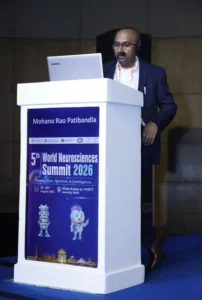
Dr Mohana Rao Patibandla speaking at INDSPNCON 2026 about advanced pediatric neurosurgery techniques including minimally invasive brain surgery and neuro-navigation at Dr Rao’s International Institute of Neurosciences

Pediatric Brain Disorders – A Neurosurgeon’s Overview

Pediatric Brain Disorders – A Neurosurgeon’s Overview

Pediatric brain disorders are among the most complex and emotionally challenging conditions affecting children and their families. These neurological disorders can impact brain development, movement, learning, speech, and overall quality of life. Early diagnosis and timely intervention by experienced specialists can significantly improve outcomes.At Dr. Rao’s Hospital, now evolving as Dr. Rao’s International Institute of Neurosciences (IIN), advanced pediatric neurosurgery and neurology services are available for children suffering from congenital and acquired brain disorders. Led by Dr. Mohana Rao Patibandla, one of the best neurosurgeons in Guntur, the hospital provides comprehensive and minimally invasive care for complex neurological conditions in children.EINpresswire

What Are Pediatric Brain Disorders?

Pediatric brain disorders refer to neurological conditions affecting infants, children, and adolescents. These disorders may be congenital (present at birth) or acquired later due to infections, trauma, tumors, or genetic conditions.

Common pediatric brain disorders include:

  • Hydrocephalus
  • Pediatric brain tumors
  • Epilepsy
  • Cerebral palsy
  • Spina bifida
  • Chiari malformations
  • Traumatic brain injury
  • Developmental brain abnormalities

According to the World Health Organization (WHO), neurological disorders are among the leading causes of disability in children worldwide.

Why Early Diagnosis Matters in Children

The developing brain is highly sensitive but also highly adaptable. Early detection of pediatric neurological disorders allows doctors to intervene before irreversible damage occurs.

Parents should seek immediate medical attention if a child experiences:

  • Persistent headaches
  • Seizures
  • Developmental delays
  • Difficulty walking
  • Poor balance or coordination
  • Visual disturbances
  • Abnormal head size
  • Speech or learning difficulties

Advanced imaging such as MRI, CT scans, and neurophysiological studies help neurosurgeons identify the exact cause and create a personalized treatment plan.

Common Pediatric Brain Disorders Explained

1. Pediatric Brain Tumors

Brain tumors are among the most serious neurological conditions in children. Pediatric brain tumors may be benign or malignant and can affect behavior, coordination, vision, and memory.

Symptoms may include:

  • Morning headaches
  • Vomiting
  • Balance problems
  • Seizures
  • Vision changes

Modern pediatric neurosurgery techniques, including minimally invasive and neuronavigation-guided surgery, improve surgical precision and reduce complications.

Source:
National Cancer Institute (NIH)

2. Hydrocephalus

Hydrocephalus occurs when cerebrospinal fluid accumulates within the brain, causing increased pressure. In infants, it may lead to enlarged head size and delayed development.

Treatment options include:

  • VP shunt surgery
  • Endoscopic Third Ventriculostomy (ETV)
  • Minimally invasive neuroendoscopic procedures

At Dr. Rao’s Hospital Neurosurgery Department, advanced neuroendoscopy techniques help many children recover faster with minimal surgical trauma.

3. Pediatric Epilepsy

Epilepsy is a neurological disorder characterized by recurrent seizures. While medications help many children, some patients develop drug-resistant epilepsy requiring surgical evaluation.

Pediatric epilepsy surgery may include:

  • Lesionectomy
  • Corpus callosotomy
  • Hemispherectomy
  • Laser ablation procedures

Studies published on PubMed show that early epilepsy surgery can significantly improve cognitive development and seizure control in selected children.

4. Cerebral Palsy

Cerebral palsy affects movement, posture, and muscle coordination. It usually results from injury to the developing brain before or shortly after birth.

Children with cerebral palsy may benefit from:

  • Physical therapy
  • Occupational therapy
  • Spasticity management
  • Selective dorsal rhizotomy
  • Rehabilitation programs

How Are Pediatric Brain Disorders Diagnosed?

Accurate diagnosis is critical for successful treatment. Pediatric neurosurgeons and neurologists use advanced technologies to evaluate neurological function.

Diagnostic TestPurpose
MRI BrainDetect tumors, abnormalities, hydrocephalus
CT ScanEmergency brain evaluation
EEGDetect seizure activity
Genetic TestingIdentify inherited neurological disorders
Neuropsychological TestingAssess cognitive function

Explore advanced Neurology Services for comprehensive neurological evaluation and treatment.

Modern Advances in Pediatric Neurosurgery

Technological advancements have transformed pediatric neurosurgery. Minimally invasive techniques reduce pain, shorten hospital stays, and improve recovery.

Innovations include:

  • Neuronavigation systems
  • Intraoperative MRI
  • Neuroendoscopy
  • Microsurgical techniques
  • Intraoperative neuro-monitoring
  • Robotic-assisted procedures

Dr. Mohana Rao Patibandla has extensive international training in pediatric neurosurgery and minimally invasive skull base surgery in the United States, bringing advanced global expertise to Andhra Pradesh.

What Makes Pediatric Brain Surgery Different?

Children are not simply “small adults.” Their brains are still developing, making pediatric neurosurgery uniquely specialized. Surgeons must protect delicate neurological structures while supporting future cognitive and developmental growth.

Special considerations include:

  • Brain development stages
  • Smaller anatomy
  • Long-term developmental outcomes
  • Emotional and family-centered care

Role of Rehabilitation After Pediatric Neurosurgery

Recovery does not end after surgery. Rehabilitation plays a vital role in helping children regain independence and developmental milestones.

Rehabilitation may involve:

  • Speech therapy
  • Physiotherapy
  • Occupational therapy
  • Behavioral therapy
  • Nutritional counseling

Comprehensive post-operative care improves long-term neurological outcomes and quality of life.

Why Choose Dr. Rao’s Hospital for Pediatric Neurosurgery?

Dr. Rao’s Hospital is recognized as one of the leading centers for brain, spine, and nerve care in Andhra Pradesh. The hospital combines advanced technology with compassionate pediatric care.

Advantages include:

  • Advanced minimally invasive neurosurgery
  • Dedicated pediatric neurological care
  • High-end neuroimaging and diagnostics
  • Internationally trained neurosurgeons
  • Comprehensive rehabilitation support
  • Patient-centered multidisciplinary care

Patients seeking expert Spine Surgery and neurological care can also access integrated pediatric spine and neuro-rehabilitation services.

AEO: Frequently Asked Questions About Pediatric Brain Disorders

What are the symptoms of pediatric brain disorders?

Symptoms may include seizures, headaches, developmental delay, abnormal head growth, difficulty walking, weakness, balance problems, and behavioral changes. Early evaluation by a pediatric neurosurgeon is important.

How are pediatric brain disorders diagnosed?

Pediatric brain disorders are diagnosed using MRI scans, CT scans, EEG tests, neurological examinations, and sometimes genetic testing. Early diagnosis improves treatment success and long-term development.

What causes pediatric brain tumors?

Pediatric brain tumors may result from genetic mutations, inherited syndromes, or unknown causes. Advanced imaging and neurosurgical evaluation help determine the best treatment approach.

Can epilepsy in children be cured with surgery?

Some children with drug-resistant epilepsy benefit significantly from epilepsy surgery. Procedures can reduce or eliminate seizures and improve quality of life.

Why choose Dr. Rao’s Hospital for pediatric neurosurgery?

At Dr. Rao’s Hospital, led by Dr. Mohana Rao Patibandla, one of the best neurosurgeons in Guntur, patients receive advanced, compassionate care using cutting-edge minimally invasive neurosurgery techniques.

Conclusion

Pediatric brain disorders require specialized expertise, timely diagnosis, and multidisciplinary care. Modern pediatric neurosurgery offers hope and improved outcomes for children suffering from complex neurological conditions.

With advanced technologies, minimally invasive surgical approaches, and compassionate patient-centered care, Dr. Rao’s Hospital continues to provide world-class treatment for pediatric neurological disorders in Andhra Pradesh and India.

If you’re searching for the best neurosurgeon in Guntur or expert care for complex brain and spine conditions, visit Dr. Rao’s Hospital. Contact us at 📞 090100 56444 or 📧 info@drraoshospitals.com.

Contact & Social Media

three best rated certificate webp

Dr. Mohana Rao Patibandla – No. 1 top neurosurgeon in Guntur – 5 years – ThreeBestRated

Dr. Mohana Rao Patibandla Ranked Among Top Neurosurgeons in Guntur for the Fifth Consecutive Year: A Benchmark in Excellence

In a remarkable achievement that reflects consistency, clinical excellence, and patient trust, Dr. Mohana Rao Patibandla has once again been ranked among the Top Neurosurgeons in Guntur by ThreeBestRated for the fifth consecutive year (2022–2026). This recognition is not just an award—it is a testament to sustained quality, innovation, and dedication in the highly demanding field of neurosurgery.

At a time when healthcare decisions are increasingly influenced by both clinical outcomes and patient experience, such consistent recognition underscores a rare combination: technical expertise, compassionate care, and institutional excellence.

National Law Review


What Makes This Recognition Significant?

The ThreeBestRated platform is known for its rigorous 50-point inspection process, which evaluates professionals based on:

  • Reputation and credibility
  • Patient satisfaction and feedback
  • Clinical performance and outcomes
  • Service consistency
  • Accessibility and trustworthiness

Unlike many awards that rely on nominations or paid listings, this ranking is independently verified, making it one of the most trusted recognitions for patients seeking reliable healthcare providers.

Being listed once is an achievement. Being listed five years in a row signals something much deeper—consistency at the highest level.


The Rise of Advanced Neurosurgical Care in Guntur

Traditionally, patients from cities like Guntur had to travel to metropolitan hubs such as Hyderabad, Chennai, or Delhi for advanced neurosurgical procedures. This not only increased financial burden but also delayed critical treatment.

However, the emergence of specialized centers like Dr. Rao’s Hospital has transformed the regional healthcare landscape.

Today, patients in Andhra Pradesh have access to:

  • Advanced brain tumor surgeries
  • Minimally invasive spine procedures
  • Comprehensive stroke care
  • Epilepsy surgery programs
  • Pediatric neurosurgery

This shift represents more than convenience—it signifies decentralization of high-quality healthcare, bringing world-class treatment closer to patients.


Clinical Excellence: The Foundation of Recognition

One of the key reasons behind this consistent ranking is the strong emphasis on clinical outcomes.

High Success Rates

Elective neurosurgical procedures at Dr. Rao’s Hospital have demonstrated favorable outcomes in 90–95% of cases, reflecting meticulous surgical planning and execution.

Minimally Invasive Spine Surgery (MISS)

Patients undergoing minimally invasive spine procedures often experience:

  • Reduced blood loss
  • Shorter hospital stays
  • Early mobilization (within 24–72 hours)
  • Faster return to normal activities

Stroke Management

Timely intervention in stroke cases has led to significant improvements in recovery, emphasizing the importance of rapid diagnosis and treatment.

These outcomes are not accidental—they are the result of evidence-based protocols, advanced technology, and surgical expertise.


Comprehensive Neurosurgical Services Under One Roof

A major strength of Dr. Rao’s Hospital is its ability to provide end-to-end neurological care.

1. Brain Tumor Surgery

Advanced techniques such as neuronavigation and microsurgery enable precise tumor removal while preserving critical brain functions.

2. Spine Surgery

From degenerative spine conditions to complex deformities, the hospital offers both traditional and minimally invasive solutions tailored to each patient.

3. Stroke Care

Emergency stroke management, including thrombolysis and neurointerventional procedures, plays a crucial role in saving lives and reducing disability.

4. Epilepsy Surgery

For patients with drug-resistant epilepsy, surgical intervention offers a chance at a seizure-free life.

5. Pediatric Neurosurgery

Specialized care for children with neurological conditions ensures age-appropriate treatment and better long-term outcomes.

This multidisciplinary approach ensures that patients receive holistic, coordinated care rather than fragmented treatment.


The Role of Global Training and Expertise

Another defining factor in this recognition is the extensive international training of Dr. Mohana Rao Patibandla.

His exposure to advanced neurosurgical techniques in the United States across multiple subspecialties—including:

  • Skull base surgery
  • Pediatric neurosurgery
  • Neuro-oncology
  • Endovascular procedures
  • Functional neurosurgery

—has enabled the adoption of cutting-edge practices in India.

This global perspective ensures that patients in Guntur benefit from the same standards of care available in leading international centers.


Patient-Centric Care: Beyond Surgery

While technical skill is critical, what truly distinguishes a great neurosurgeon is the ability to connect with patients and families.

At Dr. Rao’s Hospital, patient care extends beyond the operating room:

  • Clear communication about diagnosis and treatment options
  • Emotional support for patients and caregivers
  • Transparent decision-making
  • Post-operative rehabilitation and follow-up

This patient-first approach has contributed significantly to high satisfaction rates and positive feedback, which play a crucial role in independent rankings.


Technology and Innovation in Neurosurgery

Modern neurosurgery relies heavily on technology, and Dr. Rao’s Hospital has consistently invested in:

  • Neuronavigation systems
  • High-resolution imaging
  • Microsurgical instruments
  • Endoscopic techniques

These tools enhance precision, reduce complications, and improve outcomes.

Innovation is not just about adopting new technology—it is about integrating it effectively into patient care.


Reducing the Need for Medical Travel

One of the most impactful aspects of this achievement is its regional significance.

By offering advanced neurosurgical care locally, Dr. Rao’s Hospital has:

  • Reduced the need for patients to travel to metro cities
  • Lowered treatment costs
  • Enabled faster access to care
  • Improved overall patient convenience

This has positioned Guntur as an emerging hub for specialized neurological treatment.


The Importance of Consistency in Healthcare

Healthcare is not a field where occasional excellence is sufficient. Patients depend on consistent, reliable outcomes.

Being recognized for five consecutive years demonstrates:

  • Sustained quality standards
  • Continuous improvement
  • Long-term patient trust

Consistency is often more difficult than achieving one-time success, making this milestone particularly noteworthy.


Building Trust Through Transparency

In today’s digital era, patients are more informed than ever. They rely on:

  • Online reviews
  • Independent ratings
  • Verified outcomes

Platforms like ThreeBestRated play a crucial role in helping patients make informed decisions.

By consistently meeting high standards, Dr. Rao’s Hospital has built a reputation based on transparency and trust, rather than marketing alone.


The Future of Neurosurgery in Regional India

The success of institutions like Dr. Rao’s Hospital highlights a broader trend:

Decentralization of Specialized Care

Advanced medical services are no longer confined to metropolitan cities.

Increased Accessibility

Patients in smaller cities can now access world-class treatment without long-distance travel.

Growth of Medical Infrastructure

Investment in technology and expertise is transforming regional healthcare ecosystems.

This shift is likely to continue, benefiting millions of patients across India.


Lessons from This Achievement

The five-year consecutive ranking offers valuable insights for healthcare providers:

  1. Focus on Outcomes – Clinical results should always be the top priority
  2. Invest in Technology – Modern tools enhance precision and safety
  3. Prioritize Patient Experience – Compassionate care builds trust
  4. Maintain Consistency – Long-term excellence matters more than short-term success
  5. Adopt Global Standards – Continuous learning and training are essential

Conclusion

The recognition of Dr. Mohana Rao Patibandla as one of the top neurosurgeons in Guntur for five consecutive years is more than an individual achievement—it represents a milestone in regional healthcare excellence.

Supported by the advanced capabilities of Dr. Rao’s Hospital, this accomplishment reflects a commitment to:

  • Clinical precision
  • Patient-centered care
  • Technological innovation
  • Consistent quality

As healthcare continues to evolve, such examples set a benchmark for others to follow.

For patients and families, this recognition offers reassurance that world-class neurosurgical care is not just available—but thriving—in Guntur.

Contact:

Dr. Mohana Rao Patibandla, M. Ch (NIMS), FESBSS (KIMS), FAANS (USA), FMINS (OSU, USA), FEVNS (UVA, USA), FPNS (UCD, USA), FNOSRS (UVA, USA).

Dr. Rao’s Hospital / Patibandla Narayana Swamy Neurosciences LLP

12-19-67, Old Bank Road, Kothapet, Besides AK Khan Biryani point, Guntur, Andhra Pradesh, India 522001

Phone: +91 9010056444

Email: info@drraoshospitals.com;  Website: https://drraoshospitals.com

గుంటూరులో 5వ సంవత్సరం వరుసగా టాప్ న్యూరోసర్జన్‌గా గుర్తింపు: డా. మొహన రావు పాటిబండ్ల విజయగాథ

(Best Neurosurgeon in Guntur | Advanced Brain & Spine Care in Andhra Pradesh)

గుంటూరులో అత్యుత్తమ న్యూరోసర్జరీ సేవలను అందిస్తూ నిరంతరంగా విశ్వాసాన్ని గెలుచుకుంటున్న Dr. Mohana Rao Patibandla గారు మరోసారి గర్వకారణమైన గుర్తింపును సాధించారు. ప్రముఖ అంతర్జాతీయ ప్లాట్‌ఫామ్ ThreeBestRated ద్వారా 2022–2026 వరకు ఐదేళ్ల పాటు వరుసగా గుంటూరులో టాప్ న్యూరోసర్జన్‌గా ఎంపిక కావడం ఒక విశేష మైలురాయి.

ఈ గుర్తింపు కేవలం అవార్డు కాదు—ఇది నిరంతర నాణ్యత, క్లినికల్ ప్రతిభ, మరియు రోగుల నమ్మకానికి ప్రతిబింబం.


🧠 ఈ గుర్తింపు ఎందుకు ముఖ్యమైనది?

ThreeBestRated ప్లాట్‌ఫామ్ 50 పాయింట్ల కఠిన పరిశీలన విధానం ద్వారా వైద్యులను అంచనా వేస్తుంది:

  • రోగుల సంతృప్తి (Patient Satisfaction)
  • క్లినికల్ ఫలితాలు (Clinical Outcomes)
  • సేవల స్థిరత్వం (Consistency)
  • ప్రతిష్ట మరియు విశ్వసనీయత (Reputation & Trust)

👉 ఐదేళ్ల పాటు వరుసగా ఎంపిక కావడం అంటే ఇది ఒకసారి సాధించిన విజయం కాదు—నిరంతర మెరుగుదల మరియు స్థిరమైన నాణ్యతకు నిదర్శనం.


🏥 గుంటూరులో అత్యాధునిక న్యూరోసర్జరీ కేంద్రం

Dr. Rao’s Hospital గుంటూరులోనే అత్యాధునిక మెదడు, వెన్నెముక, మరియు నాడీ చికిత్సల కోసం ప్రత్యేకంగా నిర్మించబడిన సెంటర్.

🔗 Internal Links (SEO కోసం ముఖ్యమైనవి)

👉 ఈ ఇంటర్నల్ లింక్స్ SEO మరియు Google ranking కోసం చాలా ముఖ్యమైనవి.


🧬 క్లినికల్ ఫలితాలు (Clinical Excellence)

✅ అధిక విజయ శాతం

ఎలెక్టివ్ న్యూరోసర్జరీల్లో 90–95% వరకు సక్సెస్ రేటు.

✅ Minimally Invasive Spine Surgery (MISS)

  • 24–72 గంటల్లో నడవగలగడం
  • తక్కువ నొప్పి
  • తక్కువ ఆసుపత్రి రోజులు

✅ Stroke Management

త్వరిత చికిత్స ద్వారా:

  • మెరుగైన రికవరీ
  • వికలాంగత తగ్గింపు

👉 ఇది గుంటూరులోనే అత్యుత్తమ న్యూరోకేర్ అందుబాటులో ఉందని నిరూపిస్తుంది.


🧠 అందుబాటులో ఉన్న సేవలు

🧠 Brain Tumor Surgery

అత్యాధునిక neuronavigation తో కచ్చితమైన ట్యూమర్ తొలగింపు

🦴 Spine Surgery

Slip disc నుండి complex spine deformities వరకు చికిత్స

⚡ Epilepsy Surgery

మందులతో తగ్గని fits కి శస్త్రచికిత్స

🧒 Pediatric Neurosurgery

పిల్లల కోసం ప్రత్యేక న్యూరోసర్జరీ సేవలు

🚑 Stroke Treatment

ఎమర్జెన్సీ స్ట్రోక్ కేర్ మరియు intervention


🌍 అంతర్జాతీయ అనుభవం (Global Expertise)

డా. మొహన రావు పాటిబండ్ల గారు USAలో పలు ఫెలోషిప్‌లు పూర్తి చేశారు:

  • Skull Base Surgery
  • Pediatric Neurosurgery
  • Neuro-oncology
  • Endovascular Neurosurgery

👉 దీని వల్ల గుంటూరులోనే అంతర్జాతీయ స్థాయి చికిత్స అందుబాటులోకి వచ్చింది.


❤️ Patient-Centric Care (రోగి కేంద్రిత సేవలు)

  • స్పష్టమైన వైద్య వివరణలు
  • కుటుంబ సభ్యులకు మార్గదర్శకత్వం
  • ఆపరేషన్ తర్వాత పూర్తి ఫాలోఅప్
  • విశ్వాసం ఆధారిత సేవ

👉 ఇది ఎందుకు ఆయనను Best Neurosurgeon in Guntur గా గుర్తిస్తున్నారు అనేది స్పష్టంగా చూపిస్తుంది.


📊 SEO & AEO Optimized FAQs

❓ గుంటూరులో బెస్ట్ న్యూరోసర్జన్ ఎవరు?

👉 గుంటూరులో టాప్ న్యూరోసర్జన్‌గా 5 సంవత్సరాలుగా గుర్తింపు పొందిన డా. మొహన రావు పాటిబండ్ల గారు.

❓ గుంటూరులో బ్రెయిన్ ట్యూమర్ ఆపరేషన్ ఎక్కడ చేయించాలి?

👉 Dr. Rao’s Hospital లో advanced neuronavigation తో సురక్షితంగా చేస్తారు.

❓ Spine surgery తర్వాత ఎంత రోజుల్లో నడవగలం?

👉 Minimally invasive surgery ద్వారా 24–72 గంటల్లో నడవవచ్చు.

❓ Epilepsy surgery safeనా?

👉 సరైన కేసుల్లో చాలా సురక్షితంగా మరియు ప్రభావవంతంగా ఉంటుంది.


📈 గుంటూరులో మెడికల్ రివల్యూషన్

ఈ గుర్తింపు వల్ల:

  • మెట్రో నగరాలకు వెళ్లాల్సిన అవసరం తగ్గింది
  • ఖర్చులు తగ్గాయి
  • వేగంగా చికిత్స అందుతుంది

👉 గుంటూరు ఇప్పుడు Neurosurgery Hub in Andhra Pradesh గా మారుతోంది.


🏆 ఎందుకు ఇది ప్రత్యేకం?

✔️ 5 సంవత్సరాల నిరంతర గుర్తింపు
✔️ అధిక క్లినికల్ ఫలితాలు
✔️ అంతర్జాతీయ అనుభవం
✔️ అత్యాధునిక టెక్నాలజీ
✔️ రోగుల నమ్మకం


📢 ముగింపు (Conclusion)

Dr. Mohana Rao Patibandla గారు గుంటూరులో వరుసగా 5 సంవత్సరాలు టాప్ న్యూరోసర్జన్‌గా గుర్తింపు పొందడం అనేది వ్యక్తిగత విజయమే కాదు—ఇది ప్రాంతీయ వైద్య రంగంలో ఒక విప్లవాత్మక మార్పు.

Dr. Rao’s Hospital ద్వారా అందిస్తున్న సేవలు:

  • అత్యుత్తమ మెదడు శస్త్రచికిత్స
  • అత్యాధునిక వెన్నెముక చికిత్స
  • స్ట్రోక్ మరియు ఎపిలెప్సీ కేర్

👉 ఇప్పుడు ప్రపంచ స్థాయి న్యూరోకేర్ గుంటూరులోనే అందుబాటులో ఉంది.


📞 Contact & Appointment

📞 Phone: 090100 56444
📧 Email: info@drraoshospitals.com
🌐 Website: https://drraoshospitals.com

YouTube

Facebook

Instagram

Google Business Page

LinkedIn

X / Twitter

Dr Mohana Rao Patibandla best neurosurgeon in Guntur ThreeBestRated 2026 award Dr Rao Hospital IIN

Best Neurosurgeon in Guntur – Dr. Mohana Rao Patibandla | #1 Ranked 5 Years

Dr. Mohana Rao Patibandla – Ranked #1 Neurosurgeon in Guntur for 5 Consecutive Years by ThreeBestRated

In the ever-evolving field of neurosurgery, where precision, expertise, and patient trust define success, Dr. Mohana Rao Patibandla stands as a benchmark of excellence. Recognized as the #1 Neurosurgeon in Guntur for five consecutive years by ThreeBestRated, this achievement reflects not just clinical expertise but a relentless commitment to world-class patient care.

At Dr. Rao’s Hospital – Dr. Rao’s International Institute of Neurosciences (IIN), patients
receive advanced, evidence-based, and compassionate care for complex neurological and spinal conditions.

This consistent top ranking since the inception of the hospital highlights a rare combination of
clinical excellence, innovation, and patient satisfaction.


What Makes This Recognition Truly Significant?

Being ranked by ThreeBestRated is not a simple listing—it is the result of a rigorous 50-Point Inspection process. This includes evaluation of:

  • Reputation and patient reviews
  • Clinical expertise and outcomes
  • Professional certifications and training
  • Service consistency and accessibility
  • Overall patient experience

Achieving the #1 position consistently for five years signifies unmatched trust among patients and peers. It places Dr. Mohana Rao Patibandla among the most reliable and respected neurosurgeons not only in Guntur but across Andhra Pradesh and India.


A Vision Beyond Rankings – The Rise of IIN

The foundation of this success lies in the vision behind Dr. Rao’s International Institute of Neurosciences (IIN)—a state-of-the-art facility dedicated exclusively to brain, spine, and nerve care.

Unlike conventional hospitals, IIN is built on a specialized model focusing entirely on neurosciences. This enables:

  • Faster diagnosis with advanced imaging
  • Minimally invasive surgical techniques
  • Precision-driven outcomes
  • Dedicated neuro ICU care

Learn more about our infrastructure here: About Dr. Rao’s Hospital


International Training – Global Expertise Brought to Guntur

Dr. Mohana Rao Patibandla’s journey is marked by extensive international training across the United States, covering multiple subspecialties:

  • Minimally Invasive Skull Base Surgery
  • Pediatric Neurosurgery
  • Neuro-oncology
  • Functional and Stereotactic Radiosurgery
  • Endovascular Neurosurgery

This global exposure ensures that patients in Guntur have access to international standards of neurosurgical care without traveling abroad.


Comprehensive Neurosurgical Services

At Dr. Rao’s Hospital (IIN), we provide a full spectrum of advanced neurosurgical services:

1. Brain Tumor Surgery

Advanced techniques for safe and precise removal of brain tumors.
Learn more

2. Spine Surgery

Minimally invasive spine procedures for faster recovery.
Explore spine care

3. Stroke & Neurovascular Care

Emergency stroke management and endovascular interventions.
Stroke care details

4. Pediatric Neurosurgery

Specialized care for neurological conditions in children.
Pediatric services

5. Epilepsy Surgery

Advanced surgical solutions for drug-resistant epilepsy.
Epilepsy care


Why Patients Choose Dr. Rao’s Hospital

  • #1 Ranked Neurosurgeon for 5 Years
  • Internationally trained neurosurgeon
  • Advanced minimally invasive techniques
  • High success rates and patient satisfaction
  • Dedicated neurocritical care unit
  • Transparent and ethical treatment approach

These factors collectively position Dr. Rao’s Hospital as one of the best neurology, neurosurgery, and spine care centers in India.


Patient-Centric Approach – The Core Philosophy

Beyond technology and rankings, the hospital focuses on a deeply human aspect of care:

  • Clear communication with patients and families
  • Personalized treatment plans
  • Emotional and psychological support
  • Post-operative rehabilitation guidance

Every patient is treated with dignity, compassion, and respect—ensuring holistic healing.


Impact on Healthcare in Andhra Pradesh

The presence of a globally trained neurosurgeon and a specialized institute like IIN in Guntur
has significantly improved access to advanced neurological care in the region.

Patients who once had to travel to metro cities or abroad can now receive
world-class treatment locally, reducing both financial and emotional burden.


Recognition That Builds Trust

The consistent #1 ranking by ThreeBestRated serves as a powerful trust signal for:

  • New patients seeking reliable care
  • Medical tourists evaluating treatment options
  • Families looking for second opinions

It reinforces the hospital’s commitment to excellence and continuous improvement.


Future Vision – Expanding the International Institute of Neurosciences

The journey does not stop here. The vision is to expand IIN into a leading global destination for neuroscience care, integrating:

  • Research and innovation
  • Advanced training programs
  • AI-driven diagnostics
  • Global collaborations

This forward-looking approach ensures that Dr. Rao’s Hospital continues to lead in the
evolving landscape of neurosurgery.


Book an Appointment with the Best Neurosurgeon in Guntur

If you or your loved ones are experiencing neurological or spine-related conditions,
trust the expertise of a globally trained and consistently top-ranked specialist.

Contact Details:
📞 Phone: 090100 56444 / 9010056444
📧 Email: info@drraoshospitals.com
🌐 Website: https://drraoshospitals.com
📍 Location: 12-19-97, Old Bank Road, Kothapet, Guntur, Andhra Pradesh – 522001


Follow Dr. Rao’s Hospital on Social Media

Stay updated with the latest advancements, patient stories, and health awareness initiatives:


Conclusion

Being ranked as the #1 Neurosurgeon in Guntur for five consecutive years is not just an award— it is a reflection of unwavering dedication, clinical excellence, and patient trust.

At Dr. Rao’s Hospital (IIN), the mission remains clear: to deliver world-class brain, spine, and nerve care with compassion and precision.

When it comes to your neurological health, choose experience, choose innovation, choose trust.
Choose Dr. Mohana Rao Patibandla.

Dr Mohana Rao Patibandla with Sridhar Vembu and Ananya Birla in Mid-Day Entrepreneurs to Watch in 2026 list

Dr Mohana Rao Patibandla Featured in Mid-Day Entrepreneurs 2026 Along Side Sridhar Vembu

Dr Mohana Rao Patibandla Featured in Mid-Day Entrepreneurs 2026: A Defining Moment for Healthcare Innovation in India

In a significant recognition of healthcare entrepreneurship in India, Dr Mohana Rao Patibandla, a globally trained neurosurgeon and founder of Dr Rao’s Hospital (International Institute of Neurosciences – IIN), has been featured in the prestigious Mid-Day “Entrepreneurs to Look Forward in 2026” list. This recognition places him alongside leading entrepreneurs such as Sridhar Vembu, founder of Zoho Corporation, and Ananya Birla, highlighting the growing importance of healthcare innovation alongside technology and business sectors in India.

EINpresswire

The Rise of Healthcare Entrepreneurship in India

India’s healthcare ecosystem is undergoing a major transformation. Traditionally concentrated in metropolitan cities, advanced medical care is now expanding into tier-2 cities like Guntur. This shift is being driven by visionary clinician-entrepreneurs who are not only practicing medicine but also building scalable healthcare systems.

Dr Mohana Rao Patibandla represents this new generation of leaders who are redefining healthcare delivery by integrating advanced technology, global expertise, and patient-centered care models.

About Dr Rao’s Hospital (International Institute of Neurosciences – IIN)

Dr Rao’s Hospital (IIN) is one of the most advanced centers for neurology, neurosurgery, and spine care in Andhra Pradesh. Located in Guntur, the hospital was established with a vision to provide world-class brain, spine, and nerve care in a non-metro region.

The hospital is equipped with cutting-edge technologies including neuronavigation systems, intraoperative neuromonitoring (IONM), minimally invasive spine surgery platforms, and endoscopic skull base surgery capabilities.

These technologies enable precise surgical interventions, improved patient safety, and faster recovery times, making advanced neurosurgical care accessible to patients who would otherwise need to travel to metropolitan cities.

Global Training, Local Impact

Dr Mohana Rao Patibandla’s journey reflects a unique blend of global exposure and local commitment. After completing his neurosurgical training in India, he pursued advanced fellowships in the United States across multiple subspecialties including:

  • Minimally invasive skull base surgery
  • Pediatric neurosurgery
  • Neuro-oncology
  • Functional and stereotactic radiosurgery
  • Endovascular and cerebrovascular surgery
  •  

By bringing this expertise back to India, he has been instrumental in elevating the standards of neurosurgical care in Andhra Pradesh and beyond.

Recognition by Forbes India and Mid-Day

In addition to the Mid-Day feature, Dr Rao has also been recognized by Forbes India as a “Game-Changing Leader.” This dual recognition underscores his impact not only as a clinician but also as a healthcare entrepreneur.

Game-changing leaders featured in Forbes including Dr Mohana Rao Patibandla neurosurgeon India

Forbes India-featured game-changing leaders including Dr. Mohana Rao Patibandla, a leading neurosurgeon in India transforming brain and spine care.

The Mid-Day list highlights entrepreneurs across various sectors who are expected to shape India’s future. The inclusion of a neurosurgeon in this list reflects the growing importance of healthcare innovation in the national narrative.

Dr Rao Midday listlce

Dr Mohana Rao Patibandla Featured in Mid-Day Entrepreneurs 2026 Along Side Sridhar Vembu and Ananya Birla

Advanced Neurosurgical Care in Guntur

At Dr Rao’s Hospital (IIN), patients have access to a wide range of advanced treatments, including:

  • Brain tumor surgery
  • Minimally invasive spine surgery
  • Stroke and vascular neurosurgery
  • Endoscopic brain surgery
  • Neurocritical care
  •  

The hospital’s multidisciplinary approach ensures comprehensive care, from diagnosis to rehabilitation.

Innovation and Academic Contributions

Dr Rao is actively involved in academic and research activities. He has presented advanced neurosurgical techniques at national and international conferences, contributing to the global neurosurgical community.

His work includes innovations in endoscopic skull base surgery, intraoperative neuromonitoring, and complex vascular procedures.

Why This Recognition Matters

Being featured alongside entrepreneurs like Sridhar Vembu and Ananya Birla highlights a broader shift in India’s innovation landscape. Healthcare is no longer just a service sector; it is becoming a key driver of innovation and economic growth.

This recognition validates the importance of building healthcare systems that are:

  • Accessible
  • Technology-driven
  • Patient-centric
  • Scalable

The Vision for the Future

Dr Rao’s vision extends beyond a single hospital. Through the International Institute of Neurosciences (IIN), he aims to build a globally recognized center for brain and spine care in India.

The goal is to create an ecosystem that combines clinical excellence, research, education, and innovation to improve patient outcomes at scale.

Connect with Dr Rao’s Hospital

For more information, visit:

Conclusion

The inclusion of Dr Mohana Rao Patibandla in the Mid-Day “Entrepreneurs to Look Forward in 2026” list marks a significant milestone not only for him but also for the field of healthcare in India.

It reflects a growing recognition of the role that clinician-entrepreneurs play in shaping the future of medicine. By combining global expertise with local commitment, Dr Rao is helping to redefine how advanced healthcare is delivered in India.

As India continues to evolve as a global hub for innovation, leaders like Dr Mohana Rao Patibandla are paving the way for a future where high-quality healthcare is accessible to all.

Dr. Mohana Rao Patibandla, M. Ch (NIMS), FESBSS (KIMS), FAANS (USA), FMINS (OSU, USA), FEVNS (UVA, USA), FPNS (UCD, USA), FNOSRS (UVA, USA).

Dr. Rao’s Hospital / Patibandla Narayana Swamy Neurosciences LLP

12-19-67, Old Bank Road, Kothapet, Besides AK Khan Biryani point, Guntur, Andhra Pradesh, India 522001

Phone: +91 9010056444

Email: info@drraoshospitals.com;  Website: https://drraoshospitals.com

Dr. Mohana Rao Patibandla featured in Forbes India April 2026 as a game-changing leader in healthcare for advanced brain and spine treatments.

Dr. Mohana Rao Patibandla – Brief Bio – International Institute of Neurosciences, Guntur

Dr. Mohana Rao Patibandla

Dr. Mohana Rao Patibandla is a renowned neurosurgeon and the founder of Dr. Rao’s Hospital in Guntur, Andhra Pradesh. With extensive training across India and the United States, he has established one of India’s leading centers for neurology, neurosurgery, and spine surgery.

Education & Training

  • MBBS – Andhra Medical College, Visakhapatnam (2002)
  • MCh Neurosurgery – Nizam’s Institute of Medical Sciences, Hyderabad (2013)
  • Fellowship in Skull Base and Epilepsy Surgery – Hyderabad (2014)
  • Minimally Invasive Skull Base Surgery – Ohio, USA
  • Pediatric Neurosurgery – Colorado and Ohio, USA
  • Neuro-oncology, Functional & Stereotactic Radiosurgery – Virginia, USA
  • Endovascular and Cerebrovascular Surgery – Virginia, USA

Professional Journey

Dr. Patibandla returned to India to establish Dr. Rao’s Hospital, the first independent facility of its kind in Andhra Pradesh dedicated exclusively to neurosciences. The hospital offers advanced treatment in brain tumors, spine disorders, epilepsy, stroke, pediatric neurosurgery, and minimally invasive and robotic neurosurgery.

Awards & Recognitions

Personal Awards

  • 2018 – Brainlab Neurosurgery Award, AANS/CNS Tumor Section
    Congress of Neurological Surgeons (ANS/AANS)
  • 2023 – Best Spine Surgeon and Neurosurgeon in India, Atal Achievement Awards
    Times of India
  • 2025 – Best Minimally Invasive Neurosurgeon, Spine Surgeon, and Endovascular Surgeon, Sardar Patel Unity Summit Awards
    ET News
  • 2025 – ET Business Excellence Award for Neurosurgical Excellence
    ET Business excellence Award
  • 2025 – ET Health Conclave Award for Minimally Invasive Neurosurgery & Endovascular Surgery
    DNA INDIA
  • 2026 – Forbes India “Game-Changing Healthcare Leader”
    Forbes India
  • 2026 – EN Times International “Most Influential Healthcare Leaders”
    EN Times
  • 2024 – The Enterprise World “Top Surgeon of the Year”
    Enterprise World
  • 2025 – Time Iconic Magazine, “Top 10 Inspiring Neurosurgeons in Healthcare Leaders”
    Time Iconic
  • 2025 – The best minimally invasive Neurosurgeon, spine surgeon and endovascular neurosurgeon Mirchi 98.3  Times of India
  • 2025 – The best neurosurgeon to watch in India By Enterprise World FIRST INDIA
  • 2025 – Abdul Kalam Inspiration award – Best Minimally Invasive neurosurgeon award TIMES OF INDIA
  • 2026 – Dr Mohana Rao Patibandla and his hospital won India’s Top Neurosurgeon of the Year and Best Neurology and Neurosurgery Hospital awards.
    Business Standard

Hospital Recognitions

  • 2023 – Best Neurology and Neurosurgery Hospital in India, Atal Achievement Awards
    Times of India
  • 2026 – Dr Mohana Rao Patibandla and his hospital won India’s Top Neurosurgeon of the Year and Best Neurology and Neurosurgery Hospital award
    Business Standard

Contact

To book an appointment or learn more about Dr. Rao’s Hospital services, please visit our Services page or Contact page.

Dr. Mohana Rao Patibandla – Detailed Biography in Bullet Points

  • Dr. Mohana Rao Patibandla is one of India’s leading neurosurgeons, spine surgeons, and minimally invasive brain surgeons.
  • He is the founder and chairman of Dr. Rao’s Hospital, one of the first dedicated neuroscience hospitals in Andhra Pradesh focusing exclusively on brain, spine, and nerve care.
  • Dr. Rao is internationally trained in multiple neurosurgical subspecialties, making him one of the few neurosurgeons in India with advanced fellowship exposure across several fields of neurosciences.

Early Life and Inspiration

  • Born and raised in Andhra Pradesh, Dr. Rao developed an early passion for science, medicine, and helping people suffering from serious illnesses.
  • From childhood, he demonstrated:
    • Strong academic dedication
    • Leadership qualities
    • Compassion toward patients and society
    • Interest in human anatomy and neuroscience
  • He believed medicine was not just a profession but a lifelong mission to save lives and restore hope.
  • His journey from a middle-class background to becoming an internationally recognized neurosurgeon reflects:
    • Discipline
    • Hard work
    • Vision
    • Persistence
    • Commitment to excellence

Medical Education

MBBS – Andhra Medical College

  • Dr. Rao completed his MBBS from:
    • Andhra Medical College
    • Graduated in 2002
  • Andhra Medical College is one of the oldest and most prestigious medical colleges in India.
  • During MBBS:
    • He excelled academically
    • Developed strong surgical skills
    • Became deeply interested in the nervous system and brain sciences
  • He chose neurosurgery because:
    • It combines precision, innovation, and life-saving impact
    • It is one of the most challenging specialties in medicine

Neurosurgery Training in India

Nizam’s Institute of Medical Sciences (NIMS)

  • Dr. Rao pursued his specialization in Neurosurgery at:
    • Nizam’s Institute of Medical Sciences
  • He completed his neurosurgical training in 2013.
  • His residency at NIMS involved:
    • Complex brain surgeries
    • Spine surgeries
    • Neurotrauma management
    • Stroke care
    • Microsurgical techniques
    • Emergency neurosurgical interventions
  • During training, he gained expertise in:
    • Brain tumors
    • Skull base surgery
    • Spinal disorders
    • Hydrocephalus
    • Pediatric neurosurgery
    • Vascular neurosurgery
  • NIMS played a crucial role in shaping:
    • His surgical confidence
    • His technical excellence
    • His patient-centered philosophy

Fellowship Training in India

Skull Base and Epilepsy Surgery Fellowship

  • In 2014, Dr. Rao completed advanced fellowship training in:
    • Skull Base Surgery
    • Epilepsy Surgery
  • This training strengthened his expertise in:
    • Deep brain lesions
    • Endoscopic brain surgery
    • Functional neurosurgery
    • Complex cranial procedures

International Fellowships and Advanced Training (USA)

Minimally Invasive Skull Base Surgery – Ohio, USA

  • Dr. Rao pursued advanced training in:
    • Minimally invasive skull base surgery
    • Endoscopic brain surgery
    • Keyhole neurosurgery
  • He learned techniques that reduce:
    • Surgical trauma
    • Blood loss
    • Hospital stay
    • Recovery time

Pediatric Neurosurgery – Colorado & Ohio, USA

  • He underwent specialized pediatric neurosurgery training in:
    • Colorado, USA
    • Ohio, USA
  • He gained expertise in:
    • Pediatric brain tumors
    • Congenital anomalies
    • Hydrocephalus
    • Craniosynostosis
    • Pediatric epilepsy
    • Pediatric spine disorders

Neuro-Oncology & Radiosurgery – Virginia, USA

  • Dr. Rao received advanced training in:
    • Neuro-oncology
    • Functional neurosurgery
    • Stereotactic radiosurgery
  • His expertise expanded into:
    • Brain tumor management
    • Precision targeting techniques
    • Image-guided surgery
    • Gamma Knife concepts
    • Radiosurgical planning

Endovascular & Cerebrovascular Fellowship – Virginia, USA

  • He also trained in:
    • Endovascular neurosurgery
    • Cerebrovascular surgery
  • Areas of expertise include:
    • Brain aneurysms
    • Stroke treatment
    • AVMs
    • Flow diverters
    • Coiling procedures
    • Neurovascular reconstruction

Vision to Return to India

  • Despite opportunities abroad, Dr. Rao decided to return to India.
  • His goal was:
    • To provide world-class neuroscience care in Andhra Pradesh
    • To prevent patients from traveling to metro cities for advanced treatment
    • To bring international neurosurgical standards to regional India
  • He strongly believed:
    • Advanced healthcare should be accessible and affordable
    • Rural and regional patients deserve the same quality of care as metropolitan patients

Establishment of Dr. Rao’s Hospital

Founding Vision

  • Dr. Rao founded:
    • Dr. Rao’s Hospital
  • The hospital became:
    • One of the first independent neuroscience hospitals in Andhra Pradesh
    • A dedicated center for neurology, neurosurgery, and spine surgery
  • Located at:
    • Kothapet, Guntur, Andhra Pradesh

Hospital Achievements

  • Under Dr. Rao’s leadership, the hospital introduced:
    • Advanced neuronavigation
    • Intraoperative neuro-monitoring
    • Minimally invasive brain surgery
    • Endoscopic spine surgery
    • Advanced ICU care
    • Stroke intervention services
    • BrainPath technology
    • Endoscopic skull base surgery
  • The hospital became known for:
    • High surgical success rates
    • Ethical medical practices
    • Patient-centric care
    • Technological innovation

Contributions to Neurosurgery

Minimally Invasive Neurosurgery Pioneer

  • Dr. Rao is widely recognized as:
    • A pioneer of minimally invasive neurosurgery in Andhra Pradesh
  • He specializes in:
    • Keyhole brain surgery
    • Endoscopic neurosurgery
    • Minimally invasive spine surgery
    • Skull base surgery
  • Benefits of his techniques:
    • Smaller incisions
    • Faster recovery
    • Reduced pain
    • Less blood loss
    • Better cosmetic outcomes

BrainPath Surgery in India

  • Dr. Rao introduced BrainPath-assisted surgery techniques.
  • BrainPath technology allows:
    • Safer access to deep brain tumors
    • Minimal damage to healthy brain tissue
    • Better neurological outcomes
  • This positioned his hospital among advanced neurosurgical centers in India.

Areas of Expertise

  • Brain Tumor Surgery
  • Skull Base Surgery
  • Endoscopic Brain Surgery
  • Spine Surgery
  • Pediatric Neurosurgery
  • Stroke Surgery
  • Endovascular Neurosurgery
  • Cerebrovascular Surgery
  • Epilepsy Surgery
  • Functional Neurosurgery
  • Stereotactic Neurosurgery
  • Neuro-oncology
  • Minimally Invasive Neurosurgery

Academic and Conference Contributions

  • Dr. Rao is an active speaker at:
    • National conferences
    • International neurosurgical meetings
    • Academic workshops
  • He has presented on:
    • IONM in spine surgery
    • Endoscopic transnasal odontoidectomy
    • Pediatric neurosurgery techniques
    • Minimally invasive skull base surgery
    • Endovascular neurosurgery
  • He is known for:
    • Sharing surgical innovations
    • Training younger neurosurgeons
    • Promoting evidence-based medicine

Awards and Honors

Brainlab Neurosurgery Award (2018)

  • Recognized for:
    • Innovation in neurosurgery
    • Advanced surgical techniques
    • Excellence in minimally invasive procedures

Atal Achievement Award (2023)

  • Honored for:
    • Contributions to healthcare
    • Neurosurgical excellence
    • Transforming neuroscience care in Andhra Pradesh

India’s Best Minimally Invasive Neurosurgeon (2025)

  • Received at:
    • Sardar Patel Unity Summit Awards
  • Recognized for:
    • Advanced brain surgery
    • Spine surgery
    • Innovation in neurosurgery

Dr. A.P.J. Abdul Kalam Inspiration Awards (2025)

  • Honored as:
    • Best Minimally Invasive Neurosurgeon
    • Best Spine Surgeon
    • Best Stereotactic Neurosurgeon

ET Health Conclave Recognition (2025)

  • Recognized among India’s:
    • Leading minimally invasive neurosurgeons
    • Top spine surgeons
    • Advanced endovascular neurosurgeons

Leadership and Vision

  • Dr. Rao is not only a surgeon but also:
    • Healthcare entrepreneur
    • Innovator
    • Mentor
    • TEDx speaker
    • Medical educator
  • His leadership philosophy focuses on:
    • Compassion
    • Technology
    • Ethics
    • Innovation
    • Accessibility
  • He advocates for:
    • Affordable advanced healthcare
    • AI in medicine
    • Robotics in neurosurgery
    • Modern neuroscience infrastructure in India

Personal Qualities

  • Known for:
    • Precision
    • Calmness under pressure
    • Compassion toward patients
    • Continuous learning
    • Surgical perfectionism
  • Patients appreciate:
    • His clear explanations
    • Honest communication
    • Personalized treatment approach
    • Dedication to patient outcomes

Legacy and Impact

  • Dr. Mohana Rao Patibandla transformed neurological care in Andhra Pradesh.
  • He proved that:
    • World-class neuroscience care can exist outside metro cities
    • Advanced technology can be brought to regional India
    • International-quality healthcare can be accessible locally
  • His work continues to inspire:
    • Young doctors
    • Neurosurgeons
    • Medical students
    • Healthcare entrepreneurs
  • Today, he stands as:
    • One of India’s prominent neurosurgical innovators
    • A leader in minimally invasive brain and spine surgery
    • A symbol of modern neuroscience advancement in India
Dr. Mohana Rao Patibandla presenting on Percutaneous Endoscopic Lumbar Discectomy (PELD) at NEUROENDOCON 2026 conference in Jaipur

Neuroendoscopy Revolution: Insights from NEUROENDOCON 2026

Neuroendoscopy Revolution: Insights from NEUROENDOCON 2026

The field of neurosurgery is undergoing a profound transformation—driven by precision, minimal invasiveness, and advanced technology. Neuroendoscopy is at the forefront of this revolution, redefining how complex brain and spine disorders are treated.
 

This shift was prominently showcased at NEUROENDOCON 2026, the 12th Annual Conference of the Neuroendoscopy Society of India held in Jaipur. The event brought together leading neurosurgeons, innovators, and researchers to discuss cutting-edge advancements in minimally invasive neurosurgery.

Among the distinguished faculty was Dr. Mohana Rao Patibandla, Founder of Dr. Rao’s Hospital, who shared key insights into modern neurosurgical techniques.

Learn more:
https://drraoshospitals.com


NEUROENDOCON 2026: A Platform for Innovation

The conference served as a hub for innovation, featuring:

  • Cadaveric hands-on workshops
  • Live surgical demonstrations
  • Case-based discussions
  • Expert panel sessions

The central theme was clear: Minimally invasive neurosurgery is the future.


The Rise of Neuroendoscopy

Traditional neurosurgery often involved large incisions and prolonged recovery. Neuroendoscopy has transformed this approach by offering:

  • Smaller incisions
  • Reduced tissue damage
  • Enhanced visualization
  • Faster recovery
  • Improved surgical precision

This aligns with modern neurosurgical philosophy—precision and individualized care.


Transforming Spine Surgery: PELD

One of the key highlights of Dr. Rao’s presentation was Percutaneous Endoscopic Lumbar Discectomy (PELD).

This minimally invasive spine surgery offers:

  • Tiny incision
  • Minimal muscle damage
  • Faster recovery
  • Early mobilization

Dr. Rao emphasized that patient selection and surgical planning are critical for success.


Trigeminal Neuralgia: Advanced Endoscopic Solutions

Trigeminal neuralgia, one of the most painful neurological conditions, can now be treated more effectively using endoscopic techniques.

Endoscopic-assisted microvascular decompression (MVD) allows:

  • Better visualization of nerve compression
  • Improved surgical precision
  • Reduced recurrence rates

Endoscopic Pituitary Surgery

Endoscopic transnasal surgery for pituitary tumors represents a major advancement in skull base surgery.

  • No external scars
  • Enhanced visualization
  • Shorter hospital stay
  • Better outcomes

Modern techniques include neuronavigation and high-definition imaging systems.


Technology Driving Neurosurgery

NEUROENDOCON 2026 highlighted the role of technology in neurosurgery:

  • Neuronavigation systems
  • Intraoperative imaging
  • High-definition endoscopy
  • Biplane cath labs

These innovations significantly improve surgical safety and outcomes.


Dr. Rao’s Hospital: A Center of Excellence

Dr. Rao’s Hospital in Guntur, Andhra Pradesh, is a leading center for:

  • Neurosurgery
  • Neurology
  • Spine surgery
  • Neuro-oncology
  • Endovascular procedures

The hospital is equipped with advanced infrastructure and follows globally accepted treatment protocols.

Visit:
https://drraoshospitals.com


The Future of Neurosurgery

The future is shifting toward:

  • Minimally invasive procedures
  • Personalized treatment
  • Function preservation
  • Technology-driven precision

Patients can expect faster recovery, less pain, and better outcomes.


Conclusion

NEUROENDOCON 2026 reinforced that neurosurgery is entering a new era—one defined by innovation, precision, and patient-centric care.

With experts like Dr. Mohana Rao Patibandla and institutions like Dr. Rao’s Hospital leading the way, patients now have access to world-class neurosurgical care in India.


Contact Dr. Rao’s Hospital

📞 Phone: +91 90100 56444
📧 Email: info@drraoshospitals.com
🌐 Website: https://drraoshospitals.com


Frequently Asked Questions (FAQs)

What is neuroendoscopy?

Neuroendoscopy is a minimally invasive surgical technique that uses a small camera (endoscope) to treat brain and spine conditions with high precision and minimal tissue damage.

What is PELD surgery?

Percutaneous Endoscopic Lumbar Discectomy (PELD) is a minimally invasive spine surgery used to treat slipped discs with faster recovery and less pain.

Is endoscopic brain surgery safe?

Yes, endoscopic brain surgery is considered safe when performed by experienced neurosurgeons, offering reduced complications and faster healing.

What conditions can be treated with neuroendoscopy?

Neuroendoscopy is used for conditions like pituitary tumors, hydrocephalus, trigeminal neuralgia, and spinal disc herniations.

Where can I get advanced neuroendoscopy treatment in India?

Dr. Rao’s Hospital in Guntur offers advanced neuroendoscopy and minimally invasive neurosurgery with state-of-the-art technology.

Dr. Mohana Rao Patibandla featured in EN TIMES 2026 cover story as a leading neurosurgeon advancing minimally invasive brain care in India.

EN TIMES Recognizes Dr. Mohana Rao Patibandla Among Influential Healthcare Leaders 2026

EN TIMES Recognizes Dr. Mohana Rao Patibandla Among Influential Healthcare Leaders 2026

Published: February 2026 | Dr. Rao’s Hospital, Guntur

International business and healthcare publication EN TIMES has recognized Dr. Mohana Rao Patibandla among the “Most Influential Healthcare Leaders 2026,” highlighting his contributions to advancing minimally invasive neurosurgery and strengthening independent neuroscience infrastructure in India.

This recognition reflects not only individual achievement, but also the growing role of advanced, technology-driven neurosurgical centers outside metropolitan cities.

Dr. Mohana Rao Patibandla neurosurgeon in India recognized by EN TIMES 2026 for minimally invasive brain and spine surgery leadership.

Dr. Mohana Rao Patibandla, neurosurgeon and Founder of Dr. Rao’s Institute of Medical Sciences (Dr. Rao’s Hospital), featured in EN TIMES 2026 for leadership in minimally invasive brain and spine surgery in India.


Addressing India’s Growing Neurological Disease Burden

Neurological disorders are among the leading causes of disability and mortality worldwide. According to findings from the
Global Burden of Disease (GBD) Study, stroke and other neurological conditions contribute significantly to India’s disease burden.

As life expectancy increases and diagnostic capabilities improve, the demand for advanced brain and spine care continues to grow across Andhra Pradesh and neighboring states.

At Dr. Rao’s Institute of Medical Sciences (Dr. Rao’s Hospital), our mission has been clear: bring world-class neurology and neurosurgery care closer to patients.


Expanding Advanced Neurosurgical Access in Andhra Pradesh

Historically, complex neurosurgical procedures required patients to travel to metro cities. Dr. Rao’s Hospital was established to decentralize this access and create a dedicated neuroscience center in Guntur.

Over the years, thousands of patients from Andhra Pradesh and neighboring regions have received advanced neurosurgical care at our center, reducing the need for outbound referrals.


Advancing Minimally Invasive Brain and Spine Surgery

Dr. Mohana Rao Patibandla featured in EN TIMES 2026 discussing minimally invasive neurosurgery advancements in India.

Dr. Mohana Rao Patibandla featured in EN TIMES 2026 highlighting a new era in minimally invasive neurosurgery and advancements in brain and spine surgery in India.

Dr. Mohana Rao Patibandla has undergone advanced subspecialty training in India and the United States across:

  • Minimally invasive skull base surgery
  • Pediatric neurosurgery
  • Neuro-oncology
  • Functional and stereotactic radiosurgery
  • Endovascular and cerebrovascular neurosurgery

Modern minimally invasive techniques allow:

  • Smaller incisions
  • Reduced blood loss
  • Lower complication risk
  • Shorter hospital stays
  • Faster recovery

To learn more, visit our
Brain Tumor Surgery page.


Integrating Technology with Ethical Clinical Governance

At Dr. Rao’s Hospital, technology is integrated with clinical responsibility. Advanced imaging systems, neuronavigation platforms, and precision-guided surgical tools support safer and more effective procedures.

“Technology must enhance clinical judgment—not replace it.”

This philosophy reinforces our commitment to ethical, patient-centered care.


Education, Mentorship, and Public Awareness

Beyond surgery, Dr. Rao actively contributes to medical education and awareness initiatives. As a TEDx speaker and mentor, he emphasizes early diagnosis and combating misinformation.

Learn more about his journey on our
About Dr. Mohana Rao Patibandla page.


Strengthening India’s Neuroscience Infrastructure

India’s healthcare ecosystem is undergoing rapid modernization. Independent specialty centers are playing a critical role in expanding tertiary care access beyond metro cities.

The EN TIMES recognition highlights the growing importance of decentralized neuroscience infrastructure and technology-integrated surgical excellence.

Dr. Rao’s Hospital remains committed to:

  • Expanding minimally invasive neurosurgical services
  • Strengthening training programs
  • Enhancing advanced surgical planning technologies
  • Serving patients across Andhra Pradesh and beyond

About Dr. Rao’s Hospital

Dr. Rao’s Institute of Medical Sciences (Dr. Rao’s Hospital) is a leading neurology, neurosurgery, and spine surgery center located in Guntur, Andhra Pradesh.

12-19-67, Old Bank Road, Kothapet
Opposite Sravani Hospital
Guntur, Andhra Pradesh – 522001

Phone: +91 90100 56444
Email: info@drraoshospitals.com
Website: https://drraoshospitals.com


People Also Ask (PAA)

Who is Dr. Mohana Rao Patibandla?

Dr. Mohana Rao Patibandla is a neurosurgeon based in Guntur, Andhra Pradesh, and the Founder of Dr. Rao’s Institute of Medical Sciences (Dr. Rao’s Hospital). He is recognized for advancing minimally invasive brain and spine surgery and strengthening independent neuroscience infrastructure in India.

Why was Dr. Mohana Rao Patibandla recognized by EN TIMES?

EN TIMES recognized Dr. Mohana Rao Patibandla among the Most Influential Healthcare Leaders 2026 for his contributions to minimally invasive neurosurgery, technology-integrated surgical care, and expanding advanced neuroscience services beyond metropolitan cities.

What is minimally invasive neurosurgery?

Minimally invasive neurosurgery involves performing brain and spine procedures using smaller incisions and advanced imaging guidance. This approach reduces blood loss, lowers complication risk, shortens hospital stays, and promotes faster recovery compared to traditional open surgery.

Where is Dr. Rao’s Hospital located?

Dr. Rao’s Hospital is located at 12-19-67, Old Bank Road, Kothapet, Opposite Sravani Hospital, Guntur, Andhra Pradesh, India. It is a dedicated neurology, neurosurgery, and spine surgery center serving patients across Andhra Pradesh and neighboring states.

What services are offered at Dr. Rao’s Hospital?

Dr. Rao’s Hospital offers minimally invasive brain surgery, advanced spine surgery, endovascular neurosurgery, epilepsy surgery, pediatric neurosurgery, and treatment for complex brain tumors and neurological disorders.

Why is decentralized neuroscience care important in India?

Decentralized neuroscience care reduces the need for patients to travel to metropolitan cities for complex brain and spine procedures. It strengthens regional healthcare capacity, improves access to advanced treatment, and supports faster emergency response for neurological conditions.


Best Neurosurgeon in Guntur – Frequently Asked Questions

Who is considered the best neurosurgeon in Guntur?

Dr. Mohana Rao Patibandla is widely recognized as one of the leading neurosurgeons in Guntur for his expertise in minimally invasive brain and spine surgery. He is the Founder of Dr. Rao’s Institute of Medical Sciences (Dr. Rao’s Hospital) and has undergone advanced training in India and the United States across multiple neurosurgical subspecialties.

Why do patients choose Dr. Mohana Rao Patibandla in Guntur?

Patients choose Dr. Mohana Rao Patibandla for his experience in complex brain tumors, spine disorders, epilepsy surgery, pediatric neurosurgery, and endovascular procedures. His approach emphasizes minimally invasive techniques, reduced complications, shorter hospital stays, and faster recovery.

What makes Dr. Rao’s Hospital one of the leading neuroscience centers in Guntur?

Dr. Rao’s Hospital is a dedicated neurology, neurosurgery, and spine surgery center equipped with advanced imaging systems, neuronavigation technology, and minimally invasive surgical platforms. The hospital focuses on precision-based treatment, ethical care, and patient-centered recovery protocols.

Does Dr. Mohana Rao perform minimally invasive brain surgery in Guntur?

Yes, Dr. Mohana Rao Patibandla specializes in minimally invasive brain and spine surgery. These procedures use smaller incisions and advanced surgical guidance systems to reduce blood loss, minimize complications, and promote faster healing compared to traditional open surgery.

Where is Dr. Rao’s Hospital located in Guntur?

Dr. Rao’s Hospital is located at 12-19-67, Old Bank Road, Kothapet, Opposite Sravani Hospital, Guntur, Andhra Pradesh. The hospital serves patients from across Andhra Pradesh and neighboring states.

How can I consult the best neurosurgeon in Guntur?

You can schedule an appointment with Dr. Mohana Rao Patibandla by calling +91 90100 56444 or visiting the official website at https://drraoshospitals.com. Early consultation is recommended for symptoms such as severe headaches, seizures, weakness, spine pain, or neurological deficits.


YouTube

Facebook  

Instagram 

Google GMB 

LinkedIn 

X / Twitter


TEDx banner featuring Dr. Rao highlighting his innovative ideas and expertise.

Dr Rao’s Hospital 2025 Year in Review | Guntur

Year in Review 2025: Advancing Neurosurgical Excellence at Dr. Rao’s Hospital, Guntur

As 2025 concludes, it marks a year of structured growth, academic engagement, and continued advancement in neurosurgical care at Dr. Rao’s Hospital, Guntur. Under the leadership of Dr. Mohana Rao Patibandla, the hospital strengthened its position as a dedicated center for brain, spine, and nerve disorders in Andhra Pradesh.

This year was not defined by expansion alone, but by measurable refinement — refinement of surgical protocols, refinement of patient safety systems, and refinement of data-driven clinical practice.


Strengthening Brain Tumor and Skull Base Surgery

Brain tumor and skull base procedures remained a major focus in 2025. Complex cases involving deep-seated lesions, eloquent cortex tumors, posterior fossa tumors, and skull base meningiomas were managed using advanced operative microscopy, endoscopic assistance, and structured intraoperative neuromonitoring (IONM).

Minimally invasive approaches were emphasized wherever appropriate to reduce tissue disruption and enhance recovery. Structured volumetric follow-up for skull base meningiomas and postoperative MRI surveillance protocols were further standardized during the year.

The integration of stereotactic radiosurgery planning into comprehensive treatment pathways allowed selected patients to benefit from non-invasive options for small tumors and vascular malformations.


Spine Surgery: Precision and Preservation

Spine surgery services at Dr. Rao’s Hospital saw continued refinement in 2025, particularly in:

  1. Minimally invasive lumbar decompression

  2. Cervical spine stabilization

  3. Complex thoracic procedures

  4. Tumor-related spinal interventions

  5. Instrumented fusion with neuromonitoring support

Intraoperative neuromonitoring protocols were applied more consistently during deformity correction and high-risk spine cases, reinforcing neurological preservation strategies.

Structured rehabilitation and early mobilization pathways were strengthened, improving postoperative recovery timelines and patient outcomes.


Stereotactic Radiosurgery and Vascular Neurosurgery

A significant academic and clinical highlight of 2025 was the continued emphasis on stereotactic radiosurgery (SRS) for complex intracranial pathologies.

Dr. Mohana Rao Patibandla’s contributions to international multicenter research on stereotactic radiosurgery for arteriovenous malformations (AVMs), skull base meningiomas, and dural arteriovenous fistulas continued to inform institutional protocols.

Published work in leading journals such as the Journal of Neurosurgery and Neurosurgery has provided outcome benchmarks for:

  • Spetzler-Martin Grade III–V AVMs

  •  
  • Posterior fossa meningiomas

  •  
  • Central skull base meningiomas

  •  
  • Foramen magnum meningiomas

  •  
  • Pediatric high-grade AVMs

  •  

In 2025, these evidence-based principles were further integrated into patient selection, treatment planning, and long-term volumetric monitoring at Dr. Rao’s Hospital.


Data-Driven Neurosurgical Practice

One of the defining themes of 2025 was structured data analysis. Outcome tracking systems were strengthened to ensure that every complex procedure contributed to institutional learning.

Key focus areas included:

  • Intraoperative neuromonitoring dataset analysis

  •  
  • Tumor volumetric response documentation

  •  
  • Complication rate tracking

  •  
  • Functional neurological outcome assessment

  •  
  • ICU protocol standardization

  •  

By maintaining structured records, the hospital reinforced its commitment to evidence-based neurosurgery rather than anecdotal practice.


Pediatric Neurosurgery and Functional Disorders

Pediatric brain tumors, hydrocephalus management, and selected epilepsy surgery evaluations continued to be managed with multidisciplinary input.

Functional neurosurgery and radiosurgical planning for endocrine-related conditions were also part of academic engagement during the year, reflecting Dr. Rao’s continued involvement in collaborative research initiatives.


Institutional Infrastructure and Technology Upgrades

2025 also saw continued infrastructure optimization at Dr. Rao’s Hospital. Upgrades included:

  • Enhanced high-resolution surgical microscopy

  •  
  • Advanced endoscopic systems

  •  
  • Improved neuro-navigation integration

  •  
  • Strengthened intraoperative neuromonitoring setup

  •  
  • Structured ICU workflow refinement

  •  

The focus remained on precision, reproducibility, and patient safety rather than expansion for visibility.


Academic Engagement and Global Visibility

During 2025, Dr. Mohana Rao Patibandla’s work was featured in multiple national and international editorial platforms. Participation in academic conferences and research collaborations reinforced the hospital’s connection to global neurosurgical discourse.

Such engagements contribute not only to professional visibility but to continuous learning and adaptation of best practices in patient care.


Commitment to Regional Healthcare Advancement

A defining institutional philosophy continues to be the strengthening of advanced neurological care within Andhra Pradesh. By maintaining comprehensive neurosurgical capability in Guntur, Dr. Rao’s Hospital reduces the need for patients to travel to distant metropolitan centers.

The hospital serves patients from:

  • Andhra Pradesh

  • Telangana

  • Coastal and Rayalaseema regions

  • Neighboring states

  •  

This regional strengthening of tertiary neurosurgical services remains central to long-term planning.


Patient-Centered Care and Ethical Governance

Beyond surgical milestones, 2025 reinforced core values:

  • Transparent patient communication

  • Structured informed consent processes

  • Ethical treatment planning

  • Multidisciplinary consultation

  • Rehabilitation-focused recovery pathways

  •  

Clinical excellence without ethical governance cannot sustain long-term trust. Institutional growth in 2025 remained anchored in this understanding.


Key Highlights of 2025

  • Expansion of minimally invasive brain and spine procedures

  •  
  • Structured integration of stereotactic radiosurgery protocols

  •  
  • Enhanced intraoperative neuromonitoring implementation

  •  
  • Continued participation in international multicenter research

  •  
  • Institutional consolidation and workflow refinement

  •  
  • Regional referral growth

  •  

Looking Ahead to 2026

As Dr. Rao’s Hospital moves into 2026, priorities include:

  • Further strengthening of minimally invasive spine surgery programs

  •  
  • Expanded radiosurgery planning integration

  •  
  • Advanced neuro-rehabilitation services

  • Structured outcome publication initiatives

  •  
  • Continued academic collaboration

  •  

The focus remains sustainable progress rather than rapid expansion.


Conclusion: A Year of Structured Progress

Reflecting on 2025, Dr. Rao’s Hospital describes the year as one of maturity and consolidation. Clinical excellence was reinforced through structured systems, research engagement, and technological refinement.

Under the leadership of Dr. Mohana Rao Patibandla, the hospital continues to advance as a dedicated center for neurology, neurosurgery, and spine surgery in Guntur, Andhra Pradesh — guided by precision, evidence, and patient-centered care.

Patients from across Andhra Pradesh seeking advanced brain and spine care often search for the best neurosurgeon in Guntur, reflecting the growing demand for specialized tertiary neurological services within the region.

CONTACT INFORMATION

Dr. Rao’s Hospital / Patibandla Narayana Swamy Neurosciences LLP

12-19-67, Old Bank Road, Kothapet, Besides AK Khan Biryani point, Guntur, Andhra Pradesh, India 522001

Phone: +91 9010056444

Email: info@drraoshospitals.com; drpatibandla@gmail.com; Website: https://drraoshospitals.com

YouTube

Facebook  

Instagram 

Google GMB 

LinkedIn 

X / Twitter

Press Link

MRI-based stereotactic radiosurgery planning screen showing dose contours for brain arteriovenous malformation treatment.

Stereotactic Radiosurgery for AVMs and Skull-Base Meningiomas – Dr. Rao’s Hospital

Stereotactic Radiosurgery for AVMs and Skull-Base Meningiomas: Evidence, Experience, and Practical Integration at Dr. Rao’s Hospital

Stereotactic radiosurgery (SRS) has become a cornerstone in the multidisciplinary management of complex intracranial vascular lesions and skull-base tumors. Over the last decade, international multicenter studies — many of which include contributions from Dr. Mohana Rao Patibandla — have refined our understanding of SRS for arteriovenous malformations (AVMs) and skull-base meningiomas, clarifying indications, outcomes, volumetric response patterns, and safety considerations. At Dr. Rao’s Hospital in Guntur, these evidence signals inform patient selection, technical planning, and follow-up pathways, enabling local patients to access world-class, data-driven radiosurgical care close to home.

This article summarizes the current evidence base, highlights key publications with Dr. Patibandla as a co-author, and explains how this body of work is operationalized at Dr. Rao’s Hospital for the benefit of patients and referral partners.

Why Stereotactic Radiosurgery?

SRS delivers a conformal, high-dose radiation target to a lesion in one or a few sessions with submillimeter accuracy. For selected AVMs and skull-base meningiomas, SRS offers:

  • A non-invasive option when open surgery carries prohibitive morbidity, or when lesions are surgically inaccessible (e.g., deep brain AVMs, central skull base meningiomas).

  • High local control rates for small- to medium-sized meningiomas while preserving adjacent cranial nerve function when careful dose planning and volumetric constraints are observed.

  • A treatment pathway that can be combined with staged microsurgery, fractionated radiotherapy, or observation depending on patient and lesion factors.

Evidence from international multicenter consortia has clarified which lesion subgroups benefit most from SRS, how radiation dose and target volume predict outcomes, and what long-term surveillance strategies are effective. These multicenter analyses allow repeated findings to be validated across institutions, equipment types, and patient populations — strengthening clinical confidence in SRS protocols.

Key Multicenter Evidence (Selected Publications)

The following selected publications — many authored or coauthored by Dr. Patibandla — are among the most influential studies shaping current practice. Links to the publications are provided so clinicians can review methodology and results in full.

SRS for Spetzler-Martin Grade III AVMs. An international multicenter study evaluated outcomes of SRS for Grade III AVMs and provided important data on obliteration rates and hemorrhage risk over time; this work is frequently cited when counseling patients about radiosurgical outcomes for intermediate-grade AVMs.

SRS for Spetzler-Martin Grade IV & V AVMs. Multicenter analysis of higher-grade AVMs (IV & V) provided pragmatic outcome data that help stratify which high-risk lesions might still be appropriate for radiosurgical strategies (for example, staged SRS or combined modality approaches) versus when conservative management may be preferable.

Posterior Fossa (WHO Grade I) Meningiomas — Volumetric Outcomes. Long-term volumetric evaluations of posterior fossa meningiomas treated with SRS indicate reasonably high local control with structured follow-up and underscore the importance of dose planning in preventing cranial nerve toxicity.

Central Skull Base Meningiomas — Volumetric Evaluation & Long-Term Outcomes. Central skull base meningiomas present particular challenges because of intimate cranial nerve and brainstem relationships; volumetric SRS series in the literature have demonstrated meaningful tumor control with acceptable cranial neuropathy rates when careful planning is performed.

Foramen Magnum and Posterior Fossa Meningiomas — Multicenter Experience. Additional multicenter studies provide outcome benchmarks specifically for foramen magnum lesions and posterior fossa meningiomas, informing margin selection and surveillance intervals.

Endocrine-Related Radiosurgery (Pituitary Targets). Dr. Patibandla has also contributed to international SRS literature on functional pituitary targets (Cushing’s disease, acromegaly), which illustrates multidisciplinary radiosurgery practice principles, dose constraints, and endocrine follow-up pathways that are informative for skull base work.

Collectively, these multicenter works move beyond single-center series: they provide reproducible metrics such as volumetric tumor reduction, obliteration curves for AVMs, cranial nerve preservation rates, and timeframes for expected radiographic responses. These are essential parameters for shared decision-making with patients.

Translating Evidence to Practice: Patient Selection & Workflows at Dr. Rao’s Hospital


At Dr. Rao’s Hospital, evidence from the multicenter literature underpins a systematic, multidisciplinary workflow for radiosurgical candidates. Key components include:

1. Multidisciplinary Case Review

Every potential SRS candidate — whether for AVM or skull base meningioma — is reviewed in a multidisciplinary forum involving neurosurgery, neuro-radiology, radiation oncology, neuro-anesthesia, and neurorehabilitation. This forum evaluates surgical risk, radiosurgical candidacy, and whether staged or multimodality therapy is preferable.

2. Indications & Contraindications

  • AVMs: SRS is considered for small to medium AVMs (<10–12 mL typically), deep and eloquent location AVMs where surgical morbidity is high, and certain higher-grade AVMs after careful multidisciplinary assessment (taking cues from published Spetzler-Martin multicenter outcomes). For very large AVMs, staged SRS or multimodality treatment may be proposed.

  • Skull base meningiomas: SRS is often recommended for small-to-medium sized tumors, residual/recurrent tumors following surgery, or for surgically inaccessible central skull base and posterior fossa meningiomas where cranial nerve preservation is paramount. Volumetric data help guide fractionation and dose.

3. Imaging & Targeting Protocols

High-resolution MRI with thin slices, contrast sequences, and fused CT angiography (for AVMs) provide the accurate structural and vascular maps required for contouring. For AVMs, digital subtraction angiography (DSA) remains the gold standard in many cases and is integrated into planning when needed. Institutional imaging protocols align with those used in major multicenter studies to allow comparable dosimetric decisions and outcome tracking.

4. Dose, Volume, and Fractionation Decisions

Radiation dose and fractionation are chosen based on lesion size, proximity to critical structures (brainstem, cranial nerves), and published volumetric outcome data. For example, smaller skull base meningiomas may be treated with a single-fraction high-dose SRS regimen if critical distances permit; where nerves or brainstem proximity is close, hypofractionated SRS (fractionated stereotactic radiotherapy) may be selected to decrease cranial neuropathy risk — an approach supported by multicenter experience.

5. Patient Counselling & Shared Decision Making

Patients receive structured counselling about expected radiographic response timelines (e.g., months to years for volumetric reduction), possibilities of transient radiation-induced swelling, and the small but real risk of delayed cranial neuropathy or radionecrosis. Prognostic metrics derived from multicenter series (obliteration curves for AVMs, actuarial local control for meningiomas) are used to provide evidence-based probabilities.

6. Follow-up & Outcome Monitoring

Standardized follow-up protocols include MRI at 6 months, 12 months, then annually for 3–5 years (adjusted by pathology and response). For AVMs, DSA is used selectively to confirm obliteration, particularly if MRI suggests complete response. All outcomes are logged in a structured database to permit continuous quality assessment and contribute to local and international research activities.

Practical Examples from the Literature

The international multicenter AVM studies led by collaborators including Dr. Patibandla provide real-world outcome rates used in clinical counseling. For instance, Grade III AVMs treated with SRS demonstrate meaningful obliteration rates over a multi-year timeline with variable hemorrhage risk during the latency period after radiosurgery — data that shape follow-up intensity and urgent care planning.

Large multicenter work on Grade IV–V AVMs demonstrates that while outcomes are more guarded, tailored strategies (staged SRS, combined embolization + SRS, or conservative management) can be considered within a framework of multidisciplinary risk assessment. These studies emphasize individualized care rather than one-size-fits-all algorithms.

For skull base meningiomas, volumetric analyses from World Neurosurgery and Journal of Neurosurgery cohorts show consistent long-term tumor control with low cranial nerve toxicity when volumetric limits and dose constraints are respected. These datasets are particularly useful in cases where resection would carry substantial morbidity.

Finally, the inclusion of pituitary radiosurgery studies (e.g., on Cushing’s disease and acromegaly), while distinct in therapeutic goals, contributes to a common knowledge base about skull base radiosurgical planning, endocrine follow-up, and multidisciplinary coordination. These works illustrate how radiosurgery teams coordinate with endocrinology, neurosurgery, and radiation oncology for best outcomes.

Outcomes, Safety, and Risk Management

SRS is not risk-free; responsible practice demands balancing benefit and harm. Key safety themes include:

  • Latency hemorrhage risk in AVMs: Patients treated with SRS face a latency period before obliteration; during this time, hemorrhage remains possible. Counselling and emergency plans are part of routine care. Multicenter data provide the best estimates of this risk by lesion grade and radiosurgical dose.

  • Cranial nerve toxicity in skull base SRS: Careful dose fractionation and strict dose constraints to nerves and brainstem minimize cranial neuropathies; multicenter volumetric evaluations provide thresholds that guide safe planning.

  • Radionecrosis and edema: Close imaging surveillance and low thresholds for corticosteroid management or surgical decompression (rare) ensure patient safety where symptomatic radiation effects occur.

At Dr. Rao’s Hospital, these risks are managed through evidence-informed protocols, real-time multidisciplinary decision making, and structured emergency pathways — the very elements proven in large multicenter cohorts.

Research, Collaboration, and the Way Forward

The global multicenter collaborations that Dr. Patibandla has been part of reflect the modern scientific approach to complex neurosurgical problems: pooling cases across centers to achieve statistical power, harmonizing outcome definitions, and producing practice-informing data. Dr. Rao’s Hospital maintains institutional data registries consistent with international reporting standards to enable local contributions to future multicenter efforts.

Priority areas for ongoing research include:

  • Prospective registries for AVM radiosurgery outcomes stratified by grade and prior embolization status.

  • Volumetric imaging markers that predict early tumor response versus pseudoprogression in skull base meningiomas.

  • Comparative studies of single-fraction versus hypofractionated SRS for central skull base lesions.

  • Long-term cranial nerve function tracking after skull base radiosurgery.

These initiatives will help continue the cycle of evidence generation and clinical refinement.

Conclusion: Evidence Informs Care

Stereotactic radiosurgery is a sophisticated, evidence-based tool in the neurosurgical armamentarium for AVMs and skull base meningiomas. Multicenter studies — to which Dr. Mohana Rao Patibandla has substantially contributed — provide the outcome benchmarks and safety thresholds that clinics like Dr. Rao’s Hospital use to offer precision, documented, and patient-centered radiosurgical care. Patients and referring physicians seeking expert evaluation in Andhra Pradesh can rely on a multidisciplinary approach that emphasizes selection, safety, and long-term follow-up — the pillars of modern radiosurgical practice.

Selected References & Links (Representative publications with Dr. Patibandla contributions)

For Referrals and Patient Evaluation

Dr. Rao’s Hospital, Guntur — offers multidisciplinary radiosurgical evaluation and treatment planning for AVMs and skull base meningiomas. For consultation or referral:

Dr. Rao’s Hospital
12-19-67, Old Bank Road, Kothapet, Guntur, Andhra Pradesh
Phone: 090100 56444
Email: info@drraoshospitals.com
Website: https://drraoshospitals.com

Frequently Asked Questions (FAQ)

What is stereotactic radiosurgery for AVM?

Stereotactic radiosurgery (SRS) is a non-invasive treatment that delivers highly focused radiation to an arteriovenous malformation (AVM) in the brain. The radiation causes the abnormal blood vessels to gradually close over months to years, reducing the risk of future bleeding without open surgery.


How effective is stereotactic radiosurgery for AVMs?

Effectiveness depends on the size and grade of the AVM. Small to medium AVMs often show high obliteration rates over 2–3 years. Larger or higher-grade AVMs may require staged treatment or combined approaches. Regular follow-up imaging is essential to monitor response.


Is stereotactic radiosurgery safe for skull base meningiomas?

Yes, when carefully planned, stereotactic radiosurgery is considered a safe and effective option for small to medium skull base meningiomas. It is especially useful when tumors are close to cranial nerves or the brainstem, where open surgery may carry higher risk.


How long does it take for a meningioma to shrink after radiosurgery?

Most skull base meningiomas do not shrink immediately. Tumor growth usually stabilizes first, and gradual reduction may occur over months to years. Regular MRI scans are performed to monitor volumetric response.


Does radiosurgery require hospitalization?

Stereotactic radiosurgery is typically performed as a day-care procedure. Most patients go home the same day and can resume normal activities within a short period, depending on individual condition.


What are the risks of radiosurgery for AVMs?

During the latency period before complete AVM closure, there remains a small risk of bleeding. Some patients may experience temporary swelling or radiation-related changes on MRI. Careful follow-up helps manage these risks.


When is radiosurgery preferred over open brain surgery?

Radiosurgery is often preferred when the lesion is deep, located in eloquent brain areas, near critical nerves, or when surgical risks are high. Each case is evaluated individually by a neurosurgical team.


Is stereotactic radiosurgery available in Guntur?

Dr. Rao’s Hospital in Guntur provides structured evaluation and treatment planning for AVMs and skull base meningiomas using evidence-based stereotactic radiosurgery protocols and multidisciplinary assessment.


How do I know if I am a candidate for radiosurgery?

Eligibility depends on lesion size, location, symptoms, previous treatments, and overall health. A detailed MRI and clinical evaluation by a neurosurgeon are required to determine suitability.


Is follow-up necessary after stereotactic radiosurgery?

Yes. Long-term follow-up with MRI and, in selected AVM cases, angiography is necessary to confirm lesion response and ensure safe outcomes.

YouTube

Facebook  

Instagram 

Google GMB 

LinkedIn 

X / Twitter

India Today Health Eminent Doctors South 2025 feature showing Dr. Mohana Rao Patibandla listed among selected doctors from Andhra Pradesh and Telangana.

Dr. Mohana Rao Patibandla | India Today Eminent Doctor South 2025

Dr. Mohana Rao Patibandla Recognized Among India Today Health’s Eminent Doctors South 2025

In a significant recognition of clinical excellence and leadership in neurosciences, Dr. Mohana Rao Patibandla, Founder and Chief Neurosurgeon of Dr. Rao’s Hospital, Guntur, has been featured in India Today Health’s “Eminent Doctors South 2025”—a special editorial listing published as part of India Today Group’s 50th Anniversary edition.

This prestigious inclusion highlights doctors from Southern India who have demonstrated sustained excellence, peer recognition, and meaningful contributions to patient care across their respective specialties.

LEARN MORE HERE

A Mark of Editorial Credibility, Not Just an Award

Unlike conventional awards or paid rankings, India Today Health’s Eminent Doctors list is an editorially curated feature, based on a combination of:

  • Peer surveys

  • Professional reputation

  • Clinical experience

  • Editorial assessment by the India Today Health team

The listing spans leading clinicians from Andhra Pradesh, Telangana, Tamil Nadu, Kerala, and Karnataka, making it one of the most credible regional recognitions in Indian healthcare journalism.

Dr. Mohana Rao Patibandla’s inclusion reflects his long-standing commitment to advanced neurosurgical care, ethical medical practice, and patient-centric outcomes.

Dr. Mohana Rao Patibandla: A Leader in Modern Neurosurgery

With over two decades of experience in the field of neurosciences, Dr. Mohana Rao Patibandla is widely regarded as one of the best neurosurgeons in Guntur and a trusted name in brain and spine care across Andhra Pradesh.

His academic and professional journey includes:

  • MBBS from Andhra Medical College, Visakhapatnam

  • MCh in Neurosurgery from Nizam’s Institute of Medical Sciences (NIMS), Hyderabad

  • Advanced fellowships and international training in:

    • Minimally invasive skull base surgery

    • Pediatric neurosurgery

    • Neuro-oncology

    • Functional and stereotactic radiosurgery

    • Endovascular and cerebrovascular procedures (USA)

This diverse exposure enables him to offer evidence-based, globally aligned neurosurgical care tailored to Indian patients.

Building Dr. Rao’s Hospital: A Dedicated Neurosciences Institution

Dr. Rao’s Hospital was established with a clear vision:
👉 To create a focused, state-of-the-art center for brain, spine, and nerve care outside metropolitan cities.

Today, the hospital is recognized as:

  • One of the best neurology and neurosurgery hospitals in Guntur

  • A referral center for complex brain and spine surgeries

  • A facility known for ethical practice, surgical safety, and transparent care

The hospital integrates advanced diagnostics, modern operating theaters, neuro-ICU support, and multidisciplinary expertise—ensuring comprehensive care from diagnosis to rehabilitation.

Why This Recognition Matters for Patients

For patients and families navigating complex neurological conditions, recognitions like India Today Health’s Eminent Doctors provide trusted validation.

Dr. Rao’s inclusion reassures patients that:

  • Their care is led by a nationally acknowledged expert

  • Clinical decisions are grounded in experience and evidence

  • Treatment protocols meet national and international standards

It also reinforces Dr. Rao’s Hospital’s position as a center where expertise meets empathy.

A Continuing Commitment to Excellence

Reacting to the recognition, Dr. Mohana Rao Patibandla emphasized that such acknowledgements are not endpoints, but responsibilities.

“This recognition belongs to every patient who trusted us and every team member who works tirelessly to deliver safe, ethical, and advanced neurosurgical care. Our focus remains on improving outcomes and expanding access to quality neurosciences in our region.”

Looking Ahead

As Dr. Rao’s Hospital continues to expand its services and outreach, this feature in India Today Health further strengthens its mission to deliver world-class neurology, neurosurgery, and spine care in Andhra Pradesh.

For patients seeking the best neurosurgeon in Guntur, the best neurologist in Guntur, or the best spine surgeon in Guntur, this recognition stands as an independent editorial endorsement of trust and excellence.


📍 Dr. Rao’s Hospital, Guntur
Advanced Brain, Spine & Nerve Care
🌐 https://drraoshospitals.com
📧 info@drraoshospitals.com

Who is Dr. Mohana Rao Patibandla?

Dr. Mohana Rao Patibandla is a senior neurosurgeon and the Founder of Dr. Rao’s Hospital, Guntur, a dedicated center for advanced brain, spine, and nerve care. He has over two decades of experience and international training in complex neurosurgical procedures.
🔗 Learn more: https://drraoshospitals.com


Why is Dr. Mohana Rao Patibandla featured in India Today Health?

Dr. Mohana Rao Patibandla was featured in India Today Health’s Eminent Doctors South 2025 for his sustained excellence in neurosurgery, peer recognition, and leadership in building a focused neurosciences hospital in Andhra Pradesh.


Is the India Today Eminent Doctors listing a paid award?

No. The India Today Eminent Doctors list is an editorially curated recognition, based on peer surveys, professional standing, and editorial review. It is not a paid award or competitive ranking.


Which hospital does Dr. Mohana Rao Patibandla work at?

Dr. Mohana Rao Patibandla is the Founder and Chief Neurosurgeon at Dr. Rao’s Hospital, Guntur, which specializes in neurology, neurosurgery, and spine surgery.
🔗 Official website: https://drraoshospitals.com


What treatments are offered at Dr. Rao’s Hospital?

Dr. Rao’s Hospital offers comprehensive care for:

  • Brain tumors

  • Spine disorders

  • Stroke and cerebrovascular diseases

  • Pediatric neurosurgery

  • Minimally invasive brain and spine surgery

🔗 View services: https://drraoshospitals.com


Why is Dr. Rao considered one of the best neurosurgeons in Guntur?

Dr. Rao is considered one of the best neurosurgeons in Guntur due to his advanced international training, experience in complex neurosurgical cases, and patient-centric approach supported by modern infrastructure at Dr. Rao’s Hospital.


Where is Dr. Rao’s Hospital located?

Dr. Rao’s Hospital is located in Guntur, Andhra Pradesh, and serves patients from across Andhra Pradesh and neighboring states.
🔗 Contact & directions: https://drraoshospitals.com

YouTube

Facebook  

Instagram 

Google GMB 

LinkedIn 

X / Twitter