Best Neurologist in Guntur: How World-Class Neuroscience Care Is Transforming Healthcare in Andhra Pradesh
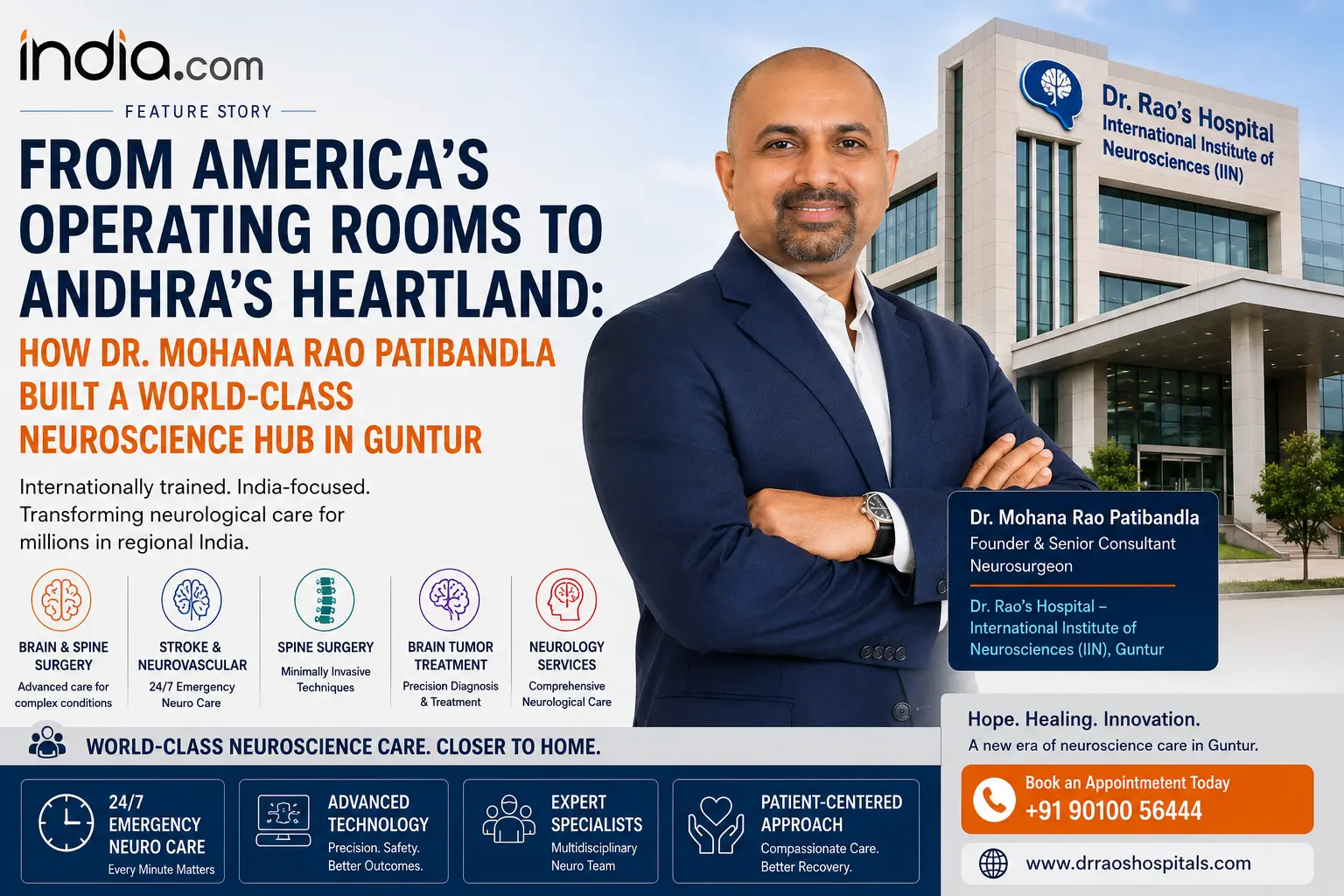
Primary Source: India.com – From America’s Operating Rooms to Andhra’s Heartland: How Dr. Mohana Rao Patibandla Built a World-Class Neuroscience Hub in Guntur.
Healthcare transformation does not happen overnight. It requires vision, expertise, infrastructure, innovation, and a commitment to bringing advanced medical care closer to patients. Across India, a new generation of healthcare leaders is helping reshape how specialized treatment is delivered, ensuring that world-class medical services are no longer limited to metropolitan cities.
One remarkable example of this transformation can be found in Guntur, Andhra Pradesh. Through years of international training, clinical excellence, and institution building, Dr. Mohana Rao Patibandla has helped establish advanced neuroscience services that are changing how patients access neurological, neurosurgical, and spine care.
According to a recent India.com feature, Dr. Mohana Rao Patibandla returned to India after extensive neurosurgical training in the United States and chose to build advanced neuroscience infrastructure in Andhra Pradesh rather than pursue opportunities exclusively in larger metropolitan healthcare centers. This decision represents a broader movement toward strengthening healthcare access in regional India.
Why Neurological Disorders Are a Growing Public Health Challenge
Neurological disorders are among the leading causes of disability and mortality worldwide. Conditions affecting the brain, spinal cord, nerves, and muscles impact millions of individuals every year and often require highly specialized diagnosis and treatment.
According to the World Health Organization (WHO), neurological disorders affect more than one billion people globally and account for a substantial portion of the global disease burden.
Source:
World Health Organization (WHO)
Common Neurological Conditions
- Stroke
- Brain tumors
- Epilepsy
- Parkinson’s disease
- Alzheimer’s disease
- Dementia
- Peripheral neuropathy
- Spinal disorders
- Traumatic brain injury
- Neurovascular diseases
Many of these conditions require rapid intervention. Delays in diagnosis or treatment can lead to irreversible neurological damage, disability, or death. Access to experienced specialists and advanced healthcare facilities therefore plays a critical role in improving patient outcomes.
The Historical Challenge of Access to Specialist Care
For many years, advanced neurological care in India remained concentrated in a small number of metropolitan centers. Patients from smaller cities frequently traveled to Delhi, Mumbai, Chennai, Bengaluru, or Hyderabad seeking specialized treatment.
This model created several challenges:
- Travel-related expenses
- Delayed treatment
- Long waiting periods
- Disruption to family life
- Difficulty accessing follow-up care
- Reduced emergency care accessibility
The India.com article highlights that patients from neighboring states and districts often had limited options when seeking advanced brain and spine care. This reality contributed to significant disparities in healthcare access across different regions.
The Importance of Reverse Brain Drain in Healthcare
One of the most significant trends shaping India’s healthcare future is reverse brain drain. Traditionally, many highly skilled physicians pursued advanced education and careers abroad. While this contributed to global medical progress, it also created challenges for countries seeking to retain specialized expertise.
Today, increasing numbers of internationally trained physicians are returning to India to establish advanced healthcare institutions and contribute to national healthcare development.
Reverse brain drain brings several advantages:
- Transfer of advanced clinical expertise
- Introduction of new technologies
- Improved patient safety systems
- Development of research programs
- Training of future specialists
- Expansion of regional healthcare services
- Improved healthcare accessibility
According to the India.com feature, the significance of this movement extends beyond individual physicians. It represents the transfer of knowledge, innovation, and institutional excellence back into Indian healthcare systems.
Building a World-Class Neuroscience Hub in Guntur
The India.com article describes how extensive international training across multiple neurosurgical subspecialties provided exposure to advanced treatment techniques, multidisciplinary care models, and sophisticated healthcare systems. Rather than remaining abroad or relocating exclusively to a major metropolitan center, Dr. Mohana Rao Patibandla chose to return to Andhra Pradesh and establish advanced neuroscience services closer to underserved communities.
This decision reflects an important healthcare principle: advanced medical care should not be determined by geography. Patients living in regional cities deserve access to the same level of expertise and technology available in major urban centers.
Core Areas of Neuroscience Care
- Neurology
- Neurosurgery
- Spine Surgery
- Stroke Care
- Neurocritical Care
- Neurovascular Services
- Brain Tumor Treatment
- Pediatric Neurosurgery
- Minimally Invasive Neurosurgery
- Endovascular Neurosurgery
The Role of Technology in Modern Neurosciences
Modern neuroscience care increasingly depends on advanced technology. Diagnostic precision, surgical accuracy, and improved outcomes are often driven by innovations that were unavailable just a few decades ago.
The India.com article highlights several technologies that are reshaping neurology and neurosurgery, including advanced imaging systems, intraoperative navigation, minimally invasive techniques, and specialized monitoring systems.
Important Technologies in Neurosciences
- Neuronavigation systems
- Intraoperative imaging
- Microsurgical platforms
- Advanced MRI technology
- CT angiography
- Endoscopic neurosurgery
- Intraoperative neuromonitoring
- Artificial intelligence-assisted diagnostics
- Robotic-assisted surgery
- Endovascular intervention systems
These innovations enable surgeons to operate with greater precision, reduce complications, shorten recovery times, and improve patient outcomes.
Why Patients Search for the Best Neurologist in Guntur
Patients searching online for the best neurologist in Guntur are often looking for more than a physician. They seek comprehensive neurological care, access to advanced technology, multidisciplinary expertise, and a healthcare team capable of managing complex conditions.
Factors patients should consider include:
- Clinical experience
- International training
- Technology and infrastructure
- Multidisciplinary support
- Emergency services
- Patient outcomes
- Rehabilitation services
Advanced Stroke Care and Neurovascular Treatment
Stroke remains one of the leading causes of death and long-term disability worldwide. According to the World Stroke Organization, one in four adults over the age of 25 is expected to experience a stroke during their lifetime. Early diagnosis and immediate intervention are critical because every minute during a stroke can result in the loss of millions of brain cells.
Patients searching for the best neurologist in Guntur often do so because stroke symptoms require urgent evaluation and treatment. Rapid access to specialized stroke care can dramatically improve recovery and reduce long-term disability.
Common Stroke Symptoms
- Sudden weakness or numbness on one side of the body
- Difficulty speaking or understanding speech
- Sudden loss of vision
- Facial drooping
- Loss of balance or coordination
- Severe sudden headache
Modern stroke treatment includes advanced neuroimaging, clot-busting medications, mechanical thrombectomy, neurocritical care, and long-term rehabilitation. The availability of these services closer to home can significantly improve outcomes for patients across Andhra Pradesh and neighboring states.
The India.com feature highlights the importance of advanced neurovascular capabilities and specialized neuroscience infrastructure in improving healthcare accessibility beyond major metropolitan cities.
Advanced Spine Surgery: Transforming Quality of Life
Spinal disorders are among the most common neurological and musculoskeletal problems affecting individuals across all age groups. Chronic back pain, neck pain, sciatica, spinal instability, and degenerative spine disease can significantly impact mobility, productivity, and overall quality of life.
Patients increasingly seek treatment from the best spine surgeon in Guntur to access modern surgical techniques that offer faster recovery and improved outcomes.
Common Spine Conditions
- Herniated discs
- Sciatica
- Cervical spondylosis
- Lumbar canal stenosis
- Spinal tumors
- Spinal trauma
- Scoliosis
- Degenerative spine disease
- Spinal cord compression
- Failed back surgery syndrome
Advances in minimally invasive spine surgery have transformed patient care. These procedures often result in smaller incisions, reduced blood loss, shorter hospital stays, lower infection rates, and faster return to daily activities.
Learn more:
Spine Surgery Department
Artificial Intelligence and the Future of Neurosciences
Artificial Intelligence (AI) is rapidly becoming one of the most influential technologies in modern medicine. Neurosciences, in particular, are benefiting from AI-driven diagnostic tools, predictive analytics, advanced imaging interpretation, and surgical planning systems.
According to the National Institutes of Health (NIH), AI has the potential to improve diagnostic accuracy, accelerate treatment decisions, and support personalized medicine approaches.
Source:
National Institutes of Health (NIH)
Applications of AI in Neurology and Neurosurgery
- Stroke detection and triage
- Brain tumor imaging analysis
- Neurodegenerative disease prediction
- Clinical decision support systems
- Surgical planning and simulation
- Outcome prediction models
- Remote neurological monitoring
- Precision medicine strategies
The future of neuroscience care will increasingly depend on integrating advanced technologies with expert clinical judgment. Regional centers capable of adopting these innovations will play a critical role in improving healthcare accessibility.
Why Regional Neuroscience Centers Matter
One of the key messages highlighted in the India.com article is that advanced healthcare should not be restricted to a few metropolitan locations. India’s healthcare needs require strong regional institutions capable of delivering world-class specialty care closer to patients’ homes.
Regional neuroscience centers provide several advantages:
- Reduced travel burden
- Faster access to emergency care
- Improved continuity of treatment
- Enhanced rehabilitation services
- Local employment and training opportunities
- Strengthened healthcare ecosystems
- Greater healthcare equity
Why Choose Dr. Rao’s Hospital – International Institute of Neurosciences (IIN)
Patients seeking the best neurologist in Guntur, the best neurosurgeon in Guntur, or the best spine surgeon in Guntur increasingly look for comprehensive neuroscience centers that combine expertise, technology, innovation, and compassionate patient care.
Dr. Rao’s Hospital – International Institute of Neurosciences (IIN) offers advanced neurological, neurosurgical, spine, stroke, and neurovascular services using modern technology and evidence-based treatment approaches.
Internal Links
- Dr. Rao’s Hospital Official Website
- Neurosurgery Department
- Spine Surgery Services
- Neurology Services
- Contact Dr. Rao’s Hospital
- About Dr. Mohana Rao Patibandla
Authoritative Medical References
- World Health Organization (WHO)
- PubMed
- National Institutes of Health (NIH)
- Mayo Clinic
- World Stroke Organization
Frequently Asked Questions
Who is considered the best neurologist in Guntur?
The best neurologist in Guntur is typically identified based on experience, advanced training, technology, patient outcomes, and comprehensive neurological care services.
When should I consult a neurologist?
You should consult a neurologist if you experience persistent headaches, seizures, memory loss, dizziness, weakness, numbness, speech difficulties, or other neurological symptoms.
What conditions does a neurosurgeon treat?
A neurosurgeon treats conditions involving the brain, spine, and nervous system, including brain tumors, stroke complications, spinal disorders, neurovascular diseases, and traumatic injuries.
What are the benefits of minimally invasive spine surgery?
Minimally invasive spine surgery often results in less pain, shorter hospital stays, faster recovery, reduced blood loss, and smaller incisions compared with traditional surgery.
Why choose Dr. Rao’s Hospital for neurological treatment?
Dr. Rao’s Hospital – International Institute of Neurosciences (IIN) offers advanced neurology, neurosurgery, spine surgery, stroke care, neurovascular interventions, and minimally invasive treatment options delivered by internationally trained specialists.
Conclusion
The future of healthcare in India depends on expanding access to advanced specialty services beyond traditional metropolitan centers. The development of world-class neuroscience infrastructure in regional cities demonstrates that excellence is not defined by geography but by vision, expertise, technology, and commitment to patient care.
As highlighted by the India.com feature, institution building, reverse brain drain, and investment in advanced healthcare infrastructure can help transform patient outcomes and strengthen regional healthcare systems.
For patients seeking the best neurologist in Guntur, the best neurosurgeon in Guntur, or the best spine surgeon in Guntur, access to comprehensive neuroscience care has never been more important. Advanced diagnostics, modern treatment technologies, multidisciplinary expertise, and compassionate patient-centered care continue to shape the future of neurological healthcare in Andhra Pradesh and beyond.
Call to Action
If you or a loved one is experiencing symptoms of stroke, epilepsy, brain tumors, spinal disorders, neurovascular disease, or other neurological conditions, early diagnosis and expert treatment can make a significant difference.
If you are searching for the best neurologist in Guntur, the best neurosurgeon in Guntur, or expert brain and spine care, visit Dr. Rao’s Hospital – International Institute of Neurosciences (IIN).
📧 [info@drraoshospitals.com](mailto:info@drraoshospitals.com)
Follow Dr. Rao’s Hospital
- Facebook: Facebook
- Instagram: Instagram
- YouTube: YouTube
- LinkedIn: LinkedIn
- X (Twitter): X
- Google Business: Google Business
- Google Maps: Google Maps
Primary Source: From America’s Operating Rooms to Andhra’s Heartland: How Dr. Mohana Rao Patibandla Built a World-Class Neuroscience Hub in Guntur – India.com.