How Innovation, Precision, and Compassion Are Transforming Neurosciences in India
Modern neurosciences are evolving rapidly through technological innovation, minimally invasive surgery, advanced imaging systems, and patient-centered healthcare models.
For decades, complex neurological and spine disorders posed major treatment challenges because of limited accessibility to specialized care, particularly outside major metropolitan cities.
Today, however, the integration of advanced neurosurgical technologies, precision-guided systems, and multidisciplinary treatment approaches is reshaping neurological healthcare across India.
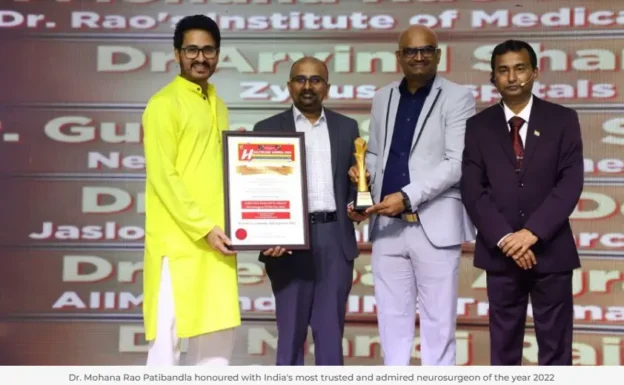
A recent Ahmedabad Mirror feature highlighted this transformation by recognizing Dr. Mohana Rao Patibandla as India’s Most Trusted and Admired Best Neurosurgeon of the Year 2022.
The article also emphasized the growing importance of innovation-driven healthcare systems, compassionate patient care, minimally invasive surgery, and advanced neurosciences infrastructure.
Primary Source: Ahmedabad Mirror – Dr. Mohana Rao Patibandla Honoured with India’s Most Trusted and Admired Best Neurosurgeon of the Year 2022
The Complexity of Neurosciences
Neurosciences remain among the most demanding specialties in medicine because they involve structures responsible for nearly every essential human function.
The brain and spinal cord control:
- Movement
- Speech
- Memory
- Vision
- Emotions
- Cognition
- Sensory processing
Even small neurological abnormalities may significantly affect a patient’s independence and quality of life.
Conditions commonly requiring advanced neurosciences care include:
- Brain tumors
- Stroke
- Spinal disorders
- Epilepsy
- Traumatic brain injuries
- Neurovascular diseases
- Peripheral nerve disorders
The complexity of these conditions requires:
- Precision-guided treatment
- Multidisciplinary collaboration
- Advanced imaging
- Continuous innovation
- Patient-centered planning
The Evolution of Minimally Invasive Neurosurgery
Traditional neurological surgeries often required larger surgical openings and extensive tissue manipulation to access deep or complex lesions.
While these approaches saved countless lives, they were frequently associated with:
- Longer hospitalization
- Greater tissue trauma
- Higher postoperative discomfort
- Extended rehabilitation periods
Modern minimally invasive neurosurgery has significantly transformed this landscape.
According to the Ahmedabad Mirror article, Dr. Rao’s expertise in minimally invasive neurosurgery and spine surgery has earned recognition nationally for improving patient care outcomes.
Minimally invasive techniques focus on:
- Smaller surgical corridors
- Reduced tissue disruption
- Precision-guided surgery
- Enhanced visualization
- Faster rehabilitation
Minimally Invasive Neurosurgery at Dr. Rao’s Hospital
The Importance of Compassionate Patient Care
One of the strongest themes highlighted throughout the Ahmedabad Mirror article is compassionate patient-centered care.
The article describes Dr. Rao’s bedside manner as compassionate, patient-focused, and deeply committed to helping patients understand their conditions and treatment plans.
In neurosciences, compassionate communication becomes particularly important because patients facing neurological illnesses often experience:
- Fear
- Anxiety
- Concerns regarding disability
- Emotional uncertainty
- Questions about recovery
Meaningful healthcare therefore depends not only on technology but also on:
- Empathy
- Trust
- Clear communication
- Emotional support
- Long-term rehabilitation guidance
The article also highlights how positive patient experiences and compassionate care contribute significantly toward building trust in healthcare systems.
Advanced Neurosciences Infrastructure
The Ahmedabad Mirror feature discusses several advanced technologies introduced at Dr. Rao’s Hospital – International Institute of Neurosciences , including:
- Hybrid operating theatre
- Biplane Cath labs
- Neuronavigation systems
- Neuromonitoring
- Intraoperative CT scans
Modern neurosciences increasingly depend on integrated technology-driven systems designed to improve surgical precision, safety, and patient outcomes.
What Is a Hybrid Operating Theatre?
A hybrid operating theatre combines advanced imaging technologies and surgical systems within a single operating room environment.
According to the Ahmedabad Mirror article, hybrid operating theatres help improve:
- Efficiency
- Surgical precision
- Patient safety
- Workflow integration
The article notes several potential advantages of hybrid operating systems, including:
- Reduced need for patient transfers
- Improved treatment coordination
- Enhanced procedural efficiency
- Better integration of surgical and imaging systems
Hybrid operating environments are increasingly becoming important in:
- Complex brain surgery
- Endovascular procedures
- Stroke intervention
- Neurovascular surgery
The Role of Biplane Cath Labs
The article also discusses the use of biplane Cath labs for advanced neurological and neurovascular treatment.
Biplane imaging systems provide highly detailed vascular visualization that may assist in:
- Stroke intervention
- Aneurysm treatment
- Endovascular procedures
- Complex neurovascular diagnostics
Advanced imaging technologies help improve procedural precision and treatment planning.
Neuronavigation and Neuromonitoring
Modern neurosurgery increasingly relies on neuronavigation systems and intraoperative neuromonitoring technologies.
Neuronavigation functions similarly to GPS-guided surgery by helping surgeons identify:
- Precise lesion location
- Critical vascular anatomy
- Functional brain regions
- Safer surgical corridors
Meanwhile, neuromonitoring systems help monitor neurological function during surgery to reduce the risk of injury to critical pathways.
According to the Ahmedabad Mirror article, these technologies improve overall patient care quality and surgical safety.
The Importance of Regional Healthcare Accessibility
Historically, many advanced neurological treatments were available primarily within metropolitan cities.
Patients from smaller towns frequently faced:
- Travel burden
- Financial stress
- Treatment delays
- Interrupted rehabilitation
The Ahmedabad Mirror article emphasizes how advanced neurosciences infrastructure within Guntur has improved accessibility for patients across Andhra Pradesh and neighboring regions.
Regional neuroscience systems improve:
- Emergency care accessibility
- Continuity of treatment
- Long-term rehabilitation support
- Patient convenience
The Human Side of Innovation
Technology alone cannot define meaningful healthcare.
The future of neurosciences depends equally on:
- Compassion
- Ethical treatment planning
- Communication
- Trust
- Long-term rehabilitation
The Ahmedabad Mirror article repeatedly reflects themes of compassionate bedside manner, patient understanding, and ethical patient-centered care.
In modern medicine, the combination of advanced technology with human-centered healthcare remains essential for improving long-term neurological outcomes.
The Future of Neurosciences in India
India’s neurosciences ecosystem continues evolving rapidly through:
- Advanced imaging systems
- Artificial intelligence-assisted diagnostics
- Minimally invasive surgery
- Precision-guided intervention
- Endovascular treatment
- Robotic-assisted technologies
At the same time, the future of neurological healthcare will depend heavily on:
- Regional accessibility
- Advanced specialist training
- Innovation-driven systems
- Ethical healthcare models
- Patient-centered care
Healthcare institutions capable of integrating technology with compassion and accessibility are likely to shape the next generation of neurosciences care across India.
Conclusion
The Ahmedabad Mirror recognition honoring Dr. Mohana Rao Patibandla as India’s Most Trusted and Admired Best Neurosurgeon of the Year 2022 reflects broader progress occurring within India’s neurosciences ecosystem.
Modern neurological and spine care increasingly depends on:
- Minimally invasive surgery
- Advanced imaging technologies
- Hybrid operating systems
- Precision-guided treatment
- Compassionate patient-centered care
Institutions such as Dr. Rao’s Hospital – International Institute of Neurosciences
represent an important part of India’s growing commitment toward innovation-driven and accessible neurosciences healthcare.
As healthcare continues evolving globally, the integration of technology, expertise, ethics, and compassion will likely define the future of neurological treatment across India.
Frequently Asked Questions (FAQ)
1. What is minimally invasive neurosurgery?
It uses smaller surgical corridors and advanced technologies to reduce tissue disruption and improve recovery.
2. Why is compassionate care important in neurosurgery?
Compassionate care improves patient trust, emotional wellbeing, communication, and long-term rehabilitation outcomes.
3. What is a hybrid operating theatre?
A hybrid operating theatre combines advanced imaging and surgical technologies within one integrated operating room.
4. What are biplane Cath labs used for?
They are used for advanced neurovascular imaging and endovascular neurological procedures.
5. Who is Dr. Mohana Rao Patibandla?
Dr. Mohana Rao Patibandla is an internationally trained neurosurgeon and founder of Dr. Rao’s Hospital – International Institute of Neurosciences.
Internal Links
Dr. Rao’s Hospital – International Institute of Neurosciences
Minimally Invasive Neurosurgery
Endoscopic Brain Surgery
About Dr. Mohana Rao Patibandla
Call To Action
If you or your loved one is experiencing neurological symptoms such as headaches, seizures, weakness, stroke warning signs, spinal pain, or neurological disorders, timely expert evaluation is essential.
Dr. Rao’s Hospital – International Institute of Neurosciences
12-19-67, Old Bank Road, Kothapet, Besides AK Biryani Point, Guntur, Andhra Pradesh
Phone: +91 9010056444
Email: info@drraoshospitals.com
Website: https://drraoshospitals.com/
Connect With Us
“`


