
The Rise of Advanced Minimally Invasive Neurosurgery in India
Inspired by the Mid-Day feature article on advanced minimally invasive neurosurgery in India Original Mid-Day Feature Article
Neurosurgery has traditionally been viewed as one of the most complex and demanding fields in medicine. For decades, brain and spine surgeries were associated with large incisions, prolonged hospital stays, extensive recovery periods, and significant postoperative discomfort. However, modern medicine is undergoing a remarkable transformation.
Today, advanced minimally invasive neurosurgery is redefining how neurological and spinal disorders are treated across India. With innovations in endoscopic surgery, neuronavigation systems, intraoperative neuromonitoring, microsurgical techniques, and advanced imaging, many complex procedures can now be performed with greater precision and reduced tissue disruption.
India is rapidly emerging as an important center for advanced neurosciences care, and institutions such as Dr. Rao’s International Institute of Neurosciences in Guntur are contributing to this evolving landscape by integrating modern minimally invasive approaches into comprehensive neurological care.
What Is Minimally Invasive Neurosurgery?
Minimally invasive neurosurgery refers to advanced surgical techniques designed to treat brain, spine, and nerve disorders through smaller incisions and highly precise surgical pathways. Instead of large open exposures, surgeons utilize specialized technologies and instruments that minimize damage to surrounding tissues while maintaining surgical effectiveness.
The primary goals of minimally invasive neurosurgery include:
- Reducing tissue trauma
- Improving surgical precision
- Shortening hospital stays
- Reducing postoperative pain
- Enhancing recovery speed
- Lowering infection risks
- Improving cosmetic outcomes
- Preserving neurological function
Importantly, minimally invasive neurosurgery is not simply about smaller incisions. It represents a broader evolution toward precision-based and patient-centered care.
The Evolution of Neurosurgery in India
India’s neurosciences ecosystem has evolved dramatically over the past two decades. Advanced technologies that were once limited to select global centers are increasingly becoming accessible within India.
Modern Indian neurosurgery now incorporates:
- Endoscopic skull base surgery
- Endoscopic spine surgery
- Microneurosurgery
- Neuronavigation systems
- Intraoperative neuro-monitoring
- Advanced neuroimaging
- Cerebrovascular interventions
- Minimally invasive spinal stabilization
This transformation is improving patient outcomes while expanding treatment possibilities for many neurological conditions that were previously considered highly complex.
According to the Mid-Day feature article, minimally invasive neurosurgery is emerging as one of the most significant developments in modern neurosciences across India.
Endoscopic Skull Base Surgery: A Revolutionary Advancement
One of the most exciting developments in minimally invasive neurosurgery is endoscopic skull base surgery.
Traditionally, tumors located deep within the skull base often required extensive open surgical approaches involving significant tissue dissection and longer recovery periods. Modern endoscopic techniques now allow surgeons to access certain lesions through minimally invasive pathways using high-definition cameras and specialized instruments.
These advanced approaches may offer:
- Reduced surgical trauma
- Improved visualization
- Enhanced precision
- Shorter recovery times
- Reduced hospital stays
- Lower postoperative discomfort
Endoscopic skull base surgery is increasingly being utilized for:
- Pituitary tumors
- Skull base tumors
- Certain cerebrospinal fluid leaks
- Selected cranial lesions
At Dr. Rao’s International Institute of Neurosciences, advanced minimally invasive techniques continue to expand treatment possibilities for carefully selected patients.
The Growing Importance of Endoscopic Spine Surgery
Spine disorders are among the most common neurological conditions affecting patients today. Conditions such as slipped discs, spinal stenosis, degenerative spine disease, and nerve compression can severely impact mobility and quality of life.
Conventional spine surgery often required larger incisions and significant muscle dissection. Endoscopic spine surgery is changing this landscape.
Using specialized endoscopic systems, surgeons can perform certain spinal procedures through very small incisions while minimizing disruption to surrounding muscles and tissues.
Benefits for many patients may include:
- Reduced postoperative pain
- Earlier mobilization
- Faster rehabilitation
- Reduced blood loss
- Smaller scars
- Shorter hospitalization
Minimally invasive spine surgery has become increasingly popular among patients seeking safer and faster recovery options whenever clinically appropriate.
Neuronavigation: GPS for the Brain and Spine
One of the most remarkable innovations in modern neurosurgery is neuronavigation technology.
Often compared to a GPS system for the brain and spine, neuronavigation allows surgeons to map complex anatomical structures in real time using integrated imaging systems.
This technology is particularly valuable in:
- Brain tumor surgery
- Skull base procedures
- Complex spinal operations
- Cerebrovascular surgery
- Deep-seated lesions
Millimeter-level accuracy is critical in neurosurgery. Neuronavigation significantly enhances surgical planning and precision while helping surgeons preserve vital neurological structures.
Advanced navigation-guided surgery represents one of the most important pillars of modern precision neurosurgery.
The Role of Intraoperative Neuro-Monitoring
Intraoperative neuro-monitoring is another major advancement improving surgical safety.
During complex neurological procedures, neuro-monitoring systems assess nerve and spinal cord function in real time. This allows surgical teams to monitor critical neurological pathways throughout surgery.
The advantages may include:
- Improved surgical safety
- Reduced risk of neurological injury
- Better functional preservation
- Enhanced surgical confidence
Neuro-monitoring is particularly valuable in:
- Complex spine surgery
- Brain tumor surgery
- Skull base surgery
- Cerebrovascular procedures
- Pediatric neurosurgery
These technologies are helping modern neurosurgery become safer and more precise than ever before.
Microneurosurgery and Precision-Based Care
Microneurosurgery remains central to advanced neurosurgical care.
High-powered operating microscopes allow surgeons to work with extraordinary precision around delicate:
- Blood vessels
- Brain tissue
- Cranial nerves
- Spinal nerves
Combined with minimally invasive techniques and advanced imaging, microneurosurgery has dramatically expanded treatment possibilities for many neurological disorders.
The integration of:
- Microscopes
- Endoscopy
- Neuronavigation
- Advanced imaging
- Neuro-monitoring
has created a new era of highly sophisticated precision neurosurgery.
Why Patients Prefer Minimally Invasive Approaches
Modern patients are increasingly informed about treatment options and recovery expectations.
Whenever medically appropriate, many patients now prefer minimally invasive procedures because they may offer:
- Less pain
- Reduced scarring
- Shorter hospital stays
- Faster return to work
- Earlier rehabilitation
- Lower complication risks
This shift is influencing how neuroscience centers across India approach patient-centered care.
However, experts emphasize that not every patient is suitable for minimally invasive surgery. Surgical decisions must always prioritize patient safety, disease characteristics, and long-term outcomes rather than technology alone.
The Importance of Ethical Patient Selection
While technology continues to evolve rapidly, experienced neurosurgeons consistently emphasize one important principle:
Technology should never replace clinical judgment.
Certain conditions may still require conventional open surgery depending on:
- Tumor complexity
- Trauma severity
- Spinal deformity
- Vascular anatomy
- Patient-specific risk factors
Ethical neurosurgical care involves selecting the safest and most effective approach for each individual patient.
At Dr. Rao’s International Institute of Neurosciences, the philosophy continues to emphasize combining advanced technology with individualized, patient-centered treatment planning.
The Future of Neurosurgery in India
India’s neurosciences landscape is entering a highly exciting phase.
Future technologies expected to further transform neurosurgery include:
- Artificial intelligence-assisted imaging
- Robotic surgical systems
- Augmented reality visualization
- Advanced intraoperative imaging
- Enhanced neuro-navigation systems
- Precision-guided robotic spine surgery
As infrastructure and expertise continue expanding across India, advanced minimally invasive neurosurgery may become increasingly accessible in both metropolitan and regional healthcare systems.
Importantly, globally trained specialists are now helping bring advanced neurosciences care to Tier-2 cities like Guntur, making sophisticated treatment more accessible to regional populations.
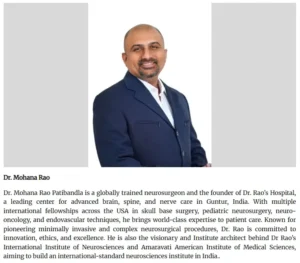
Dr. Mohana Rao Patibandla and Advanced Neurosciences Care
According to the Mid-Day feature article, Dr. Mohana Rao Patibandla has been part of the broader movement toward integrating advanced minimally invasive techniques into regional neurosciences practice in India.
With international fellowship training across subspecialties including:
- Minimally invasive skull base surgery
- Pediatric neurosurgery
- Neuro-oncology
- Cerebrovascular surgery
- Endovascular neurosurgery
Dr. Patibandla has consistently emphasized the importance of combining:
- Modern technology
- Ethical medicine
- Precision surgery
- Compassionate care
- Patient-centered decision-making
This vision continues to help shape the development of advanced neurosciences services in Andhra Pradesh and regional India.
Conclusion
Minimally invasive neurosurgery represents one of the most important transformations in modern neurosciences.
By reducing tissue trauma and improving surgical precision, these advanced techniques are helping many patients experience:
- Safer procedures
- Faster recovery
- Reduced pain
- Shorter hospitalization
- Earlier return to daily life
India is rapidly emerging as an important center for advanced neurosciences innovation. As technology, infrastructure, and expertise continue to evolve, the future of brain and spine care is becoming increasingly precise, patient-centered, and minimally invasive.
Institutions like Dr. Rao’s International Institute of Neurosciences demonstrate how world-class neurosciences care can successfully expand beyond metropolitan boundaries while maintaining high standards of ethics, innovation, and compassionate treatment.
Internal Links
- Best Neurosurgery Hospital in Guntur
- Endoscopic Brain Surgery
- Minimally Invasive Spine Surgery
- Comprehensive Stroke Care
- Pediatric Neurosurgery
- Brain Tumor Surgery
- About Dr. Mohana Rao Patibandla
External References
- Original Mid-Day Feature Article
- World Health Organization – Neurological Disorders
- American Association of Neurological Surgeons
Contact Dr. Rao’s International Institute of Neurosciences
The Best Neurosurgeon in Guntur | The Best Neurologist in Guntur | The Best Spine Surgeon in Guntur
If you or your loved one is suffering from brain tumors, spinal disorders, stroke, nerve compression, or neurological conditions, early diagnosis and advanced treatment can significantly improve outcomes.
📍 Dr. Rao’s International Institute of Neurosciences
12-19-67, Old Bank Road, Kothapet,
Opposite Sravani Hospital,
Guntur, Andhra Pradesh – 522001
📞 Phone: +91 90100 56444
📧 Email: info@drraoshospitals.com
🌐 Website: https://drraoshospitals.com
Follow Dr. Mohana Rao Patibandla
📘 Facebook: Facebook
📸 Instagram: Instagram
📺 YouTube: YouTube
💼 LinkedIn: LinkedIn
🐦 X (Twitter): X / Twitter
📍 Google Maps: Location Map