
Why Early Diagnosis Matters in Neurological Care: Improving Outcomes Through Timely Intervention
A recent article published by OneIndia highlighted the growing importance of early diagnosis in neurological care and the need for greater awareness regarding neurological symptoms across the country.
Primary Source: OneIndia – Dr. Mohana Rao Patibandla Highlights Importance of Early Diagnosis in Neurological Care
The Growing Burden of Neurological Disorders in India
India is witnessing a rapid increase in neurological diseases due to multiple factors including:
- Increasing life expectancy
- Hypertension and diabetes
- Sedentary lifestyles
- Road traffic accidents
- Stress and urbanization
- Improved awareness and diagnostics
Neurological diseases often affect quality of life significantly because they impact movement, speech, memory, balance, sensation, and cognitive functions.
Conditions such as stroke, brain tumors, spinal cord disorders, Parkinson’s disease, epilepsy, and neurodegenerative diseases require specialized evaluation and treatment.
According to the World Health Organization, neurological disorders are among the leading causes of disability worldwide.
External Source: WHO – Neurological Disorders
Why Delayed Diagnosis Is Dangerous
One of the biggest problems in neurological healthcare is that many symptoms initially appear mild or nonspecific.
As highlighted in the OneIndia article, symptoms such as:
- Recurring headaches
- Back pain
- Dizziness
- Weakness
- Speech difficulty
- Memory issues
- Seizures
are often ignored until they become severe. OneIndia – Dr. Mohana Rao Patibandla Highlights Importance of Early Diagnosis in Neurological Care
Many people assume these symptoms are caused by stress, aging, fatigue, or lifestyle issues. Unfortunately, delaying neurological evaluation can allow underlying diseases to progress significantly.
In neurosciences, timing frequently determines outcomes. Early diagnosis often means:
- Better recovery
- Reduced complications
- Less invasive treatments
- Improved survival
- Lower disability rates
Stroke: The Importance of the Golden Hour
Stroke is one of the clearest examples of why early diagnosis matters.
Often referred to as a “brain attack,” stroke occurs when blood flow to part of the brain becomes blocked or interrupted.
The article explains that stroke cases are rapidly increasing in India due to:
- Hypertension
- Diabetes
- Smoking
- Stress
- Sedentary lifestyles
- Aging populations
OneIndia – Dr. Mohana Rao Patibandla Highlights Importance of Early Diagnosis in Neurological Care
Doctors frequently emphasize the concept of the “golden hour” — the critical early period when immediate treatment can dramatically reduce brain damage and disability.
Common stroke warning signs include:
- Sudden facial drooping
- Weakness in arms or legs
- Speech difficulty
- Confusion
- Vision changes
- Loss of balance
Every minute during a stroke results in the loss of millions of brain cells. Rapid treatment with clot-busting medications or endovascular stroke interventions can significantly improve outcomes.
External Source: American Stroke Association – Stroke Symptoms
Brain Tumors and Missed Warning Signs
Brain tumors present another major challenge where symptoms are often overlooked initially.
Persistent headaches, repeated vomiting, seizures, personality changes, visual disturbances, and unexplained neurological symptoms may indicate serious intracranial pathology.
The OneIndia article highlights that many patients delay neurological consultation because of fear, assumptions, or lack of awareness. By the time some patients reach specialized care, tumors may have progressed substantially, making treatment more complicated. OneIndia – Dr. Mohana Rao Patibandla Highlights Importance of Early Diagnosis in Neurological Care
Not every headache is dangerous. However, headaches associated with neurological symptoms should always be evaluated carefully.
Modern neuroimaging technologies such as MRI and CT scans now allow earlier and more accurate diagnosis of brain tumors than ever before.
Spinal Disorders and Neurological Symptoms
Spinal disorders are increasingly affecting both younger working populations and the elderly.
Long sitting hours, poor posture, obesity, sedentary lifestyles, and physically demanding occupations contribute to rising spine-related problems across India.
While many cases of back pain are non-serious, certain warning signs should never be ignored:
- Weakness in the legs
- Numbness
- Difficulty walking
- Loss of bladder control
- Severe radiating pain
- Balance disturbances
OneIndia – Dr. Mohana Rao Patibandla Highlights Importance of Early Diagnosis in Neurological Care
These symptoms may indicate spinal cord compression or nerve root compression requiring urgent evaluation.
Early assessment often allows:
- Conservative treatment
- Physiotherapy
- Pain management
- Minimally invasive procedures
- Faster recovery
Minimally Invasive Neurosurgery at Dr. Rao’s Hospital
Pediatric Neurological Disorders Need Early Attention
Neurological disorders in children are another area where early diagnosis can dramatically improve long-term outcomes.
The article emphasizes that symptoms such as:
- Developmental delays
- Seizures
- Abnormal head growth
- Behavioral changes
- Weakness
- Difficulty walking
should never be dismissed as “normal delays” without proper evaluation. OneIndia – Dr. Mohana Rao Patibandla Highlights Importance of Early Diagnosis in Neurological Care
Timely neurological assessment in children allows early medical or surgical intervention that can improve development, learning, mobility, and quality of life.
The Challenge of Unequal Access to Neurological Care
One of the major reasons for delayed diagnosis in India is unequal access to specialized neurosciences care.
Patients from rural and semi-urban regions often travel long distances to seek neurological consultation. This results in:
- Loss of critical treatment time
- Financial burden
- Delayed imaging and diagnosis
- Progression of neurological disease
- Reduced treatment options
However, advanced neurosciences infrastructure is gradually expanding beyond metropolitan cities.
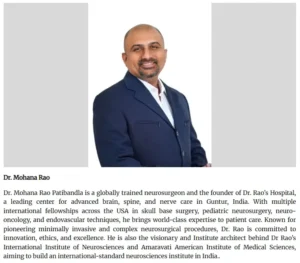
The OneIndia article specifically highlights the role of Dr. Mohana Rao Patibandla and
Dr. Rao’s Hospital – International Institute of Neurosciences
in improving access to advanced neurological care in regional India. OneIndia – Dr. Mohana Rao Patibandla Highlights Importance of Early Diagnosis in Neurological Care
The Role of Advanced Technology in Early Diagnosis
Medical technology has transformed the diagnosis and management of neurological disorders.
Today’s advanced neuroscience systems include:
- High-resolution MRI imaging
- CT angiography
- Neuronavigation systems
- Endoscopic neurosurgery
- Endovascular stroke interventions
- Minimally invasive surgical techniques
These technologies improve:
- Diagnostic accuracy
- Surgical precision
- Treatment planning
- Patient safety
- Recovery outcomes
Importantly, early diagnosis allows doctors to use these technologies more effectively and often less invasively.
OneIndia – Dr. Mohana Rao Patibandla Highlights Importance of Early Diagnosis in Neurological Care
Public Awareness Can Save Lives
One of the strongest messages in the OneIndia feature is that public awareness remains central to improving neurological outcomes in India.
People should seek medical attention immediately if neurological symptoms are:
- Persistent
- Progressive
- Associated with weakness
- Linked to seizures
- Causing speech changes
- Affecting walking or balance
Delays in neurological care can result in irreversible disability. In many cases, timely evaluation may completely change outcomes.
As the article concludes, “In neurosciences, timing often changes everything.” OneIndia – Dr. Mohana Rao Patibandla Highlights Importance of Early Diagnosis in Neurological Care
The Future of Neurological Healthcare in India
India’s future neurological healthcare systems must focus on:
- Early detection programs
- Public education
- Stroke awareness
- Regional neuroscience centers
- Tele-neurology
- Advanced emergency response systems
- AI-assisted diagnostics
- Minimally invasive neurosurgery
The expansion of advanced neurosciences into regional India has the potential to reduce disability, improve recovery, and save thousands of lives every year.
Institutions such as Dr. Rao’s Hospital represent an important step toward making advanced neurological care more accessible outside major metropolitan corridors.
Conclusion
Neurological disorders are increasing rapidly across India, and delayed diagnosis remains one of the biggest obstacles to successful treatment.
Early diagnosis is often the difference between recovery and permanent disability. Whether it is stroke, brain tumors, spinal disorders, epilepsy, or pediatric neurological disease, recognizing symptoms early and seeking expert evaluation can dramatically improve outcomes.
The OneIndia feature rightly emphasizes that awareness, accessibility, technology, and timely medical intervention are essential pillars of future neurological healthcare in India.
As neurosciences continue to advance, improving early diagnosis may become one of the most powerful tools in reducing preventable neurological disability nationwide.
Frequently Asked Questions (FAQ)
1. Why is early diagnosis important in neurological disorders?
Early diagnosis improves treatment success and reduces complications and permanent neurological damage.
2. What are the warning signs of stroke?
Sudden weakness, facial drooping, speech difficulty, confusion, and loss of balance are major warning signs.
3. When should headaches be evaluated?
Persistent headaches associated with vomiting, seizures, weakness, or visual symptoms require neurological evaluation.
4. Can children develop neurological disorders?
Yes. Developmental delays, seizures, abnormal movements, and behavioral changes may indicate pediatric neurological conditions.
5. What technologies help diagnose neurological disorders?
MRI scans, CT angiography, neuro-navigation, advanced imaging, and minimally invasive techniques help improve diagnosis and treatment.
Internal Links
Dr. Rao’s Hospital – International Institute of Neurosciences
Endoscopic Brain Surgery
Minimally Invasive Neurosurgery
About Dr. Mohana Rao Patibandla
Call To Action
If you or your loved one experiences persistent headaches, weakness, seizures, spinal pain, speech changes, balance problems, or neurological symptoms, do not delay medical evaluation.
Dr. Rao’s Hospital – International Institute of Neurosciences
12-19-67, Old Bank Road, Kothapet, Guntur, Andhra Pradesh
Phone: +91 9010056444
Email: info@drraoshospitals.com
Website: https://drraoshospitals.com/
Connect With Us