Tag Archives: neuronavigation surgery

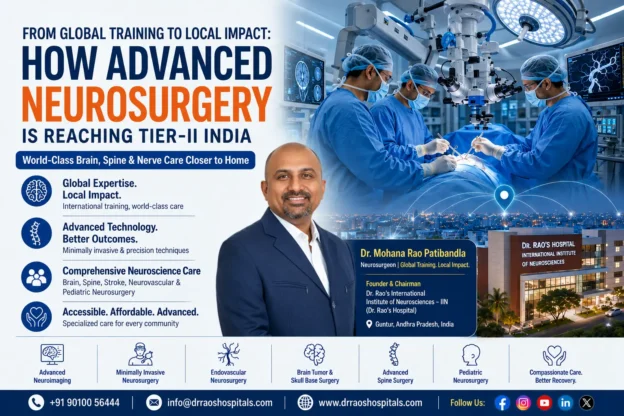
Dr. Mohana Rao Patibandla showcasing how advanced neurosurgery, minimally invasive brain surgery, spine surgery, and neuroscience innovation are transforming healthcare access in Tier-II India through Dr. Rao’s Hospital – International Institute of Neurosciences, Guntur.

Advanced Neurosurgery in Tier-II India


From Global Training to Local Impact: How Advanced Neurosurgery Is Reaching Tier-II India

SOURCE: INDIA.COM 

For decades, patients with complex neurological disorders often believed that the best treatment was available only in major metropolitan cities such as Delhi, Mumbai, Chennai, Bengaluru, or Hyderabad. Whether it was a brain tumor, aneurysm, spinal disorder, epilepsy, stroke, or pediatric neurological condition, families frequently traveled hundreds or even thousands of kilometers seeking specialized care.


This reality created significant challenges. Delayed diagnosis, financial burden, accommodation expenses, loss of income, and prolonged separation from family support systems often became part of the treatment journey.


Today, however, the landscape of neurological care in India is changing dramatically. Advanced neurosurgery is no longer limited to metropolitan hospitals. Through international training, technological innovation, and the development of specialized neuroscience centers, world-class brain, spine, and nerve care is increasingly available in Tier-II cities across India.


A recent India.com feature highlighted this transformation and emphasized how advanced neurosurgery is reaching Tier-II India, bringing sophisticated neurological care closer to patients than ever before.


This shift represents more than a healthcare trend—it is a healthcare revolution that is redefining accessibility, affordability, and quality of care for millions of Indians.


The Historical Challenge of Specialized Neurosurgical Care


SOURCE: INDIA.COM 


Neurosurgery is one of the most complex specialties in medicine. It requires extensive training, highly specialized equipment, multidisciplinary teams, and advanced infrastructure.


Traditionally, such resources were concentrated in major urban centers where academic medical institutions and tertiary hospitals had the funding and patient volume necessary to support sophisticated neuroscience programs.


As a result, patients from smaller cities and towns often faced significant barriers when seeking treatment for neurological disorders.


  • Brain tumors
  • Spinal cord compression
  • Cervical and lumbar disc disease
  • Stroke and aneurysms
  • Pediatric neurological disorders
  • Epilepsy
  • Neurovascular diseases
  • Movement disorders


Many patients delayed treatment because travel was difficult or financially burdensome. Others were diagnosed late because specialized evaluation was unavailable locally.


These challenges highlighted the urgent need to decentralize advanced neurological care and bring expertise closer to where patients live.


The Rise of Tier-II Healthcare Excellence


Over the last decade, India has witnessed remarkable growth in healthcare infrastructure beyond metropolitan regions.


Tier-II cities such as Guntur, Vijayawada, Coimbatore, Nagpur, Surat, Indore, Mysuru, and others have emerged as important healthcare destinations.


Several factors have contributed to this transformation:


  • Improved medical infrastructure
  • Greater availability of advanced technologies
  • Internationally trained specialists returning to India
  • Digital healthcare integration
  • Growing patient awareness
  • Government healthcare initiatives
  • Medical tourism growth


These developments have enabled regional centers to provide highly specialized services that were once available only in major cities.


Global Training, Local Impact


One of the most important drivers behind this transformation has been the return of highly trained specialists who pursued advanced education and fellowships abroad.


International training exposes neurosurgeons to cutting-edge technologies, innovative surgical techniques, multidisciplinary care models, and research-driven healthcare systems.


When these specialists return to India and establish practices in regional cities, they bring global standards of care closer to local communities.


According to the India.com article, this trend is helping bridge the gap between international expertise and regional healthcare access, making advanced neurosurgical treatment increasingly available outside major metropolitan centers.


Patients who once traveled to distant cities can now access sophisticated neurological care closer to home.


The Role of Technology in Neurosurgery


Modern neurosurgery is no longer defined solely by surgical skill. Technology has become an essential component of diagnosis, planning, treatment, and rehabilitation.


Advanced technologies now available in leading regional neuroscience centers include:


  • Neuronavigation systems
  • Intraoperative neuromonitoring
  • High-definition neuroendoscopy
  • Microsurgical operating microscopes
  • Advanced MRI and CT imaging
  • Hybrid operating rooms
  • Biplane neurovascular imaging systems
  • Stereotactic radiosurgery platforms


These technologies help improve surgical precision, reduce complications, and enhance patient outcomes.


External Source:
American Association of Neurological Surgeons (AANS)


Minimally Invasive Neurosurgery: A Major Shift


One of the most significant advancements highlighted in the India.com article is the increasing adoption of minimally invasive neurosurgical techniques.


Traditional neurosurgery often required larger incisions and extensive tissue exposure. Modern minimally invasive approaches enable surgeons to access pathology through smaller corridors while preserving surrounding structures.


Potential advantages include:


  • Smaller incisions
  • Reduced blood loss
  • Shorter hospital stay
  • Faster recovery
  • Reduced postoperative pain
  • Improved cosmetic outcomes


These techniques are transforming the patient experience and making advanced surgery more accessible and acceptable.


Internal Link:

Minimally Invasive Neurosurgery


Creating Comprehensive Neuroscience Ecosystems


Modern neuroscience care extends far beyond surgery.


Patients require comprehensive support across the continuum of care, including diagnosis, surgery, intensive care, rehabilitation, and long-term follow-up.


Leading neuroscience centers increasingly provide:


  • Neurology services
  • Neurosurgery
  • Neurocritical care
  • Stroke management
  • Neuro-oncology
  • Pediatric neurosciences
  • Endovascular neurosurgery
  • Rehabilitation programs


The development of these integrated neuroscience ecosystems is helping patients receive comprehensive care within their own regions.


Guntur as an Emerging Neuroscience Destination


SOURCE: INDIA.COM 

The emergence of specialized neuroscience centers in cities such as Guntur demonstrates how regional healthcare can achieve global standards.


Patients from Andhra Pradesh and neighboring states increasingly seek advanced neurological treatment closer to home rather than traveling to distant metropolitan hospitals.


This shift improves:


  • Accessibility
  • Affordability
  • Family support
  • Continuity of care
  • Long-term rehabilitation outcomes


It also strengthens regional healthcare infrastructure and contributes to broader economic development.


Stroke Care and Neurovascular Innovation


Stroke remains one of the leading causes of disability and death worldwide. Rapid diagnosis and timely intervention are critical because millions of brain cells can be lost every minute during an acute stroke.


Historically, comprehensive stroke treatment was primarily available in major metropolitan centers. Today, advanced stroke care is increasingly being delivered through specialized neuroscience hospitals in Tier-II cities.


Modern stroke management includes:


  • Advanced neuroimaging
  • CT Angiography
  • MRI Brain
  • Mechanical thrombectomy
  • Endovascular interventions
  • Neurocritical care
  • Stroke rehabilitation


The expansion of stroke centers outside metropolitan regions has significantly improved access to life-saving interventions.


External Source:
American Stroke Association


The Growth of Endovascular Neurosurgery


Endovascular neurosurgery represents one of the most rapidly evolving subspecialties in neurosciences.


Using minimally invasive catheter-based techniques, specialists can treat complex vascular conditions through blood vessels rather than traditional open surgery.


Conditions commonly treated include:


  • Brain aneurysms
  • Arteriovenous malformations (AVMs)
  • Acute ischemic stroke
  • Dural arteriovenous fistulas
  • Carotid artery disease


These procedures often result in shorter recovery times, reduced hospital stays, and improved patient comfort.


Internal Link:

Endovascular Neurosurgery


Pediatric Neurosurgery Closer to Home


Children with neurological disorders require highly specialized care tailored to their unique developmental needs.


Previously, many families traveled long distances to obtain pediatric neurosurgical treatment.


Today, specialized pediatric neuroscience programs are becoming increasingly available in regional centers.


Common pediatric neurosurgical conditions include:


  • Hydrocephalus
  • Brain tumors
  • Spinal dysraphism
  • Chiari malformations
  • Epilepsy
  • Craniosynostosis


Access to specialized pediatric care closer to home reduces emotional stress for families and improves continuity of care.


Advances in Brain Tumor and Skull Base Surgery


Brain tumor treatment has undergone remarkable transformation over the past two decades.


Advanced technologies now allow neurosurgeons to treat complex tumors with greater precision while preserving neurological function.


Modern approaches include:


  • Microsurgical tumor removal
  • Endoscopic skull base surgery
  • Neuronavigation-guided surgery
  • Functional brain mapping
  • Stereotactic radiosurgery


These innovations have significantly improved outcomes for patients with complex intracranial pathology.


Internal Link:

Brain Tumor Treatment in Guntur


The Economic Impact of Regional Healthcare Excellence


The development of advanced healthcare infrastructure in Tier-II cities generates benefits beyond patient care.


Regional centers contribute to:


  • Job creation
  • Medical education
  • Healthcare innovation
  • Research opportunities
  • Economic growth
  • Medical tourism


When patients receive treatment locally, they often spend less on travel, accommodation, and associated costs.


This improves healthcare affordability while supporting regional economic development.


Medical Tourism Beyond Metropolitan Cities


India has become a major destination for medical tourism because of its highly trained specialists and cost-effective healthcare.


While metropolitan cities have traditionally dominated this sector, Tier-II centers are increasingly attracting patients from across India and abroad.


Key advantages include:


  • Lower treatment costs
  • Reduced waiting times
  • Personalized care
  • Modern infrastructure
  • Specialized expertise


As healthcare infrastructure continues to expand, regional centers are expected to play an increasingly important role in India’s medical tourism ecosystem.


The Future of Neurosurgery in India


The future of neurosurgery is being shaped by rapid technological innovation and increasing accessibility.


Emerging developments include:


  • Artificial intelligence-assisted diagnostics
  • Advanced robotics
  • Enhanced neuroimaging
  • Precision medicine
  • Genomic-based therapies
  • Tele-neurosurgery collaboration
  • Expanded minimally invasive approaches


As these technologies become more accessible, patients across India will continue benefiting from improved neurological care regardless of geographic location.


The India.com article highlights that advanced neurosurgical expertise, once concentrated primarily in metropolitan centers, is increasingly reaching regional cities and improving healthcare access for millions of Indians.


Conclusion


India’s neurological healthcare landscape is undergoing a remarkable transformation.


Through international training, technological innovation, minimally invasive techniques, and the development of comprehensive neuroscience ecosystems, advanced neurosurgical care is becoming more accessible than ever before.


Patients in Tier-II cities no longer need to assume that world-class treatment exists only in major metropolitan centers.


The emergence of specialized neuroscience institutions in regional cities demonstrates that excellence in healthcare can thrive beyond traditional urban hubs.


As more internationally trained specialists establish advanced facilities across India, patients can increasingly access sophisticated brain, spine, stroke, and neurovascular care closer to home.


The story of Indian healthcare is no longer solely about excellence in metropolitan cities—it is increasingly about bringing excellence to every corner of the country. Neurosurgery is leading that transformation.


Frequently Asked Questions (FAQ)

1. Why are patients increasingly choosing Tier-II cities for neurosurgery?

Advanced technologies, internationally trained specialists, comprehensive neuroscience centers, and lower treatment costs are making Tier-II cities attractive healthcare destinations.


2. What is minimally invasive neurosurgery?

Minimally invasive neurosurgery uses smaller surgical corridors and advanced technologies to reduce tissue trauma and improve recovery.


3. Can stroke treatment be performed in Tier-II cities?

Yes. Many advanced neuroscience centers now provide comprehensive stroke care, including mechanical thrombectomy and neurocritical care services.


4. What conditions are treated by endovascular neurosurgery?

Brain aneurysms, AVMs, stroke, carotid artery disease, and several neurovascular disorders can often be treated through endovascular techniques.


5. Why is multidisciplinary neuroscience care important?

Complex neurological disorders often require collaboration between neurologists, neurosurgeons, neuro-oncologists, neuroradiologists, rehabilitation specialists, and critical care teams.


Related Internal Links


Keywords

best neurosurgeon in Guntur, advanced neurosurgery India, minimally invasive neurosurgery, brain surgery in Guntur, spine surgery in Guntur, Dr Mohana Rao Patibandla, neurosurgery in Tier II India, neuroscience hospital India, advanced brain surgery, endovascular neurosurgery, stroke treatment in Guntur, brain tumor surgery India, skull base surgery India, pediatric neurosurgery India, neurovascular surgery India, minimally invasive spine surgery, advanced neurological care, healthcare innovation India, international neurosurgery training, medical tourism India, neuroscience excellence, regional healthcare India, advanced stroke care, neuronavigation surgery, neuro oncology treatment, comprehensive neuroscience center, advanced spine surgery, healthcare accessibility India, best neurologist in Guntur, International Institute of Neurosciences


Contact Us

Dr. Rao’s Hospital – International Institute of Neurosciences (IIN)
12-19-67, Old Bank Road, Kothapet, Besides AK Biryani Point, Guntur, Andhra Pradesh

📞 +91 9010056444
📧 info@drraoshospitals.com
🌐 https://drraoshospitals.com/


Follow Us

Facebook |
Instagram |
LinkedIn |
YouTube |
X (Twitter) |
Google Maps

SOURCE: INDIA.COM 

“`

The best Minimally Invasive Keyhole Endoscopic Spine Surgery in Guntur

How Keyhole Neurosurgery Is Transforming Brain and Spine Care in India – Dr. Rao’s IIN


How Minimally Invasive Keyhole Neurosurgery Is Revolutionizing Brain and Spine Care in India


Modern neurosurgery has entered an era of remarkable transformation driven by advanced imaging, precision-guided technologies, minimally invasive surgical systems, and sophisticated neurosciences innovation.


Historically, many neurological and spine surgeries required large surgical openings and extensive tissue manipulation to reach delicate structures deep within the brain or spine.


While traditional surgical techniques saved countless lives, they were often associated with longer hospitalization, greater tissue disruption, postoperative pain, and extended rehabilitation periods.


Today, minimally invasive keyhole neurosurgery is changing this landscape by enabling surgeons to perform selected procedures through smaller openings while preserving surrounding neurological structures and improving recovery outcomes.


A recent Times of India feature highlighted this transformation through the recognition awarded to Dr. Mohana Rao Patibandla as the Best Minimally Invasive Keyhole Neurosurgeon and Spine Surgeon at the prestigious Radiocity FM 91.1 Icon Awards.


Primary Source: Times of India – Dr. Mohana Rao Patibandla Honoured as Best Minimally Invasive Keyhole Neurosurgeon and Spine Surgeon


The Complexity of Brain and Spine Surgery


Neurosurgery remains one of the most technically demanding specialties in medicine because it involves structures responsible for:


  • Movement
  • Speech
  • Memory
  • Vision
  • Cognition
  • Sensory function


The brain and spinal cord contain highly delicate neural pathways and vascular structures where even small surgical inaccuracies may potentially affect long-term neurological function.


Conditions commonly requiring neurosurgical or spine intervention include:


  • Brain tumors
  • Spinal cord compression
  • Disc prolapse
  • Stroke-related disorders
  • Traumatic injuries
  • Neurovascular diseases
  • Degenerative spine disease


Modern neurosurgery therefore depends heavily on precision, technology integration, multidisciplinary collaboration, and continuous innovation.


American Association of Neurological Surgeons


What Is Minimally Invasive Keyhole Neurosurgery?


Keyhole neurosurgery is an advanced minimally invasive surgical technique that allows surgeons to access neurological pathology through smaller surgical openings using specialized instruments, microscopes, endoscopes, and neuronavigation systems.


According to the Times of India article, Dr. Mohana Rao Patibandla has become widely recognized for advancing minimally invasive keyhole neurosurgery and spine surgery in India.


Unlike traditional open surgery, keyhole approaches focus on:


  • Smaller incisions
  • Microsurgical precision
  • Reduced tissue disruption
  • Enhanced visualization
  • Function preservation


These techniques often utilize:


  • Operating microscopes
  • Endoscopic systems
  • Advanced neuroimaging
  • Neuronavigation
  • Intraoperative monitoring


Modern keyhole surgery represents one of the most important advancements in contemporary neurosciences.


The Benefits of Minimally Invasive Neurosurgery


The evolution of minimally invasive surgery has significantly improved patient care in selected neurological and spinal conditions.


Potential advantages may include:


  • Reduced blood loss
  • Less postoperative pain
  • Shorter hospitalization
  • Smaller surgical scars
  • Faster recovery
  • Reduced tissue trauma


The Times of India article emphasizes Dr. Rao’s dedication toward advancing minimally invasive surgery to improve patient outcomes and accessibility.


Modern healthcare increasingly prioritizes preserving function while minimizing surgical disruption.


Minimally Invasive Neurosurgery at Dr. Rao’s Hospital


The Evolution of Minimally Invasive Spine Surgery


Spine surgery has also undergone major transformation through minimally invasive approaches.


Traditional spine procedures often involved:


  • Larger muscle dissection
  • Greater blood loss
  • Longer recovery time
  • Extended rehabilitation


Modern minimally invasive spine surgery now enables selected procedures through smaller corridors while preserving muscles and surrounding tissues.


Conditions commonly treated using minimally invasive spine techniques may include:


  • Lumbar disc prolapse
  • Cervical disc disease
  • Spinal stenosis
  • Degenerative spine disorders
  • Selected spinal tumors


These advancements have significantly improved postoperative rehabilitation and patient mobility.


North American Spine Society


International Training and Global Exposure


The Times of India feature highlights Dr. Rao’s international training experience in the United States, Europe, and Japan.


Global exposure often provides neurosurgeons experience with:


  • Advanced surgical technologies
  • Research-oriented healthcare systems
  • Complex multidisciplinary care
  • Modern operating room infrastructure
  • Evidence-based medicine


Such international training frequently influences long-term institutional vision and innovation-driven healthcare development.


The article emphasizes how these experiences shaped Dr. Rao’s patient-centered approach focused on precision and innovation.


The Importance of Regional Neurosciences Infrastructure


One of the most important themes reflected throughout the article is the expansion of advanced neurological care beyond metropolitan cities.


Historically, many patients from smaller towns traveled long distances seeking:


  • Complex brain surgery
  • Advanced spine surgery
  • Stroke intervention
  • Neuro-oncology care
  • Endovascular treatment


This often created:


  • Financial burden
  • Treatment delays
  • Interrupted rehabilitation
  • Accessibility challenges


According to the Times of India article, Dr. Rao’s dedication toward accessible and high-quality care has benefited patients from Andhra Pradesh, Telangana, and neighboring states.


Regional neuroscience systems improve:


  • Emergency accessibility
  • Continuity of treatment
  • Patient convenience
  • Long-term rehabilitation support


Technology Is Transforming Neurosciences


Modern neurological care increasingly depends on sophisticated technologies including:


  • Neuronavigation systems
  • Advanced MRI imaging
  • Microsurgical operating microscopes
  • Endoscopic systems
  • Intraoperative neuromonitoring
  • Precision-guided surgical platforms


These technologies improve:


  • Surgical planning
  • Precision
  • Safety
  • Neurological preservation
  • Patient recovery


The future of neurosurgery will increasingly depend on integrating technology with human expertise and ethical patient-centered care.


The Human Side of Neurosurgery


Despite technological advancements, neurological care remains deeply human.


Patients facing brain or spine disorders often experience:


  • Fear
  • Anxiety
  • Concerns regarding disability
  • Emotional uncertainty
  • Questions about long-term recovery


Modern healthcare therefore requires not only technical expertise but also:


  • Compassion
  • Communication
  • Empathy
  • Trust
  • Long-term rehabilitation support


The Times of India article repeatedly reflects themes of dedication toward innovation, patient care, and medical excellence.


Recognition and Healthcare Leadership


Healthcare awards frequently recognize broader contributions toward innovation, accessibility, and patient-centered care.


The article notes several recognitions associated with Dr. Rao’s contributions, including:


  • Brain Lab Neurosurgery Award
  • Leaders Award
  • Atal Achievement Award


Such recognitions highlight the growing importance of innovation-driven neurological care within India’s healthcare ecosystem.


The Future of Keyhole Neurosurgery in India


India’s neurosciences ecosystem continues evolving rapidly through:


  • Artificial intelligence-assisted diagnostics
  • Robotic surgery
  • Advanced neuroimaging
  • Precision-guided surgery
  • Minimally invasive systems
  • Endovascular intervention


At the same time, future healthcare transformation will depend heavily on:


  • Regional accessibility
  • Advanced training
  • Ethical healthcare systems
  • Continuous innovation
  • Patient-centered treatment


Institutions capable of combining advanced technology with compassionate care are likely to shape the future of neurological treatment across India.


Conclusion


The recognition awarded to Dr. Mohana Rao Patibandla as Best Minimally Invasive Keyhole Neurosurgeon and Spine Surgeon reflects a broader transformation occurring within India’s neurosciences ecosystem.


Modern neurological and spinal care increasingly depends on:


  • Minimally invasive surgery
  • Advanced imaging technologies
  • Precision-guided systems
  • Multidisciplinary expertise
  • Patient-centered care


Institutions such as Dr. Rao’s Hospital – International Institute of Neurosciences represent an important part of India’s expanding commitment toward accessible, innovation-driven, and ethically focused neurosciences care.


As minimally invasive surgery continues evolving globally, the integration of precision technology, surgical expertise, and compassionate healthcare will likely define the next era of brain and spine treatment in India.


Frequently Asked Questions (FAQ)


1. What is keyhole neurosurgery?

Keyhole neurosurgery is a minimally invasive surgical technique using smaller openings and advanced imaging systems to reduce tissue disruption.


2. What are the benefits of minimally invasive spine surgery?

Benefits may include smaller incisions, less pain, shorter hospitalization, and faster recovery.


3. Why is neuronavigation important in neurosurgery?

Neuronavigation helps surgeons identify safer surgical pathways and improve precision during brain and spine surgery.


4. Why are regional neuroscience centers important?

They improve accessibility to advanced neurological and spine care outside major metropolitan cities.


5. Who is Dr. Mohana Rao Patibandla?

Dr. Mohana Rao Patibandla is an internationally trained neurosurgeon and founder of Dr. Rao’s Hospital – International Institute of Neurosciences.


Internal Links


Call To Action

If you or your loved one is experiencing neurological symptoms such as persistent headaches, seizures, spinal pain, weakness, stroke warning signs, or neurological disorders, timely expert evaluation is essential.


Dr. Rao’s Hospital – International Institute of Neurosciences
12-19-67, Old Bank Road, Kothapet, Besides AK Biryani Point, Guntur, Andhra Pradesh

Phone: +91 9010056444

Email: info@drraoshospitals.com

Website: https://drraoshospitals.com/


Connect With Us

“`

Dr. Mohana Rao Patibandla presenting on Percutaneous Endoscopic Lumbar Discectomy (PELD) at NEUROENDOCON 2026 conference in Jaipur

Neuroendoscopy Revolution: Insights from NEUROENDOCON 2026

Neuroendoscopy Revolution: Insights from NEUROENDOCON 2026

The field of neurosurgery is undergoing a profound transformation—driven by precision, minimal invasiveness, and advanced technology. Neuroendoscopy is at the forefront of this revolution, redefining how complex brain and spine disorders are treated.
 

This shift was prominently showcased at NEUROENDOCON 2026, the 12th Annual Conference of the Neuroendoscopy Society of India held in Jaipur. The event brought together leading neurosurgeons, innovators, and researchers to discuss cutting-edge advancements in minimally invasive neurosurgery.

Among the distinguished faculty was Dr. Mohana Rao Patibandla, Founder of Dr. Rao’s Hospital, who shared key insights into modern neurosurgical techniques.

Learn more:
https://drraoshospitals.com


NEUROENDOCON 2026: A Platform for Innovation

The conference served as a hub for innovation, featuring:

  • Cadaveric hands-on workshops
  • Live surgical demonstrations
  • Case-based discussions
  • Expert panel sessions

The central theme was clear: Minimally invasive neurosurgery is the future.


The Rise of Neuroendoscopy

Traditional neurosurgery often involved large incisions and prolonged recovery. Neuroendoscopy has transformed this approach by offering:

  • Smaller incisions
  • Reduced tissue damage
  • Enhanced visualization
  • Faster recovery
  • Improved surgical precision

This aligns with modern neurosurgical philosophy—precision and individualized care.


Transforming Spine Surgery: PELD

One of the key highlights of Dr. Rao’s presentation was Percutaneous Endoscopic Lumbar Discectomy (PELD).

This minimally invasive spine surgery offers:

  • Tiny incision
  • Minimal muscle damage
  • Faster recovery
  • Early mobilization

Dr. Rao emphasized that patient selection and surgical planning are critical for success.


Trigeminal Neuralgia: Advanced Endoscopic Solutions

Trigeminal neuralgia, one of the most painful neurological conditions, can now be treated more effectively using endoscopic techniques.

Endoscopic-assisted microvascular decompression (MVD) allows:

  • Better visualization of nerve compression
  • Improved surgical precision
  • Reduced recurrence rates

Endoscopic Pituitary Surgery

Endoscopic transnasal surgery for pituitary tumors represents a major advancement in skull base surgery.

  • No external scars
  • Enhanced visualization
  • Shorter hospital stay
  • Better outcomes

Modern techniques include neuronavigation and high-definition imaging systems.


Technology Driving Neurosurgery

NEUROENDOCON 2026 highlighted the role of technology in neurosurgery:

  • Neuronavigation systems
  • Intraoperative imaging
  • High-definition endoscopy
  • Biplane cath labs

These innovations significantly improve surgical safety and outcomes.


Dr. Rao’s Hospital: A Center of Excellence

Dr. Rao’s Hospital in Guntur, Andhra Pradesh, is a leading center for:

  • Neurosurgery
  • Neurology
  • Spine surgery
  • Neuro-oncology
  • Endovascular procedures

The hospital is equipped with advanced infrastructure and follows globally accepted treatment protocols.

Visit:
https://drraoshospitals.com


The Future of Neurosurgery

The future is shifting toward:

  • Minimally invasive procedures
  • Personalized treatment
  • Function preservation
  • Technology-driven precision

Patients can expect faster recovery, less pain, and better outcomes.


Conclusion

NEUROENDOCON 2026 reinforced that neurosurgery is entering a new era—one defined by innovation, precision, and patient-centric care.

With experts like Dr. Mohana Rao Patibandla and institutions like Dr. Rao’s Hospital leading the way, patients now have access to world-class neurosurgical care in India.


Contact Dr. Rao’s Hospital

📞 Phone: +91 90100 56444
📧 Email: info@drraoshospitals.com
🌐 Website: https://drraoshospitals.com


Frequently Asked Questions (FAQs)

What is neuroendoscopy?

Neuroendoscopy is a minimally invasive surgical technique that uses a small camera (endoscope) to treat brain and spine conditions with high precision and minimal tissue damage.

What is PELD surgery?

Percutaneous Endoscopic Lumbar Discectomy (PELD) is a minimally invasive spine surgery used to treat slipped discs with faster recovery and less pain.

Is endoscopic brain surgery safe?

Yes, endoscopic brain surgery is considered safe when performed by experienced neurosurgeons, offering reduced complications and faster healing.

What conditions can be treated with neuroendoscopy?

Neuroendoscopy is used for conditions like pituitary tumors, hydrocephalus, trigeminal neuralgia, and spinal disc herniations.

Where can I get advanced neuroendoscopy treatment in India?

Dr. Rao’s Hospital in Guntur offers advanced neuroendoscopy and minimally invasive neurosurgery with state-of-the-art technology.