
Stroke, Brain Haemorrhage or Head Injury? Every Minute Matters.
Time is Brain. Every minute during a neurological emergency can determine whether a person walks, speaks, remembers, or survives. Early recognition and immediate treatment save brain cells and save lives.
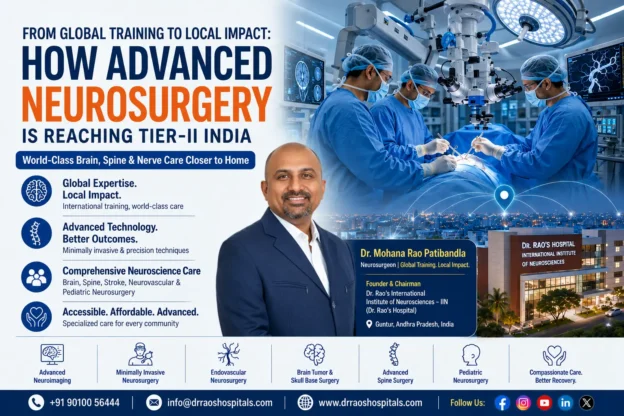
Expert Medical Review: Dr. Mohana Rao Patibandla, Founder & Chief Neurosurgeon, Dr. Rao’s Hospital – International Institute of Neurosciences (IIN), Guntur, Andhra Pradesh, India.
Published for: Patient Education • World-Class Emergency Brain Care • Stroke Awareness Campaign 2026
About the Author – Dr. Mohana Rao Patibandla
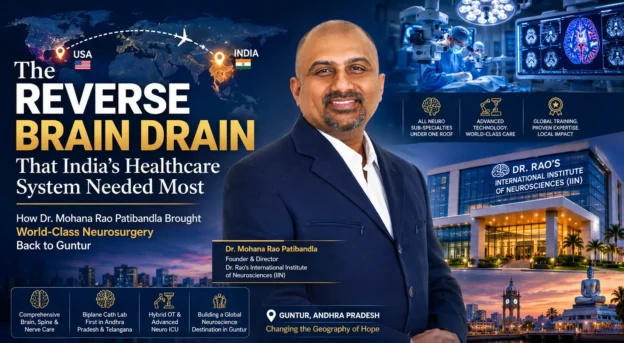
Dr. Mohana Rao Patibandla is the Founder, Chairman & Managing Director and Chief Neurosurgeon at Dr. Rao’s Hospital – International Institute of Neurosciences (IIN), Guntur, Andhra Pradesh.
With over 24 years of medical experience and international fellowship training in cerebrovascular neurosurgery, skull base surgery, pediatric neurosurgery, minimally invasive neurosurgery, neuro-oncology, endovascular neurosurgery, and stereotactic radiosurgery in the United States, Dr. Rao specializes in treating complex neurological emergencies including stroke, brain haemorrhage, traumatic brain injury, aneurysms, brain tumors, and spine trauma.
Dr. Rao’s Hospital is one of Andhra Pradesh’s advanced neuroscience centers providing emergency stroke care, neuro trauma surgery, minimally invasive brain surgery, neurocritical care, endovascular interventions, and advanced neurological rehabilitation.
Table of Contents
- What is a Neurological Emergency?
- Why Every Minute Matters — Time is Brain
- Who is at Risk of Stroke, Brain Haemorrhage and Head Injury?
- When Should You Seek Emergency Medical Care?
- Where Should Patients Receive Stroke Treatment?
- How Does Emergency Brain Care Save Lives?
- Stroke vs Brain Haemorrhage vs Head Injury
- FAST Stroke Recognition Guide
- Brain Emergency Centre: Why It Matters
- Artificial Intelligence in Stroke Diagnosis
- Stroke Prevention Checklist
- Frequently Asked Questions
Introduction
Every family knows someone who has experienced a heart attack. Most people immediately recognize chest pain as an emergency and rush to a hospital. However, when someone suddenly develops facial drooping, weakness of an arm, difficulty speaking, confusion, or collapses after a head injury, many families wait. They hope symptoms improve, visit multiple clinics, or mistake neurological symptoms for fatigue, dehydration, migraine, or low blood sugar.
This delay can permanently damage the brain.
What is a Neurological Emergency?
A neurological emergency is any sudden condition affecting the brain, spinal cord, or nerves that requires immediate medical attention to prevent permanent disability or death.
Common Neurological Emergencies
- Stroke (ischemic stroke).
- Brain haemorrhage (bleeding inside the brain).
- Traumatic brain injury after accidents or falls.
- Subdural or epidural hematoma.
- Brain aneurysm rupture.
- Status epilepticus (continuous seizures).
- Acute spinal cord injury.
Key Message
Unlike many illnesses that develop gradually, neurological emergencies evolve minute by minute. Brain tissue begins suffering damage almost immediately when blood flow stops or bleeding increases inside the skull.
What Happens During a Stroke?
Stroke occurs when blood supply to part of the brain is interrupted, preventing oxygen and nutrients from reaching brain tissue. Brain cells begin dying within minutes.
What Happens During a Brain Haemorrhage?
Brain haemorrhage occurs when a blood vessel ruptures, causing blood to accumulate inside or around the brain. Increasing pressure damages healthy brain tissue and can rapidly become life-threatening.
What Happens After a Head Injury?
Traumatic brain injury may cause bleeding, swelling, or bruising inside the skull. Importantly, patients may initially appear normal before deteriorating hours later.
Why Every Minute Matters — Understanding “Time is Brain”
The phrase “Time is Brain” is one of the most important concepts in emergency neurology. Every passing minute during an untreated stroke or brain haemorrhage results in irreversible brain injury.
Why Early Treatment Changes Outcomes
- Preserves speech and language.
- Protects movement and muscle strength.
- Reduces paralysis.
- Improves memory and thinking.
- Increases independence after recovery.
- Reduces long-term disability and mortality.
Why Families Should Never Wait
Many patients lose precious treatment time because symptoms are ignored or underestimated. Waiting at home or visiting multiple healthcare facilities before reaching a specialized neuroscience center can reduce treatment options.
Early CT scanning, MRI when indicated, neurosurgical consultation, thrombolysis for eligible stroke patients, thrombectomy for selected patients, emergency surgery for brain haemorrhage, and neurocritical care all depend on rapid arrival.
Who is at Risk of Stroke, Brain Haemorrhage and Head Injury?
Neurological emergencies can affect anyone—from young adults to elderly patients—but certain individuals have significantly higher risk.
Who is at Higher Risk of Stroke?
| Risk Factor | Why It Matters |
|---|---|
| High Blood Pressure | Most important modifiable cause of stroke and brain haemorrhage. |
| Diabetes | Damages blood vessels supplying the brain. |
| Smoking | Accelerates vascular disease and increases stroke risk. |
| High Cholesterol | Contributes to blocked brain arteries. |
| Heart Disease / Atrial Fibrillation | Can produce clots that travel to the brain. |
| Obesity & Physical Inactivity | Increase cardiovascular and cerebrovascular risk. |
| Family History | May increase inherited vascular risk. |
Who is at Risk of Brain Haemorrhage?
- Patients with uncontrolled hypertension.
- Patients taking blood thinners.
- Individuals with cerebral aneurysms or vascular malformations.
- Elderly patients with fragile blood vessels.
Who is at Risk of Head Injury?
- Road traffic accident victims.
- Two-wheeler riders without helmets.
- Elderly people after falls.
- Children during sports or falls.
- Industrial and workplace injuries.
Important Clinical Message
A patient may walk, talk, or appear completely normal immediately after a head injury. This does NOT exclude dangerous bleeding inside the brain.
Dr. Rao’s Hospital – International Institute of Neurosciences (IIN)
Advanced Stroke Care | Brain Haemorrhage Surgery | Neuro Trauma | Endovascular Neurosurgery | Neurocritical Care
 12-19-67, Old Bank Road, Kothapet,
Opp. Sravani Hospital, Guntur – 522001,
Andhra Pradesh, India.
 +91 90100 56444
 www.drraoshospitals.com
 info@drraoshospitals.com
When Should You Seek Emergency Medical Care?
One of the biggest mistakes families make is waiting for neurological symptoms to improve.
Unlike many illnesses, neurological emergencies worsen minute by minute.
Immediate evaluation can prevent permanent disability and improve survival.
Go to the Emergency Department Immediately if Any of These Symptoms Appear
- Sudden weakness or numbness on one side of the body.
- Sudden facial drooping.
- Difficulty speaking or understanding speech.
- Sudden loss of vision in one or both eyes.
- Sudden severe headache unlike previous headaches.
- Loss of consciousness.
- Confusion after a fall or accident.
- Repeated vomiting after head injury.
- Seizures after a head injury or stroke symptoms.
- Difficulty walking, imbalance, or dizziness with neurological symptoms.
The Golden Hour in Stroke Care
The first few hours after stroke symptoms begin are the most critical.
Patients who receive specialized treatment early have significantly better neurological outcomes.
Every minute saved means more brain tissue can potentially be preserved.
Do Not Wait for Symptoms to Improve
Seek emergency neurological evaluation immediately if symptoms last even a few minutes.
- Do not sleep after sudden neurological symptoms.
- Do not drive yourself if stroke symptoms begin.
- Do not take painkillers hoping symptoms disappear.
- Call emergency medical services or reach the nearest Brain Emergency Centre immediately.
Where Should Stroke, Brain Haemorrhage, and Head Injury Be Treated?
Every hospital is not equipped to provide comprehensive emergency brain care.
Neurological emergencies require coordinated evaluation by emergency physicians,
neurologists, neurosurgeons, neuroradiologists, neuro-anesthesiologists,
and neurocritical care specialists.
What is a Brain Emergency Centre?
A Brain Emergency Centre is a dedicated neuroscience emergency pathway where diagnosis,
imaging, intervention, surgery, and intensive care happen without unnecessary delays.
Brain Emergency Centre Facilities | Why They Matter |
|---|---|
| 24×7 Emergency Neurosurgery | Immediate surgical treatment for brain haemorrhage and traumatic brain injury. |
| CT Scan Available Immediately | Rapid diagnosis of stroke and intracranial bleeding. |
| MRI Brain | Identifies early ischemic stroke and complex neurological conditions. |
| Neuro ICU | Continuous neurological monitoring and critical care. |
| Stroke Pathway | Rapid thrombolysis and thrombectomy evaluation. |
| Hybrid Operating Theatre | Advanced cerebrovascular and minimally invasive procedures. |
| Biplane Neuro Cath Lab | Endovascular stroke and aneurysm treatment. |
| Neuro Rehabilitation | Early recovery planning from the first day of treatment. |
Why Dr. Rao’s Hospital – International Institute of Neurosciences (IIN)?
Dr. Rao’s Hospital in Guntur provides comprehensive emergency brain care including:
- 24/7 Stroke & Brain Emergency Evaluation.
- Emergency CT Brain and MRI Brain Imaging.
- Microsurgery for Brain Haemorrhage.
- Endovascular Stroke & Aneurysm Treatment.
- Neurocritical Care ICU.
- Advanced Neuro Trauma Surgery.
- Minimally Invasive Neurosurgery.
- Neuronavigation and Hybrid Neurosurgery.
How Does Emergency Brain Care Save Lives?
Modern neuroscience has dramatically improved outcomes after stroke, brain haemorrhage, and traumatic brain injury. The key is delivering the correct treatment without delay.
Emergency Brain Care Timeline
| Time | Emergency Action |
|---|---|
| 0–10 Minutes | Emergency neurological assessment and stabilization. |
| 10–25 Minutes | Immediate CT Brain imaging to differentiate stroke from brain haemorrhage. |
| 25–45 Minutes | Neurosurgeon and stroke team evaluation. |
| 45–60 Minutes | Treatment decision — thrombolysis, thrombectomy, surgery, or ICU management. |
| First Few Hours | Brain-saving intervention and neurocritical care. |
What Happens During Emergency Stroke Treatment?
- Neurological examination.
- CT Brain immediately.
- MRI Brain if required.
- Blood investigations.
- Blood pressure stabilization.
- Stroke severity assessment.
- Thrombolysis eligibility assessment.
- Mechanical thrombectomy evaluation.
- Neuro ICU admission when necessary.
How Brain Haemorrhage is Managed
- Emergency CT Brain confirms bleeding.
- Control blood pressure.
- Reverse blood-thinning medications when appropriate.
- Emergency neurosurgery if indicated.
- Neuro ICU monitoring for swelling and intracranial pressure.
How Head Injury is Managed
- CT Brain for all significant head injuries.
- Observation for delayed deterioration.
- Emergency surgery for hematomas when indicated.
- ICP monitoring in severe traumatic brain injury.
- Neurocritical care and rehabilitation.
Stroke vs Brain Haemorrhage vs Head Injury
Condition | What Happens? | Common Symptoms | Emergency? |
|---|---|---|---|
| Ischemic Stroke | Blood clot blocks blood supply to the brain. | Weakness, facial droop, speech difficulty, vision loss. | YES — Immediate Stroke Treatment. |
| Brain Haemorrhage | Blood vessel ruptures causing bleeding inside the brain. | Sudden severe headache, vomiting, seizures, confusion. | YES — Immediate Neurosurgical Evaluation. |
| Traumatic Brain Injury | Impact damages the brain and may cause bleeding. | Loss of consciousness, vomiting, headache, confusion, sleepiness. | YES — Immediate CT Brain. |
| Subdural Hematoma | Bleeding develops around the brain after injury. | Initially normal, later confusion, headache, weakness. | YES — Surgical Emergency in Selected Patients. |
| Epidural Hematoma | Rapid bleeding between skull and dura after trauma. | Brief recovery followed by deterioration. | YES — Immediate Neurosurgery. |
Important Clinical Message
A patient talking normally after a fall does not rule out brain bleeding.
The “lucid interval” is a dangerous period where bleeding continues silently.
FAST: Every Family Should Know These Stroke Warning Signs
FAST is the simplest way to recognize stroke symptoms and seek emergency treatment immediately.
F.A.S.T.
| FAST | Meaning |
|---|---|
| F — Face | Ask the person to smile. One side of the face droops. |
| A — Arm | Ask the person to raise both arms. One arm drifts downward or feels weak. |
| S — Speech | Speech becomes slurred, confused, or difficult to understand. |
| T — Time | Call emergency medical services and reach a Brain Emergency Centre immediately. |
Additional Stroke Symptoms Families Should Never Ignore
- Sudden numbness.
- Sudden imbalance.
- Sudden dizziness.
- Sudden double vision.
- Sudden difficulty swallowing.
- Sudden confusion.
- Sudden severe headache.
Remember
Even if symptoms improve after a few minutes, seek emergency evaluation immediately. A transient neurological episode may be a warning sign of a major stroke.
Five Brain Emergency Symptoms That Should Never Be Ignored
- Sudden Facial Drooping
A crooked smile or uneven face may indicate stroke. - Weakness in One Arm or Leg
Sudden inability to lift an arm or walk normally requires emergency evaluation. - Difficulty Speaking
Slurred speech or inability to understand words is an emergency. - Sudden Severe Headache
The worst headache of life may indicate brain haemorrhage. - Confusion or Loss of Consciousness After a Fall
Never ignore sleepiness, repeated vomiting, or increasing confusion after head injury.
Emergency Care for Brain Haemorrhage
Brain haemorrhage is often mistaken for migraine, food poisoning, or general weakness because symptoms vary depending on the location of bleeding.
Symptoms of Brain Haemorrhage
- Sudden severe headache.
- Vomiting.
- Drowsiness.
- Confusion.
- Seizures.
- Weakness on one side.
- Loss of consciousness.
Emergency Management Includes
- Immediate CT Brain.
- Blood pressure management.
- Correction of coagulation abnormalities.
- Emergency neurosurgery when required.
- Neuro ICU monitoring.
Brain Haemorrhage is Treatable
Early diagnosis allows neurosurgeons to relieve pressure,
remove hematomas in selected patients,
and improve survival through timely intervention.
Head Injury Can Be More Dangerous Than It Looks
India reports millions of traumatic brain injuries every year, especially due to road traffic accidents and falls.
The Lucid Interval
One of the most dangerous phenomena after head injury is the lucid interval.
| Immediately After Injury | Hours Later |
|---|---|
| Patient wakes up. | Progressive headache develops. |
| Patient walks normally. | Repeated vomiting begins. |
| Patient says “I am fine.” | Increasing sleepiness and confusion occur. |
| Family assumes recovery. | Brain bleeding enlarges inside the skull. |
Head Injury Safety Checklist
- Wear ISI-certified helmets.
- Use seat belts every journey.
- Prevent falls in elderly family members.
- Seek emergency care after significant head injury.
- Do not ignore delayed symptoms.
Artificial Intelligence (AI) is Changing Stroke Diagnosis
Artificial Intelligence is becoming an important support tool in emergency stroke care.
Modern AI-assisted imaging systems help identify suspected stroke,
brain haemorrhage, and large vessel occlusion more rapidly,
helping emergency teams prioritize treatment.
How AI Helps Emergency Stroke Teams
| AI Application | Clinical Benefit |
|---|---|
| CT Brain Image Analysis | Rapid identification of suspected brain haemorrhage. |
| Stroke Detection Algorithms | Earlier identification of ischemic stroke patterns. |
| Large Vessel Occlusion Detection | Helps identify thrombectomy candidates faster. |
| Emergency Workflow Prioritization | Alerts stroke teams quickly. |
| Tele-Neurosurgery Support | Allows remote expert review of CT scans. |
AI Supports Doctors — It Does Not Replace Neurosurgeons
Artificial Intelligence can assist emergency physicians by rapidly analyzing imaging,
but final diagnosis and treatment decisions require experienced neurologists,
neurosurgeons, neuroradiologists, and neurocritical care specialists.
AI and Stroke Care at Dr. Rao’s Hospital
Dr. Rao’s Hospital – International Institute of Neurosciences (IIN)
combines advanced neuroimaging, neuronavigation, hybrid operating theatres,
endovascular stroke care, neurocritical care,
and evidence-based clinical decision-making to provide comprehensive emergency brain care.
Emergency Stroke, Brain Haemorrhage & Head Injury Care — Dr. Rao’s Hospital
Time is Brain. Don’t Wait.
✔ 24×7 Emergency Neurosurgery
✔ Stroke Evaluation & Treatment Pathway
✔ Brain Haemorrhage Surgery
✔ Neuro Trauma & Head Injury Surgery
✔ Neuro ICU & Rehabilitation
Dr. Rao’s Hospital – International Institute of Neurosciences (IIN)
12-19-67, Old Bank Road, Kothapet,
Opp. Sravani Hospital, Guntur – 522001,
Andhra Pradesh, India.
+91 90100 56444 www.drraoshospitals.com info@drraoshospitals.com
How to Prevent Stroke, Brain Haemorrhage, and Head Injuries
Prevention remains the most effective treatment for many neurological emergencies. The majority of stroke risk factors can be controlled through lifestyle changes,
early diagnosis, and regular medical care.
Brain Health Begins with Prevention
Healthy blood vessels mean a healthier brain. Protecting your heart also protects your brain.
Stroke Prevention Checklist
Prevention Strategy | Why It Matters |
|---|---|
| Control Blood Pressure | High blood pressure is the leading preventable cause of stroke and brain haemorrhage. |
| Control Diabetes | Reduces damage to blood vessels supplying the brain. |
| Quit Smoking | Smoking significantly increases stroke, aneurysm, and vascular disease risk. |
| Reduce Cholesterol | Helps prevent artery blockage leading to ischemic stroke. |
| Exercise Regularly | Improves cardiovascular and cerebrovascular health. |
| Healthy Diet | Reduces obesity, hypertension, and diabetes risk. |
| Maintain Healthy Weight | Reduces multiple vascular risk factors. |
| Regular Health Check-ups | Detect silent hypertension, diabetes, and heart disease early. |
Brain Haemorrhage Prevention Tips
- Take blood pressure medications regularly.
- Do not stop antihypertensive medication without medical advice.
- Monitor blood pressure at home if advised.
- Limit alcohol intake.
- Avoid tobacco and smoking.
- Seek evaluation for recurrent severe headaches.
Head Injury Prevention Tips
- Wear ISI-certified helmets while riding two-wheelers.
- Always wear seat belts.
- Use child safety seats.
- Prevent falls in elderly family members.
- Install grab bars and improve home lighting.
- Use protective equipment during sports.
Why Every City Needs a Brain Emergency Centre
A Brain Emergency Centre is designed to diagnose and treat stroke, brain haemorrhage, traumatic brain injury, aneurysm rupture, and other neurological emergencies without delay.
Essential Components of a Brain Emergency Centre
Facility | Importance |
|---|---|
| 24×7 Emergency Neurosurgery | Immediate surgical care for life-threatening brain conditions. |
| CT Brain Within Minutes | Differentiates stroke from brain haemorrhage. |
| MRI Brain & Neuro Imaging | Advanced diagnosis for ischemic stroke and other disorders. |
| Neuro ICU | Continuous neurological monitoring. |
| Stroke Team Activation | Rapid evaluation for thrombolysis and thrombectomy. |
| Biplane Cath Lab | Advanced endovascular stroke treatment. |
| Hybrid Neurosurgery Operating Theatre | Complex cerebrovascular and minimally invasive surgery. |
| Neuro Rehabilitation | Early recovery and functional rehabilitation. |
Emergency Brain Care at Dr. Rao’s Hospital – International Institute of Neurosciences (IIN)
Dr. Rao’s Hospital provides a dedicated neuroscience emergency pathway for patients with stroke, brain haemorrhage, traumatic brain injury, aneurysms, brain tumors, spinal cord injury, epilepsy emergencies, and neurocritical care.
- 24×7 Neurosurgical Emergency Services.
- Advanced Stroke Evaluation.
- Emergency Brain CT & MRI.
- Neuro Cath Lab.
- Endovascular Neurosurgery.
- Microsurgery for Brain Haemorrhage.
- Hybrid Operating Theatre.
- Neuronavigation Technology.
- Neuro ICU.
- Comprehensive Rehabilitation.
Treatment Options for Stroke, Brain Haemorrhage, and Head Injury
Modern neuroscience offers multiple treatment options depending on the cause, severity, timing of presentation, and imaging findings. Early diagnosis helps doctors choose the safest and most effective treatment pathway.
Treatment Options for Ischemic Stroke
Treatment | Purpose |
|---|---|
| Emergency Stroke Assessment | Determine stroke type and severity. |
| CT Brain | Rule out brain haemorrhage. |
| MRI Brain | Assess early ischemic injury when indicated. |
| Intravenous Thrombolysis | Dissolve eligible blood clots in selected patients. |
| Mechanical Thrombectomy | Remove large vessel clots in selected patients. |
| Neurocritical Care | Continuous monitoring after stroke treatment. |
Treatment Options for Brain Haemorrhage
- Emergency CT Brain diagnosis.
- Blood pressure control.
- Reversal of anticoagulation when appropriate.
- Emergency craniotomy in selected patients.
- Minimally invasive hematoma evacuation in selected patients.
- External ventricular drainage when indicated.
- Neuro ICU monitoring.
Treatment Options for Traumatic Brain Injury
- Emergency stabilization.
- CT Brain imaging.
- ICP monitoring for severe injury.
- Emergency hematoma evacuation.
- Decompressive craniectomy in selected patients.
- Neurocritical Care ICU.
- Neuro rehabilitation.
Advanced Neurosurgical Technologies
Modern neurosurgery combines advanced technology with minimally invasive techniques
for safer surgery and faster recovery.
Technology | Benefit |
|---|---|
| Neuronavigation | Precise brain surgery planning. |
| Operating Microscope | Better visualization during microsurgery. |
| Neuro Endoscopy | Minimally invasive access to deep brain regions. |
| Hybrid Operating Theatre | Combined surgical and endovascular procedures. |
| Biplane Cath Lab | Advanced stroke and aneurysm intervention. |
Caregiver’s Guide: What Families Should Do During a Brain Emergency
Families play a critical role in recognizing symptoms, transporting patients quickly, and communicating important medical information.
First Five Things Families Should Do
- Note the exact time symptoms started.
- Call emergency medical services immediately.
- Do not give food or water if swallowing is impaired.
- Do not allow the patient to sleep if neurological symptoms persist.
- Reach a Brain Emergency Centre without delay.
What NOT to Do
Avoid This | Why |
|---|---|
| Waiting for symptoms to improve. | Loses valuable treatment time. |
| Driving long distances without evaluation. | Symptoms may worsen during travel. |
| Giving aspirin before brain imaging. | May worsen bleeding if brain haemorrhage is present. |
| Ignoring repeated vomiting after head injury. | May indicate dangerous intracranial bleeding. |
| Ignoring confusion after a fall. | Delayed brain bleeding is possible. |
Questions Families Should Be Ready to Answer
- When was the patient last seen normal?
- What symptoms appeared first?
- Is the patient taking blood thinners?
- Does the patient have hypertension or diabetes?
- Was there loss of consciousness?
- Was there seizure activity?
- Was there a recent fall or accident?
Recovery After Stroke and Brain Injury
Recovery begins immediately after emergency treatment.
Early rehabilitation improves independence,
mobility,
speech,
and quality of life.
Multidisciplinary Rehabilitation
- Physiotherapy.
- Speech therapy.
- Occupational therapy.
- Swallowing rehabilitation.
- Neuropsychology and cognitive rehabilitation.
- Caregiver education.
Recovery Goals
Early Recovery | Long-Term Recovery |
|---|---|
| Prevent complications. | Improve walking. |
| Reduce brain swelling. | Improve speech. |
| Control blood pressure. | Improve independence. |
| Begin mobilization. | Prevent recurrent stroke. |
| Nutrition support. | Improve cognitive function. |
Frequently Asked Questions
1. What are the first warning signs of a stroke?
Sudden facial drooping, arm weakness, speech difficulty, vision loss, imbalance, or confusion require immediate emergency evaluation.
2. What is the FAST test for stroke?
FAST stands for Face drooping, Arm weakness, Speech difficulty, and Time to seek emergency medical care immediately.
3. Can a person talk normally after a head injury and still have brain bleeding?
Yes. Some patients experience a lucid interval before symptoms worsen due to delayed intracranial bleeding.
4. What causes brain haemorrhage?
Common causes include uncontrolled hypertension, aneurysm rupture, blood vessel abnormalities, blood-thinning medications, and traumatic brain injury.
5. Is every severe headache a brain haemorrhage?
No. However, a sudden severe headache accompanied by vomiting, confusion, seizures, or weakness requires emergency CT Brain imaging.
6. How quickly should stroke treatment begin?
Treatment should begin as early as possible after symptom onset because early intervention preserves brain tissue.
7. What should families do before reaching the hospital?
Note symptom onset time, avoid giving food or aspirin, and reach a Brain Emergency Centre immediately.
8. Can stroke happen in young adults?
Yes. Stroke can occur in younger individuals due to vascular disorders, heart disease, clotting disorders, hypertension, smoking, and other medical conditions.
9. Can artificial intelligence diagnose stroke?
AI can assist doctors by rapidly analyzing brain imaging and identifying suspected stroke patterns, but treatment decisions remain physician-led.
10. How can stroke be prevented?
Control blood pressure, diabetes, cholesterol, quit smoking, exercise regularly, maintain healthy weight, and undergo regular health screening.
11. When is surgery required for brain haemorrhage?
Emergency neurosurgery may be required depending on the location, size of bleeding, neurological status, and brain swelling.
12. Where should stroke and brain haemorrhage patients receive treatment in Andhra Pradesh?
Patients should be evaluated at a hospital with emergency stroke imaging, neurosurgery, neurocritical care, and advanced cerebrovascular treatment capabilities.
Protect Your Brain. Act FAST. Every Minute Matters.
24×7 Emergency Stroke, Brain Haemorrhage & Head Injury Care
✔ Emergency Brain CT & MRI
✔ Stroke Evaluation Pathway
✔ Brain Haemorrhage Surgery
✔ Neuro Trauma Surgery
✔ Endovascular Stroke Care
✔ Neuro ICU & Rehabilitation
12-19-67, Old Bank Road, Kothapet,
Opp. Sravani Hospital, Guntur – 522001,
Andhra Pradesh, India.
+91 90100 56444 www.drraoshospitals.com info@drraoshospitals.comAbout the Author — Dr. Mohana Rao Patibandla
Dr. Mohana Rao Patibandla
Founder, Chairman & Managing Director | Chief Neurosurgeon
Dr. Rao’s Hospital – International Institute of Neurosciences (IIN), Guntur, Andhra Pradesh, India.
Dr. Mohana Rao Patibandla is an internationally fellowship-trained neurosurgeon with more than 24 years of medical experience in advanced neurosciences. He specializes in cerebrovascular neurosurgery, minimally invasive brain surgery, skull base surgery, pediatric neurosurgery, neuro-oncology, functional neurosurgery, stereotactic radiosurgery, spine surgery, and endovascular neurosurgery.
After completing Neurosurgery training at Nizam’s Institute of Medical Sciences (NIMS), Hyderabad, Dr. Rao pursued multiple advanced fellowships in the United States in minimally invasive neurosurgery, pediatric neurosurgery, skull base surgery, neuro-oncology, cerebrovascular and endovascular neurosurgery, and stereotactic radiosurgery.
Areas of Expertise
- Stroke & Cerebrovascular Neurosurgery
- Brain Haemorrhage Surgery
- Brain Aneurysm Surgery
- Endovascular Neurosurgery
- Neuro Trauma Surgery
- Brain Tumor Surgery
- Skull Base Surgery
- Minimally Invasive Spine Surgery
- Pediatric Neurosurgery
- Epilepsy Surgery
- Neurocritical Care
Why Patients Trust Dr. Rao’s Hospital
- Dedicated International Institute of Neurosciences (IIN).
- 24×7 Emergency Stroke & Brain Care.
- Hybrid Neurosurgery Operating Theatre.
- Biplane Neuro Cath Lab.
- Advanced Neuro ICU.
- Neuronavigation & Microsurgery Technology.
- Comprehensive Rehabilitation Services.
- Every Minute Matters. Save Brain. Save Life.
Recognise stroke, brain haemorrhage, and head injury symptoms early. Seek emergency neurological care immediately.
Emergency Brain Care Available 24×7
✔ Stroke Emergency Evaluation
✔ Brain Haemorrhage Surgery
✔ Endovascular Stroke Treatment
✔ Neuro Trauma Surgery
✔ Neuro ICU & Critical Care
✔ Brain Tumor & Skull Base Surgery
Dr. Rao’s Hospital – International Institute of Neurosciences (IIN)
12-19-67, Old Bank Road, Kothapet,
Opposite Sravani Hospital,
Guntur – 522001, Andhra Pradesh, India.
+91 90100 56444 https://drraoshospitals.com info@drraoshospitals.com
Medical Disclaimer
This article is intended for public education and awareness regarding neurological emergencies including stroke, brain haemorrhage, and traumatic brain injury.
It should not replace professional medical consultation, diagnosis, emergency evaluation, or treatment. If you or someone experiences sudden neurological symptoms, seek immediate emergency medical care.