
How BrainPath Minimally Invasive Brain Surgery Is Transforming Neurosurgical Care in India
Modern neurosurgery is evolving rapidly through the integration of advanced technology, precision-guided surgical systems, minimally invasive approaches, and sophisticated neuroimaging techniques.
Traditionally, many brain surgeries required large surgical openings and extensive manipulation of surrounding brain tissue to reach deep-seated lesions. While such approaches often saved lives, they could also involve longer recovery periods, greater tissue disruption, and increased postoperative challenges.
Today, minimally invasive neurosurgery is transforming this landscape by allowing surgeons to access difficult brain regions using smaller, safer, and more precise pathways.
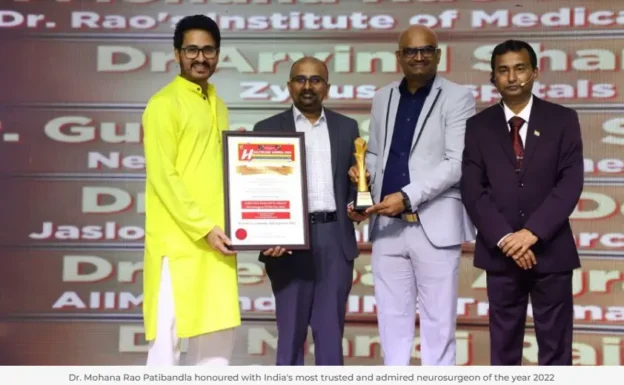
A recent ET HealthWorld feature highlighted a major milestone in Indian neurosciences: Dr. Mohana Rao Patibandla leading the introduction of BrainPath minimally invasive brain surgery technology at Dr. Rao’s Hospital – International Institute of Neurosciences in Guntur, Andhra Pradesh.
Primary Source: ET HealthWorld – Dr. Mohana Rao Patibandla Leads Dr. Rao’s Hospital in Pioneering Minimally Invasive Brain Surgery with BrainPath System
Understanding the Challenges of Traditional Brain Surgery
The human brain is one of the most delicate and complex organs in the body.
Deep brain lesions often lie within areas surrounded by:
- Critical nerve pathways
- Motor centers
- Speech regions
- Memory circuits
- Vital blood vessels
Traditional surgical approaches sometimes required surgeons to navigate through healthy brain tissue to reach deeply located tumors, hemorrhages, or lesions.
Although modern microsurgical techniques significantly improved safety over decades, reducing tissue disruption remained a major goal in neurosurgery.
The ET HealthWorld article emphasizes how BrainPath technology represents a major advancement in achieving safer access to deep-seated brain pathology.
American Association of Neurological Surgeons
What Is BrainPath Minimally Invasive Brain Surgery?
BrainPath is an advanced minimally invasive neurosurgical system designed to create a gentle and minimally disruptive pathway through the brain to reach deep lesions.
According to the ET HealthWorld article, the technology enables surgeons to access difficult brain regions with reduced trauma to surrounding tissues.
The BrainPath system works through:
- Image-guided navigation
- Tubular access systems
- Minimally disruptive tissue corridors
- Microsurgical precision
Instead of cutting through brain tissue extensively, the system gently displaces surrounding tissue along natural pathways to create access toward deep lesions.
This approach may reduce surgical trauma while improving precision and visualization.
The Importance of Minimally Invasive Neurosurgery
Minimally invasive neurosurgery represents one of the most important evolutions in modern brain and spine surgery.
The ET HealthWorld article highlights several advantages associated with minimally invasive procedures performed using BrainPath technology.
Potential benefits may include:
- Reduced trauma to surrounding tissue
- Less blood loss
- Shorter hospital stay
- Faster recovery
- Reduced postoperative discomfort
- Enhanced surgical precision
In modern neurosurgery, preserving neurological function remains one of the highest priorities.
Technologies that minimize tissue disruption may therefore significantly influence postoperative outcomes and rehabilitation.
Minimally Invasive Neurosurgery at Dr. Rao’s Hospital
Advanced Imaging and Neuronavigation
The ET HealthWorld article also highlights the integration of advanced neuronavigation and neuromonitoring systems alongside BrainPath surgery.
Modern neuronavigation systems function similarly to GPS-guided surgery by helping surgeons identify:
- Lesion location
- Critical brain structures
- Safe surgical corridors
- Important vascular anatomy
Combined with high-resolution MRI imaging and intraoperative monitoring, these technologies improve:
- Surgical planning
- Precision
- Safety
- Neurological preservation
Advanced neurotechnology continues reshaping how complex brain surgeries are performed globally.
Applications of BrainPath Technology
BrainPath minimally invasive systems may be used in selected patients with:
- Deep brain tumors
- Intracerebral hemorrhage
- Metastatic lesions
- Colloid cysts
- Deep-seated neurological abnormalities
The technology is particularly valuable when lesions are located within regions that are traditionally difficult to access safely.
However, patient selection remains extremely important because not every lesion or condition is suitable for minimally invasive approaches.
Treatment planning typically depends on:
- Lesion location
- Tumor type
- Brain anatomy
- Neurological status
- Overall patient condition
Why This Innovation Matters in India
The ET HealthWorld feature describes the BrainPath milestone at Dr. Rao’s Hospital as a pioneering advancement for Guntur and India.
Historically, many advanced neurosurgical technologies became available primarily within major metropolitan centers.
Patients from regional areas frequently faced:
- Travel burden
- Financial stress
- Treatment delays
- Limited specialist accessibility
The availability of advanced minimally invasive neurosurgical systems within regional India represents a major step toward decentralizing healthcare excellence.
Regional neuroscience centers can help improve:
- Accessibility
- Emergency care
- Continuity of rehabilitation
- Patient convenience
Dr. Mohana Rao Patibandla’s Vision
According to the ET HealthWorld article, Dr. Mohana Rao Patibandla emphasized that introducing BrainPath technology reflects an ongoing commitment toward innovation and advanced patient care.
Modern neurosciences require continuous adaptation because surgical technologies evolve rapidly.
The article highlights how innovation-driven healthcare systems help provide patients with access to cutting-edge treatments previously unavailable in many regions.
Internationally trained neurosurgeons increasingly combine:
- Advanced technology
- Precision surgery
- Evidence-based medicine
- Minimally invasive systems
- Patient-centered treatment
to improve neurological outcomes.
The Future of Brain Surgery
Neurosurgery continues evolving toward:
- Smaller surgical corridors
- Higher precision
- Enhanced visualization
- AI-assisted planning
- Robotic integration
- Function-preserving surgery
Future innovations may further reduce surgical trauma while improving patient recovery and long-term neurological outcomes.
Technologies such as BrainPath represent part of a broader global shift toward minimally disruptive neurosurgery.
Mayo Clinic – Minimally Invasive Surgery
The Human Side of Innovation
While technology remains essential, successful neurological care still depends heavily on:
- Clinical judgment
- Patient communication
- Ethical treatment planning
- Multidisciplinary teamwork
- Long-term rehabilitation support
Every neurological condition affects not only the brain but also the emotional wellbeing of patients and families.
Patients facing brain surgery often experience:
- Anxiety
- Fear
- Uncertainty
- Concerns regarding recovery
- Questions regarding neurological function
Compassionate care and clear communication therefore remain central to modern neurosciences.
India’s Growing Role in Advanced Neurosciences
India is increasingly emerging as an important global destination for advanced medical care because of:
- Highly trained specialists
- Advanced infrastructure
- Technology integration
- Affordable treatment accessibility
The introduction of advanced technologies such as BrainPath in regional India further strengthens the country’s growing neurosciences ecosystem.
Future healthcare development will likely depend on:
- Accessibility beyond metro cities
- Advanced training
- Innovation-driven institutions
- Ethical healthcare systems
- Continuous technological adaptation
Conclusion
The ET HealthWorld feature highlights an important milestone in Indian neurosciences through the introduction of BrainPath minimally invasive brain surgery technology at Dr. Rao’s Hospital – International Institute of Neurosciences
.
Modern brain surgery continues evolving toward greater precision, smaller surgical corridors, reduced tissue trauma, and improved patient recovery.
Technologies such as BrainPath demonstrate how innovation can potentially improve neurosurgical safety while expanding access to advanced care within regional India.
As neurosciences continue advancing globally, institutions that combine technology, expertise, compassion, and patient-centered care are likely to shape the future of neurological healthcare across India.
Frequently Asked Questions (FAQ)
1. What is BrainPath surgery?
BrainPath surgery is a minimally invasive neurosurgical technique designed to access deep brain lesions using minimally disruptive pathways.
2. What are the advantages of minimally invasive brain surgery?
Advantages may include reduced tissue trauma, less blood loss, shorter hospitalization, and faster recovery.
3. What conditions may be treated using BrainPath technology?
Selected deep brain tumors, intracerebral hemorrhages, and deep-seated lesions may be approached using BrainPath systems.
4. Why is neuronavigation important?
Neuronavigation helps surgeons identify precise lesion location and safer surgical corridors during brain surgery.
5. Who is Dr. Mohana Rao Patibandla?
Dr. Mohana Rao Patibandla is an internationally trained neurosurgeon and founder of Dr. Rao’s Hospital – International Institute of Neurosciences.
Keywords
best neurosurgeon in Guntur, best neurologist in Guntur, best spine surgeon in Guntur, BrainPath surgery India, minimally invasive brain surgery India, Dr Mohana Rao Patibandla, Dr Rao Hospital Guntur, advanced neurosurgery India, BrainPath system Guntur, International Institute of Neurosciences, minimally invasive neurosurgery India, neuronavigation India, advanced brain surgery India, deep brain tumor surgery India, minimally invasive brain tumor surgery India, neurotechnology India, advanced neurosciences India, brain spine and nerve hospital India, advanced healthcare India, endoscopic brain surgery India, microsurgical brain surgery India, brain hemorrhage surgery India, intracerebral hemorrhage surgery India, neuro oncology India, modern neurosurgery India, advanced neurological treatment India, minimally invasive surgery India, precision brain surgery India, stroke intervention India, advanced spine surgery India, healthcare innovation India, neuroscience excellence India, advanced medical technology India, regional neuroscience center India, advanced rehabilitation India, neurocritical care India, patient centered neurological care India, top neurosurgery hospital India, advanced neuroscience center Andhra Pradesh
Internal Links
Dr. Rao’s Hospital – International Institute of Neurosciences
Minimally Invasive Neurosurgery
Endoscopic Brain Surgery
About Dr. Mohana Rao Patibandla
Call To Action
If you or your loved one is experiencing neurological symptoms such as persistent headaches, seizures, weakness, stroke warning signs, brain tumors, or spinal disorders, timely expert evaluation is essential.
Dr. Rao’s Hospital – International Institute of Neurosciences
12-19-67, Old Bank Road, Kothapet, Besides AK Biryani Point, Guntur, Andhra Pradesh
Phone: +91 9010056444
Email: info@drraoshospitals.com
Website: https://drraoshospitals.com/
Connect With Us
“`