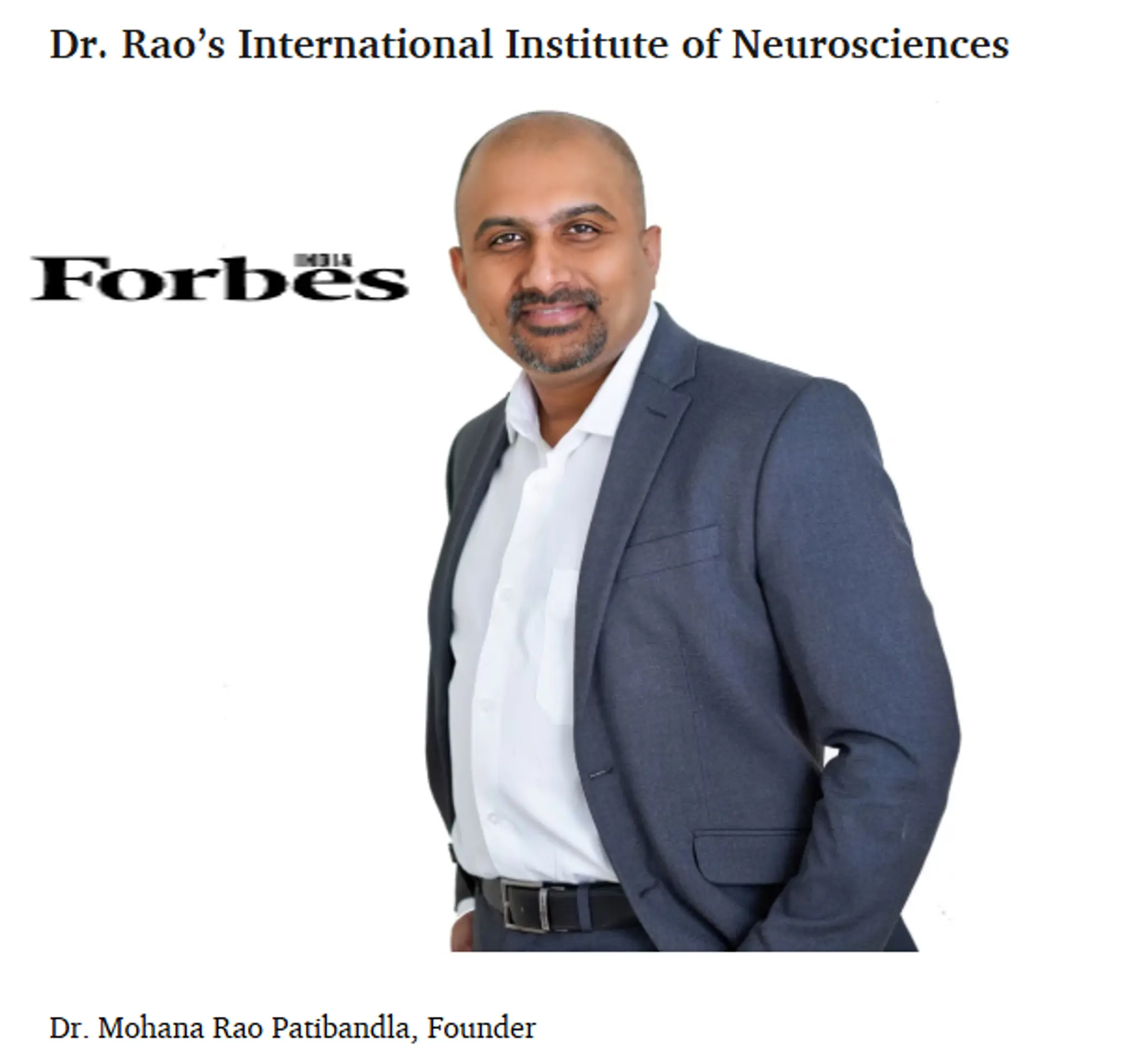
Featured in Forbes India: How Dr. Mohana Rao Patibandla Is Bringing World-Class Neuroscience Care to Andhra Pradesh
Healthcare transformation rarely happens overnight. It is usually the result of a long-term vision, years of training, technological innovation, and an unwavering commitment to improving patient care. Across India, a new generation of healthcare leaders is helping bridge the gap between metropolitan medical excellence and regional healthcare accessibility. Among them is Dr. Mohana Rao Patibandla, Founder of Dr. Rao’s Hospital – International Institute of Neurosciences (IIN) , whose work in advanced brain, spine, stroke, and neurovascular care recently gained national attention through a feature in Forbes India.
The recognition highlights more than the achievements of a single institution. It reflects a broader healthcare movement—one in which highly specialized medical services are becoming increasingly available outside traditional metropolitan centers. For patients in Andhra Pradesh and neighboring regions, this shift has profound implications. It means access to advanced neurological care closer to home, reduced treatment delays, and improved opportunities for timely intervention in complex neurological disorders.
At a time when neurological diseases are emerging as one of the most significant healthcare challenges worldwide, institutions dedicated exclusively to neurosciences play an increasingly important role. Dr. Rao’s Hospital – International Institute of Neurosciences (IIN) was founded with precisely this purpose: to create a center capable of delivering comprehensive, evidence-based, internationally informed neurological and neurosurgical care while remaining accessible to patients across India.
Why the Featured in Forbes India Matters
Recognition by a respected national publication provides an opportunity to examine the broader significance of an institution’s work. The Forbes India Brand Connect feature highlighted Dr. Rao’s Hospital – International Institute of Neurosciences (IIN) as part of its Emerging Companies in India initiative, drawing attention to the institute’s contributions to advanced neuroscience care and healthcare accessibility.
What makes this recognition noteworthy is the context in which it occurs. Historically, advanced neurosurgical treatment in India has been concentrated within a limited number of metropolitan hospitals located in cities such as Delhi, Mumbai, Bengaluru, Chennai, and Hyderabad. While these centers continue to play a critical role in healthcare delivery, patients from smaller cities and rural areas have often faced substantial barriers in accessing specialized treatment.
Traveling long distances for medical care can introduce significant challenges. Families may encounter financial strain, prolonged absences from work, disruption to education, and delays in seeking treatment. For neurological disorders, where early diagnosis and timely intervention frequently influence outcomes, such delays can be particularly consequential.
The emergence of advanced neuroscience centers in Tier-2 cities represents one of the most important developments in Indian healthcare. By bringing specialized expertise closer to patients, these institutions help reduce disparities in healthcare access while improving opportunities for timely treatment.
The Journey of Dr. Mohana Rao Patibandla
Behind every specialized medical institution is a story of professional development, clinical experience, and a vision for improving patient care. Dr. Mohana Rao Patibandla’s journey reflects a commitment to acquiring expertise across multiple subspecialties within neurosciences before returning to apply that knowledge in India.
After completing his MBBS from Andhra Medical College, Visakhapatnam, Dr. Patibandla pursued advanced training in neurosurgery at Nizam’s Institute of Medical Sciences (NIMS), Hyderabad. Recognizing the rapidly evolving nature of neurosciences, he continued his education through multiple fellowship programs in the United States, gaining exposure to leading institutions and advanced treatment methodologies.
Unlike many specialists who focus narrowly on a single area of practice, Dr. Patibandla sought comprehensive exposure across several subspecialties. This multidisciplinary approach enabled him to develop expertise in a broad range of neurological conditions while understanding how different branches of neurosciences intersect in clinical practice.
International Training Across Multiple Neurosurgical Subspecialties
Modern neurosciences encompass a diverse range of disciplines, each requiring highly specialized knowledge and technical expertise. Dr. Patibandla’s international training included exposure to several critical areas:
Minimally invasive skull base surgery
Pediatric neurosurgery
Neuro-oncology
Functional neurosurgery
Stereotactic radiosurgery
Cerebrovascular neurosurgery
Endovascular neurosurgery
Advanced spine surgery
This breadth of training provides a unique perspective on the management of neurological diseases. Rather than viewing conditions through the lens of a single subspecialty, multidisciplinary training encourages comprehensive evaluation and individualized treatment planning.
The insights gained through these experiences would later influence the development of Dr. Rao’s Hospital – International Institute of Neurosciences (IIN), shaping its emphasis on integrated neuroscience care.
Why Return to Andhra Pradesh?
One of the most significant questions often faced by internationally trained specialists is where to apply their expertise. Many choose to remain within major metropolitan healthcare systems. Others pursue opportunities abroad. A smaller number return to regions where specialized medical services remain limited despite significant patient need.
For Dr. Mohana Rao Patibandla, the decision was guided by a clear objective: to improve access to advanced neuroscience care in Andhra Pradesh.
At the time, many patients requiring complex neurological treatment routinely traveled outside the state. Families frequently journeyed to Hyderabad, Chennai, Bengaluru, or Mumbai seeking specialized consultations, surgery, and long-term neurological management.
The vision behind Dr. Rao’s Hospital – International Institute of Neurosciences (IIN) was to create a dedicated neuroscience center capable of providing advanced brain, spine, stroke, and neurovascular care within Andhra Pradesh itself.
This vision continues to define the institution’s mission today.
The Birth of Dr. Rao’s Hospital – International Institute of Neurosciences (IIN)
Establishing a dedicated neuroscience institute requires more than infrastructure. It requires a long-term commitment to building systems, assembling multidisciplinary teams, adopting advanced technologies, and creating clinical pathways tailored specifically to neurological disorders.
Dr. Rao’s Hospital – International Institute of Neurosciences (IIN) was developed with the goal of creating a focused center for neurological care rather than a general hospital with neurology and neurosurgery departments as secondary services.
This distinction is important. Dedicated neuroscience institutes are designed around the unique needs of patients with neurological disorders. They emphasize coordinated care involving neurologists, neurosurgeons, neuro-anesthesiologists, neurointensivists, rehabilitation specialists, radiologists, and other healthcare professionals.
The result is an integrated approach that supports diagnosis, treatment, recovery, and long-term management within a single coordinated framework.
The Growing Burden of Neurological Disorders in India
Neurological diseases represent one of the most significant healthcare challenges of the modern era. As populations age and healthcare systems improve diagnostic capabilities, the prevalence of many neurological conditions continues to increase.
Common conditions affecting patients across India include stroke, brain tumors, spinal disorders, epilepsy, traumatic brain injury, aneurysms, neurodegenerative diseases, and pediatric neurological disorders.
These conditions often require specialized expertise, advanced imaging technologies, surgical intervention, neurocritical care, and long-term rehabilitation. The complexity of such care underscores the importance of dedicated neuroscience centers capable of delivering comprehensive treatment pathways.
Transforming Neurosurgery in Tier-2 India
One of the most significant healthcare developments in India during the past decade has been the rise of specialized medical centers in Tier-2 cities. Traditionally, patients requiring advanced neurological treatment often traveled to major metropolitan centers. While these hospitals continue to provide exceptional care, the concentration of expertise in a limited number of cities created significant challenges for patients from smaller towns and rural communities.
Traveling long distances for healthcare can delay diagnosis, increase treatment costs, and create emotional and logistical burdens for families. In neurological disorders, where early intervention often determines outcomes, such delays can be particularly impactful.
The emergence of advanced neuroscience institutions in regional cities is helping reshape this landscape. By bringing specialized expertise closer to patients, these centers improve accessibility while maintaining high standards of care.
Dr. Rao’s Hospital – International Institute of Neurosciences (IIN) was established with this vision in mind. Located in Guntur, Andhra Pradesh, the institute was designed to provide comprehensive brain, spine, stroke, pediatric neuroscience, and neurovascular care without requiring patients to travel outside the state for every complex neurological condition.
This approach reflects a broader healthcare trend in which excellence is increasingly defined not only by technological sophistication but also by accessibility and patient-centered care.
Advancing Brain Tumor Surgery Through Precision and Innovation
Brain tumors remain among the most challenging conditions encountered in neuroscience. Every tumor is unique, not only in its pathology but also in its location, relationship to surrounding structures, and impact on neurological function.
Modern brain tumor surgery extends far beyond the traditional objective of tumor removal. Today’s treatment strategies emphasize preservation of neurological function, quality of life, and long-term outcomes.
Successful management often requires collaboration among multiple specialists, including neurosurgeons, neuro-oncologists, radiation oncologists, neuroradiologists, neuropathologists, and rehabilitation experts.
Advances in imaging technologies have dramatically improved the ability to plan and perform complex neurosurgical procedures. High-resolution MRI, functional imaging, and neuronavigation systems enable surgeons to visualize critical structures with unprecedented precision.
Dr. Rao’s Hospital – International Institute of Neurosciences (IIN), the emphasis remains on individualized treatment planning. Each patient’s condition, symptoms, imaging findings, and overall health profile contribute to decision-making, ensuring that treatment strategies are tailored to specific clinical needs.
For patients seeking advanced treatment options for brain tumors, access to dedicated neuroscience expertise plays a crucial role in achieving optimal outcomes.
The Evolution of Minimally Invasive Brain Surgery
One of the most remarkable advances in modern neurosurgery has been the development of minimally invasive surgical techniques.
Historically, many neurological procedures required large surgical exposures to access deep-seated lesions within the brain or skull base. While effective, these approaches could involve greater tissue disruption and longer recovery periods.
The evolution of endoscopic technology, microsurgical instrumentation, advanced imaging, and navigation systems has enabled surgeons to perform increasingly complex procedures through smaller and more targeted approaches.
Minimally invasive neurosurgery focuses on achieving treatment goals while reducing unnecessary disruption to surrounding tissues.
Potential advantages may include:
Smaller incisions
Reduced postoperative discomfort
Lower blood loss
Shorter hospital stays
Faster recovery
Earlier return to normal activities
These techniques are now applied across multiple areas of neurosurgery, including selected brain tumors, skull base lesions, hydrocephalus, and cerebrospinal fluid disorders.
International training in minimally invasive skull base surgery has contributed significantly to Dr. Mohana Rao Patibandla’s approach to complex neurosurgical conditions, helping bring globally recognized techniques to patients in Andhra Pradesh.
Comprehensive Spine Surgery for Modern India
Spinal disorders represent one of the most common reasons patients seek neurosurgical consultation. As populations age and lifestyles change, conditions affecting the spine have become increasingly prevalent.
Many individuals experience neck pain, back pain, radiating limb symptoms, numbness, weakness, or mobility limitations related to spinal pathology.
Common spinal conditions include:
Lumbar disc herniation
Cervical disc disease
Spinal stenosis
Spondylolisthesis
Degenerative spinal disorders
Spinal tumors
Traumatic spinal injuries
Spinal deformities
Not every spinal condition requires surgery. In fact, many patients benefit from conservative treatments such as physical therapy, medications, lifestyle modifications, and pain management strategies.
When surgery becomes necessary, however, advances in spinal techniques have transformed patient experiences.
Modern spine surgery increasingly emphasizes minimally invasive approaches designed to reduce tissue disruption while maintaining surgical effectiveness.
The goal is not simply to address anatomical abnormalities but to restore function, improve quality of life, and support long-term recovery.
Patients frequently search online for the best spine surgeon in Guntur when seeking solutions for complex spinal conditions. Beyond marketing claims, the most important considerations often include training, experience, multidisciplinary support, technological capabilities, and patient-centered treatment planning.
Stroke Care: The Race Against Time
Stroke remains one of the most urgent medical emergencies in modern healthcare. It is also among the leading causes of disability and mortality worldwide.
Neurologists and neurosurgeons frequently emphasize a simple but powerful phrase:
Time is Brain.
Every minute of untreated stroke can result in the loss of millions of neurons. Rapid recognition and intervention therefore play a critical role in determining outcomes.
Common warning signs of stroke may include:
Sudden facial drooping
Weakness in the arm or leg
Difficulty speaking
Loss of coordination
Sudden vision changes
Severe headache
Public awareness remains one of the most important factors in improving stroke outcomes. Early recognition enables patients to reach specialized centers more quickly, allowing timely evaluation and intervention.
Comprehensive stroke care requires coordination across multiple disciplines and technologies. Advanced neuroimaging, emergency assessment, neurocritical care, endovascular intervention, rehabilitation, and long-term follow-up all contribute to patient recovery.
The continued expansion of stroke services within regional neuroscience centers represents a major advancement in Indian healthcare.
The Rise of Endovascular Neurosurgery and Neurovascular Care
Few developments have transformed neuroscience as dramatically as endovascular neurosurgery.
Traditionally, many vascular disorders affecting the brain required open surgical procedures. Today, selected conditions can often be treated through minimally invasive catheter-based approaches that navigate blood vessels from within.
Endovascular neurosurgery has become an essential component of modern neurovascular care.
Conditions commonly addressed include:
Brain aneurysms
Acute ischemic stroke
Arteriovenous malformations (AVMs)
Dural arteriovenous fistulas
Carotid artery disease
Complex cerebrovascular disorders
These procedures often involve navigating microcatheters through the vascular system to reach lesions deep within the brain, allowing treatment without the need for large surgical exposures.
Advances in endovascular technology continue to expand treatment possibilities, improving outcomes for patients with complex vascular disorders.
Dr. Mohana Rao Patibandla’s fellowship training in cerebrovascular and endovascular neurosurgery contributes to the institute’s focus on comprehensive neurovascular care and stroke management.
Pediatric Neurosurgery: Specialized Care for Children
Children present unique neurological challenges that differ significantly from those encountered in adult practice.
The developing brain and nervous system require specialized expertise, dedicated equipment, and treatment strategies tailored to the needs of young patients.
Pediatric neurosurgery encompasses a broad range of conditions, including:
Hydrocephalus
Brain tumors
Congenital malformations
Spinal dysraphism
Epilepsy
Craniosynostosis
Pediatric trauma
Families facing neurological disorders in children often experience significant emotional stress. Access to specialized pediatric neuroscience services closer to home can help reduce these burdens while ensuring timely diagnosis and treatment.
International fellowship training in pediatric neurosurgery has enabled Dr. Mohana Rao Patibandla to bring specialized expertise to the management of complex neurological disorders affecting infants and children.
Technology, Innovation, and the Future of Neurosciences
The future of neurological care will be shaped by continued innovation.
Modern neuroscience increasingly relies on technologies such as:
High-resolution MRI
Advanced CT imaging
Neuronavigation systems
Intraoperative neurophysiological monitoring
Microsurgical techniques
Endoscopic surgery
Artificial intelligence-assisted diagnostics
Robotic technologies
These tools enhance precision and support evidence-based decision-making. However, technology alone does not define excellence. Its value ultimately depends upon the expertise, judgment, and experience of the healthcare professionals utilizing it.
The combination of advanced technology with specialized clinical expertise remains central to the future of neuroscience care.
Forbes India Recognition: A Reflection of a Larger Mission
The recent feature in Forbes India Brand Connect’s Emerging Companies in India special edition serves as an important milestone in the journey of Dr. Rao’s Hospital – International Institute of Neurosciences (IIN). More importantly, it highlights a broader mission that extends far beyond institutional recognition.
The healthcare story behind the feature is ultimately about accessibility, innovation, and the democratization of advanced neuroscience care.
For decades, highly specialized neurological treatment remained concentrated within a relatively small number of metropolitan centers. While these hospitals continue to play an essential role in healthcare delivery, the need for regional centers of excellence has become increasingly apparent.
The Forbes India feature recognized an institution that has focused on bringing advanced neurosciences closer to patients, helping reduce the need for extensive travel while maintaining a commitment to evidence-based medicine and international standards of care.
In many ways, the recognition reflects the evolution of Indian healthcare itself—where excellence is no longer defined solely by geography, but by expertise, innovation, outcomes, and patient-centered care.
The Future Vision for Neuroscience Care in Andhra Pradesh
The future of healthcare in India will depend upon institutions capable of combining specialized expertise with accessibility.
As neurological disorders become increasingly prevalent, demand for advanced neurosciences services is expected to grow significantly. Conditions such as stroke, degenerative spine disease, brain tumors, aneurysms, epilepsy, neurodegenerative disorders, and pediatric neurological conditions will require comprehensive and coordinated care pathways.
Meeting these challenges requires more than infrastructure alone. It requires:
Continuous medical education
Research and innovation
Technology adoption
Multidisciplinary collaboration
Community awareness programs
Advanced diagnostics
Specialized rehabilitation services
The long-term vision of Dr. Rao’s Hospital – International Institute of Neurosciences (IIN) aligns closely with these priorities, focusing on comprehensive neuroscience care that remains accessible to patients throughout Andhra Pradesh and beyond.
Why Patients Travel to Guntur for Advanced Neuroscience Care
One of the most interesting developments in modern Indian healthcare is the reverse referral pattern increasingly observed in specialized medicine.
Historically, patients traveled from smaller cities to metropolitan centers seeking advanced treatment. Today, highly specialized centers in Tier-2 cities increasingly attract patients from across India and even from international locations.
Several factors contribute to this shift:
Specialized expertise
Advanced technologies
Personalized patient care
Reduced treatment costs
Improved accessibility
Shorter waiting times
Patients seeking treatment for brain tumors, spinal disorders, stroke, aneurysms, pediatric neurological conditions, and other complex disorders increasingly evaluate expertise and outcomes rather than focusing solely on geographic location.
This shift reflects growing confidence in specialized institutions operating outside traditional metropolitan healthcare hubs.
Building a Culture of Innovation and Continuous Learning
Medicine evolves continuously. New technologies, research findings, treatment protocols, and surgical techniques emerge every year.
Healthcare institutions that aspire to maintain high standards must embrace a culture of continuous learning.
At Dr. Rao’s Hospital – International Institute of Neurosciences (IIN), emphasis is placed on:
Professional education
Scientific conferences
Academic collaboration
Research participation
Technology adoption
Quality improvement initiatives
This commitment to lifelong learning supports the institute’s ability to remain aligned with evolving best practices in neurosciences.
Why Dedicated Neuroscience Centers Matter
Neurological disorders often involve multiple systems and require collaboration among various specialists.
Dedicated neuroscience centers provide unique advantages because they bring together:
Neurosurgeons
Neurologists
Neuro-anesthesiologists
Neurointensivists
Radiologists
Rehabilitation specialists
Pediatric specialists
Pain management experts
This integrated model supports comprehensive care throughout every stage of the patient journey—from diagnosis and treatment to rehabilitation and long-term follow-up.
As neuroscience continues to become increasingly specialized, multidisciplinary collaboration will remain one of the most important determinants of successful patient outcomes.
Internal Resources for Patients and Families
Learn more about neurological and neurosurgical services at Dr. Rao’s Hospital – International Institute of Neurosciences (IIN):
Advanced Neurosurgery in Guntur
Comprehensive Neurology Care in Guntur
Advanced Spine Surgery in Guntur
Minimally Invasive Brain and Spine Surgery
Pediatric Neurosurgery in Guntur
Advanced Epilepsy Surgery in Guntur
International Patients – Neurosurgery in India
Book an Appointment at Dr. Rao’s Hospital
Frequently Asked Questions
Who is Dr. Mohana Rao Patibandla?
Dr. Mohana Rao Patibandla is an internationally trained neurosurgeon and Founder of Dr. Rao’s Hospital – International Institute of Neurosciences (IIN), Guntur.
Why was Dr. Rao’s Hospital featured in Forbes India?
The institute was featured in Forbes India Brand Connect’s Emerging Companies in India special feature for its contribution to advanced neuroscience care and healthcare accessibility.
What conditions does a neurosurgeon treat?
Neurosurgeons treat disorders affecting the brain, spine, nerves, and cerebrovascular system, including tumors, stroke, trauma, aneurysms, epilepsy, and spinal disorders.
What is minimally invasive neurosurgery?
Minimally invasive neurosurgery uses advanced techniques designed to reduce tissue disruption while maintaining effective treatment outcomes.
What is endovascular neurosurgery?
Endovascular neurosurgery uses catheter-based techniques to treat aneurysms, stroke, and vascular abnormalities affecting the brain.
What are the symptoms of a brain tumor?
Symptoms may include headaches, seizures, weakness, balance problems, vision changes, memory issues, and speech difficulties.
What are the warning signs of stroke?
Facial drooping, arm weakness, speech difficulties, sudden vision changes, and loss of coordination may indicate stroke and require immediate medical attention.
What conditions require spine surgery?
Disc prolapse, spinal stenosis, instability, tumors, trauma, and deformities may require surgical evaluation.
What is pediatric neurosurgery?
Pediatric neurosurgery focuses on neurological disorders affecting infants, children, and adolescents.
What is a brain aneurysm?
A brain aneurysm is a weakened area within a blood vessel wall that may enlarge and potentially rupture if untreated.
What is hydrocephalus?
Hydrocephalus involves abnormal accumulation of cerebrospinal fluid within the brain and may require surgical management.
What is skull base surgery?
Skull base surgery addresses tumors and lesions located at the base of the skull using specialized surgical approaches.
What technologies are used in modern neurosurgery?
Neuronavigation, intraoperative monitoring, advanced MRI, microsurgery, endoscopy, and artificial intelligence-assisted imaging are increasingly utilized.
Can brain aneurysms be treated without open surgery?
Many aneurysms may be treated using minimally invasive endovascular techniques depending on their anatomy and clinical characteristics.
Why should patients choose a dedicated neuroscience institute?
Dedicated neuroscience institutes provide specialized expertise, multidisciplinary teams, advanced technology, and integrated neurological care.
Why was Dr. Rao’s Hospital featured in Forbes India?
The institute was featured in Forbes India Brand Connect’s Emerging Companies in India special feature for its contribution to advanced neuroscience care and healthcare innovation.
What conditions are treated at a neuroscience institute?
Common conditions include brain tumors, stroke, spinal disorders, epilepsy, aneurysms, pediatric neurological disorders, and traumatic brain injuries.
What is minimally invasive neurosurgery?
Minimally invasive neurosurgery uses advanced technologies and smaller incisions to treat neurological conditions while reducing recovery times and surgical trauma.
Why is early stroke treatment important?
Prompt stroke treatment can significantly reduce disability and improve long-term outcomes. Rapid diagnosis and intervention are critical.
About the Author
Dr. Mohana Rao Patibandla is an internationally trained neurosurgeon and Founder of Dr. Rao’s Hospital – International Institute of Neurosciences (IIN), Guntur. He has advanced fellowship training in minimally invasive skull base surgery, pediatric neurosurgery, neuro-oncology, cerebrovascular surgery, functional neurosurgery, stereotactic radiosurgery, and endovascular neurosurgery from leading institutions in the United States.
His work focuses on advancing neuroscience care through innovation, education, evidence-based medicine, and patient-centered treatment.
Trusted Medical References
Trusted Medical References
World Health Organization (WHO)
National Institute of Neurological Disorders and Stroke (NINDS)
American Association of Neurological Surgeons (AANS)
World Federation of Neurosurgical Societies (WFNS)
American Stroke Association (ASA)
Follow Us
Final Thoughts
The story behind the Forbes India recognition is ultimately a story about healthcare accessibility, innovation, and the pursuit of excellence in neurosciences. Through advanced training, multidisciplinary collaboration, and a commitment to patient-centered care, Dr. Mohana Rao Patibandla and Dr. Rao’s Hospital – International Institute of Neurosciences (IIN) continue to contribute to the evolving landscape of neurological care in India.
As neuroscience advances through technology, research, and clinical innovation, the ability to provide world-class care closer to patients will remain one of the defining healthcare priorities of the coming decades. The growth of specialized neuroscience centers in regions such as Andhra Pradesh represents an important step toward achieving that vision.
Dr. Mohana Rao Patibandla
Founder of Dr. Rao’s Hospital – International Institute of Neurosciences (IIN)
India’s Leading Minimally Invasive Brain & Spine Surgeon
Internationally Trained • Neurosurgery • Spine Surgery • Endovascular Neurosurgery
📞 +91 90100 56444
Dr. Rao’s Hospital – International Institute of Neurosciences (IIN)
12-19-97, Old Bank Street,
Kothapet, Beside AK Khan Biryani Point,
Guntur – 522001,
Andhra Pradesh, India