Tag Archives: neurosurgery

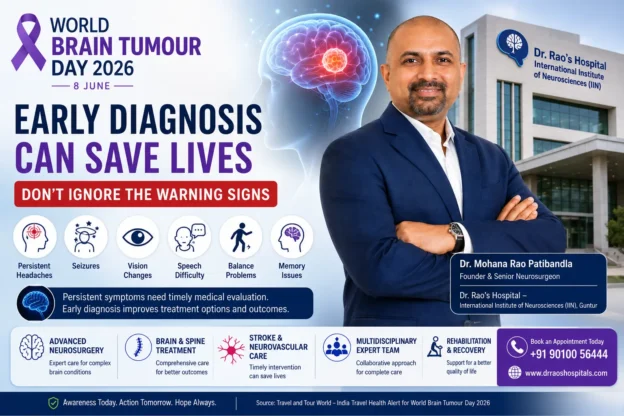
World Brain Tumour Day 2026 awareness campaign highlighting brain tumour symptoms, warning signs, and the importance of early diagnosis.

World Brain Tumour Day 2026: Early Diagnosis Can Save Lives

World Brain Tumour Day 2026: Early Diagnosis Can Save Lives

Primary Source: Travel and Tour World – India Travel Health Alert for World Brain Tumour Day 2026 as Dr. Mohana Rao Patibandla Sparks Life-Saving Early Diagnosis Call.


Every year, World Brain Tumour Day serves as a reminder that awareness, timely diagnosis, and access to expert medical care can make a significant difference in the lives of patients affected by brain tumours. In 2026, the message is particularly powerful: do not ignore persistent neurological symptoms, and do not delay seeking medical advice when warning signs appear.


A recent Travel and Tour World feature highlighted how World Brain Tumour Day 2026 has become an important public health awareness initiative in India. The article emphasized Dr. Mohana Rao Patibandla’s call for early diagnosis and urged patients, families, and travelers to take persistent neurological symptoms seriously rather than dismissing them as temporary health issues.


For many patients, symptoms such as headaches, dizziness, nausea, seizures, or vision changes are often attributed to stress, fatigue, travel, or lifestyle factors. However, persistent symptoms may sometimes indicate a more serious neurological condition requiring professional evaluation.


What Is World Brain Tumour Day?

World Brain Tumour Day is observed annually on June 8 to increase awareness about brain tumours, encourage early detection, support patients and caregivers, and promote access to quality neurological and neurosurgical care.


Brain tumours affect individuals of all ages, including children and adults. They can significantly impact neurological function, quality of life, and overall health. The goal of World Brain Tumour Day is to educate the public about symptoms, risk factors, diagnosis, treatment options, and the importance of seeking medical attention when symptoms persist.


The Travel and Tour World article emphasizes that awareness should not create fear. Instead, it should encourage individuals to recognize warning signs and seek timely medical evaluation. Early action often leads to better treatment planning and improved outcomes.


Understanding Brain Tumours

A brain tumour is an abnormal growth of cells within the brain or surrounding structures. Brain tumours may be benign (non-cancerous) or malignant (cancerous). Some originate in the brain itself, while others spread from cancers located elsewhere in the body.


The effects of a brain tumour depend on several factors:

  • Tumour size
  • Tumour location
  • Rate of growth
  • Tumour type
  • Impact on surrounding brain structures


Because different regions of the brain control different functions, symptoms can vary significantly from one patient to another.


Why Early Diagnosis Matters

One of the most important messages associated with World Brain Tumour Day 2026 is the value of early diagnosis. According to the Travel and Tour World report, Dr. Mohana Rao Patibandla emphasized that persistent neurological symptoms should not be ignored and that timely medical evaluation can help patients access appropriate care sooner.


Early diagnosis does not guarantee a cure in every case. However, it can:

  • Improve treatment planning
  • Expand available treatment options
  • Reduce delays in care
  • Improve quality of life
  • Support better decision-making for patients and families
  • Facilitate timely referral to specialists


Many neurological conditions can mimic one another. Therefore, a proper diagnosis requires evaluation by qualified healthcare professionals using clinical examination and appropriate diagnostic tests.


Common Brain Tumour Symptoms

Brain tumour symptoms can vary depending on the tumour’s location and size. Some symptoms may develop gradually, while others appear suddenly.


Symptoms Patients Should Not Ignore

  • Persistent headaches
  • Seizures
  • Vision problems
  • Speech difficulties
  • Balance problems
  • Weakness in the arms or legs
  • Numbness or tingling sensations
  • Memory difficulties
  • Personality or behavioral changes
  • Persistent nausea or vomiting
  • Excessive sleepiness
  • Confusion or cognitive decline


The Travel and Tour World article specifically highlights recurring headaches, seizures, vision changes, speech difficulties, balance problems, weakness, memory issues, personality changes, and persistent nausea as warning signs that warrant medical attention.


Warning Signs That Require Immediate Medical Attention

Certain neurological symptoms require urgent medical evaluation because they may indicate serious neurological conditions.


Red Flag Symptoms

  • A first-time seizure
  • Sudden weakness on one side of the body
  • Severe confusion
  • Sudden vision loss
  • Persistent vomiting with headache
  • Sudden difficulty speaking
  • Rapid changes in consciousness


According to the Travel and Tour World report, patients should not postpone medical evaluation simply because they are traveling, working, or managing other responsibilities. Timely assessment can be critical.


The Travel Health Perspective: Why Travelers Should Be Aware

One unique aspect of the World Brain Tumour Day 2026 discussion is its connection to travel health. The article points out that travelers frequently dismiss neurological symptoms as temporary discomfort associated with travel.


Examples include:

  • Headaches attributed to travel stress
  • Dizziness blamed on heat or fatigue
  • Nausea mistaken for motion sickness
  • Vision problems linked to lack of sleep
  • Weakness assumed to be exhaustion


While these explanations may sometimes be correct, persistent or worsening symptoms should never be ignored. Travelers often delay care because they are away from home, uncertain about local healthcare facilities, or focused on completing their journey.


The article emphasizes that health awareness should travel with the patient. Recognizing warning signs early and seeking timely medical evaluation can help prevent dangerous delays.


Global Statistics on Brain Tumours

Brain tumours remain a significant global health concern. According to the World Health Organization and international cancer registries:

  • Hundreds of thousands of new brain and central nervous system tumours are diagnosed globally each year.
  • Brain tumours affect both children and adults.
  • Early diagnosis improves access to treatment planning.
  • Advanced imaging technologies have improved diagnostic accuracy.
  • Multidisciplinary treatment approaches continue to improve patient outcomes.


Sources:


Expert Brain Tumour Care in Andhra Pradesh

Patients seeking specialized evaluation for brain tumours and other neurological conditions increasingly look for comprehensive neuroscience centers offering advanced diagnostic and treatment capabilities.


Learn more:


How Brain Tumours Are Diagnosed

Accurate diagnosis is the foundation of effective brain tumour treatment. While symptoms may raise suspicion, a definitive diagnosis requires a comprehensive neurological evaluation and advanced imaging studies.


The diagnostic process typically begins with a detailed medical history and neurological examination. Physicians assess symptoms, neurological function, cognitive abilities, vision, balance, coordination, muscle strength, and reflexes.


Common Diagnostic Tests for Brain Tumours

  • Magnetic Resonance Imaging (MRI)
  • Computed Tomography (CT Scan)
  • Functional MRI (fMRI)
  • MR Spectroscopy
  • Positron Emission Tomography (PET)
  • Neurological Examination
  • Biopsy when required


Advanced imaging technologies allow physicians to evaluate tumour size, location, growth characteristics, and potential involvement of surrounding brain structures. Early diagnosis enables more effective treatment planning and helps patients understand available treatment options.


Treatment Options for Brain Tumours

Brain tumour treatment is highly individualized. The best treatment strategy depends on the tumour type, location, size, growth rate, patient’s age, neurological condition, and overall health status.


Modern treatment often involves a multidisciplinary team that may include neurosurgeons, neurologists, neuro-oncologists, radiation oncologists, neuroradiologists, rehabilitation specialists, and nursing professionals.


Surgical Treatment

Surgery remains one of the most important treatment options for many brain tumours. Advances in microsurgical techniques, neuronavigation systems, intraoperative imaging, and minimally invasive approaches have improved surgical precision and safety.


The goals of surgery may include:

  • Removing the tumour completely when possible
  • Reducing tumour size
  • Relieving pressure within the skull
  • Obtaining tissue for diagnosis
  • Improving neurological function


Radiation Therapy

Radiation therapy uses carefully targeted radiation to destroy tumour cells while minimizing damage to surrounding healthy tissue. It may be used after surgery, as a primary treatment, or when surgery is not feasible.


Chemotherapy and Targeted Therapy

Certain brain tumours respond to chemotherapy or targeted medications. Treatment recommendations depend on tumour biology, molecular characteristics, and individual patient factors.


Advanced Treatment Technologies

  • Microsurgical techniques
  • Neuronavigation systems
  • Endoscopic neurosurgery
  • Intraoperative neuromonitoring
  • Precision radiation therapy
  • Molecular tumour profiling
  • Advanced neuroimaging


The Importance of Rehabilitation and Long-Term Follow-Up

Treatment does not end after surgery or radiation therapy. Many patients benefit from rehabilitation programs designed to improve neurological function, mobility, speech, cognition, and quality of life.


Depending on individual needs, rehabilitation may include:

  • Physical therapy
  • Occupational therapy
  • Speech and language therapy
  • Cognitive rehabilitation
  • Psychological support
  • Nutritional counseling


Long-term follow-up is also important because some tumours require ongoing monitoring through periodic imaging and neurological evaluations.


Why Awareness Campaigns Like World Brain Tumour Day Matter

World Brain Tumour Day helps bridge the gap between medical knowledge and public awareness. Many patients delay seeking care because they are unaware of warning signs or assume symptoms are minor.


The Travel and Tour World feature highlights how educational initiatives can empower patients to recognize neurological symptoms early and seek timely evaluation. Public awareness campaigns also support caregivers, encourage research, and promote access to specialized care.


By improving awareness, healthcare organizations can help reduce delays in diagnosis and ensure more patients receive appropriate treatment when it is most effective.


Why Choose Dr. Rao’s Hospital for Brain Tumour Treatment?

Patients searching for brain tumour treatment in Guntur, the best neurologist in Guntur, or the best neurosurgeon in Guntur often seek comprehensive neuroscience centers capable of providing advanced diagnosis, treatment, and rehabilitation services.


Dr. Rao’s Hospital – International Institute of Neurosciences (IIN) provides specialized brain, spine, nerve, and neurovascular care supported by advanced technology and multidisciplinary expertise.


Useful Internal Links


Frequently Asked Questions (FAQ)

What are the early symptoms of a brain tumour?

Common symptoms include persistent headaches, seizures, vision changes, weakness, balance problems, memory difficulties, personality changes, and persistent nausea or vomiting.


Can headaches always indicate a brain tumour?

No. Most headaches are not caused by brain tumours. However, persistent or unusual headaches accompanied by neurological symptoms should be evaluated by a healthcare professional.


How is a brain tumour diagnosed?

Diagnosis typically involves neurological examination, MRI scans, CT scans, and sometimes biopsy procedures to determine tumour type and characteristics.


Can brain tumours be treated successfully?

Many brain tumours can be effectively managed using surgery, radiation therapy, chemotherapy, targeted therapy, or combinations of these approaches depending on the tumour type.


Why choose Dr. Rao’s Hospital for brain tumour treatment?

Dr. Rao’s Hospital – International Institute of Neurosciences (IIN) provides advanced neurosurgical care, modern technology, multidisciplinary expertise, and patient-centered treatment for complex neurological conditions.


Image SEO Recommendations


Conclusion

World Brain Tumour Day 2026 serves as an important reminder that awareness, education, and early diagnosis can significantly influence patient outcomes. While not every headache or neurological symptom indicates a brain tumour, persistent symptoms should never be ignored.


As highlighted in the Travel and Tour World report, recognizing warning signs early and seeking prompt medical evaluation can help patients access appropriate care when it matters most. Increased awareness empowers individuals, families, and communities to make informed healthcare decisions.


Advances in diagnostic imaging, neurosurgery, radiation therapy, and multidisciplinary care continue to improve outcomes for patients with brain tumours. Access to specialized neuroscience services closer to home further strengthens the ability of patients to receive timely treatment and long-term support.


Call to Action

If you or a loved one experiences persistent headaches, seizures, vision changes, weakness, balance problems, or other neurological symptoms, do not delay seeking professional medical advice.


If you are searching for the best neurologist in Guntur, the best neurosurgeon in Guntur, or expert brain tumour treatment in Guntur, visit


Dr. Rao’s Hospital – International Institute of Neurosciences (IIN).

📞 +91 90100 56444

📧 [info@drraoshospitals.com]

🌐 https://drraoshospitals.com


Follow Dr. Rao’s Hospital


Keywords:
world brain tumour day 2026, brain tumour symptoms, brain tumour warning signs, brain tumour treatment in Guntur, best neurologist in Guntur, best neurosurgeon in Guntur, brain tumour diagnosis, brain surgery in Guntur, neurological symptoms, brain tumour awareness, Dr Mohana Rao Patibandla, advanced neurosurgery, neuroscience hospital Andhra Pradesh

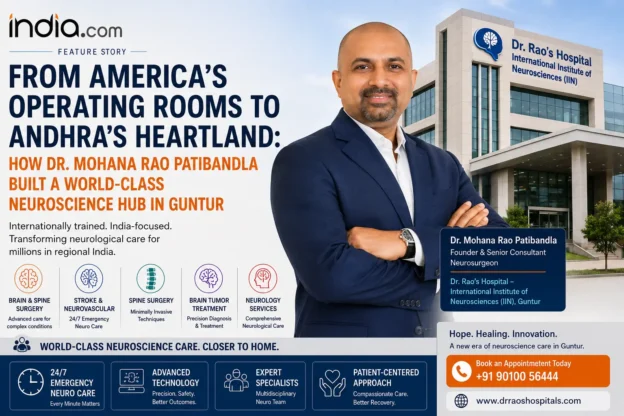
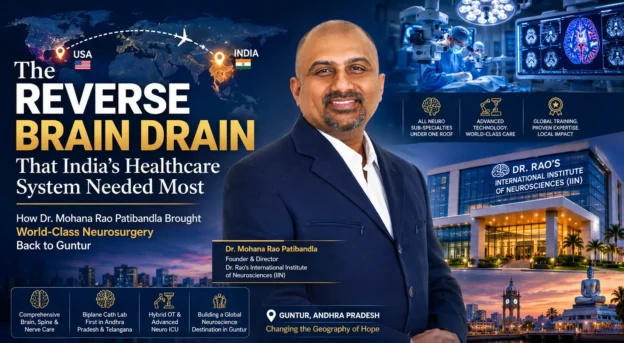
Dr. Mohana Rao Patibandla, founder of Dr. Rao's International Institute of Neurosciences (IIN), illustrating the reverse brain drain movement by bringing world-class neurosurgery, neurology, and spine care to Guntur, Andhra Pradesh, India.

Best Neurologist in Guntur: How IIN Transforming Regional Healthcare in India

Best Neurologist in Guntur: How Advanced Neurosciences Are Transforming Regional Healthcare in India


Source: Hans India – “The Return of Talent: Dr. Mohana Rao Patibandla’s Mission to Transform Regional Healthcare”


India’s healthcare landscape is undergoing a remarkable transformation. For decades, patients suffering from complex neurological disorders often traveled hundreds or even thousands of kilometers to metropolitan cities seeking specialized care. Today, however, advanced neurological and neurosurgical services are increasingly becoming available closer to home, especially in emerging healthcare hubs across regional India.


One of the strongest examples of this transformation is taking place in Guntur, Andhra Pradesh. Through the efforts of internationally trained specialists, cutting-edge technology, and patient-centered healthcare systems, access to world-class neuroscience care is becoming a reality for thousands of patients. This shift is helping establish Guntur as a destination for advanced neurological treatment and reinforcing its reputation among patients searching for the best neurologist in Guntur.


A recent feature published by Hans India highlighted the growing importance of regional healthcare development and the role of globally trained specialists returning to India to build advanced medical institutions. The article emphasized how expertise, innovation, and infrastructure can significantly improve access to specialized neurological care outside traditional metropolitan centers.


Why Neurological Disorders Require Specialized Care


Neurological disorders affect the brain, spinal cord, peripheral nerves, and muscles. These conditions can profoundly impact a person’s mobility, memory, speech, cognition, and overall quality of life.


According to the World Health Organization (WHO), neurological conditions are among the leading causes of disability and death globally. More than one billion people worldwide are affected by neurological disorders, making access to expert neurological care a public health priority.


Source: World Health Organization


Common Neurological Conditions


  • Stroke
  • Brain tumors
  • Epilepsy
  • Parkinson’s disease
  • Alzheimer’s disease and dementia
  • Peripheral neuropathy
  • Multiple sclerosis
  • Migraine and chronic headaches
  • Spinal cord disorders
  • Traumatic brain injury


Many neurological disorders require rapid diagnosis and timely treatment. Delays can result in permanent disability, loss of independence, or even death. This is why access to experienced specialists and modern healthcare infrastructure is so critical.


The Evolution of Regional Healthcare in India


Historically, India’s most advanced neurological services were concentrated in major cities such as Delhi, Mumbai, Chennai, Bengaluru, and Hyderabad. Patients from smaller cities often faced significant challenges when seeking specialized treatment.


Traveling to metropolitan centers involved financial burdens, emotional stress, accommodation expenses, prolonged waiting times, and disruptions to family life. Follow-up care was often equally challenging, particularly for elderly patients and those requiring long-term rehabilitation.


The emergence of advanced neuroscience centers in regional cities is changing this reality. Today, patients increasingly expect high-quality care to be available closer to their homes, enabling faster diagnosis, easier access to treatment, and improved continuity of care.


The Hans India feature highlighted how the development of advanced neuroscience institutions in Tier-2 cities can help address healthcare inequalities while improving patient outcomes and strengthening local healthcare ecosystems.


Why Neurosciences Matter More Than Ever


The burden of neurological disease continues to grow worldwide. Factors such as aging populations, increasing life expectancy, sedentary lifestyles, diabetes, hypertension, and road traffic accidents contribute significantly to neurological morbidity.


Stroke remains one of the leading causes of death and disability globally. Brain tumors continue to require increasingly sophisticated surgical and medical treatments. Degenerative spine disorders are becoming more common due to lifestyle changes and increased longevity.


At the same time, advances in neuroscience have dramatically improved treatment possibilities. Conditions once considered untreatable can now be effectively managed using modern surgical techniques, precision diagnostics, and multidisciplinary care approaches.


Major Advances in Neurosciences


  • Minimally invasive brain surgery
  • Endoscopic skull base surgery
  • Advanced stroke interventions
  • Endovascular neurosurgery
  • Neuronavigation systems
  • Functional neurosurgery
  • Stereotactic radiosurgery
  • Microscopic spine surgery
  • Artificial intelligence-assisted diagnostics
  • Advanced neuroimaging technologies


These innovations are improving surgical precision, reducing complications, shortening hospital stays, and enhancing patient outcomes.


What Defines the Best Neurologist in Guntur?


When patients search online for the best neurologist in Guntur, they are often looking for much more than a medical degree. They seek expertise, experience, technology, accessibility, trust, and compassionate care.


Several factors distinguish leading neurological specialists and institutions:


FactorWhy It Matters
Clinical ExperienceImproves diagnostic accuracy and treatment planning
International TrainingProvides exposure to advanced techniques and global best practices
Modern TechnologyEnhances diagnostic and surgical precision
Multidisciplinary CareEnsures comprehensive treatment and rehabilitation
Emergency ServicesCritical for stroke and neurotrauma patients
Patient-Centered ApproachImproves outcomes and patient satisfaction


The best neurological care combines evidence-based medicine, advanced technology, personalized treatment planning, and long-term support for patients and families.


The Impact of International Training on Indian Healthcare


One of the most significant developments in modern Indian healthcare is the return of specialists who have trained internationally and chosen to build institutions in India.


International fellowships expose physicians to advanced healthcare systems, innovative technologies, multidisciplinary care models, research methodologies, and patient safety frameworks.


When these specialists establish advanced healthcare facilities in regional India, patients gain access to expertise that was previously available only in select metropolitan institutions.


The Hans India article notes that institution-building, rather than individual achievement alone, represents one of the most meaningful contributions such specialists can make to healthcare transformation.


Advanced Neurology Services Available in Guntur


Modern neuroscience centers now offer a comprehensive range of neurological services that were once available only in large metropolitan hospitals.


Stroke Care


Stroke treatment requires rapid intervention. Every minute matters when blood flow to the brain is interrupted.


Comprehensive stroke care includes:


  • Emergency neurological evaluation
  • Advanced brain imaging
  • Thrombolytic therapy
  • Mechanical thrombectomy
  • Neurocritical care
  • Stroke rehabilitation


Brain Tumor Treatment


Brain tumors require multidisciplinary management involving neurosurgeons, neurologists, neuro-oncologists, radiologists, and rehabilitation specialists.


Modern treatment options may include:

  • Microsurgical tumor removal
  • Minimally invasive approaches
  • Image-guided surgery
  • Neuro-oncology support
  • Radiation therapy coordination
  • Long-term surveillance


Epilepsy Management


Many patients with epilepsy can achieve excellent seizure control through proper diagnosis and treatment. Advanced epilepsy centers provide EEG monitoring, medication management, and surgical evaluation when necessary.


Advanced Spine Surgery and Comprehensive Spine Care


Spinal disorders are among the most common reasons patients seek neurological and neurosurgical consultation. As life expectancy increases and lifestyles become more sedentary, conditions affecting the spine are becoming increasingly prevalent across India.


Back pain, neck pain, sciatica, spinal instability, degenerative disc disease, spinal tumors, and spinal trauma can significantly impact quality of life. Fortunately, advances in modern spine surgery have transformed treatment outcomes for many patients.


Common Spine Conditions Treated

  • Herniated disc
  • Cervical spondylosis
  • Lumbar canal stenosis
  • Sciatica
  • Spinal deformities
  • Spinal cord compression
  • Spinal tumors
  • Spinal fractures
  • Degenerative disc disease
  • Failed back surgery syndrome


Modern spine surgery increasingly emphasizes minimally invasive approaches that reduce tissue damage, minimize blood loss, shorten hospital stays, and accelerate recovery.


Learn more about advanced spine care at: Spine Surgery Department


Artificial Intelligence and the Future of Neurology


Artificial Intelligence (AI) is rapidly transforming healthcare worldwide. Neurology and neurosurgery are among the specialties benefiting significantly from AI-driven innovations.


AI technologies are helping clinicians detect disease earlier, analyze imaging more accurately, improve treatment planning, and enhance patient outcomes.


Applications of AI in Neurology


  • Stroke detection and triage
  • Brain tumor imaging analysis
  • Neurodegenerative disease prediction
  • Clinical decision support systems
  • Surgical planning assistance
  • Predictive analytics for patient outcomes
  • Remote neurological monitoring
  • Advanced neuroimaging interpretation


According to the National Institutes of Health (NIH), AI technologies have the potential to significantly improve diagnostic accuracy and healthcare delivery while supporting clinicians in managing increasingly complex neurological conditions.


Source: National Institutes of Health (NIH)


The Role of Technology in Modern Neurosurgery


Technology continues to reshape the field of neurosciences. Today’s neurosurgical procedures are safer and more precise than ever before.


Key Technologies Driving Neurosurgical Excellence


  • Neuronavigation systems
  • Intraoperative imaging
  • Microsurgical platforms
  • Endoscopic neurosurgery
  • Intraoperative neuromonitoring
  • 3D surgical planning
  • Advanced neurovascular imaging
  • Robotic-assisted surgical systems


These technologies allow surgeons to operate with greater precision while preserving healthy tissue and minimizing complications.


The Hans India feature highlighted that innovation, infrastructure, and technology will play critical roles in shaping the future of neurological care across India.


Why Institution Building Matters in Healthcare


Healthcare transformation is not solely about individual physicians. Sustainable progress requires strong institutions capable of delivering high-quality care consistently over decades.


The Hans India article emphasizes that the long-term impact of healthcare leaders often lies in creating systems, training future professionals, introducing advanced technologies, and building organizations that continue serving patients for generations.


Regional centers of excellence can:


  • Improve healthcare accessibility
  • Reduce treatment delays
  • Create employment opportunities
  • Promote medical education
  • Encourage research and innovation
  • Reduce migration for treatment
  • Strengthen local healthcare ecosystems


Why Patients Choose Dr. Rao’s Hospital – International Institute of Neurosciences (IIN)


Patients seeking the best neurologist in Guntur, best neurosurgeon in Guntur, or best spine surgeon in Guntur increasingly seek comprehensive neuroscience centers that provide advanced diagnostics, specialized treatment, and compassionate patient care.


Dr. Rao’s Hospital – International Institute of Neurosciences (IIN) has emerged as a leading destination for neurological, neurosurgical, spine, and neurovascular care in Andhra Pradesh.


Internal Links


Authoritative Medical Sources


AEO-Optimized Frequently Asked Questions


Who is considered the best neurologist in Guntur?

The best neurologist in Guntur is typically identified by extensive experience, advanced training, access to modern technology, patient outcomes, and comprehensive neurological care capabilities.


When should I consult a neurologist?

You should consult a neurologist if you experience persistent headaches, seizures, weakness, numbness, memory problems, dizziness, balance difficulties, or other neurological symptoms.


What conditions do neurologists treat?

Neurologists diagnose and treat stroke, epilepsy, Parkinson’s disease, Alzheimer’s disease, migraines, neuropathy, multiple sclerosis, and many other disorders affecting the nervous system.


What is the difference between a neurologist and a neurosurgeon?

A neurologist primarily treats neurological conditions using medications and non-surgical therapies, while a neurosurgeon performs surgical procedures involving the brain, spine, and nervous system.


Why is early diagnosis important for neurological disorders?

Early diagnosis often improves treatment outcomes, reduces complications, preserves neurological function, and enhances quality of life.


Why choose Dr. Rao’s Hospital for neurological treatment?

At Dr. Rao’s Hospital, led by Dr. Mohana Rao Patibandla, Founder of Dr. Rao’s Hospital – International Institute of Neurosciences (IIN), Guntur, patients receive advanced brain, spine, and nerve care using cutting-edge technologies and minimally invasive treatment approaches.


Conclusion


India’s healthcare future will increasingly depend on strong regional centers of excellence capable of delivering advanced, affordable, and accessible care. The growing availability of world-class neuroscience services outside metropolitan cities represents one of the most important developments in modern Indian healthcare.


As highlighted in the Hans India feature, the return of globally trained specialists, investment in healthcare infrastructure, adoption of advanced technologies, and commitment to institution building are helping transform patient care across regional India. These developments are ensuring that patients no longer need to leave their communities to access sophisticated neurological treatment.


For patients seeking the best neurologist in Guntur, the best neurosurgeon in Guntur, or the best spine surgeon in Guntur, access to comprehensive neuroscience care has never been better. Modern healthcare institutions are bringing advanced diagnosis, treatment, rehabilitation, and long-term support closer to home, improving outcomes and transforming lives.


Call to Action

If you or a loved one is experiencing symptoms of a neurological disorder, seeking expert evaluation early can make a significant difference. Whether you need treatment for stroke, brain tumors, epilepsy, spine disorders, neurovascular conditions, or complex neurological diseases, timely care matters.


If you’re searching for the best neurologist in Guntur, the best neurosurgeon in Guntur, or expert care for complex brain and spine conditions, visit


Dr. Rao’s Hospital – International Institute of Neurosciences (IIN).

📞 +91 90100 56444

📧 [info@drraoshospitals.com]

🌐 [www.drraoshospitals.com]


Follow Dr. Rao’s Hospital

Facebook

Instagram

YouTube

LinkedIn

X

Google Business

Google Maps


Primary Source:

The Return of Talent: Dr. Mohana Rao Patibandla’s Mission to Transform Regional Healthcare – Hans India

India Today Health Eminent Doctors South 2025 feature showing Dr. Mohana Rao Patibandla listed among selected doctors from Andhra Pradesh and Telangana.

Dr. Mohana Rao Patibandla | India Today Eminent Doctor South 2025

Dr. Mohana Rao Patibandla Recognized Among India Today Health’s Eminent Doctors South 2025

In a significant recognition of clinical excellence and leadership in neurosciences, Dr. Mohana Rao Patibandla, Founder and Chief Neurosurgeon of Dr. Rao’s Hospital, Guntur, has been featured in India Today Health’s “Eminent Doctors South 2025”—a special editorial listing published as part of India Today Group’s 50th Anniversary edition.

This prestigious inclusion highlights doctors from Southern India who have demonstrated sustained excellence, peer recognition, and meaningful contributions to patient care across their respective specialties.

LEARN MORE HERE

A Mark of Editorial Credibility, Not Just an Award

Unlike conventional awards or paid rankings, India Today Health’s Eminent Doctors list is an editorially curated feature, based on a combination of:

  • Peer surveys

  • Professional reputation

  • Clinical experience

  • Editorial assessment by the India Today Health team

The listing spans leading clinicians from Andhra Pradesh, Telangana, Tamil Nadu, Kerala, and Karnataka, making it one of the most credible regional recognitions in Indian healthcare journalism.

Dr. Mohana Rao Patibandla’s inclusion reflects his long-standing commitment to advanced neurosurgical care, ethical medical practice, and patient-centric outcomes.

Dr. Mohana Rao Patibandla: A Leader in Modern Neurosurgery

With over two decades of experience in the field of neurosciences, Dr. Mohana Rao Patibandla is widely regarded as one of the best neurosurgeons in Guntur and a trusted name in brain and spine care across Andhra Pradesh.

His academic and professional journey includes:

  • MBBS from Andhra Medical College, Visakhapatnam

  • MCh in Neurosurgery from Nizam’s Institute of Medical Sciences (NIMS), Hyderabad

  • Advanced fellowships and international training in:

    • Minimally invasive skull base surgery

    • Pediatric neurosurgery

    • Neuro-oncology

    • Functional and stereotactic radiosurgery

    • Endovascular and cerebrovascular procedures (USA)

This diverse exposure enables him to offer evidence-based, globally aligned neurosurgical care tailored to Indian patients.

Building Dr. Rao’s Hospital: A Dedicated Neurosciences Institution

Dr. Rao’s Hospital was established with a clear vision:
👉 To create a focused, state-of-the-art center for brain, spine, and nerve care outside metropolitan cities.

Today, the hospital is recognized as:

  • One of the best neurology and neurosurgery hospitals in Guntur

  • A referral center for complex brain and spine surgeries

  • A facility known for ethical practice, surgical safety, and transparent care

The hospital integrates advanced diagnostics, modern operating theaters, neuro-ICU support, and multidisciplinary expertise—ensuring comprehensive care from diagnosis to rehabilitation.

Why This Recognition Matters for Patients

For patients and families navigating complex neurological conditions, recognitions like India Today Health’s Eminent Doctors provide trusted validation.

Dr. Rao’s inclusion reassures patients that:

  • Their care is led by a nationally acknowledged expert

  • Clinical decisions are grounded in experience and evidence

  • Treatment protocols meet national and international standards

It also reinforces Dr. Rao’s Hospital’s position as a center where expertise meets empathy.

A Continuing Commitment to Excellence

Reacting to the recognition, Dr. Mohana Rao Patibandla emphasized that such acknowledgements are not endpoints, but responsibilities.

“This recognition belongs to every patient who trusted us and every team member who works tirelessly to deliver safe, ethical, and advanced neurosurgical care. Our focus remains on improving outcomes and expanding access to quality neurosciences in our region.”

Looking Ahead

As Dr. Rao’s Hospital continues to expand its services and outreach, this feature in India Today Health further strengthens its mission to deliver world-class neurology, neurosurgery, and spine care in Andhra Pradesh.

For patients seeking the best neurosurgeon in Guntur, the best neurologist in Guntur, or the best spine surgeon in Guntur, this recognition stands as an independent editorial endorsement of trust and excellence.


📍 Dr. Rao’s Hospital, Guntur
Advanced Brain, Spine & Nerve Care
🌐 https://drraoshospitals.com
📧 info@drraoshospitals.com

Who is Dr. Mohana Rao Patibandla?

Dr. Mohana Rao Patibandla is a senior neurosurgeon and the Founder of Dr. Rao’s Hospital, Guntur, a dedicated center for advanced brain, spine, and nerve care. He has over two decades of experience and international training in complex neurosurgical procedures.
🔗 Learn more: https://drraoshospitals.com


Why is Dr. Mohana Rao Patibandla featured in India Today Health?

Dr. Mohana Rao Patibandla was featured in India Today Health’s Eminent Doctors South 2025 for his sustained excellence in neurosurgery, peer recognition, and leadership in building a focused neurosciences hospital in Andhra Pradesh.


Is the India Today Eminent Doctors listing a paid award?

No. The India Today Eminent Doctors list is an editorially curated recognition, based on peer surveys, professional standing, and editorial review. It is not a paid award or competitive ranking.


Which hospital does Dr. Mohana Rao Patibandla work at?

Dr. Mohana Rao Patibandla is the Founder and Chief Neurosurgeon at Dr. Rao’s Hospital, Guntur, which specializes in neurology, neurosurgery, and spine surgery.
🔗 Official website: https://drraoshospitals.com


What treatments are offered at Dr. Rao’s Hospital?

Dr. Rao’s Hospital offers comprehensive care for:

  • Brain tumors

  • Spine disorders

  • Stroke and cerebrovascular diseases

  • Pediatric neurosurgery

  • Minimally invasive brain and spine surgery

🔗 View services: https://drraoshospitals.com


Why is Dr. Rao considered one of the best neurosurgeons in Guntur?

Dr. Rao is considered one of the best neurosurgeons in Guntur due to his advanced international training, experience in complex neurosurgical cases, and patient-centric approach supported by modern infrastructure at Dr. Rao’s Hospital.


Where is Dr. Rao’s Hospital located?

Dr. Rao’s Hospital is located in Guntur, Andhra Pradesh, and serves patients from across Andhra Pradesh and neighboring states.
🔗 Contact & directions: https://drraoshospitals.com

YouTube

Facebook  

Instagram 

Google GMB 

LinkedIn 

X / Twitter

Dr. Mohana Rao Patibandla, Top Neurosurgeon in India 2024, featured on The Enterprise World magazine cover for leadership in minimally invasive neurosurgery at Dr. Rao’s Hospital, Guntur.

Emerging Innovations in Neurosurgery: From Endoscopic to AI


Emerging Innovations in Neurosurgery: From Endoscopic Brain Surgery to AI-Guided Spine Procedures

The field of neurosurgery is undergoing a transformative evolution, driven by cutting-edge technologies that redefine what’s possible in brain and spine care. From endoscopic brain surgery to AI-guided spine procedures, these innovations promise more precise, less invasive, and highly personalized treatments.

At Dr. Rao’s Hospital, one of India’s most advanced centers for neurosurgical excellence, innovation meets compassion. Led by Dr. Mohana Rao Patibandla — one of the best neurosurgeons in Guntur — the hospital integrates artificial intelligence, robotics, and endoscopic techniques to deliver the highest standards of care.


1. Endoscopic Brain Surgery: A New Window into the Brain

What is Endoscopic Brain Surgery? It’s a minimally invasive approach where neurosurgeons use a small camera (endoscope) and micro-instruments to access deep-seated areas of the brain through tiny openings or natural pathways like the nasal cavity. This allows precise tumor removal with minimal disruption to healthy tissues.

Benefits of Endoscopic Brain Surgery

  • Smaller incisions and reduced scarring
  • Less blood loss and faster recovery
  • Shorter hospital stay and reduced infection risk

At the Neurosurgery Department of Dr. Rao’s Hospital, advanced endoscopic procedures are performed routinely for brain tumors, colloid cysts, hydrocephalus, and skull base lesions. These surgeries combine technology with surgical mastery for optimal patient outcomes.

[Source: WHO – Surgical Safety and Innovation]


2. AI-Guided Spine Surgery: Where Precision Meets Technology

How does AI improve spine surgery? Artificial Intelligence assists spine surgeons by analyzing preoperative imaging, planning precise screw placements, and guiding robotic systems during the procedure. AI tools reduce human error and optimize patient-specific surgical plans.

At the Spine Surgery Unit at Dr. Rao’s Hospital, AI-integrated navigation and robotic assistance are redefining complex spinal deformity corrections and fusion surgeries. Patients benefit from enhanced safety, accuracy, and quicker recovery times.

[Source: NIH – Artificial Intelligence in Neurosurgery]


3. Intraoperative Neuromonitoring (IONM): Real-Time Safety

Intraoperative Neuromonitoring (IONM) has become essential in modern neurosurgery. It allows continuous monitoring of nerve function during surgery, helping prevent permanent neurological damage.

  • Protects critical brain and spinal pathways
  • Detects early warning signals during operations
  • Reduces postoperative complications

Dr. Mohana Rao presented his clinical experience on the efficacy of IONM in over 1000 neurosurgical cases, showcasing its vital role in improving safety across brain and spine surgeries.


4. Minimally Invasive Skull Base Surgery: Access Without Trauma

Traditionally, skull base surgery involved large openings and long recoveries. Today, with endoscopic transnasal approaches, neurosurgeons can reach complex regions through the nasal passage, minimizing trauma and preserving facial structures.

These approaches are particularly effective for:

  • Pituitary tumors
  • Craniopharyngiomas
  • Meningiomas
  • Chordomas

Dr. Rao’s Hospital is among the few centers in India where such minimally invasive skull base surgeries are routinely performed — including advanced procedures like endoscopic transnasal odontoidectomy.

[Source: PubMed – Endoscopic Skull Base Surgery]


5. Neuro-navigation and 3D Brain Mapping: The GPS of Neurosurgery

Neuro-navigation systems use real-time imaging to create 3D brain maps, allowing surgeons to precisely locate and remove tumors while avoiding vital brain areas. This technology acts as a “GPS for the brain,” improving both precision and safety.

Combined with intraoperative MRI and 3D mapping, these systems allow Dr. Rao’s Hospital’s Neurosurgery Department to offer unmatched accuracy in delicate brain tumor resections and epilepsy surgeries.


6. Robotics in Neurosurgery: Precision Beyond the Human Hand

Robotics has made its mark in neurosurgery by enhancing accuracy and stability during intricate procedures. With robotic assistance, neurosurgeons can perform deep-brain and spinal stabilization surgeries with sub-millimeter precision.

At Dr. Rao’s Hospital’s Neurology and Neurosurgery Units, robotic-assisted procedures are revolutionizing patient safety and postoperative outcomes through automation and artificial intelligence.


7. AI in Predictive and Personalized Neurosurgery

Artificial Intelligence is not limited to the operating room — it now extends to predictive modeling, outcome forecasting, and personalized rehabilitation. AI helps doctors estimate patient recovery times, surgical risks, and long-term mobility outcomes with remarkable accuracy.

[Source: Mayo Clinic – AI in Personalized Medicine]


8. The Future of Neurosurgical Care at Dr. Rao’s Hospital

The integration of AI, robotics, and endoscopy marks a new era in neurosurgery — one that prioritizes precision, speed, and safety. Patients at Dr. Rao’s Hospital benefit from:

  • Real-time intraoperative neuromonitoring
  • Minimally invasive surgical techniques
  • Shorter hospital stays and faster recovery
  • Multidisciplinary neurological care under one roof

To book an appointment or consultation, visit the Contact Page or call 📞 090100 56444.


Conclusion: Pioneering the Future of Neurosurgery in India

Neurosurgery is evolving from open procedures to precision-guided, minimally invasive solutions powered by AI and robotics. At the forefront of this revolution is Dr. Mohana Rao Patibandla, one of the best neurosurgeons in Guntur.

Under his leadership, Dr. Rao’s Hospital stands as a national hub for advanced neurosurgical innovation, offering safer and smarter treatments for complex brain and spine disorders.

If you’re searching for the best neurosurgeon in Guntur or expert care for complex neurological conditions, visit Dr. Rao’s Hospital. Contact us at 📞 090100 56444 or 📧 info@drraoshospitals.com.


What is endoscopic brain surgery?

Endoscopic brain surgery is a minimally invasive technique using a small camera and instruments through tiny openings to treat brain tumors, cysts, and hydrocephalus with less recovery time.

How does AI assist in spine surgery?

AI analyzes scans and guides surgical tools to enhance precision and safety during spinal procedures. It reduces errors and improves postoperative outcomes.

Why choose Dr. Rao’s Hospital for advanced neurosurgery?

At Dr. Rao’s Hospital, led by Dr. Mohana Rao Patibandla, one of the best neurosurgeons in Guntur, patients receive world-class minimally invasive, AI-assisted, and compassionate neurosurgical care.


Follow Dr. Rao’s Hospital

Cover of Time Iconic Magazine 2025 featuring Dr. Mohana Rao Patibandla recognized for innovation, empathy, and leadership in neurosurgery.

Brain & Spine Surgery in the Age of Telemedicine: What’s Changed?

Brain & Spine Surgery in the Age of Telemedicine: What’s Changed?

Over the last decade, telemedicine has transformed how people access complex care—especially in brain and spine surgery. Today, patients can share MRI/CT scans, get second opinions, plan surgery, and complete post-op reviews from home. At Dr. Rao’s Hospital, Guntur, led by Dr. Mohana Rao Patibandla, this digital shift means faster access, fewer travel burdens, and more personalized recovery—all while maintaining the highest standards of safety.

What is Telemedicine in Neurosurgery?

Telemedicine uses secure video, messaging, and image-sharing tools to deliver care remotely. In neurosurgery and spine surgery, it enables virtual evaluations, triage for emergencies, pre-op planning, and structured follow-ups. Authoritative organizations note telemedicine can expand specialist access and reduce delays in care. [Source: WHO]

How Telemedicine Has Changed Brain & Spine Care

1) Faster Access to Experts

Patients from any city or town can connect with experienced specialists such as Dr. Mohana Rao Patibandla in minutes. Early guidance often prevents deterioration and directs patients to the right tests and next steps.

2) Remote Review of Imaging and Pre-Op Planning

Securely shared MRI and CT images allow surgeons to assess lesions, spinal compression, or vascular anomalies remotely. This speeds up decision-making and supports minimally invasive planning—often reducing hospital time and costs.

3) Post-Operative Follow-Ups and Rehabilitation

Virtual reviews help track wound healing, manage symptoms, and optimize rehabilitation programs. Patients benefit from frequent touchpoints without repeated travel—useful after complex cranial or spine procedures.

4) Multidisciplinary Collaboration

Tele-discussion rooms bring together neurologists, neuroradiologists, anesthesiologists, and spine surgeons to review cases efficiently. This team approach supports individualized recommendations and shared decision-making. [Background reading: PubMed]

5) Guidance for Peripheral Hospitals

In select scenarios, senior surgeons can provide intraoperative suggestions via secure video—supporting teams in remote centers when time is critical.

Key Benefits for Patients

  • Rapid access to subspecialty opinions in skull base, neuro-oncology, functional, and spine disorders
  • Lower travel/time burden for families and caregivers
  • Structured follow-up with early detection of red flags
  • Greater adherence to rehab and medication plans
  • Continuity of care for elderly and mobility-limited patients

Important Limits to Know

Telemedicine complements but doesn’t replace in-person evaluation when neurological examination, emergency stabilization, or imaging is required. Connectivity, data privacy, and device literacy also matter—though these are improving steadily with better infrastructure and encryption standards. (See NIH and Mayo Clinic resources for patient guidance.)

How Dr. Rao’s Hospital Delivers Tele-Neurosurgery

  • Tele-triage & second opinions: Upload prior reports and scans for structured review before deciding on travel.
  • Virtual pre-op consults: Counseling, risk discussion, and enhanced recovery planning done remotely.
  • Hybrid care pathways: When surgery is needed, inpatient time is optimized; routine checks continue via video.
  • Rehabilitation continuity: Remote physiotherapy guidance and medication adjustments for brain and spine recovery.

Explore our departments and services:

Real-World Example (Illustrative)

A patient from Odisha with cervical canal stenosis began with a tele-consult for numbness and gait imbalance. Imaging review confirmed severe compression; the patient traveled for a scheduled minimally invasive decompression. Discharged in 48 hours, they continued remote physio and virtual reviews—regaining daily function within weeks.

The Future: AI, Wearables, and Remote Robotics

Emerging tools—AI-assisted image triage, wearable gait/balance trackers, and remote robotic support—are making follow-up smarter and more proactive. Combined with expert surgical judgment, these advances promise better outcomes and fewer avoidable admissions.

When Telemedicine Is Not Enough

  • Acute stroke symptoms or rapidly progressive weakness
  • Severe trauma, uncontrolled seizures, or suspected infection
  • New bowel/bladder incontinence with back pain (possible cauda equina)

In these scenarios, seek immediate in-person care. Our emergency team coordinates rapid imaging and surgical evaluation when indicated.

Why Choose Dr. Rao’s Hospital?

  • Expertise in minimally invasive brain and spine surgery
  • Advanced neuronavigation, endoscopy, and IONM
  • Hybrid tele-to-inpatient workflow for continuity
  • Patient-centric counseling and transparent decisions

Learn more about our approach to complex cases on the official website or connect via our contact page.

Helpful Resources


Frequently Asked Questions

What problems can telemedicine address in neurosurgery?

Remote second opinions, pre-op planning, discharge counseling, rehab check-ins, and monitoring of chronic spine or nerve pain—while ensuring urgent cases are fast-tracked for in-person care.

How do I prepare for a tele-consult?

Keep your reports ready (MRI/CT, blood tests), note your symptoms and duration, ensure a quiet space with good lighting, and test your camera/audio. A family member can join to help discuss medications and history.

Is telemedicine safe for post-operative follow-up?

Yes—most routine checks are suitable online. Red flags (fever, wound issues, new weakness, severe headaches/incontinence) warrant an immediate in-person review.

What are the symptoms of a spine or brain issue that warrant a consult?

Red flags include sudden severe headache, recurrent seizures, progressive limb weakness or numbness, gait imbalance, severe neck/back pain with radiating pain, and bowel/bladder changes. Book an online consult for guidance and triage.

How are brain and spine conditions diagnosed through telemedicine?

Tele-consults guide the right tests: neurological examination (in-clinic when necessary), MRI/CT imaging, and blood panels. You can upload scans securely for remote review; urgent signs trigger expedited in-person assessment.

Why choose Dr. Rao’s Hospital for tele-neurosurgery and spine care?

At Dr. Rao’s Hospital, led by Dr. Mohana Rao Patibandla, one of the best neurosurgeons in Guntur, patients receive advanced, compassionate care using cutting-edge minimally invasive neurosurgery and structured tele-follow-ups.

Call to Action

If you’re searching for the best neurosurgeon in Guntur or expert telemedicine support for complex brain and spine conditions, visit Dr. Rao’s Hospital. Contact us at 📞 090100 56444 or 📧 info@drraoshospitals.com.


Neurosurgery, Spine Surgery, Neurology Services, and Contact


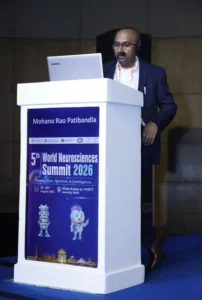
Dr. Mohana Rao Patibandla standing at the podium at SIONCON 2025 in Bengaluru, with a large screen displaying his professional profile, qualifications, and fellowships from leading global neurosurgery centers.

How Intraoperative Neuromonitoring (IONM) Is Transforming Brain and Spine Surgery in India: Insights from Dr. Mohana Rao’s 1008-Case Study Presented at SIONCON 2025, NIMHANS Bengaluru

Advancing Surgery with Intraoperative Neuromonitoring (IONM) in India

By Dr. Mohana Rao Patibandla, Chief Neurosurgeon, Dr. Rao’s Hospital, Guntur


Introduction: The Future of Neurosurgery Is Here

Brain and spine surgeries are among the most delicate and high-risk procedures in all of medicine. Surgeons work within millimeters of the structures that control movement, speech, vision, memory, and breathing. Even a minor surgical disruption can lead to paralysis, speech loss, or permanent disability.

For decades, neurosurgeons relied solely on their anatomical knowledge, experience, and the microscope to navigate these high-risk regions. But in the last few years, a revolutionary tool has transformed neurosurgical safety worldwide:
Intraoperative Neuromonitoring (IONM).

In November 2025, at SIONCON 2025, held at the prestigious NIMHANS Convention Centre, Bengaluru, I had the honor of presenting one of India’s most comprehensive IONM datasets—a 1008-case analysis covering diverse brain and spine surgeries performed over 5 years at Dr. Rao’s Hospital, Guntur.

Find the news on the Business World:

Guntur Neurosurgeon Presents India’s Largest IONM Dataset, Sets New Benchmark In Brain & Spine Safety

https://www.businessworld.in/article/guntur-neurosurgeon-presents-india-s-largest-ionm-dataset-sets-new-benchmark-in-brain-spine-safety-583438

The presentation demonstrated how real-time neuromonitoring can significantly reduce neurological complications and improve outcomes, even in the most complex neurosurgical cases.

This blog explains the entire study in a clear, patient-friendly way, detailing how IONM protects patients, helps surgeons make safer decisions, and is shaping the future of neurosurgery in India.


Chapter 1: What Exactly Is Intraoperative Neuromonitoring (IONM)?

Imagine having a real-time safety system during surgery that continuously checks how your brain, spine, and nerves are functioning—even while under anesthesia.
That is the power of IONM.

IONM monitors:

  • Motor function

  • Sensory pathways

  • Cranial nerve function

  • Language and speech centers (in awake surgeries)

  • Brainstem responses

  • Electrical activity of nerves and muscles

If anything harmful begins to happen—such as nerve stretching or decreased blood supply—the system alerts the surgical team immediately.

It is like having a “nerve safety alarm” during surgery.


Why IONM Is Critical in Modern Neurosurgery

Without IONM, nerve injury might be detected only after surgery, when it is too late to reverse the damage.
With IONM, however, risks are identified immediately, allowing the surgeon to respond and prevent permanent injury.

This simple concept can save movement, speech, vision, swallowing ability, and quality of life.


Chapter 2: Why This 1008-Case Study Is a Landmark for India

IONM is still growing in India.
Most hospitals use it only for select cases.
Very few centers have standardized, protocol-driven multimodal IONM across multiple years of surgical work.

At Dr. Rao’s Hospital, we took a different approach:

We used IONM in over 1000 surgeries across:

  • Brain tumors (including eloquent cortex tumors)

  • Skull base and brainstem lesions

  • Spine surgeries

  • Pediatric neurosurgery

  • Epilepsy surgery

  • Awake craniotomy

  • Vascular and endovascular neurosurgery

We also implemented a strict, step-by-step protocol to ensure quality, accuracy, and meaningful intervention whenever signals changed.

This dataset is among the largest single-center IONM studies from India, and the presentation at SIONCON 2025 highlighted the clinical impact of every modality.


Chapter 3: Study Results Explained Simply

Below is a simplified explanation of the key results we presented at SIONCON:


1. Diagnostic Accuracy: IONM Predicts Danger Early

Sensitivity: 85.7%

This means IONM correctly detected 85.7% of cases where something was going wrong.

Specificity: 98.8%

This means IONM rarely gave false alarms.

These numbers show the system is both reliable and precise. Out of 1008 surgeries:

  • True Positives (TP): 186

  • True Negatives (TN): 781

  • False Positives (FP): 10

  • False Negatives (FN): 31

IONM accurately predicted neurological outcomes in 967 out of 1008 cases.


2. Neurological Recovery & Complication Reduction

Key highlights:

  • 78.5% prevention rate for neurological deficits

  • 94% of temporary deficits recovered within 3 months

  • Only 2.1% permanent deficits, mostly in complex eloquent tumors

  • Permanent signal loss: 0.7%

  • Functional independence (KPS ≥80): 91.6% at 3 months

These outcomes match or exceed global neurosurgical benchmarks—reinforcing that India can deliver world-class results.


Chapter 4: Pathology-Wise Outcomes

Eloquent Area Brain Tumors (Movement/Speech Regions)

  • Very high risk surgeries

  • Permanent deficits only 2.1%

  • Safe maximal tumor removal possible

Epilepsy Surgery

  • 88.4% deficit prevention

  • Excellent long-term functional outcomes

Spine Surgery

  • 83.1% deficit prevention rate

  • EMG and MEP monitoring prevented nerve-root injury

Brainstem and Posterior Fossa Surgeries

  • Extremely high-risk surgeries

  • 76.9% neurological protection

Vascular Lesions (AVMs, Aneurysms)

  • 74.2% prevention rate

This shows IONM’s benefit across all neurosurgical domains.


Chapter 5: Pediatric Neurosurgery—Why Children Benefit More

Children’s brains have an amazing ability to recover—known as neuroplasticity.

With IONM:

  • Surgeons can safely operate on epilepsy-causing lesions

  • Brain tumors near critical regions can be removed precisely

  • Early intervention improves long-term development

The study showed better recovery rates in children than adults.


Chapter 6: Awake Brain Surgery—Speaking or Moving During Surgery

Awake craniotomy is a specialized surgery where:

  • The patient is awake during part of the operation

  • They speak, count, or move their hands/legs

  • The surgeon maps critical functions using DES/DCS stimulation

  • Tumors near speech/motor regions can be removed more safely

Results from 227 Awake Surgeries:

  • 11% transient problems

  • 0% long-term complications

  • Best outcomes achieved with DES/DCS mapping

This is among the largest awake craniotomy series in the region.


Chapter 7: What Happens When the Signal Drops?

A small percentage of patients show irreversible signal loss during surgery.

At our hospital, we follow a 5-step Signal Loss Protocol:

  1. Recheck connections, anesthesia, temperature

  2. Increase blood pressure (MAP >90 mmHg)

  3. Reduce traction, decompression

  4. Re-monitor for 3–5 minutes

  5. If no recovery → Staged closure

Results:

  • 26 staged closures (2.6%)

  • Planned re-interventions

  • 73% regained neurological function

This approach prevents permanent disability.


Chapter 8: Why Structured Protocols Matter

IONM isn’t just equipment—it’s a full system.

We use:

  • Standard stimulation thresholds

  • Validated alert criteria

  • Multimodal monitoring (MEP, SSEP, EMG, DES, BAER)

  • Collaboration with anesthesia

  • Checklists for every signal change

Our structured approach ensures maximum safety.


Chapter 9: Why India Needs Wider IONM Adoption

In India, many surgeries are still performed without IONM due to cost, lack of trained personnel, or limited awareness.

But the consequences of nerve injury—lifelong disability—are far more expensive.

Our study clearly shows:

  • Fewer complications

  • Better functional outcomes

  • Safer maximal resection

  • Higher quality of life

  • Lower long-term costs for families

IONM must become a standard of care, not a luxury.


Chapter 10: About Dr. Rao’s Hospital, Guntur

Dr. Rao’s Hospital is one of India’s leading centers for:

  • Advanced neurosurgery

  • Pediatric neurosurgery

  • Epilepsy surgery

  • Endoscopic skull base surgery

  • Minimally invasive spine surgery

  • Neuro-oncology

  • Endovascular neurosurgery

  • Full-scale IONM-supported neurosurgery

We strongly believe in precision, safety, and functional preservation.

With international training from the USA (UVA, OSU, NCH, Colorado), and over 70 publications and 50+ invited lectures,
Dr. Mohana Rao is widely known as:

  • The best neurosurgeon in Guntur

  • The best neurologist in Guntur

  • The best spine surgeon in Guntur


Conclusion: A New Era of Safe Neurosurgery in India

The 1008-case IONM study presented at SIONCON 2025 is more than just academic research—it is proof that:

  • Indian hospitals can match global neurosurgical standards

  • Structured IONM can prevent disability

  • Safe maximal resection is achievable

  • Pediatric and awake surgeries benefit enormously

  • Neuromonitoring must become routine across centers

At Dr. Rao’s Hospital, we continue to advance neurosurgical care with innovation, precision, and compassion.


Contact Us

📞 90100 56444
🌐 https://drraoshospitals.com
📧 info@drraoshospitals.com
📍 Guntur, Andhra Pradesh

For Consultations or Appointments

📍 Dr. Rao’s Hospital
12-19-67, Old Bank Road, Kothapet,
Opp. Sravani Hospital, Guntur, Andhra Pradesh

📞 Phone: +9190100 56444
📧 Email: info@drraoshospitals.com | drpatibandla@gmail.com
🌐 Website: https://drraoshospitals.com

📺 YouTube: https://www.youtube.com/user/mrpatiban
📘 Facebook: https://www.facebook.com/Dr.Raoshospital.Neurosurgeon/
📸 Instagram: https://www.instagram.com/dr_mohana_rao/
📍 Google Maps: https://g.page/r/CSzUiYw6Fj7IEBE
💼 LinkedIn: https://www.linkedin.com/in/drpatibandla/
🐦 X (Twitter): https://x.com/MohanaRaoPatib

The Knowledge review cover of Dr. Mohana Rao patibandla

Discover Unparalleled Neurosurgery with Dr. Mohana Rao Patibandla

Discover Unparalleled Neurosurgery with Dr. Mohana Rao Patibandla

At Dr. Rao’s Hospital, we don’t just offer neurosurgery—we deliver life-changing transformations through our Brain & Spine Precision Care System. Led by Dr. Mohana Rao Patibandla, a globally trained neurosurgeon with expertise in minimally invasive techniques, we redefine what world-class care means.

Why Choose Dr. Rao’s Hospital?

Unlike others who compete on price, we make cost irrelevant by offering unmatched expertise, cutting-edge technology, and a structured approach to care as per times of india. Here’s how we stand out:

1. The Brain & Spine Precision Care System

Our proprietary 5-Step Care Framework ensures every patient receives personalized, high-precision treatment:

  • Diagnosis: Advanced imaging and AI-driven analysis for pinpoint accuracy.

  • Planning: Tailored surgical or non-surgical strategies by Dr. Patibandla.

  • Procedure: Minimally invasive techniques for faster recovery.

  • Recovery: Comprehensive post-op care with dedicated neuro-rehabilitation.

  • Follow-Up: Long-term monitoring to ensure lasting results.

This isn’t just surgery—it’s a system designed to restore your quality of life.

2. Tailored Care Packages

We’ve productized our services to suit your needs, ensuring transparency and value. Choose from three levels of care:

  • Essential Care: Core neurosurgical intervention with expert oversight.

  • Advanced Care: Includes enhanced diagnostics and personalized rehab plans.

  • Comprehensive Care: Full-spectrum treatment with priority scheduling, advanced therapies, and concierge-level support.

Each package is designed to deliver outcomes, not just procedures, so you invest in results.

3. Proven Transformations

Don’t take our word for it—our patients’ lives speak for themselves:

  • Over 95% of our spine surgery patients walk within 24 hours post-operation.

  • We’ve helped 100+ patients with complex brain tumors regain independence using minimally invasive techniques.

  • From chronic pain to restored mobility, our system has transformed lives across India and beyond.

When you choose Dr. Rao’s Hospital, you’re not buying a procedure—you’re investing in a future free from pain and limitations.

Ready to Experience the Difference?

Don’t settle for generic care or compete on price. With Dr. Mohana Rao Patibandla, you get incomparable expertise and a system built for your success.

📞 Contact us today at Dr. Rao’s Hospital, Guntur, to schedule your consultation.
🌐 Visit  drraoshospitals for more details.

Your health deserves the best. Choose transformation over transaction.

A team of surgeons in blue scrubs performing a surgery in a high-tech, modern operating room with advanced medical equipment and lighting.

Top 10 Spine Surgery Hospitals in India

Top 10 Spine Surgery Hospitals in India

India is a global leader in healthcare, particularly for advanced spine surgery, offering world-class facilities, highly skilled surgeons, and cost-effective treatments. Spine Surgery Hospitals in India attract patients worldwide for conditions like herniated discs, scoliosis, spinal stenosis, and spinal tumors.

This blog highlights the top 10 Spine Surgery Hospitals in India, including Dr. Rao’s Hospital in Guntur, known for their cutting-edge technology, experienced specialists, and exceptional patient outcomes. Whether you need minimally invasive procedures or complex deformity corrections, these hospitals deliver unparalleled care.

Why Choose India for Spine Surgery?

Spine surgery demands precision, advanced technology, and comprehensive post-operative care. India excels due to:

  • Expert Surgeons: Many surgeons have international training from top institutions in the US, UK, and Europe.

  • Advanced Technology: Hospitals use robotic-assisted systems, neuromonitoring, O-arm navigation, and 3rd-generation spinal implants.

  • Affordability: Procedures cost 60–80% less than in Western countries, ranging from $5,000–$15,000 compared to $50,000–$100,000 abroad.

  • Holistic Care: Multidisciplinary teams, including neurosurgeons, orthopedic surgeons, physiotherapists, and pain specialists, ensure comprehensive treatment.

  • Medical Tourism Support: Agencies like IndiCure and Dheeraj Bojwani Consultants streamline visas, travel, and hospital coordination for international patients.

Below is a curated list of the top 10 spine surgery hospitals in India, selected based on reputation, infrastructure, surgeon expertise, and patient reviews.

1. Apollo Hospitals, Greams Road, Chennai

  • Overview: A pioneer in spine surgery, Apollo performed India’s first lumbar disc replacement and introduced 3rd-generation spinal implants.

  • Key Features:

    • Expertise in minimally invasive spine surgery (MISS), robotic surgery (Excelsis GPS Spine Robot), and complex deformity corrections.

    • Led by Dr. Sajan K. Hegde, a leader in robotic-assisted and non-fusion scoliosis correction.

    • JCI and NABH accredited with 750 beds and 22 operation theaters.

  • Specializations: Scoliosis correction, spinal tumors, disc replacements, and revision spine surgeries.

  • Why Choose?: Apollo’s high-volume complex case experience and focus on precision ensure excellent outcomes.

2. Ganga Hospital, Coimbatore

  • Overview: One of Asia’s top spine surgery centers, with over 12,000 spine surgeries performed.

  • Key Features:

    • Led by Prof. S. Rajasekaran, with a team including Dr. Ajoy Prasad Shetty and Dr. Rishi M. Kanna.

    • First in Asia-Pacific to install the BrainLab CT AIRO navigation system for high-precision surgeries.

    • Advanced intraoperative neuromonitoring and 1.5 Tesla MRI.

  • Specializations: Spinal deformity corrections, trauma surgeries, and minimally invasive procedures.

  • Why Choose?: Ganga’s dedicated spine unit and high success rates make it ideal for complex cases.

3. Dr. Rao’s Hospital, Guntur

best-minimally-invasive-spine-surgery-hospital-in-guntur

best-minimally-invasive-spine-surgery-hospital-in-guntur

  • Overview: A premier neurosurgery and spine surgery center in Andhra Pradesh, led by Dr. Mohana Rao Patibandla, recognized as one of the best spine surgeon in India with extensive global training and experience.

  • Key Features:

    • Equipped with Stealth 8 Neuronavigation, intraoperative Xper dual CT, and full Storz endoscopic 4K technology, making it the first in South India with these capabilities.

    • Dr. Rao has performed over 10,000 surgeries, specializing in minimally invasive and endoscopic spine procedures, and is widely regarded as the best spine surgeon in Guntur.

    • NABH accredited, with a flat-panel biplane vascular hybrid cath lab for advanced interventions.

  • Specializations: Minimally invasive spine surgery, endoscopic discectomies, spinal tumors, and complex reconstructions.

  • Why Choose?: Dr. Rao’s international training (USA fellowships in minimally invasive and pediatric neurosurgery) and patient-centric care make it a top destination for affordable, high-quality spine surgery. The hospital also offers comprehensive brain and nerve care with access to the best neurosurgeon in India and best neurologist in India, including specialized treatment from the best neurosurgeon in Guntur and best neurologist in Guntur.

4. Artemis Hospital, Gurgaon

  • Overview: Known for advanced infrastructure and surgeons like Dr. Hitesh Garg, who has performed over 8,800 spine surgeries.

  • Key Features:

    • Features O-arm, neuromonitoring, and navigation technology for precision.

    • JCI and NABH accredited with 400 beds.

    • Comprehensive pediatric and adult spine programs.

  • Specializations: Pediatric spine surgery, scoliosis correction, and minimally invasive procedures.

  • Why Choose?: Artemis blends cutting-edge technology with a patient-focused approach.

5. Max Super Speciality Hospital, Saket, Delhi

  • Overview: Renowned for its minimally invasive spine surgery program, led by surgeons like Dr. Arun Saroha.

  • Key Features:

    • Uses robotic-assisted systems and Novalis TX radiosurgery for precision.

    • NABH accredited with 750 beds and 22 operation theaters.

    • Dedicated rehabilitation and physiotherapy units.

  • Specializations: Discectomy, spinal fusion, decompression surgery, and artificial disc replacement.

  • Why Choose?: Max’s focus on faster recovery and successful outcomes is ideal for spine patients.

6. Fortis Memorial Research Institute, Gurgaon

  • Overview: A global leader in spine surgery, featuring surgeons like Dr. Sandeep Vaishya, with over 15,000 surgeries.

  • Key Features:

    • Equipped with CyberKnife VSI, precision-guided MRI, and intraoperative O-arm suite.

    • JCI and NABH accredited with 1,000 beds across its network.

    • Serves patients from 55+ countries.

  • Specializations: Minimally invasive surgery, spinal trauma, and brachial plexus injuries.

  • Why Choose?: Fortis offers personalized care and advanced diagnostics for international patients.

7. Indian Spinal Injuries Centre (ISIC), New Delhi

  • Overview: India’s most advanced center for spine, orthopedic, and neuromuscular surgeries, founded by Maj. HPS Ahluwalia.

  • Key Features:

    • Led by surgeons like Dr. Rajat Mahajan, specializing in complex spine surgeries.

    • State-of-the-art diagnostics and minimally invasive technology.

    • NABH accredited with a focus on spinal rehabilitation.

  • Specializations: Spinal tumors, deformities, infections, and trauma surgeries.

  • Why Choose?: ISIC’s spine-specific focus and rehabilitation programs ensure optimal recovery.

8. Medanta The Medicity, Gurgaon

  • Overview: A top destination for spine surgery, with surgeons like Dr. Vineesh Mathur, who has performed over 5,000 spine procedures.

  • Key Features:

    • Uses robotic systems, Leica microscopes, and intraoperative neuromonitoring (IONM).

    • JCI and NABH accredited with 1,250 beds.

    • Multidisciplinary approach for complex cases.

  • Specializations: Degenerative spine disorders, disc replacements, and spinal fusions.

  • Why Choose?: Medanta’s advanced infrastructure supports comprehensive spine care.

9. Manipal Hospital, Old Airport Road, Bangalore

  • Overview: A Centre of Excellence in Spine Care, known for innovative treatments.

  • Key Features:

    • Led by surgeons like Dr. Hamza Shaikh and Dr. Bharat P. Sarkar, specializing in endoscopic surgeries.

    • Offers stem cell therapy for spinal cord injuries and vertebroplasty.

    • NABH accredited with 600 beds.

  • Specializations: Scoliosis, kyphosis, spinal infections, and endoscopic surgeries.

  • Why Choose?: Manipal’s innovative approach and recovery focus make it a top choice.

10. Nanavati Max Super Speciality Hospital, Mumbai

  • Overview: A premier spine surgery center, led by Dr. Mihir Bapat.

  • Key Features:

    • Specializes in microscopic and endoscopic disc surgeries with a multidisciplinary approach.

    • Equipped with advanced imaging and intraoperative monitoring.

    • NABH accredited with 350 beds.

  • Specializations: Spinal fusion, disc surgeries, and back pain management.

  • Why Choose?: Nanavati’s high success rates and comprehensive care attract diverse patients.

Factors to Consider When Choosing a Spine Surgery Hospital

  1. Surgeon Expertise: Verify credentials and specialization (e.g., Dr. Mohana Rao Patibandla for minimally invasive spine surgery or Dr. Sajan K. Hegde for scoliosis).

  2. Technology: Choose hospitals with robotic systems, neuromonitoring, and intraoperative imaging for better outcomes.

  3. Accreditation: JCI and NABH certifications ensure high standards.

  4. Cost: Confirm costs, typically $5,500–$9,500 for robotic or minimally invasive surgeries.

  5. Patient Reviews: Check testimonials on hospital websites or platforms like Vaidam Health.

  6. Location: Major cities like Delhi, Chennai, and Guntur offer top facilities; consider travel logistics.

Why These Hospitals Stand Out

These hospitals lead due to:

  • Innovation: Pioneering techniques like robotic surgery (Apollo, Dr. Rao’s) and BrainLab navigation (Ganga).

  • Global Recognition: Serving patients from 50+ countries with multilingual support.

  • Comprehensive Care: Offering diagnostics, surgery, and rehabilitation under one roof.

  • Affordability: High-quality care at a fraction of Western costs, supported by medical tourism agencies.

Conclusion

India’s top Spine Surgery Hospitals in India, including Dr. Rao’s Hospital in Guntur, Apollo Hospitals, and Ganga Hospital, offer unmatched expertise, technology, and affordability. From minimally invasive discectomies to complex scoliosis corrections, these institutions ensure optimal outcomes with personalized care. For international patients, medical tourism facilitators like IndiCure or Dheeraj Bojwani Consultants simplify the process, from visas to post-operative care.

When comparing Spine Surgery Hospitals in India, it’s essential to consult experienced and the best spine surgeon in India , review patient testimonials, and verify hospital accreditations. These steps help ensure that you receive the highest standard of care.

To begin your recovery journey, reach out to one of the leading Spine Surgery Hospitals in India. For Dr. Rao’s Hospital, visit drraoshospitals.com or call 9010056444.

Disclaimer: This blog is for informational purposes only. Consult a healthcare professional for personalized advice before making medical decisions.

A confident male doctor in white coat and stethoscope standing in a modern operation theater with the text "Best Spine Surgeon in India" alongside a spine illustration.

Who is the Best Spine Surgeon in India?

Who is the Best Spine Surgeon in India?

India has emerged as a global hub for medical tourism, especially for those seeking the best spine surgeon in India for complex procedures like spine surgery. Equipped with world-class hospitals, cutting-edge technology, and highly skilled best surgeons for back surgery, India provides top-tier care at a fraction of the cost compared to Western nations. However, choosing the best surgeons for back surgery depends on factors such as expertise, experience, patient outcomes, and specialization in specific spinal conditions. This blog explores some of India’s most renowned spine surgeons, their credentials, and what makes them stand out, while acknowledging that the “best” choice varies based on individual needs.

Why Spine Surgery Requires the Best Expertise

Spine surgery is a highly specialized field involving delicate structures like the spinal cord, nerves, and vertebrae. Procedures range from minimally invasive discectomies to complex spinal deformity corrections like scoliosis surgery. Only the best surgeons for back surgery can significantly impact recovery, reduce risks, and improve quality of life. When searching for the best spine surgeons in india, it’s essential to evaluate their training, success rates, and patient testimonials. Choosing the best spine surgeon in India ensures not only surgical expertise but also personalized care tailored to specific spinal conditions.

  • Experience: Number of surgeries performed and success rates.

  • Specialization: Expertise in specific procedures (e.g., minimally invasive surgery, robotic-assisted surgery, or pediatric spine disorders).

  • Training: International fellowships and certifications from prestigious institutions.

  • Patient Reviews: Testimonials and outcomes reflecting patient satisfaction.

  • Hospital Affiliation: Access to advanced technology like neuromonitoring, O-arm, or robotic systems.

Best Spine Surgeon in India

Below is a curated list of some of India’s best surgeons for back surgery, recognized for their expertise, innovation, and patient-centric care. This list of best spine doctor in India is not exhaustive, and the “best” surgeon depends on your specific condition and location preferences.

Explore: Best spine surgeon in Ongole | Best spine surgeon in Nellore | best spine surgeon in Vijayawada | Best spine surgeon in Visakhapatnam

1. Dr. Mohana Rao Patibandla

  • Location: Dr. Rao’s Hospital, Guntur, Andhra Pradesh

  • Experience: Over 21 years, with more than 10,000 spine surgeries.

  • Credentials:

    • MBBS, MCh (Neurosurgery).

    • Multiple international fellowships, including minimally invasive spine surgery.

  • Specializations: minimally invasive spine surgery, endoscopic spine procedures, and complex spinal reconstructions.

  • Why Stand Out?: As one of best spine surgeon in India, Dr. Rao is recognized in major publications like The Times of India for his minimally invasive techniques, making him the best spine surgeons in India. His hospital is a preferred destination for affordable, high-quality spine care, especially for international patients.

2. Dr. Hitesh Garg

  • Location: Artemis Hospital, Gurgaon, Delhi NCR

  • Experience: Over 23 years, with more than 8,800 spine surgeries, including 2,500 spinal fusions, 1,000 deformity corrections, and 300 artificial disc replacements making him the best spine doctor India.

  • Credentials:

    • MBBS from AIIMS, New Delhi; MS (Orthopedics) from KEM Hospital, Mumbai.

    • Fellowships in spine surgery from Yale University and pediatric spine surgery from the University of Pennsylvania, USA.

  • Specializations: Minimally invasive spine surgery, scoliosis correction, cervical spine surgery, and pediatric spine disorders.

  • Why Stand Out?: Dr. Garg is One of the best doctor for spine surgery in India for using advanced technologies like neuromonitoring and O-arm navigation. He has received awards like the 2018 Healthcare Today “Best Spine Surgeon of the Year” and is praised for his patient-centric approach, making him a top choice for complex cases.

3. Dr. G. Balamurali

  • Location: Kauvery Hospital, Chennai

  • Experience: 27 years of surgical experience, with thousands of spine and neurosurgery procedures.

  • Credentials:

    • MBBS, MRCS (Edinburgh), MD (UK), FRCS (Neurosurgery).

    • Fellowships in complex spine surgery and minimally invasive techniques.

  • Specializations: Minimally invasive spine surgery, spinal deformity corrections, and neuro-oncology.

  • Why Stand Out?: Dr. Balamurali is celebrated for his innovative approaches and dedication to advancing spine surgery in India. His international training and academic contributions, including publications and textbook chapters, make him the best surgeons for back surgery.

4. Dr. Sajan K. Hegde

  • Location: Apollo Hospitals, Chennai

  • Experience: Over 44 years, with a focus on advanced spinal procedures.

  • Credentials:

    • MBBS, MS (Orthopedics).

    • Pioneer in robotic-assisted spine surgery in the Asia-Pacific.

  • Specializations: Robotic-assisted spine surgery, non-fusion scoliosis correction, and spinal deformity treatment.

  • Why Stand Out?: Dr. Hegde is the best doctor for spine surgery in india performing non-fusion scoliosis correction, preserving spinal mobility. His expertise in robotic surgery ensures precision and faster recovery, making him a trailblazer in spinal care.

5. Dr. Sandeep Vaishya

  • Location: Fortis Memorial Research Institute, Gurgaon

  • Experience: Over 36 years, with more than 15,000 brain and spine surgeries.

  • Credentials:

    • MBBS, MS, MCh (Neurosurgery).

    • Fellowship in minimally invasive and image-guided neurosurgery.

  • Specializations: Minimally invasive spine surgery, Gamma Knife surgery, and brachial plexus injuries.

  • Why Stand Out?: Dr. Vaishya’s vast surgical experience and international patient base (from over 110 countries) highlight his global reputation. His focus on minimally invasive techniques reduces recovery time and complications.

Explore More: Neurologist in Guntur  | Neurosurgeon in Tenali | Spine Surgery in Narasaraopet | Neurologist in Mumbai

Factors to Consider When Choosing Best Doctor for Spine Surgery in India

  1. Condition-Specific Expertise: Ensure the surgeon specializes in your condition (e.g., herniated disc, scoliosis, or spinal tumors). For instance, Dr. Hegde excels in scoliosis, while Dr. Garg is ideal for pediatric cases as the best spine doctor in India.

  2. Hospital Infrastructure: Best surgeons for back surgery are affiliated with hospitals equipped with advanced tools like robotic systems (e.g., Apollo Hospitals, Artemis Hospital, Ganga Hospital).

  3. Location: Best doctor for spine surgery in India are spread across cities like Delhi, Mumbai, Chennai, and Bangalore, as well as Guntur, where patients can access advanced care from the best spine surgeon in Guntur and benefit from comprehensive treatment guided by experienced spine specialists, making it a convenient choice for travel and follow-up care.

  4. Cost: Spine surgery in India is cost-effective, ranging from $5,000–$15,000 compared to $50,000–$100,000 in the US. Confirm costs with the hospital or medical tourism agencies like Dheeraj Bojwani Consultants.

  5. Patient Reviews and Referrals: Check testimonials on hospital websites or platforms like Credihealth to choose the best spine surgeon in India. Personal referrals from past patients can also guide your choice.

Why Choose the Best Spine Surgeon in India for Your Surgery?

India’s rise as a medical tourism destination is driven by:

  • Affordable Care: Costs are 60–80% lower than in Western countries.

  • World-Class Facilities: Hospitals like Apollo, Max, and Ganga use cutting-edge technology, including BrainLab CT AIRO navigation and 3rd-generation spinal implants.

  • Highly Trained Surgeons: Many surgeons have international training from institutions in the US, UK, and Canada.

  • Comprehensive Support: Medical tourism firms assist with visas, accommodations, and post-operative care, ensuring a seamless experience.

How to Choose the Best Surgeons for Back Surgery in India

  • Consult Multiple Surgeons: Schedule video consultations with best spine surgeons in India to discuss your case. Many hospitals, like Max Healthcare, offer this service.

  • Review Credentials: Verify training, fellowships, and awards. For example, Dr. Yash Gulati, another notable surgeon, received the Padma Shri for his contributions.

  • Ask About Techniques: Inquire whether the surgeon uses minimally invasive or robotic methods, which reduce recovery time.

  • Check Hospital Reputation: Opt for accredited hospitals like Ganga Hospital, recognized as a top spine surgery center in Asia.

Why Choose Dr. Rao for Spine Care?

Dr. Rao is a leading spine specialist known for his expertise in minimally invasive and complex spine surgeries. Patients benefit from a multidisciplinary approach, with access to the best neurosurgeon in Guntur and best neurologist in Guntur for comprehensive brain and nerve care. His hospital offers a full spectrum of services, from advanced spine procedures to neurological consultations, ensuring high-quality, patient-centric care. With international training and thousands of successful surgeries, Dr. Rao provides trusted, holistic treatment under one roof.

Conclusion

Determining the best spine doctor India depends on your specific condition, budget, and location preferences. Surgeons like Dr. Hitesh Garg, Dr. G. Balamurali, Dr. Sajan K. Hegde, Dr. Sandeep Vaishya, and Dr. Mohana Rao Patibandla are among the best spine surgeon in india and the finest doctor for spine surgery in India, each excelling in different aspects of spine surgery. Research their expertise, consult with them, and choose a surgeon affiliated with a reputable hospital to ensure the best outcome and find the best spine doctor in India.

For further assistance, contact medical tourism agencies like IndiCure Health Tours or Dheeraj Bojwani Consultants, which connect patients with top hospitals and the best spine surgeons in India for their needs. Take the first step toward a pain-free life by reaching out to one of these experts today.

Disclaimer: Always consult a healthcare professional for personalized advice. This blog is for informational purposes only and does not endorse any specific surgeon.

Deep Brain Stimulation: Revolutionizing the Treatment of Movement Disorders

Deep Brain Stimulation: Transforming Lives with Advanced Neurosurgery

Deep Brain Stimulation: Transforming Lives with Advanced Neurosurgery—Dr. Rao at Dr. Rao’s Hospital

At the forefront of medical innovation, Dr. Rao and his team at Dr. Rao’s Hospital in Guntur, Andhra Pradesh, are pioneering advanced treatments for movement disorders through Deep Brain Stimulation (DBS). This revolutionary procedure has emerged as a beacon of hope for patients grappling with conditions like Parkinson’s disease, dystonia, and essential tremor.

Understanding Deep Brain Stimulation:

Deep Brain Stimulation is a cutting-edge neurosurgical technique that involves implanting electrodes into specific areas of the brain. These electrodes are connected to a small device called a neurostimulator, which is implanted under the skin, usually near the collarbone. The neurostimulator sends electrical impulses to the targeted brain regions, helping to regulate abnormal signals and alleviate symptoms.

The DBS Procedure:

  1. Pre-Surgical Evaluation: Dr. Rao conducts a comprehensive evaluation to determine if DBS is suitable for the patient. This includes neurological assessments, imaging studies, and discussions about the patient’s medical history and treatment goals.
  2. Surgical Planning: Precision is paramount in DBS. Using advanced imaging techniques, Dr. Rao meticulously plans the surgery to ensure accurate electrode placement. The goal is to target specific brain regions that control movement and other functions.
  3. Implantation: During the procedure, Dr. Rao implants the electrodes into the brain through small openings in the skull. The patient may be awake during part of the surgery to provide feedback, ensuring optimal electrode placement. The neurostimulator is then implanted under the skin.
  4. Programming and Follow-Up: After surgery, the neurostimulator is programmed to deliver the appropriate electrical impulses. Dr. Rao and his team provide ongoing support and adjustments to optimize the patient’s outcomes.

Life-Changing Benefits:

For many patients, DBS has been a life-altering treatment. It can significantly reduce symptoms such as tremors, stiffness, and difficulty with movement. Patients often experience improved quality of life, greater independence, and renewed hope for the future.

Meet Dr. Rao – A Pioneer in Neurosurgery:

Dr. Mohana Rao Patibandla is a highly respected neurosurgeon with extensive expertise in minimally invasive techniques. His commitment to patient care and surgical excellence has made him a trusted name in the field. At Dr. Rao’s Hospital, he leads a dedicated team that is passionate about delivering world-class medical care. According to The Times of India coverage.

Why Choose Dr. Rao’s Hospital?

  • State-of-the-Art Facilities: Dr. Rao’s Hospital is equipped with the latest technology and advanced surgical tools, ensuring the highest standards of care.
  • Personalized Care: Every patient is treated with compassion and respect, receiving individualized attention and support throughout their treatment journey.
  • Multidisciplinary Approach: Collaboration among specialists in neurology, neurosurgery, and rehabilitation ensures comprehensive care for each patient.

Contact Dr. Rao’s Hospital:

Discover the transformative power of Deep Brain Stimulation with Dr. Rao. Take the first step towards a brighter future and schedule your consultation today.