Tag Archives: neurology hospital Guntur

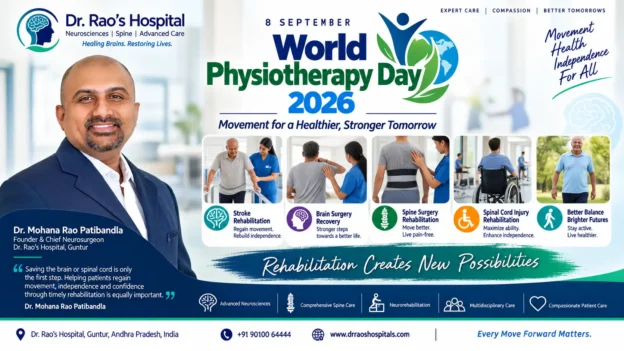
Dr. Mohana Rao Patibandla, Founder and Chief Neurosurgeon at Dr. Rao's Hospital, Guntur, highlighting the importance of early neurorehabilitation, stroke rehabilitation, brain surgery recovery, spine surgery rehabilitation, spinal cord injury rehabilitation, and neurological physiotherapy on World Physiotherapy Day 2026.

World Physiotherapy Day 2026: Dr. Mohana Rao Patibandla Highlights the Vital Role of Early Neurorehabilitation in Stroke, Brain, and Spine Recovery


World Physiotherapy Day 2026: Dr. Mohana Rao Patibandla Highlights the Vital Role of Early Neurorehabilitation in Stroke, Brain, and Spine Recovery


World Physiotherapy Day 2026

Dr. Rao’s Hospital
Neurorehabilitation

GUNTUR, Andhra Pradesh, India — September 8, 2026


On World Physiotherapy Day 2026, Dr. Mohana Rao Patibandla, Founder and Chief Neurosurgeon of Dr. Rao’s Hospital, Guntur, emphasized that early physiotherapy and specialized neurorehabilitation are among the most important factors determining recovery after stroke, brain surgery, spinal cord injury, traumatic brain injury, and complex spine surgery. He noted that rehabilitation should begin as early as medically appropriate and continue through a personalized multidisciplinary recovery program to maximize independence and quality of life.


Observed globally every year on September 8, World Physiotherapy Day raises awareness about the critical contribution of physiotherapists in preventing disability, restoring movement, and improving long-term health outcomes. The 2026 global campaign places particular emphasis on physiotherapy’s role in stroke recovery, cardiovascular health, and physical activity, making neurorehabilitation especially relevant for patients recovering from neurological illnesses and injuries.


Hawaii’s Leader in Stroke Rehabilitation | Rehabilitation Hospital of the Pacific
Stroke Care in Alberta | Alberta Health Services

Neuro Rehabilitation Chandler, AZ- Advanced Neurologic Rehabilitation


According to Dr. Mohana Rao Patibandla, recovery from neurological disease does not end after successful surgery or emergency treatment.


“Saving the brain or spinal cord is only the first step. Helping patients regain movement, balance, speech, confidence, and independence through timely neurorehabilitation is equally important.”


Dr. Rao explained that advances in neurosurgery, endovascular stroke treatment, minimally invasive spine surgery, and neurocritical care have significantly improved survival. However, long-term outcomes depend heavily on structured rehabilitation delivered by trained physiotherapists working alongside neurologists, neurosurgeons, rehabilitation physicians, speech therapists, occupational therapists, and nursing teams.


Conditions That Benefit from Neurological Physiotherapy


Neuro Rehabilitation Therapy in Burlington: Increase Recovery and Restore Independence
Brain Tumor Rehabilitation: What to Expect After Surgery

Spinal Cord Injury Rehabilitation | West Gables Rehabilitation Hospital


At Dr. Rao’s Hospital, physiotherapy forms an integral part of comprehensive neurosciences care for patients with:


Neurological Condition


Role of Physiotherapy


Stroke (Ischemic & Hemorrhagic)


Walking recovery, balance, strength, mobility, prevention of disability.


Brain Tumor Surgery


Improving coordination, gait, muscle strength, and functional recovery after surgery.


Traumatic Brain Injury


Balance retraining, mobility restoration, posture, and cognitive-functional rehabilitation.


Spinal Cord Injury


Strengthening, wheelchair mobility, standing programs, gait rehabilitation where appropriate.


Spine Surgery


Early mobilization, pain reduction, posture correction, and return to daily activities.


Parkinson’s Disease


Gait training, balance improvement, fall prevention, and mobility exercises.


Peripheral Nerve DisordersMuscle strengthening, nerve recovery support, and functional rehabilitation.


Stroke Recovery Begins Early


Un fisioterapeuta canario lidera la primera guía para tratar a pacientes con ictus | Canarias7
Vale Stroke Unit | ERGSY

Stroke patients ‘being failed every day’ due to rehabilitation gaps | ITV News


Stroke remains one of India’s leading causes of long-term disability. While emergency treatments such as clot removal and neurocritical care save lives, rehabilitation determines how well patients return to independent living.


Dr. Rao emphasized that, for many medically stable stroke patients, early mobilization and physiotherapy can begin within the first 24–48 hours under specialist supervision, depending on the patient’s neurological and medical condition. Early rehabilitation helps reduce complications associated with prolonged immobility and supports recovery of movement and balance.


Key goals of stroke physiotherapy include:


  • Restoring walking ability.

  • Improving balance and coordination.

  • Strengthening weakened limbs.

  • Preventing muscle stiffness and joint contractures.

  • Reducing the risk of falls.

  • Promoting independence in daily activities.


He added that every stroke patient requires an individualized rehabilitation program rather than a one-size-fits-all approach.


Rehabilitation After Brain Surgery Is Essential


Rachel Foster Boston Marathon: She ran the marathon soon after a traumatic brain injury
Physical therapy 'a constant puzzle to help solve'

Neurological Rehabilitation in Alpharetta | FYZICAL Alpharetta


Patients undergoing surgery for brain tumors, aneurysms, epilepsy, hydrocephalus, or traumatic brain injuries often experience temporary weakness, balance disturbances, or coordination difficulties.


Dr. Rao explained that postoperative physiotherapy helps patients:


  • Regain muscle strength.

  • Improve coordination and posture.

  • Restore gait and mobility.

  • Increase endurance.

  • Return safely to work and daily life.


  •  

Early rehabilitation also helps reduce postoperative complications related to prolonged bed rest.


Spine Surgery Recovery Is a Journey


臨床5年目までに押さえておきたい「腰椎術後のリハビリ」”いつから?”、”何を?”、”どこま?で”|Hitoshi & KZFM
Hospital Care After Spinal Fusion Surgery (2 to 4 Days)

Physio Meets Science (@PhysioMeScience) on X


Modern spine surgery allows many patients to mobilize much earlier than previously possible.


Following cervical and lumbar spine surgery, physiotherapy focuses on:


  • Safe mobilization.

  • Core strengthening.

  • Posture correction.

  • Flexibility exercises.

  • Functional movement training.

  • Return-to-work rehabilitation.


  •  

Dr. Rao emphasized that rehabilitation programs are tailored according to the type of surgery, neurological recovery, and patient-specific goals.


Spinal Cord Injury Rehabilitation Requires a Multidisciplinary Team


Un résumé de notre programme 'Activity-based therapy' pour les blessés médullaires
Innovative Exercise Physiology Strategies for Spinal Cord Injury Rehabilitation | Holistic Strength

Spinal Cord Injury Rehabilitation | Dignity Health Rehabilitation Hospital


Patients with spinal cord injuries often require prolonged rehabilitation involving multiple specialties.


Physiotherapy plays an important role in:


  • Preserving muscle function.

  • Improving mobility.

  • Preventing pressure injuries.

  • Managing spasticity.

  • Teaching transfers and wheelchair skills.

  • Maximizing independence.


  •  

Dr. Rao stressed that rehabilitation should begin during hospitalization whenever clinically appropriate and continue after discharge through structured follow-up.


Preventing Falls and Improving Balance


Troubles de l'équilibre après 65 ans : Prévenir les | Kinevir
Kinésithérapie neurologique à Genval - CareFit

Parkinson's Physiotherapy in Dubai | Physio Cure Dubai


Neurological physiotherapy is equally important for older adults with balance disorders, Parkinson’s disease, peripheral neuropathy, and vestibular dysfunction.


Balance rehabilitation helps:


  • Reduce fall risk.

  • Improve walking confidence.

  • Enhance coordination.

  • Maintain independence in older adults.


  •  

Dr. Rao encouraged families not to ignore recurrent falls or persistent imbalance, as these may indicate underlying neurological conditions requiring evaluation.


Physical Activity Is Brain Health


7 Exercises to Improve Walking Strength for Seniors
Stroke survivor: I had to seek rehab outside NHS to walk again | The latest National and International News - upday News

‘Definitive test’ finds exercise a potent weapon against colon cancer | Folio


World Physiotherapy Day also promotes physical activity as an essential component of long-term health.


Dr. Rao highlighted that regular physical activity can contribute to:


  • Better cardiovascular health.

  • Reduced stroke risk factors.

  • Improved brain function.

  • Better recovery after neurological illness.

  • Improved mental health and quality of life.


  •  

He encouraged patients recovering from neurological conditions to remain physically active under professional guidance rather than avoiding movement due to fear.


The Dr. Rao’s Hospital Neurorehabilitation Approach


Neuro Rehabilitation centre in hyderabad | Neuro care center - Brinnovacare
Facilities - NeuroGen BSI

Program enhances stroke care at nearly 3,000 U.S. hospitals: Newsroom - UT Southwestern, Dallas, Texas


At Dr. Rao’s Hospital, Guntur, neurorehabilitation is integrated into comprehensive neuroscience care through collaboration between neurosurgeons, neurologists, physiotherapists, neurocritical care specialists, rehabilitation experts, speech therapists, occupational therapists, and specialized nursing teams.


The hospital’s rehabilitation philosophy includes:


  • Early neurological assessment.

  • Individualized rehabilitation planning.

  • Goal-oriented physiotherapy.

  • Balance and gait training.

  • Strength and mobility rehabilitation.

  • Functional independence training.

  • Long-term follow-up and recovery monitoring.


  •  

This multidisciplinary approach aims to improve recovery and help patients return to independent daily living whenever possible.


A Message to Patients and Families


Dr. Rao advised patients and caregivers not to delay rehabilitation after neurological illness or surgery.


“Recovery is a process, not a single event. Early physiotherapy, consistent rehabilitation, family participation, and regular follow-up together provide patients with the best opportunity to regain independence.”


He encouraged individuals experiencing weakness after stroke, persistent back pain after spinal injury, difficulty walking, balance problems, or neurological disability to seek early evaluation by a neuroscience team rather than waiting for symptoms to worsen.


About Dr. Rao’s Hospital


Dr. Rao’s Hospital is a dedicated neuroscience hospital in Guntur, Andhra Pradesh, specializing in neurology, neurosurgery, spine surgery, stroke care, neuro-oncology, pediatric neurosurgery, cerebrovascular surgery, endovascular neurosurgery, epilepsy surgery, minimally invasive brain and spine surgery, and comprehensive neurorehabilitation.


The hospital provides advanced diagnosis, emergency neurological care, surgical treatment, intensive neurocritical care, and rehabilitation services for patients across Andhra Pradesh and India.


Frequently Asked Questions


What is World Physiotherapy Day?

World Physiotherapy Day is observed every year on September 8 to recognize the contribution of physiotherapists in improving health, mobility, rehabilitation, and quality of life worldwide.


Why is physiotherapy important after a stroke?

Physiotherapy helps stroke patients regain movement, balance, strength, walking ability, and independence while reducing long-term disability through structured rehabilitation.


When should physiotherapy begin after stroke?

For many medically stable patients, rehabilitation begins as early as clinically appropriate under specialist supervision, based on neurological and medical stability.


Is physiotherapy necessary after brain or spine surgery?

Yes. Rehabilitation after brain and spine surgery helps restore strength, mobility, posture, balance, coordination, and functional independence.


Can physiotherapy help patients with spinal cord injuries?

Physiotherapy is a key component of spinal cord injury rehabilitation and focuses on mobility, muscle preservation, balance, wheelchair skills, and maximizing independence.


Media Contact


Dr. Rao’s Hospital – International Institute of Neurosciences (IIN)

12-19-67, Old Bank Road, Kothapet, Guntur, Andhra Pradesh – 522001, India

Phone: +91 90100 64444

Website: Dr. Rao’s Hospital

Email: info@drraoshospitals.com


On World Physiotherapy Day 2026, Dr. Mohana Rao Patibandla emphasizes that recovery from stroke, brain surgery, spinal cord injury, and spine surgery depends not only on successful treatment but also on timely neurorehabilitation. Early physiotherapy, individualized rehabilitation, and multidisciplinary neuroscience care help patients regain mobility, independence, and quality of life. #WorldPhysiotherapyDay #StrokeRecovery #Neurorehabilitation #SpineRehabilitation #DrRaosHospital

#WorldPhysiotherapyDay2026, #WorldPhysiotherapyDay, #DrMohanaRaoPatibandla, #DrRaosHospital, #Neurorehabilitation, #StrokeRecovery, #StrokeRehabilitation, #BrainSurgeryRecovery, #SpineRehabilitation, #SpinalCordInjuryRehabilitation, #NeurologicalPhysiotherapy, #BrainHealth, #SpineHealth, #AdvancedNeurosciences, #Guntur, #AndhraPradesh, #HealingBrainsRestoringLives, #EveryMoveForwardMatters

YouTube

Facebook

Instagram

Google Business Page

LinkedIn

X / Twitter


Dr. Rao’s Hospital, Guntur

Dr. Mohana Rao Patibandla

About Dr. Rao’s Hospital

Advanced Neurosurgery in Guntur

Comprehensive Neurology Care in Guntur

Advanced Spine Surgery in Guntur

Minimally Invasive Brain and Spine Surgery

Pediatric Neurosurgery in Guntur

Advanced Epilepsy Surgery in Guntur

International Patients – Neurosurgery in India

Book an Appointment at Dr. Rao’s Hospital


Primary  Pages

Dr. Rao’s Hospital – International Institute of Neurosciences

About Dr. Rao’s Hospital

Dr. Mohana Rao Patibandla – Best Neurosurgeon in Guntur

World-Class Neurosurgery at Dr. Rao’s Hospital

Advanced Neurosurgery and Spine Care at Dr. Rao’s Hospital


Brain Surgery Internal Links

Brain Tumor Surgery

Minimally Invasive Brain Surgery

Brain Specialist in Andhra Pradesh

Neurosurgery Excellence at Dr. Rao’s Hospital


Spine Surgery Internal Links

Advanced Spine Surgery at Dr. Rao’s Hospital

Comprehensive Spine Surgery Services

Minimally Invasive Neurosurgery

Keyhole Brain and Spine Surgery


Stroke & Endovascular Internal Links


Stroke and Cerebrovascular Treatment

Hybrid Cath Lab and Endovascular Neurosurgery

Brain Aneurysm and Cerebrovascular Care


Functional Neurosurgery Internal Links


Functional Neurosurgery in Andhra Pradesh

Deep Brain Stimulation and Functional Neurosurgery

Epilepsy Surgery


Neuro-Oncology Internal Links


Brain Tumor Surgery

Minimally Invasive Neuro-Oncology

Advanced Brain Tumor Treatment in Andhra Pradesh


Hospital Technology Internal Links


Stealth 8 Neuronavigation System

Flat Panel Biplane Hybrid Cath Lab

Intraoperative Neuromonitoring (IONM)

Dedicated Neuro ICU

4K Neuroendoscopy Technology


Dr. Mohana Rao Patibandla 

Dr. Mohana Rao Patibandla – Biography

Dr. Mohana Rao Patibandla – Neurosurgeon in Guntur

Dr. Mohana Rao Patibandla’s Vision for Advanced Neurosurgery


Related Blog Links 


World Federation of Neurosurgical Societies (WFNS)

American Association of Neurological Surgeons (AANS)

Congress of Neurological Surgeons (CNS)
World Stroke Organization

National Institute on Aging – Alzheimer’s Disease

Alzheimer’s Disease International


World Physiotherapy

World Health Organization (WHO)

World Stroke Organization

India Today Health Eminent Doctors South 2025 feature showing Dr. Mohana Rao Patibandla listed among selected doctors from Andhra Pradesh and Telangana.

Dr. Mohana Rao Patibandla | India Today Eminent Doctor South 2025

Dr. Mohana Rao Patibandla Recognized Among India Today Health’s Eminent Doctors South 2025

In a significant recognition of clinical excellence and leadership in neurosciences, Dr. Mohana Rao Patibandla, Founder and Chief Neurosurgeon of Dr. Rao’s Hospital, Guntur, has been featured in India Today Health’s “Eminent Doctors South 2025”—a special editorial listing published as part of India Today Group’s 50th Anniversary edition.

This prestigious inclusion highlights doctors from Southern India who have demonstrated sustained excellence, peer recognition, and meaningful contributions to patient care across their respective specialties.

LEARN MORE HERE

A Mark of Editorial Credibility, Not Just an Award

Unlike conventional awards or paid rankings, India Today Health’s Eminent Doctors list is an editorially curated feature, based on a combination of:

  • Peer surveys

  • Professional reputation

  • Clinical experience

  • Editorial assessment by the India Today Health team

The listing spans leading clinicians from Andhra Pradesh, Telangana, Tamil Nadu, Kerala, and Karnataka, making it one of the most credible regional recognitions in Indian healthcare journalism.

Dr. Mohana Rao Patibandla’s inclusion reflects his long-standing commitment to advanced neurosurgical care, ethical medical practice, and patient-centric outcomes.

Dr. Mohana Rao Patibandla: A Leader in Modern Neurosurgery

With over two decades of experience in the field of neurosciences, Dr. Mohana Rao Patibandla is widely regarded as one of the best neurosurgeons in Guntur and a trusted name in brain and spine care across Andhra Pradesh.

His academic and professional journey includes:

  • MBBS from Andhra Medical College, Visakhapatnam

  • MCh in Neurosurgery from Nizam’s Institute of Medical Sciences (NIMS), Hyderabad

  • Advanced fellowships and international training in:

    • Minimally invasive skull base surgery

    • Pediatric neurosurgery

    • Neuro-oncology

    • Functional and stereotactic radiosurgery

    • Endovascular and cerebrovascular procedures (USA)

This diverse exposure enables him to offer evidence-based, globally aligned neurosurgical care tailored to Indian patients.

Building Dr. Rao’s Hospital: A Dedicated Neurosciences Institution

Dr. Rao’s Hospital was established with a clear vision:
👉 To create a focused, state-of-the-art center for brain, spine, and nerve care outside metropolitan cities.

Today, the hospital is recognized as:

  • One of the best neurology and neurosurgery hospitals in Guntur

  • A referral center for complex brain and spine surgeries

  • A facility known for ethical practice, surgical safety, and transparent care

The hospital integrates advanced diagnostics, modern operating theaters, neuro-ICU support, and multidisciplinary expertise—ensuring comprehensive care from diagnosis to rehabilitation.

Why This Recognition Matters for Patients

For patients and families navigating complex neurological conditions, recognitions like India Today Health’s Eminent Doctors provide trusted validation.

Dr. Rao’s inclusion reassures patients that:

  • Their care is led by a nationally acknowledged expert

  • Clinical decisions are grounded in experience and evidence

  • Treatment protocols meet national and international standards

It also reinforces Dr. Rao’s Hospital’s position as a center where expertise meets empathy.

A Continuing Commitment to Excellence

Reacting to the recognition, Dr. Mohana Rao Patibandla emphasized that such acknowledgements are not endpoints, but responsibilities.

“This recognition belongs to every patient who trusted us and every team member who works tirelessly to deliver safe, ethical, and advanced neurosurgical care. Our focus remains on improving outcomes and expanding access to quality neurosciences in our region.”

Looking Ahead

As Dr. Rao’s Hospital continues to expand its services and outreach, this feature in India Today Health further strengthens its mission to deliver world-class neurology, neurosurgery, and spine care in Andhra Pradesh.

For patients seeking the best neurosurgeon in Guntur, the best neurologist in Guntur, or the best spine surgeon in Guntur, this recognition stands as an independent editorial endorsement of trust and excellence.


📍 Dr. Rao’s Hospital, Guntur
Advanced Brain, Spine & Nerve Care
🌐 https://drraoshospitals.com
📧 info@drraoshospitals.com

Who is Dr. Mohana Rao Patibandla?

Dr. Mohana Rao Patibandla is a senior neurosurgeon and the Founder of Dr. Rao’s Hospital, Guntur, a dedicated center for advanced brain, spine, and nerve care. He has over two decades of experience and international training in complex neurosurgical procedures.
🔗 Learn more: https://drraoshospitals.com


Why is Dr. Mohana Rao Patibandla featured in India Today Health?

Dr. Mohana Rao Patibandla was featured in India Today Health’s Eminent Doctors South 2025 for his sustained excellence in neurosurgery, peer recognition, and leadership in building a focused neurosciences hospital in Andhra Pradesh.


Is the India Today Eminent Doctors listing a paid award?

No. The India Today Eminent Doctors list is an editorially curated recognition, based on peer surveys, professional standing, and editorial review. It is not a paid award or competitive ranking.


Which hospital does Dr. Mohana Rao Patibandla work at?

Dr. Mohana Rao Patibandla is the Founder and Chief Neurosurgeon at Dr. Rao’s Hospital, Guntur, which specializes in neurology, neurosurgery, and spine surgery.
🔗 Official website: https://drraoshospitals.com


What treatments are offered at Dr. Rao’s Hospital?

Dr. Rao’s Hospital offers comprehensive care for:

  • Brain tumors

  • Spine disorders

  • Stroke and cerebrovascular diseases

  • Pediatric neurosurgery

  • Minimally invasive brain and spine surgery

🔗 View services: https://drraoshospitals.com


Why is Dr. Rao considered one of the best neurosurgeons in Guntur?

Dr. Rao is considered one of the best neurosurgeons in Guntur due to his advanced international training, experience in complex neurosurgical cases, and patient-centric approach supported by modern infrastructure at Dr. Rao’s Hospital.


Where is Dr. Rao’s Hospital located?

Dr. Rao’s Hospital is located in Guntur, Andhra Pradesh, and serves patients from across Andhra Pradesh and neighboring states.
🔗 Contact & directions: https://drraoshospitals.com

YouTube

Facebook  

Instagram 

Google GMB 

LinkedIn 

X / Twitter

A promotional image for Dr. Rao's Hospital featuring Dr. Mohana Rao Patibandla receiving the Economic Times Excellence in Neurology, Neurosurgery, and Spine Surgery Award 2025. The image includes photos of the award ceremony, a portrait of Dr. Patibandla, and details about his qualifications (MCh, FESBS, FAANS, etc.) and contact information. The hospital's locations (Guntur, Vijayawada, Bhimavaram, Rajahmundry, Kakinada, Eluru, Ongole, Nellore) and the slogan "Act Fast - Save Brain and Spine" are highlighted, along with a map and phone number.

Recognising Early Signs of Brain Tumours in Adults: When to Seek a Neurosurgeon


Recognizing early signs of brain tumors in adults

Brain tumours can affect anyone, but their symptoms often develop subtly and are easily mistaken for more common conditions such as migraines, anxiety, or stress. However, recognising the early signs of a brain tumour can make a life-saving difference. Early diagnosis allows for timely intervention and better treatment outcomes.

At Dr. Rao’s Hospital in Guntur, led by Dr. Mohana Rao Patibandla—one of the best neurosurgeons in Guntur—patients receive world-class care for brain tumours, combining advanced neuroimaging, minimally invasive neurosurgery, and personalized treatment planning.


Understanding Brain Tumours

A brain tumour is an abnormal growth of cells within the brain or surrounding tissues. Tumours can be benign (non-cancerous) or malignant (cancerous), and their effects depend on their size, location, and growth rate. According to the World Health Organization (WHO), brain and nervous system tumours account for nearly 2% of all cancers worldwide.

Common Types of Brain Tumours in Adults

  • Glioblastoma: A highly aggressive malignant brain tumour.
  • Meningioma: Usually benign; arises from the membranes covering the brain.
  • Pituitary Tumours: Affect hormone production and vision.
  • Astrocytoma and Oligodendroglioma: Intermediate-grade tumours of the brain’s supporting cells.

[Source: PubMed – Epidemiology of Brain Tumours]


What Are the Early Signs of Brain Tumour in Adults?

Brain tumour symptoms in adults vary depending on the affected area of the brain. Many symptoms mimic other conditions, making awareness critical for early detection.

1. Persistent Headaches That Don’t Respond to Usual Medication

One of the most common early signs of a brain tumour is a persistent headache that is different from usual tension or migraine headaches. These headaches often:

  • Are worse in the morning or after waking up.
  • Get progressively more intense over time.
  • Occur with nausea or vomiting.

If you have a persistent headache and nausea that lasts beyond a few days or does not respond to medication, it’s time to consult a neurosurgeon.

2. Seizures (Fits)

Even a single seizure episode in an adult without a prior history of epilepsy could indicate a brain tumour. Tumours can irritate nearby brain tissue, causing electrical disturbances that lead to seizures.

3. Vision and Hearing Changes

Blurry vision, double vision, loss of peripheral vision, or sudden hearing loss can occur when tumours affect the optic or auditory nerves. For instance, pituitary tumours commonly cause vision problems due to pressure on the optic chiasm.

4. Personality and Behavioural Changes

Subtle shifts in behaviour, irritability, or memory problems may indicate a tumour in the frontal lobe—the brain’s area responsible for reasoning and emotional control. Family members often notice these changes first.

5. Balance and Coordination Problems

Tumours in the cerebellum can lead to unsteady walking, dizziness, and balance difficulties. These symptoms are often accompanied by headaches or nausea.

6. Speech and Cognitive Difficulties

Difficulty finding words, slurred speech, or confusion in understanding language can occur in tumours affecting the temporal or parietal lobes.

7. Weakness or Numbness in Limbs

If you notice weakness, tingling, or numbness on one side of the body, it could signify a tumour compressing motor pathways in the brain. These symptoms should not be ignored, especially if they develop gradually.


When to See a Neurosurgeon for Headaches or Neurological Symptoms

Not every headache means a tumour—but certain “red flag” symptoms indicate the need to see a neurosurgeon urgently:

  • Persistent or worsening headaches despite medication
  • Headaches accompanied by vomiting or visual disturbances
  • New-onset seizures or fainting spells
  • Changes in personality, mood, or memory
  • Weakness, speech problems, or coordination issues

At Dr. Rao’s Hospital Neurology Department, patients undergo detailed neurological assessments and advanced imaging like MRI and CT scans for early detection and accurate diagnosis.


Diagnosis and Tests for Brain Tumours

Accurate diagnosis is the cornerstone of successful treatment. The diagnostic approach includes:

  • Neurological Examination: Checks reflexes, coordination, and sensory function.
  • Neuroimaging: MRI or CT scan to locate and assess tumour characteristics.
  • Biopsy: For confirming tumour type and grade.
  • Hormone and Vision Tests: For pituitary or optic nerve involvement.

[Source: Mayo Clinic – Brain Tumour Diagnosis]


Brain Tumour Treatment in Guntur at Dr. Rao’s Hospital

Dr. Rao’s Hospital is recognized as one of the best neurosurgery hospitals in Guntur and Andhra Pradesh for brain tumour treatment. Led by Dr. Mohana Rao Patibandla, a fellowship-trained neurosurgeon with expertise in minimally invasive and skull base brain surgery, the hospital provides:

  • Advanced neuro-navigation and intraoperative imaging
  • Microsurgical and endoscopic tumour removal
  • Comprehensive neuro-oncology and rehabilitation
  • Personalized care for benign and malignant brain tumours
  • Stereotactic Radiosurgery for knife less tumor surgery

Patients across Andhra Pradesh trust Dr. Rao’s Hospital Guntur for safe and precise brain tumour surgeries.


Living with a Brain Tumour: Hope with Early Detection

While the term “brain tumour” sounds alarming, advances in neurosurgery have dramatically improved outcomes. Many benign tumours can be fully removed, and even malignant types can be controlled with surgery, radiation, and targeted therapy.

Awareness of brain tumour warning signs—such as persistent headaches, seizures, and vision problems—can help detect issues early, when treatment is most effective. Early consultation with a qualified neurosurgeon in Guntur ensures the best possible recovery.


Call to Action

If you or someone you know is experiencing persistent headaches, seizures, or neurological changes, don’t ignore them. Visit Dr. Rao’s Hospital—the leading brain tumour hospital in Guntur—for expert evaluation and treatment by Dr. Mohana Rao Patibandla, one of the best neurosurgeons in Andhra Pradesh. Contact us at 📞 090100 56444 or 📧 info@drraoshospitals.com.


What are the first signs of a brain tumour?

Early signs include persistent headaches, seizures, vision changes, memory issues, and personality changes. Seek immediate evaluation if symptoms persist.

When should I consult a neurosurgeon for headaches?

If headaches are persistent, severe, or accompanied by nausea, vision issues, or seizures, it’s essential to consult a neurosurgeon for timely diagnosis.

Why choose Dr. Rao’s Hospital for brain tumour treatment?

At Dr. Rao’s Hospital, led by Dr. Mohana Rao Patibandla, one of the best neurosurgeons in Guntur, patients receive advanced, minimally invasive, and compassionate care using modern neurosurgical techniques.


Follow Dr. Rao’s Hospital