Tag Archives: skull base surgery India

TEDx banner featuring Dr. Rao highlighting his innovative ideas and expertise.

Why Dr. Rao’s Hospital Is Emerging as a Global Destination for Advanced Neurosurgery and Spine Care

Why Dr. Rao’s Hospital Is Emerging as a Global Destination

In the rapidly evolving world of neurosciences, only a few institutions successfully combine cutting-edge technology, internationally trained expertise, compassionate patient care, and affordability. Dr. Rao’s Hospital in Guntur has emerged as one of India’s most recognized centers for neurology, neurosurgery, spine surgery, and minimally invasive brain and spine care.


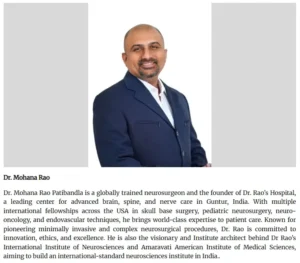
Founded by internationally trained neurosurgeon Dr. Mohana Rao Patibandla, the hospital has steadily transformed the healthcare landscape of Andhra Pradesh by bringing world-class neuro care closer to patients who previously had to travel to metro cities or abroad for advanced treatment.

According to the official hospital website, Dr. Rao’s Hospital is among the first dedicated neurosciences facilities in Andhra Pradesh equipped with advanced technologies such as intraoperative neuronavigation, hybrid cath lab systems, intraoperative imaging, neuromonitoring, and minimally invasive neurosurgical platforms.


A Vision to Bring World-Class Neurosurgery to Andhra Pradesh

The journey of Dr. Rao’s Hospital began with a mission: to create an internationally comparable neuroscience institute in Andhra Pradesh that prioritizes innovation, precision, safety, and compassionate healing.


After extensive training across India and the United States in skull base surgery, pediatric neurosurgery, minimally invasive neurosurgery, cerebrovascular surgery, neuro-oncology, and endovascular surgery, Dr. Mohana Rao Patibandla returned to India with a vision to establish a center of excellence in neurosciences.


Today, that vision has evolved into a highly respected institution serving patients from across:


  • Andhra Pradesh
  • Telangana
  • Tamil Nadu
  • Karnataka
  • Odisha
  • International medical tourism destinations
  •  

The hospital has become especially known for:

  • Brain tumor surgery
  • Complex spine surgery
  • Endoscopic skull base surgery
  • Endovascular neurosurgery
  • Pediatric neurosurgery
  • Epilepsy surgery
  • Functional neurosurgery
  • Stroke and aneurysm management
  • Minimally invasive spine surgery

Advanced Technology That Defines Precision Neurosurgery

Modern neurosurgery depends heavily on precision.

Even a millimeter can determine neurological outcomes. That is why advanced technology plays a central role at Dr. Rao’s Hospital.


According to the hospital’s official information, the facility includes:

  • Advanced neuronavigation systems
  • Hybrid vascular cath lab technology
  • Intraoperative neuromonitoring
  • High-end endoscopic neurosurgical systems
  • Advanced neuroimaging platforms
  • Minimally invasive surgical technologies
  •  

These technologies help surgeons:

  • Improve surgical accuracy
  • Reduce complications
  • Minimize blood loss
  • Preserve neurological function
  • Enable faster patient recovery
  •  

The hospital’s emphasis on minimally invasive and endoscopic approaches aligns with global neurosurgical trends promoted by organizations such as the American Association of Neurological Surgeons and the Congress of Neurological Surgeons.


Expertise in Brain Tumor Surgery

Brain tumors require a multidisciplinary approach involving neurosurgeons, neurologists, neuro-anesthesiologists, neurocritical care teams, radiologists, and rehabilitation experts.


Dr. Rao’s Hospital provides advanced management for:

  • Gliomas
  • Meningiomas
  • Pituitary tumors
  • Skull base tumors
  • Metastatic brain tumors
  • Pediatric brain tumors
  • Acoustic neuromas
  •  

Using minimally invasive and image-guided techniques, surgeons can often access deep-seated tumors while minimizing damage to healthy brain tissue.

The hospital’s expertise in skull base surgery is particularly notable because these surgeries involve delicate structures including cranial nerves, blood vessels, and the brainstem.


The importance of specialized neuro-oncology centers has also been highlighted by the National Cancer Institute, which emphasizes multidisciplinary care and precision-based treatment for improved outcomes.


Comprehensive Spine Surgery and Minimally Invasive Spine Care

Spinal disorders are increasingly common due to modern sedentary lifestyles, aging populations, trauma, and degenerative disease.


Dr. Rao’s Hospital offers advanced treatment for:


  • Cervical spondylosis
  • Lumbar disc prolapse
  • Sciatica
  • Spinal tumors
  • Spinal trauma
  • Scoliosis
  • Spinal instability
  • Craniovertebral junction disorders
  • Degenerative spine disease
  •  

The hospital is especially recognized for minimally invasive spine surgery, which offers several benefits:


  • Smaller incisions
  • Less muscle injury
  • Reduced postoperative pain
  • Faster mobilization
  • Shorter hospital stay
  • Quicker return to work
  •  

The growing importance of minimally invasive spine techniques is also recognized globally by organizations like the North American Spine Society.


Stroke, Aneurysm, and Endovascular Neurosurgery

Stroke remains one of the leading causes of disability and death worldwide. Rapid diagnosis and intervention are critical.


Dr. Rao’s Hospital provides emergency neurovascular care for:

  • Brain stroke
  • Aneurysms
  • Arteriovenous malformations (AVMs)
  • Intracranial hemorrhage
  • Carotid artery disease
  • Complex cerebrovascular disorders
  •  

The hospital’s advanced neurovascular and endovascular capabilities allow minimally invasive treatment approaches for many vascular conditions.


The World Health Organization notes that timely stroke management significantly improves outcomes and reduces long-term disability. World Health Organization – Stroke Information


Pediatric Neurosurgery with Compassionate Care

Children with neurological disorders require highly specialized treatment and emotional support.


Dr. Rao’s Hospital offers pediatric neurosurgical care for:


  • Hydrocephalus
  • Pediatric brain tumors
  • Congenital spine disorders
  • Craniosynostosis
  • Neural tube defects
  • Epilepsy
  • Traumatic brain injury
  •  

The hospital’s approach combines surgical expertise with family-centered care, ensuring parents remain informed and supported throughout treatment.


The importance of specialized pediatric neurosurgery has been emphasized by institutions such as Boston Children’s Hospital and Johns Hopkins Medicine.


International Recognition and Academic Contributions

One of the distinguishing aspects of Dr. Mohana Rao Patibandla’s career is his active participation in global neurosurgical academia.


He has presented advanced neurosurgical techniques at multiple national and international conferences, including presentations related to:


  • Endoscopic craniovertebral junction surgery
  • Advanced cerebrovascular procedures
  • Intraoperative neuromonitoring
  • Skull base surgery
  • Endovascular neurosurgery
  •  

International academic participation reflects not only surgical expertise but also commitment to advancing the field of neurosciences globally.

The hospital’s growing international visibility has contributed to increasing medical tourism interest from patients seeking affordable yet world-class neurological care.


Why Patients Choose Dr. Rao’s Hospital


Patients often choose Dr. Rao’s Hospital because of its combination of:

  • Internationally trained expertise
  • Advanced infrastructure
  • Personalized care
  • Affordable treatment
  • Ethical approach
  • Comprehensive neurosciences focus
  •  

The hospital emphasizes individualized treatment planning rather than a one-size-fits-all approach.


According to publicly available hospital information and patient feedback platforms, the institution has gained recognition for:


  • Rapid diagnosis
  • Emergency neuro care
  • Surgical precision
  • Patient communication
  • Postoperative rehabilitation
  • Compassionate nursing care
  •  

Medical Tourism in India and the Rise of Specialized Neuroscience Centers

India has become one of the world’s leading destinations for medical tourism due to:


  • Highly trained specialists
  • Advanced infrastructure
  • Cost-effective treatment
  • English-speaking healthcare professionals
  • Reduced waiting periods
  •  

Dr. Rao’s Hospital is increasingly becoming part of this medical tourism ecosystem, particularly for patients seeking advanced neurosurgical and spine procedures.


The hospital’s comprehensive medical tourism support includes:

  • Consultation coordination
  • Surgical planning
  • Postoperative follow-up
  • Rehabilitation guidance
  • International patient assistance
  •  

India’s growing role in medical tourism has been recognized by the Medical Tourism Association.


Community Outreach and Expanding Access to Neuro Care

Dr. Rao’s Hospital has also expanded neuro and spine outpatient access across multiple cities in Andhra Pradesh. Recent reports highlighted the launch of neuro and spine OPD centers in several Andhra cities to improve accessibility for patients outside Guntur.


This expansion reflects an important healthcare principle:


Specialized care should not be limited to metropolitan cities alone.

By extending consultations and outreach services, the hospital is helping bridge the gap between advanced neuroscience care and underserved populations.


Research, Innovation, and Future Directions

The future of neurosciences lies in:


  • Artificial intelligence-assisted diagnostics
  • Robotic surgery
  • Advanced neuroimaging
  • Precision medicine
  • Minimally invasive interventions
  • Personalized rehabilitation
  •  

Dr. Rao’s Hospital continues to evolve alongside these innovations, integrating advanced technology and evidence-based treatment approaches into daily practice.


The hospital’s long-term vision includes:


  • Expanded neuroscience education
  • Research collaborations
  • International partnerships
  • Advanced fellowship programs
  • Broader accessibility to high-end neuro care

Patient-Centered Care at the Core

While technology and expertise are essential, compassionate care remains central to healing.


At Dr. Rao’s Hospital, the philosophy of care emphasizes:


  • Clear communication
  • Transparency
  • Ethical decision-making
  • Emotional support
  • Family involvement
  • Holistic recovery
  •  

This patient-first approach has helped the institution build trust among thousands of families across India and internationally.


Internal Links

Learn more about:


Contact Dr. Rao’s Hospital

Dr. Rao’s Hospital

📍 Address:
12-19-67 / 12-19-97 Old Bank Road, Kothapet, Opposite Sravani Hospital, Besides AK Biryani point, Guntur, Andhra Pradesh, India

📞 Phone:
+91 9010056444
+91 9010057444

📧 Email:
info@drraoshospitals.com
drpatibandla@gmail.com

🌐 Website:
Official Website

📍 Google Maps:
Google Maps Location


Follow Dr. Rao’s Hospital on Social Media

📺 YouTube
Dr. Rao’s Hospital YouTube Channel

📘 Facebook
Dr. Rao’s Hospital Facebook

📸 Instagram
Dr. Mohana Rao Instagram

💼 LinkedIn
Dr. Mohana Rao LinkedIn

🐦 X (Twitter)
Dr. Mohana Rao on X


Conclusion

As neuroscience continues to advance rapidly, institutions that combine innovation, expertise, ethics, and compassion will define the future of neurological care.


Dr. Rao’s Hospital stands as a powerful example of how world-class neurosciences can thrive outside traditional metropolitan centers. Through advanced technology, internationally trained expertise, minimally invasive approaches, and a deep commitment to patient care, the hospital is redefining neurological and spine care in India.


For patients seeking advanced treatment for brain, spine, nerve, stroke, or complex neurological disorders, Dr. Rao’s Hospital continues to emerge as one of the most trusted destinations for comprehensive neurosciences care in India.

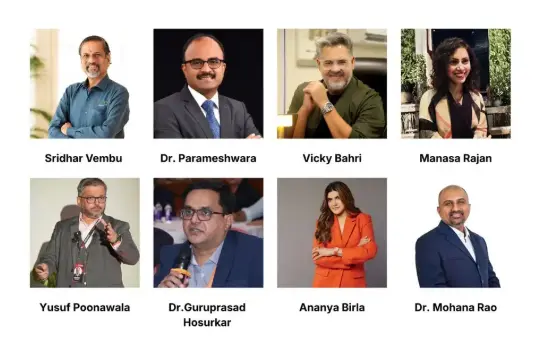
Dr Mohana Rao Patibandla with Sridhar Vembu and Ananya Birla in Mid-Day Entrepreneurs to Watch in 2026 list

Dr Mohana Rao Patibandla Featured in Mid-Day Entrepreneurs 2026 Along Side Sridhar Vembu

Dr Mohana Rao Patibandla Featured in Mid-Day Entrepreneurs 2026: A Defining Moment for Healthcare Innovation in India

In a significant recognition of healthcare entrepreneurship in India, Dr Mohana Rao Patibandla, a globally trained neurosurgeon and founder of Dr Rao’s Hospital (International Institute of Neurosciences – IIN), has been featured in the prestigious Mid-Day “Entrepreneurs to Look Forward in 2026” list. This recognition places him alongside leading entrepreneurs such as Sridhar Vembu, founder of Zoho Corporation, and Ananya Birla, highlighting the growing importance of healthcare innovation alongside technology and business sectors in India.

EINpresswire

The Rise of Healthcare Entrepreneurship in India

India’s healthcare ecosystem is undergoing a major transformation. Traditionally concentrated in metropolitan cities, advanced medical care is now expanding into tier-2 cities like Guntur. This shift is being driven by visionary clinician-entrepreneurs who are not only practicing medicine but also building scalable healthcare systems.

Dr Mohana Rao Patibandla represents this new generation of leaders who are redefining healthcare delivery by integrating advanced technology, global expertise, and patient-centered care models.

About Dr Rao’s Hospital (International Institute of Neurosciences – IIN)

Dr Rao’s Hospital (IIN) is one of the most advanced centers for neurology, neurosurgery, and spine care in Andhra Pradesh. Located in Guntur, the hospital was established with a vision to provide world-class brain, spine, and nerve care in a non-metro region.

The hospital is equipped with cutting-edge technologies including neuronavigation systems, intraoperative neuromonitoring (IONM), minimally invasive spine surgery platforms, and endoscopic skull base surgery capabilities.

These technologies enable precise surgical interventions, improved patient safety, and faster recovery times, making advanced neurosurgical care accessible to patients who would otherwise need to travel to metropolitan cities.

Global Training, Local Impact

Dr Mohana Rao Patibandla’s journey reflects a unique blend of global exposure and local commitment. After completing his neurosurgical training in India, he pursued advanced fellowships in the United States across multiple subspecialties including:

  • Minimally invasive skull base surgery
  • Pediatric neurosurgery
  • Neuro-oncology
  • Functional and stereotactic radiosurgery
  • Endovascular and cerebrovascular surgery
  •  

By bringing this expertise back to India, he has been instrumental in elevating the standards of neurosurgical care in Andhra Pradesh and beyond.

Recognition by Forbes India and Mid-Day

In addition to the Mid-Day feature, Dr Rao has also been recognized by Forbes India as a “Game-Changing Leader.” This dual recognition underscores his impact not only as a clinician but also as a healthcare entrepreneur.

Game-changing leaders featured in Forbes including Dr Mohana Rao Patibandla neurosurgeon India

Forbes India-featured game-changing leaders including Dr. Mohana Rao Patibandla, a leading neurosurgeon in India transforming brain and spine care.

The Mid-Day list highlights entrepreneurs across various sectors who are expected to shape India’s future. The inclusion of a neurosurgeon in this list reflects the growing importance of healthcare innovation in the national narrative.

Dr Rao Midday listlce

Dr Mohana Rao Patibandla Featured in Mid-Day Entrepreneurs 2026 Along Side Sridhar Vembu and Ananya Birla

Advanced Neurosurgical Care in Guntur

At Dr Rao’s Hospital (IIN), patients have access to a wide range of advanced treatments, including:

  • Brain tumor surgery
  • Minimally invasive spine surgery
  • Stroke and vascular neurosurgery
  • Endoscopic brain surgery
  • Neurocritical care
  •  

The hospital’s multidisciplinary approach ensures comprehensive care, from diagnosis to rehabilitation.

Innovation and Academic Contributions

Dr Rao is actively involved in academic and research activities. He has presented advanced neurosurgical techniques at national and international conferences, contributing to the global neurosurgical community.

His work includes innovations in endoscopic skull base surgery, intraoperative neuromonitoring, and complex vascular procedures.

Why This Recognition Matters

Being featured alongside entrepreneurs like Sridhar Vembu and Ananya Birla highlights a broader shift in India’s innovation landscape. Healthcare is no longer just a service sector; it is becoming a key driver of innovation and economic growth.

This recognition validates the importance of building healthcare systems that are:

  • Accessible
  • Technology-driven
  • Patient-centric
  • Scalable

The Vision for the Future

Dr Rao’s vision extends beyond a single hospital. Through the International Institute of Neurosciences (IIN), he aims to build a globally recognized center for brain and spine care in India.

The goal is to create an ecosystem that combines clinical excellence, research, education, and innovation to improve patient outcomes at scale.

Connect with Dr Rao’s Hospital

For more information, visit:

Conclusion

The inclusion of Dr Mohana Rao Patibandla in the Mid-Day “Entrepreneurs to Look Forward in 2026” list marks a significant milestone not only for him but also for the field of healthcare in India.

It reflects a growing recognition of the role that clinician-entrepreneurs play in shaping the future of medicine. By combining global expertise with local commitment, Dr Rao is helping to redefine how advanced healthcare is delivered in India.

As India continues to evolve as a global hub for innovation, leaders like Dr Mohana Rao Patibandla are paving the way for a future where high-quality healthcare is accessible to all.

Dr. Mohana Rao Patibandla, M. Ch (NIMS), FESBSS (KIMS), FAANS (USA), FMINS (OSU, USA), FEVNS (UVA, USA), FPNS (UCD, USA), FNOSRS (UVA, USA).

Dr. Rao’s Hospital / Patibandla Narayana Swamy Neurosciences LLP

12-19-67, Old Bank Road, Kothapet, Besides AK Khan Biryani point, Guntur, Andhra Pradesh, India 522001

Phone: +91 9010056444

Email: info@drraoshospitals.com;  Website: https://drraoshospitals.com

Dr. Mohana Rao Patibandla presenting on Percutaneous Endoscopic Lumbar Discectomy (PELD) at NEUROENDOCON 2026 conference in Jaipur

Neuroendoscopy Revolution: Insights from NEUROENDOCON 2026

Neuroendoscopy Revolution: Insights from NEUROENDOCON 2026

The field of neurosurgery is undergoing a profound transformation—driven by precision, minimal invasiveness, and advanced technology. Neuroendoscopy is at the forefront of this revolution, redefining how complex brain and spine disorders are treated.
 

This shift was prominently showcased at NEUROENDOCON 2026, the 12th Annual Conference of the Neuroendoscopy Society of India held in Jaipur. The event brought together leading neurosurgeons, innovators, and researchers to discuss cutting-edge advancements in minimally invasive neurosurgery.

Among the distinguished faculty was Dr. Mohana Rao Patibandla, Founder of Dr. Rao’s Hospital, who shared key insights into modern neurosurgical techniques.

Learn more:
https://drraoshospitals.com


NEUROENDOCON 2026: A Platform for Innovation

The conference served as a hub for innovation, featuring:

  • Cadaveric hands-on workshops
  • Live surgical demonstrations
  • Case-based discussions
  • Expert panel sessions

The central theme was clear: Minimally invasive neurosurgery is the future.


The Rise of Neuroendoscopy

Traditional neurosurgery often involved large incisions and prolonged recovery. Neuroendoscopy has transformed this approach by offering:

  • Smaller incisions
  • Reduced tissue damage
  • Enhanced visualization
  • Faster recovery
  • Improved surgical precision

This aligns with modern neurosurgical philosophy—precision and individualized care.


Transforming Spine Surgery: PELD

One of the key highlights of Dr. Rao’s presentation was Percutaneous Endoscopic Lumbar Discectomy (PELD).

This minimally invasive spine surgery offers:

  • Tiny incision
  • Minimal muscle damage
  • Faster recovery
  • Early mobilization

Dr. Rao emphasized that patient selection and surgical planning are critical for success.


Trigeminal Neuralgia: Advanced Endoscopic Solutions

Trigeminal neuralgia, one of the most painful neurological conditions, can now be treated more effectively using endoscopic techniques.

Endoscopic-assisted microvascular decompression (MVD) allows:

  • Better visualization of nerve compression
  • Improved surgical precision
  • Reduced recurrence rates

Endoscopic Pituitary Surgery

Endoscopic transnasal surgery for pituitary tumors represents a major advancement in skull base surgery.

  • No external scars
  • Enhanced visualization
  • Shorter hospital stay
  • Better outcomes

Modern techniques include neuronavigation and high-definition imaging systems.


Technology Driving Neurosurgery

NEUROENDOCON 2026 highlighted the role of technology in neurosurgery:

  • Neuronavigation systems
  • Intraoperative imaging
  • High-definition endoscopy
  • Biplane cath labs

These innovations significantly improve surgical safety and outcomes.


Dr. Rao’s Hospital: A Center of Excellence

Dr. Rao’s Hospital in Guntur, Andhra Pradesh, is a leading center for:

  • Neurosurgery
  • Neurology
  • Spine surgery
  • Neuro-oncology
  • Endovascular procedures

The hospital is equipped with advanced infrastructure and follows globally accepted treatment protocols.

Visit:
https://drraoshospitals.com


The Future of Neurosurgery

The future is shifting toward:

  • Minimally invasive procedures
  • Personalized treatment
  • Function preservation
  • Technology-driven precision

Patients can expect faster recovery, less pain, and better outcomes.


Conclusion

NEUROENDOCON 2026 reinforced that neurosurgery is entering a new era—one defined by innovation, precision, and patient-centric care.

With experts like Dr. Mohana Rao Patibandla and institutions like Dr. Rao’s Hospital leading the way, patients now have access to world-class neurosurgical care in India.


Contact Dr. Rao’s Hospital

📞 Phone: +91 90100 56444
📧 Email: info@drraoshospitals.com
🌐 Website: https://drraoshospitals.com


Frequently Asked Questions (FAQs)

What is neuroendoscopy?

Neuroendoscopy is a minimally invasive surgical technique that uses a small camera (endoscope) to treat brain and spine conditions with high precision and minimal tissue damage.

What is PELD surgery?

Percutaneous Endoscopic Lumbar Discectomy (PELD) is a minimally invasive spine surgery used to treat slipped discs with faster recovery and less pain.

Is endoscopic brain surgery safe?

Yes, endoscopic brain surgery is considered safe when performed by experienced neurosurgeons, offering reduced complications and faster healing.

What conditions can be treated with neuroendoscopy?

Neuroendoscopy is used for conditions like pituitary tumors, hydrocephalus, trigeminal neuralgia, and spinal disc herniations.

Where can I get advanced neuroendoscopy treatment in India?

Dr. Rao’s Hospital in Guntur offers advanced neuroendoscopy and minimally invasive neurosurgery with state-of-the-art technology.

Dr Rao Business World Eureka

India’s Leadership in Advanced Neurosurgery | Surgeon’s View

India’s Growing Leadership in Advanced Neurosurgery: A Surgeon’s Perspective

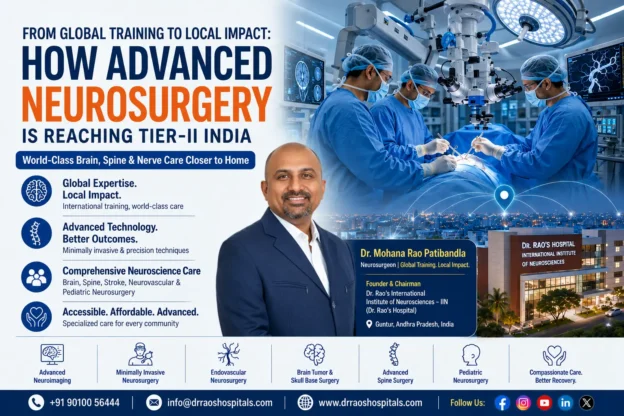
Over the last two decades, India has undergone a quiet but powerful transformation in the field of neurosurgery. Once known primarily for high-volume care, India today is increasingly recognized for advanced neurosurgical innovation, complex brain and spine surgery, and world-class outcomes.

From minimally invasive brain surgery and navigation-guided spine fixation to intraoperative neuromonitoring and AI-assisted neurosurgery, India is no longer following global trends—it is actively shaping them.

As a practicing neurosurgeon, this evolution is not merely academic. It is witnessed daily in operating theaters, intensive care units, and long-term patient outcomes. This article explores why India is emerging as a global leader in advanced neurosurgery, what this means for patients worldwide, and where the future is headed.

The Evolution of Neurosurgery in India

Neurosurgery in India began as a highly specialized discipline available only in a handful of institutions. Early pioneers laid the foundation with strong academic training and surgical rigor.

Over time, the ecosystem matured through:

  • Establishment of tertiary and quaternary neurosurgery centers
  • Exposure to international fellowships and global best practices
  • Rapid adoption of modern surgical technologies

Today, India hosts multiple neurosurgery centers of excellence capable of handling the most complex brain and spine disorders with outcomes comparable to the best global institutions.

Technology as the Catalyst for India’s Neurosurgical Leadership

Technology has been the single most important driver of India’s rise in advanced neurosurgery.
Modern neurosurgical practice in India routinely incorporates:

  • Minimally invasive neurosurgery
  • Endoscopic brain and skull base surgery
  • Keyhole neurosurgical approaches
  • Navigation-guided brain and spine surgery
  • Intraoperative neuromonitoring
  • AI-assisted surgical planning
  • Robotic and computer-assisted neurosurgery

These technologies have significantly improved surgical precision, reduced complications, and enhanced functional preservation.

Advanced Brain and Spine Surgery in India

India now performs a wide spectrum of highly complex neurosurgical procedures, including:

  • Complex brain tumor surgery
  • Skull base and endoscopic brain surgery
  • Advanced neuro-oncology surgery
  • Navigation-guided spine fixation
  • Complex spine deformity correction
  • Cerebrovascular and stroke intervention neurosurgery

Outcomes from Indian centers increasingly demonstrate high success rates with low complication profiles, supported by evidence-based neurosurgery protocols.

The Minimally Invasive Neurosurgery Revolution

One of India’s strongest areas of leadership is minimally invasive neurosurgery. These approaches reduce surgical trauma while preserving neurological function.

Key advantages include:

  • Smaller incisions
  • Less blood loss
  • Reduced infection risk
  • Shorter hospital stays
  • Faster functional recovery

Minimally invasive techniques are now routinely applied in brain tumors, spine surgery, skull base lesions, and functional neurosurgery across India.

Leadership in Functional and Specialized Neurosurgery

India has made remarkable progress in specialized neurosurgical subspecialties:

  • Epilepsy surgery
  • Functional neurosurgery
  • Deep brain stimulation
  • Pediatric neurosurgery
  • Neurotrauma and critical care

These services require not only technical skill but also multidisciplinary collaboration and advanced perioperative care, all of which are increasingly available across Indian centers.

Neurosurgical Training and Talent in India

Another pillar of India’s leadership is its neurosurgical workforce. India produces a large number of highly trained neurosurgeons every year.

Key strengths include:

  • Rigorous residency and fellowship programs
  • International exposure and global collaborations
  • Strong academic and research orientation

Many Indian neurosurgeons are fellowship-trained abroad and bring global expertise back to Indian practice.

Cost-Effective Yet World-Class Neurosurgery

One of India’s most compelling advantages is its ability to deliver advanced neurosurgery at a fraction of global costs.

This makes India a preferred destination for:

  • Medical tourism in neurosurgery
  • International patients seeking complex brain and spine surgery
  • Patients requiring long-term neuro rehabilitation

Importantly, cost-effectiveness does not come at the expense of quality. Many Indian centers adhere strictly to international safety and ethical standards.

Neurosurgery Leadership in Andhra Pradesh and Guntur

Leadership in neurosurgery is no longer limited to metropolitan cities. Tier-2 cities such as Guntur are emerging as hubs for advanced neurosurgical care.

At Dr. Rao’s Hospital, patients receive comprehensive brain and spine care using modern, minimally invasive neurosurgery techniques.

Led by Dr. Mohana Rao Patibandla, the hospital reflects how regional centers can deliver global-standard neurosurgery with personalized care.

The Future of Neurosurgery in India (2025–2026 and Beyond)

The future of neurosurgery in India is promising and transformative.
Key trends include:

  • Greater use of AI in surgical planning
  • Expansion of robotic neurosurgery
  • Enhanced outcome tracking and research
  • Stronger international academic collaboration

India is well-positioned to remain a global leader in safe, ethical, and innovative neurosurgical care.

Frequently Asked Questions

Why is India emerging as a leader in advanced neurosurgery?


India combines skilled surgeons, advanced technology, and cost-effective care, making it a global neurosurgery destination.


Is neurosurgery in India safe?


Yes. Many Indian centers follow international protocols and deliver outcomes comparable to top global institutions.


Why choose Dr. Rao’s Hospital for neurosurgery?

At Dr. Rao’s Hospital, advanced technology, ethical practice, and personalized care ensure safe and effective neurosurgical outcomes.

Looking for World-Class Neurosurgery in India?

If you or your loved one requires advanced brain or spine surgery, choosing the right center and surgeon is critical. At Dr. Rao’s Hospital, Guntur, patients receive advanced neurosurgical care guided by experience, ethics, and innovation.

📞 090100 56444
📧 info@drraoshospitals.com
🌐 https://drraoshospitals.com

Follow Dr. Rao’s Hospital for Neurosurgery Insights

How India Compares with Global Neurosurgery Leaders

When compared with traditional neurosurgery powerhouses such as the United States, Europe, and Japan, India now matches global standards in both technical sophistication and clinical outcomes.

In many subspecialties—particularly minimally invasive neurosurgery, skull base surgery, complex spine surgery, and neuro-oncology—Indian centers demonstrate outcomes that are comparable to international benchmarks, while offering significantly greater accessibility.

What distinguishes India is not imitation, but adaptation: advanced technology is applied within a high-volume clinical environment, allowing surgeons to refine techniques rapidly and build deep experiential expertise.

High Surgical Volumes: A Hidden Strength

One of India’s most underappreciated advantages in neurosurgery is the sheer volume of complex cases treated annually.

High surgical volumes translate into:

  • Greater procedural proficiency
  • Improved complication recognition and prevention
  • Refined decision-making in complex scenarios
  • Better long-term functional outcomes

For a surgeon, experience gained through volume is irreplaceable. This reality plays a major role in India’s consistently improving neurosurgical outcomes.

Ethical Practice and Patient-Centered Neurosurgery

Leadership in neurosurgery is not defined by technology alone. It is equally shaped by ethical decision-making and patient trust.

Across leading Indian neurosurgery centers, there is increasing emphasis on:

  • Evidence-based surgical indications
  • Avoidance of unnecessary procedures
  • Transparent patient counseling
  • Shared decision-making with families

This ethical framework strengthens long-term trust and aligns surgical success with patient quality of life.

The Multidisciplinary Model: A Cornerstone of Excellence

Advanced neurosurgery today is never delivered in isolation. India’s top centers have embraced a multidisciplinary care model.

This includes close collaboration between:

  • Neurosurgeons and neurologists
  • Neuro-anesthesiologists and intensivists
  • Neuroradiologists
  • Oncologists and rehabilitation specialists

Such integrated care pathways ensure that surgical excellence is supported by optimal perioperative and postoperative management.

Medical Tourism and Global Confidence in Indian Neurosurgery

India’s leadership in advanced neurosurgery is reflected in the growing number of international patients seeking care here.

Patients from Africa, the Middle East, Southeast Asia, and even developed nations travel to India for:

  • Complex brain tumor surgery
  • Advanced spine surgery
  • Skull base and vascular neurosurgery

Their choice is driven by a combination of trust, outcomes, affordability, and access to experienced surgeons.

A Surgeon’s Perspective: What Truly Defines Leadership

From a surgeon’s perspective, true leadership in neurosurgery is not about prestige or scale.
It is defined by consistency, humility, and responsibility.

Leadership means:

  • Knowing when not to operate
  • Choosing the safest approach over the most aggressive
  • Prioritizing long-term function over short-term results
  • Continuously learning and adapting

India’s neurosurgical growth reflects a collective maturity— one that balances innovation with caution, and ambition with accountability.

India’s Role in Shaping the Future of Neurosurgery

India’s growing leadership in advanced neurosurgery is not a temporary trend—it is the result of sustained effort, investment in training, ethical practice, and patient trust.

As technology evolves and global collaboration deepens, India is poised to play a defining role
in shaping the future of neurosurgical care worldwide.

For patients, this leadership translates into hope. For surgeons, it represents responsibility.
And for global healthcare, it marks a shift toward accessible excellence.

Looking for World-Class Neurosurgery in India?

If you or your loved one requires advanced brain or spine surgery, choosing the right center and surgeon is critical. At Dr. Rao’s Hospital, Guntur, patients receive advanced neurosurgical care guided by experience, ethics, and innovation.

📞 090100 56444
📧 info@drraoshospitals.com
🌐 https://drraoshospitals.com

Follow Dr. Rao’s Hospital for Neurosurgery Insights

People Also Ask: Advanced Neurosurgery in India

Why is India emerging as a global leader in advanced neurosurgery?


India is emerging as a global leader in advanced neurosurgery due to a combination of highly trained neurosurgeons, rapid adoption of modern technologies, high surgical volumes, and cost-effective delivery of world-class care.


Is advanced neurosurgery in India comparable to the US or Europe?

Yes. Leading neurosurgery centers in India deliver outcomes comparable to top hospitals
in the US and Europe, particularly in minimally invasive brain surgery, spine surgery, skull base surgery, and neuro-oncology.


What advanced neurosurgical technologies are available in India?


Advanced neurosurgery in India includes navigation-guided surgery, intraoperative neuromonitoring, endoscopic and keyhole brain surgery, minimally invasive spine surgery, AI-assisted planning, and robotic or computer-assisted neurosurgical techniques.


Why do international patients choose India for neurosurgery?


International patients choose India for neurosurgery because of high success rates, experienced surgeons, ethical practice, shorter waiting times, and significantly lower costs without compromising quality.


Is advanced neurosurgery in India affordable?


Advanced neurosurgery in India is far more affordable than in many countries, while still adhering to global safety standards, making it accessible to both domestic and international patients.


What role do surgeons play in India’s neurosurgical leadership?


Indian neurosurgeons combine rigorous training, high clinical exposure, international fellowships, and ethical decision-making, which together drive India’s leadership in modern neurosurgery.


How is neurosurgery advancing in states like Andhra Pradesh?


States like Andhra Pradesh are seeing rapid growth in advanced neurosurgery, with tertiary centers in cities such as Guntur offering minimally invasive, navigation-guided brain and spine surgery at international standards.


What does the future of neurosurgery in India look like?


The future of neurosurgery in India includes greater use of AI, robotic assistance, precision-guided surgery, outcome-based care models, and stronger global collaboration.


In Summary: Why India Is Leading the Future of Neurosurgery

India’s rise as a global leader in advanced neurosurgery is the result of highly trained surgeons, rapid adoption of cutting-edge technology, evidence-based practice, and cost-effective care without compromise on safety. From minimally invasive brain and spine surgery to navigation-guided, AI-assisted, and intraoperative neuromonitoring–enabled procedures, India now delivers outcomes comparable to the world’s best neurosurgical centers.

As a practicing neurosurgeon, it is evident that the future of neurosurgery in India lies in precision, safety, ethical decision-making, and patient-first outcomes. Centers that combine expertise, technology, and compassion are setting new global benchmarks.


Consult an Expert in Advanced Neurosurgery

If you are searching for the best neurosurgeon in Guntur, advanced brain or spine surgery in Andhra Pradesh, or a trusted referral center for complex neurosurgical conditions, Dr. Rao’s Hospital offers comprehensive, world-class care under one roof.

Led by Dr. Mohana Rao Patibandla, a fellowship-trained neurosurgeon with expertise in minimally invasive, endoscopic, navigation-guided, and high-risk neurosurgery, the hospital is recognized as a center of excellence in advanced neurosciences.

👉 Visit: https://drraoshospitals.com
📞 Call: 090100 56444
📧 Email: info@drraoshospitals.com
📍 Location: Guntur, Andhra Pradesh


Follow Dr. Rao’s Hospital

Stay updated on neurosurgical innovations, patient education, and clinical excellence from  Dr. Mohana Rao Patibandl

Advanced Neurosurgery. Ethical Care. Global Standards—Delivered in India.