How National Recognition at the Atal Achievement Awards Reflects the Growing Transformation of Neurosciences in India
India’s healthcare system has witnessed remarkable transformation over the last decade, particularly in highly specialized fields such as neurosciences, spine surgery, minimally invasive neurosurgery, neuro-oncology, stroke care, and advanced neurological rehabilitation.
Historically, many advanced neurological and spine treatments remained concentrated primarily within metropolitan cities, limiting accessibility for patients living in regional and semi-urban areas.
Today, however, the expansion of advanced healthcare infrastructure, internationally trained specialists, minimally invasive technologies, and regional neuroscience systems is gradually reshaping neurological care across India.
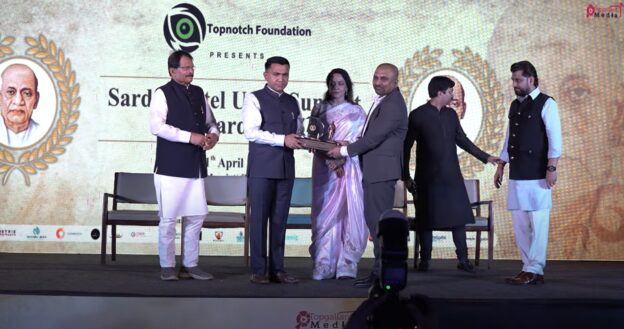
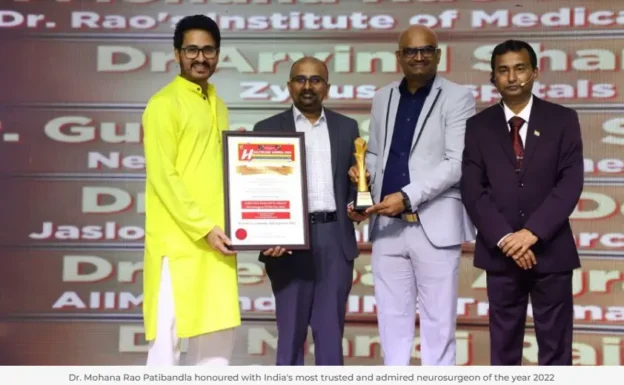
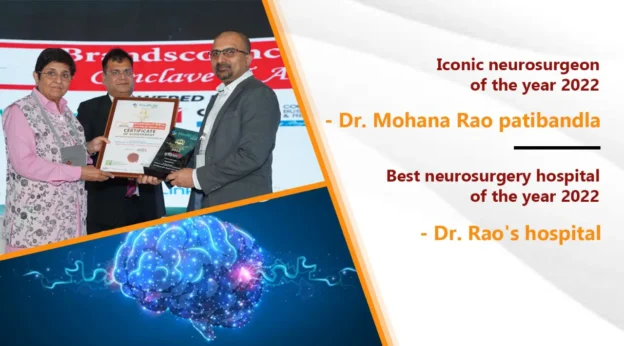
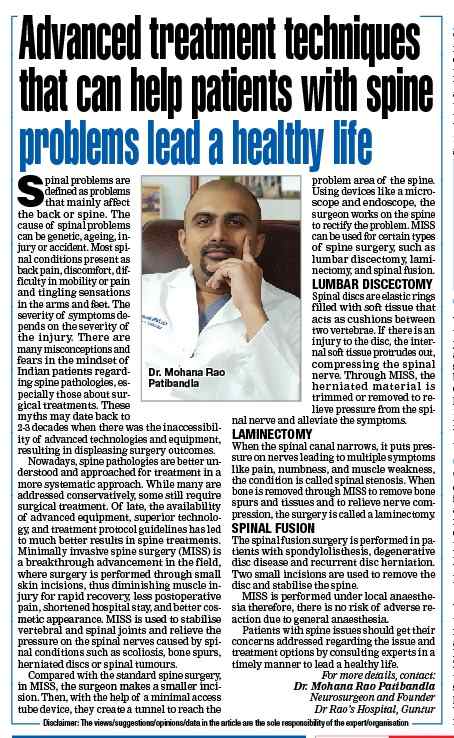
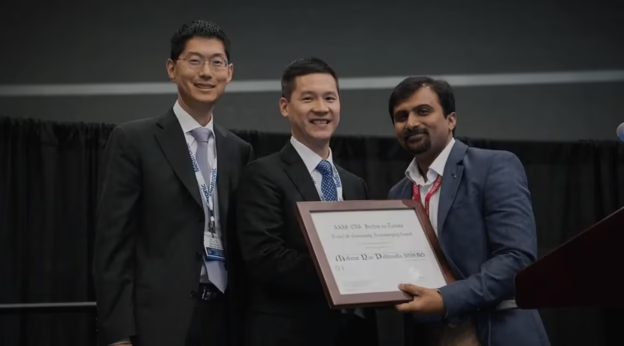
A recent Times of India feature highlighted this transformation through the national recognition received by Dr. Mohana Rao Patibandla and Dr. Rao’s Hospital – International Institute of Neurosciences at the prestigious Atal Achievement Awards 2023.
Primary Source: Times of India – Dr Mohana Rao Patibandla and Dr Rao’s Hospital Honoured at Atal Achievement Awards 2023
The Importance of Healthcare Recognition
Healthcare awards are not merely symbolic achievements. They frequently represent years of dedication toward patient care, innovation, ethical medical practice, advanced treatment systems, and continuous improvement in healthcare delivery.
According to the Times of India article, the Atal Achievement Awards 2023 recognized excellence in healthcare by honoring Dr. Mohana Rao Patibandla as the Best Spine Surgeon and Neurosurgeon in India, while Dr. Rao’s Hospital received recognition as the Best Neurology and Neurosurgery Hospital.
The awards ceremony was attended by several distinguished dignitaries including:
- Anurag Thakur
- Narayan Rane
- Subhas Sarkar
- Bharti Pravin Pawar
The event celebrated institutions and healthcare professionals contributing significantly toward India’s evolving medical ecosystem.
Why Neurosciences Require Exceptional Expertise
Neurosciences remain among the most technically demanding branches of medicine because they involve disorders affecting:
- The brain
- Spinal cord
- Cranial nerves
- Peripheral nerves
- Cerebrovascular systems
Conditions such as:
- Brain tumors
- Stroke
- Epilepsy
- Spinal cord compression
- Neurovascular diseases
- Traumatic brain injuries
often require highly specialized multidisciplinary treatment.
Even minor inaccuracies during surgery can potentially affect:
- Movement
- Speech
- Memory
- Cognition
- Vision
- Long-term neurological independence
This level of complexity requires:
- Advanced surgical precision
- Continuous education
- Technology integration
- Patient-centered planning
- Evidence-based treatment
The Journey of Dr. Mohana Rao Patibandla
The Times of India article describes Dr. Mohana Rao Patibandla as a neurosurgeon deeply committed to advancing neurological care through innovation, compassion, and expertise.
His training spans multiple neurosurgical subspecialties both in India and internationally, including:
- Minimally invasive skull base surgery
- Pediatric neurosurgery
- Neuro-oncology
- Functional neurosurgery
- Endovascular neurosurgery
International fellowships often provide specialists exposure to:
- Advanced surgical systems
- Research-oriented healthcare
- Modern operating technologies
- Complex multidisciplinary care
- Evidence-based treatment systems
Such global exposure frequently influences institutional vision and healthcare innovation.
Dr. Rao’s Hospital and Regional Healthcare Transformation
According to the Times of India feature, Dr. Rao’s Hospital was recognized for comprehensive patient care, advanced medical technologies, and compassionate healthcare delivery.
The hospital was established with the broader vision of bringing advanced neurosciences and spine care closer to patients within regional India.
Historically, patients from smaller cities often traveled to metropolitan centers for:
- Complex brain surgery
- Spine surgery
- Stroke intervention
- Neuro-oncology treatment
- Endovascular procedures
Regional neuroscience systems help reduce:
- Travel burden
- Financial stress
- Treatment delays
- Interrupted rehabilitation
Improved accessibility plays a major role in enhancing patient outcomes and long-term neurological recovery.
The Evolution of Minimally Invasive Neurosurgery
Modern neurosurgery increasingly focuses on minimizing tissue disruption while maximizing surgical precision.
Traditional surgeries often required:
- Larger incisions
- Longer hospitalization
- Greater tissue trauma
- Extended recovery periods
Today, minimally invasive approaches allow selected procedures through:
- Smaller incisions
- Endoscopic systems
- Microsurgical corridors
- Image-guided navigation
These techniques may help reduce:
- Blood loss
- Postoperative pain
- Hospital stay duration
- Recovery time
Minimally Invasive Neurosurgery at Dr. Rao’s Hospital
Mayo Clinic – Minimally Invasive Surgery
Technology Is Reshaping Modern Neurosciences
Advanced neurosciences increasingly depend on sophisticated technologies including:
- Neuronavigation systems
- Advanced MRI imaging
- Intraoperative neuromonitoring
- Microsurgical operating microscopes
- Endoscopic brain surgery systems
- AI-assisted diagnostics
These technologies improve:
- Surgical planning
- Precision
- Neurological preservation
- Patient safety
- Recovery outcomes
Modern neuroscience centers combine technology with clinical judgment and multidisciplinary teamwork to improve long-term patient outcomes.
The Human Side of Neurosciences
Neurological disorders affect not only anatomy but also emotions, families, livelihoods, and quality of life.
Patients facing neurological illnesses frequently experience:
- Fear
- Anxiety
- Concerns regarding disability
- Financial uncertainty
- Questions regarding recovery
The Times of India article repeatedly reflects themes of compassion, patient-centered care, and dedication toward improving lives.
Meaningful healthcare therefore depends not only on technical expertise but also on:
- Communication
- Trust
- Ethical care
- Empathy
- Long-term rehabilitation support
The Importance of Multidisciplinary Care
Modern neurosciences increasingly rely on collaborative multidisciplinary systems involving:
- Neurosurgeons
- Neurologists
- Spine surgeons
- Neuro-anesthesiologists
- Neurocritical care specialists
- Rehabilitation experts
- Physiotherapists
This collaborative approach helps optimize:
- Neurological recovery
- Functional outcomes
- Patient safety
- Long-term quality of life
The article notes that Dr. Rao’s Hospital has consistently focused on comprehensive healthcare systems designed around patient-centered outcomes.
The Importance of Ethical Healthcare Systems
As healthcare technology advances rapidly, ethical medical practice becomes increasingly important.
Patients today seek:
- Transparent communication
- Evidence-based treatment
- Compassionate care
- Long-term trust
- Accountability
Awards recognizing healthcare excellence often reflect institutional commitment toward these values.
The Times of India article emphasizes the hospital’s dedication toward serving patients with compassion and high-quality healthcare systems.
The Future of Neurosciences in India
India’s neurosciences ecosystem continues evolving rapidly through:
- Artificial intelligence integration
- Robotic surgery
- Endovascular intervention
- Advanced neuroimaging
- Precision-guided surgery
- Minimally invasive technologies
At the same time, the future of healthcare will depend heavily on:
- Regional accessibility
- Advanced training
- Continuous innovation
- Patient-centered care
- Ethical healthcare systems
Healthcare institutions combining advanced technology with compassion and accessibility are likely to define the next generation of neurological care across India.
Conclusion
The recognition received by Dr. Mohana Rao Patibandla and Dr. Rao’s Hospital – International Institute of Neurosciences at the Atal Achievement Awards 2023 reflects a broader transformation occurring within India’s neurosciences ecosystem.
Modern neurological and spine care increasingly depends on:
- Advanced technology
- Minimally invasive surgery
- Multidisciplinary expertise
- Regional healthcare accessibility
- Compassionate patient-centered systems
As neurosciences continue evolving globally, institutions committed to innovation, ethics, accessibility, and meaningful patient outcomes are likely to shape the future of neurological healthcare in India.
Frequently Asked Questions (FAQ)
1. What are the Atal Achievement Awards?
The awards recognize excellence, innovation, and outstanding contributions across multiple sectors including healthcare.
2. Who is Dr. Mohana Rao Patibandla?
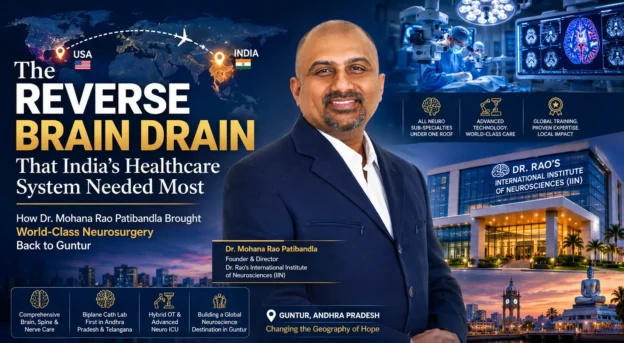
Dr. Mohana Rao Patibandla is an internationally trained neurosurgeon and founder of Dr. Rao’s Hospital – International Institute of Neurosciences.
3. What is minimally invasive neurosurgery?
It involves advanced surgical systems using smaller corridors and reduced tissue disruption to improve recovery.
4. Why are regional neuroscience centers important?
They improve access to specialized neurological and spine care while reducing travel burden and treatment delays.
5. What technologies are transforming neurosciences?
Neuronavigation, advanced imaging, endoscopy, AI-assisted diagnostics, and minimally invasive systems are reshaping modern neurological care.
Internal Links
Dr. Rao’s Hospital – International Institute of Neurosciences
Minimally Invasive Neurosurgery
Endoscopic Brain Surgery
About Dr. Mohana Rao Patibandla
Call To Action
If you or your loved one is experiencing neurological symptoms such as headaches, seizures, spinal pain, weakness, stroke warning signs, or neurological disorders, timely expert evaluation is essential.
Dr. Rao’s Hospital – International Institute of Neurosciences
12-19-67, Old Bank Road, Kothapet, Besides AK Biryani Point, Guntur, Andhra Pradesh
Phone: +91 9010056444
Email: info@drraoshospitals.com
Website: https://drraoshospitals.com/
Connect With Us