Author Archives: Dr RAO

About Dr RAO

Dr. Mohana Rao Patibandla Founder, Chairman & Chief Neurosurgeon | Dr. Rao's Hospital – International Institute of Neurosciences (IIN), Guntur, IndiaDr. Mohana Rao Patibandla, M.Ch (NIMS), FESBSS (KIMS), FAANS (USA), FMINS (USA), FEVNS (USA), FPNS (USA), FNOSRS (USA), is an internationally fellowship-trained neurosurgeon, spine surgeon, cerebrovascular and endovascular neurosurgeon, neuro-oncological surgeon, and skull base specialist. He is the Founder, Chairman, and Chief Neurosurgeon of Dr. Rao's Hospital – International Institute of Neurosciences (IIN) in Guntur, Andhra Pradesh, one of India's dedicated neuroscience centers providing comprehensive brain, spine, stroke, and nerve care.With more than 24 years of medical experience and advanced subspecialty training in India and the United States, Dr. Rao has established himself as one of India's leading neurosurgeons in minimally invasive brain surgery, complex spine surgery, cerebrovascular neurosurgery, skull base surgery, pediatric neurosurgery, neuro-oncology, stereotactic radiosurgery, and endovascular neurosurgery. His clinical philosophy combines evidence-based medicine, microsurgical precision, advanced technology, and compassionate patient-centered care to achieve the best possible outcomes.Education and International Fellowship TrainingDr. Rao completed his MBBS from Andhra Medical College, Visakhapatnam, followed by M.Ch. in Neurosurgery from the prestigious Nizam's Institute of Medical Sciences (NIMS), Hyderabad. He subsequently pursued a Fellowship in Skull Base and Epilepsy Surgery before undertaking multiple advanced fellowships in the United States, gaining expertise across several neurosurgical subspecialties.His international fellowship training includes:Minimally Invasive Skull Base Surgery Pediatric Neurosurgery Neuro-oncology Functional Neurosurgery Stereotactic Radiosurgery Cerebrovascular and Endovascular Neurosurgery Advanced Microsurgical and Minimally Invasive Neurosurgical TechniquesThis extensive multidisciplinary training enables Dr. Rao to offer comprehensive treatment for both common and highly complex neurological disorders using modern surgical approaches.Founder of Dr. Rao's Hospital – International Institute of NeurosciencesDriven by the vision of bringing world-class neuroscience care closer to patients in South India, Dr. Rao established Dr. Rao's Hospital – International Institute of Neurosciences (IIN) in Guntur.Under his leadership, the institute has become a referral center for advanced treatment of:Brain tumors Skull base tumors Pituitary tumors Cerebral aneurysms Arteriovenous malformations (AVMs) Stroke and neurovascular disorders Complex spinal disorders Pediatric neurological diseases Epilepsy Peripheral nerve disorders Functional neurological disordersThe hospital integrates advanced technologies including neuronavigation, intraoperative neurophysiological monitoring (IONM), hybrid operating rooms, endoscopic neurosurgery, high-definition operative microscopy, minimally invasive spine surgery, stereotactic radiosurgery, and neuro-endovascular intervention to improve surgical precision and patient safety.Areas of Clinical ExpertiseDr. Mohana Rao Patibandla specializes in:Brain Tumor Surgery Minimally Invasive Brain Surgery Keyhole Neurosurgery Skull Base Surgery Endoscopic Brain Surgery Endoscopic Spine Surgery Minimally Invasive Spine Surgery Cervical, Thoracic, and Lumbar Spine Surgery Complex Spine Reconstruction Cerebrovascular Surgery Brain Aneurysm Surgery AVM Surgery Stroke Surgery Endovascular Neurosurgery Neuro-oncology Pediatric Neurosurgery Epilepsy Surgery Functional Neurosurgery Stereotactic Radiosurgery Peripheral Nerve Surgery Neurotrauma Surgery Research, Innovation, and Academic ContributionsDr. Rao is committed to advancing neurosurgical science through research, innovation, and education. He has authored numerous peer-reviewed publications and regularly presents original scientific work at national and international neurosurgical conferences.His academic interests include:Intraoperative Neurophysiological Monitoring (IONM) BrainPath® and minimally invasive transsulcal surgery Endoscopic skull base surgery Endovascular treatment of cerebrovascular disorders Neuro-oncology Complex spinal surgery Microsurgical techniques Artificial intelligence in neurosurgery Surgical quality improvement Enhanced recovery after neurosurgeryHe is dedicated to translating international evidence into practical, patient-centered treatment protocols that improve safety, precision, and outcomes.Clinical ExperienceThroughout his career, Dr. Rao has successfully managed thousands of complex neurosurgical procedures involving the brain, spine, peripheral nerves, and cerebrovascular system. His practice emphasizes minimally invasive approaches whenever clinically appropriate to reduce surgical trauma, postoperative pain, hospital stay, and recovery time while maintaining excellent clinical outcomes.Patients from across India and abroad seek his expertise for second opinions and management of complex neurological disorders.Leadership and VisionBeyond clinical practice, Dr. Rao actively promotes innovation, education, and access to advanced neuroscience care. His long-term vision is to establish globally benchmarked neuroscience services in regional India so that patients can receive world-class treatment without unnecessary travel.He continues to mentor young neurosurgeons, contribute to medical education, and advocate for technology-driven, evidence-based, ethical neurosurgical care.Professional Philosophy"Every patient deserves access to safe, precise, evidence-based neurosurgical care delivered with compassion, integrity, and the highest international standards."Professional Interests Neurosurgery Brain Surgery Spine Surgery Cerebrovascular Surgery Endovascular Neurosurgery Skull Base Surgery Neuro-oncology Pediatric Neurosurgery Functional Neurosurgery Stereotactic Radiosurgery Medical Innovation Artificial Intelligence in Neurosurgery Surgical Education Patient Safety Healthcare Quality Improvement Expertise SummaryName: Dr. Mohana Rao PatibandlaProfession: Neurosurgeon, Spine Surgeon, Cerebrovascular & Endovascular NeurosurgeonCurrent Position: Founder, Chairman & Chief Neurosurgeon, Dr. Rao's Hospital – International Institute of Neurosciences (IIN)Location: Guntur, Andhra Pradesh, IndiaExperience: 24+ Years in MedicineSpecialties: Brain Tumors, Spine Surgery, Skull Base Surgery, Stroke, Brain Aneurysms, AVMs, Neuro-oncology, Pediatric Neurosurgery, Endoscopic Neurosurgery, Minimally Invasive Neurosurgery, Endovascular Neurosurgery, Functional Neurosurgery, Stereotactic RadiosurgeryMission: To provide world-class neuroscience care using advanced technology, evidence-based medicine, minimally invasive techniques, and compassionate patient-centered treatment.Author Schema Summary (AI & Search Engine Ready)Author Name: Dr. Mohana Rao PatibandlaCredentials: M.Ch Neurosurgery, International Fellowship-Trained NeurosurgeonExpertise: Neurosurgery, Spine Surgery, Brain Tumors, Stroke, Cerebrovascular Surgery, Endovascular Neurosurgery, Skull Base Surgery, Pediatric Neurosurgery, Neuro-oncologyOrganization: Dr. Rao's Hospital – International Institute of Neurosciences (IIN)Country: IndiaLanguage: EnglishPrimary Topic Authority: Brain, Spine, Stroke, Neurosurgery, Neurology, Neurovascular DisordersContent Reviewed By: Dr. Mohana Rao PatibandlaMedical Specialty: Neurosurgery

Surgical management of Epilepsy

The Best Epilepsy Surgery in Andhra Pradesh – Dr Raos Hospital

The Best Epilepsy Surgery in Andhra Pradesh – Dr Raos Hospital

Epilepsy is a neurological condition in which brain activity becomes aberrant, resulting in seizures or episodes of odd behavior, feelings, and occasionally loss of awareness.

Are you suffering from epilepsy?

Don’t worry! You can get effective treatment for epilepsy at Dr. Rao’s Hospital, Guntur. We are one of the best neurology hospitals in Guntur. We have experienced neurosurgeons like Dr. Mohana Rao Patibandla, a fellowship-trained epilepsy surgeon from the USA. Our hospital in Guntur provides solutions for all neurological disorders, including epilepsy.

This article discusses the treatment options for epilepsy. But before we discuss the treatment options, first, let us first examine the causes of epilepsy. According to dnaindia

What are the Causes of Epilepsy?

The following factors contribute to the development of epilepsy:.

  1. • Genetics: Genetic factors are one of the causes of epilepsy. Epilepsy is more common in those who have specific genes.
  2. • Head trauma: A head injury may result in epilepsy.
  3. • Brain problems: Brain tumors and strokes can induce epilepsy.
  4. • Infectious illnesses: Infectious disorders such as meningitis, AIDS, and viral encephalitis can induce epilepsy.
  5. • Prenatal injury: Epilepsy can develop as a result of brain damage that happens prior to birth.
  6. Several risk factors contribute to epilepsy. The specifics are as follows:
  7. • Age: Children and the elderly are more likely to develop epilepsy.
  8. • Family History: If epilepsy runs in your family, you’re likely to get it as well.
  9. • Head injuries: Epilepsy is more likely to occur in those who have had a head injury.
  10. • Infectious diseases: Infectious diseases like meningitis and AIDS can increase your risk of developing epilepsy.

What are the symptoms of epilepsy?

The most common sign of epilepsy is seizures. Symptoms vary from one individual to the next and depending on the type of seizure.

Focal or partial seizures

There is no loss of consciousness in a simple partial seizure. Among the signs and symptoms are:

  1. • Changes in the senses of taste, smell, sight, hearing, and touch
  2. • Dizziness
  3. • Limb tingling and twitching
  4. There is a loss of awareness or consciousness with complex partial seizures. Other signs and symptoms include:
  5. • Blank stare
  6. • Unresponsiveness
  7. • Repeating the same moves

Generalized seizures

Seizures that affect the entire brain are known as generalized seizures. There are six different types:

Absence seizures, often known as “petit mal seizures,” result in a blank stare. Repetitive motions, such as lip-smacking or blinking,, may occur due to this type of seizure. There is frequently a brief loss of awareness as well.

Muscle stiffness is a side effect of tonic seizures.

Atonic seizures result in a loss of muscle control, which might cause you to fall unexpectedly.

Clonic seizures are characterized by repeatedly jerky muscular movements in the face, neck, and arms.

A rapid twitching of the arms and legs characterizes myoclonic seizures.

Grand mal seizures were once known as tonic-clonic seizures. Among the signs and symptoms are:

• Body becomes stiff

• Shaking

• Inability to control bladder or bowel movements. There can also be loss of consciousness.

What is intractable epilepsy?

Intractable epilepsy is defined as seizures that two epileptic medicines can’t control at their maximum tolerable doses for two years. (Intractable means “not easily managed or relieved.“) It’s also called refractory, uncontrolled, or drug-resistant epileptic seizures. Nearly 36% of epilepsy patients are refractory to medication, and we need to find surgical candidates in this population.

What will you do when you see your close relative having seizures?

Now, let us discuss the treatment options available in Guntur to treat epilepsy.

What solutions are provided by Dr. Rao’s Hospital in Guntur to treat epilepsy?

We use the following treatment options to manage and treat epilepsy:

Anti-epileptic medications (AEDs)

The most common treatment for epilepsy is antiepileptic drugs (AEDs). In about 7 out of 10 people, they aid in seizure management.

AEDs function by altering the chemical levels in your brain. They cannot cure epilepsy, but they can prevent seizures. AEDs come in a variety of forms, including pills, capsules, liquids, and syrups. In most cases, you must take the medication daily.

Your doctor in Guntur will begin with a low dose and then raise it until you no longer have seizures. If the first medicine you try does not work, your doctor may suggest you try a different type.

You must follow any recommendations for when and how much to take AEDs. If you suddenly stop taking an AED, you risk having a seizure. Drowsiness, headaches, rashes, tremors, etc., are some of the side effects of AEDs.

Surgery on the brain

There’s a reasonable probability that your seizures will stop completely following surgery in certain instances, such as the following: 70% in temporal lobe seizures and 50% in nontemporal lobe seizures.

• AEDs are not controlling your seizures.

Tests show that a disorder in a small area of your brain that is treatable without having severe side effects is the cause of your seizures.

Brain scans (MRI seizure protocol), electroencephalograms (EEG), and other testing are conducted before surgery. The findings of these tests will help you and your doctor determine whether surgery is a viable choice for you.

Resection surgeries:

The identified epilepsy focus was removed during this procedure with the help of brain electric activity.

Epilepsy surgery is usually performed while you are unconscious, using a general anesthetic.

The neurosurgeon at Dr. Rao’s Hospital in Guntur makes a small cut in your head and a hole in your skull to remove the affected area of the brain.

At the conclusion of the procedure, the openings in your skull and scalp are closed. Make sure you discuss the risks with your neurosurgeon before undergoing surgery.

 Stimulation procedures:

When we cannot resect the lesion due to eloquence or recognize the precise area, we stimulate the brain or vagus nerve.

• Vagus nerve stimulation:

In vagus nerve stimulation, doctors implant a vagus nerve stimulator beneath the skin of your chest, similar to a heart pacemaker. The cables from the stimulator are connected to the vagus nerve in your neck.

The battery-operated device uses the vagus nerve to send electrical energy bursts to your brain. The device’s mechanism for preventing seizures is unknown, although it can usually reduce seizures by 50%. Side effects of vagus nerve stimulation include throat pain, hoarseness, shortness of breath, and coughing.

Responsive Neurostimulation:

We know that electrical activity comes from the two critical areas, so we placed two electrodes connected to a battery in the skull.

DBS (deep brain stimulation):

This method targets the anterior thalamic nucleus, resulting in a 50% decrease in the devastating seizure frequency.

Ketogenic diet

A ketogenic diet is a high-fat, low-carbohydrate, and low-protein diet that is supposed to reduce the likelihood of seizures in children by altering the quantities of substances in the brain.

Conclusion

As every problem comes with a solution, the problem of epilepsy also comes with a solution. You can get effective solutions for epilepsy by visiting Dr. Rao’s Hospital in Guntur. We have solutions for all your neurological problems. So, visit us now

Dr. Rao’s Contact Information:

Symptoms of Parkinson's disease - best Parkinson treatment at Dr Rao's Hospital, Guntur

The Best Parkinson’s Treatment in Andhra Pradesh – Dr Rao’s Hospital

Do you have shaky hands?

Is there any stiffness in your body?

Are you having difficulty walking?

If yes, then it is likely that you are suffering from Parkinson’s disease.

Parkinsons Treatment is a neurological condition that affects movement. It happens when the nerve cells in the brain that create the chemical dopamine, which is crucial for motor function, have a problem. As a person’s dopamine levels fall, his or her motor function begins to deteriorate. Tremors in the hands, rigidity or stiffness in the body, and trouble walking are all early indicators of Parkinson’s disease. Parkinson’s disease causes the muscles of the individual suffering from the condition to weaken over time. But there is no lock in this world made without a key!

In the same way, there is no problem in this world without a solution! Yes, there are treatment options available in Guntur for Parkinson’s disease. The best treatment is at Dr. Rao’s hospital.

One can treat Parkinson’s disease by visiting the best neurology hospital in Guntur, Dr. Rao’s Hospital. Our hospital has top neurosurgeons, such as Dr. Mohana Rao Patibandla. He is a fellowship-trained functional stereotactic surgeon from the USA. He has solutions for all neurological disorders, including Parkinson’s disease. According to mid-day

What are the Parkinsons treatment options available at Dr. Rao’s Hospital in Guntur for treating and managing Parkinson’s disease?

We suggest a specific treatment for treating Parkinson’s disease based on the following factors:

  • Age
  • Medical history
  • Type and severity of the condition
  • Patient’s tolerance for specific procedures and medications
  • Patient’s preference

Treatment for Parkinson’s disease usually includes the following:

  1. Medications
  2. Surgery
  3. Complementary therapies

Let’s take a closer look at each of these treatment alternatives.

• Medications

Medications can help with the significant symptoms of Parkinson’s disease, such as tremors and movement issues.

Your neurosurgeon in Guntur may prescribe the following medications:

Levodopa plus carbidopa:

Most people with Parkinson’s disease need to take levodopa at some point.

Your brain’s nerve cells absorb levodopa and transform it into the chemical dopamine necessary to transmit signals between brain regions and nerves that control movement. Improvement with Levodopa is one distinguishing feature from other dangerous Parkinson’s plus syndromes.

Movement issues are usually improved by increasing dopamine levels with levodopa.

Agonists of dopamine

Dopamine agonists, like ropinirole and pramipexole, function in the brain as a substitute for dopamine and have a comparable but lesser impact than levodopa. Compared to levodopa, they can be given less frequently.

They’re usually taken as tablets, but they can also be applied to the skin as patches.

Amantadine is an antiviral drug that treats dyskinesias brought on by dopamine agonists.

Inhibitors of monoamine oxidase-B

Selegiline and rasagiline are monoamine oxidase-B (MAO-B) inhibitors that can be used instead of levodopa to treat early Parkinson’s disease.

They increase dopamine levels by blocking the effects of monoamine oxidase-B, an enzyme or brain chemical that breaks down dopamine.

• Surgery

The experienced neurosurgeon at Dr. Rao’s Hospital in Guntur may consider one of the following surgeries for Parkinson’s disease, depending on the patient’s needs, medical history, health, and symptoms:

Surgery for a lesion (burning of tissue):

Deep areas of the brain are targeted in this treatment, and small lesions are produced in important parts of the brain that control movement, like the Globus pallidus or subthalamic nucleus, based on your predominant symptoms. To help pinpoint the exact location of the lesion, the procedure may be performed while the patient is conscious. The lesion is placed to help control or stop the tremor-causing area of the brain.

Deep Brain Stimulation (DBS):

In this sort of surgery, a tiny electrode is implanted in the crucial areas of the brain that help control movement. Wires inserted beneath the skin connect the electrode to a tiny battery in the chest wall. The stimulator is then activated, interrupting the usual flow of information in the brain and helping reduce Parkinson’s disease symptoms.

Continuous intestinal infusion of levodopa/carbidopa in advanced Parkinsons Treatment:

Using a portable pump to give a gel suspension of levodopa or carbidopa directly into the duodenum lets the drug work where the body absorbs it. Bypassing gastric emptying and duodenal infusions of LCIG helps to avoid a possible reason why levodopa does not work as well as it should. This leads to less variability in plasma levels of levodopa and fewer motor fluctuations compared to oral levodopa.

Tissue transplants or neural grafts:

Experimental research aims to develop a replacement for the brain area that fails in Parkinson’s disease.

Complementary Therapies:

Physiotherapy

A physiotherapist can help you relieve muscular stiffness and joint pain through movement and exercise.

Occupational therapy

An occupational therapist can help you discover problems in your daily life, such as dressing or getting to the store.

They can help you devise practical solutions and ensure that your home is secure and correctly configured for you. This will help you preserve your independence for as long as possible.

Therapy for speech and language

Dysphagia (difficulty swallowing) and speech issues are common in patients with Parkinson’s disease.

A speech and language therapist can often help address these challenges by teaching speaking and swallowing exercises or offering assistive technology.

Dietary suggestions

Making dietary modifications can help some patients with Parkinson’s disease improve their symptoms.

These modifications may include:

• To avoid constipation, increase the fiber in your diet and ensure you drink enough water.

• Increasing your salt intake and eating small, frequent meals will help you avoid low blood pressure issues, such as dizziness when standing up rapidly.

• Adopting dietary modifications to prevent unexpected weight loss

The above treatment options will surely help manage Parkinson’s disease.

So, what are you waiting for? It is now time to treat and manage Parkinson’s disease by visiting the best neurology hospital in Guntur, Dr. Rao’s Hospital with the best neurologist and neurosurgeon, Dr. Mohana Rao Patibandla.

SYNOPSIS

Parkinson’s disease is a degenerative disorder of the central nervous system that often impairs a person’s motor skills, speech, and other functions. The disease results from the death of brain nerve cells that produce dopamine, which aids in controlling movement.

There are two main types of Parkinson’s disease: early-onset and late-onset. Early-onset Parkinson’s disease usually affects people under the age of 50, while late-onset Parkinson’s disease typically affects people over the age of 60.

There is no cure for Parkinson’s disease, but there are treatments that can help improve a person’s quality of life.

Early-onset Parkinson’s Disease

Early-onset Parkinson’s disease is the less common type of the disease, accounting for about 10 percent of all cases. The average age of onset is around 47 years old. Men are more likely to develop early-onset Parkinson’s disease than women.

The symptoms of early-onset Parkinson’s disease are similar to those of late-onset Parkinson’s disease, but they tend to be more severe. People with early-onset Parkinson’s disease may have difficulty walking and talking, and they may also experience tremors, rigidity, and problems with balance.

There is no cure for early-onset Parkinson’s disease, but there are treatments that can help improve a person’s quality of life. Medications can help relieve symptoms, and surgery may be an option for some people.

Late-onset Parkinson’s Disease

Late-onset Parkinson’s disease is the more common type of the disease, accounting for about 90 percent of all cases. The average age of onset is around 60 years old. Men and women are equally likely to develop late-onset Parkinson’s disease.

The symptoms of late-onset Parkinson’s disease are similar to those of early-onset Parkinson’s disease, but they tend to be less severe. People with late-onset Parkinson’s disease may have difficulty walking and talking, and they may also experience tremors, rigidity, and problems with balance.

There is no cure for late-onset Parkinson’s disease, but there are treatments that can help improve a person’s quality of life. Medications can help relieve symptoms, and surgery may be an option for some people.

Conclusion:

Parkinson’s disease is a degenerative disorder of the central nervous system that often impairs a person’s motor skills, speech, and other functions. The disease results from the death of brain nerve cells that produce dopamine, which aids in controlling movement. There is no cure for Parkinson’s disease, but there are treatments that can help improve a person’s quality of life.

Dr. Rao’s Contact Information:

minimally-invasive-spine-surgery-all-you-need-to-know

The Best Minimally Invasive Spine Surgery in Andhra Pradesh

The Best Minimally Invasive Spine Surgery in Andhra Pradesh

“You are the backbone of the family!”

“My mother is my backbone.”

You might have heard such sentences and even used them yourself.

What does it mean when one uses the term backbone?

The backbone indicates strength! It means crucial—the central and most vital part of something!

Like, mothers are the backbone of the family!

We also use the word backbone to refer to one of our organs! And that organ is none other than the spine! The name justifies the organ. The spine, or backbone, is a crucial part of our body. It is the strength and the body’s central support structure.

What if the backbone of the body gets damaged?

Can you imagine a family without a mother, the most vital part, the backbone of the family?

What happens if the backbone of your family gets ill or injured?

The entire family is affected.

In the same way, when the backbone of our body, our spine,, is injured or damaged, our entire body is negatively affected.

The strongest becomes the weakest!

Stand up! Now sit down!

You can easily stand and sit,, right?

But unfortunately, you can’t easily sit, stand, or move when you have an injured spine!

But there is a solution to every problem! So don’t worry!

One can treat their spine problems by visiting Dr. Rao’s Hospital, Guntur!

Your neurosurgeon in Guntur will advise you to have spine surgery. It is recommended to ask your neurosurgeon whether minimally invasive spine surgery is an option for you.

What exactly is minimally invasive spine surgery?

Minimally invasive spine surgery is a technique for doing spine surgery. The experienced neurosurgeon at Dr. Rao’s Hospital, Guntur, will make a single large incision (cut) into your skin in a “traditional” open surgery procedure. A considerable quantity of muscle and surrounding soft tissue is distributed, pulled out of the way, or removed from the bone to let your surgeon see the surgery site correctly. This might lead to additional muscle injuries and pain following surgery.

Your neurosurgeon in Guntur will make one or more small incisions (approximately 1-2 inches each) through your skin during minimally invasive surgery. An endoscope is inserted into the incision to allow the surgeon to work in a narrower operational field. Working through more minor wounds produces far less harm to soft tissues and muscles than a single lengthy incision. Minimally invasive spine surgery is performed at the best neurology hospital in Guntur.

So, are you having severe spinal problems and are considering having a minimally invasive spine surgery treatment done?

Then, you would be interested in learning more about minimally invasive spine surgery!

This article explains minimally invasive spine surgery treatment in detail.

So, keep reading this article to learn more about minimally invasive spine surgery!

What kinds of spinal surgeries can be done using a minimally invasive approach?

At Dr. Rao’s Hospital in Guntur, many spine procedures can be performed using MISS. The following are a few of them:

  1. • Spinal fusion, a procedure that is commonly used to treat “slipped” discs.
  2. • Correction of deformities like kyphosis and scoliosis.
  3. • Decompression of tumors in the spine.
  4. • Vertebral compression fractures are repaired and stabilized.
  5. • Lumbar spinal stenosis, a condition that affects the lower back.
  6. • A bacterial infection in the spine.

How does minimally invasive spine surgery work?

  1. Anesthesia will be first administered to you.
  2. Several minimally invasive procedures are available. They all have one thing in common: your surgeon makes one or more small incisions through your skin instead of one lengthy incision.
  3. Your surgeon may use an endoscope or fluoroscope to decide where to make incisions. Tiny surgical instruments are inserted through the endoscope or the other half-inch incisions where tubular retractors have been inserted.
  4. Tubular retractors are narrow, hollow tubes. From the hole in your skin to the targeted location on your spine, retractors create little tunnels of workspace. One or more retractors are used to insert instruments. These retractors also remove tissue and bone from the spine during surgery. During surgery, tubular retractors keep your muscles away from the surgical site. Your muscles get back to their normal position once the retractors are removed.
  5. Stitches or glue are used to close your incisions after surgery, and surgical tape or thin bandages are used to conceal them.

What advantages does MISS have?

There are various advantages to minimally invasive spine surgery over open surgery, such as the following:

  1. • Less anesthesia is required.
  2. • There will be less loss of blood.
  3. • Soft tissue and muscle injuries are reduced.
  4. • The infection risk is reduced.
  5. • Post-surgery discomfort is reduced.
  6. • Use of pain relievers is reduced.
  7. • A more appealing appearance
  8. • A shorter stay in the hospital
  9. • Recovery time is reduced
  10. • A faster return to normal activities, such as work.

What can I expect from my recovery after minimally invasive spine surgery?

MISS leads to less discomfort, muscle damage, fewer hospital stays, and a faster recovery than open surgery.

Those who have undergone MISS are discharged the same day or the next day. The severity of your spinal condition, the experience of your neurosurgeon, your age, your health conditions, and other factors all affect how long it takes to recover fully from surgery. It could take months for you to heal fully. In a recent India today article.

Your doctor may recommend physical therapy to help you recover faster.

Do you wish to get rid of your spine problems and want to move around with ease?

Do you wish to resume your daily activities and get rid of the persistent and terrible spinal and back pain?

So, now is the time for your wishes to come true!

Visit Dr. Rao’s Hospital in Guntur, one of the best neurology hospitals in Guntur, for minimally invasive spine surgery treatment! Our hospital has experienced neurosurgeons like Dr. Mohana Rao Patibandla. He is a fellowship-trained minimally invasive surgeon from the USA who has performed many successful minimally invasive spine surgeries.

So, you will get rid of your persistent and terrible pain for sure!

So, now is the time to replace pain with joy by doing minimally invasive spine surgery.

Minimally invasive spine surgery is the path to a painless tomorrow!

A walk to the hospital can get you walking for the rest of your life!

So, visit the best neurology hospital, Dr. Rao’s Hospital in Guntur right now for minimally invasive spine surgery!

Dr. Rao’s Contact Information:

Your brain and spine health with keyhole surgery

The best Keyhole Neurosurgery-All You Need to Know

Open surgery comes with various complications.

But these complications can now be avoided!

How?

By performing keyhole neurosurgery!

The concept of keyhole surgery is the safe removal of brain and skull base cancers through tiny holes that cause less collateral harm to the scalp, brain, and nerves. The best neurologist in Guntur performs keyhole neurosurgery, which is effective and painless. Keyhole neurosurgery allows patients to avoid the risks of open surgery. This procedure prevents needless surgical site investigation and brain retraction by minimizing the anatomic window and adequately exposing the lesions. According to mid-day

The process, kinds, and benefits of keyhole neurosurgery are discussed in this article.

What is keyhole neurosurgery,, and how does it work?

In keyhole surgery, a neurosurgeon at Rao Hospital Guntur will make a small incision in the location where the surgery will be performed. A light stick called an endoscope with a high-resolution camera is put into this opening. The device has an eyepiece that the neurosurgeon may look through. The camera sends photographs to your neurosurgeon in Guntur, and the light illuminates the inside of the channel. Delicate surgical equipment is inserted via another similar incision, and your neurosurgeon uses it to cut or amputate the tumor.

You will be unconscious for the length of the surgery because a general anesthetic will be used.

What are the different types of keyhole neurosurgery procedures?

The best neurology hospital in Guntur does the following keyhole neurosurgeries:.

  1. • Keyhole brain surgery:

In this procedure, a hole is formed above the brows. Your neurosurgeon in Guntur can also insert an endoscope through the mouth. The following people are candidates for keyhole brain surgery:

  • Those with pituitary tumors:

A pituitary gland tumor is a collection of abnormal cells that have grown out of control in your pituitary gland.

  • Those diagnosed with Glioma

Glioma is a cancer that affects the brain and spinal cord.

  • Those diagnosed with chordoma or meningioma

Chordoma is an uncommon kind of bone cancer that most commonly affects the spine or skull bones. It usually appears where the skull sits atop the spine (skull base) or at the bottom of the spine (spine base) (sacrum). Conversely, a meningioma is a tumor that develops from the meninges, the membranes surrounding your brain and spinal cord.

2• Keyhole spinal surgery:

 Typically, open operations are used to treat spinal disorders. However, this procedure causes tears in the tissues of the spine. This condition can be solved with keyhole spinal surgery. A tubular retractor is used in keyhole spinal surgery to drill a hole in the spine while holding the muscles apart without causing a rupture. The following people are the best candidates for keyhole spinal surgery: –

  • Those with disc issues:

Disk issues cause discs to break down, causing excruciating discomfort. Herniated discs and degenerative disc disease are two common disc issues.

  • Those who have bone spurs on their spine:

Bone spurs indicate spinal degeneration and signify an expansion of the bony structure.

  • Those who suffer from spinal instability:

“Spinal instability” was coined to describe abnormal movement between vertebrae. When a disc degenerates, it loses tension or turgor, which allows the disc to bulge and allow more movement between the vertebrae.

What are the benefits of keyhole surgery in neurosurgery?

The following are some of the benefits of keyhole neurosurgery:

  1. • They lessen the chances of an infection developing at the operation site.
  2. • Healing time is reduced.
  3. • Keyhole neurosurgery avoids damaging the surrounding tissues and blood vessels.
  4. • Improved cosmetic outcomes

Conclusion

I hope this article has helped you understand keyhole neurosurgery, its types, procedures, and benefits. Keyhole surgery is a boon that overcomes the various complications of open surgery. Keyhole neurosurgery comes with multiple benefits. It decreases the risk of infections in the area of surgery and prevents the tissues from getting damaged. The healing time is also faster in keyhole neurosurgery, leading to better cosmetic results.

The top neurosurgeon in Guntur performs keyhole neurosurgery with great care and caution and has successfully performed many keyhole neurosurgeries.

So, visit the top neurosurgeon in Guntur right now to benefit from keyhole neurosurgery!

Dr. Rao’s Contact Information:

Dr Rao's Hospital the best neurosurgery and spine surgery hospital in India

COVID-19 Neurological Complications

Are You Aware of the COVID-19 Neurological Complications?

The COVID-19 pandemic, or coronavirus infections caused by SARS-CoV-2, has stormed the world. The world has not experienced a destructive pandemic since the 1918 Spanish Flu or Influenza Pandemic. Though the respiratory system is the most common clinical presentation, a growing number of cerebral symptoms are also identified as developing problems in COVID patients.

There have been reports of CNS and peripheral nerves involved in rare cases. According to growing data, COVID-19 patients frequently have neurological symptoms such as myalgia (muscle pains), anosmia (loss of smell), a changed mental state, and headaches. Dizziness and headache were the most prevalent CNS symptoms. Other possible side effects include encephalopathy, encephalitis, strokes, and convulsions. 

Patients who visit Rao Hospital in Guntur for proper consultation from the best neurologist in Guntur always have questions about how COVID-19 affects different neurological complications.

Let us attempt to investigate all possible COVID-19-related neurological problems.

Some instances in France and China have been linked to encephalopathy. SARS-CoV-2 has been found in some individuals’ CSFs.

Most patients at the best neurology hospital in Guntur have reported a lack of sense of smell (anosmia) and ageusia, a frequent worldwide finding. In the absence of additional clinical characteristics, these symptoms are possible.

Acute cerebrovascular illness has been identified as an emergent consequence of COVID-19, with a stroke occurring in two to six percent of documented hospitalized cases.

Though the number of infections that lead to neurological disease is likely to remain low, diagnosing neurological disease in moderately symptomatic and asymptomatic people can be difficult, especially when the infection happened weeks ago.

Patients with sepsis may develop encephalitis or polyneuropathy in up to seventy percent of cases.

According to research by Lewis and colleagues, six percent of patients who underwent a CSF investigation showed significant positive SARS-CoV-2 levels in their CSF.

A cytokine storm can cause a type of headache. It generally happens between the seventh and tenth day after COVID-19 infection begins.

One-third of the survivors had experienced disorientation, clumsy movements, and a dysexecutive condition that was characterized by inattention.

Coagulopathy might cause cerebrovascular illness, as some signs suggest, since the virus can harm endothelial cells, producing irritation and thrombotic events as well.

The involvement of the brain has also been linked to a hypersensitivity reaction and tissue damage in immunohistochemistry investigations.

COVID-19-affected individuals are at high risk for 

And other neurological problems.  

Neurocognitive impairment has been observed in many recovered patients and survivors. Furthermore, individuals frequently report losing their sense of taste and smell. So, visit the best neurology hospital in Guntur if you feel any of these complications after surviving from COVID – 19 infection. Take proper care of yourself and treat your complications with appropriate medications. 

Conclusion

COVID neurologic problems are less common than respiratory disease and its related consequences, although they may extend future issues. The most frequent first neurological signs of COVID-19 are tiredness, myalgia, and muscular discomfort. However, tiredness, muscular pain, and myalgia are typical findings in almost forty percent of patients. As the number of people sick grows across the world, neurological illness may become more common. Regardless of whether the COVID-19 virus is involved directly or indirectly, neurological consequences such as strokes and encephalitis can result in life-long impairment, requiring long-term care and putting a financial strain on the family.

Coping Mechanisms to Manage Stress and Support Brain Health: Expert Tips from Dr. Rao

7 Natural Ways to Keep Your Anxiety Away

7 Natural Ways to Keep Your Anxiety Away

A lot of people in Guntur suffer from anxiety. They search for the best neurology hospital in Guntur to treat their anxiety problems. Are you also becoming acutely aware of your sentiments, sensations, low-grade pain, and vibrations in your body due to your anxiety? If you answered yes, you have developed hypersensitivity.

Stress can lead to two major health problems. The first is hypersensitivity, which is becoming more common among people who suffer from anxiety attacks. The second issue is obsessiveness, in which you find it impossible to ignore anything that causes tension. You will become too sensitive to mild tinnitus – which is nearly indistinguishable – due to these two minor difficulties, and you will be unable to ignore it. According to studies, people with ringing in their ears usually don’t hear it because the volume isn’t loud enough to be heard – and their bodies adjust accordingly. People who suffer from anxiety, on the other hand, find it more difficult to acclimatize. However, here are a few things you can do to completely control your worry.

The following are a handful of them:

  1. Acupuncture

The worry of being overly sensitive to pricks may discourage you from trying this fantastic relaxing technique. Still, if you choose to use it to relieve tension, it will work wonderfully for you. Acupuncturists use tiny needles to treat specific points or parts of the body. Electrical stimulation can also help relieve muscle and nerve stress in some circumstances.

2. How can biofeedback help you overcome anxiety?

Biofeedback is a technique in which you enlist the assistance of a psychologist or therapist to help you take control of the things that cause you anxiety. The therapist next guides you through soothing your thoughts and nerves. You can see if the strategies are working by looking at the feedback on the computer screen. If you do this regularly with expert coaching, you will gain reasonable control over your thoughts and anxiety over time.

3. How Do You Get Rid of Anxiety by Getting a Good Night’s Sleep?

A good night’s sleep is beneficial to your mind and your body. During the day, it aids in improving concentration, mood, focus, and alertness. You will be less likely to become anxious if you have a calm and quiet mind. Every day, you should sleep for at least 7 to 8 hours. Go to bed and wake up at the same hour to ensure this. Make it a habit and stick to it no matter what. The following are some more crucial things you can do to ensure a good night’s sleep: Make sure the room is completely dark and silent; keep it cool, and avoid watching TV or using your phone before going to bed. Routine exercise is an excellent habit to develop but do so in the morning and afternoon rather than late at night, as it may disrupt your nighttime sleep.

Another crucial factor to consider when it comes to sleep is nutritional health. A lack of specific vitamins and minerals, such as magnesium, potassium, vitamin D, or melatonin, can cause insomnia.

If you want a decent night’s sleep, ensure you get plenty of natural light during the day and avoid lighting after sunset. Also, keep yourself in your dark for two to three hours before bedtime. Camping for a few days in natural surroundings, particularly in the countryside or on the outskirts of a city, is another way to reset your internal biological clock. Avoid utilizing artificial lights and bulbs during your stay.

4. Limit your alcohol intake.

While a few drinks can help you relax, excessive drinking can make you worried instead of reviving your brain. It has the potential to make you anxious. Furthermore, excessive drinking can harm your health, employment, and even personal life. One drink for ladies and no more than two drinks for men is a good rule of thumb.

5. Prioritize your tasks.

Workplace stress and a constant focus on many tasks and priorities are the leading causes of concern nowadays. Instead of prioritizing, most of us are preoccupied with completing all the duties simultaneously. On the other hand, setting up a to-do list allows us to break down a significant project into smaller tasks and prioritize only the most critical ones. With this information, we can determine what needs to be done immediately and what can wait. Allowing yourself to let go of the things that aren’t important will help you relax.

6. How to Get Rid of Anxiety Through Sex

When you’re anxious, sex may be the last thing on your mind, yet it can help your body’s stress reaction. Having a healthy sexual life, particularly with a dedicated partner, can make you happier and healthier, as well as help you avoid anxiety.

7. Maintain a Journal

It may appear strange to keep track of the activities and patterns that make you worried, but it aids in identifying the sources of your anxiety. Look into whether too much work, too much thinking, too much coffee, or money worries are causing your anxious thoughts. To put it another way, scribble down whatever you’re thinking and doing. You might be able to control your anxiety better with alcohol if you understand what’s causing it.

At Rao Hospital in Guntur, we treat patients who are experiencing anxiety efficiently. Most people in Guntur had recovered from their anxiety issues after visiting our hospital. 

Dr. Rao’s Contact Information:

Unlocking the Gut-Brain Axis: Enhancing Brain Function with Dr. Rao

Physical symptoms of Depression


Physical symptoms of depression: Dr. Rao at Dr Rao’s Hospital

Physical Symptoms of Depression is a mood disorder, and it disrupts a person’s routine life. Depression is becoming common for people in Guntur. They look for the best neurology hospital in Guntur to solve their condition. They find Rao Hospital Guntur effective in solving their condition. The hospital has successfully treated several patients with depression. Do you want to know whether you have depression or not? Here, we have discussed physical symptoms that lead to depression. Continue reading to learn more.

  1.  Sleep Problems

Depression can harm your physical and mental health. Specific individuals with depression are perpetually sleepy and tired.

2. Chest Pain

Various conditions can cause pain in the chest, including digestive tract issues, lung, and other difficulties. Chest pain is not the only sign of this condition. It can also indicate anxiety, panic attack, or depression. First and foremost, consult with a cardiologist.

Depression increases the likelihood of developing heart disease. Patients who have had a heart attack are more likely to suffer from depression.

3. Exhaustion and Fatigue

Despite getting enough at night, you still feel tired, lethargic, and sluggish the whole day. Such experiences can be a warning sign of depression. Depression and fatigue can occur at the same time, making your condition severe.

4. Joints and Muscles Aching

Have you been suffering from chronic discomforts, such as joint pain, muscle aches, and headaches? These are the signs of depression. Further, ongoing pain can increase depression risk.

If you suffer from chronic pain, you may also suffer from depression or anxiety. Both painful conditions and depression share chemical messengers in your brain. Depressed people are three to four times more likely to suffer from pain every day.

5. Digestive Issues

Conditions like chronic migraines can lead to Nausea, vomiting, and stomach pain. Similarly, if you are overly anxious, terrified, or depressed, you may face the same conditions. This is because our digestive system and brain are closely associated.

6. Back pain

It is possible to develop impatience, restlessness, anxiety, and depression if you suffer from back pain consistently. Furthermore, those depressed individuals are four times more likely to suffer from significant, crippling neck and back pain – notably lower back pain – than the general population.

7. Restlessness and Irritation

Restlessness, irritation, and agitation are some of the most noticeable signs of depression. When it comes to depression, men are more prone than women to experience this type of problem. Sleep issues, such as insomnia and restless leg syndrome, are common among those suffering from depression. People who suffer from sleep disorders are more prone to be disturbed or restless than those who do not.

8. Sexual Difficulties

People who are depressed may experience a loss of interest in sex. You may experience ejaculatory difficulties, erectile dysfunction, and poor sex performance. Antidepressant drugs can affect libido and sex drive. Additionally, they affect the ejaculation process—the drugs make it premature or too long. Hence, if you are taking anti-depressants, speak with your doctor about the proper medication to consider. Low testosterone levels are associated with depression as well.

How can you improve Physical Symptoms of Depression?

Exercise

There is no simple guideline or prescription that shows that exercise can help overcome depression. Still, it allows you to reduce the symptoms if you exercise for an extended period. Further, substantial research has shown that frequent exercise enhances mood, lowers pain sensitivity, and makes you feel good. Your brain releases healthy chemicals when you exercise.

Remember! Returning from the ramp to the couch can be challenging for people who are depressed. Getting the energy to exercise is challenging, but exercising helps you feel less tired.

To sum it all up,

It is difficult to recognize the symptoms of body depression when you are not suffering from depression. Hence, many people seek relief from muscular and joint pain through medications. They address their symptoms rather than the underlying reason for their symptoms, which is depression.

So, visit the best neurologist hospital in Guntur to solve your condition.

Dr. Rao’s Contact Information:

Craniosynostosis

Craniosynostosis- All you Need to Know

Have you seen a baby with an abnormally shaped skull in Guntur?

If so, they are likely to have craniosynostosis. Craniosynostosis is when a baby develops or is born with an abnormally shaped skull.

This happens when the natural spaces known as cranial sutures in the baby’s skull join earlier than they should.

The sutures should usually be joined only after the child reaches 2. This allows the brain to develop without any pressure from the skull.

Craniosynostosis affects the shape of the skull and the self-esteem of children. An odd-shaped head makes them feel odd and uncomfortable. They feel excluded from the rest of the crowd. It makes them feel lonely and isolated. They start feeling ashamed of their heads and ashamed of themselves.

But there’s a solution for this. Children with unusually shaped skulls no longer need to feel ashamed of their heads or themselves. They no longer need to feel excluded from the crowd. They no longer need to feel sad and isolated. Because there are treatment options available for craniosynostosis, by getting treatment for Craniosynostosis from the best neurology hospital in Guntur, one will not only get rid of craniosynostosis but also replace their isolation with happiness and shame with pride and confidence. They will no longer feel apart but will feel a part of society.

This article discusses craniosynostosis’s types, symptoms, causes, and treatment options.

First, let us understand the types of craniosynostosis.

What are the different types of craniosynostosis?

The different types of Craniosynostosis are as follows:

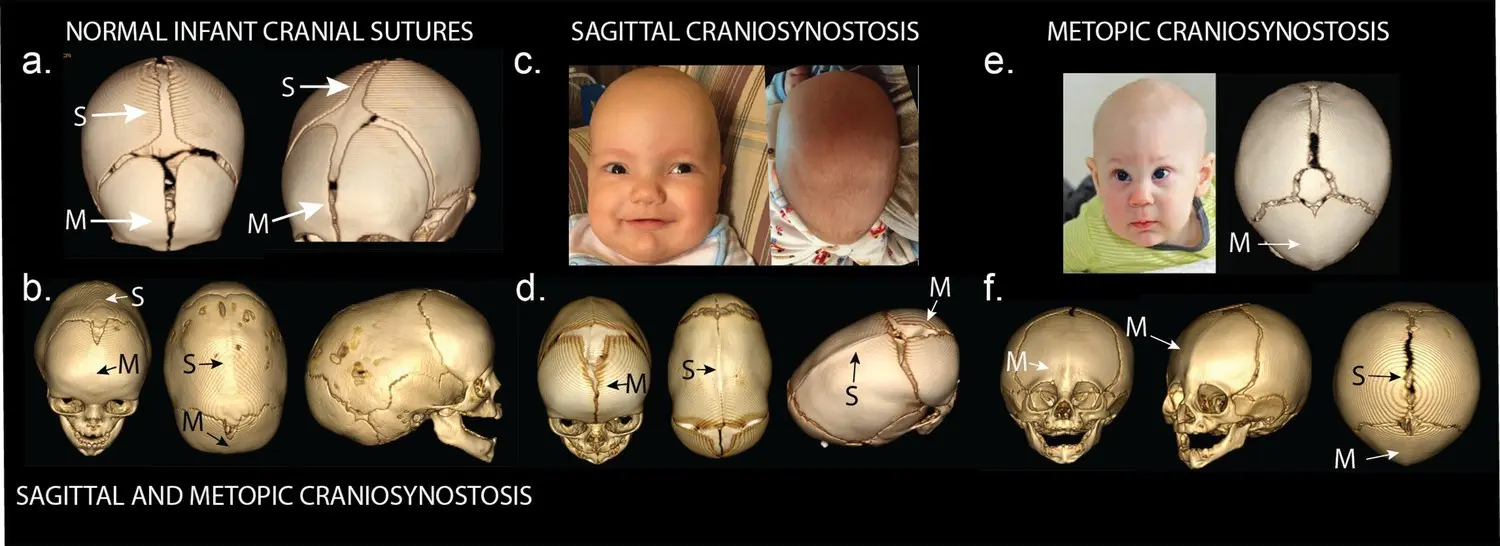
Sagittal synostosis

  • The sagittal suture, which runs along the top of the skull, unites relatively early in this condition. The head grows taller but narrower than it should in this kind of Craniosynostosis. Boys are more likely to experience this.

Coronal craniosynostosis

• The sutures that connect the top of the head to the ears fuse sooner than they should in this case. The kid will have a flat forehead if he or she has this form of Craniosynostosis. Girls are more likely to experience this.

Synostosis metopic

• The sutures that connect the sagittal suture to the nose fuse quite quickly. As a result, the scalp develops a triangle shape.

Synostosis of the lambdoid

This type of craniosynostosis affects the lambdoid suture at the back of the skull, forming a flat-topped head.

The best neurologist in Guntur can treat the types as mentioned above of craniosynostosis.

What are the symptoms of Craniosynostosis?

The common symptoms of Craniosynostosis are as follows:

  • An unusually shaped skull
  • The head grows slower than the body
  • Formation of a hard ridge along the suture.
  • The fontanel disappears soon.

If you experience any of the above symptoms of cranial synostosis, it is advisable to seek help from Rao Hospital in Guntur.

What are the causes and risk factors of Craniosynostosis?

Craniosynostosis can be either syndromic or nonsyndromic. Syndromic Cranial Synostosis occurs with other birth defects. With Cranial Synostosis, changes may be in genes that further affect different parts of the body, like fingers, heart, etc. Cell defects in the sutures may be the cause of Nonsyndromic Cranial Synostosis, which causes the sutures to fuse earlier than usual.

The following are the risk factors of craniosynostosis:

  • Taking valproic acid-like Depakote for epilepsy at the time of pregnancy may increase the risk of giving birth to a child having Craniosynostosis.
  • Babies whose mothers have thyroid disease or undergo thyroid treatment during pregnancy are more likely to be born with Craniosynostosis.
  • Babies whose mothers took fertility medicines like clomiphene citrate during pregnancy are more likely to be born with Craniosynostosis.

What are the treatment options for treating Craniosynostosis?

Surgery is an effective treatment option for cranial Synostosis. Best neurologist in Guntur can perform the surgery.

There are usually two types of surgeries that are preferred to treat Craniosynostosis. They are as follows-

• Conventional surgery:

In Guntur, a neurologist and a craniofacial surgeon perform the procedure. The neurosurgeon makes an incision across the top of the baby’s scalp and removes any sections of the skull that are out of form. The craniofacial surgeon then restores and replaces these pieces of the skull in the head. After that, stitches are applied. The doctor will later monitor the development of the skull.

• Endoscopic Surgery–

In this procedure, your doctor in Guntur makes two small incisions in the scalp and uses an endoscope to cut the sutures. This procedure should be performed before the baby reaches the age of three months. After the treatment, wearing a molding helmet is recommended to allow your head to grow into its correct form.

It is essential to get timely treatment for Cranial Synostosis from the best neurosurgeon in Guntur to avoid further complications. If Cranial Synostosis is left untreated, the skull will continue to develop in an unusual manner, which may lead to additional complications and problems such as vision problems, etc. In a recent India today article.

Conclusion

This article explains craniosynostosis, its symptoms, causes, and treatment options. It is advisable to get proper and timely treatment for craniosynostosis from the best neurology hospital in Guntur to avoid further complications, to feel a part of the crowd and not feel apart from the crowd, and to develop a feeling of oneness and not feel different and odd! It is essential to get timely treatment for Craniosynostosis to replace discomfort with self-worth and self-esteem.

Dr. Rao’s Contact Information:


stroke-and-mechanical-thrombectomy at Dr Rao's Hosptial by Dr Rao

The best STROKE Treatment is MECHANICAL THROMBECTOMY

The most effective STROKE treatment is MECHANICAL THROMBECTOMY.

MECHANICAL THROMBECTOMY – Stroke is dangerous and very damaging. It is caused by a blood clot that disrupts the flow of blood to the brain.

However, it is now possible to overcome the dangerous stroke with a procedure called mechanical thrombectomy. Yes, mechanical thrombectomy treatment by the best neurologist in Guntur can help one successfully defeat a stroke.


But what is a mechanical thrombectomy?

Mechanical Thrombectomy is an effective stroke treatment. It helps remove blood clots that disturb blood flow in the body. Blood clots slow down blood flow in the body, causing different complications. Mechanical Thrombectomy removes these blood clots. It helps treat stroke and other complications caused by the formation of blood clots. Mechanical Thrombectomy help one deal with strokes and confront them effectively. Now, one can courageously face and defeat problems like a stroke with the help of mechanical thrombectomy treatment from the best neurology hospital in Guntur.

What Causes Stroke?

The common risk factors that lead to stroke are as follows:

· Improper Sleep

· Fear and anxiety

· Irregular eating habits

· Air Pollution

· Smoking and drinking alcohol

In case you get a stroke, it is advisable to seek immediate help from neurologists at Rao Hospital, Guntur. With treatments like mechanical thrombectomy, you are sure to recover from a stroke.

What kinds of devices are used in mechanical thrombectomy procedures?

Neurosurgeons in Guntur carry out mechanical thrombectomies to remove blood clots using the following tools:

· Stentriever mechanical thrombectomy

The latest mechanical device is a stentriever. The device is a self-expanding mesh tube attached to a wire-guided through a catheter (thin tube). The surgeon inserts the catheter in an artery in the groin and guides the catheter through various blood vessels up to the blood clot in the brain.

· Aspiration thrombectomy –

Aspiration thrombectomy entails either manual cluster yearning or the use of catheter equipment to suck the coagulation out of the vessel.

How is the mechanical thrombectomy procedure performed?

In mechanical thrombectomy, neurosurgeons in Guntur use a vacuum or mechanical gear to remove blood clots. Thus, the blood flow is restored, and stroke gets treated.

To achieve effective results, it is advisable to get mechanical thrombectomy treatment from the best neurology hospital in Guntur.

Why go for a mechanical thrombectomy?

In mechanical thrombectomy treatment, one has a window of 24 hours from the onset of a stroke to have a chance to recover from a stroke. This will help more patients recover from stroke and save them from the harmful impact of stroke. Mechanical Thrombectomy is a ray of hope for people affected by stroke. Mechanical Thrombectomy give them hope and courage to fight strokes. It gives life to their dead hopes and courage to fight stroke. It is a powerful weapon that helps people to win against difficult stroke. Mechanical Thrombectomy also leads to a speedy recovery from stroke. So, going for mechanical thrombectomy treatment at the best neurology hospital in Guntur is advisable.

What is the problem with mechanical thrombectomy?

Though mechanical thrombectomy is an effective procedure to treat stroke, there aren’t sufficient neurology hospitals in Guntur that provide this stroke treatment option.

Conclusion

In this article, we learned about stroke and the risk factors that cause a stroke. We also learned about mechanical thrombectomy treatment, which helps treat stroke. We learned about the devices used in mechanical thrombectomy treatment and its procedure. We also learned about the advantages and problems of mechanical thrombectomy in Guntur. A stroke is a severe problem. Before it defeats you, you defeat it with the help of mechanical thrombectomy treatment from the best doctor in Guntur. Mechanical Thrombectomy not only gives you life but also gives life to your dead hopes and courage. Mechanical Thrombectomy is a powerful and effective weapon that helps you battle stroke. It enables you to defeat death and makes your life win this battle. So, now it’s time to make your life a winner, not the time to lose it and allow it to perish! Now it’s time to defeat and not get defeated! Now is the time to win! Now is the time to live!

Dr. Rao’s Contact Information:

the best migraine treatment in Andhra Pradesh at Dr Rao's Hosptial by Dr Rao

Migraine – Symptoms, Signs, Causes, Types, and Treatment

Migraine – Symptoms, Signs, Causes, Types, and Treatment

Migraine is a neurological disease that is common in people of Guntur. In migraines, people experience severe headaches. Vomiting and nausea are common side effects of headaches. In migraines, one may also experience sensitivity to sound and light, problems in speech, etc. Migraine can occur in any age group. If you have migraine problems running in your family, it is more likely you will also experience migraines. In case you experience migraine headaches, it is advisable to visit Rao hospital Guntur, which is one of the best neurology hospitals in Guntur. This article discusses migraine symptoms, causes, types, and treatment.

What is a migraine?

Migraine is a neurological condition in which one experiences severe headaches, nausea, and vomiting. One may also experience sensitivity to light and sound. Migraine is more common in women than men. The most common migraines are migraines with aura and without aura. We will study each of them in detail later in the article.

What are the common signs and symptoms of migraine?

Migraine occurs in stages. The symptoms of migraine may differ depending on the stage.

Prodrome stage:

In this stage of migraine, symptoms are experienced a few days before the headache starts. The common symptoms experienced in this stage include the following-

Increased hunger

Tiredness

Stiffness in the neck

Feeling depressed

Aura:

This occurs after the prodrome stage. The common problems experienced in this stage include the following-

Problems in speaking

Vision problems

Sensation problems

Attack:

In this phase, a severe headache is experienced. The common symptoms in this stage include the following-

Nausea

Vomiting

Very severe pain in your head

Sensitivity to light and sound

Postdrome Phase:

The following symptoms characterize this phase-

Extreme mood swings

Headaches

If you experience any of the above symptoms, you should visit the best neurologist in Guntur immediately for proper treatment. When left untreated, migraines may become severe and last longer.

What are the possible causes of migraine?

The actual cause of migraine is not yet known. However, certain risk factors may lead to migraine. Some of them are as follows-

  • Changes in weather
  • Less water intake in the body
  • Hormone changes
  • Increased stress
  • Irregular eating schedule and skipping meals
  • Improper sleep
  • Specific medications
  • Smoking and alcohol

Your neurologist may ask you in Guntur to keep a record of the things that you ate or the medicines you took before the onset of your migraine. This may help identify the triggers that lead to migraines and thus avoid them to reduce and treat them. According to dnaindia

How can migraines be diagnosed?

Doctors in Guntur can diagnose migraines by examining symptoms, medical conditions, and family history. Various tests are used to diagnose migraines.

What are the different types of migraines?

The following are the different types of migraine seen in people of Guntur

Migraine without Aura:

This is one of the most common types of migraine. People with this type of migraine have had at least five attacks that have these characteristics:

Headaches lasting for 4-72 hours if timely treatment is not provided.

Moderate or severe headache on one side of the head

Headaches accompanied by sensitivity to light and sound and nausea.

Migraine with Aura:

This is also one of the common types of migraine. People with this type of migraine have had at least 2 attacks that have these characteristics:

Vision problems

Speech problems

Vertigo

Sensory problems

Chronic migraines:

People with chronic migraines experience severe headaches. They may also experience the following-

Depression

Other medical problems

Other chronic pain

Acute migraines:

This type of migraine is not chronic. People experience less severe headaches than chronic migraines in this type of migraine.

There are other types of migraines, such as an optical migraine(affects one of the eyes), Acephalgic migraine(migraine with no headaches), hormonal migraines(caused by changes in hormones like estrogen), abdominal migraine(experiencing stomach-ache), among others.

How to treat migraines?

Migraine is a very fatal condition. So, there are treatment options available to treat migraines. Migraines can’t be completely cured, but these treatment options can help control and reduce migraines to a great extent.

  • Lifestyle changes include proper sleep, regular exercise, stress management through yoga and meditation, avoiding triggers that lead to migraine attacks, and drinking plenty of water.
  • Medications like NSAIDs, Triptans, and CGRP analogs Are superior.
  • Surgical interventions
  • Acupressure and acupuncture also help treat migraines
  • Home remedies like lying in a quiet, dark room and placing a cold cloth over your head may also help.

It is advisable to visit a specialist in Guntur in case you experience severe migraine headaches to get proper treatment and to manage your migraines.

Conclusion

This article helped us understand migraines’ symptoms, causes, types, treatments, etc. Regular exercise, drinking plenty of water, and managing stress through yoga and meditation can help greatly in controlling and managing migraines. If you experience severe migraine headaches, kindly visit a neurologist in Guntur immediately to get proper treatment and relief from the severe headache that hinders you from performing your day-to-day activities.

Dr. Rao’s Contact Information:

Your health and well-being are our top priorities. For the best migraine care, trust in the expertise of Dr. Rao and the other leading neurosurgeons in India.