Tag Archives: neurological care India

Why Choose Minimally Invasive Spine Surgery (MIS)? A Comprehensive Guide

International Neurosurgical Training in India – Dr Rao’s International Institute of Neurosciences


How International Neurosurgical Training Is Transforming Brain and Spine Care in India


India’s neurosciences landscape is undergoing a remarkable transformation. Over the last decade, advancements in neurosurgery, neurology, spine surgery, stroke intervention, and neurocritical care have expanded significantly beyond traditional metropolitan institutions.


Today, sophisticated brain and spine treatment options are becoming increasingly accessible to patients across India. One of the major driving forces behind this transformation has been the growing number of Indian neurosurgeons receiving advanced international training and integrating global expertise into local healthcare systems.


A recent Republic World feature explored how internationally trained neurosurgeons are reshaping modern neurosciences care in India and improving accessibility to advanced treatment options across regional healthcare ecosystems.


Primary Source: Republic World – Dr Mohana Rao Patibandla on How International Neurosurgical Training Is Transforming Brain and Spine Care in India


The Evolution of Neurosciences in India


Historically, patients with highly complex neurological disorders often had very limited treatment options within India. Advanced procedures involving skull base tumors, cerebrovascular diseases, pediatric neurological disorders, and minimally invasive spine surgery were largely concentrated within a few metropolitan centers.


Patients frequently had to travel:


  • To major Indian metro cities
  • To overseas medical centers
  • Across states for specialized surgery
  • Long distances for advanced stroke care


The Republic World article highlights how the gap between global neurosurgical innovation and Indian healthcare delivery is now steadily narrowing. Republic World – Dr Mohana Rao Patibandla on How International Neurosurgical Training Is Transforming Brain and Spine Care in India


Today, India is witnessing a broader decentralization of advanced neurosciences care, where sophisticated neurological treatment is increasingly available closer to patients’ homes.


External Source:

WHO – Neurological Disorders


The Impact of International Neurosurgical Training


International exposure has contributed significantly to modern Indian neurosciences.


Neurosurgeons trained in advanced global institutions bring back:


  • Advanced surgical techniques
  • Modern minimally invasive approaches
  • Multidisciplinary treatment models
  • Patient-centered care systems
  • Advanced technology integration
  • Evidence-based medical practices


This global training influences much more than technical expertise alone. Exposure to international healthcare systems also shapes perspectives regarding:


  • Patient safety
  • Precision surgery
  • Long-term rehabilitation
  • Neurocritical care
  • Clinical research
  • Interdisciplinary collaboration


According to the Republic World article, internationally trained specialists are increasingly helping modernize India’s neurological healthcare ecosystem. Republic World – Dr Mohana Rao Patibandla on How International Neurosurgical Training Is Transforming Brain and Spine Care in India


The Rise of Minimally Invasive Neurosurgery


One of the clearest examples of this transformation is the rapid evolution of minimally invasive neurosurgery and spine surgery.


Traditional brain and spine procedures often involved:


  • Large incisions
  • Extended hospitalization
  • Greater tissue disruption
  • Long recovery periods

Modern minimally invasive approaches focus on:


  • Smaller incisions
  • Reduced tissue damage
  • Faster recovery
  • Improved surgical precision
  • Reduced postoperative pain


The Republic World feature explains how technologies such as endoscopic assistance, image-guided navigation, and advanced operating microscopes have significantly changed the surgical experience for patients. Republic World – Dr Mohana Rao Patibandla on How International Neurosurgical Training Is Transforming Brain and Spine Care in India


Minimally Invasive Neurosurgery at Dr. Rao’s Hospital


Skull Base Surgery and Advanced Brain Tumor Care


Skull base surgery is another area that has evolved dramatically because of international collaboration and advanced neurosurgical training.


Tumors located deep within the skull were historically considered extremely difficult to access because of their proximity to delicate neurological structures.


Modern endoscopic skull base surgery now allows surgeons to approach selected lesions through minimally invasive pathways using:


  • Endoscopic visualization
  • Microsurgical precision
  • Advanced imaging guidance
  • Neuronavigation systems


These advancements reduce:


  • Complications
  • Recovery time
  • Hospital stay duration
  • Surgical morbidity


The adoption of these techniques within India has expanded treatment possibilities for patients who previously had limited options. Republic World – Dr Mohana Rao Patibandla on How International Neurosurgical Training Is Transforming Brain and Spine Care in India


The Revolution of Endovascular Neurosurgery


Endovascular neurosurgery has emerged as one of the fastest-growing areas within neurosciences.


Instead of conventional open surgery, many cerebrovascular conditions can now be treated using minimally invasive catheter-based techniques.


These procedures are used for:


  • Brain aneurysms
  • Vascular malformations
  • Acute ischemic stroke
  • Cerebrovascular blockages
  • Neurovascular diseases


The Republic World article highlights that international training in cerebrovascular and endovascular techniques is helping advanced stroke and vascular care become increasingly accessible within India. Republic World – Dr Mohana Rao Patibandla on How International Neurosurgical Training Is Transforming Brain and Spine Care in India


External Source: American Stroke Association – Stroke Information


Pediatric Neurosurgery and Specialized Care


Pediatric neurosurgery is another highly specialized field benefiting from global exposure and advanced training.


Neurological disorders in children require unique expertise because of developmental and anatomical considerations.


International training programs have exposed Indian neurosurgeons to:


  • Advanced pediatric surgical techniques
  • Neonatal neurosurgery
  • Epilepsy surgery
  • Complex congenital disorders
  • Multidisciplinary rehabilitation systems


These modern approaches are now increasingly being adapted into Indian neurosciences practice.


Republic World – Dr Mohana Rao Patibandla on How International Neurosurgical Training Is Transforming Brain and Spine Care in India


Functional Neurosurgery and Modern Neuromodulation


Functional neurosurgery is also gaining prominence across India.


Conditions such as:


  • Parkinson’s disease
  • Movement disorders
  • Epilepsy
  • Chronic pain syndromes


are increasingly being managed using advanced neurosurgical interventions including:

  • Deep brain stimulation (DBS)
  • Neuromodulation
  • Functional mapping
  • Advanced epilepsy surgery


These techniques were once available only in select global institutions but are gradually becoming part of India’s evolving neurosciences ecosystem.


Republic World – Dr Mohana Rao Patibandla on How International Neurosurgical Training Is Transforming Brain and Spine Care in India


Dr. Mohana Rao Patibandla and Regional Neurosciences Advancement


The Republic World feature specifically highlights the role of Dr. Mohana Rao Patibandla in advancing regional neurosciences development in India.


Through Dr. Rao’s Hospital – International Institute of Neurosciences , advanced neurological care is increasingly being brought closer to patients outside traditional metropolitan systems.


After receiving advanced training in multiple subspecialties in the United States, including:


  • Minimally invasive skull base surgery
  • Pediatric neurosurgery
  • Neuro-oncology
  • Functional neurosurgery
  • Endovascular neurosurgery


Dr. Patibandla has emphasized the importance of making advanced neurosciences accessible within regional India. Republic World – Dr Mohana Rao Patibandla on How International Neurosurgical Training Is Transforming Brain and Spine Care in India


This broader movement reflects a growing shift toward decentralized neuroscience excellence across the country.


The Growing Burden of Neurological Disorders in India


India’s neurological disease burden continues to rise steadily.


Conditions such as:

  • Stroke
  • Traumatic brain injuries
  • Spine disorders
  • Brain tumors
  • Epilepsy
  • Degenerative neurological diseases


are affecting larger populations than ever before.


At the same time, patients today are increasingly aware of advanced treatment options and prefer receiving high-quality care within India itself.


The Republic World report notes that internationally trained expertise combined with evolving healthcare technology is helping bridge some of the gaps in neurological healthcare accessibility. Republic World – Dr Mohana Rao Patibandla on How International Neurosurgical Training Is Transforming Brain and Spine Care in India


The Role of Technology in Modern Neurosciences


Technology adoption has further accelerated the transformation of Indian neurosciences.


Modern neuroscience systems now increasingly include:


  • Neuronavigation systems
  • Intraoperative neuromonitoring
  • Advanced neuroimaging
  • Robotic assistance
  • Artificial intelligence-based diagnostics


These technologies improve:


  • Surgical planning
  • Precision
  • Safety
  • Patient outcomes
  • Recovery speed


The integration of internationally trained expertise with evolving technologies is gradually reshaping brain and spine care delivery across India.


Regional Neuroscience Centers Are the Future


One of the most important healthcare transformations occurring in India today is the decentralization of advanced neurosciences care.


Increasingly, high-quality neurological and spine treatment is becoming available beyond major metro cities.


This shift helps:


  • Improve healthcare accessibility
  • Reduce travel burden
  • Lower emotional stress for families
  • Reduce treatment delays
  • Improve continuity of care


The Republic World article emphasizes that the future of Indian neurosciences will depend on continued investment in:


  • Training
  • Research
  • Infrastructure
  • Technology
  • Collaborative learning


Republic World – Dr Mohana Rao Patibandla on How International Neurosurgical Training Is Transforming Brain and Spine Care in India


Conclusion


India’s neurosciences ecosystem is evolving rapidly, and international neurosurgical training has become one of the key factors driving this transformation.


Globally trained neurosurgeons are helping integrate advanced surgical techniques, minimally invasive approaches, patient-centered systems, and modern technologies into Indian healthcare practice.


As highlighted in the Republic World feature, institutions such as Dr. Rao’s Hospital – International Institute of Neurosciences demonstrate how advanced neurological care can successfully expand beyond traditional metropolitan healthcare systems.


Ultimately, the greatest beneficiaries of this progress are patients, who now have greater access to sophisticated brain and spine care within India than ever before.


Frequently Asked Questions (FAQ)

1. Why is international neurosurgical training important?

It helps specialists bring advanced global techniques, modern technologies, and multidisciplinary approaches into Indian healthcare systems.

2. What is minimally invasive spine surgery?

It is an advanced surgical approach using smaller incisions and precision-guided technologies to improve recovery and reduce tissue damage.

3. What conditions are treated with endovascular neurosurgery?

Brain aneurysms, vascular malformations, stroke, and cerebrovascular diseases can often be treated using minimally invasive catheter-based procedures.

4. How is technology transforming neurosciences?

Neuronavigation, robotic assistance, advanced imaging, and AI-based diagnostics are improving precision and patient outcomes.

5. Why are regional neuroscience centers important?

They improve accessibility to advanced neurological care while reducing travel burden and treatment delays.


Internal Links


Call To Action

If you or your loved one is experiencing neurological symptoms such as stroke warning signs, seizures, persistent headaches, spinal pain, weakness, or balance problems, early specialist evaluation is essential.


Dr. Rao’s Hospital – International Institute of Neurosciences
12-19-67, Old Bank Road, Kothapet, Besides AK Biryani Point, Guntur, Andhra Pradesh
Phone: +91 9010056444
Email: info@drraoshospitals.com
Website: https://drraoshospitals.com/


Connect With Us


Dr. Mohana Rao Patibandla explaining DTI neuronavigation technology for advanced brain surgery at Dr. Rao’s Hospital in Guntur.

Early Diagnosis in Neurological Care India – International Institute of Neurosciences

Why Early Diagnosis Matters in Neurological Care: Improving Outcomes Through Timely Intervention


Neurological disorders are increasingly becoming one of India’s most significant healthcare challenges. Conditions affecting the brain, spine, and nervous system are rising across all age groups, creating an urgent need for improved awareness, timely diagnosis, and advanced treatment accessibility.Stroke, brain tumors, spinal disorders, epilepsy, traumatic brain injuries, and pediatric neurological conditions are no longer uncommon. Yet despite major advancements in neurosciences and medical technology, delayed diagnosis remains one of the biggest reasons for poor neurological outcomes in India. 

A recent article published by OneIndia highlighted the growing importance of early diagnosis in neurological care and the need for greater awareness regarding neurological symptoms across the country.


Primary Source: OneIndia – Dr. Mohana Rao Patibandla Highlights Importance of Early Diagnosis in Neurological Care


The Growing Burden of Neurological Disorders in India


India is witnessing a rapid increase in neurological diseases due to multiple factors including:


  • Increasing life expectancy
  • Hypertension and diabetes
  • Sedentary lifestyles
  • Road traffic accidents
  • Stress and urbanization
  • Improved awareness and diagnostics


Neurological diseases often affect quality of life significantly because they impact movement, speech, memory, balance, sensation, and cognitive functions.


Conditions such as stroke, brain tumors, spinal cord disorders, Parkinson’s disease, epilepsy, and neurodegenerative diseases require specialized evaluation and treatment.


According to the World Health Organization, neurological disorders are among the leading causes of disability worldwide.


External Source: WHO – Neurological Disorders


Why Delayed Diagnosis Is Dangerous


One of the biggest problems in neurological healthcare is that many symptoms initially appear mild or nonspecific.


As highlighted in the OneIndia article, symptoms such as:


  • Recurring headaches
  • Back pain
  • Dizziness
  • Weakness
  • Speech difficulty
  • Memory issues
  • Seizures


are often ignored until they become severe.  OneIndia – Dr. Mohana Rao Patibandla Highlights Importance of Early Diagnosis in Neurological Care


Many people assume these symptoms are caused by stress, aging, fatigue, or lifestyle issues. Unfortunately, delaying neurological evaluation can allow underlying diseases to progress significantly.


In neurosciences, timing frequently determines outcomes. Early diagnosis often means:


  • Better recovery
  • Reduced complications
  • Less invasive treatments
  • Improved survival
  • Lower disability rates


Stroke: The Importance of the Golden Hour


Stroke is one of the clearest examples of why early diagnosis matters.


Often referred to as a “brain attack,” stroke occurs when blood flow to part of the brain becomes blocked or interrupted.


The article explains that stroke cases are rapidly increasing in India due to:


  • Hypertension
  • Diabetes
  • Smoking
  • Stress
  • Sedentary lifestyles
  • Aging populations

OneIndia – Dr. Mohana Rao Patibandla Highlights Importance of Early Diagnosis in Neurological Care


Doctors frequently emphasize the concept of the “golden hour” — the critical early period when immediate treatment can dramatically reduce brain damage and disability.


Common stroke warning signs include:


  • Sudden facial drooping
  • Weakness in arms or legs
  • Speech difficulty
  • Confusion
  • Vision changes
  • Loss of balance


Every minute during a stroke results in the loss of millions of brain cells. Rapid treatment with clot-busting medications or endovascular stroke interventions can significantly improve outcomes.


External Source: American Stroke Association – Stroke Symptoms


Brain Tumors and Missed Warning Signs


Brain tumors present another major challenge where symptoms are often overlooked initially.


Persistent headaches, repeated vomiting, seizures, personality changes, visual disturbances, and unexplained neurological symptoms may indicate serious intracranial pathology.


The OneIndia article highlights that many patients delay neurological consultation because of fear, assumptions, or lack of awareness. By the time some patients reach specialized care, tumors may have progressed substantially, making treatment more complicated.  OneIndia – Dr. Mohana Rao Patibandla Highlights Importance of Early Diagnosis in Neurological Care


Not every headache is dangerous. However, headaches associated with neurological symptoms should always be evaluated carefully.


Modern neuroimaging technologies such as MRI and CT scans now allow earlier and more accurate diagnosis of brain tumors than ever before.


Spinal Disorders and Neurological Symptoms


Spinal disorders are increasingly affecting both younger working populations and the elderly.


Long sitting hours, poor posture, obesity, sedentary lifestyles, and physically demanding occupations contribute to rising spine-related problems across India.


While many cases of back pain are non-serious, certain warning signs should never be ignored:


  • Weakness in the legs
  • Numbness
  • Difficulty walking
  • Loss of bladder control
  • Severe radiating pain
  • Balance disturbances


OneIndia – Dr. Mohana Rao Patibandla Highlights Importance of Early Diagnosis in Neurological Care


These symptoms may indicate spinal cord compression or nerve root compression requiring urgent evaluation.


Early assessment often allows:


  • Conservative treatment
  • Physiotherapy
  • Pain management
  • Minimally invasive procedures
  • Faster recovery


Minimally Invasive Neurosurgery at Dr. Rao’s Hospital


Pediatric Neurological Disorders Need Early Attention


Neurological disorders in children are another area where early diagnosis can dramatically improve long-term outcomes.


The article emphasizes that symptoms such as:


  • Developmental delays
  • Seizures
  • Abnormal head growth
  • Behavioral changes
  • Weakness
  • Difficulty walking


should never be dismissed as “normal delays” without proper evaluation.  OneIndia – Dr. Mohana Rao Patibandla Highlights Importance of Early Diagnosis in Neurological Care


Timely neurological assessment in children allows early medical or surgical intervention that can improve development, learning, mobility, and quality of life.


The Challenge of Unequal Access to Neurological Care


One of the major reasons for delayed diagnosis in India is unequal access to specialized neurosciences care.


Patients from rural and semi-urban regions often travel long distances to seek neurological consultation. This results in:


  • Loss of critical treatment time
  • Financial burden
  • Delayed imaging and diagnosis
  • Progression of neurological disease
  • Reduced treatment options


However, advanced neurosciences infrastructure is gradually expanding beyond metropolitan cities.


The OneIndia article specifically highlights the role of Dr. Mohana Rao Patibandla and 
Dr. Rao’s Hospital – International Institute of Neurosciences

in improving access to advanced neurological care in regional India.  OneIndia – Dr. Mohana Rao Patibandla Highlights Importance of Early Diagnosis in Neurological Care


The Role of Advanced Technology in Early Diagnosis


Medical technology has transformed the diagnosis and management of neurological disorders.


Today’s advanced neuroscience systems include:


  • High-resolution MRI imaging
  • CT angiography
  • Neuronavigation systems
  • Endoscopic neurosurgery
  • Endovascular stroke interventions
  • Minimally invasive surgical techniques


These technologies improve:


  • Diagnostic accuracy
  • Surgical precision
  • Treatment planning
  • Patient safety
  • Recovery outcomes


Importantly, early diagnosis allows doctors to use these technologies more effectively and often less invasively.


OneIndia – Dr. Mohana Rao Patibandla Highlights Importance of Early Diagnosis in Neurological Care


Public Awareness Can Save Lives


One of the strongest messages in the OneIndia feature is that public awareness remains central to improving neurological outcomes in India.


People should seek medical attention immediately if neurological symptoms are:


  • Persistent
  • Progressive
  • Associated with weakness
  • Linked to seizures
  • Causing speech changes
  • Affecting walking or balance


Delays in neurological care can result in irreversible disability. In many cases, timely evaluation may completely change outcomes.


As the article concludes, “In neurosciences, timing often changes everything.”  OneIndia – Dr. Mohana Rao Patibandla Highlights Importance of Early Diagnosis in Neurological Care


The Future of Neurological Healthcare in India


India’s future neurological healthcare systems must focus on:


  • Early detection programs
  • Public education
  • Stroke awareness
  • Regional neuroscience centers
  • Tele-neurology
  • Advanced emergency response systems
  • AI-assisted diagnostics
  • Minimally invasive neurosurgery


The expansion of advanced neurosciences into regional India has the potential to reduce disability, improve recovery, and save thousands of lives every year.


Institutions such as Dr. Rao’s Hospital represent an important step toward making advanced neurological care more accessible outside major metropolitan corridors.


Conclusion

Neurological disorders are increasing rapidly across India, and delayed diagnosis remains one of the biggest obstacles to successful treatment.

Early diagnosis is often the difference between recovery and permanent disability. Whether it is stroke, brain tumors, spinal disorders, epilepsy, or pediatric neurological disease, recognizing symptoms early and seeking expert evaluation can dramatically improve outcomes.

The OneIndia feature rightly emphasizes that awareness, accessibility, technology, and timely medical intervention are essential pillars of future neurological healthcare in India.

As neurosciences continue to advance, improving early diagnosis may become one of the most powerful tools in reducing preventable neurological disability nationwide.


Frequently Asked Questions (FAQ)

1. Why is early diagnosis important in neurological disorders?

Early diagnosis improves treatment success and reduces complications and permanent neurological damage.

2. What are the warning signs of stroke?

Sudden weakness, facial drooping, speech difficulty, confusion, and loss of balance are major warning signs.

3. When should headaches be evaluated?

Persistent headaches associated with vomiting, seizures, weakness, or visual symptoms require neurological evaluation.

4. Can children develop neurological disorders?

Yes. Developmental delays, seizures, abnormal movements, and behavioral changes may indicate pediatric neurological conditions.

5. What technologies help diagnose neurological disorders?

MRI scans, CT angiography, neuro-navigation, advanced imaging, and minimally invasive techniques help improve diagnosis and treatment.


Internal Links


Call To Action

If you or your loved one experiences persistent headaches, weakness, seizures, spinal pain, speech changes, balance problems, or neurological symptoms, do not delay medical evaluation.

Dr. Rao’s Hospital – International Institute of Neurosciences
12-19-67, Old Bank Road, Kothapet, Guntur, Andhra Pradesh
Phone: +91 9010056444
Email: info@drraoshospitals.com
Website: https://drraoshospitals.com/


Connect With Us
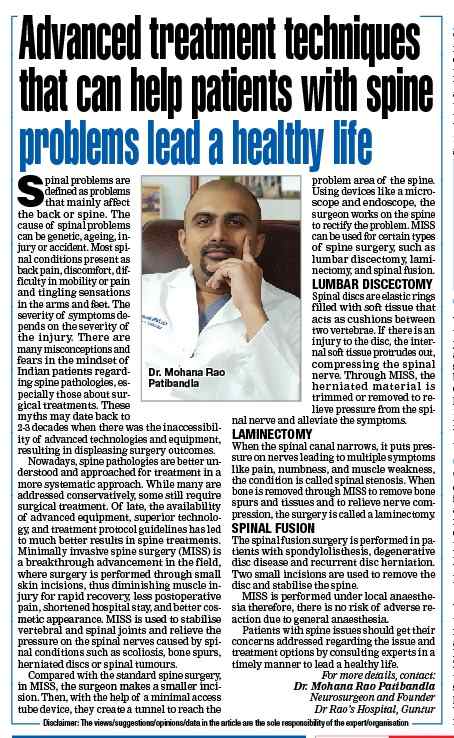
 

Dr. Rao, neurosurgeon, featured in Times of India, discusses advanced neurosurgery techniques for optimal patient outcomes.

“India’s Best Neuro & Spine Care at Dr. Rao’s Hospital, Guntur”

India’s Best Neuro & Spine Care at Dr. Rao’s Hospital, Guntur

Top Neurological Hospitals in India

India is home to some of the finest neurological hospitals in the world, offering cutting-edge technology and top-tier medical expertise. When it comes to neurological care, choosing the right hospital is crucial for accurate diagnosis, effective treatment, and comprehensive rehabilitation. Among the top neurological hospitals in India, Dr. Rao’s Hospital in Guntur stands out for its dedication to patient care, advanced medical infrastructure, and team of highly skilled professionals. According to The Times of India coverage.

Dr. Rao’s Hospital: Medical Tourism for Economical Neurosurgery in India

Dr. Rao’s Hospital: Medical Tourism for Economical Neurosurgery in India

Best Neurology Hospital in India

Selecting the best neurology hospital in India requires careful consideration of several factors, including the qualifications of the medical staff, the availability of specialized services, and the hospital’s track record in treating complex neurological conditions. Dr. Rao’s Hospital is recognized as one of the best neurology hospitals in India, particularly for its expertise in managing cases of stroke, epilepsy, multiple sclerosis, Parkinson’s disease, and other neurological disorders. The hospital’s state-of-the-art neuroimaging facilities and its patient-centric approach make it a preferred choice for domestic and international patients. In a recent India today article.

Best Neurological Hospitals in India

Dr. Rao’s Hospital is a leader among the best neurological hospitals in India, providing comprehensive care for a wide range of neurological conditions. The hospital’s multidisciplinary team, which includes neurologists, neurosurgeons, neuro-oncologists, and neuro-physiotherapists, ensures that each patient receives a personalized treatment plan. The hospital’s commitment to research and innovation further enhances its reputation as a top destination for neurological care.

World Top Neurosurgeon

Dr. Mohana Rao Patibandla, the chief neurosurgeon at Dr. Rao’s Hospital, is recognized as one of the world’s top neurosurgeons. With extensive training and experience from leading institutions across the globe, Dr. Rao has performed thousands of successful surgeries, including complex brain and spine procedures. His expertise in minimally invasive neurosurgery, stereotactic radiosurgery, and advanced spinal cord surgeries has earned him international acclaim, attracting patients from various countries seeking world-class treatment.

Spine and Neuro Center

As a premier spine and neuro center, Dr. Rao’s Hospital offers specialized care for spine-related disorders and neurological conditions. The center is equipped with advanced technology, such as intraoperative MRI, neuronavigation systems, and robotic-assisted surgery, which enhances precision and outcomes. The spine and neuro center at Dr. Rao’s Hospital is dedicated to providing holistic care, from diagnosis to rehabilitation, ensuring that patients regain their quality of life.

Best Neuro Hospital in India

The best neuro hospital in India combines clinical excellence with compassionate care, and Dr. Rao’s Hospital excels in both areas. The hospital’s neuro department is known for handling the most challenging cases, offering endoscopic brain surgery, spinal fusion, and cerebrovascular surgery treatments. Patients benefit from the hospital’s focus on minimally invasive techniques, which reduce recovery times and minimize complications.

Neurologist List

Finding the right neurologist is key to effective treatment. Dr. Rao’s Hospital boasts a distinguished list of neurologists specializing in various areas, including stroke care, movement disorders, neuro-oncology, and pediatric neurology. Each neurologist at Dr. Rao’s Hospital is committed to staying at the forefront of medical advancements, ensuring that patients receive the latest and most effective treatments available.

Best Spinal Cord Doctor

The best spinal cord doctor combines expertise, experience, and empathy to treat complex spinal conditions. Patients at Dr. Rao’s Hospital have access to some of India’s top spinal cord specialists under the direction of Dr. Mohana Rao Patibandla. The hospital’s spinal cord team specializes in treating conditions such as spinal cord injuries, degenerative disc disease, scoliosis, and spinal tumors. With a focus on minimally invasive techniques, the spinal cord specialists at Dr. Rao’s Hospital aim to restore function and improve the quality of life for their patients.

List of Neurology Doctors

When considering treatment at Dr. Rao’s Hospital, patients can choose from a comprehensive list of neurology doctors, each with a unique specialization. The hospital’s neurology department includes experts in epilepsy management, neurorehabilitation, neuroimmunology, and neurocritical care. This diverse team ensures patients receive tailored treatment plans that address their neurological needs.

Best Hospital for Neurology & Neurosurgery

Dr. Rao’s Hospital is widely regarded as the best hospital for neurology and neurosurgery in India. The hospital’s neurosurgery department is equipped with the latest surgical tools and technologies, allowing for precision in procedures such as brain tumor removal, spinal cord surgery, and vascular neurosurgery. Additionally, the hospital’s neurology department offers comprehensive care for chronic neurological conditions, including stroke management, neurogenetic disorders, and neurodegenerative diseases.

Affordable Medical Tourism at Dr. Rao’s Hospital, Guntur

One of the significant advantages of choosing Dr. Rao’s Hospital is its commitment to affordable medical tourism. Patients worldwide can access world-class neurological and neurosurgical care at a fraction of the cost they might incur in Western countries. Dr. Rao’s Hospital offers personalized care packages that include consultation, surgery, post-operative care, and accommodation, making it an attractive option for international patients. The hospital’s dedicated international patient services team ensures a seamless experience, from initial consultation to follow-up care, providing language assistance, visa support, and travel arrangements.

Conclusion

In conclusion, Dr. Rao’s Hospital in Guntur stands out as India’s leading destination for neurological and spinal care. With a team of world-renowned specialists, state-of-the-art facilities, and a commitment to affordable medical tourism, Dr. Rao’s Hospital offers unparalleled care for patients from around the globe. Whether seeking the expertise of the world’s top neurosurgeon or comprehensive care at the best neuro hospital in India, Dr. Rao’s Hospital is the premier choice for all your neurological and neurosurgical needs.

Dr. Rao’s Contact Information:

India’s Best Neurosurgeon — Dr. Rao at Dr. Rao's Hospital

Top Neurosurgery & Spine Care at Dr. Rao’s Hospital, India

Top Neurosurgery & Spine Care at Dr. Rao’s Hospital, India

MD Neurologist: Expertise and Precision in Neuroscience

An MD Neurologist is a medical doctor who specializes in diagnosing, treating, and managing disorders of the brain, spinal cord, and nervous system. Dr. Mohana Rao Patibandla at Dr. Rao’s Hospital in Guntur is one of India’s leading MD neurologists. He is known for his expertise in treating complex neurological conditions with a patient-centered approach. With his extensive experience and advanced training, he offers unparalleled care for patients suffering from various neurological disorders.

Spine and Brain Neurosurgery: Advanced Surgical Interventions

Spine and brain neurosurgery are among the most intricate fields of medicine, requiring precision, skill, and state-of-the-art technology. The neurosurgery team at Dr. Rao’s Hospital, under Dr. Rao’s direction, excels at performing both straightforward and challenging surgeries. Whether it’s a brain tumor, spinal cord injury, or degenerative spine condition, the hospital’s comprehensive approach ensures the best possible outcomes for patients. The facility is equipped with the latest technology, including neuronavigation and intraoperative imaging, which significantly enhance the accuracy and safety of neurosurgical procedures.

Pediatric Neurosurgeon Near Me: Specialized Care for Young Patients

Finding a pediatric neurosurgeon near me who understands the unique needs of children can be challenging. Dr. Rao’s Hospital in Guntur offers specialized pediatric neurosurgery services. The hospital is dedicated to providing compassionate care tailored to the developmental needs of children. Dr. Rao and his team have successfully treated a wide range of conditions, including congenital abnormalities, brain and spinal tumors, and traumatic injuries in children. The hospital’s child-friendly environment and multidisciplinary approach ensure that young patients receive the best care possible.

Head Doctor Near Me: Accessing Top Neurological Expertise

When searching for a “head doctor near me,” you want to ensure that you’re seeing a specialist with the experience and credentials necessary to handle complex cases. Dr. Rao’s Hospital is home to top neurologists and neurosurgeons who are leaders in their field. Dr. Rao, in particular, is renowned for his expertise in managing head injuries, brain tumors, and neurological disorders. His comprehensive treatment plans address each patient’s unique needs, providing them the best chance for recovery.

Brain and Spine Specialist: Comprehensive Care Under One Roof

As a brain and spine specialist, Dr. Rao offers integrated care for patients with conditions affecting both the brain and spinal cord. His approach combines the latest research with cutting-edge technology to provide holistic treatment. At Dr. Rao’s Hospital, patients have access to a team of specialists who comprehensively diagnose, treat, and manage neurological conditions. This collaborative approach ensures patients receive the most effective care, improving their quality of life.

Best Hospital for Back Surgery: Why Dr. Rao’s Hospital Stands Out

Back surgery is a critical intervention that requires the highest level of expertise. Dr. Rao’s Hospital is widely regarded as the best hospital for back surgery in India, thanks to its state-of-the-art facilities and skilled surgical team. The hospital offers many surgical options, including minimally invasive procedures that reduce recovery time and improve outcomes. Patients worldwide choose Dr. Rao’s Hospital for its reputation for excellence in spinal surgery and its commitment to patient care.

Best Spine Surgery: Innovative Techniques and Successful Outcomes

Dr. Rao’s Hospital is a leader in spine surgery, offering innovative techniques proven to provide successful outcomes. The hospital’s spine surgery department is equipped with advanced technologies like robotic surgery and 3D navigation systems, enhancing surgical interventions’ precision. Whether it’s a herniated disc, spinal stenosis, or a complex spinal deformity, the team at Dr. Rao’s Hospital is committed to providing the best spine surgery options to improve patients’ lives.

Center for Neurology and Spine: A Hub of Excellence

The Center for Neurology and Spine at Dr. Rao’s Hospital is a hub of excellence, providing comprehensive care for neurological and spinal conditions. The center brings together a multidisciplinary team of neurologists, neurosurgeons, physiotherapists, and rehabilitation specialists to offer a full spectrum of care. Patients receive personalized care designed to meet their needs, from diagnosis to treatment and follow-up. The center’s commitment to innovation and patient care has made it a top destination for those seeking neurological and spinal disorders treatment.

Pediatric Neuro Surgeon Near Me: Ensuring the Best for Your Child

When searching for a “pediatric neuro surgeon near me,” finding a specialist with the right experience and approach is crucial. Dr. Rao’s Hospital offers expert pediatric neurosurgery services, ensuring that children with neurological conditions receive the best care possible. The hospital’s pediatric neurosurgeons are trained to handle the unique challenges of treating young patients, using techniques that minimize risks and promote faster recovery. Parents can trust Dr. Rao’s Hospital to provide compassionate and effective care for their children.

Spine Doctor Name: Dr. Rao—A Name Synonymous with Excellence

In spine surgery, Dr. Rao’s name is synonymous with excellence. His extensive experience and commitment to patient care have earned him a reputation as one of the top spine doctors in India. Patients from across the country and beyond seek his expertise for conditions ranging from degenerative spine diseases to complex spinal deformities. At Dr. Rao’s Hospital, patients can expect world-class care from a doctor dedicated to achieving the best possible outcomes.

Affordable Medical Tourism: World-Class Care at a Fraction of the Cost

India has become a leading destination for medical tourism, offering world-class healthcare at a fraction of the cost compared to Western countries. Dr. Rao’s Hospital is at the forefront of this trend, providing international patients with affordable, high-quality care. The hospital’s comprehensive medical tourism services include assistance with travel arrangements, accommodation, and post-operative care, making it easier for patients from abroad to access the treatment they need. With Dr. Rao’s expertise and state-of-the-art facilities, patients can expect top-tier care without the hefty price tag.

Conclusion

Dr. Rao’s Hospital in Guntur is India’s premier neurological and spine care destination. Whether you are looking for an MD neurologist, spine and brain neurosurgery, or pediatric neurosurgery, Dr. Rao and his team provide world-class care tailored to each patient’s needs. With a focus on innovation, patient-centered care, and affordable medical tourism, Dr. Rao’s Hospital is the best choice for anyone seeking top-notch treatment for neurological and spine conditions. Whether in India or traveling from abroad, you can trust Dr. Rao’s Hospital to provide the highest standard of care, ensuring a successful recovery and improved quality of life.

For more information or to schedule a consultation, please contact Dr. Rao’s Hospital at 9010056444 or 9010057444 or email info@drraoshospitals.comFor more details, visit our website at Dr. Rao’s Hospitals.