Tag Archives: Andhra Pradesh Healthcare

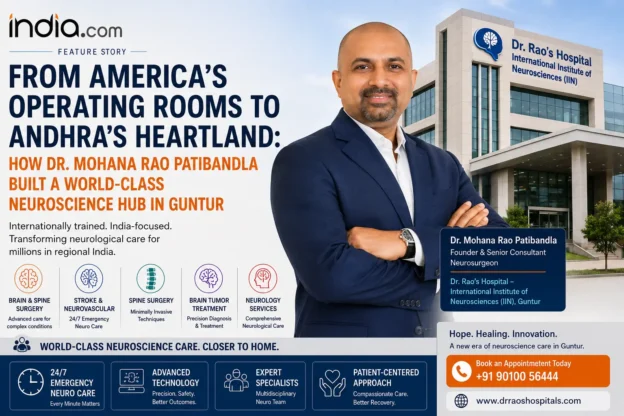
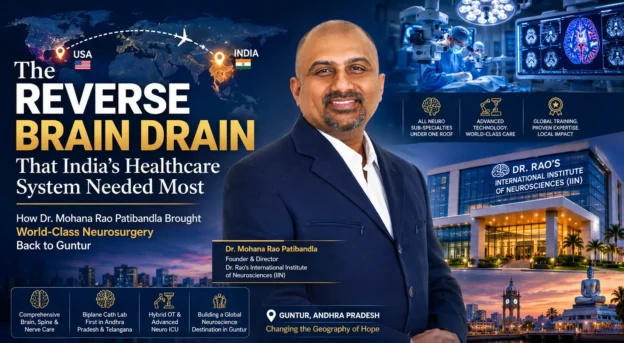
Dr. Mohana Rao Patibandla, founder of Dr. Rao's International Institute of Neurosciences (IIN), illustrating the reverse brain drain movement by bringing world-class neurosurgery, neurology, and spine care to Guntur, Andhra Pradesh, India.

Best Neurologist in Guntur: How IIN Transforming Regional Healthcare in India

Best Neurologist in Guntur: How Advanced Neurosciences Are Transforming Regional Healthcare in India


Source: Hans India – “The Return of Talent: Dr. Mohana Rao Patibandla’s Mission to Transform Regional Healthcare”


India’s healthcare landscape is undergoing a remarkable transformation. For decades, patients suffering from complex neurological disorders often traveled hundreds or even thousands of kilometers to metropolitan cities seeking specialized care. Today, however, advanced neurological and neurosurgical services are increasingly becoming available closer to home, especially in emerging healthcare hubs across regional India.


One of the strongest examples of this transformation is taking place in Guntur, Andhra Pradesh. Through the efforts of internationally trained specialists, cutting-edge technology, and patient-centered healthcare systems, access to world-class neuroscience care is becoming a reality for thousands of patients. This shift is helping establish Guntur as a destination for advanced neurological treatment and reinforcing its reputation among patients searching for the best neurologist in Guntur.


A recent feature published by Hans India highlighted the growing importance of regional healthcare development and the role of globally trained specialists returning to India to build advanced medical institutions. The article emphasized how expertise, innovation, and infrastructure can significantly improve access to specialized neurological care outside traditional metropolitan centers.


Why Neurological Disorders Require Specialized Care


Neurological disorders affect the brain, spinal cord, peripheral nerves, and muscles. These conditions can profoundly impact a person’s mobility, memory, speech, cognition, and overall quality of life.


According to the World Health Organization (WHO), neurological conditions are among the leading causes of disability and death globally. More than one billion people worldwide are affected by neurological disorders, making access to expert neurological care a public health priority.


Source: World Health Organization


Common Neurological Conditions


  • Stroke
  • Brain tumors
  • Epilepsy
  • Parkinson’s disease
  • Alzheimer’s disease and dementia
  • Peripheral neuropathy
  • Multiple sclerosis
  • Migraine and chronic headaches
  • Spinal cord disorders
  • Traumatic brain injury


Many neurological disorders require rapid diagnosis and timely treatment. Delays can result in permanent disability, loss of independence, or even death. This is why access to experienced specialists and modern healthcare infrastructure is so critical.


The Evolution of Regional Healthcare in India


Historically, India’s most advanced neurological services were concentrated in major cities such as Delhi, Mumbai, Chennai, Bengaluru, and Hyderabad. Patients from smaller cities often faced significant challenges when seeking specialized treatment.


Traveling to metropolitan centers involved financial burdens, emotional stress, accommodation expenses, prolonged waiting times, and disruptions to family life. Follow-up care was often equally challenging, particularly for elderly patients and those requiring long-term rehabilitation.


The emergence of advanced neuroscience centers in regional cities is changing this reality. Today, patients increasingly expect high-quality care to be available closer to their homes, enabling faster diagnosis, easier access to treatment, and improved continuity of care.


The Hans India feature highlighted how the development of advanced neuroscience institutions in Tier-2 cities can help address healthcare inequalities while improving patient outcomes and strengthening local healthcare ecosystems.


Why Neurosciences Matter More Than Ever


The burden of neurological disease continues to grow worldwide. Factors such as aging populations, increasing life expectancy, sedentary lifestyles, diabetes, hypertension, and road traffic accidents contribute significantly to neurological morbidity.


Stroke remains one of the leading causes of death and disability globally. Brain tumors continue to require increasingly sophisticated surgical and medical treatments. Degenerative spine disorders are becoming more common due to lifestyle changes and increased longevity.


At the same time, advances in neuroscience have dramatically improved treatment possibilities. Conditions once considered untreatable can now be effectively managed using modern surgical techniques, precision diagnostics, and multidisciplinary care approaches.


Major Advances in Neurosciences


  • Minimally invasive brain surgery
  • Endoscopic skull base surgery
  • Advanced stroke interventions
  • Endovascular neurosurgery
  • Neuronavigation systems
  • Functional neurosurgery
  • Stereotactic radiosurgery
  • Microscopic spine surgery
  • Artificial intelligence-assisted diagnostics
  • Advanced neuroimaging technologies


These innovations are improving surgical precision, reducing complications, shortening hospital stays, and enhancing patient outcomes.


What Defines the Best Neurologist in Guntur?


When patients search online for the best neurologist in Guntur, they are often looking for much more than a medical degree. They seek expertise, experience, technology, accessibility, trust, and compassionate care.


Several factors distinguish leading neurological specialists and institutions:


FactorWhy It Matters
Clinical ExperienceImproves diagnostic accuracy and treatment planning
International TrainingProvides exposure to advanced techniques and global best practices
Modern TechnologyEnhances diagnostic and surgical precision
Multidisciplinary CareEnsures comprehensive treatment and rehabilitation
Emergency ServicesCritical for stroke and neurotrauma patients
Patient-Centered ApproachImproves outcomes and patient satisfaction


The best neurological care combines evidence-based medicine, advanced technology, personalized treatment planning, and long-term support for patients and families.


The Impact of International Training on Indian Healthcare


One of the most significant developments in modern Indian healthcare is the return of specialists who have trained internationally and chosen to build institutions in India.


International fellowships expose physicians to advanced healthcare systems, innovative technologies, multidisciplinary care models, research methodologies, and patient safety frameworks.


When these specialists establish advanced healthcare facilities in regional India, patients gain access to expertise that was previously available only in select metropolitan institutions.


The Hans India article notes that institution-building, rather than individual achievement alone, represents one of the most meaningful contributions such specialists can make to healthcare transformation.


Advanced Neurology Services Available in Guntur


Modern neuroscience centers now offer a comprehensive range of neurological services that were once available only in large metropolitan hospitals.


Stroke Care


Stroke treatment requires rapid intervention. Every minute matters when blood flow to the brain is interrupted.


Comprehensive stroke care includes:


  • Emergency neurological evaluation
  • Advanced brain imaging
  • Thrombolytic therapy
  • Mechanical thrombectomy
  • Neurocritical care
  • Stroke rehabilitation


Brain Tumor Treatment


Brain tumors require multidisciplinary management involving neurosurgeons, neurologists, neuro-oncologists, radiologists, and rehabilitation specialists.


Modern treatment options may include:

  • Microsurgical tumor removal
  • Minimally invasive approaches
  • Image-guided surgery
  • Neuro-oncology support
  • Radiation therapy coordination
  • Long-term surveillance


Epilepsy Management


Many patients with epilepsy can achieve excellent seizure control through proper diagnosis and treatment. Advanced epilepsy centers provide EEG monitoring, medication management, and surgical evaluation when necessary.


Advanced Spine Surgery and Comprehensive Spine Care


Spinal disorders are among the most common reasons patients seek neurological and neurosurgical consultation. As life expectancy increases and lifestyles become more sedentary, conditions affecting the spine are becoming increasingly prevalent across India.


Back pain, neck pain, sciatica, spinal instability, degenerative disc disease, spinal tumors, and spinal trauma can significantly impact quality of life. Fortunately, advances in modern spine surgery have transformed treatment outcomes for many patients.


Common Spine Conditions Treated

  • Herniated disc
  • Cervical spondylosis
  • Lumbar canal stenosis
  • Sciatica
  • Spinal deformities
  • Spinal cord compression
  • Spinal tumors
  • Spinal fractures
  • Degenerative disc disease
  • Failed back surgery syndrome


Modern spine surgery increasingly emphasizes minimally invasive approaches that reduce tissue damage, minimize blood loss, shorten hospital stays, and accelerate recovery.


Learn more about advanced spine care at: Spine Surgery Department


Artificial Intelligence and the Future of Neurology


Artificial Intelligence (AI) is rapidly transforming healthcare worldwide. Neurology and neurosurgery are among the specialties benefiting significantly from AI-driven innovations.


AI technologies are helping clinicians detect disease earlier, analyze imaging more accurately, improve treatment planning, and enhance patient outcomes.


Applications of AI in Neurology


  • Stroke detection and triage
  • Brain tumor imaging analysis
  • Neurodegenerative disease prediction
  • Clinical decision support systems
  • Surgical planning assistance
  • Predictive analytics for patient outcomes
  • Remote neurological monitoring
  • Advanced neuroimaging interpretation


According to the National Institutes of Health (NIH), AI technologies have the potential to significantly improve diagnostic accuracy and healthcare delivery while supporting clinicians in managing increasingly complex neurological conditions.


Source: National Institutes of Health (NIH)


The Role of Technology in Modern Neurosurgery


Technology continues to reshape the field of neurosciences. Today’s neurosurgical procedures are safer and more precise than ever before.


Key Technologies Driving Neurosurgical Excellence


  • Neuronavigation systems
  • Intraoperative imaging
  • Microsurgical platforms
  • Endoscopic neurosurgery
  • Intraoperative neuromonitoring
  • 3D surgical planning
  • Advanced neurovascular imaging
  • Robotic-assisted surgical systems


These technologies allow surgeons to operate with greater precision while preserving healthy tissue and minimizing complications.


The Hans India feature highlighted that innovation, infrastructure, and technology will play critical roles in shaping the future of neurological care across India.


Why Institution Building Matters in Healthcare


Healthcare transformation is not solely about individual physicians. Sustainable progress requires strong institutions capable of delivering high-quality care consistently over decades.


The Hans India article emphasizes that the long-term impact of healthcare leaders often lies in creating systems, training future professionals, introducing advanced technologies, and building organizations that continue serving patients for generations.


Regional centers of excellence can:


  • Improve healthcare accessibility
  • Reduce treatment delays
  • Create employment opportunities
  • Promote medical education
  • Encourage research and innovation
  • Reduce migration for treatment
  • Strengthen local healthcare ecosystems


Why Patients Choose Dr. Rao’s Hospital – International Institute of Neurosciences (IIN)


Patients seeking the best neurologist in Guntur, best neurosurgeon in Guntur, or best spine surgeon in Guntur increasingly seek comprehensive neuroscience centers that provide advanced diagnostics, specialized treatment, and compassionate patient care.


Dr. Rao’s Hospital – International Institute of Neurosciences (IIN) has emerged as a leading destination for neurological, neurosurgical, spine, and neurovascular care in Andhra Pradesh.


Internal Links


Authoritative Medical Sources


AEO-Optimized Frequently Asked Questions


Who is considered the best neurologist in Guntur?

The best neurologist in Guntur is typically identified by extensive experience, advanced training, access to modern technology, patient outcomes, and comprehensive neurological care capabilities.


When should I consult a neurologist?

You should consult a neurologist if you experience persistent headaches, seizures, weakness, numbness, memory problems, dizziness, balance difficulties, or other neurological symptoms.


What conditions do neurologists treat?

Neurologists diagnose and treat stroke, epilepsy, Parkinson’s disease, Alzheimer’s disease, migraines, neuropathy, multiple sclerosis, and many other disorders affecting the nervous system.


What is the difference between a neurologist and a neurosurgeon?

A neurologist primarily treats neurological conditions using medications and non-surgical therapies, while a neurosurgeon performs surgical procedures involving the brain, spine, and nervous system.


Why is early diagnosis important for neurological disorders?

Early diagnosis often improves treatment outcomes, reduces complications, preserves neurological function, and enhances quality of life.


Why choose Dr. Rao’s Hospital for neurological treatment?

At Dr. Rao’s Hospital, led by Dr. Mohana Rao Patibandla, Founder of Dr. Rao’s Hospital – International Institute of Neurosciences (IIN), Guntur, patients receive advanced brain, spine, and nerve care using cutting-edge technologies and minimally invasive treatment approaches.


Conclusion


India’s healthcare future will increasingly depend on strong regional centers of excellence capable of delivering advanced, affordable, and accessible care. The growing availability of world-class neuroscience services outside metropolitan cities represents one of the most important developments in modern Indian healthcare.


As highlighted in the Hans India feature, the return of globally trained specialists, investment in healthcare infrastructure, adoption of advanced technologies, and commitment to institution building are helping transform patient care across regional India. These developments are ensuring that patients no longer need to leave their communities to access sophisticated neurological treatment.


For patients seeking the best neurologist in Guntur, the best neurosurgeon in Guntur, or the best spine surgeon in Guntur, access to comprehensive neuroscience care has never been better. Modern healthcare institutions are bringing advanced diagnosis, treatment, rehabilitation, and long-term support closer to home, improving outcomes and transforming lives.


Call to Action

If you or a loved one is experiencing symptoms of a neurological disorder, seeking expert evaluation early can make a significant difference. Whether you need treatment for stroke, brain tumors, epilepsy, spine disorders, neurovascular conditions, or complex neurological diseases, timely care matters.


If you’re searching for the best neurologist in Guntur, the best neurosurgeon in Guntur, or expert care for complex brain and spine conditions, visit


Dr. Rao’s Hospital – International Institute of Neurosciences (IIN).

📞 +91 90100 56444

📧 [info@drraoshospitals.com]

🌐 [www.drraoshospitals.com]


Follow Dr. Rao’s Hospital

Facebook

Instagram

YouTube

LinkedIn

X

Google Business

Google Maps


Primary Source:

The Return of Talent: Dr. Mohana Rao Patibandla’s Mission to Transform Regional Healthcare – Hans India

The best Minimally Invasive Keyhole Endoscopic Spine Surgery in Guntur

How Keyhole Neurosurgery Is Transforming Brain and Spine Care in India – Dr. Rao’s IIN


How Minimally Invasive Keyhole Neurosurgery Is Revolutionizing Brain and Spine Care in India


Modern neurosurgery has entered an era of remarkable transformation driven by advanced imaging, precision-guided technologies, minimally invasive surgical systems, and sophisticated neurosciences innovation.


Historically, many neurological and spine surgeries required large surgical openings and extensive tissue manipulation to reach delicate structures deep within the brain or spine.


While traditional surgical techniques saved countless lives, they were often associated with longer hospitalization, greater tissue disruption, postoperative pain, and extended rehabilitation periods.


Today, minimally invasive keyhole neurosurgery is changing this landscape by enabling surgeons to perform selected procedures through smaller openings while preserving surrounding neurological structures and improving recovery outcomes.


A recent Times of India feature highlighted this transformation through the recognition awarded to Dr. Mohana Rao Patibandla as the Best Minimally Invasive Keyhole Neurosurgeon and Spine Surgeon at the prestigious Radiocity FM 91.1 Icon Awards.


Primary Source: Times of India – Dr. Mohana Rao Patibandla Honoured as Best Minimally Invasive Keyhole Neurosurgeon and Spine Surgeon


The Complexity of Brain and Spine Surgery


Neurosurgery remains one of the most technically demanding specialties in medicine because it involves structures responsible for:


  • Movement
  • Speech
  • Memory
  • Vision
  • Cognition
  • Sensory function


The brain and spinal cord contain highly delicate neural pathways and vascular structures where even small surgical inaccuracies may potentially affect long-term neurological function.


Conditions commonly requiring neurosurgical or spine intervention include:


  • Brain tumors
  • Spinal cord compression
  • Disc prolapse
  • Stroke-related disorders
  • Traumatic injuries
  • Neurovascular diseases
  • Degenerative spine disease


Modern neurosurgery therefore depends heavily on precision, technology integration, multidisciplinary collaboration, and continuous innovation.


American Association of Neurological Surgeons


What Is Minimally Invasive Keyhole Neurosurgery?


Keyhole neurosurgery is an advanced minimally invasive surgical technique that allows surgeons to access neurological pathology through smaller surgical openings using specialized instruments, microscopes, endoscopes, and neuronavigation systems.


According to the Times of India article, Dr. Mohana Rao Patibandla has become widely recognized for advancing minimally invasive keyhole neurosurgery and spine surgery in India.


Unlike traditional open surgery, keyhole approaches focus on:


  • Smaller incisions
  • Microsurgical precision
  • Reduced tissue disruption
  • Enhanced visualization
  • Function preservation


These techniques often utilize:


  • Operating microscopes
  • Endoscopic systems
  • Advanced neuroimaging
  • Neuronavigation
  • Intraoperative monitoring


Modern keyhole surgery represents one of the most important advancements in contemporary neurosciences.


The Benefits of Minimally Invasive Neurosurgery


The evolution of minimally invasive surgery has significantly improved patient care in selected neurological and spinal conditions.


Potential advantages may include:


  • Reduced blood loss
  • Less postoperative pain
  • Shorter hospitalization
  • Smaller surgical scars
  • Faster recovery
  • Reduced tissue trauma


The Times of India article emphasizes Dr. Rao’s dedication toward advancing minimally invasive surgery to improve patient outcomes and accessibility.


Modern healthcare increasingly prioritizes preserving function while minimizing surgical disruption.


Minimally Invasive Neurosurgery at Dr. Rao’s Hospital


The Evolution of Minimally Invasive Spine Surgery


Spine surgery has also undergone major transformation through minimally invasive approaches.


Traditional spine procedures often involved:


  • Larger muscle dissection
  • Greater blood loss
  • Longer recovery time
  • Extended rehabilitation


Modern minimally invasive spine surgery now enables selected procedures through smaller corridors while preserving muscles and surrounding tissues.


Conditions commonly treated using minimally invasive spine techniques may include:


  • Lumbar disc prolapse
  • Cervical disc disease
  • Spinal stenosis
  • Degenerative spine disorders
  • Selected spinal tumors


These advancements have significantly improved postoperative rehabilitation and patient mobility.


North American Spine Society


International Training and Global Exposure


The Times of India feature highlights Dr. Rao’s international training experience in the United States, Europe, and Japan.


Global exposure often provides neurosurgeons experience with:


  • Advanced surgical technologies
  • Research-oriented healthcare systems
  • Complex multidisciplinary care
  • Modern operating room infrastructure
  • Evidence-based medicine


Such international training frequently influences long-term institutional vision and innovation-driven healthcare development.


The article emphasizes how these experiences shaped Dr. Rao’s patient-centered approach focused on precision and innovation.


The Importance of Regional Neurosciences Infrastructure


One of the most important themes reflected throughout the article is the expansion of advanced neurological care beyond metropolitan cities.


Historically, many patients from smaller towns traveled long distances seeking:


  • Complex brain surgery
  • Advanced spine surgery
  • Stroke intervention
  • Neuro-oncology care
  • Endovascular treatment


This often created:


  • Financial burden
  • Treatment delays
  • Interrupted rehabilitation
  • Accessibility challenges


According to the Times of India article, Dr. Rao’s dedication toward accessible and high-quality care has benefited patients from Andhra Pradesh, Telangana, and neighboring states.


Regional neuroscience systems improve:


  • Emergency accessibility
  • Continuity of treatment
  • Patient convenience
  • Long-term rehabilitation support


Technology Is Transforming Neurosciences


Modern neurological care increasingly depends on sophisticated technologies including:


  • Neuronavigation systems
  • Advanced MRI imaging
  • Microsurgical operating microscopes
  • Endoscopic systems
  • Intraoperative neuromonitoring
  • Precision-guided surgical platforms


These technologies improve:


  • Surgical planning
  • Precision
  • Safety
  • Neurological preservation
  • Patient recovery


The future of neurosurgery will increasingly depend on integrating technology with human expertise and ethical patient-centered care.


The Human Side of Neurosurgery


Despite technological advancements, neurological care remains deeply human.


Patients facing brain or spine disorders often experience:


  • Fear
  • Anxiety
  • Concerns regarding disability
  • Emotional uncertainty
  • Questions about long-term recovery


Modern healthcare therefore requires not only technical expertise but also:


  • Compassion
  • Communication
  • Empathy
  • Trust
  • Long-term rehabilitation support


The Times of India article repeatedly reflects themes of dedication toward innovation, patient care, and medical excellence.


Recognition and Healthcare Leadership


Healthcare awards frequently recognize broader contributions toward innovation, accessibility, and patient-centered care.


The article notes several recognitions associated with Dr. Rao’s contributions, including:


  • Brain Lab Neurosurgery Award
  • Leaders Award
  • Atal Achievement Award


Such recognitions highlight the growing importance of innovation-driven neurological care within India’s healthcare ecosystem.


The Future of Keyhole Neurosurgery in India


India’s neurosciences ecosystem continues evolving rapidly through:


  • Artificial intelligence-assisted diagnostics
  • Robotic surgery
  • Advanced neuroimaging
  • Precision-guided surgery
  • Minimally invasive systems
  • Endovascular intervention


At the same time, future healthcare transformation will depend heavily on:


  • Regional accessibility
  • Advanced training
  • Ethical healthcare systems
  • Continuous innovation
  • Patient-centered treatment


Institutions capable of combining advanced technology with compassionate care are likely to shape the future of neurological treatment across India.


Conclusion


The recognition awarded to Dr. Mohana Rao Patibandla as Best Minimally Invasive Keyhole Neurosurgeon and Spine Surgeon reflects a broader transformation occurring within India’s neurosciences ecosystem.


Modern neurological and spinal care increasingly depends on:


  • Minimally invasive surgery
  • Advanced imaging technologies
  • Precision-guided systems
  • Multidisciplinary expertise
  • Patient-centered care


Institutions such as Dr. Rao’s Hospital – International Institute of Neurosciences represent an important part of India’s expanding commitment toward accessible, innovation-driven, and ethically focused neurosciences care.


As minimally invasive surgery continues evolving globally, the integration of precision technology, surgical expertise, and compassionate healthcare will likely define the next era of brain and spine treatment in India.


Frequently Asked Questions (FAQ)


1. What is keyhole neurosurgery?

Keyhole neurosurgery is a minimally invasive surgical technique using smaller openings and advanced imaging systems to reduce tissue disruption.


2. What are the benefits of minimally invasive spine surgery?

Benefits may include smaller incisions, less pain, shorter hospitalization, and faster recovery.


3. Why is neuronavigation important in neurosurgery?

Neuronavigation helps surgeons identify safer surgical pathways and improve precision during brain and spine surgery.


4. Why are regional neuroscience centers important?

They improve accessibility to advanced neurological and spine care outside major metropolitan cities.


5. Who is Dr. Mohana Rao Patibandla?

Dr. Mohana Rao Patibandla is an internationally trained neurosurgeon and founder of Dr. Rao’s Hospital – International Institute of Neurosciences.


Internal Links


Call To Action

If you or your loved one is experiencing neurological symptoms such as persistent headaches, seizures, spinal pain, weakness, stroke warning signs, or neurological disorders, timely expert evaluation is essential.


Dr. Rao’s Hospital – International Institute of Neurosciences
12-19-67, Old Bank Road, Kothapet, Besides AK Biryani Point, Guntur, Andhra Pradesh

Phone: +91 9010056444

Email: info@drraoshospitals.com

Website: https://drraoshospitals.com/


Connect With Us

“`

Dr. Mohana Rao Patibandla: The best neurosurgeon and spine surgeon in India and Founder-Director of Dr. Rao’s Hospitals

Dr. Mohana Rao Patibandla: The best neurosurgeon and spine surgeon in India and Founder-Director of Dr. Rao’s Hospitals

Dr. Mohana Rao Patibandla: The best neurosurgeon and spine surgeon in India and Founder-Director of Dr. Rao’s Hospitals


SUMMARY

Dr. Mohana Rao Patibandla is a distinguished neurosurgeon and visionary entrepreneur who founded Dr. Rao’s Hospitals. With over 19 years of experience, he’s a trailblazer in neurosurgery, specializing in minimally invasive techniques. His medical journey began with an MBBS from Andhra Medical College, followed by neurosurgery training at Nizam’s Institute of Medical Sciences and later in the United States of the America. His vision led to the establishment of Dr. Rao’s Hospitals, a center of excellence in neurosurgery, equipped with cutting-edge technology. Dr. Rao’s commitment to patient care, innovation, and education has transformed the landscape of neurosurgery, inspired professionals and impacting countless lives.

Dr. Mohana Rao Patibandla: The best neurosurgeon and spine surgeon in India and Founder-Director of Dr. Rao’s Hospitals

Introduction:

When it comes to the realm of neurosurgery, expertise, experience, and innovation are paramount. In this regard, Dr. Mohana Rao Patibandla (Dr. Rao) stands as a shining example of a distinguished neurosurgeon who has left an indelible mark on the field. With a career spanning over 19 years, Dr. Patibandla has earned his place as one of the top neurosurgeons in Andhra Pradesh and across India. As the founder-director of Dr. Rao’s Hospitals, he has revolutionized comprehensive brain, spine, and nerve care, delivering cutting-edge treatments and compassionate patient care.

Early Education and Training:

Dr. Rao’s journey to becoming a leading neurosurgeon began at the prestigious Andhra Medical College, Visakhapatnam, where he completed his MBBS degree. His thirst for knowledge and his passion for healing led him to pursue a specialization in neurosurgery at the renowned Nizam’s Institute of Medical Sciences, Hyderabad. Here, he honed his skills and developed a deep understanding of the complexities of the human brain and nervous system.

Advanced Fellowship Training in the USA:

In his pursuit of excellence, Dr. Rao embarked on a remarkable journey to the United States, where he underwent extensive fellowship training. His year-long fellowships covered a range of specialized areas, including Pediatric Neurosurgery, Minimally Invasive Neurosurgery, Brain Tumors (Neurooncology and Radiosurgery), Interventional Neurosurgery, and Endovascular Neurosurgery. This rigorous training at esteemed institutions in the USA further elevated his proficiency and broadened his horizons in neurosurgery.

Founder-Director of Dr. Rao’s Hospitals:

Dr. Rao’s vision and commitment to advancing neurosurgical care led to the establishment of Dr. Rao’s Hospitals, a premier healthcare institution with state-of-the-art facilities in both Telugu states. With a dedicated focus on brain, spine, and nerve care, the hospital stands as a beacon of hope for patients seeking specialized treatment. Under Dr. Rao’s leadership, the hospital has become synonymous with excellence, innovation, and compassionate patient care.

Innovative Approach and Accomplishments:

His innovative approach to complex cases marks Dr. Rao’s contributions to neurosurgery. His expertise spans various conditions, from epilepsy and skull base surgeries to minimally invasive techniques and interventional neurosurgery. His remarkable success in treating brain tumors through neurooncology and radiosurgery has earned him accolades and the trust of countless patients.

Conclusion:

Dr. Rao’s journey from his early education to becoming a top-tier neurosurgeon and the founder-director of Dr. Rao’s Hospitals is a testament to his unwavering dedication, relentless pursuit of knowledge, and deep compassion for his patients. His legacy as a pioneer in neurosurgery continues to impact lives, offering hope, healing, and a brighter future for those needing specialized care for brain, spine, and nerve conditions.

For those seeking the expertise of one of the best neurosurgeons in India, Dr. Mohana Rao Patibandla’s (Dr. Rao’s) name shines bright as a beacon of medical excellence, compassionate care, and a commitment to enhancing the quality of life for patients in need.

For appointments and consultations with Dr. Mohana Rao Patibandla (Dr. Rao), please get in touch with Dr. Rao’s Hospitals at 9010056444 or visit drraoshospitals.

Tags: Neurosurgeon, Dr. Mohana Rao Patibandla, Dr. Rao’s Hospitals, Brain Surgery, Spine Surgery, Nerve Care, Medical Excellence, Comprehensive Healthcare, Innovations in Neurosurgery, Compassionate Patient Care, Top Neurosurgeons in India, Brain Tumors, Minimally Invasive Neurosurgery, Pediatric Neurosurgery, Interventional Neurosurgery, Endovascular Neurosurgery, Andhra Pradesh Healthcare, Cutting-edge Treatments, Founder-Director, Medical Legacy

Best Neuro Doctor in India | Top 10 Neurosurgeon In India – Dr. Rao | Dr Rao’s Hospital

Best Neuro Doctor in India | Top 10 Neurosurgeon In India – Dr. Rao | Dr Rao’s Hospital

Best Neuro Doctor in India | Top 10 Neurosurgeon In India – Dr. Rao

Discover why Dr. Mohana Rao Patibandla is renowned as one of the top 10 neurosurgeons in India. With over 19 years of experience and extensive training, he leads neurosurgery at Dr. Rao’s Hospital.”

Introduction:

When it comes to the realm of neurosurgery, expertise, experience, and innovation are paramount. In this regard, Dr. Mohana Rao Patibandla stands as a shining example of a distinguished neurosurgeon who has left an indelible mark on the field. With a career spanning over 19 years, Dr. Patibandla has earned his place as one of the top neurosurgeons in Andhra Pradesh and across India. As the founder-director of Dr. Rao’s Hospitals, he has revolutionized comprehensive brain, spine, and nerve care by delivering cutting-edge treatments and compassionate patient care.

Early Education and Training:

Dr. Rao’s journey to becoming a leading neurosurgeon began at the prestigious Andhra Medical College, Visakhapatnam, where he completed his MBBS degree. His thirst for knowledge and his passion for healing led him to pursue a specialization in neurosurgery at the renowned Nizam’s Institute of Medical Sciences, Hyderabad. Here, he honed his skills and developed a deep understanding of the complexities of the human brain and nervous system.

Advanced Fellowship Training in the USA:

In his pursuit of excellence, Dr. Rao embarked on a remarkable journey to the United States, where he underwent extensive fellowship training. His year-long fellowships covered a range of specialized areas, including Pediatric Neurosurgery, Minimally Invasive Neurosurgery, Brain Tumors (Neurooncology and Radiosurgery), Interventional Neurosurgery, and Endovascular Neurosurgery. This rigorous training at esteemed institutions in the USA further elevated his proficiency and broadened his horizons in neurosurgery.

Founder-Director of Dr. Rao’s Hospitals:

Dr. Rao’s vision and commitment to advancing neurosurgical care led to the establishment of Dr. Rao’s Hospital, a premier healthcare institution with state-of-the-art facilities in both Telugu states. With a dedicated focus on brain, spine, and nerve care, the hospital stands as a beacon of hope for patients seeking specialized treatment. Under Dr. Patibandla’s leadership, the hospital has become synonymous with excellence, innovation, and compassionate patient care.

Innovative Approach and Accomplishments:

Dr. Patibandla’s innovative approach to challenging cases distinguishes his contributions to neurosurgery. His expertise spans various conditions, from epilepsy and skull base surgeries to minimally invasive techniques and interventional neurosurgery. His remarkable success in treating brain tumors through neurooncology and radiosurgery has earned him accolades and the trust of countless patients.

A Vision for the Future

Dr. Mohana Rao Patibandla’s journey is a testament to his unwavering commitment to advancing the field of neurosurgery. As a pioneer in neurosurgical care, he continues to inspire and set new standards of excellence. Patients seeking expert neurosurgical care can rely on Dr. Rao’s expertise, experience, and compassionate approach. In a recent deccanherald

Dr. Rao is the best neurosurgeon in India.

Dr. Mohana Rao Patibandla is a renowned neurosurgeon in Guntur, Andhra Pradesh. He founded Dr. Rao’s Hospital, the first independent state-of-the-art facility in Andhra Pradesh and India for the best brain, spine, and nerve care. He has over 19 years of experience and has performed over 10,000 surgeries for various neurological conditions. He also receives many prestigious awards, such as the Brain LAB Neurosurgery Award by the Congress of Neurological Surgeons, USA, and India’s Top Neurosurgeon of the Year by 9ine Planets Research and Media.

Some of the reasons why he is considered the best neurosurgeon in India are:

  • He has trained in all the subspecialties of neurosciences in the USA, such as skull base surgery, epilepsy surgery, pediatric neurosurgery, minimally invasive surgery, endovascular surgery, cerebrovascular surgery, neuro-oncology, and functional and stereotactic radiosurgery.
  • He has expertise in treating complex and rare neurological disorders, such as brain tumors, aneurysms, arteriovenous malformations, stroke, epilepsy, Parkinson’s disease, spinal cord injuries, and congenital anomalies. As reported by ahmedabadmirror
  • He uses the latest technology and equipment to provide the best possible care for his patients, such as hybrid operation theatre, biplane cath labs, neuronavigation, neuromonitoring, intraoperative CT scans, and navigated drills.
  • He has a compassionate bedside manner and is always very gentle with his patients. He listens to their concerns and explains everything clearly before proceeding with surgery.
  • He has received excellent feedback and reviews from his patients and their families for his successful outcomes and patient satisfaction.

There are many reasons why Dr. Rao is the best neurosurgeon in India. First, he is highly skilled and has a lot of experience. He has performed countless surgeries and has helped many people. He is also very knowledgeable about the latest neurosurgery advancements and is always up-to-date on the latest techniques.

Conclusion

Dr. Mohana Rao Patibandla’s journey from his educational foundation to his extensive fellowships and his role as the founder-director of Dr. Rao’s Hospitals speaks volumes about his dedication to providing exceptional neurosurgical care. His unwavering commitment to excellence and innovation has earned him a well-deserved place among the top 10 neurosurgeons in India. With Dr. Rao at the helm, patients can trust his expertise and experience for comprehensive brain, spine, and nerve care at Dr. Rao’s Hospitals.

Dr. Mohana Rao Patibandla’s journey from his early education to becoming a top-tier neurosurgeon and the founder-director of Dr. Rao’s Hospitals is a testament to his unwavering dedication, relentless pursuit of knowledge, and deep compassion for his patients. His legacy as a pioneer in neurosurgery continues to impact lives, offering hope, healing, and a brighter future for those needing specialized care for brain, spine, and nerve conditions.

For those seeking the expertise of one of the best neurosurgeons in India, Dr. Mohana Rao Patibandla’s name shines bright as a beacon of medical excellence, compassionate care, and a commitment to enhancing the quality of life for patients in need.

For appointments and consultations with Dr. Mohana Rao Patibandla, don’t hesitate to contact Dr. Rao’s Hospitals at 9010056444 or visit drraoshospitals.com.