
Tag Archives: cerebrovascular surgery India

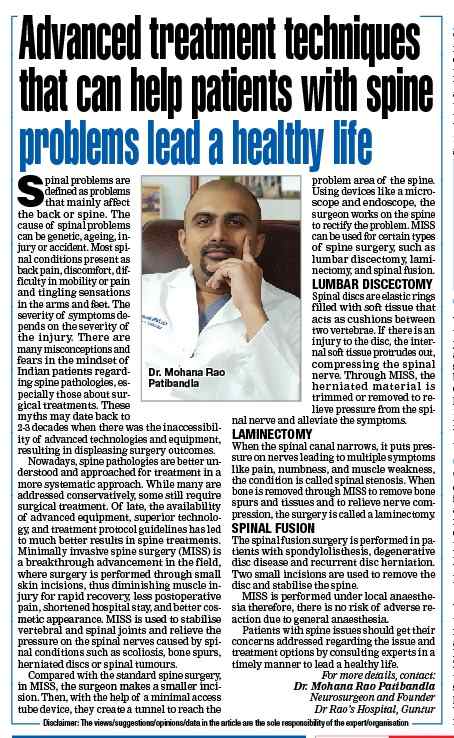
Dr. Rao, neurosurgeon, featured in Times of India, discusses advanced neurosurgery techniques for optimal patient outcomes.

Dr. Mohana Rao Patibandla and Transformative Healthcare in India


How Dr. Mohana Rao Patibandla Is Advancing Transformative Neurosciences Healthcare in India


India’s healthcare ecosystem is evolving rapidly, particularly in highly specialized fields such as neurosciences, neurosurgery, spine surgery, stroke care, and minimally invasive neurological interventions.


For decades, advanced neurological treatment remained concentrated primarily within major metropolitan cities. Patients from regional areas frequently traveled long distances seeking specialized care for brain tumors, spinal disorders, epilepsy, stroke, and complex neurosurgical diseases.


However, India’s modern healthcare transformation is gradually shifting toward decentralization, where advanced medical expertise and sophisticated neurological care are increasingly becoming accessible beyond metropolitan boundaries.


A recent Times of India feature highlighted the inspiring journey of Dr. Mohana Rao Patibandla and his commitment toward building transformative neurosciences healthcare infrastructure in Andhra Pradesh.


Primary Source: Times of India – Dr Mohana Rao Patibandla is committed to transformative healthcare


The Early Journey of a Neurosurgeon


Every remarkable healthcare institution begins with a vision, but behind every vision lies years of dedication, education, sacrifice, and relentless pursuit of excellence.


According to the Times of India article, Dr. Mohana Rao Patibandla was born and raised in Bhimavaram, Andhra Pradesh, where his early years were shaped by a strong sense of responsibility and commitment toward society.


His academic journey began at Andhra Medical College, Visakhapatnam, where he pursued MBBS and graduated in 2002.


The article emphasizes that even during his early educational years, Dr. Patibandla demonstrated strong academic commitment and a deep interest in healthcare service. This foundation later became instrumental in shaping his long-term mission of advancing neurosciences care in India.


American Association of Neurological Surgeons


Specialization in Neurosurgery


Following his undergraduate medical education, Dr. Patibandla pursued specialization in neurosurgery at Nizam’s Institute of Medical Sciences (NIMS), Hyderabad, completing his neurosurgical training in 2013.


Neurosurgery remains one of the most technically demanding specialties in medicine because it involves delicate structures including:


  • The brain
  • Spinal cord
  • Cranial nerves
  • Peripheral nerves
  • Critical vascular structures


Even small surgical inaccuracies may affect movement, speech, sensation, memory, cognition, or overall neurological function.


This level of complexity requires:


  • Technical precision
  • Advanced training
  • Continuous learning
  • Multidisciplinary collaboration
  • Patient-centered decision-making


International Training and Global Exposure


One of the defining aspects of Dr. Patibandla’s journey, as described in the Times of India feature, was his decision to pursue advanced international training across multiple neurosciences subspecialties.


His fellowships and training included:


  • Minimally invasive skull base surgery in Ohio, USA
  • Pediatric neurosurgery and minimally invasive neurosurgery in Colorado, USA
  • Neuro-oncology
  • Functional and stereotactic radiosurgery in Virginia, USA


International exposure often provides neurosurgeons with access to:


  • Advanced surgical technologies
  • Modern operating systems
  • Research-oriented practice
  • Evidence-based medicine
  • Multidisciplinary care models


These experiences frequently shape long-term institutional vision and healthcare leadership.


The Decision to Return to India


Many highly trained specialists choose to continue careers abroad because of access to infrastructure, research opportunities, and advanced medical systems.


However, the Times of India article highlights that Dr. Patibandla made the deliberate decision to return to India and establish advanced neurosciences care within his home state.


This decision reflected a broader healthcare philosophy focused on:


  • Accessibility
  • Regional healthcare development
  • Patient-centered care
  • Ethical medical systems
  • Long-term institutional growth


The article describes this decision not simply as a professional move but as a reflection of patriotism and commitment toward community healthcare improvement.


The Establishment of Dr. Rao’s Hospital


The return to India eventually led to the establishment of Dr. Rao’s Hospital – International Institute of Neurosciences in Guntur, Andhra Pradesh.


According to the Times of India feature, the institution was built with the goal of bringing advanced neurosurgical and neurological care closer to regional populations.


The hospital focuses on:


  • Brain surgery
  • Spine surgery
  • Stroke intervention
  • Endovascular neurosurgery
  • Neuro-oncology
  • Pediatric neurosciences
  • Minimally invasive neurosurgery


Advanced neurosciences infrastructure requires enormous commitment involving:


  • Technology acquisition
  • Specialized operating rooms
  • Critical care systems
  • Advanced imaging
  • Multidisciplinary teams


Building such infrastructure outside metropolitan regions represents one of the most challenging aspects of healthcare development.


The Role of Technology in Modern Neurosciences


Modern neurological care depends heavily on advanced technology.


The Times of India article highlights the institution’s focus on advanced neurosurgical systems and cutting-edge technologies.


Technologies transforming neurosciences include:


  • Neuronavigation systems
  • Advanced MRI imaging
  • Endoscopic brain surgery
  • Minimally invasive spine surgery
  • Endovascular procedures
  • Intraoperative neuromonitoring


These advancements improve:


  • Surgical precision
  • Patient safety
  • Recovery speed
  • Rehabilitation outcomes
  • Long-term neurological function


Minimally Invasive Neurosurgery at Dr. Rao’s Hospital


The Importance of Minimally Invasive Neurosurgery


One of the major transformations in modern neurosciences is the evolution of minimally invasive surgical approaches.


Traditional surgeries often required:


  • Larger incisions
  • Longer hospitalization
  • Greater tissue disruption
  • Extended recovery periods


Modern minimally invasive techniques now allow selected procedures through:


  • Smaller incisions
  • Endoscopic approaches
  • Image-guided systems
  • Microsurgical precision


These approaches may reduce:


  • Postoperative pain
  • Blood loss
  • Hospital stay duration
  • Rehabilitation time


Mayo Clinic – Minimally Invasive Surgery


Regional Healthcare Accessibility Matters


One of the strongest themes throughout the article is healthcare accessibility beyond metropolitan cities.


Patients with neurological emergencies often face:


  • Travel burden
  • Financial stress
  • Delayed diagnosis
  • Interrupted rehabilitation
  • Limited specialist access


Regional neuroscience centers help reduce these barriers significantly.


According to the Times of India feature, the hospital has emerged as an important healthcare destination for patients seeking advanced neurological care in Andhra Pradesh.


This decentralization reflects a broader transformation occurring across India’s healthcare landscape.


The Human Side of Healthcare


While technology remains critical, healthcare ultimately revolves around human trust and compassion.


The Times of India article repeatedly reflects themes of:


  • Service
  • Patriotism
  • Community commitment
  • Compassionate healthcare
  • Ethical leadership


Patients facing neurological disorders often experience:


  • Fear
  • Anxiety
  • Emotional stress
  • Financial uncertainty
  • Concerns regarding long-term recovery


Compassionate communication and patient-centered care therefore remain essential components of meaningful healthcare systems.


Recognition and Healthcare Excellence


The article also highlights the institution’s recognition through the Atal Achievement Awards 2023, where Dr. Rao’s Hospital received recognition as the Best Neurology and Neurosurgery Hospital.


Awards and institutional recognition help reinforce:


  • Clinical credibility
  • Healthcare quality standards
  • Public trust
  • Academic visibility


However, long-term healthcare excellence ultimately depends on sustained patient outcomes, ethical systems, and continuous innovation.


International Patients and Global Standards


According to the Times of India article, the hospital has also attracted international patients seeking advanced neurological treatment.


Global healthcare competitiveness increasingly depends on:


  • Advanced infrastructure
  • Specialized expertise
  • Technology integration
  • Patient safety systems
  • Affordable healthcare accessibility


India continues emerging as an important destination for advanced medical treatment because of its growing combination of expertise, innovation, and accessibility.


The Future of Neurosciences in India


India’s neurosciences ecosystem continues evolving rapidly through:


  • Artificial intelligence-based diagnostics
  • Robotic surgery
  • Endovascular stroke intervention
  • Advanced neuroimaging
  • Precision medicine
  • Minimally invasive neurosurgery


At the same time, future healthcare transformation will depend on ensuring these advancements become accessible across regional India rather than remaining concentrated solely within metro cities.


Healthcare systems that combine:


  • Advanced technology
  • Ethical care
  • Accessibility
  • Patient trust
  • Continuous innovation


will likely define the next era of neurosciences development in India.


Conclusion


The Times of India feature presents the journey of Dr. Mohana Rao Patibandla as more than a story of professional achievement alone.


It reflects a broader vision regarding the future of healthcare in India — one where advanced neurosciences, global expertise, ethical leadership, and patient-centered systems combine to improve accessibility and outcomes for patients beyond metropolitan regions.


As advanced neurological infrastructure continues evolving across India, institutions such as 
Dr. Rao’s Hospital – International Institute of Neurosciences

represent an important part of the country’s expanding healthcare transformation.


Ultimately, the true impact of transformative healthcare lies not only in technology or infrastructure but in improving lives through compassionate, accessible, and meaningful medical care.


Frequently Asked Questions (FAQ)

1. Who is Dr. Mohana Rao Patibandla?

Dr. Mohana Rao Patibandla is an internationally trained neurosurgeon and founder of Dr. Rao’s Hospital – International Institute of Neurosciences.


2. What services are offered at Dr. Rao’s Hospital?

The hospital provides advanced brain, spine, stroke, endovascular, pediatric neurosciences, and minimally invasive neurosurgical care.


3. What is minimally invasive neurosurgery?

It involves smaller incisions and advanced technologies to improve precision and reduce recovery time.


4. Why are regional neuroscience centers important?

Regional neuroscience systems improve healthcare accessibility while reducing travel burden and treatment delays.


5. How is technology transforming neurological care?

Technologies such as neuronavigation, endoscopy, advanced imaging, and minimally invasive systems improve diagnosis and patient outcomes.


Internal Links

Call To Action

If you or your loved one is experiencing neurological symptoms such as persistent headaches, seizures, spinal pain, weakness, stroke warning signs, or neurological disorders, timely expert evaluation is essential.


Dr. Rao’s Hospital – International Institute of Neurosciences
12-19-67, Old Bank Road, Kothapet, Besides AK Biryani Point, Guntur, Andhra Pradesh

Phone: +91 9010056444

Email: info@drraoshospitals.com

Website: https://drraoshospitals.com/

Connect With Us

“`

Dr Mohana Rao Patibandla - Leader behind the Dr Rao's International Institute of Neurosciences

Vision Behind a Rs 100 Crore Hospital—Dr. Rao’s International Institute of Neurosciences


Dr. Mohana Rao Patibandla: A Journey of Vision and Resilience That Led to the Foundation of a Rs 100 Crore Hospital


Healthcare transformation rarely happens overnight. Behind every major medical institution lies years of struggle, sacrifice, risk, resilience, and an unwavering commitment to patient care.


Across India, advanced healthcare infrastructure has historically remained concentrated within metropolitan cities. Patients from smaller towns and regional communities often faced significant challenges accessing highly specialized treatment for neurological disorders, brain tumors, spinal conditions, stroke, and complex neurosurgical diseases.


In Andhra Pradesh, one such transformational journey emerged through the work of Dr. Mohana Rao Patibandla — an internationally trained neurosurgeon whose vision helped establish a state-of-the-art neurosciences institution focused on advanced brain, spine, and neurological care.


A recent Financial Express feature explored the inspiring story behind Dr. Patibandla’s journey, leadership philosophy, financial resilience, and the establishment of a Rs 100 crore healthcare institution in Guntur.


Primary Source:

Financial Express – Dr Mohana Rao Patibandla: A Journey of Vision and Resilience That Led to Foundation of Rs 100 Crore Hospital


The Early Passion for Neurosciences


The foundation of every medical journey often begins with curiosity.According to the Financial Express article, Dr. Patibandla’s early years were marked by a deep fascination with the complexities of the human brain and nervous system. Financial Express – Dr Mohana Rao Patibandla: A Journey of Vision and Resilience That Led to Foundation of Rs 100 Crore Hospital 

Neurosurgery remains one of the most demanding fields in medicine because it deals with:


  • The brain
  • Spinal cord
  • Nerves
  • Critical neurological functions


Even small neurological injuries can profoundly affect movement, speech, sensation, memory, personality, and quality of life.


For many specialists, neurosurgery becomes more than a profession — it becomes a lifelong pursuit of precision, innovation, and responsibility.


External Source: American Association of Neurological Surgeons


The Need for Advanced Neurosciences in Regional India


For decades, patients from Andhra Pradesh and neighboring regions frequently traveled to metro cities seeking advanced neurological care.


Conditions such as:


  • Brain tumors
  • Stroke
  • Spinal disorders
  • Pediatric neurological conditions
  • Traumatic brain injuries
  • Cerebrovascular diseases


often required referral to distant hospitals in metropolitan regions.


The Financial Express article highlights that Dr. Patibandla recognized the urgent need for advanced neurosurgical infrastructure within Guntur and regional Andhra Pradesh. Financial Express – Dr Mohana Rao Patibandla: A Journey of Vision and Resilience That Led to Foundation of Rs 100 Crore Hospital


This recognition ultimately became the foundation for creating a comprehensive neurosciences center capable of delivering sophisticated treatment closer to patients’ homes.


Building a Vision Beyond Surgery


According to the article, the goal was never limited to creating only a surgical center.


The larger vision involved building:


  • A center of excellence
  • Advanced neurosciences infrastructure
  • Academic growth
  • Research-oriented systems
  • Comprehensive patient care


Healthcare institutions capable of long-term impact require far more than medical expertise alone. They require:

  • Leadership
  • Institutional planning
  • Technology integration
  • Human resource development
  • Financial sustainability


Creating advanced neurosciences systems outside metropolitan regions remains one of the most difficult challenges in healthcare development.


The Financial Challenges Behind Healthcare Infrastructure


One of the most compelling aspects of the Financial Express feature is its discussion of the financial realities behind building large-scale healthcare infrastructure.


Healthcare institutions require enormous investments in:


  • Land acquisition
  • Hospital construction
  • Advanced operation theaters
  • Neuroimaging systems
  • ICU infrastructure
  • Endovascular technology
  • Neuronavigation systems
  • Medical staffing


The article describes how Dr. Patibandla navigated substantial financial challenges involving secured and unsecured loans during the hospital’s development phase. Financial Express – Dr Mohana Rao Patibandla: A Journey of Vision and Resilience That Led to Foundation of Rs 100 Crore Hospital


Successfully managing these challenges required:


  • Strategic financial planning
  • Long-term institutional thinking
  • Operational discipline
  • Careful resource allocation


Healthcare entrepreneurship often involves balancing medical ideals with practical operational realities.


Technology and Continuous Innovation


Modern neurosciences depend heavily on advanced technology.


The Financial Express article highlights the hospital’s focus on introducing:


  • Advanced neurosurgical techniques
  • Modern technologies
  • Continuous learning systems
  • Innovation-driven care


Financial Express – Dr Mohana Rao Patibandla: A Journey of Vision and Resilience That Led to Foundation of Rs 100 Crore Hospital


Technologies transforming modern neurological care include:


  • Neuronavigation
  • Advanced MRI imaging
  • Minimally invasive spine surgery
  • Endoscopic neurosurgery
  • Endovascular interventions
  • Intraoperative monitoring


These advancements help improve:


  • Precision
  • Patient safety
  • Recovery outcomes
  • Rehabilitation speed
  • Long-term neurological function


Minimally Invasive Neurosurgery at Dr. Rao’s Hospital

The Human Side of Healthcare Leadership


Healthcare leadership extends far beyond infrastructure and technology.


According to the Financial Express feature, Dr. Patibandla’s influence extends into mentorship, academic guidance, and community healthcare initiatives. Financial Express – Dr Mohana Rao Patibandla: A Journey of Vision and Resilience That Led to Foundation of Rs 100 Crore Hospital


  • Ethical leadership
  • Team development
  • Training systems
  • Patient-centered care
  • Long-term institutional culture


Mentorship plays a particularly important role in medicine because healthcare systems evolve continuously through shared knowledge and training.


Future neurosciences growth in India will depend significantly on:


  • Academic collaboration
  • Training programs
  • Research development
  • Technological adaptation


The Importance of Regional Neuroscience Centers


India’s future healthcare systems cannot remain limited to metro cities alone.


Patients from smaller towns often experience:


  • Travel burden
  • Financial stress
  • Delayed diagnosis
  • Interrupted rehabilitation
  • Reduced access to specialists


Regional neuroscience centers help reduce these barriers while improving accessibility to advanced treatment.


The establishment of advanced neurosciences institutions in Tier-2 cities reflects a broader movement toward decentralizing medical excellence across India.


Dr. Rao’s Hospital – International Institute of Neurosciences


Minimally Invasive Neurosurgery and Modern Care


One of the most important transformations in modern neurosurgery is the rise of minimally invasive techniques.


Traditional procedures often involved:


  • Larger incisions
  • Extended hospitalization
  • Higher tissue disruption
  • Longer rehabilitation periods


Modern minimally invasive approaches focus on:


  • Smaller surgical corridors
  • Enhanced visualization
  • Reduced tissue trauma
  • Improved recovery
  • Faster mobilization


Advanced technologies now allow surgeons to perform selected procedures with greater precision and improved patient comfort.


Mayo Clinic – Minimally Invasive Surgery


The Role of Ethics in Healthcare Growth


Healthcare institutions ultimately succeed not only because of technology but because of trust.


The Financial Express article repeatedly reflects themes of:


  • Responsible leadership
  • Ethical growth
  • Patient-centered systems
  • Long-term credibility


Financial Express – Dr Mohana Rao Patibandla: A Journey of Vision and Resilience That Led to Foundation of Rs 100 Crore Hospital


Patients seek:


  • Honest communication
  • Ethical recommendations
  • Compassionate treatment
  • Transparency
  • Clinical competence


Modern healthcare systems must preserve humanity even as technology advances rapidly.


Community Impact Beyond the Hospital


Healthcare institutions influence communities in many ways beyond direct treatment alone.


The article highlights Dr. Patibandla’s contributions toward:


  • Community health programs
  • Medical education
  • Public awareness
  • Healthcare accessibility


Financial Express – Dr Mohana Rao Patibandla: A Journey of Vision and Resilience That Led to Foundation of Rs 100 Crore Hospital


Improving neurological awareness is particularly important because early diagnosis dramatically affects outcomes in conditions such as:


  • Stroke
  • Brain tumors
  • Spinal cord compression
  • Epilepsy
  • Neurovascular disorders


Educational outreach helps patients seek treatment earlier while reducing preventable disability.


The Future of Neurosciences in India


India’s neurosciences ecosystem continues evolving rapidly through:


  • AI-assisted diagnostics
  • Robotic surgery
  • Endovascular interventions
  • Advanced neuroimaging
  • Precision surgery
  • Multidisciplinary treatment systems


At the same time, accessibility remains one of the most important future healthcare priorities.


Advanced neuroscience care should become available:


  • Closer to patients
  • Within regional healthcare systems
  • Through ethically driven institutions
  • With long-term sustainability


The Financial Express feature demonstrates how vision, resilience, leadership, and commitment can help transform regional healthcare ecosystems meaningfully.


Conclusion


The story of Dr. Mohana Rao Patibandla reflects far more than the establishment of a hospital.


It reflects:


  • Vision
  • Resilience
  • Strategic leadership
  • Healthcare innovation
  • Commitment to accessibility
  • Dedication to patient-centered neurosciences care


The Financial Express article presents a broader message regarding the future of Indian healthcare: world-class medicine should not remain limited to metropolitan boundaries.


As advanced neurosciences continue expanding across regional India, patients may increasingly gain access to sophisticated brain, spine, and neurological treatment closer to home — supported by technology, ethics, compassion, and institutional excellence.


Frequently Asked Questions (FAQ)

1. Who is Dr. Mohana Rao Patibandla?

Dr. Mohana Rao Patibandla is an internationally trained neurosurgeon and founder of Dr. Rao’s Hospital – International Institute of Neurosciences.

2. Why is regional neurosciences care important?

Regional neuroscience centers improve healthcare accessibility while reducing travel burden and treatment delays.

3. What technologies improve modern neurosurgery?

Neuronavigation, minimally invasive surgery, advanced imaging, endoscopy, and endovascular techniques improve outcomes and precision.

4. What is minimally invasive neurosurgery?

It is an advanced surgical approach using smaller incisions and precision-guided technologies to reduce recovery time and surgical trauma.

5. Why are ethics important in healthcare?

Ethics ensure transparency, patient welfare, responsible treatment recommendations, and long-term trust.


Call To Action


If you or your loved one is experiencing neurological symptoms such as persistent headaches, seizures, stroke warning signs, spinal pain, weakness, or balance problems, timely expert evaluation is essential.


Dr. Rao’s Hospital – International Institute of Neurosciences
12-19-67, Old Bank Road, Kothapet, Besides AK Biryani Point, Guntur, Andhra Pradesh

Phone: +91 9010056444

Email: info@drraoshospitals.com

Website: https://drraoshospitals.com/


Connect With Us


Dr. Mohana Rao Patibandla explaining DTI neuronavigation technology for advanced brain surgery at Dr. Rao’s Hospital in Guntur.

Early Diagnosis in Neurological Care India – International Institute of Neurosciences

Why Early Diagnosis Matters in Neurological Care: Improving Outcomes Through Timely Intervention


Neurological disorders are increasingly becoming one of India’s most significant healthcare challenges. Conditions affecting the brain, spine, and nervous system are rising across all age groups, creating an urgent need for improved awareness, timely diagnosis, and advanced treatment accessibility.Stroke, brain tumors, spinal disorders, epilepsy, traumatic brain injuries, and pediatric neurological conditions are no longer uncommon. Yet despite major advancements in neurosciences and medical technology, delayed diagnosis remains one of the biggest reasons for poor neurological outcomes in India. 

A recent article published by OneIndia highlighted the growing importance of early diagnosis in neurological care and the need for greater awareness regarding neurological symptoms across the country.


Primary Source: OneIndia – Dr. Mohana Rao Patibandla Highlights Importance of Early Diagnosis in Neurological Care


The Growing Burden of Neurological Disorders in India


India is witnessing a rapid increase in neurological diseases due to multiple factors including:


  • Increasing life expectancy
  • Hypertension and diabetes
  • Sedentary lifestyles
  • Road traffic accidents
  • Stress and urbanization
  • Improved awareness and diagnostics


Neurological diseases often affect quality of life significantly because they impact movement, speech, memory, balance, sensation, and cognitive functions.


Conditions such as stroke, brain tumors, spinal cord disorders, Parkinson’s disease, epilepsy, and neurodegenerative diseases require specialized evaluation and treatment.


According to the World Health Organization, neurological disorders are among the leading causes of disability worldwide.


External Source: WHO – Neurological Disorders


Why Delayed Diagnosis Is Dangerous


One of the biggest problems in neurological healthcare is that many symptoms initially appear mild or nonspecific.


As highlighted in the OneIndia article, symptoms such as:


  • Recurring headaches
  • Back pain
  • Dizziness
  • Weakness
  • Speech difficulty
  • Memory issues
  • Seizures


are often ignored until they become severe.  OneIndia – Dr. Mohana Rao Patibandla Highlights Importance of Early Diagnosis in Neurological Care


Many people assume these symptoms are caused by stress, aging, fatigue, or lifestyle issues. Unfortunately, delaying neurological evaluation can allow underlying diseases to progress significantly.


In neurosciences, timing frequently determines outcomes. Early diagnosis often means:


  • Better recovery
  • Reduced complications
  • Less invasive treatments
  • Improved survival
  • Lower disability rates


Stroke: The Importance of the Golden Hour


Stroke is one of the clearest examples of why early diagnosis matters.


Often referred to as a “brain attack,” stroke occurs when blood flow to part of the brain becomes blocked or interrupted.


The article explains that stroke cases are rapidly increasing in India due to:


  • Hypertension
  • Diabetes
  • Smoking
  • Stress
  • Sedentary lifestyles
  • Aging populations

OneIndia – Dr. Mohana Rao Patibandla Highlights Importance of Early Diagnosis in Neurological Care


Doctors frequently emphasize the concept of the “golden hour” — the critical early period when immediate treatment can dramatically reduce brain damage and disability.


Common stroke warning signs include:


  • Sudden facial drooping
  • Weakness in arms or legs
  • Speech difficulty
  • Confusion
  • Vision changes
  • Loss of balance


Every minute during a stroke results in the loss of millions of brain cells. Rapid treatment with clot-busting medications or endovascular stroke interventions can significantly improve outcomes.


External Source: American Stroke Association – Stroke Symptoms


Brain Tumors and Missed Warning Signs


Brain tumors present another major challenge where symptoms are often overlooked initially.


Persistent headaches, repeated vomiting, seizures, personality changes, visual disturbances, and unexplained neurological symptoms may indicate serious intracranial pathology.


The OneIndia article highlights that many patients delay neurological consultation because of fear, assumptions, or lack of awareness. By the time some patients reach specialized care, tumors may have progressed substantially, making treatment more complicated.  OneIndia – Dr. Mohana Rao Patibandla Highlights Importance of Early Diagnosis in Neurological Care


Not every headache is dangerous. However, headaches associated with neurological symptoms should always be evaluated carefully.


Modern neuroimaging technologies such as MRI and CT scans now allow earlier and more accurate diagnosis of brain tumors than ever before.


Spinal Disorders and Neurological Symptoms


Spinal disorders are increasingly affecting both younger working populations and the elderly.


Long sitting hours, poor posture, obesity, sedentary lifestyles, and physically demanding occupations contribute to rising spine-related problems across India.


While many cases of back pain are non-serious, certain warning signs should never be ignored:


  • Weakness in the legs
  • Numbness
  • Difficulty walking
  • Loss of bladder control
  • Severe radiating pain
  • Balance disturbances


OneIndia – Dr. Mohana Rao Patibandla Highlights Importance of Early Diagnosis in Neurological Care


These symptoms may indicate spinal cord compression or nerve root compression requiring urgent evaluation.


Early assessment often allows:


  • Conservative treatment
  • Physiotherapy
  • Pain management
  • Minimally invasive procedures
  • Faster recovery


Minimally Invasive Neurosurgery at Dr. Rao’s Hospital


Pediatric Neurological Disorders Need Early Attention


Neurological disorders in children are another area where early diagnosis can dramatically improve long-term outcomes.


The article emphasizes that symptoms such as:


  • Developmental delays
  • Seizures
  • Abnormal head growth
  • Behavioral changes
  • Weakness
  • Difficulty walking


should never be dismissed as “normal delays” without proper evaluation.  OneIndia – Dr. Mohana Rao Patibandla Highlights Importance of Early Diagnosis in Neurological Care


Timely neurological assessment in children allows early medical or surgical intervention that can improve development, learning, mobility, and quality of life.


The Challenge of Unequal Access to Neurological Care


One of the major reasons for delayed diagnosis in India is unequal access to specialized neurosciences care.


Patients from rural and semi-urban regions often travel long distances to seek neurological consultation. This results in:


  • Loss of critical treatment time
  • Financial burden
  • Delayed imaging and diagnosis
  • Progression of neurological disease
  • Reduced treatment options


However, advanced neurosciences infrastructure is gradually expanding beyond metropolitan cities.


The OneIndia article specifically highlights the role of Dr. Mohana Rao Patibandla and 
Dr. Rao’s Hospital – International Institute of Neurosciences

in improving access to advanced neurological care in regional India.  OneIndia – Dr. Mohana Rao Patibandla Highlights Importance of Early Diagnosis in Neurological Care


The Role of Advanced Technology in Early Diagnosis


Medical technology has transformed the diagnosis and management of neurological disorders.


Today’s advanced neuroscience systems include:


  • High-resolution MRI imaging
  • CT angiography
  • Neuronavigation systems
  • Endoscopic neurosurgery
  • Endovascular stroke interventions
  • Minimally invasive surgical techniques


These technologies improve:


  • Diagnostic accuracy
  • Surgical precision
  • Treatment planning
  • Patient safety
  • Recovery outcomes


Importantly, early diagnosis allows doctors to use these technologies more effectively and often less invasively.


OneIndia – Dr. Mohana Rao Patibandla Highlights Importance of Early Diagnosis in Neurological Care


Public Awareness Can Save Lives


One of the strongest messages in the OneIndia feature is that public awareness remains central to improving neurological outcomes in India.


People should seek medical attention immediately if neurological symptoms are:


  • Persistent
  • Progressive
  • Associated with weakness
  • Linked to seizures
  • Causing speech changes
  • Affecting walking or balance


Delays in neurological care can result in irreversible disability. In many cases, timely evaluation may completely change outcomes.


As the article concludes, “In neurosciences, timing often changes everything.”  OneIndia – Dr. Mohana Rao Patibandla Highlights Importance of Early Diagnosis in Neurological Care


The Future of Neurological Healthcare in India


India’s future neurological healthcare systems must focus on:


  • Early detection programs
  • Public education
  • Stroke awareness
  • Regional neuroscience centers
  • Tele-neurology
  • Advanced emergency response systems
  • AI-assisted diagnostics
  • Minimally invasive neurosurgery


The expansion of advanced neurosciences into regional India has the potential to reduce disability, improve recovery, and save thousands of lives every year.


Institutions such as Dr. Rao’s Hospital represent an important step toward making advanced neurological care more accessible outside major metropolitan corridors.


Conclusion

Neurological disorders are increasing rapidly across India, and delayed diagnosis remains one of the biggest obstacles to successful treatment.

Early diagnosis is often the difference between recovery and permanent disability. Whether it is stroke, brain tumors, spinal disorders, epilepsy, or pediatric neurological disease, recognizing symptoms early and seeking expert evaluation can dramatically improve outcomes.

The OneIndia feature rightly emphasizes that awareness, accessibility, technology, and timely medical intervention are essential pillars of future neurological healthcare in India.

As neurosciences continue to advance, improving early diagnosis may become one of the most powerful tools in reducing preventable neurological disability nationwide.


Frequently Asked Questions (FAQ)

1. Why is early diagnosis important in neurological disorders?

Early diagnosis improves treatment success and reduces complications and permanent neurological damage.

2. What are the warning signs of stroke?

Sudden weakness, facial drooping, speech difficulty, confusion, and loss of balance are major warning signs.

3. When should headaches be evaluated?

Persistent headaches associated with vomiting, seizures, weakness, or visual symptoms require neurological evaluation.

4. Can children develop neurological disorders?

Yes. Developmental delays, seizures, abnormal movements, and behavioral changes may indicate pediatric neurological conditions.

5. What technologies help diagnose neurological disorders?

MRI scans, CT angiography, neuro-navigation, advanced imaging, and minimally invasive techniques help improve diagnosis and treatment.


Internal Links


Call To Action

If you or your loved one experiences persistent headaches, weakness, seizures, spinal pain, speech changes, balance problems, or neurological symptoms, do not delay medical evaluation.

Dr. Rao’s Hospital – International Institute of Neurosciences
12-19-67, Old Bank Road, Kothapet, Guntur, Andhra Pradesh
Phone: +91 9010056444
Email: info@drraoshospitals.com
Website: https://drraoshospitals.com/


Connect With Us


Dr. Mohana Rao Patibandla explaining DTI neuronavigation technology for advanced brain surgery at Dr. Rao’s Hospital in Guntur.

The Rise of Advanced Minimally Invasive Neurosurgery in India | Dr. Rao’s International Institute of Neurosciences

The Rise of Advanced Minimally Invasive Neurosurgery in India


Inspired by the Mid-Day feature article on advanced minimally invasive neurosurgery in India Original Mid-Day Feature Article


Neurosurgery has traditionally been viewed as one of the most complex and demanding fields in medicine. For decades, brain and spine surgeries were associated with large incisions, prolonged hospital stays, extensive recovery periods, and significant postoperative discomfort. However, modern medicine is undergoing a remarkable transformation.


Today, advanced minimally invasive neurosurgery is redefining how neurological and spinal disorders are treated across India. With innovations in endoscopic surgery, neuronavigation systems, intraoperative neuromonitoring, microsurgical techniques, and advanced imaging, many complex procedures can now be performed with greater precision and reduced tissue disruption.


India is rapidly emerging as an important center for advanced neurosciences care, and institutions such as Dr. Rao’s International Institute of Neurosciences in Guntur are contributing to this evolving landscape by integrating modern minimally invasive approaches into comprehensive neurological care.


What Is Minimally Invasive Neurosurgery?


Minimally invasive neurosurgery refers to advanced surgical techniques designed to treat brain, spine, and nerve disorders through smaller incisions and highly precise surgical pathways. Instead of large open exposures, surgeons utilize specialized technologies and instruments that minimize damage to surrounding tissues while maintaining surgical effectiveness.


The primary goals of minimally invasive neurosurgery include:


  • Reducing tissue trauma
  • Improving surgical precision
  • Shortening hospital stays
  • Reducing postoperative pain
  • Enhancing recovery speed
  • Lowering infection risks
  • Improving cosmetic outcomes
  • Preserving neurological function

Importantly, minimally invasive neurosurgery is not simply about smaller incisions. It represents a broader evolution toward precision-based and patient-centered care.


The Evolution of Neurosurgery in India


India’s neurosciences ecosystem has evolved dramatically over the past two decades. Advanced technologies that were once limited to select global centers are increasingly becoming accessible within India.


Modern Indian neurosurgery now incorporates:


  • Endoscopic skull base surgery
  • Endoscopic spine surgery
  • Microneurosurgery
  • Neuronavigation systems
  • Intraoperative neuro-monitoring
  • Advanced neuroimaging
  • Cerebrovascular interventions
  • Minimally invasive spinal stabilization


This transformation is improving patient outcomes while expanding treatment possibilities for many neurological conditions that were previously considered highly complex.


According to the Mid-Day feature article, minimally invasive neurosurgery is emerging as one of the most significant developments in modern neurosciences across India.


Endoscopic Skull Base Surgery: A Revolutionary Advancement


One of the most exciting developments in minimally invasive neurosurgery is endoscopic skull base surgery.


Traditionally, tumors located deep within the skull base often required extensive open surgical approaches involving significant tissue dissection and longer recovery periods. Modern endoscopic techniques now allow surgeons to access certain lesions through minimally invasive pathways using high-definition cameras and specialized instruments.


These advanced approaches may offer:


  • Reduced surgical trauma
  • Improved visualization
  • Enhanced precision
  • Shorter recovery times
  • Reduced hospital stays
  • Lower postoperative discomfort


Endoscopic skull base surgery is increasingly being utilized for:


  • Pituitary tumors
  • Skull base tumors
  • Certain cerebrospinal fluid leaks
  • Selected cranial lesions


At Dr. Rao’s International Institute of Neurosciences, advanced minimally invasive techniques continue to expand treatment possibilities for carefully selected patients.


The Growing Importance of Endoscopic Spine Surgery


Spine disorders are among the most common neurological conditions affecting patients today. Conditions such as slipped discs, spinal stenosis, degenerative spine disease, and nerve compression can severely impact mobility and quality of life.


Conventional spine surgery often required larger incisions and significant muscle dissection. Endoscopic spine surgery is changing this landscape.


Using specialized endoscopic systems, surgeons can perform certain spinal procedures through very small incisions while minimizing disruption to surrounding muscles and tissues.


Benefits for many patients may include:


  • Reduced postoperative pain
  • Earlier mobilization
  • Faster rehabilitation
  • Reduced blood loss
  • Smaller scars
  • Shorter hospitalization


Minimally invasive spine surgery has become increasingly popular among patients seeking safer and faster recovery options whenever clinically appropriate.


Neuronavigation: GPS for the Brain and Spine


One of the most remarkable innovations in modern neurosurgery is neuronavigation technology.


Often compared to a GPS system for the brain and spine, neuronavigation allows surgeons to map complex anatomical structures in real time using integrated imaging systems.


This technology is particularly valuable in:


  • Brain tumor surgery
  • Skull base procedures
  • Complex spinal operations
  • Cerebrovascular surgery
  • Deep-seated lesions


Millimeter-level accuracy is critical in neurosurgery. Neuronavigation significantly enhances surgical planning and precision while helping surgeons preserve vital neurological structures.


Advanced navigation-guided surgery represents one of the most important pillars of modern precision neurosurgery.


The Role of Intraoperative Neuro-Monitoring


Intraoperative neuro-monitoring is another major advancement improving surgical safety.


During complex neurological procedures, neuro-monitoring systems assess nerve and spinal cord function in real time. This allows surgical teams to monitor critical neurological pathways throughout surgery.


The advantages may include:


  • Improved surgical safety
  • Reduced risk of neurological injury
  • Better functional preservation
  • Enhanced surgical confidence


Neuro-monitoring is particularly valuable in:


  • Complex spine surgery
  • Brain tumor surgery
  • Skull base surgery
  • Cerebrovascular procedures
  • Pediatric neurosurgery


These technologies are helping modern neurosurgery become safer and more precise than ever before.


Microneurosurgery and Precision-Based Care


Microneurosurgery remains central to advanced neurosurgical care.


High-powered operating microscopes allow surgeons to work with extraordinary precision around delicate:


  • Blood vessels
  • Brain tissue
  • Cranial nerves
  • Spinal nerves


Combined with minimally invasive techniques and advanced imaging, microneurosurgery has dramatically expanded treatment possibilities for many neurological disorders.


The integration of:

  • Microscopes
  • Endoscopy
  • Neuronavigation
  • Advanced imaging
  • Neuro-monitoring


has created a new era of highly sophisticated precision neurosurgery.


Why Patients Prefer Minimally Invasive Approaches


Modern patients are increasingly informed about treatment options and recovery expectations.


Whenever medically appropriate, many patients now prefer minimally invasive procedures because they may offer:


  • Less pain
  • Reduced scarring
  • Shorter hospital stays
  • Faster return to work
  • Earlier rehabilitation
  • Lower complication risks


This shift is influencing how neuroscience centers across India approach patient-centered care.


However, experts emphasize that not every patient is suitable for minimally invasive surgery. Surgical decisions must always prioritize patient safety, disease characteristics, and long-term outcomes rather than technology alone.


The Importance of Ethical Patient Selection


While technology continues to evolve rapidly, experienced neurosurgeons consistently emphasize one important principle:


Technology should never replace clinical judgment.


Certain conditions may still require conventional open surgery depending on:


  • Tumor complexity
  • Trauma severity
  • Spinal deformity
  • Vascular anatomy
  • Patient-specific risk factors


Ethical neurosurgical care involves selecting the safest and most effective approach for each individual patient.


At Dr. Rao’s International Institute of Neurosciences, the philosophy continues to emphasize combining advanced technology with individualized, patient-centered treatment planning.


The Future of Neurosurgery in India


India’s neurosciences landscape is entering a highly exciting phase.


Future technologies expected to further transform neurosurgery include:


  • Artificial intelligence-assisted imaging
  • Robotic surgical systems
  • Augmented reality visualization
  • Advanced intraoperative imaging
  • Enhanced neuro-navigation systems
  • Precision-guided robotic spine surgery


As infrastructure and expertise continue expanding across India, advanced minimally invasive neurosurgery may become increasingly accessible in both metropolitan and regional healthcare systems.


Importantly, globally trained specialists are now helping bring advanced neurosciences care to Tier-2 cities like Guntur, making sophisticated treatment more accessible to regional populations.


Dr. Mohana Rao Patibandla and Advanced Neurosciences Care


According to the Mid-Day feature article, Dr. Mohana Rao Patibandla has been part of the broader movement toward integrating advanced minimally invasive techniques into regional neurosciences practice in India.


With international fellowship training across subspecialties including:


  • Minimally invasive skull base surgery
  • Pediatric neurosurgery
  • Neuro-oncology
  • Cerebrovascular surgery
  • Endovascular neurosurgery

Dr. Patibandla has consistently emphasized the importance of combining:


  • Modern technology
  • Ethical medicine
  • Precision surgery
  • Compassionate care
  • Patient-centered decision-making

This vision continues to help shape the development of advanced neurosciences services in Andhra Pradesh and regional India.


Conclusion


Minimally invasive neurosurgery represents one of the most important transformations in modern neurosciences.


By reducing tissue trauma and improving surgical precision, these advanced techniques are helping many patients experience:


  • Safer procedures
  • Faster recovery
  • Reduced pain
  • Shorter hospitalization
  • Earlier return to daily life

India is rapidly emerging as an important center for advanced neurosciences innovation. As technology, infrastructure, and expertise continue to evolve, the future of brain and spine care is becoming increasingly precise, patient-centered, and minimally invasive.


Institutions like Dr. Rao’s International Institute of Neurosciences demonstrate how world-class neurosciences care can successfully expand beyond metropolitan boundaries while maintaining high standards of ethics, innovation, and compassionate treatment.


Internal Links

External References


Contact Dr. Rao’s International Institute of Neurosciences

The Best Neurosurgeon in Guntur | The Best Neurologist in Guntur | The Best Spine Surgeon in Guntur

If you or your loved one is suffering from brain tumors, spinal disorders, stroke, nerve compression, or neurological conditions, early diagnosis and advanced treatment can significantly improve outcomes.

📍 Dr. Rao’s International Institute of Neurosciences
12-19-67, Old Bank Road, Kothapet,
Opposite Sravani Hospital,
Guntur, Andhra Pradesh – 522001

📞 Phone: +91 90100 56444
📧 Email: info@drraoshospitals.com
🌐 Website: https://drraoshospitals.com


Follow Dr. Mohana Rao Patibandla

📘 Facebook: Facebook
📸 Instagram: Instagram
📺 YouTube: YouTube
💼 LinkedIn: LinkedIn
🐦 X (Twitter): X / Twitter
📍 Google Maps: Location Map

TEDx banner featuring Dr. Rao highlighting his innovative ideas and expertise.

Why Dr. Rao’s Hospital Is Emerging as a Global Destination for Advanced Neurosurgery and Spine Care

Why Dr. Rao’s Hospital Is Emerging as a Global Destination

In the rapidly evolving world of neurosciences, only a few institutions successfully combine cutting-edge technology, internationally trained expertise, compassionate patient care, and affordability. Dr. Rao’s Hospital in Guntur has emerged as one of India’s most recognized centers for neurology, neurosurgery, spine surgery, and minimally invasive brain and spine care.


Founded by internationally trained neurosurgeon Dr. Mohana Rao Patibandla, the hospital has steadily transformed the healthcare landscape of Andhra Pradesh by bringing world-class neuro care closer to patients who previously had to travel to metro cities or abroad for advanced treatment.

According to the official hospital website, Dr. Rao’s Hospital is among the first dedicated neurosciences facilities in Andhra Pradesh equipped with advanced technologies such as intraoperative neuronavigation, hybrid cath lab systems, intraoperative imaging, neuromonitoring, and minimally invasive neurosurgical platforms.


A Vision to Bring World-Class Neurosurgery to Andhra Pradesh

The journey of Dr. Rao’s Hospital began with a mission: to create an internationally comparable neuroscience institute in Andhra Pradesh that prioritizes innovation, precision, safety, and compassionate healing.


After extensive training across India and the United States in skull base surgery, pediatric neurosurgery, minimally invasive neurosurgery, cerebrovascular surgery, neuro-oncology, and endovascular surgery, Dr. Mohana Rao Patibandla returned to India with a vision to establish a center of excellence in neurosciences.


Today, that vision has evolved into a highly respected institution serving patients from across:


  • Andhra Pradesh
  • Telangana
  • Tamil Nadu
  • Karnataka
  • Odisha
  • International medical tourism destinations
  •  

The hospital has become especially known for:

  • Brain tumor surgery
  • Complex spine surgery
  • Endoscopic skull base surgery
  • Endovascular neurosurgery
  • Pediatric neurosurgery
  • Epilepsy surgery
  • Functional neurosurgery
  • Stroke and aneurysm management
  • Minimally invasive spine surgery

Advanced Technology That Defines Precision Neurosurgery

Modern neurosurgery depends heavily on precision.

Even a millimeter can determine neurological outcomes. That is why advanced technology plays a central role at Dr. Rao’s Hospital.


According to the hospital’s official information, the facility includes:

  • Advanced neuronavigation systems
  • Hybrid vascular cath lab technology
  • Intraoperative neuromonitoring
  • High-end endoscopic neurosurgical systems
  • Advanced neuroimaging platforms
  • Minimally invasive surgical technologies
  •  

These technologies help surgeons:

  • Improve surgical accuracy
  • Reduce complications
  • Minimize blood loss
  • Preserve neurological function
  • Enable faster patient recovery
  •  

The hospital’s emphasis on minimally invasive and endoscopic approaches aligns with global neurosurgical trends promoted by organizations such as the American Association of Neurological Surgeons and the Congress of Neurological Surgeons.


Expertise in Brain Tumor Surgery

Brain tumors require a multidisciplinary approach involving neurosurgeons, neurologists, neuro-anesthesiologists, neurocritical care teams, radiologists, and rehabilitation experts.


Dr. Rao’s Hospital provides advanced management for:

  • Gliomas
  • Meningiomas
  • Pituitary tumors
  • Skull base tumors
  • Metastatic brain tumors
  • Pediatric brain tumors
  • Acoustic neuromas
  •  

Using minimally invasive and image-guided techniques, surgeons can often access deep-seated tumors while minimizing damage to healthy brain tissue.

The hospital’s expertise in skull base surgery is particularly notable because these surgeries involve delicate structures including cranial nerves, blood vessels, and the brainstem.


The importance of specialized neuro-oncology centers has also been highlighted by the National Cancer Institute, which emphasizes multidisciplinary care and precision-based treatment for improved outcomes.


Comprehensive Spine Surgery and Minimally Invasive Spine Care

Spinal disorders are increasingly common due to modern sedentary lifestyles, aging populations, trauma, and degenerative disease.


Dr. Rao’s Hospital offers advanced treatment for:


  • Cervical spondylosis
  • Lumbar disc prolapse
  • Sciatica
  • Spinal tumors
  • Spinal trauma
  • Scoliosis
  • Spinal instability
  • Craniovertebral junction disorders
  • Degenerative spine disease
  •  

The hospital is especially recognized for minimally invasive spine surgery, which offers several benefits:


  • Smaller incisions
  • Less muscle injury
  • Reduced postoperative pain
  • Faster mobilization
  • Shorter hospital stay
  • Quicker return to work
  •  

The growing importance of minimally invasive spine techniques is also recognized globally by organizations like the North American Spine Society.


Stroke, Aneurysm, and Endovascular Neurosurgery

Stroke remains one of the leading causes of disability and death worldwide. Rapid diagnosis and intervention are critical.


Dr. Rao’s Hospital provides emergency neurovascular care for:

  • Brain stroke
  • Aneurysms
  • Arteriovenous malformations (AVMs)
  • Intracranial hemorrhage
  • Carotid artery disease
  • Complex cerebrovascular disorders
  •  

The hospital’s advanced neurovascular and endovascular capabilities allow minimally invasive treatment approaches for many vascular conditions.


The World Health Organization notes that timely stroke management significantly improves outcomes and reduces long-term disability. World Health Organization – Stroke Information


Pediatric Neurosurgery with Compassionate Care

Children with neurological disorders require highly specialized treatment and emotional support.


Dr. Rao’s Hospital offers pediatric neurosurgical care for:


  • Hydrocephalus
  • Pediatric brain tumors
  • Congenital spine disorders
  • Craniosynostosis
  • Neural tube defects
  • Epilepsy
  • Traumatic brain injury
  •  

The hospital’s approach combines surgical expertise with family-centered care, ensuring parents remain informed and supported throughout treatment.


The importance of specialized pediatric neurosurgery has been emphasized by institutions such as Boston Children’s Hospital and Johns Hopkins Medicine.


International Recognition and Academic Contributions

One of the distinguishing aspects of Dr. Mohana Rao Patibandla’s career is his active participation in global neurosurgical academia.


He has presented advanced neurosurgical techniques at multiple national and international conferences, including presentations related to:


  • Endoscopic craniovertebral junction surgery
  • Advanced cerebrovascular procedures
  • Intraoperative neuromonitoring
  • Skull base surgery
  • Endovascular neurosurgery
  •  

International academic participation reflects not only surgical expertise but also commitment to advancing the field of neurosciences globally.

The hospital’s growing international visibility has contributed to increasing medical tourism interest from patients seeking affordable yet world-class neurological care.


Why Patients Choose Dr. Rao’s Hospital


Patients often choose Dr. Rao’s Hospital because of its combination of:

  • Internationally trained expertise
  • Advanced infrastructure
  • Personalized care
  • Affordable treatment
  • Ethical approach
  • Comprehensive neurosciences focus
  •  

The hospital emphasizes individualized treatment planning rather than a one-size-fits-all approach.


According to publicly available hospital information and patient feedback platforms, the institution has gained recognition for:


  • Rapid diagnosis
  • Emergency neuro care
  • Surgical precision
  • Patient communication
  • Postoperative rehabilitation
  • Compassionate nursing care
  •  

Medical Tourism in India and the Rise of Specialized Neuroscience Centers

India has become one of the world’s leading destinations for medical tourism due to:


  • Highly trained specialists
  • Advanced infrastructure
  • Cost-effective treatment
  • English-speaking healthcare professionals
  • Reduced waiting periods
  •  

Dr. Rao’s Hospital is increasingly becoming part of this medical tourism ecosystem, particularly for patients seeking advanced neurosurgical and spine procedures.


The hospital’s comprehensive medical tourism support includes:

  • Consultation coordination
  • Surgical planning
  • Postoperative follow-up
  • Rehabilitation guidance
  • International patient assistance
  •  

India’s growing role in medical tourism has been recognized by the Medical Tourism Association.


Community Outreach and Expanding Access to Neuro Care

Dr. Rao’s Hospital has also expanded neuro and spine outpatient access across multiple cities in Andhra Pradesh. Recent reports highlighted the launch of neuro and spine OPD centers in several Andhra cities to improve accessibility for patients outside Guntur.


This expansion reflects an important healthcare principle:


Specialized care should not be limited to metropolitan cities alone.

By extending consultations and outreach services, the hospital is helping bridge the gap between advanced neuroscience care and underserved populations.


Research, Innovation, and Future Directions

The future of neurosciences lies in:


  • Artificial intelligence-assisted diagnostics
  • Robotic surgery
  • Advanced neuroimaging
  • Precision medicine
  • Minimally invasive interventions
  • Personalized rehabilitation
  •  

Dr. Rao’s Hospital continues to evolve alongside these innovations, integrating advanced technology and evidence-based treatment approaches into daily practice.


The hospital’s long-term vision includes:


  • Expanded neuroscience education
  • Research collaborations
  • International partnerships
  • Advanced fellowship programs
  • Broader accessibility to high-end neuro care

Patient-Centered Care at the Core

While technology and expertise are essential, compassionate care remains central to healing.


At Dr. Rao’s Hospital, the philosophy of care emphasizes:


  • Clear communication
  • Transparency
  • Ethical decision-making
  • Emotional support
  • Family involvement
  • Holistic recovery
  •  

This patient-first approach has helped the institution build trust among thousands of families across India and internationally.


Internal Links

Learn more about:


Contact Dr. Rao’s Hospital

Dr. Rao’s Hospital

📍 Address:
12-19-67 / 12-19-97 Old Bank Road, Kothapet, Opposite Sravani Hospital, Besides AK Biryani point, Guntur, Andhra Pradesh, India

📞 Phone:
+91 9010056444
+91 9010057444

📧 Email:
info@drraoshospitals.com
drpatibandla@gmail.com

🌐 Website:
Official Website

📍 Google Maps:
Google Maps Location


Follow Dr. Rao’s Hospital on Social Media

📺 YouTube
Dr. Rao’s Hospital YouTube Channel

📘 Facebook
Dr. Rao’s Hospital Facebook

📸 Instagram
Dr. Mohana Rao Instagram

💼 LinkedIn
Dr. Mohana Rao LinkedIn

🐦 X (Twitter)
Dr. Mohana Rao on X


Conclusion

As neuroscience continues to advance rapidly, institutions that combine innovation, expertise, ethics, and compassion will define the future of neurological care.


Dr. Rao’s Hospital stands as a powerful example of how world-class neurosciences can thrive outside traditional metropolitan centers. Through advanced technology, internationally trained expertise, minimally invasive approaches, and a deep commitment to patient care, the hospital is redefining neurological and spine care in India.


For patients seeking advanced treatment for brain, spine, nerve, stroke, or complex neurological disorders, Dr. Rao’s Hospital continues to emerge as one of the most trusted destinations for comprehensive neurosciences care in India.

Dr Rao Business World Eureka

India’s Leadership in Advanced Neurosurgery | Surgeon’s View

India’s Growing Leadership in Advanced Neurosurgery: A Surgeon’s Perspective

Over the last two decades, India has undergone a quiet but powerful transformation in the field of neurosurgery. Once known primarily for high-volume care, India today is increasingly recognized for advanced neurosurgical innovation, complex brain and spine surgery, and world-class outcomes.

From minimally invasive brain surgery and navigation-guided spine fixation to intraoperative neuromonitoring and AI-assisted neurosurgery, India is no longer following global trends—it is actively shaping them.

As a practicing neurosurgeon, this evolution is not merely academic. It is witnessed daily in operating theaters, intensive care units, and long-term patient outcomes. This article explores why India is emerging as a global leader in advanced neurosurgery, what this means for patients worldwide, and where the future is headed.

The Evolution of Neurosurgery in India

Neurosurgery in India began as a highly specialized discipline available only in a handful of institutions. Early pioneers laid the foundation with strong academic training and surgical rigor.

Over time, the ecosystem matured through:

  • Establishment of tertiary and quaternary neurosurgery centers
  • Exposure to international fellowships and global best practices
  • Rapid adoption of modern surgical technologies

Today, India hosts multiple neurosurgery centers of excellence capable of handling the most complex brain and spine disorders with outcomes comparable to the best global institutions.

Technology as the Catalyst for India’s Neurosurgical Leadership

Technology has been the single most important driver of India’s rise in advanced neurosurgery.
Modern neurosurgical practice in India routinely incorporates:

  • Minimally invasive neurosurgery
  • Endoscopic brain and skull base surgery
  • Keyhole neurosurgical approaches
  • Navigation-guided brain and spine surgery
  • Intraoperative neuromonitoring
  • AI-assisted surgical planning
  • Robotic and computer-assisted neurosurgery

These technologies have significantly improved surgical precision, reduced complications, and enhanced functional preservation.

Advanced Brain and Spine Surgery in India

India now performs a wide spectrum of highly complex neurosurgical procedures, including:

  • Complex brain tumor surgery
  • Skull base and endoscopic brain surgery
  • Advanced neuro-oncology surgery
  • Navigation-guided spine fixation
  • Complex spine deformity correction
  • Cerebrovascular and stroke intervention neurosurgery

Outcomes from Indian centers increasingly demonstrate high success rates with low complication profiles, supported by evidence-based neurosurgery protocols.

The Minimally Invasive Neurosurgery Revolution

One of India’s strongest areas of leadership is minimally invasive neurosurgery. These approaches reduce surgical trauma while preserving neurological function.

Key advantages include:

  • Smaller incisions
  • Less blood loss
  • Reduced infection risk
  • Shorter hospital stays
  • Faster functional recovery

Minimally invasive techniques are now routinely applied in brain tumors, spine surgery, skull base lesions, and functional neurosurgery across India.

Leadership in Functional and Specialized Neurosurgery

India has made remarkable progress in specialized neurosurgical subspecialties:

  • Epilepsy surgery
  • Functional neurosurgery
  • Deep brain stimulation
  • Pediatric neurosurgery
  • Neurotrauma and critical care

These services require not only technical skill but also multidisciplinary collaboration and advanced perioperative care, all of which are increasingly available across Indian centers.

Neurosurgical Training and Talent in India

Another pillar of India’s leadership is its neurosurgical workforce. India produces a large number of highly trained neurosurgeons every year.

Key strengths include:

  • Rigorous residency and fellowship programs
  • International exposure and global collaborations
  • Strong academic and research orientation

Many Indian neurosurgeons are fellowship-trained abroad and bring global expertise back to Indian practice.

Cost-Effective Yet World-Class Neurosurgery

One of India’s most compelling advantages is its ability to deliver advanced neurosurgery at a fraction of global costs.

This makes India a preferred destination for:

  • Medical tourism in neurosurgery
  • International patients seeking complex brain and spine surgery
  • Patients requiring long-term neuro rehabilitation

Importantly, cost-effectiveness does not come at the expense of quality. Many Indian centers adhere strictly to international safety and ethical standards.

Neurosurgery Leadership in Andhra Pradesh and Guntur

Leadership in neurosurgery is no longer limited to metropolitan cities. Tier-2 cities such as Guntur are emerging as hubs for advanced neurosurgical care.

At Dr. Rao’s Hospital, patients receive comprehensive brain and spine care using modern, minimally invasive neurosurgery techniques.

Led by Dr. Mohana Rao Patibandla, the hospital reflects how regional centers can deliver global-standard neurosurgery with personalized care.

The Future of Neurosurgery in India (2025–2026 and Beyond)

The future of neurosurgery in India is promising and transformative.
Key trends include:

  • Greater use of AI in surgical planning
  • Expansion of robotic neurosurgery
  • Enhanced outcome tracking and research
  • Stronger international academic collaboration

India is well-positioned to remain a global leader in safe, ethical, and innovative neurosurgical care.

Frequently Asked Questions

Why is India emerging as a leader in advanced neurosurgery?


India combines skilled surgeons, advanced technology, and cost-effective care, making it a global neurosurgery destination.


Is neurosurgery in India safe?


Yes. Many Indian centers follow international protocols and deliver outcomes comparable to top global institutions.


Why choose Dr. Rao’s Hospital for neurosurgery?

At Dr. Rao’s Hospital, advanced technology, ethical practice, and personalized care ensure safe and effective neurosurgical outcomes.

Looking for World-Class Neurosurgery in India?

If you or your loved one requires advanced brain or spine surgery, choosing the right center and surgeon is critical. At Dr. Rao’s Hospital, Guntur, patients receive advanced neurosurgical care guided by experience, ethics, and innovation.

📞 090100 56444
📧 info@drraoshospitals.com
🌐 https://drraoshospitals.com

Follow Dr. Rao’s Hospital for Neurosurgery Insights

How India Compares with Global Neurosurgery Leaders

When compared with traditional neurosurgery powerhouses such as the United States, Europe, and Japan, India now matches global standards in both technical sophistication and clinical outcomes.

In many subspecialties—particularly minimally invasive neurosurgery, skull base surgery, complex spine surgery, and neuro-oncology—Indian centers demonstrate outcomes that are comparable to international benchmarks, while offering significantly greater accessibility.

What distinguishes India is not imitation, but adaptation: advanced technology is applied within a high-volume clinical environment, allowing surgeons to refine techniques rapidly and build deep experiential expertise.

High Surgical Volumes: A Hidden Strength

One of India’s most underappreciated advantages in neurosurgery is the sheer volume of complex cases treated annually.

High surgical volumes translate into:

  • Greater procedural proficiency
  • Improved complication recognition and prevention
  • Refined decision-making in complex scenarios
  • Better long-term functional outcomes

For a surgeon, experience gained through volume is irreplaceable. This reality plays a major role in India’s consistently improving neurosurgical outcomes.

Ethical Practice and Patient-Centered Neurosurgery

Leadership in neurosurgery is not defined by technology alone. It is equally shaped by ethical decision-making and patient trust.

Across leading Indian neurosurgery centers, there is increasing emphasis on:

  • Evidence-based surgical indications
  • Avoidance of unnecessary procedures
  • Transparent patient counseling
  • Shared decision-making with families

This ethical framework strengthens long-term trust and aligns surgical success with patient quality of life.

The Multidisciplinary Model: A Cornerstone of Excellence

Advanced neurosurgery today is never delivered in isolation. India’s top centers have embraced a multidisciplinary care model.

This includes close collaboration between:

  • Neurosurgeons and neurologists
  • Neuro-anesthesiologists and intensivists
  • Neuroradiologists
  • Oncologists and rehabilitation specialists

Such integrated care pathways ensure that surgical excellence is supported by optimal perioperative and postoperative management.

Medical Tourism and Global Confidence in Indian Neurosurgery

India’s leadership in advanced neurosurgery is reflected in the growing number of international patients seeking care here.

Patients from Africa, the Middle East, Southeast Asia, and even developed nations travel to India for:

  • Complex brain tumor surgery
  • Advanced spine surgery
  • Skull base and vascular neurosurgery

Their choice is driven by a combination of trust, outcomes, affordability, and access to experienced surgeons.

A Surgeon’s Perspective: What Truly Defines Leadership

From a surgeon’s perspective, true leadership in neurosurgery is not about prestige or scale.
It is defined by consistency, humility, and responsibility.

Leadership means:

  • Knowing when not to operate
  • Choosing the safest approach over the most aggressive
  • Prioritizing long-term function over short-term results
  • Continuously learning and adapting

India’s neurosurgical growth reflects a collective maturity— one that balances innovation with caution, and ambition with accountability.

India’s Role in Shaping the Future of Neurosurgery

India’s growing leadership in advanced neurosurgery is not a temporary trend—it is the result of sustained effort, investment in training, ethical practice, and patient trust.

As technology evolves and global collaboration deepens, India is poised to play a defining role
in shaping the future of neurosurgical care worldwide.

For patients, this leadership translates into hope. For surgeons, it represents responsibility.
And for global healthcare, it marks a shift toward accessible excellence.

Looking for World-Class Neurosurgery in India?

If you or your loved one requires advanced brain or spine surgery, choosing the right center and surgeon is critical. At Dr. Rao’s Hospital, Guntur, patients receive advanced neurosurgical care guided by experience, ethics, and innovation.

📞 090100 56444
📧 info@drraoshospitals.com
🌐 https://drraoshospitals.com

Follow Dr. Rao’s Hospital for Neurosurgery Insights

People Also Ask: Advanced Neurosurgery in India

Why is India emerging as a global leader in advanced neurosurgery?


India is emerging as a global leader in advanced neurosurgery due to a combination of highly trained neurosurgeons, rapid adoption of modern technologies, high surgical volumes, and cost-effective delivery of world-class care.


Is advanced neurosurgery in India comparable to the US or Europe?

Yes. Leading neurosurgery centers in India deliver outcomes comparable to top hospitals
in the US and Europe, particularly in minimally invasive brain surgery, spine surgery, skull base surgery, and neuro-oncology.


What advanced neurosurgical technologies are available in India?


Advanced neurosurgery in India includes navigation-guided surgery, intraoperative neuromonitoring, endoscopic and keyhole brain surgery, minimally invasive spine surgery, AI-assisted planning, and robotic or computer-assisted neurosurgical techniques.


Why do international patients choose India for neurosurgery?


International patients choose India for neurosurgery because of high success rates, experienced surgeons, ethical practice, shorter waiting times, and significantly lower costs without compromising quality.


Is advanced neurosurgery in India affordable?


Advanced neurosurgery in India is far more affordable than in many countries, while still adhering to global safety standards, making it accessible to both domestic and international patients.


What role do surgeons play in India’s neurosurgical leadership?


Indian neurosurgeons combine rigorous training, high clinical exposure, international fellowships, and ethical decision-making, which together drive India’s leadership in modern neurosurgery.


How is neurosurgery advancing in states like Andhra Pradesh?


States like Andhra Pradesh are seeing rapid growth in advanced neurosurgery, with tertiary centers in cities such as Guntur offering minimally invasive, navigation-guided brain and spine surgery at international standards.


What does the future of neurosurgery in India look like?


The future of neurosurgery in India includes greater use of AI, robotic assistance, precision-guided surgery, outcome-based care models, and stronger global collaboration.


In Summary: Why India Is Leading the Future of Neurosurgery

India’s rise as a global leader in advanced neurosurgery is the result of highly trained surgeons, rapid adoption of cutting-edge technology, evidence-based practice, and cost-effective care without compromise on safety. From minimally invasive brain and spine surgery to navigation-guided, AI-assisted, and intraoperative neuromonitoring–enabled procedures, India now delivers outcomes comparable to the world’s best neurosurgical centers.

As a practicing neurosurgeon, it is evident that the future of neurosurgery in India lies in precision, safety, ethical decision-making, and patient-first outcomes. Centers that combine expertise, technology, and compassion are setting new global benchmarks.


Consult an Expert in Advanced Neurosurgery

If you are searching for the best neurosurgeon in Guntur, advanced brain or spine surgery in Andhra Pradesh, or a trusted referral center for complex neurosurgical conditions, Dr. Rao’s Hospital offers comprehensive, world-class care under one roof.

Led by Dr. Mohana Rao Patibandla, a fellowship-trained neurosurgeon with expertise in minimally invasive, endoscopic, navigation-guided, and high-risk neurosurgery, the hospital is recognized as a center of excellence in advanced neurosciences.

👉 Visit: https://drraoshospitals.com
📞 Call: 090100 56444
📧 Email: info@drraoshospitals.com
📍 Location: Guntur, Andhra Pradesh


Follow Dr. Rao’s Hospital

Stay updated on neurosurgical innovations, patient education, and clinical excellence from  Dr. Mohana Rao Patibandl

Advanced Neurosurgery. Ethical Care. Global Standards—Delivered in India.