
Tag Archives: Dr. Rao’s Hospital

A promotional image for Dr. Rao's Hospital featuring Dr. Mohana Rao Patibandla receiving the Economic Times Excellence in Neurology, Neurosurgery, and Spine Surgery Award 2025. The image includes photos of the award ceremony, a portrait of Dr. Patibandla, and details about his qualifications (MCh, FESBS, FAANS, etc.) and contact information. The hospital's locations (Guntur, Vijayawada, Bhimavaram, Rajahmundry, Kakinada, Eluru, Ongole, Nellore) and the slogan "Act Fast - Save Brain and Spine" are highlighted, along with a map and phone number.

Recognising Early Signs of Brain Tumours in Adults: When to Seek a Neurosurgeon


Recognizing early signs of brain tumors in adults

Brain tumours can affect anyone, but their symptoms often develop subtly and are easily mistaken for more common conditions such as migraines, anxiety, or stress. However, recognising the early signs of a brain tumour can make a life-saving difference. Early diagnosis allows for timely intervention and better treatment outcomes.

At Dr. Rao’s Hospital in Guntur, led by Dr. Mohana Rao Patibandla—one of the best neurosurgeons in Guntur—patients receive world-class care for brain tumours, combining advanced neuroimaging, minimally invasive neurosurgery, and personalized treatment planning.


Understanding Brain Tumours

A brain tumour is an abnormal growth of cells within the brain or surrounding tissues. Tumours can be benign (non-cancerous) or malignant (cancerous), and their effects depend on their size, location, and growth rate. According to the World Health Organization (WHO), brain and nervous system tumours account for nearly 2% of all cancers worldwide.

Common Types of Brain Tumours in Adults

  • Glioblastoma: A highly aggressive malignant brain tumour.
  • Meningioma: Usually benign; arises from the membranes covering the brain.
  • Pituitary Tumours: Affect hormone production and vision.
  • Astrocytoma and Oligodendroglioma: Intermediate-grade tumours of the brain’s supporting cells.

[Source: PubMed – Epidemiology of Brain Tumours]


What Are the Early Signs of Brain Tumour in Adults?

Brain tumour symptoms in adults vary depending on the affected area of the brain. Many symptoms mimic other conditions, making awareness critical for early detection.

1. Persistent Headaches That Don’t Respond to Usual Medication

One of the most common early signs of a brain tumour is a persistent headache that is different from usual tension or migraine headaches. These headaches often:

  • Are worse in the morning or after waking up.
  • Get progressively more intense over time.
  • Occur with nausea or vomiting.

If you have a persistent headache and nausea that lasts beyond a few days or does not respond to medication, it’s time to consult a neurosurgeon.

2. Seizures (Fits)

Even a single seizure episode in an adult without a prior history of epilepsy could indicate a brain tumour. Tumours can irritate nearby brain tissue, causing electrical disturbances that lead to seizures.

3. Vision and Hearing Changes

Blurry vision, double vision, loss of peripheral vision, or sudden hearing loss can occur when tumours affect the optic or auditory nerves. For instance, pituitary tumours commonly cause vision problems due to pressure on the optic chiasm.

4. Personality and Behavioural Changes

Subtle shifts in behaviour, irritability, or memory problems may indicate a tumour in the frontal lobe—the brain’s area responsible for reasoning and emotional control. Family members often notice these changes first.

5. Balance and Coordination Problems

Tumours in the cerebellum can lead to unsteady walking, dizziness, and balance difficulties. These symptoms are often accompanied by headaches or nausea.

6. Speech and Cognitive Difficulties

Difficulty finding words, slurred speech, or confusion in understanding language can occur in tumours affecting the temporal or parietal lobes.

7. Weakness or Numbness in Limbs

If you notice weakness, tingling, or numbness on one side of the body, it could signify a tumour compressing motor pathways in the brain. These symptoms should not be ignored, especially if they develop gradually.


When to See a Neurosurgeon for Headaches or Neurological Symptoms

Not every headache means a tumour—but certain “red flag” symptoms indicate the need to see a neurosurgeon urgently:

  • Persistent or worsening headaches despite medication
  • Headaches accompanied by vomiting or visual disturbances
  • New-onset seizures or fainting spells
  • Changes in personality, mood, or memory
  • Weakness, speech problems, or coordination issues

At Dr. Rao’s Hospital Neurology Department, patients undergo detailed neurological assessments and advanced imaging like MRI and CT scans for early detection and accurate diagnosis.


Diagnosis and Tests for Brain Tumours

Accurate diagnosis is the cornerstone of successful treatment. The diagnostic approach includes:

  • Neurological Examination: Checks reflexes, coordination, and sensory function.
  • Neuroimaging: MRI or CT scan to locate and assess tumour characteristics.
  • Biopsy: For confirming tumour type and grade.
  • Hormone and Vision Tests: For pituitary or optic nerve involvement.

[Source: Mayo Clinic – Brain Tumour Diagnosis]


Brain Tumour Treatment in Guntur at Dr. Rao’s Hospital

Dr. Rao’s Hospital is recognized as one of the best neurosurgery hospitals in Guntur and Andhra Pradesh for brain tumour treatment. Led by Dr. Mohana Rao Patibandla, a fellowship-trained neurosurgeon with expertise in minimally invasive and skull base brain surgery, the hospital provides:

  • Advanced neuro-navigation and intraoperative imaging
  • Microsurgical and endoscopic tumour removal
  • Comprehensive neuro-oncology and rehabilitation
  • Personalized care for benign and malignant brain tumours
  • Stereotactic Radiosurgery for knife less tumor surgery

Patients across Andhra Pradesh trust Dr. Rao’s Hospital Guntur for safe and precise brain tumour surgeries.


Living with a Brain Tumour: Hope with Early Detection

While the term “brain tumour” sounds alarming, advances in neurosurgery have dramatically improved outcomes. Many benign tumours can be fully removed, and even malignant types can be controlled with surgery, radiation, and targeted therapy.

Awareness of brain tumour warning signs—such as persistent headaches, seizures, and vision problems—can help detect issues early, when treatment is most effective. Early consultation with a qualified neurosurgeon in Guntur ensures the best possible recovery.


Call to Action

If you or someone you know is experiencing persistent headaches, seizures, or neurological changes, don’t ignore them. Visit Dr. Rao’s Hospital—the leading brain tumour hospital in Guntur—for expert evaluation and treatment by Dr. Mohana Rao Patibandla, one of the best neurosurgeons in Andhra Pradesh. Contact us at 📞 090100 56444 or 📧 info@drraoshospitals.com.


What are the first signs of a brain tumour?

Early signs include persistent headaches, seizures, vision changes, memory issues, and personality changes. Seek immediate evaluation if symptoms persist.

When should I consult a neurosurgeon for headaches?

If headaches are persistent, severe, or accompanied by nausea, vision issues, or seizures, it’s essential to consult a neurosurgeon for timely diagnosis.

Why choose Dr. Rao’s Hospital for brain tumour treatment?

At Dr. Rao’s Hospital, led by Dr. Mohana Rao Patibandla, one of the best neurosurgeons in Guntur, patients receive advanced, minimally invasive, and compassionate care using modern neurosurgical techniques.


Follow Dr. Rao’s Hospital


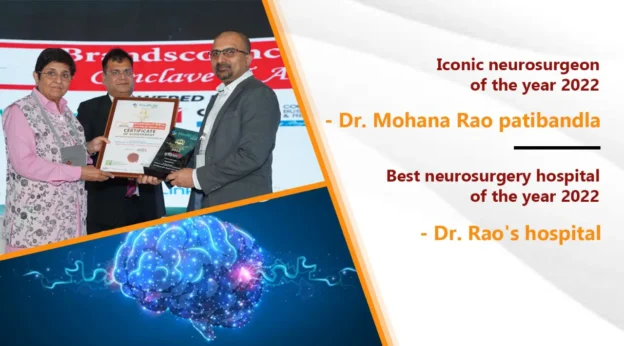
Dr. Mohana Rao Patibandla holding the Iconic Neurosurgeon of the Year 2022 certificate presented by KIRAN BEDI (Medilinks India & Brandscouncil)

Hyponatremia in Stroke Patients: Prevention, Monitoring, and Risk Factors

🧠 Hyponatremia in Stroke Patients: Prevention, Monitoring, and Risk Factors

Expert Insights from Dr. Rao’s Hospital, Guntur – Center for Advanced Brain, Spine & Nerve Care

⚕️ Understanding Hyponatremia in Stroke Patients

Hyponatremia in Stroke Patients, or low sodium levels in the blood, is one of the most common but often overlooked complications in stroke patients.
It occurs when serum sodium falls below 135 mEq/L, leading to swelling of brain cells — a potentially serious issue that can worsen neurological outcomes.
At Dr. Rao’s Hospital, recognized as one of the best neurology and neurosurgery hospitals in Andhra Pradesh, hyponatremia monitoring is a routine part of acute stroke management.

“Hyponatremia may appear to be a simple electrolyte imbalance, but in stroke patients, it can be life-threatening. Timely monitoring and correction prevent secondary brain injury,” explains
Dr. Mohana Rao Patibandla,
Senior Consultant Neurosurgeon and Director of Dr. Rao’s Hospital.

🧬 Why Hyponatremia Occurs After Stroke

Several mechanisms can trigger hyponatremia in stroke patients. Understanding them is key to targeted prevention.

1. Syndrome of Inappropriate Antidiuretic Hormone Secretion (SIADH)

Stroke-related brain injury can cause excessive release of ADH, leading to water retention and dilutional hyponatremia.

2. Cerebral Salt Wasting Syndrome (CSWS)

CSWS causes true sodium loss due to increased renal excretion. Differentiating it from SIADH is essential as treatment strategies differ.

3. Medications and Hospital Factors

Drugs like diuretics, antiepileptics, or antidepressants used in stroke management can alter sodium balance.

4. Increased Intracranial Pressure (ICP)

Raised ICP after ischemic or hemorrhagic stroke can disrupt hypothalamic-pituitary control, leading to hormonal imbalance and hyponatremia.

⚠️ Risk Factors for Hyponatremia in Stroke Patients

  • Large territorial or hemorrhagic strokes
  • Subarachnoid hemorrhage (SAH)
  • Prolonged ICU stay or mechanical ventilation
  • Use of osmotic diuretics like mannitol
  • Elderly patients with comorbidities
  • Excess IV fluid administration

At Dr. Rao’s Hospital’s Neuro-ICU, these risk factors are closely monitored using continuous electrolyte tracking and smart alert systems as part of advanced brain stroke treatment in Guntur and comprehensive brain stroke treatment in India.

🔍 Symptoms and Warning Signs

Hyponatremia symptoms often mimic stroke-related signs, making vigilance critical in stroke patients. Common warning signs include:

  • Confusion, irritability, or lethargy
  • Headache, nausea, vomiting
  • Muscle cramps or twitching
  • Seizures or coma in severe cases

Early recognition of these hyponatremia symptoms allows timely hyponatremia treatment, which is crucial for preventing neurological complications. All stroke patients in Dr. Rao’s Hospital’s Neuro Intensive Care Unit undergo 24×7 neuromonitoring and electrolyte checks to ensure early detection as part of advanced brain stroke treatment in Guntur and trusted brain stroke treatment in India, including carefully guided strategies such as permissive hypernatremia in stroke when clinically indicated.

🏥 Diagnosis and Monitoring

The hospital follows standardized international stroke protocols to diagnose and correct hyponatremia efficiently.

  1. Serum sodium and osmolality testing every 6–12 hours
  2. Urine sodium and osmolality differentiation (SIADH vs CSWS)
  3. Volume status assessment and fluid balance charts
  4. Brain imaging to evaluate hypothalamic-pituitary axis injury

For patients seeking timely and advanced neuro care, exploring treatment options across major cities can make a significant difference in stroke outcomes. Learn more about specialised services through Stroke and Cerebrovascular Treatment in Andhra Pradesh | Stroke and Cerebrovascular Treatment in Bhimavaram | Stroke and Cerebrovascular Treatment in Chennai | Stroke and Cerebrovascular Treatment in Delhi | Stroke and Cerebrovascular Treatment in Guntur to find the most suitable care for your needs.

💧 Prevention and Management

1. Close Fluid and Electrolyte Monitoring

Regular sodium surveillance is part of the hospital’s stroke care protocol.

2. Individualized Fluid Therapy

SIADH is treated with fluid restriction, while CSWS requires volume and sodium replacement with isotonic or hypertonic saline.

3. Controlled Correction

Gradual sodium correction is crucial to avoid central pontine myelinolysis. Every adjustment is guided by critical care neurologists.

4. Medication Review

Stroke patients’ medications are reviewed regularly to minimize risk of sodium imbalance.

5. Nutrition and Early Rehabilitation

Proper nutrition and early physiotherapy via the Stroke Rehabilitation Program support recovery and stability.

🧠 Hyponatremia and Stroke Outcomes

Unmanaged hyponatremia can delay neurological recovery and increase mortality risk.
Thanks to Dr. Rao’s advanced neurosurgical care and multidisciplinary team approach, outcomes have significantly improved for stroke patients.

“Preventing hyponatremia is as crucial as preventing a second stroke. We focus not just on survival but on preserving function and quality of life,” says Dr. Rao.

🧩 Why Choose Dr. Rao’s Hospital for Stroke Care

Located in Guntur, Dr. Rao’s Hospital is one of the best stroke hospitals in Andhra Pradesh.
Led by internationally trained neurosurgeon Dr. Mohana Rao Patibandla, the hospital combines global technology with compassionate neurocare.

Key Stroke Care Highlights

  • 24×7 Stroke Emergency Unit (Door-to-Needle Time < 30 minutes)
  • Dedicated Neuro-ICU with continuous ICP and electrolyte monitoring
  • Comprehensive stroke rehabilitation and physiotherapy support
  • Integration of neuroimaging, neuronavigation, and critical care
  • Expert management of complications like hyponatremia, brain edema, and hydrocephalus

💬 Final Thoughts

Hyponatremia in stroke patients is a silent but serious threat to recovery.
At Dr. Rao’s Hospital, a multidisciplinary team ensures that every patient receives precise monitoring and timely correction.

“Recognizing hyponatremia early can save lives and protect brain function,” emphasizes Dr. Mohana Rao Patibandla, widely regarded as the best neurologist and neurosurgeon in Guntur.

📞 Contact Dr. Rao’s Hospital

Dr. Rao’s Hospital – Advanced Brain, Spine & Nerve Care
📍 12-19-67, Old Bank Road, Kothapet, Opp. Sravani Hospital, Guntur, Andhra Pradesh
📞 090100 56444
📧 info@drraoshospitals.com | drpatibandla@gmail.com
🌐 https://drraoshospitals.com
📺 YouTube |
📘 Facebook |
📸 Instagram |
💼 LinkedIn |
📍 Google Maps

Frequently Asked Questions

1. What is Hyponatremia in Stroke Patients?
Hyponatremia in Stroke Patients refers to low sodium levels that can worsen brain swelling and neurological recovery if not managed on time.

2. Why is brain stroke treatment in guntur considered advanced?
Brain stroke treatment in guntur offers rapid diagnosis, Neuro-ICU care, and expert neurosurgical intervention for faster and safer recovery.

3. How effective is brain stroke treatment in india today?
Brain stroke treatment in india has advanced significantly with modern thrombolysis, thrombectomy, and specialized stroke rehabilitation centers.

4. What are the common hyponatremia symptoms to watch for?
Hyponatremia symptoms include confusion, headache, nausea, muscle cramps, seizures, and in severe cases, coma.

5. What does proper hyponatremia treatment involve?
Hyponatremia treatment focuses on correcting sodium levels safely through IV fluids, medications, and continuous electrolyte monitoring.

6. What is the role of permissive hypernatremia in stroke?
Permissive hypernatremia in stroke is a controlled strategy used in select cases to reduce brain edema and lower intracranial pressure.

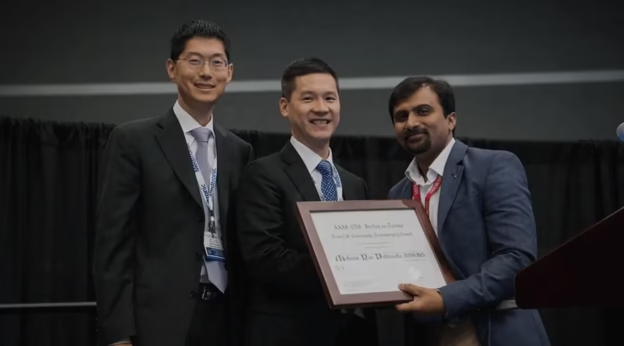
Dr. Mohana Rao Patibandla (right) accepting the BrainLab Neurosurgery Award at the CNS 2018 meeting in Houston

Global Recognition for Dr. Mohana Rao Patibandla

🧠 Global Recognition for Dr. Mohana Rao Patibandla: Redefining Modern Neurosurgery from Guntur, India

<meta name=”title” content=”Global Recognition for Dr. Mohana Rao Patibandla | Dr. Rao’s Hospital, Guntur”> <meta name=”description” content=”Discover how Dr. Mohana Rao Patibandla, the best neurosurgeon in Guntur, is redefining modern brain and spine surgery at Dr. Rao’s Hospital, Andhra Pradesh.”> <meta name=”keywords” content=”best neurosurgeon in Guntur, best neurologist in Guntur, best spine surgeon in Guntur, Dr. Mohana Rao Patibandla, Dr. Rao’s Hospital, brain surgery, spine surgery, neurosurgery in India, minimally invasive neurosurgery Guntur”>


In the world of modern neurosurgery, few names command as much global respect as Dr. Mohana Rao Patibandla, founder and lead neurosurgeon at Dr. Rao’s Hospital, Guntur — one of India’s most advanced centers for brain, spine, and nerve care.

Recently featured by leading global and Indian media outlets, Dr. Rao is recognized for transforming neurosurgical care through minimally invasive neurosurgery, neuro-oncology, and complex spine surgery, bringing cutting-edge techniques to South India.


🩺 A Visionary Neurosurgeon with Global Expertise

After completing his MBBS from Andhra Medical College, Visakhapatnam, and M.Ch. in Neurosurgery from Nizam’s Institute of Medical Sciences, Hyderabad, Dr. Rao pursued several advanced fellowships across the United States, mastering:

  • Minimally Invasive Skull Base Surgery – Ohio, USA

  • Pediatric Neurosurgery – Colorado & Ohio, USA

  • Functional and Stereotactic Radiosurgery – Virginia, USA

  • Endovascular and Cerebrovascular Neurosurgery – Virginia, USA

This diverse global training empowered him to introduce world-class neurosurgical practices in Andhra Pradesh.

“My mission was to create a center of excellence in neurosurgery where global precision meets Indian compassion,” says Dr. Rao.


🏥 Dr. Rao’s Hospital – A Center of Neurosurgical Excellence

Located in the heart of Guntur, Dr. Rao’s Hospital is among the first independent, super-specialized hospitals in India dedicated entirely to brain, spine, and nerve care.

As noted by The Times of India, Dr. Rao’s Hospital “represents a new era in transformative healthcare, where technology and ethics go hand in hand.”
🔗 Reference: Times of India Feature

Key Hospital Highlights

📍 Address: 12-19-67, Old Bank Road, Kothapet, Opp. Sravani Hospital, Guntur, Andhra Pradesh
🌐 Website: https://drraoshospitals.com


🌍 Global Media Recognition

Dr. Rao’s excellence has received wide coverage from both Indian and global media outlets.

Recent features in Lokmat Times and Time Iconic Magazine listed him among the Top 10 Inspiring Neurosurgeons in India.
🔗 Lokmat Times Feature

The EINPresswire article “Global Magazines Honor Dr. Mohana Rao Patibandla for Redefining Modern Neurosurgery” highlighted his leadership and the hospital’s innovative role in modern neurosurgical techniques.
🔗 EINPresswire Article


🏅 Awards and Achievements

Dr. Rao’s contributions to medical innovation and patient care have earned him numerous distinctions:

  • Best Minimally Invasive NeurosurgeonRadioCity Icon Awards (TOI Coverage)

  • Healthcare Leadership Excellence Award

  • Top Neurosurgeon in India 2024Time Iconic Magazine

  • Medical Tourism Contributor Award for treating international patients seeking advanced neurosurgical care

These honors affirm Dr. Rao’s position as the best neurosurgeon in Guntur and one of India’s foremost experts in spine surgery and neurology.

The Knowlege review cover of Dr. Mohana Rao patibandla

Cover of Time Iconic Magazine 2025 featuring Dr. Mohana Rao Patibandla recognized for innovation, empathy, and leadership in neurosurgery.

Magazine Cover — Time Iconic Issue 71 (OCT 2025)


🔬 Pioneering Minimally Invasive Neurosurgery in India

Under Dr. Rao’s leadership, the hospital has become one of India’s premier centers for keyhole and endoscopic brain and spine surgeries.

These state-of-the-art approaches reduce tissue damage, blood loss, and hospital stays while improving recovery outcomes.

Specialized Surgeries Include:

Dr. Rao has presented these methods at NSSA 2024 and MISSABCON 2024, earning national recognition for innovation and clinical safety.


💙 Compassionate and Accessible Neurocare

At the core of Dr. Rao’s philosophy is “Excellence with Compassion.” His focus is not only on surgical precision but also on accessibility and affordability.

Patients from across India and abroad choose Dr. Rao’s Hospital for conditions including:

This approach has earned Dr. Rao widespread recognition as the best neurologist in Guntur and a trusted name in neurosurgical care.


🌐 Conclusion

From Guntur to the global stage, Dr. Mohana Rao Patibandla exemplifies how global expertise and compassionate care can redefine healthcare standards. Through Dr. Rao’s Hospital, he continues to set new benchmarks in brain surgery, spine surgery, and neuro-oncology — cementing his position as one of India’s most accomplished neurosurgeons.

Recognized as the best neurosurgeon in Guntur, the best neurologist in Guntur, and the best spine surgeon in Guntur, Dr. Rao continues to inspire a new generation of neurosurgeons and elevate patient care across India.


📞 Contact Dr. Rao’s Hospital

Dr. Rao’s Hospital – Advanced Brain, Spine & Nerve Care
📍 12-19-67, Old Bank Road, Kothapet, Opp. Sravani Hospital, Guntur, Andhra Pradesh
📞 090100 56444
📧 info@drraoshospitals.com | drpatibandla@gmail.com
🌐 https://drraoshospitals.com
📺 YouTube |
📘 Facebook |
📸 Instagram |
💼 LinkedIn |
📍 Google Maps

A promotional image for Dr. Rao's Hospital featuring Dr. Mohana Rao Patibandla receiving the Economic Times Excellence in Neurology, Neurosurgery, and Spine Surgery Award 2025. The image includes photos of the award ceremony, a portrait of Dr. Patibandla, and details about his qualifications (MCh, FESBS, FAANS, etc.) and contact information. The hospital's locations (Guntur, Vijayawada, Bhimavaram, Rajahmundry, Kakinada, Eluru, Ongole, Nellore) and the slogan "Act Fast - Save Brain and Spine" are highlighted, along with a map and phone number.

World-Class Neurosurgery Now in Guntur | Dr. Rao’s Hospital

World-Class Advanced Neurosurgery Now Available in Guntur

How Dr. Mohana Rao Patibandla and Dr. Rao’s Hospital are redefining access, excellence, and empathy in brain and spine care.


Introduction: The Cost of Distance in the Journey to Healing

For generations, patients in smaller cities and towns across India have faced a heartbreaking dilemma: when a complex neurological or spine condition strikes, where do you go for the best treatment? For many, the answer has long been a hospital hundreds or even thousands of kilometers away — often in Chennai, Hyderabad, Delhi, or Mumbai.

This journey, both physical and emotional, has been more than a matter of distance. It has been a test of faith, finances, and endurance. Families uprooted for months, savings exhausted, and patients made to feel like outsiders in cities where world-class care is concentrated.

But what if the very same level of advanced neurosurgical care — the technology, the precision, the expertise — could be available right where you live?
What if “going to the best” didn’t mean “leaving home”?

That vision — to make world-class neurosurgery accessible without migration — is now a reality in Guntur, Andhra Pradesh, thanks to Dr. Mohana Rao Patibandla, one of India’s most respected and internationally trained neurosurgeons, and his brainchild, Dr. Rao’s Hospital.


The Problem: Centralized Healthcare and the Rural–Urban Divide

India’s healthcare excellence has always been world-class — but unevenly distributed. While major metros house globally recognized institutes for brain and spine surgery, millions of people in Tier 2 and Tier 3 cities have had to travel far for complex treatments like aneurysm repair, tumor resections, epilepsy surgery, or minimally invasive spine procedures.

This concentration of medical expertise in urban centers has led to:

  • Delayed diagnoses and interventions

  • Increased financial burden from travel, accommodation, and logistics

  • Psychological distress for patients and families during prolonged treatments

  • Loss of community and emotional support at a time when it’s needed most

For many families, this “medical migration” becomes a trauma of its own.

Dr. Mohana Rao Patibandla recognized this imbalance early in his career — and decided to change it forever.


The Visionary Who Brought the World to Guntur

After years of specialized training in the United States — including Fellowships in Minimally Invasive Skull Base Surgery (Ohio), Pediatric Neurosurgery (Colorado & Ohio), Functional and Stereotactic Radiosurgery, Neuro-oncology, and Endovascular Neurosurgery (Virginia) — Dr. Rao returned to his hometown of Guntur with a mission:

“World-class care should never depend on your postal code.”

This belief became the foundation for Dr. Rao’s Hospital, established in 2019 under Patibandla Narayana Swamy Neurosciences LLP — Andhra Pradesh’s first independent, state-of-the-art super-specialty hospital dedicated entirely to brain, spine, and nerve care.

Today, Dr. Rao’s Hospital stands as a beacon of hope not only for Guntur but for all of South India — a place where global neurosurgical standards meet homegrown compassion.


The Facility: Innovation Rooted in Accessibility

Dr. Rao’s Hospital isn’t a typical regional hospital. It’s a complete neuroscience ecosystem, equipped with technologies usually found only in premier institutes abroad.

Cutting-Edge Technology

  • 3D Neuronavigation Systems – for millimeter-level precision in brain and spine surgeries

  • Intraoperative Neurophysiological Monitoring (IONM) – ensuring safety of brain and spinal cord function during complex procedures

  • Endoscopic & Minimally Invasive Surgical Suites – for smaller incisions, faster recovery, and minimal scarring

  • Hybrid Cath Labs – for advanced endovascular procedures like aneurysm coiling and AVM embolization

  • Stereotactic Radiosurgery Units – for non-invasive treatment of tumors and functional brain disorders

These are not luxuries — they are life-saving essentials. And by bringing them to Guntur, Dr. Rao has eliminated the need for patients to travel to metropolitan cities for specialized care.


The Expertise: A Surgeon Who Bridges Continents

What makes Dr. Mohana Rao’s journey remarkable is his combination of international expertise and local dedication.

With over 15,000 neurosurgical procedures, including:

  • 12,000+ minimally invasive surgeries

  • 3,000+ endovascular and cerebrovascular interventions

  • 2,000+ stereotactic radiosurgeries

  • 1,000+ IONM-guided surgeries

…Dr. Rao brings not just experience, but an artistry that transforms every surgery into a mission to restore life and dignity.

His repertoire includes:

  • 470+ Endoscopic Pituitary Surgeries

  • 400+ Aneurysm Repairs

  • 300+ CP Angle Tumor Resections

  • 1,000+ Endoscopic Spine Procedures

Patients who once had to travel to Hyderabad, Chennai, or Delhi for such complex procedures now find the same level of expertise just a short drive away in Guntur.


The Philosophy: Healing Beyond Technology

Dr. Rao often says:

“Technology saves lives, but compassion heals them.”

This philosophy defines every aspect of his hospital. While the infrastructure rivals the world’s best centers, what truly sets Dr. Rao’s Hospital apart is its ethos of empathy.

Every patient, regardless of background, receives personalized attention — from diagnosis to recovery. The hospital’s design itself fosters comfort and calm, blending cutting-edge equipment with a healing environment.

Patients describe their experience not as a hospital visit, but as being part of a family that genuinely cares.


Why Leaving Home Shouldn’t Be a Prerequisite for Healing

There’s a psychological component to recovery that’s often overlooked in medicine: familiarity fosters healing.

Being treated near home means:

  • Family support is consistent and accessible.

  • Recovery environments are emotionally safer.

  • Financial burdens are drastically reduced.

  • Continuity of care is stronger through follow-ups and rehabilitation.

When patients receive high-quality neurosurgical treatment in their own city, they are not just surviving — they are truly living through the process of healing with dignity.

Dr. Rao’s mission is built on this understanding: that every patient deserves to heal without leaving behind their community, culture, or comfort zone.


Transforming Guntur into a Hub of Neurosurgical Excellence

Under Dr. Rao’s leadership, Guntur has evolved from a regional medical stopover into a destination for advanced neurosurgery.

Today, patients travel to Guntur — from across Andhra Pradesh, Telangana, Karnataka, and even overseas — for complex neurosurgical, spinal, and vascular interventions.

Dr. Rao’s Hospital is now recognized for:

  • Comprehensive Neurosurgical Care — from trauma to tumors, epilepsy to endovascular cases

  • Exceptional Patient Outcomes — matching international standards

  • Affordable Global Care — eliminating the need for costly medical tourism abroad

In essence, Guntur has become a center of healing and innovation, proving that geography is no longer a barrier to excellence.


Beyond the Operating Room: Leadership and Legacy

Dr. Mohana Rao Patibandla’s role extends far beyond surgery. He is a teacher, mentor, and visionary leader.

As an invited speaker at global conferences like MISSABCON, NESICON, SkullBaseCon, SNVICON, and AP MISSAB, and as a TEDx speaker for his talk My Journey to Bring Healing Home – A Neurosurgeon’s Quest in Guntur,” Dr. Rao continues to inspire the next generation of medical professionals.

His TEDx message resonates deeply:

“My journey was never about building a hospital — it was about bringing healing home.”

He is also the recipient of multiple honors, including:

  • Dr. A.P.J. Abdul Kalam Inspiration Award 2025 for Best Minimally Invasive Neurosurgeon

  • Economic Times Business & Health Excellence Awards 2025

  • Sardar Vallabhbhai Patel Unity Award 2025

  • Asia’s Most Trusted Neurosurgeon (2023)

  • Health Icon of the Year (2021)

With over 70 international publications and 1,200+ citations, Dr. Rao’s academic and clinical contributions continue to influence neurosurgery globally.


A Hospital Built on Hope

Every corner of Dr. Rao’s Hospital tells a story — stories of families who once feared the worst and found hope in the heart of Guntur.

From children born with congenital neurological disorders to adults recovering from aneurysms, brain tumors, or spinal injuries, thousands of patients have discovered that you don’t have to leave home to find world-class care.

Each successful surgery, each grateful smile, stands as proof of Dr. Rao’s belief that healing is not just a science — it’s a service.


The Future: Expanding Horizons, Empowering Communities

Dr. Rao envisions a future where India leads the world in accessible, affordable, and advanced neurosurgery.

His next phase involves the establishment of the Dr. Rao Institute of Neurosciences, a center for AI-driven research, robotic surgery, and global collaboration — right here in Guntur.

This institute aims to:

  • Train the next generation of neurosurgeons

  • Develop indigenous neuro-navigation technologies

  • Make complex surgical care more affordable across India

In Dr. Rao’s words:

“True innovation isn’t about building bigger hospitals — it’s about building better systems of care.”


Conclusion: The Power of Bringing Healing Home

When patients no longer have to cross cities or countries to receive world-class treatment, healthcare achieves its truest form of equality.

Through Dr. Rao’s Hospital, Dr. Mohana Rao Patibandla has proved that excellence doesn’t belong to metros — it belongs wherever compassion and courage meet.

By transforming Guntur into a global hub for advanced neurosurgery, he has not just changed outcomes; he has changed the geography of hope.

Because healing, after all, should never require leaving home.


About Dr. Rao’s Hospital

Address: 12-19-67, Old Bank Road, Kothapet, Opp. Sravani Hospital, Guntur, Andhra Pradesh
📞 Phone: +91 90100 56444
🌐 Website: www.drraoshospitals.com
📧 Email: info@drraoshospitals.com

Follow Dr. Rao’s Hospital:
YouTube | Facebook | Instagram | LinkedIn | Twitter/X | Google Maps

Cover story of Time Iconic Magazine featuring Dr. Mohana Rao Patibandla, Top 10 Inspiring Neurosurgeon 2025, honoring his excellence in minimally invasive neurosurgery and compassionate patient care at Dr. Rao’s Hospital, Guntur.

Dr. Rao – Time Iconic Magazine Cover Story -Top 10 Inspiring Neurosurgeons 2025

Dr. Mohana Rao Patibandla: Redefining the Frontiers of Neurosurgery and Compassionate Care

Time Iconic Magazine Cover Story | Top 10 Inspiring Neurosurgeons 2025


🌍 A Visionary Journey from Guntur to Global Recognition

It is a proud moment for Andhra Pradesh and the entire Indian medical community as Dr. Mohana Rao Patibandla, the Founder and Chief Neurosurgeon of Dr. Rao’s Hospital, Guntur, graces the cover of Time Iconic Magazine. The prestigious feature celebrates him as one of the Top 10 Inspiring Neurosurgeons in Healthcare Leaders 2025, honoring his contribution to the evolution of neurosurgery through innovation, empathy, and excellence.

Time Iconic Magazine, in its special healthcare leaders edition, titled the cover story “Redefining the Frontiers of Neurosurgery and Compassionate Care,” spotlighting Dr. Patibandla’s incredible journey — from his early medical training in Andhra Pradesh to becoming a globally recognized pioneer in minimally invasive brain and spine surgery.


🩺 The Man Behind the Milestone: Dr. Mohana Rao Patibandla

Dr. Mohana Rao Patibandla’s career is defined by relentless pursuit of precision, compassion, and progress. After earning his MBBS from Andhra Medical College, Visakhapatnam, he completed his specialization in Neurosurgery at Nizam’s Institute of Medical Sciences, Hyderabad in 2013.

To further his expertise, Dr. Patibandla trained across leading centers in the USA, acquiring multiple fellowships in:

  • Minimally Invasive Skull Base Surgery (Ohio, USA)

  • Pediatric Neurosurgery (Colorado & Ohio, USA)

  • Functional and Stereotactic Radiosurgery (Virginia, USA)

  • Neuro-Oncology and Endovascular Cerebrovascular Surgery

This global exposure shaped his philosophy — blending Western precision with Indian empathy — forming the foundation of Dr. Rao’s Hospital, now among India’s most trusted names in brain, spine, and nerve care.


🏥 Dr. Rao’s Hospital: Andhra Pradesh’s First Independent Neurosciences Centre

Founded in Guntur, Dr. Rao’s Hospital stands as a state-of-the-art center for advanced neurology, neurosurgery, and spine surgery. What began as a vision to make world-class brain and spine care accessible locally has grown into a beacon of hope for patients from across India and abroad.

The hospital is equipped with:

  • Advanced Neuro-Navigation & Microsurgical Suites

  • 3D Endoscopic Systems for Minimally Invasive Procedures

  • Intra-Operative Neurophysiological Monitoring (IONM)

  • Dedicated Neuro-ICU and 24×7 Neuro Emergency Response

Every procedure reflects Dr. Patibandla’s core belief: “High-tech medicine should never lose the human touch.”


🧩 Innovation Meets Empathy: What the Time Iconic Cover Stands For

The Time Iconic cover — featuring Dr. Mohana Rao Patibandla with the tagline “Innovation & Empathy” — perfectly captures his professional ethos. The story applauds how his team combines surgical excellence with compassionate care, a duality that defines true medical leadership.

“When a patient enters our hospital, they’re not just seeking surgery — they’re seeking trust. Our mission is to heal both the disease and the fear,”
— Dr. Mohana Rao Patibandla

This recognition isn’t just about awards or titles; it’s a symbol of dedication to every patient who walks through the doors of Dr. Rao’s Hospital.


🏆 Awards and Accolades

Dr. Patibandla’s contributions have been widely recognized:

  • Featured in Time Iconic Magazine as Top 10 Inspiring Neurosurgeons 2025

  • Recipient of Certificate of Achievement from Time Iconic Editorial Board

  • Honored with the Time Iconic Award for Leadership in Healthcare 2025

  • Awarded the Best Minimally Invasive Neurosurgeon 2025 at the Abdul Kalam Inspiration Awards

  • Invited Speaker at NSSA 2024 and MISSABCON 2024, presenting on Endoscopic Transnasal Odontoidectomy and IONM in Spine Surgery

Each accolade reinforces his belief that recognition comes from responsibility — to innovate, educate, and serve.


🌐 A Global Approach to Local Care

Dr. Patibandla’s training abroad inspired him to bring the world’s best neurosurgical techniques to India. Under his guidance, Dr. Rao’s Hospital now performs complex cases such as:

  • Endoscopic Transnasal Skull Base Tumor Resection

  • Minimally Invasive Spine Stabilization and Fusion

  • Awake Craniotomy for Brain Tumors

  • Endovascular Aneurysm Repair and AVM Management

  • Functional Surgery for Epilepsy and Movement Disorders

His work exemplifies that cutting-edge technology and compassionate care can coexist to create transformative outcomes.


💬 Recognition in the Time Iconic Editorial Feature

In its profile, Time Iconic describes Dr. Patibandla as “a neurosurgeon who embodies the rare balance of surgical brilliance and human warmth.”
The article applauds his precision, innovation, and ethical approach to medicine, which have positioned him as a benchmark for modern neurosurgical leadership.

The feature also highlights Dr. Rao’s Hospital as one of the few independent institutions in India providing complete neuroscience services — from diagnosis to rehabilitation — under one roof.


🌟 Inspiring Future Generations

Beyond surgery, Dr. Patibandla’s mission is to mentor the next generation of neurosurgeons. He regularly participates in national academic programs, live surgical workshops, and global collaborations.
His mentorship emphasizes not just surgical skills but also values of humility, compassion, and continuous learning.

“True innovation is when science touches lives. My goal is to make high-end neurosurgery accessible to every citizen, not just a privilege for a few.”
— Dr. Mohana Rao Patibandla


🔬 Research and Academic Contributions

Dr. Patibandla’s scholarly output reflects his dual focus on clinical excellence and scientific progress. He has authored over 60 international publications and has been cited by more than 1,200 researchers, covering a range of topics including stereotactic radiosurgery, arteriovenous malformations, skull base tumors, meningiomas, neuro-oncology, endovascular neurosurgery, spine surgery, and minimally invasive neurosurgery. His publications and conference presentations include topics like:

  • Endoscopic Odontoidectomy — A Minimally Invasive Approach to Cervicomedullary Compression

  • IONM in Complex Spinal Decompression — A Safety Standard for Future Surgeons

  • Functional Outcomes After Skull Base Tumor Resection — Evidence from Indian Cohorts

He is also a reviewer for World Neurosurgery Journal, contributing to the advancement of global research.


🧠 Patient-Centric Philosophy: Healing with Heart

What sets Dr. Rao’s Hospital apart is not just its technology but its human-first approach. The hospital follows a philosophy of “Care Before Cut.”
Each treatment plan is customized to the patient’s lifestyle, emotional state, and long-term goals.

The facility provides multilingual counselling, rehabilitation programs, and post-surgical follow-ups that ensure holistic recovery — aligning perfectly with Dr. Patibandla’s belief that “every brain deserves empathy.”


📷 Visual Highlights from the Time Iconic Feature

🖼️ 1. Magazine Cover — Time Iconic Issue 71 (OCT 2025)

Cover of Time Iconic Magazine 2025 featuring Dr. Mohana Rao Patibandla recognized for innovation, empathy, and leadership in neurosurgery.

Magazine Cover — Time Iconic Issue 71 (OCT 2025)

🏆 2. Time Iconic Award Trophy — Healthcare Leaders 2025

Time Iconic Award trophy 2025 honoring Dr. Mohana Rao Patibandla as Top 10 Inspiring Neurosurgeon in India.

The Time Iconic Award 2025 presented to Dr. Mohana Rao Patibandla for excellence in neurosurgery and leadership.

📜 3. Certificate of Achievement — Time Iconic Magazine

Certificate of Achievement presented to Dr. Mohana Rao Patibandla by Time Iconic as one of the Top 10 Inspiring Neurosurgeons 2025.

Certificate of Achievement awarded to Dr. Mohana Rao Patibandla by Time Iconic for transforming neurosurgery with innovation and compassion.


🌐 Why This Recognition Matters

Dr. Patibandla’s inclusion among Time Iconic’s Top 10 Inspiring Neurosurgeons 2025 symbolizes a shift in India’s medical narrative — from treatment to transformation.
It showcases how a vision from Guntur can achieve global impact through research, innovation, and compassion.

His feature raises awareness of India’s capabilities in advanced neurosurgical care, especially in minimally invasive approaches that reduce recovery time, minimize pain, and improve quality of life.


🔗 About Time Iconic Magazine

Time Iconic is an international publication that chronicles success stories of leaders across healthcare, business, and innovation. Its Top 10 Healthcare Leaders 2025 edition recognizes professionals redefining excellence with social impact.
Website: https://timeiconic.com


📍 Visit the Leader in Neurosurgery — Dr. Rao’s Hospital

Dr. Rao’s Hospital
12-19-67, Old Bank Road, Kothapet, Opp. Sravani Hospital, Guntur, Andhra Pradesh 522001
📞 090100 564444
📧 info@drraoshospitals.com | drpatibandla@gmail.com
🌐 https://drraoshospitals.com

Follow Dr. Rao’s Hospital:
📘 Facebook 📸 Instagram 💼 LinkedIn 🐦 X (Twitter) 📺 YouTube

A promotional image for Dr. Rao's Hospital featuring Dr. Mohana Rao Patibandla receiving the Economic Times Excellence in Neurology, Neurosurgery, and Spine Surgery Award 2025. The image includes photos of the award ceremony, a portrait of Dr. Patibandla, and details about his qualifications (MCh, FESBS, FAANS, etc.) and contact information. The hospital's locations (Guntur, Vijayawada, Bhimavaram, Rajahmundry, Kakinada, Eluru, Ongole, Nellore) and the slogan "Act Fast - Save Brain and Spine" are highlighted, along with a map and phone number.

Dr. Mohana Rao Patibandla — The Best Neurosurgeon to Watch in India 2025

Dr. Mohana Rao Patibandla — The Best Neurosurgeon to Visit in India

Dr. Mohana Rao Patibandla — Neurosurgeon at Dr. Rao's Hospital

Dr. Mohana Rao Patibandla, founder of Dr. Rao’s Hospital in Guntur, is widely recognized as the best neurosurgeon in Guntur and one of India’s most influential leaders in minimally invasive, endovascular, and stereotactic neurosurgery. With a career spanning advanced international fellowships and an expansive surgical portfolio, Dr. Rao combines precision technique with compassionate care.

Vision & Mission: Precision, Innovation, Compassion

Dr. Rao established Dr. Rao’s Hospital (Patibandla Narayana Swamy Neurosciences LLP) to bring world-class neurosurgical care to South India — a center where the latest technologies meet the human touch. The hospital’s mission focuses on three pillars: clinical excellence, innovation, and education.

Clinical Impact — By the Numbers

Innovation & Technology

Dr. Rao’s practice emphasizes minimally invasive skull base surgery, endoscopic spine approaches, neuronavigation, intraoperative neurophysiological monitoring (IONM), stereotactic radiosurgery, and endovascular care. The hospital continually invests in advanced imaging, hybrid operating suites, and training programs to keep patient safety and outcomes at the forefront.

“Technology saves lives; compassion heals them.” — Dr. Mohana Rao Patibandla

Awards, Publications & Academic Leadership

Dr. Rao’s accolades underscore a sustained commitment to clinical excellence and scholarship:

  • Economic Times Business Excellence Award (2025)
  • Economic Times Health Award (2025)
  • Sardar Vallabhbhai Patel Unity Award (2025)
  • Best Minimally Invasive Neurosurgeon / Best Spine Surgeon / Best Endovascular Surgeon / Best Stereotactic Radiosurgeon — multiple national & international honors
  • Invited speaker: SkullBaseCon 2025, NESICON 2025, AP MISSAB 2025, MISSABCON, SNVICON 2025, NSI YNF and many more
  • 60+ peer-reviewed publications in journals including Neurosurgery, Journal of Neurosurgery, Stroke, The Spine Journal, and more
  • 1,200+ citations in international literature

What This Means for Patients

Choosing Dr. Rao’s Hospital means access to a multidisciplinary team skilled in complex cranial, spinal, and vascular disorders — delivered with a patient-first philosophy. The hospital accepts national and international patients; for appointments and referrals, visit our Contact page.

Further Reading & Services

Learn more about our specialized services and clinical teams:

  • Neurosurgery Services
  • Spine Surgery
  • Endovascular & Cerebrovascular
  • Stereotactic Radiosurgery
  • Meet the Team

Contact & Appointments

For appointments, second opinions, or international patient coordination:

© Dr. Rao’s Hospital. All rights reserved.


with alt image, caption, description and name of the image

Understanding Epilepsy: Expert Insights from Dr. Rao

Understanding Epilepsy: Expert Insights from Dr. Rao’s Hospital

Epilepsy is a neurological disorder affecting millions worldwide, and finding expert care is crucial for managing it effectively. At Dr. Rao’s Hospital in Guntur, Andhra Pradesh, Dr. Mohana Rao Patibandla, a renowned neurosurgeon, leads a team dedicated to providing world-class epilepsy treatment. This blog answers common questions about epilepsy, including who it affects, its causes, driving regulations, symptoms that impair driving, risks of seizures while driving, safety tips, and liability in car accidents. Whether you’re seeking answers for yourself or a loved one, Dr. Rao’s Hospital is here to guide you toward a seizure-free life.

Who is Affected by Epilepsy?

Epilepsy can impact anyone, regardless of age, gender, or background. It affects approximately 65 million people globally, with about 1.1% of U.S. adults living with the condition. At Dr. Rao’s Hospital, we see a diverse range of patients, from children to seniors, seeking advanced epilepsy care.

  • Children: Epilepsy is common in minors, with over 450,000 U.S. children diagnosed.

  • Seniors: Adults over 60 are at higher risk due to age-related brain changes or complications like stroke.

  • Family History: Those with a family history of epilepsy may have an increased risk.

  • Other Groups: Males and females of all races and ethnicities are equally susceptible.

Dr. Mohana Rao Patibandla, recognized as one of India’s top epilepsy specialists, emphasizes personalized care to help patients manage their condition effectively.

Causes of Epilepsy

Epilepsy results from abnormal brain activity, leading to seizures. While the exact cause varies, Dr. Rao’s team uses state-of-the-art diagnostics to identify triggers and tailor treatments. Common causes include:

  • Genetic Factors: Inherited conditions or gene mutations can predispose individuals to epilepsy.

  • Brain Injuries: Traumatic brain injuries, concussions, or head trauma may trigger seizures.

  • Infections: Conditions like meningitis or encephalitis can cause epilepsy.

  • Stroke or Tumors: Vascular issues or brain tumors can disrupt normal brain function.

  • Developmental Disorders: Autism or other neurodevelopmental conditions may increase epilepsy risk.

  • Unknown Causes: In many cases, no specific cause is identified, requiring specialized evaluation.

At Dr. Rao’s Hospital, our Epilepsy Monitoring Unit (EMU) provides precise diagnostics to pinpoint causes, enabling targeted treatments like medication or minimally invasive surgery.

Laws and Regulations for Driving with Epilepsy

Driving with epilepsy involves strict regulations to ensure public safety, varying by region. In India, the Motor Vehicles Act 1988 currently prohibits individuals with epilepsy from obtaining a driver’s license, regardless of seizure frequency or control. In contrast, other countries have more flexible guidelines:

  • United States: Most states require a seizure-free period of 3–12 months, often with a doctor’s recommendation confirming seizure control. For example, Texas mandates a 3-month seizure-free period and a stable treatment plan.

  • Australia: A 6–12 month seizure-free period is typically required.

  • Exceptions: Some regions allow driving for those with nocturnal seizures, prolonged auras, or focal aware seizures that don’t impair consciousness, subject to medical evaluation.

Dr. Rao advises patients to consult local driving authorities and their neurologist to understand specific regulations. Noncompliance can lead to legal consequences, including license suspension.

Symptoms of Epilepsy That Can Impair Driving Abilities

Certain epilepsy symptoms can significantly affect driving safety. Dr. Mohana Rao Patibandla highlights the following symptoms that may impair driving:

  • Loss of Consciousness: Common in generalized seizures, this can cause a complete inability to control a vehicle.

  • Muscle Spasms or Jerking: Uncontrollable movements in arms or legs during seizures can hinder steering or braking.

  • Focal Impaired Awareness Seizures: These cause confusion, disorientation, or memory lapses, making it unsafe to respond to road conditions.

  • Auras: Sensory disturbances like tingling or hallucinations may signal an impending seizure, requiring drivers to pull over immediately.

  • Post-Seizure Effects: Fatigue, headaches, or nausea after a seizure can reduce alertness and reaction times.

At Dr. Rao’s Hospital, our team uses advanced testing, such as video-EEG monitoring, to assess how seizures affect patients, helping them make informed decisions about driving.

What Happens if a Seizure Occurs While Driving?

A seizure while driving can have severe consequences, posing risks to the driver, passengers, and others on the road. Potential outcomes include:

  • Loss of Vehicle Control: A seizure can lead to crashes with fixed objects, other vehicles, or pedestrians, causing property damage, injuries, or fatalities. Studies show 52% of epilepsy-related crashes involve single vehicles, often hitting fixed objects.

  • Legal Repercussions: Driving against medical advice or without reporting seizures to the DMV can result in fines, license suspension, or criminal charges if injuries occur.

  • Injury or Death: Seizure-related accidents can lead to life-altering injuries or, in rare cases, death for those involved.

If a seizure occurs while driving, Dr. Rao recommends:

  1. Pull Over Safely: If an aura is felt, stop the vehicle in a safe location immediately.

  2. Contact Emergency Services: Ensure safety and seek medical attention.

  3. Consult Your Doctor: Schedule a follow-up to reassess treatment and driving eligibility.

Safety Tips for Driving with Epilepsy

For individuals with epilepsy whose seizures are well-controlled, driving may be possible with precautions. Dr. Mohana Rao Patibandla and the team at Dr. Rao’s Hospital offer these safety tips:

  • Adhere to Medication: Take anti-seizure drugs as prescribed to maintain control. Noncompliance increases seizure risk.

  • Track Seizure Triggers: Keep a seizure diary to identify and avoid triggers like stress, sleep deprivation, or alcohol.

  • Regular Medical Checkups: Visit your neurologist to monitor seizure control and adjust treatment as needed.

  • Avoid Driving if Symptomatic: Refrain from driving if you experience auras, fatigue, or recent seizures.

  • Know Your Limits: Avoid driving during high-risk situations, such as after medication changes or during periods of stress.

  • Create a Seizure Action Plan: Share a plan with family or coworkers to manage seizures safely.

Dr. Rao’s Hospital provides comprehensive support, including counseling and minimally invasive epilepsy surgery, to help patients achieve seizure control and safely regain independence.

Liability in Car Accidents Involving Epilepsy

Liability in epilepsy-related car accidents depends on local laws and the driver’s compliance with regulations. Key considerations include:

  • Failure to Report: Not informing the DMV or driving against medical advice can lead to civil or criminal liability, especially if injuries occur.

  • Insurance Issues: Insurance companies may deny coverage for accidents during a seizure if the driver concealed their condition or was noncompliant with treatment.

  • Negligence: Drivers who knowingly drive with uncontrolled seizures may face lawsuits for negligence, particularly if they cause harm.

Dr. Rao advises patients to be transparent with their doctor and DMV to minimize legal risks. Proper documentation of seizure-free periods and medical clearance can protect against liability.

Why Choose Dr. Rao’s Hospital for Epilepsy Care?

Dr. Rao’s Hospital in Guntur is a Level 4 epilepsy center, accredited for its advanced resources and expertise in managing complex epilepsy cases. Led by Dr. Mohana Rao Patibandla, a top neurosurgeon in India, our hospital offers:

  • Cutting-Edge Technology: State-of-the-art Epilepsy Monitoring Units (EMUs) and minimally invasive surgical options.

  • Personalized Care: Tailored treatment plans, from medication to advanced procedures like vagus nerve stimulation or deep brain stimulation (DBS).

  • Affordable Treatment: Transparent pricing and medical tourism options for international patients.

  • Expert Team: A multidisciplinary approach with neurologists, neurosurgeons, and neuro-rehabilitation specialists.

Book an appointment today at Dr. Rao’s Hospital to explore the best epilepsy treatment options and regain control of your life. Visit drraoshospitals.com or contact us for a consultation.

Conclusion

Epilepsy is a manageable condition with the right care and precautions. At Dr. Rao’s Hospital, Dr. Mohana Rao Patibandla and his team are committed to helping patients achieve seizure control and navigate challenges like driving safely. By understanding who epilepsy affects, its causes, driving regulations, impairing symptoms, risks, safety tips, and liability concerns, patients can make informed decisions. Trust Dr. Rao’s Hospital for expert epilepsy care and a path to a seizure-free life.

A team of surgeons in blue scrubs performing a surgery in a high-tech, modern operating room with advanced medical equipment and lighting.

Top 10 Spine Surgery Hospitals in India

Top 10 Spine Surgery Hospitals in India

India is a global leader in healthcare, particularly for advanced spine surgery, offering world-class facilities, highly skilled surgeons, and cost-effective treatments. Spine Surgery Hospitals in India attract patients worldwide for conditions like herniated discs, scoliosis, spinal stenosis, and spinal tumors.

This blog highlights the top 10 Spine Surgery Hospitals in India, including Dr. Rao’s Hospital in Guntur, known for their cutting-edge technology, experienced specialists, and exceptional patient outcomes. Whether you need minimally invasive procedures or complex deformity corrections, these hospitals deliver unparalleled care.

Why Choose India for Spine Surgery?

Spine surgery demands precision, advanced technology, and comprehensive post-operative care. India excels due to:

  • Expert Surgeons: Many surgeons have international training from top institutions in the US, UK, and Europe.

  • Advanced Technology: Hospitals use robotic-assisted systems, neuromonitoring, O-arm navigation, and 3rd-generation spinal implants.

  • Affordability: Procedures cost 60–80% less than in Western countries, ranging from $5,000–$15,000 compared to $50,000–$100,000 abroad.

  • Holistic Care: Multidisciplinary teams, including neurosurgeons, orthopedic surgeons, physiotherapists, and pain specialists, ensure comprehensive treatment.

  • Medical Tourism Support: Agencies like IndiCure and Dheeraj Bojwani Consultants streamline visas, travel, and hospital coordination for international patients.

Below is a curated list of the top 10 spine surgery hospitals in India, selected based on reputation, infrastructure, surgeon expertise, and patient reviews.

1. Apollo Hospitals, Greams Road, Chennai

  • Overview: A pioneer in spine surgery, Apollo performed India’s first lumbar disc replacement and introduced 3rd-generation spinal implants.

  • Key Features:

    • Expertise in minimally invasive spine surgery (MISS), robotic surgery (Excelsis GPS Spine Robot), and complex deformity corrections.

    • Led by Dr. Sajan K. Hegde, a leader in robotic-assisted and non-fusion scoliosis correction.

    • JCI and NABH accredited with 750 beds and 22 operation theaters.

  • Specializations: Scoliosis correction, spinal tumors, disc replacements, and revision spine surgeries.

  • Why Choose?: Apollo’s high-volume complex case experience and focus on precision ensure excellent outcomes.

2. Ganga Hospital, Coimbatore

  • Overview: One of Asia’s top spine surgery centers, with over 12,000 spine surgeries performed.

  • Key Features:

    • Led by Prof. S. Rajasekaran, with a team including Dr. Ajoy Prasad Shetty and Dr. Rishi M. Kanna.

    • First in Asia-Pacific to install the BrainLab CT AIRO navigation system for high-precision surgeries.

    • Advanced intraoperative neuromonitoring and 1.5 Tesla MRI.

  • Specializations: Spinal deformity corrections, trauma surgeries, and minimally invasive procedures.

  • Why Choose?: Ganga’s dedicated spine unit and high success rates make it ideal for complex cases.

3. Dr. Rao’s Hospital, Guntur

best-minimally-invasive-spine-surgery-hospital-in-guntur

best-minimally-invasive-spine-surgery-hospital-in-guntur

  • Overview: A premier neurosurgery and spine surgery center in Andhra Pradesh, led by Dr. Mohana Rao Patibandla, a globally trained neurosurgeon.

  • Key Features:

    • Equipped with Stealth 8 Neuronavigation, intraoperative Xper dual CT, and full Storz endoscopic 4K technology, making it the first in South India with these capabilities.

    • Dr. Rao has performed over 10,000 surgeries, specializing in minimally invasive and endoscopic spine procedures.

    • NABH accredited, with a flat-panel biplane vascular hybrid cath lab for advanced interventions.

  • Specializations: Minimally invasive spine surgery, endoscopic discectomies, spinal tumors, and complex reconstructions.

  • Why Choose?: Dr. Rao’s international training (USA fellowships in minimally invasive and pediatric neurosurgery) and patient-centric care make it a top destination for affordable, high-quality spine surgery.

4. Artemis Hospital, Gurgaon

  • Overview: Known for advanced infrastructure and surgeons like Dr. Hitesh Garg, who has performed over 8,800 spine surgeries.

  • Key Features:

    • Features O-arm, neuromonitoring, and navigation technology for precision.

    • JCI and NABH accredited with 400 beds.

    • Comprehensive pediatric and adult spine programs.

  • Specializations: Pediatric spine surgery, scoliosis correction, and minimally invasive procedures.

  • Why Choose?: Artemis blends cutting-edge technology with a patient-focused approach.

5. Max Super Speciality Hospital, Saket, Delhi

  • Overview: Renowned for its minimally invasive spine surgery program, led by surgeons like Dr. Arun Saroha.

  • Key Features:

    • Uses robotic-assisted systems and Novalis TX radiosurgery for precision.

    • NABH accredited with 750 beds and 22 operation theaters.

    • Dedicated rehabilitation and physiotherapy units.

  • Specializations: Discectomy, spinal fusion, decompression surgery, and artificial disc replacement.

  • Why Choose?: Max’s focus on faster recovery and successful outcomes is ideal for spine patients.

6. Fortis Memorial Research Institute, Gurgaon

  • Overview: A global leader in spine surgery, featuring surgeons like Dr. Sandeep Vaishya, with over 15,000 surgeries.

  • Key Features:

    • Equipped with CyberKnife VSI, precision-guided MRI, and intraoperative O-arm suite.

    • JCI and NABH accredited with 1,000 beds across its network.

    • Serves patients from 55+ countries.

  • Specializations: Minimally invasive surgery, spinal trauma, and brachial plexus injuries.

  • Why Choose?: Fortis offers personalized care and advanced diagnostics for international patients.

7. Indian Spinal Injuries Centre (ISIC), New Delhi

  • Overview: India’s most advanced center for spine, orthopedic, and neuromuscular surgeries, founded by Maj. HPS Ahluwalia.

  • Key Features:

    • Led by surgeons like Dr. Rajat Mahajan, specializing in complex spine surgeries.

    • State-of-the-art diagnostics and minimally invasive technology.

    • NABH accredited with a focus on spinal rehabilitation.

  • Specializations: Spinal tumors, deformities, infections, and trauma surgeries.

  • Why Choose?: ISIC’s spine-specific focus and rehabilitation programs ensure optimal recovery.

8. Medanta The Medicity, Gurgaon

  • Overview: A top destination for spine surgery, with surgeons like Dr. Vineesh Mathur, who has performed over 5,000 spine procedures.

  • Key Features:

    • Uses robotic systems, Leica microscopes, and intraoperative neuromonitoring (IONM).

    • JCI and NABH accredited with 1,250 beds.

    • Multidisciplinary approach for complex cases.

  • Specializations: Degenerative spine disorders, disc replacements, and spinal fusions.

  • Why Choose?: Medanta’s advanced infrastructure supports comprehensive spine care.

9. Manipal Hospital, Old Airport Road, Bangalore

  • Overview: A Centre of Excellence in Spine Care, known for innovative treatments.

  • Key Features:

    • Led by surgeons like Dr. Hamza Shaikh and Dr. Bharat P. Sarkar, specializing in endoscopic surgeries.

    • Offers stem cell therapy for spinal cord injuries and vertebroplasty.

    • NABH accredited with 600 beds.

  • Specializations: Scoliosis, kyphosis, spinal infections, and endoscopic surgeries.

  • Why Choose?: Manipal’s innovative approach and recovery focus make it a top choice.

10. Nanavati Max Super Speciality Hospital, Mumbai

  • Overview: A premier spine surgery center, led by Dr. Mihir Bapat.

  • Key Features:

    • Specializes in microscopic and endoscopic disc surgeries with a multidisciplinary approach.

    • Equipped with advanced imaging and intraoperative monitoring.

    • NABH accredited with 350 beds.

  • Specializations: Spinal fusion, disc surgeries, and back pain management.

  • Why Choose?: Nanavati’s high success rates and comprehensive care attract diverse patients.

Factors to Consider When Choosing a Spine Surgery Hospital

  1. Surgeon Expertise: Verify credentials and specialization (e.g., Dr. Mohana Rao Patibandla for minimally invasive spine surgery or Dr. Sajan K. Hegde for scoliosis).

  2. Technology: Choose hospitals with robotic systems, neuromonitoring, and intraoperative imaging for better outcomes.

  3. Accreditation: JCI and NABH certifications ensure high standards.

  4. Cost: Confirm costs, typically $5,500–$9,500 for robotic or minimally invasive surgeries.

  5. Patient Reviews: Check testimonials on hospital websites or platforms like Vaidam Health.

  6. Location: Major cities like Delhi, Chennai, and Guntur offer top facilities; consider travel logistics.

Why These Hospitals Stand Out

These hospitals lead due to:

  • Innovation: Pioneering techniques like robotic surgery (Apollo, Dr. Rao’s) and BrainLab navigation (Ganga).

  • Global Recognition: Serving patients from 50+ countries with multilingual support.

  • Comprehensive Care: Offering diagnostics, surgery, and rehabilitation under one roof.

  • Affordability: High-quality care at a fraction of Western costs, supported by medical tourism agencies.

Conclusion

India’s top Spine Surgery Hospitals in India, including Dr. Rao’s Hospital in Guntur, Apollo Hospitals, and Ganga Hospital, offer unmatched expertise, technology, and affordability. From minimally invasive discectomies to complex scoliosis corrections, these institutions ensure optimal outcomes with personalized care. For international patients, medical tourism facilitators like IndiCure or Dheeraj Bojwani Consultants simplify the process, from visas to post-operative care.

When comparing Spine Surgery Hospitals in India, it’s essential to consult experienced surgeons, review patient testimonials, and verify hospital accreditations. These steps help ensure that you receive the highest standard of care.

To begin your recovery journey, reach out to one of the leading Spine Surgery Hospitals in India. For Dr. Rao’s Hospital, visit drraoshospitals.com or call 9010056444.

Disclaimer: This blog is for informational purposes only. Consult a healthcare professional for personalized advice before making medical decisions.

osteoarthritis-of-spine-spondylosis-dr-raos-hospital-the-best-spondylosis-treatment-center-in-guntur

Dr. Rao’s Hospital The Best Spondylosis Treatment Center In Guntur

Dr. Rao’s Hospital The Best Spondylosis Treatment Center In Guntur

Introduction

Spondylosis Treatment: Osteoarthritis of the spine is called spondylosis. Spondylosis is caused by a buildup of calcium in the spine. It causes loss of normal curvature, structure, and function. Spondylosis can happen with age, and certain medical conditions or medications can also cause it. Spondylosis can occur in the intervertebral discs and facet joints of the spine’s cervical, dorsal and lumbar regions; the lumbar region is the most commonly affected area. Spondylosis causes the development of bone spurs and disc degeneration. These degenerative changes lead to spinal stenosis and cause nerve pinching. Dr. Rao’s hospital offer a variety of treatments for spondylosis, including medications, physical therapy, and surgery. For Spine surgery, spine surgeries, spinal surgery, Dr. Mohana Rao Patibandla is the best neurosurgeon, the best spine surgeon at Dr. Rao’s hospital, the best spine surgery hospital in India.

Pressure on the cervical part of the spinal cord may produce pain, tingling, or numbness in the upper limbs. Pressure on the dorsal or lumbar portion of the spinal cord may cause pain, tingling, or numbness in the legs. Pain or symptoms increase with lifting, sitting for a long time, or bending. Osteoarthritis of facet joints leads to slippage of one vertebra over the other. It is called Degenerative spondylolisthesis and most commonly occurs at L4 over L5 vertebral bodies. Symptoms include pain in the low back, claudicating pain, numbness in the thighs and legs, muscle spasms, weakness in the legs, and tight hamstring muscles. Spondylosis can lead to pain and stiffness in the spine and cause movement and balance problems. Treatment for spondylosis may include physical therapy, medication, and surgery.

A. Causes of spondylosis are unknown but generally following factors aggravate it: 
1.Age
2.Heredity
3.Genetics
4.Inactivity
5.Being overweight
6.Joint injury
7.Nerve injury
8.Repeated overuse of specific joints
9.Lack of physical activity

B. Symptoms of spondylosis
1.Tingling or numbness in the fingers or toes
2.Pain and stiffness in the neck or low back
3.Radiating pain in arm or leg
4.Pain or morning stiffness that lasts for more than 30 min due to inactivity
5.Pain that worsens due to activity
6.pinching or pain in the neck or shoulders or legs
7.leg weakness or arm weakness
8.Claudicating distance and claudicating pain
9.Bowel and bladder involvement

C. Diagnosis of spondylosis
  1. Physical examination
  2. X-ray
  3. MRI

D. Treatment of spondylosis
  1. Medications: Anti-inflammatory drugs
  2. Physical therapy: help stabilize the spine, build endurance and increase flexibility
  3. Surgery: laminectomy or Decompression alone or decompression with fixation like ALIF or PLIF or TLIF. Minimally invasive spine surgery is better than open spine surgery and lacks the complications that occur secondary to the open surgery includes less scarring, less blood loss, less muscle injury, less hospital stay, less recovery period.

Conclusion
Spondylosis is caused by a buildup of calcium in the spine. Spondylosis can be treated with medications, physical therapy, and surgery. Make sure to get regular physicals and check for signs of spondylosis. Please call us at 9010056444 or 9010057444 or e-mail us at info@drraoshospitals.com to get appointment. Dr. Mohana Rao Patibandla is the best spine surgeon in Guntur, and India does spine surgeries without deficits. Dr. Rao’s hospital is the best spine surgery, spinal surgery, or minimally invasive surgery hospital in India. We offer a variety of treatments for spondylosis, including medications, physical therapy, and surgery.