Tag Archives: pediatric brain tumor surgery

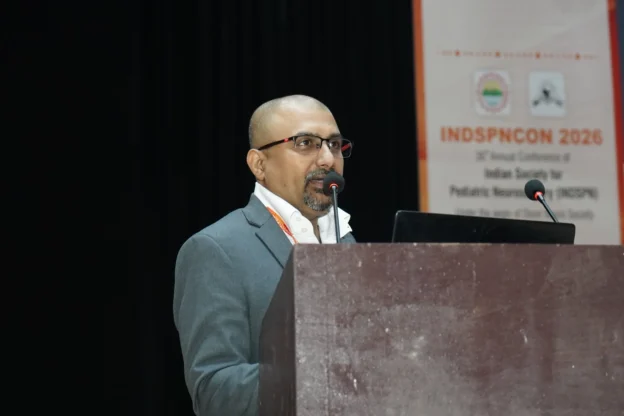
Dr Mohana Rao Patibandla speaking at INDSPNCON 2026 about advanced pediatric neurosurgery techniques including minimally invasive brain surgery and neuro-navigation at Dr Rao’s International Institute of Neurosciences

Pediatric Brain Disorders – A Neurosurgeon’s Overview

Pediatric Brain Disorders – A Neurosurgeon’s Overview

Pediatric brain disorders are among the most complex and emotionally challenging conditions affecting children and their families. These neurological disorders can impact brain development, movement, learning, speech, and overall quality of life. Early diagnosis and timely intervention by experienced specialists can significantly improve outcomes.At Dr. Rao’s Hospital, now evolving as Dr. Rao’s International Institute of Neurosciences (IIN), advanced pediatric neurosurgery and neurology services are available for children suffering from congenital and acquired brain disorders. Led by Dr. Mohana Rao Patibandla, one of the best neurosurgeons in Guntur, the hospital provides comprehensive and minimally invasive care for complex neurological conditions in children.EINpresswire

What Are Pediatric Brain Disorders?

Pediatric brain disorders refer to neurological conditions affecting infants, children, and adolescents. These disorders may be congenital (present at birth) or acquired later due to infections, trauma, tumors, or genetic conditions.

Common pediatric brain disorders include:

  • Hydrocephalus
  • Pediatric brain tumors
  • Epilepsy
  • Cerebral palsy
  • Spina bifida
  • Chiari malformations
  • Traumatic brain injury
  • Developmental brain abnormalities

According to the World Health Organization (WHO), neurological disorders are among the leading causes of disability in children worldwide.

Why Early Diagnosis Matters in Children

The developing brain is highly sensitive but also highly adaptable. Early detection of pediatric neurological disorders allows doctors to intervene before irreversible damage occurs.

Parents should seek immediate medical attention if a child experiences:

  • Persistent headaches
  • Seizures
  • Developmental delays
  • Difficulty walking
  • Poor balance or coordination
  • Visual disturbances
  • Abnormal head size
  • Speech or learning difficulties

Advanced imaging such as MRI, CT scans, and neurophysiological studies help neurosurgeons identify the exact cause and create a personalized treatment plan.

Common Pediatric Brain Disorders Explained

1. Pediatric Brain Tumors

Brain tumors are among the most serious neurological conditions in children. Pediatric brain tumors may be benign or malignant and can affect behavior, coordination, vision, and memory.

Symptoms may include:

  • Morning headaches
  • Vomiting
  • Balance problems
  • Seizures
  • Vision changes

Modern pediatric neurosurgery techniques, including minimally invasive and neuronavigation-guided surgery, improve surgical precision and reduce complications.

Source:
National Cancer Institute (NIH)

2. Hydrocephalus

Hydrocephalus occurs when cerebrospinal fluid accumulates within the brain, causing increased pressure. In infants, it may lead to enlarged head size and delayed development.

Treatment options include:

  • VP shunt surgery
  • Endoscopic Third Ventriculostomy (ETV)
  • Minimally invasive neuroendoscopic procedures

At Dr. Rao’s Hospital Neurosurgery Department, advanced neuroendoscopy techniques help many children recover faster with minimal surgical trauma.

3. Pediatric Epilepsy

Epilepsy is a neurological disorder characterized by recurrent seizures. While medications help many children, some patients develop drug-resistant epilepsy requiring surgical evaluation.

Pediatric epilepsy surgery may include:

  • Lesionectomy
  • Corpus callosotomy
  • Hemispherectomy
  • Laser ablation procedures

Studies published on PubMed show that early epilepsy surgery can significantly improve cognitive development and seizure control in selected children.

4. Cerebral Palsy

Cerebral palsy affects movement, posture, and muscle coordination. It usually results from injury to the developing brain before or shortly after birth.

Children with cerebral palsy may benefit from:

  • Physical therapy
  • Occupational therapy
  • Spasticity management
  • Selective dorsal rhizotomy
  • Rehabilitation programs

How Are Pediatric Brain Disorders Diagnosed?

Accurate diagnosis is critical for successful treatment. Pediatric neurosurgeons and neurologists use advanced technologies to evaluate neurological function.

Diagnostic TestPurpose
MRI BrainDetect tumors, abnormalities, hydrocephalus
CT ScanEmergency brain evaluation
EEGDetect seizure activity
Genetic TestingIdentify inherited neurological disorders
Neuropsychological TestingAssess cognitive function

Explore advanced Neurology Services for comprehensive neurological evaluation and treatment.

Modern Advances in Pediatric Neurosurgery

Technological advancements have transformed pediatric neurosurgery. Minimally invasive techniques reduce pain, shorten hospital stays, and improve recovery.

Innovations include:

  • Neuronavigation systems
  • Intraoperative MRI
  • Neuroendoscopy
  • Microsurgical techniques
  • Intraoperative neuro-monitoring
  • Robotic-assisted procedures

Dr. Mohana Rao Patibandla has extensive international training in pediatric neurosurgery and minimally invasive skull base surgery in the United States, bringing advanced global expertise to Andhra Pradesh.

What Makes Pediatric Brain Surgery Different?

Children are not simply “small adults.” Their brains are still developing, making pediatric neurosurgery uniquely specialized. Surgeons must protect delicate neurological structures while supporting future cognitive and developmental growth.

Special considerations include:

  • Brain development stages
  • Smaller anatomy
  • Long-term developmental outcomes
  • Emotional and family-centered care

Role of Rehabilitation After Pediatric Neurosurgery

Recovery does not end after surgery. Rehabilitation plays a vital role in helping children regain independence and developmental milestones.

Rehabilitation may involve:

  • Speech therapy
  • Physiotherapy
  • Occupational therapy
  • Behavioral therapy
  • Nutritional counseling

Comprehensive post-operative care improves long-term neurological outcomes and quality of life.

Why Choose Dr. Rao’s Hospital for Pediatric Neurosurgery?

Dr. Rao’s Hospital is recognized as one of the leading centers for brain, spine, and nerve care in Andhra Pradesh. The hospital combines advanced technology with compassionate pediatric care.

Advantages include:

  • Advanced minimally invasive neurosurgery
  • Dedicated pediatric neurological care
  • High-end neuroimaging and diagnostics
  • Internationally trained neurosurgeons
  • Comprehensive rehabilitation support
  • Patient-centered multidisciplinary care

Patients seeking expert Spine Surgery and neurological care can also access integrated pediatric spine and neuro-rehabilitation services.

AEO: Frequently Asked Questions About Pediatric Brain Disorders

What are the symptoms of pediatric brain disorders?

Symptoms may include seizures, headaches, developmental delay, abnormal head growth, difficulty walking, weakness, balance problems, and behavioral changes. Early evaluation by a pediatric neurosurgeon is important.

How are pediatric brain disorders diagnosed?

Pediatric brain disorders are diagnosed using MRI scans, CT scans, EEG tests, neurological examinations, and sometimes genetic testing. Early diagnosis improves treatment success and long-term development.

What causes pediatric brain tumors?

Pediatric brain tumors may result from genetic mutations, inherited syndromes, or unknown causes. Advanced imaging and neurosurgical evaluation help determine the best treatment approach.

Can epilepsy in children be cured with surgery?

Some children with drug-resistant epilepsy benefit significantly from epilepsy surgery. Procedures can reduce or eliminate seizures and improve quality of life.

Why choose Dr. Rao’s Hospital for pediatric neurosurgery?

At Dr. Rao’s Hospital, led by Dr. Mohana Rao Patibandla, one of the best neurosurgeons in Guntur, patients receive advanced, compassionate care using cutting-edge minimally invasive neurosurgery techniques.

Conclusion

Pediatric brain disorders require specialized expertise, timely diagnosis, and multidisciplinary care. Modern pediatric neurosurgery offers hope and improved outcomes for children suffering from complex neurological conditions.

With advanced technologies, minimally invasive surgical approaches, and compassionate patient-centered care, Dr. Rao’s Hospital continues to provide world-class treatment for pediatric neurological disorders in Andhra Pradesh and India.

If you’re searching for the best neurosurgeon in Guntur or expert care for complex brain and spine conditions, visit Dr. Rao’s Hospital. Contact us at 📞 090100 56444 or 📧 info@drraoshospitals.com.

Contact & Social Media

Dr Mohana Rao Patibandla presenting India’s first BrainPath-assisted parafascicular intraventricular tumor surgery series at NSI 2025

How a New Brain Surgery Approach Is Changing Brain Tumor Care in India

How a New Brain Surgery Approach Is Changing Intraventricular Tumor Care in India

Deep-seated brain tumors that arise within the ventricular system have long tested the limits of neurosurgical precision. Their location—surrounded by critical white-matter pathways—means that even successful tumor removal can sometimes come at the cost of neurological function.

At the Neurological Society of India Conference (NSICON / NSI 2025), a presentation from Guntur, Andhra Pradesh, quietly signaled a shift in how these tumors may be approached in the Indian clinical setting.

Senior neurosurgeon Dr. Mohana Rao Patibandla presented a 51-case consecutive clinical series on BrainPath-assisted intraventricular tumor resection using the parafascicular approach—the first sustained Indian adoption and the largest reported series from the country to date.

Rather than focusing on novelty, the presentation centered on outcomes, feasibility, and anatomical respect—principles increasingly defining modern neurosurgery worldwide.


Why Intraventricular Brain Tumors Are So Difficult to Treat

Intraventricular tumors arise within the fluid-filled cavities of the brain—the lateral, third, or fourth ventricles. While relatively uncommon, they often present late, with symptoms such as:

  • Persistent headache due to raised intracranial pressure
  • Hydrocephalus
  • Visual disturbances
  • Cognitive or motor deficits

Traditional surgical routes—transcortical or transcallosal—require passing through healthy brain tissue to reach these deep lesions. Although effective for access, these approaches inherently carry risks related to cortical and white-matter injury.

For decades, neurosurgeons have searched for ways to reduce approach-related damage without compromising tumor removal.


The Parafascicular Concept: Operating Between Pathways, Not Through Them

The parafascicular approach is based on a simple but powerful principle: the brain has natural corridors between white-matter fiber tracts.

Instead of cutting across functional pathways, this strategy navigates between them, minimizing collateral injury. When combined with tubular access systems such as BrainPath and precise neuronavigation, surgeons can reach deep-seated intraventricular tumors through a narrow, controlled surgical corridor.

Globally, this technique has gained attention only in recent years. Until now, however, Indian outcome-based data supporting this approach had been limited.


What the NSI 2025 Series Demonstrated

The 51-case series presented at NSI 2025 included:

  • Pediatric and adult patients
  • Tumors involving the lateral, third, and fourth ventricles
  • A uniform minimally invasive parafascicular strategy applied consistently

Across the series, several clinically relevant observations were noted:

  • High rates of gross or near-total tumor resection
  • Limited approach-related neurological morbidity
  • Controlled blood loss and operative duration despite lesion depth
  • Feasibility across age groups, including children

Importantly, the presentation emphasized reproducibility and safety rather than isolated technical success.


Why This Indian Dataset Matters

In global neurosurgery, technique adoption often precedes long-term outcome data. What distinguished the NSI 2025 presentation was not only the method itself, but the scale and consistency of its application within an Indian tertiary-care environment.

The series represents:

  • The first documented sustained use of parafascicular intraventricular surgery in India
  • The largest single-surgeon dataset from the country using this technique
  • A foundational reference for training, research, and future multi-center collaboration

As neurosurgery increasingly prioritizes functional preservation, such indigenous datasets play a critical role in shaping responsible adoption.


Watch the NSI 2025 Scientific Presentation

The complete academic presentation delivered at NSI 2025 is available on YouTube:

▶ BrainPath-Assisted Intraventricular Tumor Surgery – NSI 2025

The video details surgical planning, execution, outcome analysis, and limitations in a purely scientific and educational format.

One India published the talk – NSI 2025: Dr. Mohana Rao Patibandla’s Groundbreaking Series On Intraventricular Brain Tumor Surgery

MSN – NSI 2025: Dr. Patibandla presents India’s largest tumor series

IBTIMES: NSI 2025: Dr. Mohana Rao Patibandla’s 51-Case Series Signals India’s Entry into Parafascicular Intraventricular Tumor Surgery

ASIA NET: NSI 2025: Dr. Mohana Rao Patibandla on India’s Largest Parafascicular Series


Advanced Neurosurgical Care Beyond Metropolitan Centers

The ability to perform complex deep-brain surgery consistently depends on more than surgical technique alone. At Dr. Rao’s Hospital, this work is supported by:

  • Advanced neuronavigation systems
  • Minimally invasive tubular access technologies
  • Dedicated neurosurgical operating theaters
  • Comprehensive perioperative and neurocritical care

This integration of infrastructure and expertise has enabled systematic adoption of advanced neurosurgical strategies in a non-metro setting.


About Dr. Mohana Rao Patibandla

Dr. Mohana Rao Patibandla is a senior Indian neurosurgeon and the Founder, Chairman, and Managing Director of Dr. Rao’s Hospital, a tertiary-care center for neurology, neurosurgery, and spine surgery in Guntur, Andhra Pradesh, India. With over two decades of clinical experience, he is known for his work in minimally invasive brain and spine surgery, skull base surgery, pediatric neurosurgery, epilepsy surgery, neuro-oncology, and functional neurosurgery.

He completed his MBBS from Andhra Medical College, Visakhapatnam, and his MCh in Neurosurgery from Nizam’s Institute of Medical Sciences (NIMS), Hyderabad. Dr. Patibandla has received advanced fellowship training in India and the United States, including skull base surgery, epilepsy surgery, minimally invasive neurosurgery, pediatric neurosurgery, stereotactic and radiosurgery, cerebrovascular and endovascular neurosurgery, and neuro-oncology.

He is recognized for introducing advanced neurosurgical technologies and protocols in Andhra Pradesh, including endoscopic and keyhole neurosurgery, intraoperative neuromonitoring, and image-guided procedures.


What This Means for Patients and the Field

For patients facing intraventricular brain tumors, the parafascicular approach offers a potential pathway toward safer access with greater emphasis on neurological preservation.

For the neurosurgical community, the NSI 2025 series serves as an early Indian reference point—encouraging careful adoption, structured reporting, and long-term outcome evaluation.

Rather than marking an endpoint, the 51-case series highlights a direction: one in which deep brain surgery evolves toward precision, restraint, and respect for anatomy.


Implications for Neurosurgical Training and Skill Development

The adoption of parafascicular strategies for intraventricular tumors has implications beyond individual patient outcomes. It necessitates a shift in how neurosurgeons are trained to think about deep brain anatomy.

Traditional neurosurgical training has emphasized safe cortical entry points and exposure-based resections. In contrast, parafascicular surgery requires:

  • Advanced understanding of white-matter anatomy and tractography
  • Preoperative trajectory planning rather than exposure planning
  • Comfort with limited working corridors and depth-oriented visualization

As more Indian centers begin to explore minimally invasive deep brain surgery, structured training modules and cadaveric simulation will become increasingly important.


Ethical Considerations in Adopting New Surgical Techniques

The introduction of newer surgical approaches raises ethical questions related to patient selection, informed consent, and outcome transparency.

In the NSI 2025 presentation, emphasis was placed on responsible adoption—selecting cases where the parafascicular approach offered a clear anatomical advantage rather than using the technique indiscriminately.

This highlights an important principle in modern surgery: innovation should be guided by patient benefit and evidence, not novelty alone.


Role of Long-Term Outcome Measurement

While early postoperative neurological preservation is encouraging, long-term follow-up remains essential—particularly for pediatric patients.

Future Indian studies will need to evaluate:

  • Neurocognitive development and academic performance in children
  • Quality-of-life metrics in adults
  • Durability of tumor control
  • Late-onset neurological or neuropsychological sequelae

Such data will be critical in determining how widely parafascicular approaches should be incorporated into national treatment guidelines.


Moving Toward Multi-Center Collaboration in India

Single-center experiences, while valuable, represent only the first step in technique validation. The NSI 2025 series opens the door for broader collaboration across Indian neurosurgical centers.

Multi-center registries and shared outcome reporting could help:

  • Define standardized indications
  • Benchmark complication rates
  • Shorten learning curves for newer surgeons
  • Generate data relevant to diverse patient populations

Such collaboration would also ensure that advanced techniques evolve within a framework of shared responsibility and peer review.


The Broader Shift in Neurosurgical Philosophy

The growing interest in parafascicular and minimally invasive approaches reflects a broader philosophical shift in neurosurgery—from maximal exposure to maximal preservation.

Success is no longer measured solely by radiological extent of resection, but by how well neurological function, cognition, and quality of life are maintained after surgery.

In this context, the NSI 2025 presentation aligns with global trends that prioritize precision, restraint, and anatomical respect.


Conclusion: An Evolving Chapter, Not a Final Verdict

The Indian experience with parafascicular intraventricular tumor surgery remains in its early stages. The 51-case series presented at NSI 2025 should therefore be viewed not as a definitive conclusion, but as an important opening chapter.

As additional data emerge, techniques refine, and collaborative research expands, the true role of this approach will be more clearly defined.

For now, the work contributes a meaningful Indian perspective to an evolving global conversation—one that places patient safety, functional preservation, and scientific rigor at the center of neurosurgical progress.

Dr. Mohana Rao Patibandla, M. Ch (NIMS), FESBSS (KIMS), FAANS (USA), FMINS (OSU, USA), FEVNS (UVA, USA), FPNS (UCD, USA), FNOSRS (UVA, USA).

Dr. Rao’s Hospital / Patibandla Narayana Swamy Neurosciences LLP

12-19-67, Old Bank Road, Kothapet, Besides AK Khan Biryani point, Guntur, Andhra Pradesh, India 522001

Phone: +91 9010056444

Email: info@drraoshospitals.com; drpatibandla@gmail.com; Website: https://drraoshospitals.com

YouTube

Facebook

Instagram

Google Business Page

LinkedIn

X / Twitter


Dr. Rao’s Hospital, Guntur

Dr. Mohana Rao Patibandla

About Dr. Rao’s Hospital

Advanced Neurosurgery in Guntur

Comprehensive Neurology Care in Guntur

Advanced Spine Surgery in Guntur

Minimally Invasive Brain and Spine Surgery

Pediatric Neurosurgery in Guntur

Advanced Epilepsy Surgery in Guntur

International Patients – Neurosurgery in India

Book an Appointment at Dr. Rao’s Hospital

Frequently Asked Questions (FAQs)

What is parafascicular brain surgery?

Parafascicular brain surgery is a minimally invasive neurosurgical technique that accesses deep brain tumors by navigating between natural white-matter fiber pathways rather than cutting through them. This approach aims to reduce injury to healthy brain tissue.

What is BrainPath-assisted intraventricular tumor surgery?

BrainPath-assisted surgery uses a tubular access system guided by neuronavigation to reach intraventricular brain tumors through a narrow corridor. It supports parafascicular access and helps minimize approach-related brain injury.

How is parafascicular surgery different from traditional brain tumor surgery?

Traditional brain tumor surgery often involves transcortical or transcallosal approaches that pass through normal brain tissue. Parafascicular surgery instead follows natural anatomical corridors, focusing on functional preservation while achieving tumor removal.

Is parafascicular intraventricular tumor surgery safe?

When performed in appropriately selected patients and specialized centers, parafascicular intraventricular tumor surgery has shown encouraging safety profiles with limited approach-related neurological deficits. Long-term outcomes continue to be studied.

Who is a candidate for parafascicular intraventricular tumor surgery?

Candidacy depends on tumor location, size, relationship to white-matter tracts, patient age, and overall neurological status. A detailed MRI and surgical planning are essential to determine suitability.

Can children undergo parafascicular brain tumor surgery?

Yes. Parafascicular approaches have been applied in pediatric patients, where preserving developing white-matter pathways is particularly important. Careful case selection and specialized expertise are required.

Does parafascicular surgery reduce recovery time?

Because this approach minimizes disruption to healthy brain tissue, some patients may experience better functional preservation and smoother recovery, although recovery time varies depending on tumor type and individual factors.

Is this type of brain surgery available in India?

Parafascicular BrainPath-assisted intraventricular tumor surgery has been introduced in select Indian centers, with clinical data presented at national neurosurgical conferences. Availability depends on expertise and infrastructure.

What are the risks of intraventricular brain tumor surgery?

Risks can include bleeding, infection, neurological deficits, hydrocephalus, or tumor recurrence. The exact risk profile depends on tumor location, size, and the surgical approach used.

How do surgeons plan parafascicular brain surgery?

Surgeons use high-resolution MRI, tractography, and neuronavigation to plan a surgical corridor that avoids critical white-matter pathways while allowing safe access to the tumor.

Where can I learn more about this surgical technique?

Scientific presentations and peer-reviewed discussions, such as those delivered at national neurosurgical conferences, provide detailed insights. Educational videos and expert consultations also help patients understand the approach.