How Dr. Mohana Rao Patibandla Is Advancing Transformative Neurosciences Healthcare in India
India’s healthcare ecosystem is evolving rapidly, particularly in highly specialized fields such as neurosciences, neurosurgery, spine surgery, stroke care, and minimally invasive neurological interventions.
For decades, advanced neurological treatment remained concentrated primarily within major metropolitan cities. Patients from regional areas frequently traveled long distances seeking specialized care for brain tumors, spinal disorders, epilepsy, stroke, and complex neurosurgical diseases.
However, India’s modern healthcare transformation is gradually shifting toward decentralization, where advanced medical expertise and sophisticated neurological care are increasingly becoming accessible beyond metropolitan boundaries.
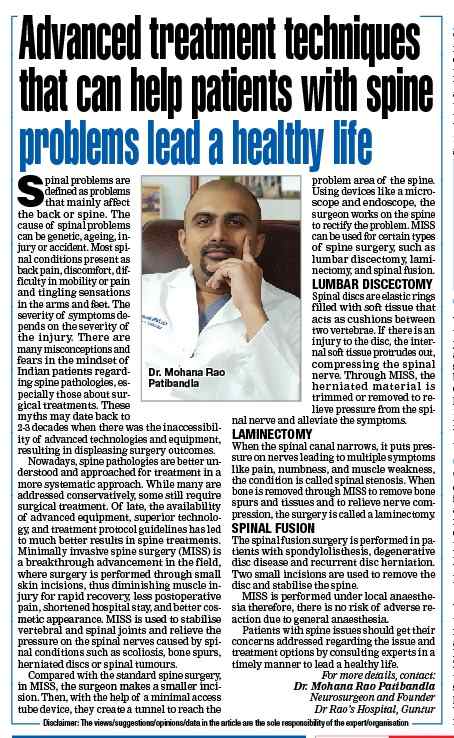
A recent Times of India feature highlighted the inspiring journey of Dr. Mohana Rao Patibandla and his commitment toward building transformative neurosciences healthcare infrastructure in Andhra Pradesh.
Primary Source: Times of India – Dr Mohana Rao Patibandla is committed to transformative healthcare
The Early Journey of a Neurosurgeon
Every remarkable healthcare institution begins with a vision, but behind every vision lies years of dedication, education, sacrifice, and relentless pursuit of excellence.
According to the Times of India article, Dr. Mohana Rao Patibandla was born and raised in Bhimavaram, Andhra Pradesh, where his early years were shaped by a strong sense of responsibility and commitment toward society.
His academic journey began at Andhra Medical College, Visakhapatnam, where he pursued MBBS and graduated in 2002.
The article emphasizes that even during his early educational years, Dr. Patibandla demonstrated strong academic commitment and a deep interest in healthcare service. This foundation later became instrumental in shaping his long-term mission of advancing neurosciences care in India.
American Association of Neurological Surgeons
Specialization in Neurosurgery
Following his undergraduate medical education, Dr. Patibandla pursued specialization in neurosurgery at Nizam’s Institute of Medical Sciences (NIMS), Hyderabad, completing his neurosurgical training in 2013.
Neurosurgery remains one of the most technically demanding specialties in medicine because it involves delicate structures including:
- The brain
- Spinal cord
- Cranial nerves
- Peripheral nerves
- Critical vascular structures
Even small surgical inaccuracies may affect movement, speech, sensation, memory, cognition, or overall neurological function.
This level of complexity requires:
- Technical precision
- Advanced training
- Continuous learning
- Multidisciplinary collaboration
- Patient-centered decision-making
International Training and Global Exposure
One of the defining aspects of Dr. Patibandla’s journey, as described in the Times of India feature, was his decision to pursue advanced international training across multiple neurosciences subspecialties.
His fellowships and training included:
- Minimally invasive skull base surgery in Ohio, USA
- Pediatric neurosurgery and minimally invasive neurosurgery in Colorado, USA
- Neuro-oncology
- Functional and stereotactic radiosurgery in Virginia, USA
International exposure often provides neurosurgeons with access to:
- Advanced surgical technologies
- Modern operating systems
- Research-oriented practice
- Evidence-based medicine
- Multidisciplinary care models
These experiences frequently shape long-term institutional vision and healthcare leadership.
The Decision to Return to India
Many highly trained specialists choose to continue careers abroad because of access to infrastructure, research opportunities, and advanced medical systems.
However, the Times of India article highlights that Dr. Patibandla made the deliberate decision to return to India and establish advanced neurosciences care within his home state.
This decision reflected a broader healthcare philosophy focused on:
- Accessibility
- Regional healthcare development
- Patient-centered care
- Ethical medical systems
- Long-term institutional growth
The article describes this decision not simply as a professional move but as a reflection of patriotism and commitment toward community healthcare improvement.
The Establishment of Dr. Rao’s Hospital
The return to India eventually led to the establishment of Dr. Rao’s Hospital – International Institute of Neurosciences in Guntur, Andhra Pradesh.
According to the Times of India feature, the institution was built with the goal of bringing advanced neurosurgical and neurological care closer to regional populations.
The hospital focuses on:
- Brain surgery
- Spine surgery
- Stroke intervention
- Endovascular neurosurgery
- Neuro-oncology
- Pediatric neurosciences
- Minimally invasive neurosurgery
Advanced neurosciences infrastructure requires enormous commitment involving:
- Technology acquisition
- Specialized operating rooms
- Critical care systems
- Advanced imaging
- Multidisciplinary teams
Building such infrastructure outside metropolitan regions represents one of the most challenging aspects of healthcare development.
The Role of Technology in Modern Neurosciences
Modern neurological care depends heavily on advanced technology.
The Times of India article highlights the institution’s focus on advanced neurosurgical systems and cutting-edge technologies.
Technologies transforming neurosciences include:
- Neuronavigation systems
- Advanced MRI imaging
- Endoscopic brain surgery
- Minimally invasive spine surgery
- Endovascular procedures
- Intraoperative neuromonitoring
These advancements improve:
- Surgical precision
- Patient safety
- Recovery speed
- Rehabilitation outcomes
- Long-term neurological function
Minimally Invasive Neurosurgery at Dr. Rao’s Hospital
The Importance of Minimally Invasive Neurosurgery
One of the major transformations in modern neurosciences is the evolution of minimally invasive surgical approaches.
Traditional surgeries often required:
- Larger incisions
- Longer hospitalization
- Greater tissue disruption
- Extended recovery periods
Modern minimally invasive techniques now allow selected procedures through:
- Smaller incisions
- Endoscopic approaches
- Image-guided systems
- Microsurgical precision
These approaches may reduce:
- Postoperative pain
- Blood loss
- Hospital stay duration
- Rehabilitation time
Mayo Clinic – Minimally Invasive Surgery
Regional Healthcare Accessibility Matters
One of the strongest themes throughout the article is healthcare accessibility beyond metropolitan cities.
Patients with neurological emergencies often face:
- Travel burden
- Financial stress
- Delayed diagnosis
- Interrupted rehabilitation
- Limited specialist access
Regional neuroscience centers help reduce these barriers significantly.
According to the Times of India feature, the hospital has emerged as an important healthcare destination for patients seeking advanced neurological care in Andhra Pradesh.
This decentralization reflects a broader transformation occurring across India’s healthcare landscape.
The Human Side of Healthcare
While technology remains critical, healthcare ultimately revolves around human trust and compassion.
The Times of India article repeatedly reflects themes of:
- Service
- Patriotism
- Community commitment
- Compassionate healthcare
- Ethical leadership
Patients facing neurological disorders often experience:
- Fear
- Anxiety
- Emotional stress
- Financial uncertainty
- Concerns regarding long-term recovery
Compassionate communication and patient-centered care therefore remain essential components of meaningful healthcare systems.
Recognition and Healthcare Excellence
The article also highlights the institution’s recognition through the Atal Achievement Awards 2023, where Dr. Rao’s Hospital received recognition as the Best Neurology and Neurosurgery Hospital.
Awards and institutional recognition help reinforce:
- Clinical credibility
- Healthcare quality standards
- Public trust
- Academic visibility
However, long-term healthcare excellence ultimately depends on sustained patient outcomes, ethical systems, and continuous innovation.
International Patients and Global Standards
According to the Times of India article, the hospital has also attracted international patients seeking advanced neurological treatment.
Global healthcare competitiveness increasingly depends on:
- Advanced infrastructure
- Specialized expertise
- Technology integration
- Patient safety systems
- Affordable healthcare accessibility
India continues emerging as an important destination for advanced medical treatment because of its growing combination of expertise, innovation, and accessibility.
The Future of Neurosciences in India
India’s neurosciences ecosystem continues evolving rapidly through:
- Artificial intelligence-based diagnostics
- Robotic surgery
- Endovascular stroke intervention
- Advanced neuroimaging
- Precision medicine
- Minimally invasive neurosurgery
At the same time, future healthcare transformation will depend on ensuring these advancements become accessible across regional India rather than remaining concentrated solely within metro cities.
Healthcare systems that combine:
- Advanced technology
- Ethical care
- Accessibility
- Patient trust
- Continuous innovation
will likely define the next era of neurosciences development in India.
Conclusion
The Times of India feature presents the journey of Dr. Mohana Rao Patibandla as more than a story of professional achievement alone.
It reflects a broader vision regarding the future of healthcare in India — one where advanced neurosciences, global expertise, ethical leadership, and patient-centered systems combine to improve accessibility and outcomes for patients beyond metropolitan regions.
As advanced neurological infrastructure continues evolving across India, institutions such as
Dr. Rao’s Hospital – International Institute of Neurosciences
represent an important part of the country’s expanding healthcare transformation.
Ultimately, the true impact of transformative healthcare lies not only in technology or infrastructure but in improving lives through compassionate, accessible, and meaningful medical care.
Frequently Asked Questions (FAQ)
1. Who is Dr. Mohana Rao Patibandla?
Dr. Mohana Rao Patibandla is an internationally trained neurosurgeon and founder of Dr. Rao’s Hospital – International Institute of Neurosciences.
2. What services are offered at Dr. Rao’s Hospital?
The hospital provides advanced brain, spine, stroke, endovascular, pediatric neurosciences, and minimally invasive neurosurgical care.
3. What is minimally invasive neurosurgery?
It involves smaller incisions and advanced technologies to improve precision and reduce recovery time.
4. Why are regional neuroscience centers important?
Regional neuroscience systems improve healthcare accessibility while reducing travel burden and treatment delays.
5. How is technology transforming neurological care?
Technologies such as neuronavigation, endoscopy, advanced imaging, and minimally invasive systems improve diagnosis and patient outcomes.
Internal Links
Dr. Rao’s Hospital – International Institute of Neurosciences
Minimally Invasive Neurosurgery
Endoscopic Brain Surgery
About Dr. Mohana Rao Patibandla
Call To Action
If you or your loved one is experiencing neurological symptoms such as persistent headaches, seizures, spinal pain, weakness, stroke warning signs, or neurological disorders, timely expert evaluation is essential.
Dr. Rao’s Hospital – International Institute of Neurosciences
12-19-67, Old Bank Road, Kothapet, Besides AK Biryani Point, Guntur, Andhra Pradesh
Phone: +91 9010056444
Email: info@drraoshospitals.com
Website: https://drraoshospitals.com/
Connect With Us
“`