Tag Archives: Stereotactic Radiosurgery

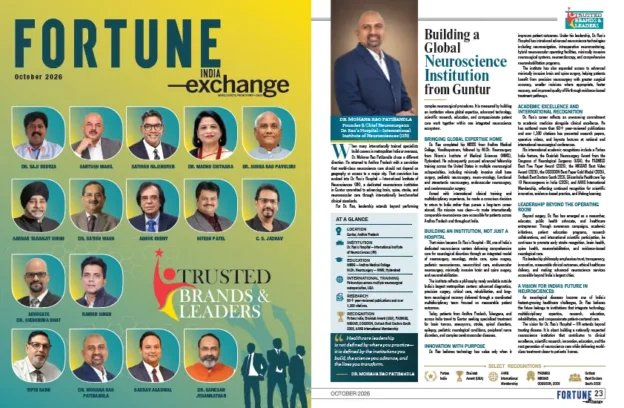
Fortune India Exchange October 2026 Trusted Brands & Leaders feature showing Dr. Mohana Rao Patibandla and his profile, “Building a Global Neuroscience Institution from Guntur.”

Fortune India Exchange Features Dr. Rao’s IIN: Building a Global Neuroscience Institution from Guntur

Fortune India Exchange Features Dr. Rao’s IIN: Building a Global Neuroscience Institution from Guntur

By Dr. Mohana Rao Patibandla ·
· Guntur, Andhra Pradesh

Fortune India Exchange October 2026 Trusted Brands & Leaders feature showing Dr. Mohana Rao Patibandla and his profile, “Building a Global Neuroscience Institution from Guntur.”

Dr. Mohana Rao Patibandla, Founder and Chief Neurosurgeon of Dr. Rao’s Hospital – International Institute of Neurosciences (IIN), Guntur, featured in Fortune India Exchange’s October 2026 “Trusted Brands & Leaders” section, in the profile “Building a Global Neuroscience Institution from Guntur.”


Dr. Mohana Rao Patibandla featured in Fortune India Exchange’s October 2026 “Trusted Brands & Leaders” section.


Fortune India Exchange has featured Dr. Mohana Rao Patibandla, minimally invasive neurosurgeon, pediatric neurosurgeon, cerebrovascular endovascular neurosurgeon, skull base neurosurgeon, neuro-oncology specialist and stereotactic radiosurgeon, in its October 2026 issue. 


The profile, titled “Building a Global Neuroscience Institution from Guntur,” appears in the magazine’s “Trusted Brands & Leaders” section and covers his training, research and the growth of Dr. Rao’s Hospital – International Institute of Neurosciences (IIN) in Guntur, Andhra Pradesh. The official release is available on EIN Presswire.


“Healthcare leadership is not defined by where you practice—it is defined by the institutions you build, the science you advance, and the lives you transform.”

— Dr. Mohana Rao Patibandla, Neurosurgeon & Founder, Dr. Rao’s Hospital

Specialised neuroscience care outside the metros


The feature looks at how specialised neuroscience services can be built outside India’s largest metropolitan centres. It describes the clinical areas served by Dr. Rao’s IIN, the technologies in its operating model, and the role of research, education and multidisciplinary care.


Dr. Rao’s IIN lists neurosurgery, neurology, stroke care, spine surgery, pediatric neurosciences, neurocritical care, endovascular neurosurgery, minimally invasive brain and spine surgery, and neurorehabilitation among its service areas. Patients present with conditions such as brain tumours, aneurysms, stroke, spinal disorders, epilepsy, pediatric neurological conditions, peripheral nerve disorders and cerebrovascular diseases. Explore the full range on the Dr. Rao’s IIN website.


Medical education and specialist training


According to the published profile, Dr. Rao completed his MBBS at Andhra Medical College, Visakhapatnam, and his M.Ch. in Neurosurgery at Nizam’s Institute of Medical Sciences (NIMS), Hyderabad. 


The article also reports fellowship training in the United States across several neurosurgical subspecialties:


  • Minimally invasive skull base surgery
  • Pediatric neurosurgery
  • Neuro-oncology
  • Functional and stereotactic neurosurgery
  • Endovascular neurosurgery
  • Cerebrovascular surgery
  •  

The profile describes his decision to return to Andhra Pradesh and build his practice in Guntur as part of a focus on developing specialised neurological services in the region. Today, Dr. Rao’s IIN draws patients from other Indian states and from abroad, and its reach has extended to seven cities.


Technology at Dr. Rao’s IIN


The October issue lists the following among the technologies and services described at the institution:

  • Neuronavigation
  • Intraoperative neurophysiological monitoring (IONM)
  • Hybrid neurovascular operating facilities and a biplane catheterisation laboratory
  • Minimally invasive neurosurgical systems and neuroendoscopy
  • Neurorehabilitation programmes
  • Hybrid Operation Theatre


Technology is applied case by case. Its use depends on the diagnosis, the proposed procedure and the clinical team’s assessment, and its presence alone does not establish a particular treatment outcome. Learn more about minimally invasive brain and spine surgery and endovascular neurosurgery at Dr. Rao’s IIN. For background on image-guided surgery, see Brainlab.


Research and recognition


The profile reports that Dr. Rao has authored more than 60 peer-reviewed publications and received over 1,300 citations. It also refers to his presentations of research papers, operative videos and lectures at national and international neurosurgical conferences, and over the course of his career he has performed 12,000 minimally invasive surgeries, 4,000 of them in Guntur.


The article lists the following professional recognitions:


These details are reported as part of the publication’s profile and have not been independently evaluated.

Public education and neurological care


Beyond clinical practice, the article describes Dr. Rao’s involvement in patient education, academic initiatives, research collaborations and public awareness on stroke recognition, brain health, spine health and neurorehabilitation.


Awareness matters because some symptoms need urgent assessment. Sudden weakness, difficulty speaking, loss of balance or a sudden severe headache can indicate a medical emergency and warrant immediate medical attention. The NHS guide to stroke symptoms explains the warning signs. For other neurological conditions, clinical assessment determines the diagnosis and whether observation, medication, rehabilitation, surgery or another approach is appropriate.


Frequently asked questions


What did Fortune India Exchange publish about Dr. Rao’s IIN?

The October 2026 issue carries the profile “Building a Global Neuroscience Institution from Guntur” in the Trusted Brands & Leaders section.

Where is Dr. Rao’s IIN located?


Old Bank Street, besides AK Biryani Point, Kothapeta, Guntur, Andhra Pradesh, India.

How can I contact Dr. Rao’s IIN?


Email info@drraoshospitals.com or call +91 90100 56444.

Book a consultation at Dr. Rao’s IIN, Guntur.
Visit drraoshospitals.com, email info@drraoshospitals.com or call +91 90100 56444.


Editorial note: This post reports on a published profile and attributes biographical, research and institutional details to that source. It does not represent an independent assessment of clinical performance or patient outcomes. This content is for general information and is not a substitute for professional medical advice.


Publication: Fortune India Exchange · Issue: October 2026 · Feature: “Building a Global Neuroscience Institution from Guntur” · Source release: EIN Presswire

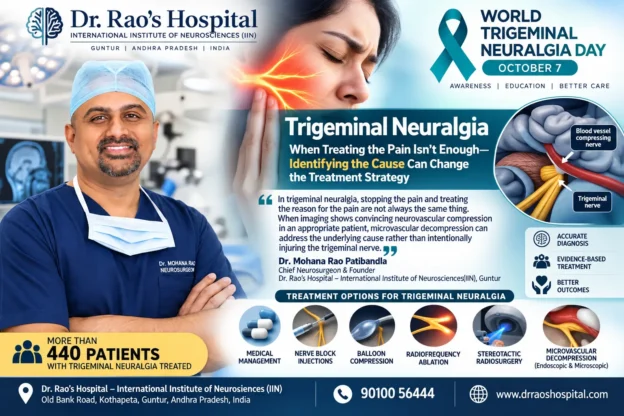
World Trigeminal Neuralgia Day infographic showing Dr. Mohana Rao Patibandla and treatment options for trigeminal neuralgia at Dr. Rao's Hospital in Guntur

Trigeminal Neuralgia: When Treating the Pain Isn’t Enough, Guntur Neurosurgeon Says

Trigeminal Neuralgia Treatment: Why Finding the Cause of Facial Pain Matters


Trigeminal neuralgia can cause sudden, severe facial pain that feels like an electric shock.
But for some patients, the most important question is not simply how to stop the pain—it is
whether an underlying cause can be identified and treated.


What Is Trigeminal Neuralgia?


Trigeminal neuralgia is a neurological condition characterized by recurrent attacks of
severe facial pain. Patients may describe the pain as electric shocks, stabbing sensations,
or lightning-like pain.


Everyday activities such as talking, chewing, brushing the teeth, touching the face, or even
exposure to a light breeze may trigger an attack.


Because the pain may occur around the jaw, cheek, or teeth, some patients initially consult
a dentist. When dental disease does not adequately explain the symptoms, a neurological
cause should be considered.


Trigeminal Neuralgia Does Not Have One Best Treatment for Everyone


One of the most important principles in treating trigeminal neuralgia is that the same
procedure is not necessarily appropriate for every patient.


Treatment should take into account the patient’s symptoms, neurological examination,
MRI findings, age, medical fitness, previous treatments, and willingness to accept the
risks associated with a particular procedure.


The goal is not simply to choose the procedure with the highest reported success rate.
The more useful question is:

Which treatment provides the best balance of durable pain control, preservation
of facial sensation, procedural risk, and the patient’s individual preferences?


Why MRI Matters in Trigeminal Neuralgia


Appropriate brain MRI is an important part of evaluating suspected trigeminal neuralgia.
Imaging can help exclude other causes and can provide information relevant to treatment
planning and surgical candidacy.


However, an MRI should not be interpreted in isolation. Simply seeing a blood vessel close
to the trigeminal nerve does not automatically establish that the vessel is responsible
for the patient’s pain.


The clinical symptoms and imaging findings need to tell a consistent story.


When a patient has clinical features consistent with classical trigeminal neuralgia and
MRI demonstrates a convincing neurovascular relationship, the treatment discussion may
change significantly.


What Is Neurovascular Compression?


In classical trigeminal neuralgia, a blood vessel may compress or contact the trigeminal
nerve and contribute to the characteristic attacks of facial pain.


When the clinical diagnosis and imaging support this mechanism, treatment may be directed
at the underlying neurovascular conflict rather than only interrupting pain transmission.


This distinction is particularly important when long-term pain control and preservation
of facial sensation are important goals.


What Is Microvascular Decompression (MVD)?


Microvascular decompression, commonly called MVD, is a surgical procedure designed to
address the underlying neurovascular conflict in appropriately selected patients.


Unlike procedures that intentionally injure or interrupt the trigeminal nerve to control
pain, MVD involves identifying the offending vascular structure and separating it from
the nerve, typically by placing protective material between them.


This makes MVD fundamentally different from procedures that intentionally interrupt
trigeminal nerve transmission.


The European Academy of Neurology guideline cited in the recent discussion recommends
microvascular decompression as first-line surgery for classical trigeminal neuralgia
when surgery is indicated.


Why MVD May Be Considered for Long-Term Pain Relief


The objective of treatment is not always simply immediate pain relief. For appropriately
selected patients, durable pain control while preserving facial sensation may be an
important consideration.


Comparative evidence cited in the EIN Presswire release reports higher short- and
long-term pain freedom with MVD compared with stereotactic radiosurgery in selected
patients, together with lower rates of facial numbness and dysesthesia, although MVD
carries greater postoperative procedural risk.


One prospective long-term comparison cited in the release reported pain-free rates
after MVD of 83% at five years compared with 47% after stereotactic radiosurgery,
with a longer median time to pain recurrence following MVD.


These findings do not mean that MVD is the right procedure for every patient. Instead,
they reinforce the importance of matching the treatment to the patient’s diagnosis,
anatomy, health, and treatment goals.


Is Microvascular Decompression Suitable for Everyone?


No. Not every person with trigeminal neuralgia is an appropriate candidate for MVD.


An older patient with significant medical comorbidities, a patient who does not want
intracranial surgery, or a patient without convincing neurovascular compression may be
better served by a less invasive treatment approach.


The decision should therefore be individualized rather than based solely on the name
of the procedure.


Other Treatment Options for Trigeminal Neuralgia


Depending on the patient’s diagnosis and individual circumstances, treatment options
may include:


  • Medical treatment for patients who achieve adequate pain control
  • Nerve-block and injection-based treatment in selected circumstances
  • Radiofrequency ablation through the foramen ovale
  • Balloon compression or rhizotomy
  • Stereotactic radiosurgery
  • Microvascular decompression
  • Endoscopic-assisted or endoscopic microvascular decompression in appropriately selected cases


The European Academy of Neurology guideline cited in the release recommends surgery when
pain is inadequately controlled with medication or medication is poorly tolerated, with
the choice of procedure guided by the type of trigeminal neuralgia and individual
circumstances.


More Than 440 Trigeminal Neuralgia Patients: Experience Across the Treatment Spectrum


Dr. Rao’s Hospital – International Institute of Neurosciences (IIN) reports treatment
experience involving more than 440 patients with trigeminal neuralgia.


The institutional procedural experience reported in the EIN Presswire release includes
approximately:


  • 213 microvascular decompression procedures
  • 114 endoscopic MVD procedures
  • 76 stereotactic radiosurgery procedures
  • 35 balloon compression/rhizotomy procedures
  • 120 radiofrequency ablation procedures


These figures represent institutional procedural experience rather than unique patient
counts. An individual patient may undergo more than one procedure during the course of
treatment.


This breadth of experience highlights an important principle: having multiple treatment
options is valuable only when those options are used selectively and appropriately.


When Recurrent Trigeminal Neuralgia Should Prompt Reassessment


Repeated procedures can provide meaningful pain relief and may remain appropriate for
patients who are not candidates for MVD or who prefer a less invasive approach.


However, when pain repeatedly returns, reassessment may be appropriate rather than
automatically repeating the same procedure.


Recurrent pain should prompt consideration of whether the diagnosis remains consistent
with classical trigeminal neuralgia, whether there is convincing neurovascular conflict,
what previous procedures have changed, and whether the treatment strategy should be
modified.


Five Questions to Ask Before Trigeminal Neuralgia Treatment


Patients considering a procedure for trigeminal neuralgia may benefit from discussing
the following questions with their treating specialist:

  1. Does my clinical picture fit classical trigeminal neuralgia?
  2. Does my MRI show convincing neurovascular compression of the trigeminal nerve?
  3. If MVD is being considered, what is my expected chance of durable pain relief and what are the operative risks?
  4. If a less invasive procedure is recommended, how quickly should I expect pain relief, how durable is it likely to be, and what is the risk of facial numbness?
  5. If the pain returns, what will the next treatment option be?


Trigeminal Neuralgia: Treat the Cause When the Cause Can Be Identified


Trigeminal neuralgia is often described simply as severe facial pain. For some patients,
however, there may be an identifiable anatomical problem behind that pain.


When the clinical diagnosis, imaging, and patient profile point toward convincing
neurovascular compression, it may be appropriate to discuss whether the underlying
cause can be treated rather than repeatedly treating only the symptom.


This does not mean that every patient with trigeminal neuralgia requires surgery.
Rather, when classical trigeminal neuralgia, convincing neurovascular compression,
and appropriate surgical candidacy come together, microvascular decompression may
deserve serious consideration because it can address the underlying neurovascular
conflict while aiming to preserve facial sensation.


Why Treatment Should Be Individualized


There is no universal “best procedure” for every patient with trigeminal neuralgia.
The most appropriate treatment depends on the mechanism of pain, MRI findings,
overall health, previous treatment, age, procedural risks, and patient preferences.


The goal should be a carefully considered treatment strategy that balances pain relief,
durability, preservation of sensation, procedural risk, and the patient’s individual
circumstances.


If facial pain continues despite treatment, a specialist reassessment can help determine
whether the diagnosis, imaging interpretation, or treatment strategy needs to be revisited.


Dr. Mohana Rao Patibandla – Neurosurgeon in Guntur


Dr. Mohana Rao Patibandla is the Founder and Chief Neurosurgeon of
Dr. Rao’s Hospital – International Institute of Neurosciences (IIN), Guntur, Andhra Pradesh.


His clinical practice includes minimally invasive neurosurgery, skull base surgery,
pediatric neurosurgery, cerebrovascular and endovascular neurosurgery, neuro-oncology,
and stereotactic radiosurgery.


Dr. Rao’s Hospital is a dedicated neurosciences centre providing neurosurgical and
neurological care with infrastructure that includes intraoperative neurophysiological
monitoring, neuronavigation, a hybrid operating theatre, and a biplane catheterisation
laboratory.


Trigeminal Neuralgia Treatment in Guntur

If you or a family member is experiencing recurrent electric-shock-like facial pain,
pain triggered by chewing or touching the face, or persistent facial pain despite
previous treatment, specialist neurological evaluation may help determine the underlying
cause and appropriate treatment options.

Dr. Rao’s Hospital – International Institute of Neurosciences (IIN)
Old Bank Road, Kothapeta, Guntur, Andhra Pradesh, India
Phone: +91 90100 56444
Email: info@drraoshospitals.com


Visit Dr. Rao’s Hospital

YouTube

Facebook  

Instagram 

Google GMB 

LinkedIn 

X / Twitter

Dr Mohana Rao Patibandla Wiki

Dr Mohana Rao Patibandla


Medical Disclaimer


This article is intended for general educational and informational purposes only.
It does not replace an individual medical consultation, diagnosis, or treatment plan.
Treatment decisions for trigeminal neuralgia should be made after appropriate clinical
evaluation, imaging review, and discussion of the potential benefits and risks with a
qualified neurosurgeon or neurologist.


MRI-based stereotactic radiosurgery planning screen showing dose contours for brain arteriovenous malformation treatment.

Stereotactic Radiosurgery for AVMs and Skull-Base Meningiomas – Dr. Rao’s Hospital

Stereotactic Radiosurgery for AVMs and Skull-Base Meningiomas: Evidence, Experience, and Practical Integration at Dr. Rao’s Hospital

Stereotactic radiosurgery (SRS) has become a cornerstone in the multidisciplinary management of complex intracranial vascular lesions and skull-base tumors. Over the last decade, international multicenter studies — many of which include contributions from Dr. Mohana Rao Patibandla — have refined our understanding of SRS for arteriovenous malformations (AVMs) and skull-base meningiomas, clarifying indications, outcomes, volumetric response patterns, and safety considerations. At Dr. Rao’s Hospital in Guntur, these evidence signals inform patient selection, technical planning, and follow-up pathways, enabling local patients to access world-class, data-driven radiosurgical care close to home.

This article summarizes the current evidence base, highlights key publications with Dr. Patibandla as a co-author, and explains how this body of work is operationalized at Dr. Rao’s Hospital for the benefit of patients and referral partners.

Why Stereotactic Radiosurgery?

SRS delivers a conformal, high-dose radiation target to a lesion in one or a few sessions with submillimeter accuracy. For selected AVMs and skull-base meningiomas, SRS offers:

  • A non-invasive option when open surgery carries prohibitive morbidity, or when lesions are surgically inaccessible (e.g., deep brain AVMs, central skull base meningiomas).

  • High local control rates for small- to medium-sized meningiomas while preserving adjacent cranial nerve function when careful dose planning and volumetric constraints are observed.

  • A treatment pathway that can be combined with staged microsurgery, fractionated radiotherapy, or observation depending on patient and lesion factors.

Evidence from international multicenter consortia has clarified which lesion subgroups benefit most from SRS, how radiation dose and target volume predict outcomes, and what long-term surveillance strategies are effective. These multicenter analyses allow repeated findings to be validated across institutions, equipment types, and patient populations — strengthening clinical confidence in SRS protocols.

Key Multicenter Evidence (Selected Publications)

The following selected publications — many authored or coauthored by Dr. Patibandla — are among the most influential studies shaping current practice. Links to the publications are provided so clinicians can review methodology and results in full.

SRS for Spetzler-Martin Grade III AVMs. An international multicenter study evaluated outcomes of SRS for Grade III AVMs and provided important data on obliteration rates and hemorrhage risk over time; this work is frequently cited when counseling patients about radiosurgical outcomes for intermediate-grade AVMs.

SRS for Spetzler-Martin Grade IV & V AVMs. Multicenter analysis of higher-grade AVMs (IV & V) provided pragmatic outcome data that help stratify which high-risk lesions might still be appropriate for radiosurgical strategies (for example, staged SRS or combined modality approaches) versus when conservative management may be preferable.

Posterior Fossa (WHO Grade I) Meningiomas — Volumetric Outcomes. Long-term volumetric evaluations of posterior fossa meningiomas treated with SRS indicate reasonably high local control with structured follow-up and underscore the importance of dose planning in preventing cranial nerve toxicity.

Central Skull Base Meningiomas — Volumetric Evaluation & Long-Term Outcomes. Central skull base meningiomas present particular challenges because of intimate cranial nerve and brainstem relationships; volumetric SRS series in the literature have demonstrated meaningful tumor control with acceptable cranial neuropathy rates when careful planning is performed.

Foramen Magnum and Posterior Fossa Meningiomas — Multicenter Experience. Additional multicenter studies provide outcome benchmarks specifically for foramen magnum lesions and posterior fossa meningiomas, informing margin selection and surveillance intervals.

Endocrine-Related Radiosurgery (Pituitary Targets). Dr. Patibandla has also contributed to international SRS literature on functional pituitary targets (Cushing’s disease, acromegaly), which illustrates multidisciplinary radiosurgery practice principles, dose constraints, and endocrine follow-up pathways that are informative for skull base work.

Collectively, these multicenter works move beyond single-center series: they provide reproducible metrics such as volumetric tumor reduction, obliteration curves for AVMs, cranial nerve preservation rates, and timeframes for expected radiographic responses. These are essential parameters for shared decision-making with patients.

Translating Evidence to Practice: Patient Selection & Workflows at Dr. Rao’s Hospital


At Dr. Rao’s Hospital, evidence from the multicenter literature underpins a systematic, multidisciplinary workflow for radiosurgical candidates. Key components include:

1. Multidisciplinary Case Review

Every potential SRS candidate — whether for AVM or skull base meningioma — is reviewed in a multidisciplinary forum involving neurosurgery, neuro-radiology, radiation oncology, neuro-anesthesia, and neurorehabilitation. This forum evaluates surgical risk, radiosurgical candidacy, and whether staged or multimodality therapy is preferable.

2. Indications & Contraindications

  • AVMs: SRS is considered for small to medium AVMs (<10–12 mL typically), deep and eloquent location AVMs where surgical morbidity is high, and certain higher-grade AVMs after careful multidisciplinary assessment (taking cues from published Spetzler-Martin multicenter outcomes). For very large AVMs, staged SRS or multimodality treatment may be proposed.

  • Skull base meningiomas: SRS is often recommended for small-to-medium sized tumors, residual/recurrent tumors following surgery, or for surgically inaccessible central skull base and posterior fossa meningiomas where cranial nerve preservation is paramount. Volumetric data help guide fractionation and dose.

3. Imaging & Targeting Protocols

High-resolution MRI with thin slices, contrast sequences, and fused CT angiography (for AVMs) provide the accurate structural and vascular maps required for contouring. For AVMs, digital subtraction angiography (DSA) remains the gold standard in many cases and is integrated into planning when needed. Institutional imaging protocols align with those used in major multicenter studies to allow comparable dosimetric decisions and outcome tracking.

4. Dose, Volume, and Fractionation Decisions

Radiation dose and fractionation are chosen based on lesion size, proximity to critical structures (brainstem, cranial nerves), and published volumetric outcome data. For example, smaller skull base meningiomas may be treated with a single-fraction high-dose SRS regimen if critical distances permit; where nerves or brainstem proximity is close, hypofractionated SRS (fractionated stereotactic radiotherapy) may be selected to decrease cranial neuropathy risk — an approach supported by multicenter experience.

5. Patient Counselling & Shared Decision Making

Patients receive structured counselling about expected radiographic response timelines (e.g., months to years for volumetric reduction), possibilities of transient radiation-induced swelling, and the small but real risk of delayed cranial neuropathy or radionecrosis. Prognostic metrics derived from multicenter series (obliteration curves for AVMs, actuarial local control for meningiomas) are used to provide evidence-based probabilities.

6. Follow-up & Outcome Monitoring

Standardized follow-up protocols include MRI at 6 months, 12 months, then annually for 3–5 years (adjusted by pathology and response). For AVMs, DSA is used selectively to confirm obliteration, particularly if MRI suggests complete response. All outcomes are logged in a structured database to permit continuous quality assessment and contribute to local and international research activities.

Practical Examples from the Literature

The international multicenter AVM studies led by collaborators including Dr. Patibandla provide real-world outcome rates used in clinical counseling. For instance, Grade III AVMs treated with SRS demonstrate meaningful obliteration rates over a multi-year timeline with variable hemorrhage risk during the latency period after radiosurgery — data that shape follow-up intensity and urgent care planning.

Large multicenter work on Grade IV–V AVMs demonstrates that while outcomes are more guarded, tailored strategies (staged SRS, combined embolization + SRS, or conservative management) can be considered within a framework of multidisciplinary risk assessment. These studies emphasize individualized care rather than one-size-fits-all algorithms.

For skull base meningiomas, volumetric analyses from World Neurosurgery and Journal of Neurosurgery cohorts show consistent long-term tumor control with low cranial nerve toxicity when volumetric limits and dose constraints are respected. These datasets are particularly useful in cases where resection would carry substantial morbidity.

Finally, the inclusion of pituitary radiosurgery studies (e.g., on Cushing’s disease and acromegaly), while distinct in therapeutic goals, contributes to a common knowledge base about skull base radiosurgical planning, endocrine follow-up, and multidisciplinary coordination. These works illustrate how radiosurgery teams coordinate with endocrinology, neurosurgery, and radiation oncology for best outcomes.

Outcomes, Safety, and Risk Management

SRS is not risk-free; responsible practice demands balancing benefit and harm. Key safety themes include:

  • Latency hemorrhage risk in AVMs: Patients treated with SRS face a latency period before obliteration; during this time, hemorrhage remains possible. Counselling and emergency plans are part of routine care. Multicenter data provide the best estimates of this risk by lesion grade and radiosurgical dose.

  • Cranial nerve toxicity in skull base SRS: Careful dose fractionation and strict dose constraints to nerves and brainstem minimize cranial neuropathies; multicenter volumetric evaluations provide thresholds that guide safe planning.

  • Radionecrosis and edema: Close imaging surveillance and low thresholds for corticosteroid management or surgical decompression (rare) ensure patient safety where symptomatic radiation effects occur.

At Dr. Rao’s Hospital, these risks are managed through evidence-informed protocols, real-time multidisciplinary decision making, and structured emergency pathways — the very elements proven in large multicenter cohorts.

Research, Collaboration, and the Way Forward

The global multicenter collaborations that Dr. Patibandla has been part of reflect the modern scientific approach to complex neurosurgical problems: pooling cases across centers to achieve statistical power, harmonizing outcome definitions, and producing practice-informing data. Dr. Rao’s Hospital maintains institutional data registries consistent with international reporting standards to enable local contributions to future multicenter efforts.

Priority areas for ongoing research include:

  • Prospective registries for AVM radiosurgery outcomes stratified by grade and prior embolization status.

  • Volumetric imaging markers that predict early tumor response versus pseudoprogression in skull base meningiomas.

  • Comparative studies of single-fraction versus hypofractionated SRS for central skull base lesions.

  • Long-term cranial nerve function tracking after skull base radiosurgery.

These initiatives will help continue the cycle of evidence generation and clinical refinement.

Conclusion: Evidence Informs Care

Stereotactic radiosurgery is a sophisticated, evidence-based tool in the neurosurgical armamentarium for AVMs and skull base meningiomas. Multicenter studies — to which Dr. Mohana Rao Patibandla has substantially contributed — provide the outcome benchmarks and safety thresholds that clinics like Dr. Rao’s Hospital use to offer precision, documented, and patient-centered radiosurgical care. Patients and referring physicians seeking expert evaluation in Andhra Pradesh can rely on a multidisciplinary approach that emphasizes selection, safety, and long-term follow-up — the pillars of modern radiosurgical practice.

Selected References & Links (Representative publications with Dr. Patibandla contributions)

For Referrals and Patient Evaluation

Dr. Rao’s Hospital, Guntur — offers multidisciplinary radiosurgical evaluation and treatment planning for AVMs and skull base meningiomas. For consultation or referral:

Dr. Rao’s Hospital
12-19-67, Old Bank Road, Kothapet, Guntur, Andhra Pradesh
Phone: 090100 56444
Email: info@drraoshospitals.com
Website: https://drraoshospitals.com

Frequently Asked Questions (FAQ)

What is stereotactic radiosurgery for AVM?

Stereotactic radiosurgery (SRS) is a non-invasive treatment that delivers highly focused radiation to an arteriovenous malformation (AVM) in the brain. The radiation causes the abnormal blood vessels to gradually close over months to years, reducing the risk of future bleeding without open surgery.


How effective is stereotactic radiosurgery for AVMs?

Effectiveness depends on the size and grade of the AVM. Small to medium AVMs often show high obliteration rates over 2–3 years. Larger or higher-grade AVMs may require staged treatment or combined approaches. Regular follow-up imaging is essential to monitor response.


Is stereotactic radiosurgery safe for skull base meningiomas?

Yes, when carefully planned, stereotactic radiosurgery is considered a safe and effective option for small to medium skull base meningiomas. It is especially useful when tumors are close to cranial nerves or the brainstem, where open surgery may carry higher risk.


How long does it take for a meningioma to shrink after radiosurgery?

Most skull base meningiomas do not shrink immediately. Tumor growth usually stabilizes first, and gradual reduction may occur over months to years. Regular MRI scans are performed to monitor volumetric response.


Does radiosurgery require hospitalization?

Stereotactic radiosurgery is typically performed as a day-care procedure. Most patients go home the same day and can resume normal activities within a short period, depending on individual condition.


What are the risks of radiosurgery for AVMs?

During the latency period before complete AVM closure, there remains a small risk of bleeding. Some patients may experience temporary swelling or radiation-related changes on MRI. Careful follow-up helps manage these risks.


When is radiosurgery preferred over open brain surgery?

Radiosurgery is often preferred when the lesion is deep, located in eloquent brain areas, near critical nerves, or when surgical risks are high. Each case is evaluated individually by a neurosurgical team.


Is stereotactic radiosurgery available in Guntur?

Dr. Rao’s Hospital in Guntur provides structured evaluation and treatment planning for AVMs and skull base meningiomas using evidence-based stereotactic radiosurgery protocols and multidisciplinary assessment.


How do I know if I am a candidate for radiosurgery?

Eligibility depends on lesion size, location, symptoms, previous treatments, and overall health. A detailed MRI and clinical evaluation by a neurosurgeon are required to determine suitability.


Is follow-up necessary after stereotactic radiosurgery?

Yes. Long-term follow-up with MRI and, in selected AVM cases, angiography is necessary to confirm lesion response and ensure safe outcomes.

YouTube

Facebook  

Instagram 

Google GMB 

LinkedIn 

X / Twitter

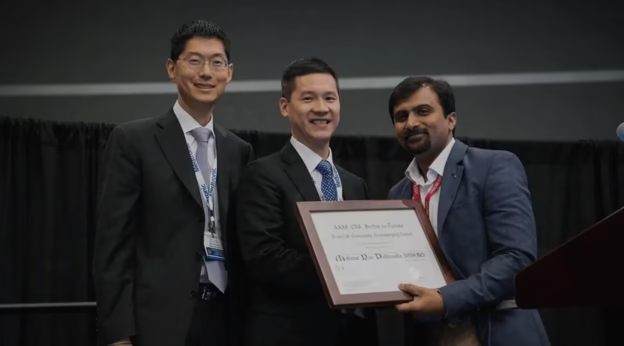
Dr. Mohana Rao Patibandla (right) accepting the BrainLab Neurosurgery Award at the CNS 2018 meeting in Houston

Brainlab Neurosurgery Award | Dr. Mohana Rao Patibandla

Brainlab Neurosurgery Award to Dr. Mohana Rao Patibandla at CNS 2018: Advancing Stereotactic Radiosurgery for Skull Base Meningiomas

Dr. Mohana Rao Patibandla, one of India’s leading neurosurgeons, received the prestigious Brainlab Neurosurgery Award at CNS 2018 (Congress of Neurological Surgeons) for his landmark scientific presentation titled:

“Stereotactic Radiosurgery for Skull Base Meningiomas: 20-year Long-term Outcomes with Volumetric Analysis.”

This international recognition placed Dr. Rao among an elite group of global neurosurgeons and marked a significant milestone for Indian neurosurgery on the world stage.


What Is the Brainlab Neurosurgery Award?

The Brainlab Neurosurgery Award is an internationally respected honor presented during the annual meeting of the Congress of Neurological Surgeons (CNS). It recognizes outstanding scientific contributions that advance neurosurgical knowledge, technology, and patient outcomes.

  • Awarded to high-impact, peer-reviewed neurosurgical research
  • Evaluated by the CNS Tumor Section and AANS/CNS Section on Tumors
  • Highly competitive with global participation

Receiving this award as a nonacademic neurosurgeon is particularly rare and underscores the global relevance of Dr. Rao’s clinical research.


CNS 2018 and the Congress of Neurological Surgeons

The Congress of Neurological Surgeons (CNS) is one of the world’s most influential neurosurgical organizations, headquartered in the United States. The annual CNS meeting brings together thousands of neurosurgeons, researchers, and innovators from across the globe.

CNS 2018 showcased cutting-edge advances in:

  • Brain tumor surgery
  • Stereotactic radiosurgery
  • Neuro-oncology and skull base surgery
  • Artificial intelligence and volumetric imaging

Dr. Rao’s selection for the Brainlab Award at CNS 2018 reflects the scientific rigor and long-term clinical value of his work.


Understanding Skull Base Meningiomas

What Are Skull Base Meningiomas?

Skull base meningiomas are typically benign brain tumors that arise from the meninges near critical structures such as:

  • Optic nerves
  • Brainstem
  • Cranial nerves
  • Major blood vessels

Because of their location, surgical removal can carry significant risks, including vision loss, cranial nerve deficits, and neurological complications.

According to the World Health Organization (WHO), meningiomas account for nearly 30% of all primary brain tumors.


Stereotactic Radiosurgery: A Game-Changer

Stereotactic radiosurgery (SRS) is a non-invasive treatment that delivers highly focused radiation to brain tumors with sub-millimeter accuracy.

Common Radiosurgery Platforms

  • Gamma Knife
  • LINAC-based radiosurgery
  • CyberKnife

For skull base meningiomas, SRS offers excellent tumor control with minimal risk to surrounding critical brain structures.

Studies published on PubMed and NIH consistently demonstrate tumor control rates exceeding 90% with radiosurgery.


The Award-Winning Research: 20-Year Long-Term Outcomes

Dr. Rao’s CNS 2018 presentation was unique because it focused on:

  • 20-year long-term follow-up
  • Volumetric tumor analysis rather than simple diameter measurements
  • Clinical correlation with neurological outcomes

Why Volumetric Analysis Matters

Traditional tumor assessment relies on linear dimensions. Volumetric analysis provides a far more accurate representation of:

  • Tumor shrinkage
  • True response to radiosurgery
  • Long-term tumor stability

This approach improves decision-making in meningioma treatment and follow-up protocols.


Key Findings from Dr. Rao’s Study

Outcome MeasureResult
Long-term tumor control>90%
Volumetric tumor reductionSignificant in majority of cases
Neurological preservationExcellent
Need for repeat surgeryMinimal

These outcomes support stereotactic radiosurgery as a first-line or adjuvant treatment for skull base meningiomas.


Why This Brainlab Award Is Significant

This recognition is significant for several reasons:

  • Honors a nonacademic neurosurgeon award recipient
  • Demonstrates long-term, real-world outcomes
  • Bridges technology, clinical care, and patient safety
  • Elevates Indian neurosurgery on a global platform

It also highlights how advanced radiosurgery techniques can be successfully implemented outside traditional academic centers.


Dr. Mohana Rao Patibandla: A Global Neurosurgeon from India

Dr. Mohana Rao Patibandla is the Founder and Chief Neurosurgeon of Dr. Rao’s Hospital, a dedicated center for brain, spine, and nerve care.

With advanced international training and decades of experience, Dr. Rao is widely recognized as one of the best neurosurgeons in Guntur and a pioneer in:

  • Skull base surgery
  • Stereotactic radiosurgery
  • Gamma Knife procedures
  • Endovascular neurosurgery

Learn more: About Dr. Mohana Rao Patibandla


Radiosurgery for Skull Base Tumors at Dr. Rao’s Hospital

At Dr. Rao’s Hospital, patients benefit from advanced radiosurgery protocols guided by global best practices.

Services include:

  • Gamma Knife radiosurgery
  • Multidisciplinary tumor boards
  • Advanced imaging & volumetric follow-up
  • Comprehensive neurology and spine surgery care

Frequently Asked Questions (FAQs)

What is stereotactic radiosurgery?

Stereotactic radiosurgery is a non-invasive treatment that delivers focused radiation to brain tumors with high precision, often in a single session.

Are skull base meningiomas dangerous?

They are usually benign but can cause serious symptoms due to pressure on vital brain structures. Early and appropriate treatment is essential.

Why is volumetric analysis important?

Volumetric analysis measures the true three-dimensional size of tumors, offering a more accurate assessment of treatment response.

Why choose Dr. Rao’s Hospital for radiosurgery?

At Dr. Rao’s Hospital, led by Dr. Mohana Rao Patibandla, one of the best neurosurgeons in Guntur, patients receive advanced, compassionate care using cutting-edge minimally invasive neurosurgery techniques.


Conclusion

The Brainlab Neurosurgery Award at CNS 2018 stands as a testament to Dr. Mohana Rao Patibandla’s dedication to advancing stereotactic radiosurgery and improving long-term outcomes for patients with skull base meningiomas.

This achievement not only honors individual excellence but also strengthens India’s position in international neurosurgery.


Call to Action

If you are searching for the best neurosurgeon in Guntur or expert care for complex brain tumors and skull base conditions, visit Dr. Rao’s Hospital.

📞 090100 56444
📧 info@drraoshospitals.com
📍 Guntur, Andhra Pradesh


CNS 2018లో డా. మోహన రావు పాటిబండ్లకు బ్రెయిన్‌ల్యాబ్ న్యూరోసర్జరీ అవార్డు: స్కల్ బేస్ మెనింజియోమాలపై స్టీరియోటాక్టిక్ రేడియోసర్జరీలో మైలురాయి

డా. మోహన రావు పాటిబండ్ల, భారతదేశానికి చెందిన ప్రముఖ న్యూరోసర్జన్, CNS 2018 (Congress of Neurological Surgeons)లో ప్రతిష్టాత్మకమైన Brainlab Neurosurgery Awardను అందుకున్నారు.

ఈ అవార్డు ఆయన సమర్పించిన పరిశోధన పత్రం కోసం ప్రదానం చేయబడింది:

“Stereotactic Radiosurgery for Skull Base Meningiomas: 20-year Long-term Outcomes with Volumetric Analysis”

ఈ అంతర్జాతీయ గౌరవం, భారతదేశ న్యూరోసర్జరీని ప్రపంచ వేదికపై మరింత గౌరవనీయంగా నిలిపిన ఘట్టంగా నిలిచింది.


బ్రెయిన్‌ల్యాబ్ న్యూరోసర్జరీ అవార్డు అంటే ఏమిటి?

Brainlab Neurosurgery Award అనేది ప్రపంచవ్యాప్తంగా న్యూరోసర్జరీ రంగంలో అత్యుత్తమ పరిశోధనలకు ఇచ్చే ప్రత్యేక గౌరవం. ఇది ప్రతి సంవత్సరం Congress of Neurological Surgeons (CNS) సమావేశంలో ప్రదానం చేయబడుతుంది.

  • అత్యున్నత శాస్త్రీయ ప్రమాణాలు
  • దీర్ఘకాలిక క్లినికల్ ఫలితాలు
  • రోగి భద్రత మరియు చికిత్స ఫలితాలపై ప్రభావం

ప్రత్యేకంగా, ఒక నాన్-అకాడెమిక్ న్యూరోసర్జన్ ఈ అవార్డు పొందడం చాలా అరుదైన విషయం.


CNS 2018 – కాంగ్రెస్ ఆఫ్ న్యూరాలజికల్ సర్జన్స్

Congress of Neurological Surgeons (CNS) అనేది అమెరికాలో స్థాపితమైన, ప్రపంచంలో అత్యంత ప్రభావవంతమైన న్యూరోసర్జరీ సంస్థలలో ఒకటి.

CNS 2018 సమావేశంలో ప్రపంచవ్యాప్తంగా వేలాది న్యూరోసర్జన్లు పాల్గొన్నారు.

  • బ్రెయిన్ ట్యూమర్ చికిత్సలు
  • రేడియోసర్జరీ
  • స్కల్ బేస్ సర్జరీ
  • వాల్యూమెట్రిక్ అనాలిసిస్

ఇలాంటి వేదికపై డా. రావు పరిశోధనకు బ్రెయిన్‌ల్యాబ్ అవార్డు రావడం ఆయన కృషికి గొప్ప గుర్తింపు.


స్కల్ బేస్ మెనింజియోమాలు అంటే ఏమిటి?

స్కల్ బేస్ మెనింజియోమాలు మెదడుకు అడుగుభాగంలో (Skull Base) ఏర్పడే సాధారణంగా నిరపాయమైన ట్యూమర్లు.

ఇవి దగ్గరగా ఉండే ముఖ్యమైన భాగాలు:

  • ఆప్టిక్ నర్వ్స్ (చూపు నరాలు)
  • బ్రెయిన్ స్టెమ్
  • క్రేనియల్ నర్వ్స్
  • ప్రధాన రక్తనాళాలు

ఈ ప్రాంతంలో సర్జరీ చేయడం ప్రమాదకరమైనది కావడంతో, ప్రత్యామ్నాయ చికిత్సలు కీలకం.

WHO ప్రకారం, మెనింజియోమాలు మొత్తం మెదడు ట్యూమర్లలో దాదాపు 30% ఉంటాయి.


స్టీరియోటాక్టిక్ రేడియోసర్జరీ: ఆధునిక పరిష్కారం

Stereotactic Radiosurgery (SRS) అనేది శస్త్రచికిత్స లేకుండా, అత్యంత ఖచ్చితమైన రేడియేషన్‌ను ట్యూమర్‌పై ప్రయోగించే విధానం.

వాడే సాంకేతికతలు

  • Gamma Knife
  • LINAC ఆధారిత రేడియోసర్జరీ
  • CyberKnife

ఇది స్కల్ బేస్ మెనింజియోమాలకు అత్యంత సురక్షితమైన చికిత్సగా గుర్తించబడింది.


20 సంవత్సరాల దీర్ఘకాలిక అధ్యయనం – ప్రత్యేకత ఏమిటి?

డా. మోహన రావు పాటిబండ్ల పరిశోధన ప్రత్యేకత:

  • 20 సంవత్సరాల ఫాలోఅప్
  • సాధారణ కొలతల బదులు Volumetric Analysis
  • న్యూరోలాజికల్ ఫలితాల విశ్లేషణ

వాల్యూమెట్రిక్ అనాలిసిస్ ఎందుకు ముఖ్యం?

ట్యూమర్ నిజంగా ఎంత తగ్గిందో తెలుసుకోవడానికి ఇది అత్యంత ఖచ్చితమైన పద్ధతి.

  • నిజమైన ట్యూమర్ తగ్గుదల
  • దీర్ఘకాలిక నియంత్రణ
  • పునఃచికిత్స అవసరం తగ్గింపు

ఈ అధ్యయనంలో ముఖ్యమైన ఫలితాలు

పరిమాణంఫలితం
దీర్ఘకాలిక ట్యూమర్ నియంత్రణ90% కంటే ఎక్కువ
ట్యూమర్ పరిమాణం తగ్గుదలచాలా కేసుల్లో స్పష్టంగా
న్యూరోలాజికల్ భద్రతఅత్యుత్తమం
మళ్లీ సర్జరీ అవసరంఅత్యల్పం

ఈ అవార్డు ఎందుకు ప్రత్యేకం?

  • నాన్-అకాడెమిక్ న్యూరోసర్జన్‌కు లభించిన గౌరవం
  • ప్రపంచస్థాయి పరిశోధన
  • భారత న్యూరోసర్జరీకి అంతర్జాతీయ గుర్తింపు

డా. మోహన రావు పాటిబండ్ల – భారతదేశం నుంచి ప్రపంచానికి

డా. మోహన రావు పాటిబండ్ల గారు డా. రావోస్ హాస్పిటల్ వ్యవస్థాపకులు మరియు చీఫ్ న్యూరోసర్జన్.

ఆయన ప్రత్యేకతలు:

  • స్కల్ బేస్ సర్జరీ
  • Gamma Knife రేడియోసర్జరీ
  • బ్రెయిన్ ట్యూమర్ చికిత్స

డా. మోహన రావు పాటిబండ్ల గురించి


డా. రావోస్ హాస్పిటల్‌లో రేడియోసర్జరీ సేవలు

డా. రావోస్ హాస్పిటల్ న్యూరోసర్జరీ విభాగం ప్రపంచస్థాయి చికిత్సలను అందిస్తోంది.

  • Gamma Knife చికిత్సలు
  • బ్రెయిన్ & స్పైన్ సర్జరీ
  • న్యూరాలజీ సేవలు

తరచూ అడిగే ప్రశ్నలు (FAQs)

స్టీరియోటాక్టిక్ రేడియోసర్జరీ అంటే ఏమిటి?

ఇది శస్త్రచికిత్స లేకుండా మెదడు ట్యూమర్లను ఖచ్చితంగా చికిత్స చేసే ఆధునిక విధానం.

స్కల్ బేస్ మెనింజియోమాలు ప్రమాదకరమా?

సాధారణంగా నిరపాయమైనవే కానీ ముఖ్యమైన నరాలపై ఒత్తిడి వల్ల సమస్యలు కలిగించవచ్చు.

ఎందుకు డా. రావోస్ హాస్పిటల్‌ను ఎంచుకోవాలి?

డా. రావోస్ హాస్పిటల్లో డా. మోహన రావు పాటిబండ్ల గారి ఆధ్వర్యంలో, గుంటూరులోని ఉత్తమ న్యూరోసర్జరీ సేవలు అందుబాటులో ఉన్నాయి.


ముగింపు

CNS 2018లో లభించిన బ్రెయిన్‌ల్యాబ్ న్యూరోసర్జరీ అవార్డు డా. మోహన రావు పాటిబండ్ల గారి పరిశోధనకు, సేవలకు గొప్ప గుర్తింపు.

ఇది భారతదేశ న్యూరోసర్జరీ స్థాయిని అంతర్జాతీయంగా మరింత ముందుకు తీసుకెళ్లింది.


సంప్రదించండి

మీకు గుంటూరులో ఉత్తమ న్యూరోసర్జన్ అవసరమైతే, డా. రావోస్ హాస్పిటల్ను సంప్రదించండి.

📞 090100 56444
📧 info@drraoshospitals.com


Cover of Time Iconic Magazine 2025 featuring Dr. Mohana Rao Patibandla recognized for innovation, empathy, and leadership in neurosurgery.

Minimally Invasive Neurosurgery, Spine Surgery, Endovascular Neurosurgery, and Stereotactic Neurosurgery at Dr. Rao’s Hospital, Guntur

Advanced Minimally Invasive Neurosurgery Care in Guntur

Revolutionizing Brain, Spine, and Vascular Care in India—Where Precision Meets Compassion


Introduction: The Dawn of a New Era in Neurosurgery

Modern neurosurgery has undergone a silent revolution — one defined not by larger incisions or longer hospital stays, but by smaller, safer, and smarter techniques. From removing complex brain tumors through a few millimeters of access to treating life-threatening aneurysms without open surgery, the field has evolved into one of breathtaking precision and minimal trauma.

At the forefront of this revolution in South India stands Dr. Mohana Rao Patibandla, Founder and Chief Neurosurgeon at Dr. Rao’s Hospital, Guntur. Internationally trained in the United States and India, and widely recognized as the best neurosurgeon in Guntur, Dr. Rao has brought together some of the most advanced forms of neurosurgery — Minimally Invasive Neurosurgery, Spine Surgery, Endovascular Neurosurgery, and Stereotactic Neurosurgery — under one roof.

Dr. Rao’s Hospital, established under Patibandla Narayana Swamy Neurosciences LLP, is India’s first independent, state-of-the-art super-specialty neuroscience center — combining global innovation with the warmth of local care. Here, every procedure is designed not only to extend life but to enhance its quality.

“We don’t just perform surgery — we restore function, dignity, and hope,” says Dr. Mohana Rao.


Why Minimally Invasive Neurosurgery Matters

Traditional neurosurgery often involved large openings, extended recovery periods, and visible scarring. While effective, such methods came with higher risks and longer hospital stays.
Minimally Invasive Neurosurgery (MIN) has changed that paradigm completely.

At Dr. Rao’s Hospital, Minimally Invasive Neurosurgery combines advanced imaging, high-definition endoscopes, and neuronavigation systems to treat brain and spinal conditions through tiny incisions — resulting in less pain, faster recovery, and safer outcomes.

Key Advantages of Minimally Invasive Neurosurgery

  • Smaller incisions and minimal blood loss

  • Reduced risk of infection

  • Shorter hospital stay and quicker recovery

  • Improved cosmetic outcomes

  • Faster return to normal life and work

Conditions Treated

  • Brain and skull base tumors

  • Pituitary adenomas

  • Hydrocephalus and cystic lesions

  • Epilepsy and movement disorders

  • Spinal disc herniation and canal stenosis

  • Intracranial aneurysms and vascular malformations

Dr. Rao has performed over 12,000 minimally invasive brain and spine surgeries, setting a new benchmark for safe and effective neurosurgical care in India.

His expertise in endoscopic skull base surgery, keyhole craniotomy, and neuroendoscopic tumor resection has positioned Dr. Rao’s Hospital among the top centers for minimally invasive neurosurgery in South India.


Minimally Invasive Spine Surgery (MISS): Precision That Preserves Movement

Back and spine problems are among the most common causes of disability worldwide. Traditionally, spinal surgeries meant large incisions, muscle disruption, and long rehabilitation times.
Minimally Invasive Spine Surgery (MISS) at Dr. Rao’s Hospital transforms that experience.

What Is MISS?

MISS uses tubular retractors, specialized microscopes, and endoscopes to access spinal structures with minimal disruption to muscles and ligaments. By avoiding large incisions, patients experience significantly less pain and faster functional recovery.

Common Procedures Performed

  • Microdiscectomy for herniated discs

  • Endoscopic decompression for spinal stenosis

  • Minimally invasive spinal fusion

  • Vertebroplasty and kyphoplasty for fractures

  • Spinal tumor resections

  • Navigation-assisted instrumentation and stabilization

Patient Benefits

  • Tiny incision (often <2 cm)

  • Minimal postoperative pain

  • Reduced muscle damage and scarring

  • Early mobility (within 24–48 hours)

  • Shorter hospitalization (2–3 days)

  • Rapid return to work and normal activities

Dr. Rao’s Hospital has successfully performed over 1,000 endoscopic spine surgeries and several thousand microdiscectomies and fusions using advanced neuronavigation and intraoperative monitoring.

With these technologies, Dr. Rao ensures real-time precision, minimizing risk to spinal nerves and improving long-term outcomes.


Endovascular Neurosurgery: Healing Through the Bloodstream

Imagine treating a brain aneurysm or stroke without opening the skull. That’s the promise — and the reality — of Endovascular Neurosurgery, one of the most sophisticated subspecialties practiced at Dr. Rao’s Hospital.

What Is Endovascular Neurosurgery?

Also known as Interventional Neuroradiology, this specialty involves using catheters and micro-instruments inserted through the blood vessels (usually via the femoral or radial artery) to diagnose and treat brain and spinal vascular conditions.

Advanced Procedures at Dr. Rao’s Hospital

  • Aneurysm Coiling and Stent-Assisted Coiling

  • AVM and AVF Embolization

  • Carotid and Intracranial Stenting

  • Thrombectomy for Acute Stroke

  • Tumor Embolization Prior to Surgery

  • Endovascular Treatment of Vasospasm

Why It’s Revolutionary

Endovascular neurosurgery offers:

  • No large incisions or craniotomy

  • Shorter procedure time and hospital stay

  • Minimal postoperative pain

  • Early recovery with lower complication rates

  • Precise navigation using real-time fluoroscopy and 3D angiography

Dr. Rao’s Hospital houses one of the few Hybrid Neurovascular Suites in Andhra Pradesh, equipped for both microsurgical and endovascular procedures in a single setting — enabling immediate decision-making and seamless transition between modalities.

With over 3,000 endovascular procedures and 400 aneurysm repairs, Dr. Rao has become one of India’s pioneers in minimally invasive vascular neurosurgery.

“We’ve reached a stage where we can treat stroke and aneurysm patients without a single cut — that’s the power of innovation meeting intent,” says Dr. Rao.


Stereotactic Neurosurgery: The Science of Targeting Perfection

If minimally invasive surgery is precision, stereotactic neurosurgery is perfection. This technique allows surgeons to reach deep-seated brain structures through pinpoint accuracy guided by advanced imaging and coordinate systems.

What Is Stereotactic Neurosurgery?

Stereotactic neurosurgery uses a 3D coordinate mapping system (based on CT, MRI, or functional imaging) to identify the exact target area in the brain — often within a tolerance of less than one millimeter.

Applications

  • Stereotactic Radiosurgery (SRS) for brain tumors, AVMs, and trigeminal neuralgia

  • Deep Brain Stimulation (DBS) for Parkinson’s disease and movement disorders

  • Biopsies of deep brain lesions

  • Functional procedures for epilepsy and chronic pain

  • Targeted drug delivery or lesioning

Why It Matters

These procedures eliminate the need for open craniotomy in many cases, offering:

  • Non-invasive or minimally invasive approaches

  • Outpatient or short hospital stay

  • No sutures, minimal pain, faster recovery

  • Extremely high precision and safety

At Dr. Rao’s Hospital, over 2,000 stereotactic radiosurgeries and multiple functional neurosurgical procedures have been performed using cutting-edge navigation and targeting systems.

The hospital’s expertise in this field has earned Dr. Rao recognition as one of India’s best stereotactic and functional neurosurgeons, known for his compassionate approach and meticulous execution.


Technology That Transforms: Inside Dr. Rao’s Operating Rooms

Dr. Rao’s Hospital is equipped with the most advanced neurosurgical technology in India:

  • 3D Microscopes and Endoscopic Systems for enhanced visualization

  • Intraoperative Neurophysiological Monitoring (IONM) for nerve safety

  • Neuronavigation & Frameless Stereotaxy for precise targeting

  • Intraoperative Imaging & Ultrasound for real-time decision-making

  • Hybrid Cath Lab for combined microsurgical and endovascular interventions

  • High-Definition Neuroendoscopy Units for skull base and pituitary surgeries

These technologies allow Dr. Rao and his team to push the boundaries of what’s possible — reducing risk, maximizing recovery, and redefining neurosurgical excellence in India.


Meet the Visionary: Dr. Mohana Rao Patibandla

Training and Credentials

  • MBBS — Andhra Medical College, Visakhapatnam

  • MCh (Neurosurgery) — Nizam’s Institute of Medical Sciences, Hyderabad

  • Fellowships — USA (Ohio, Colorado, Virginia) in
    Minimally Invasive Skull Base Surgery, Pediatric Neurosurgery, Functional & Stereotactic Radiosurgery, and Endovascular Neurosurgery

Experience

  • 15,000+ Neurosurgeries Performed

  • 12,000+ Minimally Invasive Procedures

  • 3,000+ Endovascular Interventions

  • 2,000+ Radiosurgeries

  • 1,000+ Endoscopic Spine Surgeries

  • 400 Aneurysm Repairs & 300 CP Angle Tumor Resections

Awards and Recognition

  • Dr. A.P.J. Abdul Kalam Inspiration Award 2025

  • Economic Times Business & Health Excellence Awards 2025

  • Sardar Vallabhbhai Patel Unity Award 2025

  • Asia’s Most Trusted Neurosurgeon 2023

  • Health Icon of the Year 2021

Academic Leadership

  • 70+ International Publications

  • 1,200+ Citations in journals like Neurosurgery, Journal of Neurosurgery, Stroke, and The Spine Journal

  • Invited Speaker at MISSABCON, SkullBaseCon, NESICON, SNVICON, and TEDx Talks

“My mission was never about building a hospital; it was about bringing healing home,” Dr. Rao shares in his TEDx talk, “My Journey to Bring Healing Home – A Neurosurgeon’s Quest in Guntur.”


Integrated Neuroscience Care: One Destination for All Brain and Spine Needs

Dr. Rao’s Hospital offers a multidisciplinary approach — uniting neurosurgery, neurology, neuro-anesthesiology, neuroradiology, and rehabilitation — ensuring 360-degree care from diagnosis to recovery.

Comprehensive Services Include:

  • Brain and spine trauma management

  • Pediatric neurosurgery

  • Epilepsy and functional neurosurgery

  • Skull base and pituitary tumor surgery

  • Endovascular stroke management

  • Spine deformity correction and pain management

  • Stereotactic radiosurgery and neuro-oncology care

Every patient benefits from a customized treatment plan, where decisions are guided by both data and empathy.


Why Choose Dr. Rao’s Hospital?

✅ Global Expertise, Local Accessibility
Trained internationally, Dr. Rao brings world-class care to Guntur, eliminating the need for patients to travel to metros or abroad.

✅ Patient-First Philosophy
Each patient is treated with dignity, compassion, and respect. Communication and transparency are integral to the hospital’s ethos.

✅ State-of-the-Art Infrastructure
Advanced surgical technology, hybrid suites, and ICU facilities ensure seamless care for even the most complex cases.

✅ Exceptional Outcomes
Thousands of successful surgeries, high patient satisfaction rates, and minimal complication profiles.

✅ 24×7 Emergency Neurosurgical Services
Immediate response for trauma, stroke, aneurysm, and spine emergencies.

✅ International Patient Support
Dedicated coordinators assist global patients with visa, logistics, and post-operative rehabilitation.


Patient Voices: Stories of Courage and Recovery

Case 1: Aneurysm Saved, Life Restored

A 38-year-old woman arrived with a ruptured brain aneurysm. Instead of open surgery, Dr. Rao performed endovascular coiling. Within 48 hours, she was walking. Within a week, she was home — a living testament to the power of minimally invasive treatment.

Case 2: Spine Surgery Without Fear

A 52-year-old teacher with chronic back pain and disc herniation underwent endoscopic decompression. With just a 2-cm incision and no visible scar, she resumed teaching in 10 days.

Case 3: Precision Without Incision

A young man with a deep-seated brain tumor underwent stereotactic radiosurgery — no cut, no pain, no hospital stay. The tumor shrank over months, and he resumed a normal life.

Each of these stories embodies Dr. Rao’s belief that healing is not just about the surgery — it’s about restoring hope.


Research, Education, and Future Vision

Dr. Rao’s Hospital is not just a treatment center but a hub for research and innovation. Current initiatives include:

  • AI-assisted surgical planning

  • Robotic spine surgery research collaborations

  • 3D printing for cranial reconstruction

  • Virtual reality-based neurosurgical training programs

  • Community awareness programs for stroke and epilepsy prevention

Dr. Rao also plans to establish the Dr. Rao Institute of Neurosciences, a global center of excellence that will blend research, training, and compassionate clinical care — right in Guntur.


Conclusion: Redefining the Geography of Hope

At a time when advanced neurosurgery is often associated with major metros or medical tourism abroad, Dr. Rao’s Hospital has transformed Guntur into a global destination for brain and spine excellence.

Here, Minimally Invasive Neurosurgery, Spine Surgery, Endovascular Neurosurgery, and Stereotactic Neurosurgery are not just procedures — they’re promises of precision, safety, and compassion.

Dr. Mohana Rao Patibandla’s vision proves that world-class care doesn’t require leaving home. It simply requires vision, values, and a heart dedicated to healing.

“Our goal is not just to save lives — it’s to give every life the chance to thrive.”


Visit Dr. Rao’s Hospital

📍 Address: 12-19-67, Old Bank Road, Kothapet, Opposite Sravani Hospital, Guntur, Andhra Pradesh
📞 Phone: +91 90100 56444
📧 Email: info@drraoshospitals.com
🌐 Website: www.drraoshospitals.com

Follow Dr. Rao’s Hospital:
YouTube | Facebook | Instagram | LinkedIn | Twitter/X | Google Maps

A promotional image for Dr. Rao's Hospital featuring Dr. Mohana Rao Patibandla receiving the Economic Times Excellence in Neurology, Neurosurgery, and Spine Surgery Award 2025. The image includes photos of the award ceremony, a portrait of Dr. Patibandla, and details about his qualifications (MCh, FESBS, FAANS, etc.) and contact information. The hospital's locations (Guntur, Vijayawada, Bhimavaram, Rajahmundry, Kakinada, Eluru, Ongole, Nellore) and the slogan "Act Fast - Save Brain and Spine" are highlighted, along with a map and phone number.

Dr. Mohana Rao Patibandla — The Best Neurosurgeon to Watch in India 2025

Dr. Mohana Rao Patibandla — The Best Neurosurgeon to Visit in India

Dr. Mohana Rao Patibandla — Neurosurgeon at Dr. Rao's Hospital

Dr. Mohana Rao Patibandla, founder of Dr. Rao’s Hospital in Guntur, is widely recognized as the best neurosurgeon in Guntur and one of India’s most influential leaders in minimally invasive, endovascular, and stereotactic neurosurgery. With a career spanning advanced international fellowships and an expansive surgical portfolio, Dr. Rao combines precision technique with compassionate care.

Vision & Mission: Precision, Innovation, Compassion

Dr. Rao established Dr. Rao’s Hospital (Patibandla Narayana Swamy Neurosciences LLP) to bring world-class neurosurgical care to South India — a center where the latest technologies meet the human touch. The hospital’s mission focuses on three pillars: clinical excellence, innovation, and education.

Clinical Impact — By the Numbers

Innovation & Technology

Dr. Rao’s practice emphasizes minimally invasive skull base surgery, endoscopic spine approaches, neuronavigation, intraoperative neurophysiological monitoring (IONM), stereotactic radiosurgery, and endovascular care. The hospital continually invests in advanced imaging, hybrid operating suites, and training programs to keep patient safety and outcomes at the forefront.

“Technology saves lives; compassion heals them.” — Dr. Mohana Rao Patibandla

Awards, Publications & Academic Leadership

Dr. Rao’s accolades underscore a sustained commitment to clinical excellence and scholarship:

  • Economic Times Business Excellence Award (2025)
  • Economic Times Health Award (2025)
  • Sardar Vallabhbhai Patel Unity Award (2025)
  • Best Minimally Invasive Neurosurgeon / Best Spine Surgeon / Best Endovascular Surgeon / Best Stereotactic Radiosurgeon — multiple national & international honors
  • Invited speaker: SkullBaseCon 2025, NESICON 2025, AP MISSAB 2025, MISSABCON, SNVICON 2025, NSI YNF and many more
  • 60+ peer-reviewed publications in journals including Neurosurgery, Journal of Neurosurgery, Stroke, The Spine Journal, and more
  • 1,200+ citations in international literature

What This Means for Patients

Choosing Dr. Rao’s Hospital means access to a multidisciplinary team skilled in complex cranial, spinal, and vascular disorders — delivered with a patient-first philosophy. The hospital accepts national and international patients; for appointments and referrals, visit our Contact page.

Further Reading & Services

Learn more about our specialized services and clinical teams:

  • Neurosurgery Services
  • Spine Surgery
  • Endovascular & Cerebrovascular
  • Stereotactic Radiosurgery
  • Meet the Team

Contact & Appointments

For appointments, second opinions, or international patient coordination:

© Dr. Rao’s Hospital. All rights reserved.


The Knowledge review cover of Dr. Mohana Rao patibandla

Discover Unparalleled Neurosurgery with Dr. Mohana Rao Patibandla

Discover Unparalleled Neurosurgery with Dr. Mohana Rao Patibandla

At Dr. Rao’s Hospital, we don’t just offer neurosurgery—we deliver life-changing transformations through our Brain & Spine Precision Care System. Led by Dr. Mohana Rao Patibandla, a globally trained neurosurgeon with expertise in minimally invasive techniques, we redefine what world-class care means.

Why Choose Dr. Rao’s Hospital?

Unlike others who compete on price, we make cost irrelevant by offering unmatched expertise, cutting-edge technology, and a structured approach to care as per times of india. Here’s how we stand out:

1. The Brain & Spine Precision Care System

Our proprietary 5-Step Care Framework ensures every patient receives personalized, high-precision treatment:

  • Diagnosis: Advanced imaging and AI-driven analysis for pinpoint accuracy.

  • Planning: Tailored surgical or non-surgical strategies by Dr. Patibandla.

  • Procedure: Minimally invasive techniques for faster recovery.

  • Recovery: Comprehensive post-op care with dedicated neuro-rehabilitation.

  • Follow-Up: Long-term monitoring to ensure lasting results.

This isn’t just surgery—it’s a system designed to restore your quality of life.

2. Tailored Care Packages

We’ve productized our services to suit your needs, ensuring transparency and value. Choose from three levels of care:

  • Essential Care: Core neurosurgical intervention with expert oversight.

  • Advanced Care: Includes enhanced diagnostics and personalized rehab plans.

  • Comprehensive Care: Full-spectrum treatment with priority scheduling, advanced therapies, and concierge-level support.

Each package is designed to deliver outcomes, not just procedures, so you invest in results.

3. Proven Transformations

Don’t take our word for it—our patients’ lives speak for themselves:

  • Over 95% of our spine surgery patients walk within 24 hours post-operation.

  • We’ve helped 100+ patients with complex brain tumors regain independence using minimally invasive techniques.

  • From chronic pain to restored mobility, our system has transformed lives across India and beyond.

When you choose Dr. Rao’s Hospital, you’re not buying a procedure—you’re investing in a future free from pain and limitations.

Ready to Experience the Difference?

Don’t settle for generic care or compete on price. With Dr. Mohana Rao Patibandla, you get incomparable expertise and a system built for your success.

📞 Contact us today at Dr. Rao’s Hospital, Guntur, to schedule your consultation.
🌐 Visit  drraoshospitals for more details.

Your health deserves the best. Choose transformation over transaction.

Pre and post-op MRI scans of craniopharyngioma patient, showing successful surgery by Dr. Rao at Dr. Rao's Hospital.

Best Brain & Spine Surgery in India at Dr. Rao’s Hospital

Best Neurosurgeon in India for Brain Tumor Surgery

India has become one of the leading destinations for neurosurgery, particularly for brain tumor surgery. The country is home to some of the best neurosurgeons in the world, offering cutting-edge treatments and techniques that deliver successful outcomes. This blog will delve into the critical aspects of brain tumor surgery, with a specific focus on how India, and more notably, Dr. Mohana Rao Patibandla at Dr. Rao’s Hospital in Guntur, has become a beacon for patients seeking affordable and world-class neurosurgical treatments. In a recent deccanherald

Why India is a Hub for Brain Tumor Surgery

India’s healthcare sector has made significant advancements, particularly in neurosurgery. From advanced medical equipment to well-trained specialists, the country is known for its high success rates and affordable healthcare services.

Minimally Invasive Brain Tumor Surgery in India

Many hospitals in India, including Dr. Rao’s Hospital, offer minimally invasive neurosurgical techniques. These techniques involve smaller incisions, fewer complications, and quicker recovery times. Minimally invasive brain tumor surgery has revolutionized patient outcomes, making India a leading destination for this treatment. In a recent India today article.

Advanced Technologies for Brain Tumor Surgery

The availability of state-of-the-art technology, such as intraoperative MRI, neuronavigation, and stereotactic radiosurgery, makes India a top choice for brain tumor surgeries. These advanced technologies ensure precision and safety during surgeries, improving outcomes significantly.

Dr. Rao’s Hospital Guntur, the Leading Brain Tumor Surgery Center in India

Dr. Rao’s Hospital in Guntur is one of the leading neurosurgical centers in India. With a team of highly specialized neurosurgeons and cutting-edge equipment, this hospital has become synonymous with quality care and successful treatment outcomes for brain tumors. According to The Times of India coverage.

Best Neurosurgeon in India for Brain Surgeries

India is home to many renowned neurosurgeons. However, Dr. Mohana Rao Patibandla at Dr. Rao’s Hospital stands out for his expertise in brain surgeries. His experience and success in handling complex brain tumor surgeries have earned him a reputation as one of the best neurosurgeons in India.

Keyhole Neurosurgery for Brain Tumor Treatment

Keyhole neurosurgery is a technique that allows surgeons to operate through a small incision, minimizing damage to the surrounding tissues. This technique is beneficial for brain tumor surgeries, and Dr. Rao is a pioneer in performing keyhole neurosurgery in India.

Affordable Brain Tumor Surgery in India

Medical tourism in India has allowed international patients to receive world-class treatment at a fraction of the cost. Brain tumor surgery, which can be prohibitively expensive in other countries, is more affordable in India without compromising quality.

Best Pediatric Neurosurgeon in India for Brain Tumors

Pediatric brain tumor surgery requires specialized skills and experience. Dr. Rao is recognized as one of the best pediatric neurosurgeons in India, offering tailored treatment plans for children with brain tumors.

Best Hospital for Brain Tumor Surgery in India

Dr. Rao’s Hospital in Guntur is widely considered one of India’s best hospitals for brain tumor surgery. It is a top choice for patients because it has the most recent technology and skilled neurosurgeons.

Brain Tumor Surgery Success Rates in India

India’s success rates for brain tumor surgery are comparable to those in Western countries. With advanced diagnostic tools and skilled surgeons, the chances of successful treatment are very high, especially at leading hospitals like Dr. Rao’s.

Minimally Invasive Neurosurgery for Brain Tumors

Minimally invasive neurosurgery is becoming increasingly popular for brain tumor removal due to its lower risk of complications and faster recovery. Dr. Rao’s Hospital offers some of India’s most advanced minimally invasive neurosurgical options.

Best Neurosurgeon in India for Minimally Invasive Brain Surgery

Dr. Rao is highly skilled in minimally invasive neurosurgery. His expertise ensures that patients experience fewer side effects, quicker recovery times, and lower chances of complications.

Stereotactic Radiosurgery for Brain Tumors in India

Stereotactic radiosurgery is a noninvasive technique for treating small brain tumors. This advanced procedure is available at Dr. Rao’s Hospital, offering patients a nonsurgical treatment option with high success rates.

Best Spine Surgeon in India

In addition to brain surgeries, Dr. Rao is an expert spine surgeon, making him a top choice for patients seeking comprehensive neurosurgical care, including spine and brain treatments.

Comprehensive Care at Neurosurgical Spine Centers in India

India has several specialized neurosurgical spine centers that provide comprehensive care for spinal and brain conditions. Dr. Rao’s Hospital stands out for its holistic approach, offering brain and spine surgeries with the latest technology and treatment methodologies.

Best Hospital for Minimally Invasive Spine Surgery in India

Dr. Rao’s Hospital is renowned for brain tumor surgeries and minimally invasive spine surgeries. The hospital uses cutting-edge technology to ensure the best outcomes with the least invasive procedures.

Best Neurosurgeon in India for Brain Tumor Surgery

Dr. Mohana Rao Patibandla is one of the leading neurosurgeons in India. He specializes in brain tumor surgery. His expertise and dedication to providing the best patient outcomes make him a top choice for anyone requiring brain surgery.

Dr. Rao: Neurosurgeon, Spine Surgeon, and Endovascular Surgeon

Dr. Rao’s qualifications extend beyond neurosurgery. He is also a spine and endovascular surgeon, making him a versatile expert capable of handling various conditions of the brain, spine, and vascular systems.

Best Endovascular Neurosurgeon in Guntur

As an endovascular neurosurgeon, Dr. Rao is also skilled in performing non-invasive procedures to treat brain and spinal conditions. His expertise in this area ensures patients receive the best care in Guntur and surrounding regions.

Best Interventional Neurologist in Guntur

In addition to being a skilled neurosurgeon, Dr. Rao is one of the best interventional neurologists in Guntur. His ability to diagnose and treat neurological conditions with non-invasive techniques has made him a leader in this field.

Best Hospital for Brain and Spine Surgery in India

Dr. Rao’s Hospital is a premier destination for patients seeking brain and spine surgery in India. With a team of experienced specialists and state-of-the-art facilities, the hospital provides world-class care for patients from across the globe.

Minimally Invasive Spine Surgery in India

Minimally invasive spine surgery is becoming a preferred treatment option for many patients due to its numerous benefits, such as reduced recovery time, less postoperative pain, and fewer complications. Dr. Rao is at the forefront of providing these advanced surgical techniques in India.

Affordable Medical Tourism for Brain and Spine Surgery

India’s affordability and high healthcare standards make it a top destination for medical tourism. International patients seeking brain and spine surgeries can expect high-quality treatment at a fraction of the cost compared to Western countries. Dr. Rao’s Hospital plays a significant role in offering affordable and comprehensive care for international patients.

Dr. Rao’s Hospital: Best Brain, Spine, and Endovascular Center in India

Dr. Rao’s Hospital has established itself as one of India’s best centers for brain, spine, and endovascular treatments. Focusing on providing comprehensive care, the hospital continues to serve both domestic and international patients with excellent results.

The Importance of Post-Surgical Care in Brain Tumor Surgery

Post-surgical care is crucial in ensuring a patient’s full recovery after brain tumor surgery. At Dr. Rao’s Hospital, a dedicated team of specialists offers personalized follow-up care to monitor the patient’s progress and ensure optimal recovery.

Key Benefits of Minimally Invasive Brain Surgery

Minimally invasive brain surgery offers numerous benefits, including reduced scarring, less postoperative pain, and faster recovery times. Patients undergoing minimally invasive procedures at Dr. Rao’s Hospital can expect to return to their everyday lives more quickly than traditional surgery.

Why Choose Dr. Rao’s Hospital for Brain and Spine Surgery?

Dr. Rao’s Hospital is known for providing cutting-edge treatments for brain and spine conditions. With a team of highly skilled neurosurgeons, state-of-the-art technology, and a patient-centered approach, the hospital is a leader in neurosurgery in India.

How to Prepare for Brain Tumor Surgery in India

Preparing for brain tumor surgery requires careful planning, both physically and mentally. At Dr. Rao’s Hospital, the specialists guide patients through every step to ensure they are well-prepared for surgery and recovery.

Recovery After Brain Tumor Surgery: What to Expect

The recovery process following brain tumor surgery can vary depending on the type of surgery performed. At Dr. Rao’s Hospital, patients receive detailed postoperative care instructions and continuous follow-up to monitor their recovery and address concerns.

Conclusion

Regarding brain tumor surgery, India offers some of the best neurosurgical care in the world. With skilled surgeons like Dr. Rao and state-of-the-art hospitals like Dr. Rao’s Hospital in Guntur, patients can expect high success rates, minimally invasive techniques, and affordable treatment options. Whether you’re seeking care for brain tumors, spine surgery, or endovascular procedures, Dr. Rao’s Hospital stands out as India’s leading destination for comprehensive neurosurgical care.

Dr. Rao’s Contact Information:

Leading the Way: The Best Spine Surgeons in India

“Expert Spine & Brain Care at Dr. Rao’s Hospital, Guntur”

Expert Spine & Brain Care at Dr. Rao’s Hospital, Guntur


Spine Clinic Near Me: Your Local Solution for Spine Care

Finding a trusted spine clinic near you is crucial for addressing back pain, spinal issues, and overall spine health. Whether you’re dealing with chronic back pain or a more severe spinal condition, seeking timely medical attention can significantly improve your quality of life. Dr. Rao’s Hospital in Guntur, Andhra Pradesh, is a top-rated medical facility providing specialized care for spine-related ailments. The hospital offers advanced diagnostics, treatment plans, and minimally invasive spine surgery, ensuring patients receive the best care close to home. According to The Times of India coverage.

Brain and Spine Center: Comprehensive Care for Complex Conditions

At Dr. Rao’s Hospital, the Brain and Spine Center is a beacon of hope for patients with neurological and spinal disorders. This specialized center brings together a team of experts, including neurosurgeons, neurologists, and spine specialists, who collaborate to provide comprehensive care. Whether it’s a complex brain tumor, a spinal deformity, or a nerve disorder, the Brain and Spine Center is equipped with state-of-the-art technology and skilled professionals to handle the most challenging cases with precision and care.

Brain & Spine Center: Leading the Way in Neurological Care

The Brain & Spine Center at Dr. Rao’s Hospital is not just another medical facility; it’s a center of excellence in neurosurgery and spine care. The center delivers patient-centric care through cutting-edge technologies and minimally invasive procedures. This approach reduces recovery time and minimizes the risks associated with traditional surgical methods. Patients from India and abroad choose Dr. Rao’s Hospital for its reputation in treating complex brain and spine conditions effectively and safely. According to dnaindia

Best Spine Specialist Near Me: Expert Care for Your Spine

When it comes to spine health, having access to the best spine specialist near you is essential. Dr. Rao, a leading neurosurgeon at Dr. Rao’s Hospital, is renowned for his expertise in spine surgery, particularly minimally invasive spine surgery. This approach allows for smaller incisions, less pain, and quicker recovery than traditional spine surgery. Whether you’re suffering from a herniated disc, spinal stenosis, or scoliosis, Dr. Rao and his team provide top-notch care tailored to your needs.

Back Surgeons Near Me: Expert Solutions for Back Pain

Back pain is one of the most common health issues affecting people worldwide. If you’re searching for experienced back surgeons near you, look no further than Dr. Rao’s Hospital in Guntur. The hospital’s team of back surgeons is well-versed in the latest surgical techniques, including minimally invasive spine surgery. This technique offers a safer, less painful alternative to traditional back surgery, ensuring patients can return to their daily lives more quickly and with less discomfort.

Pediatric Neurosurgeon: Specialized Care for Children

Children with neurological or spinal disorders require specialized care that addresses their unique needs. At Dr. Rao’s Hospital, the pediatric neurosurgeon is dedicated to providing comprehensive care for young patients. From congenital conditions to brain tumors and spinal deformities, the hospital offers advanced treatment options that are both safe and effective for children. The pediatric neurosurgery team works closely with other specialists to ensure every child receives the best care tailored to their specific condition.

Spine Orthopedic Surgeon: Combining Expertise in Orthopedics and Neurosurgery

Spine issues often require the combined expertise of both orthopedic surgeons and neurosurgeons. At Dr. Rao’s Hospital, the spine orthopedic surgeon plays a crucial role in treating conditions affecting the bones and the nervous system. Whether you’re dealing with a spinal fracture, degenerative disc disease, or a complex spinal deformity, the spine orthopedic surgeon at Dr. Rao’s Hospital offers a comprehensive treatment plan that includes both surgical and non-surgical options. The hospital’s multidisciplinary approach ensures that patients receive the most appropriate and effective care for their condition.

Back Surgery Near Me: Advanced Surgical Options for Spine Disorders

If you’re considering back surgery and searching for top medical facilities near you, Dr. Rao’s Hospital in Guntur should be at the top of your list. The hospital is known for its advanced surgical options, including minimally invasive spine surgery. This approach is particularly beneficial for patients who require surgery for conditions such as herniated discs, spinal stenosis, or degenerative spine diseases. By opting for minimally invasive procedures, patients experience less pain, shorter hospital stays, and quicker recovery times.

Paediatric Neurosurgeon: Expertise in Pediatric Neurological Conditions

Neurological disorders in children can be particularly challenging to diagnose and treat. The paediatric neurosurgeon at Dr. Rao’s Hospital is trained to address these challenges with precision and care. Whether it’s a brain tumor, epilepsy, or a congenital spine condition, the hospital offers comprehensive diagnostic and treatment services designed specifically for children. The paediatric neurosurgeon works closely with a team of pediatric specialists to ensure that young patients receive the most effective and least invasive treatments possible.

Guntur Neurologist: Expert Care in Neurology

Neurological conditions require specialized care from an experienced neurologist. Dr. Rao’s Hospital in Guntur is home to some of the best neurologists in the region. These experts are skilled in diagnosing and treating a wide range of neurological disorders, from migraines and epilepsy to more complex conditions like multiple sclerosis and Parkinson’s disease. The Guntur neurologist at Dr. Rao’s Hospital utilizes the latest diagnostic tools and treatment protocols to provide patients with the best possible outcomes.

Best Spine Doctor Near Me: Top-Rated Spine Care

Finding the best spine doctor near you is essential for managing spinal disorders effectively. Dr. Rao’s Hospital offers access to top-rated spine specialists who are experts in both surgical and non-surgical treatments. Whether you need a consultation for chronic back pain or require surgery for a spinal condition, the best spine doctor at Dr. Rao’s Hospital will guide you through every treatment step. The hospital’s commitment to using the latest technologies and minimally invasive techniques ensures you receive the highest quality of care. In a recent mid-day

Nerve Doctor Near Me: Specialized Treatment for Nerve Disorders

Nerve disorders can cause significant pain and disability if not treated promptly. If you’re searching for a nerve doctor near you, Dr. Rao’s Hospital in Guntur offers specialized care for various nerve-related conditions. The hospital’s neurology team is experienced in diagnosing and treating conditions such as neuropathy, nerve compression syndromes, and nerve injuries. With access to advanced diagnostics and minimally invasive treatment options, the nerve doctor at Dr. Rao’s Hospital can help you manage your condition effectively.

Neuro Doctors Near Me: Comprehensive Neurological Care

Access to skilled neuro doctors is crucial for the diagnosis and treatment of neurological disorders. Dr. Rao’s Hospital in Guntur is home to a team of highly qualified neuro doctors who specialize in a wide range of neurological conditions. From stroke and epilepsy to multiple sclerosis and neurodegenerative diseases, the neuro doctors at Dr. Rao’s Hospital provide comprehensive care that’s tailored to each patient’s needs. The hospital’s state-of-the-art facilities and multidisciplinary approach ensure patients receive the best care possible.

Dr. Rao Neurosurgeon and Spine Surgeon: Leader in Neurosurgery

Dr. Rao is a renowned neurosurgeon and spine surgeon at Dr. Rao’s Hospital, with a reputation for excellence in brain and spine surgery. His expertise in minimally invasive neurosurgery and spine surgery has made him a sought-after specialist in India and beyond. Patients from all over the world come to Dr. Rao’s Hospital for his expert care, knowing that they are in the hands of one of the best neurosurgeons in the field. Whether it’s a complex brain tumor or a spinal deformity, Dr. Rao is committed to providing the highest quality of care, focusing on patient safety and satisfaction.

Best Interventional Neurologist in Andhra Pradesh: Cutting-Edge Treatment

Interventional neurology is a rapidly growing field that offers minimally invasive treatment options for a variety of neurological conditions. Dr. Rao’s Hospital is home to the best interventional neurologist in Andhra Pradesh, who specializes in treating conditions such as stroke, aneurysms, and other vascular disorders of the brain and spine. Using state-of-the-art imaging and catheter-based techniques, the interventional neurologist at Dr. Rao’s Hospital provides effective treatments with less risk and quicker recovery times compared to traditional surgery.

Best Endovascular Neurosurgeon in Andhra Pradesh: Excellence in Vascular Neurosurgery

Endovascular neurosurgery is a highly specialized field that treats vascular conditions affecting the brain and spine. Dr. Rao’s Hospital is proud to have the best endovascular neurosurgeon in Andhra Pradesh, who is an expert in treating conditions such as aneurysms, arteriovenous malformations (AVMs), and strokes. The endovascular neurosurgeon uses minimally invasive techniques to navigate the blood vessels and treat these conditions precisely. This approach reduces the risks associated with open surgery and allows for quicker recovery times.

Minimally Invasive Neurosurgery: Advanced Techniques for Better Outcomes

Minimally invasive neurosurgery is a cutting-edge approach that offers numerous benefits over traditional surgery. At Dr. Rao’s Hospital, minimally invasive techniques are used to treat various brain and spine conditions. These techniques involve smaller incisions, less tissue damage, and quicker recovery times. Whether it’s a brain tumor, spinal disc herniation, or a nerve disorder, minimally invasive neurosurgery at Dr. Rao’s Hospital ensures that patients receive the most advanced and least invasive treatment possible. In a recent India today article.

Minimally Invasive Spine Surgery: Safer, Faster, and Less Painful

Minimally invasive spine surgery is a specialized technique that offers significant advantages over traditional spine surgery. At Dr. Rao’s Hospital, minimally invasive spine surgery is used to treat conditions such as herniated discs, spinal stenosis, and scoliosis. This approach involves smaller incisions, less muscle damage, and faster recovery times. Patients who undergo minimally invasive spine surgery at Dr. Rao’s Hospital can expect less postoperative pain, shorter hospital stays, and a quicker return to their daily activities.

Affordable Medical Tourism: High-Quality Care at a Fraction of the Cost

India is becoming a popular destination for medical tourism due to its high-quality healthcare services and affordable costs. Dr. Rao’s Hospital in Guntur is a leading provider of medical tourism services, offering world-class care at a fraction of the cost compared to Western countries. Patients worldwide choose Dr. Rao’s Hospital for its expert care in neurosurgery and spine surgery and its commitment to patient satisfaction. The hospital provides comprehensive medical tourism packages that include consultation, treatment, accommodation, and follow-up care, ensuring a hassle-free experience for international patients.

Conclusion

In conclusion, Dr. Rao’s Hospital in Guntur, Andhra Pradesh, stands out as a premier brain and spine care destination. The hospital offers top-notch care for a wide range of neurological and spinal conditions with a team of highly skilled specialists, state-of-the-art facilities, and a commitment to using the latest minimally invasive techniques. Whether you’re seeking treatment for yourself or a loved one, Dr. Rao’s Hospital provides the expertise and care you need for a successful recovery.

Dr. Rao’s Contact Information:

Top 10 Spine Surgeons in India—Dr. Rao at Dr. Rao's Hospital

Top Neuroscience & Spine Care: Best Surgeons & Specialists at Dr. Rao’s Hospital, Guntur

“Top Neuroscience & Spine Care: Best Surgeons & Specialists at Dr. Rao’s Hospital, Guntur”


Introduction

When it comes to advanced healthcare, particularly in the fields of neurology and spine surgery, the expertise of specialists is paramount. Dr. Rao’s Hospital in Guntur, India, is a premier destination for those seeking top-tier medical care in these areas. Whether you need back surgeons, spine doctors, or neurologist doctors, this facility offers cutting-edge technology, experienced professionals, and a patient-centric approach. Furthermore, Dr. Rao’s Hospital is known for its excellence in minimally invasive neurosurgery and spine surgery, making it a preferred choice for patients worldwide seeking affordable medical tourism.

Back Surgeons

Back pain can be debilitating, affecting your daily life and overall well-being. At Dr. Rao’s Hospital, highly skilled back surgeons are dedicated to diagnosing and treating various spinal conditions. These surgeons specialize in procedures that alleviate pain, restore function, and improve the quality of life for patients suffering from chronic back issues. With a strong focus on minimally invasive techniques, the back surgeons at Dr. Rao’s Hospital ensure that patients experience less pain, shorter recovery times, and minimal scarring compared to traditional open surgeries.

Spine Doctor

The spine doctor at Dr. Rao’s Hospital is a specialist who focuses on disorders and conditions related to the spine. Whether you’re dealing with a herniated disc, spinal stenosis, or scoliosis, the spine doctors at this hospital have the expertise to offer accurate diagnoses and effective treatment plans. Their comprehensive approach addresses not just the symptoms but the underlying causes of spine-related issues. By integrating physical therapy, pain management, and surgical interventions when necessary, the spine doctors at Dr. Rao’s Hospital provide holistic care tailored to each patient’s needs.

Spine Dr

Often, patients refer to their spine specialist simply as a “spine dr.” At Dr. Rao’s Hospital, the spine dr is more than just a title. These professionals are highly trained in the latest advancements in spine care. They are adept at managing common and complex spine conditions, utilizing state-of-the-art imaging and diagnostic tools to craft precise treatment strategies. Their commitment to patient education ensures that each individual understands their condition and the rationale behind their treatment plan, fostering a collaborative approach to healthcare.

Dr Spinal

In neurosurgery and spine care, having a trusted dr spinal is crucial for effective treatment outcomes. Dr. Rao’s Hospital is home to some of the leading spinal surgeons in India. These doctors are skilled in traditional surgical methods and pioneers in minimally invasive spine surgery. This approach minimizes damage to surrounding tissues, reduces postoperative pain, and accelerates recovery. Patients who seek care from a dr spinal at Dr. Rao’s Hospital can expect a world-class treatment that adheres to the highest standards of medical excellence.

Spine Specialist

A spine specialist is a medical professional who dedicates their practice to diagnosing and treating spinal conditions. At Dr. Rao’s Hospital, spine specialists collaborate with neurologists, orthopedic surgeons, and physiotherapists to provide a multidisciplinary approach to spine care. Whether you’re suffering from degenerative disc disease, spinal tumors, or trauma-related injuries, the spine specialists at Dr. Rao’s Hospital are equipped to offer the most advanced and effective treatments available. Their expertise in minimally invasive spine surgery ensures that patients receive the best care with the least disruption to their lives.

Neurologist Doctors

Neurologist doctors at Dr. Rao’s Hospital play a vital role in diagnosing and treating neurological disorders that affect the brain, spine, and nervous system. These specialists are experts in managing conditions such as epilepsy, multiple sclerosis, Parkinson’s disease, and stroke. By working closely with other specialists, neurologist doctors at Dr. Rao’s Hospital ensure that patients receive comprehensive care that addresses all aspects of their neurological health. Their commitment to staying updated with the latest research and treatment modalities allows them to offer the most effective therapies to their patients.

Dr Neurologist

A dr neurologist at Dr. Rao’s Hospital is more than just a medical professional; they are a trusted advisor and healer for patients facing complex neurological challenges. These doctors have undergone extensive training in neurology and are equipped to handle everything from common headaches to intricate brain surgeries. Patients who consult with a dr neurologist at Dr. Rao’s Hospital benefit from personalized care that considers their unique medical history, symptoms, and lifestyle. The goal is to provide treatments that address the condition and enhance the patient’s overall quality of life.

Neuro Doctors

The neuro doctors at Dr. Rao’s Hospital treat conditions that affect the brain, spinal cord, and nerves. They employ a range of diagnostic tools, including MRI, CT scans, and electromyography, to pinpoint the exact nature of neurological disorders. From there, they develop treatment plans that may include medication, physical therapy, or surgery, depending on the patient’s needs. The neuro doctors at Dr. Rao’s Hospital are also skilled in performing complex neurosurgeries, including those that involve tumors, vascular malformations, and spinal cord injuries.

Neurology Specialist Doctor

A neurology specialist doctor is a key player in treating neurological disorders. At Dr. Rao’s Hospital, these specialists are responsible for managing a wide array of conditions, from migraines and seizures to Alzheimer’s disease and motor neuron disease. The neurology specialist doctor works closely with other healthcare providers to ensure that each patient receives a comprehensive treatment plan that addresses all facets of their condition. By staying at the forefront of medical advancements, the neurology specialists at Dr. Rao’s Hospital can offer cutting-edge therapies that improve patient outcomes.

Specialist for the Spine

When it comes to spinal health, having a specialist for the spine is crucial for accurate diagnosis and effective treatment. Dr. Rao’s Hospital boasts a team of spine specialists dedicated to treating conditions such as spinal deformities, disc herniations, and spinal fractures. These specialists are skilled in surgical and non-surgical treatments, offering patients a range of options based on their specific needs. The specialist for the spine at Dr. Rao’s Hospital is committed to helping patients regain their mobility and quality of life through personalized care and advanced treatment options.

Specialist Neurologist Doctor

A specialist neurologist doctor is essential for managing complex neurological conditions that require specialized care. At Dr. Rao’s Hospital, these doctors have extensive experience in treating diseases of the nervous system, including rare and difficult-to-diagnose conditions. The specialist neurologist doctor works in tandem with other specialists, such as neurosurgeons and physiotherapists, to provide a holistic approach to patient care. This collaboration ensures that every patient’s condition is addressed, improving treatment outcomes.

Spine Surgeon

The spine surgeon at Dr. Rao’s Hospital is a highly trained professional specializing in spine surgeries. These surgeons are experts in traditional open surgeries and minimally invasive techniques, allowing them to choose the best approach for each patient. Whether it’s a spinal fusion, discectomy, or laminectomy, the spine surgeon at Dr. Rao’s Hospital ensures that each procedure is performed with precision and care. The hospital’s state-of-the-art facilities and advanced surgical tools enable the spine surgeons to achieve excellent outcomes, even in complex cases.

Neurology Specialist

A neurology specialist at Dr. Rao’s Hospital is dedicated to diagnosing and treating neurological disorders. These specialists are equipped to handle a wide range of conditions, from common ailments like headaches and dizziness to more severe issues like seizures and neurodegenerative diseases. The neurology specialist works closely with patients to develop individualized treatment plans that address their needs. With access to the latest diagnostic tools and treatment options, the neurology specialists at Dr. Rao’s Hospital can provide care that is both effective and compassionate.

Neuro Dr Near Me

Finding a neuro dr near me can be daunting, but Dr. Rao’s Hospital makes it easier by offering access to some of the best neurological care in the region. The hospital’s team of neurosurgeons and neurologists are not only highly qualified but also deeply committed to patient care. Patients searching for a neuro dr near me will find that Dr. Rao’s Hospital offers a convenient location, cutting-edge technology, and a patient-centered approach, making it a top choice for neurological care.

Neuroscience Doctor Near Me

When searching for a neuroscience doctor near me, it’s essential to find a specialist who is experienced and well-versed in the latest advancements in neuroscience. Dr. Rao’s Hospital is home to some of the leading neuroscience doctors in India. These doctors specialize in treating a variety of conditions that affect the brain and nervous system, including tumors, epilepsy, and stroke. Patients looking for a neuroscience doctor near me will find that Dr. Rao’s Hospital offers comprehensive care, from diagnosis to treatment and follow-up, all under one roof.

Spinal Surgeons Near Me

If you need spinal surgeons near me, Dr. Rao’s Hospital is the place to go. The hospital is renowned for its team of highly skilled spinal surgeons who are experts in performing both traditional and minimally invasive spine surgeries. Whether you’re dealing with a degenerative spinal condition or a traumatic injury, the spinal surgeons near me at Dr. Rao’s Hospital are equipped to provide the highest level of care. With a focus on patient outcomes and satisfaction, these surgeons strive to deliver the best possible results for every patient.

Minimally Invasive Neurosurgery

One of the key advantages of choosing Dr. Rao’s Hospital is its expertise in minimally invasive neurosurgery. This advanced surgical technique allows for treating complex neurological conditions with smaller incisions, less tissue damage, and faster recovery times. The neurosurgeons at Dr. Rao’s Hospital are pioneers in minimally invasive techniques, offering patients a less invasive option for treating conditions such as brain tumors, spinal disorders, and vascular malformations. Patients who undergo minimally invasive neurosurgery at Dr. Rao’s Hospital benefit from reduced pain, shorter hospital stays, and a quicker return to normal activities.

Minimally Invasive Spine Surgery

Minimally invasive spine surgery is a specialized technique that allows surgeons to perform spinal procedures through small incisions, reducing damage to muscles and tissues. At Dr. Rao’s Hospital, minimally invasive spine surgery is a cornerstone of their treatment approach, providing patients with a safer and more effective alternative to traditional open surgeries. This technique is used to treat a variety of spinal conditions, including herniated discs, spinal stenosis, and degenerative disc disease. By opting for minimally invasive spine surgery at Dr. Rao’s Hospital, patients can expect a quicker recovery, less postoperative pain, and improved overall outcomes.

Affordable Medical Tourism

Dr. Rao’s Hospital in Guntur is a leader in advanced neurological and spine care and a top destination for affordable medical tourism. Patients worldwide travel to Guntur for high-quality medical care at a fraction of the cost they would incur in Western countries. The hospital’s state-of-the-art facilities, experienced surgeons, and patient-centric approach make it ideal for those seeking affordable yet top-tier healthcare. Affordable medical tourism at Dr. Rao’s Hospital is made even more appealing by its commitment to providing personalized care and support to international patients, ensuring they have a comfortable and successful treatment experience.


Conclusion

Dr. Rao’s Hospital in Guntur is a beacon of excellence in neurology and spine care. Whether you’re looking for the best back surgeons, spine doctors, or neurologist doctors, this hospital offers everything you need under one roof. With a strong focus on minimally invasive techniques and affordable medical tourism, Dr. Rao’s Hospital ensures patients receive the best care possible without compromising quality or affordability. Dr. Rao’s Hospital is your go-to destination for world-class treatment and compassionate care if you need expert medical care.

Dr. Rao’s Contact Information: