Osteoporosis: Symptoms, Diagnosis, Prevention and Treatment of Spinal Compression Fractures
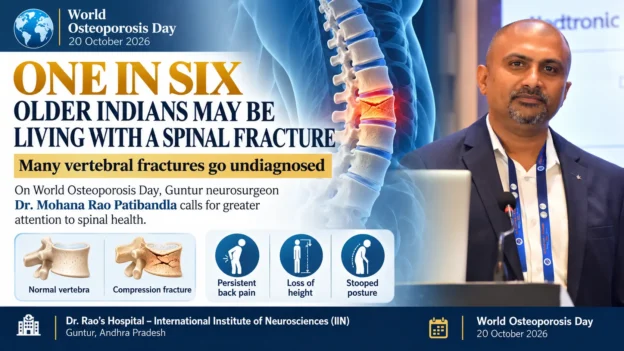
Osteoporosis is often called a silent disease because bones can become weak before a person notices any symptoms. For some people, the first sign is a fracture after a minor fall. For others, the warning may be persistent back pain, loss of height or a gradually stooped posture caused by a vertebral compression fracture.
Osteoporosis affects bone strength and increases the risk of fractures involving the spine, hip, wrist and other bones. Although it is commonly associated with older women, men can also develop osteoporosis, and fractures can occur in people of different ages when important risk factors are present.
This comprehensive guide explains what osteoporosis is, who is at risk, how bone density and spinal fractures are assessed, what treatments may be recommended, and how people can protect their bone and spinal health. It also explains the role of specialist assessment when osteoporosis leads to a painful or structurally significant spinal fracture.
At Dr. Rao’s Hospital – International Institute of Neurosciences (IIN), Guntur, patients can seek information about neurological and spinal conditions, including vertebral compression fractures and the assessment of conditions that may affect the spine and nerves.
What Is Osteoporosis?
Osteoporosis is a skeletal disease characterised by reduced bone strength and increased susceptibility to fractures. Bone is living tissue that is continually renewed through a process in which old bone is removed and new bone is formed. When bone breakdown exceeds bone formation over time, bone mass and internal structure can deteriorate.
Healthy bones contain a dense outer layer and an internal framework that helps them withstand everyday forces. In osteoporosis, this framework becomes less robust. A bone may then fracture under a force that would not ordinarily cause a break, such as a fall from standing height or, in some cases, routine movement.
Osteoporosis may develop without obvious symptoms. A person can continue walking, working and performing daily activities while bone strength declines. A fracture may be the first indication that an assessment of bone health is needed.
Osteoporosis and osteopenia are related but different terms. Osteopenia generally refers to bone mineral density that is below the normal range but does not meet the bone-density threshold used to diagnose osteoporosis. Fracture risk, however, is influenced by more than a single bone-density number. Age, previous fractures, medicines, medical conditions, falls and other clinical factors also matter.
Why Osteoporosis Matters for Spinal Health
The spine is one of the major sites affected by osteoporosis. The vertebrae are the bones that form the spinal column and protect the spinal cord and support the body. When a vertebra becomes fragile, it may partially collapse under pressure. This is known as a vertebral compression fracture.
Vertebral fractures may occur in the thoracic spine, the lumbar spine or the junction between these regions. Some fractures produce sudden pain, while others develop with relatively mild symptoms or are discovered incidentally during imaging performed for another reason.
A spinal compression fracture can have consequences beyond pain. Depending on its severity and location, it may cause loss of vertebral height, a change in spinal alignment, reduced mobility and a forward-bending posture. Multiple fractures can contribute to progressive spinal curvature and difficulty performing everyday activities.
A vertebral fracture can also indicate a higher risk of further fractures. Therefore, care should not end when the immediate pain improves. Patients may need an assessment of bone health, fracture risk and treatment options to help prevent another fracture.
The World Health Organization identifies the spine, hip and wrist among the common sites of fragility fractures. Its guidance emphasises the importance of identifying risk factors and treating osteoporosis to reduce future fracture risk. Read the WHO fact sheet on fragility fractures.
What Is a Vertebral Compression Fracture?
A vertebral compression fracture occurs when a vertebral body loses some of its height because the bone has weakened or sustained an injury. In people with osteoporosis, a fracture may follow a minor fall, lifting an object, bending, twisting or another relatively low-force activity. Some fractures occur without a clearly remembered injury.
Not every spinal fracture is caused by osteoporosis. Trauma, certain tumours, infections and other bone disorders can also damage vertebrae. A clinician must therefore consider the patient’s history, symptoms, examination and imaging before determining the likely cause.
Common symptoms of vertebral compression fractures
- New or sudden back pain: Pain may begin after a minor fall or everyday activity, or appear without an obvious trigger.
- Persistent back pain: Pain may be worse when standing, walking or changing position and may improve when lying down.
- Loss of height: A person may gradually become shorter as vertebral height is lost.
- Stooped posture: Multiple vertebral fractures may contribute to an increasingly rounded upper back.
- Reduced mobility: Pain and changes in spinal alignment may make walking, dressing and other daily activities more difficult.
- Incidental discovery: Some vertebral fractures are identified on an X-ray, CT scan, MRI or bone-density examination performed for another reason.
Symptoms alone cannot confirm a vertebral fracture. Persistent back pain is common and has many possible causes, including muscular, disc-related, joint-related and nerve-related conditions. The combination of symptoms, age, risk factors and clinical assessment helps determine whether spinal imaging is necessary.
Who Is at Risk of Osteoporosis?
Osteoporosis can affect anyone, but some people have a higher risk because of age, hormonal changes, family history, medical conditions, medicines or lifestyle factors.
Age and menopause
Bone mass generally declines with ageing. Women experience accelerated bone loss around menopause as oestrogen levels decrease. This is one reason postmenopausal women may have an increased risk of osteoporosis and fragility fractures.
Men are not immune. Older men can develop osteoporosis, particularly when they have previous fractures, low body weight, hormonal problems, chronic illness or prolonged exposure to medicines that affect bone strength.
Previous fractures and family history
A fracture following a minor fall or low-energy injury can be an important warning sign. A previous fragility fracture may indicate that bone strength is reduced and that the risk of another fracture needs assessment. A family history of osteoporosis or hip fracture may also contribute to an individual’s risk.
Medical conditions and medicines
Conditions that affect hormone levels, nutrient absorption, kidney function or general health can contribute to bone loss. Examples include certain thyroid and parathyroid disorders, malabsorption conditions, inflammatory diseases and some chronic illnesses.
Long-term use of systemic corticosteroids is an important risk factor. Other medicines may affect bone health in particular circumstances. Patients should discuss potential risks with their prescribing clinician rather than stopping a prescribed medicine on their own.
Lifestyle and nutrition
Factors associated with increased fracture risk include smoking, excessive alcohol consumption, low body weight, physical inactivity, inadequate nutrition, insufficient calcium or vitamin D, and an increased risk of falling.
These factors do not mean that a person will definitely develop osteoporosis. They help clinicians decide whether a bone-health assessment or preventive measures may be appropriate.
Why Spinal Fractures Can Be Missed
Vertebral compression fractures may be overlooked because their symptoms can resemble common age-related back problems. Some fractures cause only moderate pain, and others are not associated with a clearly remembered injury. Patients may attribute a change in posture or gradual height loss to ageing without realising that one or more vertebrae may have collapsed.
Another important distinction is that a bone-density scan and a spinal fracture assessment answer different questions. Bone mineral density estimates how much mineral is present in selected bones. Spinal imaging can identify structural changes, including fractures, that may not be apparent from the bone-density result alone.
A person with an osteoporotic vertebral fracture may therefore need more than a review of the DEXA score. The clinician may consider the patient’s history, fracture risk, spinal imaging and whether additional investigations are required.
The International Osteoporosis Foundation’s guidance on vertebral fractures describes the role of X-rays, vertebral fracture assessment, CT and MRI in detecting and evaluating spinal fractures.
How Is Osteoporosis Diagnosed?
Diagnosis involves assessing bone mineral density, fracture history and other factors that affect bone strength. The exact investigations depend on the patient’s age, symptoms, medical history and estimated fracture risk.
1. Medical history and clinical assessment
A clinician may ask about previous fractures, back pain, height loss, falls, menopause, family history, diet, physical activity, chronic conditions and current or previous medicines. A physical examination may assess posture, mobility, tenderness, balance and other findings relevant to the patient’s symptoms.
2. DEXA or DXA bone-density scan
Dual-energy X-ray absorptiometry, commonly called DEXA or DXA, is a widely used method for measuring bone mineral density. The hip and lumbar spine are common measurement sites. The test uses a low dose of X-rays and is generally quick and painless.
For postmenopausal women and men aged 50 years or older, a T-score of -2.5 or lower at an appropriate diagnostic site is commonly used as a bone-density criterion for osteoporosis. A T-score between -1.0 and -2.5 is generally classified as low bone mass or osteopenia. Interpretation differs in some younger populations, including premenopausal women and men under 50, for whom other criteria and clinical considerations may apply.
A DEXA result is not a complete assessment of fracture risk. A clinician may recommend treatment based on the overall clinical picture, including a previous fragility fracture, even when a bone-density result does not fall within the osteoporosis range.
For more information, consult the International Osteoporosis Foundation’s patient guide to diagnosis.
3. X-rays, CT and MRI of the spine
When a vertebral fracture is suspected, spinal imaging may be needed. X-rays can demonstrate vertebral height loss and changes in alignment. CT can provide detailed information about bone structure and fracture anatomy. MRI may help assess whether a fracture is recent, evaluate surrounding soft tissues or investigate possible involvement of the spinal canal and neural structures.
The most appropriate investigation depends on the symptoms and the clinical question. Not everyone with back pain needs every imaging test.
4. Blood tests and assessment of contributing conditions
Blood tests may be recommended to look for factors contributing to bone loss or to guide treatment. Depending on the patient’s history, these may include measurements related to calcium, kidney function, vitamin D, thyroid function or other possible secondary causes.
5. Fracture-risk assessment
Clinical tools such as FRAX may help estimate the probability of a future fracture using selected risk factors, with bone mineral density included when appropriate. These tools support clinical decision-making; they do not replace a clinician’s assessment or identify every existing vertebral fracture.
Osteoporosis Treatment: The Main Goals
The aims of osteoporosis treatment are to reduce the risk of future fractures, maintain mobility and independence, address contributing conditions and support recovery after a fracture.
Treatment is individualised. A person with low bone density but no fracture may have a different plan from someone who has sustained a hip fracture or multiple vertebral fractures. The choice of treatment depends on fracture risk, medical history, kidney function, other medicines, contraindications and patient preferences.
1. Nutrition and bone health
Calcium and vitamin D are important for normal bone health. A balanced diet may include milk and other dairy products, calcium-fortified foods, suitable leafy vegetables, pulses, nuts and other locally available nutrient-rich foods. Protein intake also matters for muscle strength and general recovery.
Vitamin D helps the body absorb calcium. Sun exposure, dietary intake and supplementation needs vary between individuals. A clinician may recommend testing or supplementation when there is a relevant clinical reason. High-dose supplements should not be taken without appropriate guidance, as excessive intake can cause harm.
2. Exercise and muscle strength
Regular physical activity supports muscle strength, balance and function. Weight-bearing activities, resistance exercises and balance training may be included according to the person’s health and fracture risk.
People with a known vertebral fracture, severe osteoporosis or substantial pain should obtain professional advice before starting a new exercise programme. High-impact activities, heavy lifting or repeated spinal flexion may be unsuitable for some individuals. A physiotherapist or clinician can help identify appropriate activities and progression.
3. Fall prevention
Reducing falls is an important part of fracture prevention, especially in older adults. Practical steps may include improving home lighting, removing loose rugs and clutter, installing handrails where needed, using non-slip bathroom surfaces, reviewing vision and footwear, and discussing medicines that may cause dizziness or affect balance.
Strength and balance exercises may also help reduce fall risk when tailored to the person’s abilities. People who have already fallen or who feel unsteady while walking should discuss a falls assessment with a healthcare professional.
4. Medicines to reduce fracture risk
Prescription osteoporosis medicines may be recommended for people whose fracture risk is sufficiently high. Available treatment classes include antiresorptive medicines, such as bisphosphonates and denosumab, and bone-forming treatments for selected patients at very high risk. The specific medicine, route, duration and monitoring plan depend on the individual’s circumstances.
Patients should understand how to take their medicine, what adverse effects to watch for and when follow-up is required. Some treatments require particular attention to kidney function, calcium levels or dental health. Denosumab should not be delayed or stopped without a clinician-directed plan because interruption can increase the risk of vertebral fractures.
Osteoporosis treatment often requires continuing review. A clinician may reassess fracture risk, treatment tolerance, adherence and bone density at appropriate intervals. Calcium and vitamin D may support treatment when needed, but they are not substitutes for prescription therapy when medication is indicated.
For a detailed clinical overview, see the National Osteoporosis Guideline Group’s recommendations on osteoporosis assessment and treatment.
How Are Osteoporotic Spinal Compression Fractures Treated?
Not every vertebral compression fracture requires surgery. Treatment depends on the severity of the fracture, pain, spinal stability, imaging findings, neurological examination, general health and response to initial care.
Non-surgical treatment
Many fractures are initially managed with an individualised combination of pain control, gradual mobilisation, activity modification and rehabilitation. Bracing may be considered in selected cases. The clinician will also assess and treat the underlying osteoporosis to reduce the risk of additional fractures.
Prolonged inactivity can contribute to muscle weakness and loss of independence, so mobilisation should be planned according to the fracture and the patient’s condition. The treating team can advise on safe movement, lifting restrictions and the timing of rehabilitation.
Vertebroplasty
Vertebroplasty is a minimally invasive procedure in which bone cement is injected into a selected fractured vertebral body under imaging guidance. The purpose is to stabilise the fracture and, in appropriately selected patients, help relieve pain.
It is not a routine treatment for every osteoporotic fracture. The decision requires assessment of the fracture, symptom severity and duration, imaging findings, alternative treatment options and the patient’s overall health. Potential complications and the possibility of limited benefit must be discussed before the procedure.
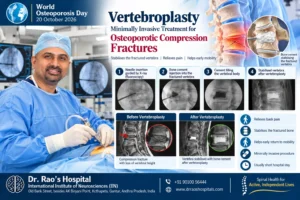
World Osteoporosis Day 2026: Dr. Mohana Rao Patibandla explains vertebroplasty, a minimally invasive procedure that uses bone cement to stabilise selected osteoporotic vertebral compression fractures.
Kyphoplasty
Kyphoplasty is another vertebral augmentation procedure. A balloon is used within the vertebral body before cement is introduced. In selected cases, this may help create a cavity and may improve vertebral height, although restoration of height is not guaranteed and the degree of correction varies.
Vertebroplasty and kyphoplasty differ in technique, and neither is appropriate for every fracture. A specialist must determine whether a procedure is justified and explain its expected benefits, limitations and risks.
Read more about the hospital’s existing information on vertebral compression fracture assessment and treatment and its overview of neuroradiology and spinal interventions.
When is surgery or urgent specialist assessment needed?
Urgent assessment is important when a suspected spinal fracture is accompanied by new or worsening weakness, difficulty walking, numbness in the saddle region, loss of bladder or bowel control, or other symptoms suggesting spinal cord or nerve compression. These symptoms require emergency medical evaluation.
Specialist assessment may also be needed for severe or persistent pain, progressive spinal deformity, suspected instability, an uncertain diagnosis or a fracture that is not improving as expected. Surgery is considered only when the clinical findings and expected benefits justify the risks.
Can Osteoporosis Be Prevented?
Not every case of osteoporosis can be prevented, but several measures can help support bone health and reduce fracture risk throughout life.
- Build bone health early: Adequate nutrition and regular physical activity during childhood, adolescence and adulthood help support the development and maintenance of bone.
- Maintain a balanced diet: Obtain adequate calcium, protein and other nutrients through a varied diet, with supplements when clinically appropriate.
- Stay physically active: Include suitable weight-bearing, resistance and balance activities.
- Avoid smoking: Smoking is associated with poorer bone health and increased fracture risk.
- Limit alcohol: Excessive alcohol consumption can contribute to falls and bone-health problems.
- Review risk factors: Discuss early menopause, long-term steroid use, previous fractures, low body weight and relevant medical conditions with a healthcare professional.
- Consider bone-health assessment: People with significant risk factors or a previous fragility fracture may need DEXA testing or other investigations.
- Prevent falls: Improve home safety, maintain strength and balance, and seek help for vision or mobility problems.
Prevention is not limited to women after menopause. Men and younger adults with risk factors may also need assessment. A personalised plan is more useful than assuming that age, sex or the absence of symptoms guarantees healthy bones.
Frequently Asked Questions About Osteoporosis
Can osteoporosis occur without symptoms?
Yes. Bone loss commonly develops without noticeable symptoms. A fracture, loss of height or a change in spinal posture may be the first indication that further assessment is needed.
Does back pain always mean osteoporosis?
No. Back pain has many possible causes. However, new or persistent back pain in an older adult, especially after a minor fall or with height loss or a stooped posture, deserves clinical assessment.
Can men develop osteoporosis?
Yes. Osteoporosis affects men as well as women. Age, previous fractures, low body weight, certain medical conditions, smoking and some medicines can increase risk.
Does a normal or borderline DEXA result rule out a spinal fracture?
No. DEXA measures bone mineral density, while spinal imaging assesses vertebral structure. A clinician may recommend spinal imaging when symptoms and risk factors suggest a fracture, even if the bone-density result alone does not establish osteoporosis.
Does every vertebral compression fracture need vertebroplasty?
No. Many fractures are managed without a procedure. Vertebroplasty or kyphoplasty may be considered for selected patients after review of symptoms, imaging, clinical findings and alternatives.
Can osteoporosis be treated after a fracture?
Yes. A fracture is an important opportunity to assess bone health and reduce the risk of another fracture. Management may include appropriate osteoporosis medication, nutrition, exercise, fall prevention and rehabilitation.
When should someone seek urgent medical attention?
Seek emergency care for new or worsening limb weakness, difficulty walking, numbness around the groin or saddle region, loss of bladder or bowel control, or severe pain after significant trauma. These symptoms may indicate a serious spinal or neurological problem.
Osteoporosis and Spinal Health at Dr. Rao’s Hospital, Guntur
Osteoporosis requires a coordinated approach that considers bone strength, fracture risk, mobility and the patient’s overall health. When a vertebral compression fracture is suspected, assessment may involve clinical examination and appropriate imaging. Treatment may range from pain management and rehabilitation to vertebral augmentation or other interventions in selected cases.
Dr. Rao’s Hospital – International Institute of Neurosciences (IIN), Guntur, provides information about neurosurgical and spinal conditions, including vertebral compression fractures and spinal interventions. The appropriate treatment depends on the patient’s diagnosis, symptoms, imaging and individual risk factors.
Patients with persistent back pain, loss of height, a suspected spinal fracture or neurological symptoms should seek appropriate medical assessment. Early evaluation can help identify the cause of symptoms, determine whether a fracture is present and guide decisions about bone-health treatment and recovery.
Dr. Rao’s Hospital – International Institute of Neurosciences (IIN)
Guntur, Andhra Pradesh, India
Phone: +91 90100 564444
Email: info@drraoshospitals.com
Website: https://drraoshospitals.com/
References and Further Reading
- World Health Organization: Fragility fractures
- International Osteoporosis Foundation: Diagnosis
- International Osteoporosis Foundation: Assessing vertebral fractures
- National Osteoporosis Guideline Group: Summary of recommendations
- Dr. Rao’s Hospital: Vertebral compression fracture information
- Dr. Rao’s Hospital: Neuroradiology and spinal interventions
Medical disclaimer: This article is for educational purposes and does not replace individual medical advice, diagnosis or treatment. Not everyone with osteoporosis requires surgery, and not every spinal fracture is caused by osteoporosis. Investigations and treatment should be selected by qualified healthcare professionals according to the patient’s clinical condition.