Early Warning Signs of Stroke in Elderly Patients: Every Minute Matters
Reviewed by: Dr. Mohana Rao Patibandla, M.Ch (Neurosurgery), FAANS (USA), FMINS, FEVNS, FPNS, FNOSRS
Chief Neurosurgeon & Founder
Dr. Rao’s Hospital – International Institute of Neurosciences, Guntur, India
Last Updated: July 2026

Stroke Awareness Saves Lives
Stroke is one of the leading causes of death and long-term disability worldwide, particularly among older adults. Every year, millions of people experience a stroke, and the majority occur in individuals over the age of 60. While age is one of the strongest risk factors, recognizing the early warning signs of stroke and seeking immediate medical attention can dramatically improve survival and recovery.
Recent educational efforts have emphasized that “Time is Brain.” Every minute a stroke goes untreated, nearly 1.9 million brain cells are lost, making rapid diagnosis and treatment essential for preserving neurological function and quality of life. This message has been reinforced in recent educational initiatives highlighting the importance of recognizing stroke symptoms early and reaching a Comprehensive Stroke Center without delay.
At Dr. Rao’s Hospital – International Institute of Neurosciences, our comprehensive stroke team combines advanced neuroimaging, minimally invasive endovascular procedures, emergency neurosurgery, neurocritical care, and rehabilitation to provide evidence-based stroke care for patients across Andhra Pradesh and India.
🚨 Stroke is a Medical Emergency
If you notice sudden weakness, facial drooping, slurred speech, loss of vision, or difficulty walking, do not wait for symptoms to improve.
Seek emergency medical attention immediately.
Every minute matters.
Table of Contents
- What is a Stroke?
- Why Are Elderly People at Higher Risk?
- Types of Stroke
- FAST Warning Signs
- Additional Warning Signs
- Major Stroke Risk Factors
- What To Do During a Stroke
- Emergency Stroke Diagnosis
- Modern Stroke Treatments
- Why Comprehensive Stroke Centers Save Lives
- Stroke Prevention
- Frequently Asked Questions
What is a Stroke?
A stroke occurs when blood flow to a part of the brain is suddenly interrupted. Without oxygen and nutrients, brain cells begin dying within minutes. Depending on the area affected, stroke can impair movement, speech, memory, vision, swallowing, balance, or even consciousness.
Stroke is not simply a disease of aging—it is a neurological emergency that requires immediate diagnosis and treatment. Modern stroke care has evolved significantly over the last decade, and many patients who receive treatment within the appropriate time window can regain independence and return to normal life.
The most important determinant of recovery is how quickly treatment begins.
Key Fact
Every minute after a large vessel stroke begins, approximately:
- 1.9 million neurons die
- 14 billion synapses are lost
- 12 km of nerve fibers are damaged
This is why neurologists and neurosurgeons often say:
“Time is Brain.”
Why Are Elderly Patients at Higher Risk of Stroke?
Although stroke can occur at any age, advancing age significantly increases the likelihood of both ischemic and hemorrhagic stroke. Aging causes structural and functional changes in blood vessels, while chronic medical conditions become more common over time.
Older adults also tend to have multiple risk factors occurring simultaneously, increasing both the likelihood of stroke and the severity of neurological injury.
Common reasons include:
- High blood pressure (Hypertension)
- Diabetes mellitus
- High cholesterol
- Atrial fibrillation
- Coronary artery disease
- Carotid artery narrowing
- Smoking history
- Obesity
- Sedentary lifestyle
- Chronic kidney disease
- Sleep apnea
In addition, elderly patients often have reduced physiological reserve, making recovery more challenging if treatment is delayed.
Related Services at Dr. Rao’s Hospital
- Comprehensive Stroke Treatment
- Endovascular Neurosurgery
- Neurology Services
- Neurosurgery Department
- Neuro Critical Care
The Three Main Types of Stroke
Understanding the different types of stroke helps patients appreciate why emergency imaging is necessary before treatment begins.
1. Ischemic Stroke
Approximately 87% of all strokes are ischemic strokes. They occur when an artery supplying blood to the brain becomes blocked by a clot.
Large vessel occlusions involving the internal carotid artery or middle cerebral artery often require advanced treatments such as mechanical thrombectomy.
Common causes include:
- Atherosclerosis
- Blood clots from the heart
- Atrial fibrillation
- Carotid artery disease
- Small vessel disease
2. Hemorrhagic Stroke
A hemorrhagic stroke occurs when a blood vessel ruptures, causing bleeding inside or around the brain.
These strokes often require emergency neurosurgical intervention and intensive care management.
Common causes include:
- High blood pressure
- Brain aneurysm rupture
- Arteriovenous malformation (AVM)
- Blood-thinning medications
- Head injury
3. Transient Ischemic Attack (TIA)
A transient ischemic attack, commonly called a mini-stroke, results from temporary interruption of blood flow to the brain.
Symptoms usually resolve within minutes, but a TIA should never be ignored. It is a warning sign that a major stroke may occur within hours or days.
Clinical Pearl
Many patients mistakenly wait for symptoms to disappear before seeking medical attention. Even if symptoms resolve completely, immediate evaluation by a stroke specialist is essential because early treatment can prevent a devastating future stroke.
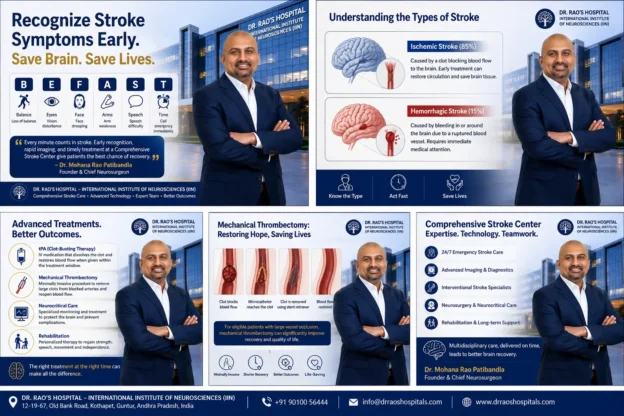
Recognize Stroke FAST
The FAST method is the simplest and most effective way for families to recognize a stroke quickly.
FAST: The Four Most Important Stroke Warning Signs
The FAST acronym is recognized worldwide as a quick and reliable method for identifying the most common symptoms of stroke. It enables family members, caregivers, and bystanders to recognize a stroke within seconds and seek emergency medical care without delay.
🧠 F – Face Drooping
Ask the person to smile.
- One side of the face droops
- Uneven smile
- Facial numbness
- Difficulty closing one eye
💪 A – Arm Weakness
Ask the person to raise both arms.
- One arm drifts downward
- Sudden weakness
- Numbness on one side
- Loss of grip strength
🗣 S – Speech Difficulty
Ask the person to repeat a simple sentence.
- Slurred speech
- Difficulty finding words
- Unable to speak
- Confused language
⏰ T – Time to Call Emergency Services
If any of these signs are present—even if they disappear—seek emergency medical care immediately. Rapid transportation to a Comprehensive Stroke Center offers the best chance of preserving brain tissue and improving recovery.
BE-FAST: An Even Better Way to Recognize Stroke
Although FAST identifies many strokes, some patients—particularly those with posterior circulation strokes—may initially present with balance problems or sudden vision loss. To improve recognition, many stroke specialists recommend the BE-FAST approach.
| Letter | Meaning | Symptoms |
|---|---|---|
| B | Balance | Sudden dizziness, loss of balance, inability to walk |
| E | Eyes | Sudden vision loss or double vision |
| F | Face | Facial drooping |
| A | Arms | Arm weakness or numbness |
| S | Speech | Difficulty speaking or understanding |
| T | Time | Seek emergency stroke care immediately |
Additional Early Warning Signs of Stroke
Not every stroke presents with classic FAST symptoms. Some patients, particularly elderly individuals, experience less obvious neurological changes that are easily mistaken for fatigue, dehydration, or aging.
Other symptoms include:
- Sudden confusion
- Difficulty understanding conversations
- Loss of vision in one eye
- Double vision
- Sudden severe headache
- Persistent dizziness
- Difficulty walking
- Loss of coordination
- Sudden numbness of the face, arm, or leg
- Difficulty swallowing
- Sudden loss of consciousness
- Unexpected falls
- Memory disturbance
- Behavioral changes
- Sudden urinary incontinence associated with neurological symptoms
Important Note for Families
Many elderly patients do not complain of pain during a stroke. Instead, they may simply appear confused, unusually sleepy, weak, or unable to communicate normally. These subtle symptoms should never be ignored.
Stroke Symptoms in Elderly Patients May Be Different
Compared with younger adults, older patients frequently present with atypical symptoms. Family members often attribute these changes to dementia, aging, or medication side effects, delaying treatment during the most critical therapeutic window.
Watch for:
- Sudden personality change
- New confusion
- Unexpected falls
- Difficulty following conversations
- Reduced alertness
- Inability to recognize family members
- Sudden worsening of memory
- Difficulty swallowing food or liquids
- Unexplained imbalance
- Generalized weakness affecting one side more than the other
Any sudden neurological change in an older adult should be treated as a potential stroke until proven otherwise.
Conditions That Can Mimic a Stroke
Several medical conditions produce symptoms similar to stroke. Although these disorders may not involve interrupted blood flow to the brain, distinguishing them from stroke requires urgent medical evaluation and brain imaging.
Stroke mimics include:
- Low blood sugar (Hypoglycemia)
- Seizures with postictal weakness (Todd’s paralysis)
- Migraine with aura
- Brain tumors
- Inner ear disorders
- Bell’s palsy
- Medication toxicity
- Electrolyte disturbances
- Brain infections
Because these conditions may closely resemble stroke, emergency physicians perform neurological examinations and brain imaging before determining the correct diagnosis.
What Should You Do If Someone Has Stroke Symptoms?
Immediate action saves brain tissue. Never wait for symptoms to improve.
Follow these steps:
- Call emergency medical services immediately (9010056444).
- Note the exact time symptoms began.
- Keep the patient calm.
- Do not give food or water if swallowing is impaired.
- Do not allow the patient to drive.
- Bring previous medical records if readily available.
- Inform doctors about blood thinners or previous stroke history.
Why the Time of Onset Matters
Many stroke treatments, including intravenous thrombolysis and mechanical thrombectomy, are only effective within specific treatment windows. Knowing when symptoms started helps physicians determine which therapies are appropriate.
Emergency Stroke Diagnosis
Modern stroke care begins with rapid diagnosis. Within minutes of arriving at a Comprehensive Stroke Center, patients undergo neurological assessment and advanced imaging to determine the type, location, and severity of the stroke.
Initial Evaluation Includes:
- Complete neurological examination
- Blood pressure assessment
- Blood glucose testing
- Electrocardiogram (ECG)
- Blood investigations
Advanced Brain Imaging
| Investigation | Purpose |
|---|---|
| Non-contrast CT Brain | Detects brain hemorrhage rapidly |
| CT Angiography (CTA) | Identifies blocked blood vessels |
| CT Perfusion | Determines salvageable brain tissue |
| MRI Brain | Detects early ischemic stroke with high sensitivity |
| Carotid Doppler | Evaluates narrowing of neck arteries |
Modern imaging enables physicians to distinguish ischemic stroke from hemorrhagic stroke and rapidly determine whether a patient is a candidate for advanced therapies such as intravenous thrombolysis or mechanical thrombectomy.
Advanced Stroke Care at Dr. Rao’s Hospital
Modern Stroke Treatments That Save Lives
Stroke treatment has advanced dramatically over the past two decades. Today, many patients who once would have faced permanent disability can recover remarkably well when treated rapidly at a Comprehensive Stroke Center. The key to successful treatment is early diagnosis, rapid brain imaging, and timely intervention by an experienced multidisciplinary stroke team.
Treatment depends on:
- Whether the stroke is ischemic or hemorrhagic
- The location of the blocked or bleeding vessel
- The time since symptoms began
- The patient’s age and overall health
- Brain imaging findings
Intravenous Thrombolysis (Clot-Busting Medication)

For eligible patients with an acute ischemic stroke, intravenous thrombolysis using tissue plasminogen activator (tPA) or tenecteplase can dissolve the blood clot and restore blood flow to the brain.
Who May Benefit?
- Patients with ischemic stroke
- Symptoms beginning within the recommended treatment window
- No evidence of brain hemorrhage on CT scan
- No major contraindications such as active bleeding
Timely administration of thrombolytic therapy significantly improves the likelihood of functional recovery and reduces long-term disability.
Mechanical Thrombectomy: A Revolutionary Stroke Treatment

Mechanical thrombectomy has revolutionized the treatment of acute ischemic stroke caused by large vessel occlusion (LVO). This minimally invasive endovascular procedure physically removes the clot from the blocked artery, restoring blood flow to the brain.
The procedure is performed through a tiny puncture in the groin or wrist using advanced catheter-based technology under fluoroscopic guidance.
Benefits of Mechanical Thrombectomy
- Rapid restoration of blood flow
- Reduced disability
- Improved independence after stroke
- Higher survival rates
- Minimally invasive approach
- Shorter hospital stay in appropriate patients
Why Experience Matters
Mechanical thrombectomy requires highly specialized expertise in cerebrovascular and endovascular neurosurgery. Outcomes are best when patients are treated at centers equipped with dedicated neurointerventional specialists, advanced imaging, and comprehensive neurocritical care.
Treatment for Hemorrhagic Stroke

Unlike ischemic stroke, hemorrhagic stroke results from bleeding within or around the brain. Rapid diagnosis is critical because treatment focuses on controlling the bleeding, reducing pressure within the skull, and preventing secondary brain injury.
Available Treatments Include
- Blood pressure control
- Reversal of anticoagulant medications
- Neurocritical care monitoring
- Emergency craniotomy
- Minimally invasive hematoma evacuation
- Endoscopic clot evacuation
- Brain aneurysm clipping
- Endovascular coiling
- Decompressive craniectomy
Each patient requires individualized treatment based on the location, size, and cause of the hemorrhage.
Why a Comprehensive Stroke Center Saves Lives

Not all hospitals provide advanced stroke care. A Comprehensive Stroke Center offers specialized expertise, technology, and around-the-clock availability to diagnose and treat both ischemic and hemorrhagic stroke rapidly.
A Comprehensive Stroke Center Offers:
- 24/7 emergency stroke response
- Stroke neurologists
- Neurosurgeons
- Endovascular neurosurgeons
- Advanced CT and MRI imaging
- CT Angiography and CT Perfusion
- Mechanical thrombectomy capability
- Hybrid operating theatre
- Neurocritical care ICU
- Dedicated stroke rehabilitation
Evidence consistently demonstrates that patients treated at Comprehensive Stroke Centers experience lower mortality, fewer complications, and better long-term functional outcomes.
Stroke Rehabilitation Begins on Day One

Recovery from stroke does not end after emergency treatment. Early rehabilitation plays a vital role in restoring independence, mobility, communication, and quality of life.
Stroke Rehabilitation May Include
- Physiotherapy
- Occupational therapy
- Speech and language therapy
- Swallowing rehabilitation
- Neuropsychological assessment
- Cognitive rehabilitation
- Balance training
- Home exercise programs
The brain possesses an extraordinary ability known as neuroplasticity, allowing healthy brain regions to compensate for damaged areas through intensive rehabilitation.
Can Stroke Be Prevented?
The encouraging news is that many strokes are preventable. Managing vascular risk factors significantly lowers the likelihood of experiencing a first or recurrent stroke.
Stroke Prevention Checklist
- ✔ Maintain blood pressure below recommended targets
- ✔ Control diabetes
- ✔ Treat high cholesterol
- ✔ Stop smoking
- ✔ Exercise regularly
- ✔ Maintain a healthy weight
- ✔ Follow a Mediterranean-style diet
- ✔ Limit alcohol intake
- ✔ Treat atrial fibrillation
- ✔ Take prescribed medications consistently
- ✔ Attend regular health checkups
Healthy Lifestyle Tip
Even modest improvements in blood pressure, physical activity, nutrition, and smoking cessation can substantially reduce stroke risk over time.
Why Choose Dr. Rao’s Hospital for Stroke Care?
Dr. Rao’s Hospital – International Institute of Neurosciences is dedicated to delivering advanced stroke care using evidence-based protocols and state-of-the-art technology. Our multidisciplinary team is committed to providing rapid diagnosis, minimally invasive treatment, comprehensive neurocritical care, and personalized rehabilitation.
Our Stroke Services Include
- Emergency stroke evaluation
- Advanced neuroimaging
- Intravenous thrombolysis
- Mechanical thrombectomy
- Brain aneurysm treatment
- Hemorrhagic stroke surgery
- Neurocritical care ICU
- Stroke rehabilitation
- Long-term stroke prevention programs
Frequently Asked Questions
1. What are the first warning signs of stroke?
The earliest warning signs include facial drooping, arm weakness, slurred speech, sudden confusion, vision loss, severe dizziness, or loss of balance. These symptoms require immediate emergency medical evaluation.
2. Can elderly patients recover after a stroke?
Yes. Recovery depends on the severity of the stroke, how quickly treatment begins, and participation in rehabilitation. Many elderly patients regain significant independence with timely care.
3. What is the FAST test?
FAST stands for Face drooping, Arm weakness, Speech difficulty, and Time to call emergency services. It is a simple tool to recognize stroke symptoms quickly.
4. What is mechanical thrombectomy?
Mechanical thrombectomy is a minimally invasive endovascular procedure that removes blood clots from blocked brain arteries, restoring circulation in selected patients with acute ischemic stroke.
5. Is every stroke preventable?
Not every stroke can be prevented, but controlling blood pressure, diabetes, cholesterol, atrial fibrillation, and lifestyle factors can substantially reduce the risk.
🚨 Suspect a Stroke? Every Minute Matters.
Stroke is a true medical emergency. Early recognition and immediate treatment can save brain function, reduce disability, and save lives.
If you or a loved one develops sudden facial drooping, arm weakness, speech difficulty, loss of vision, severe dizziness, or sudden confusion, seek emergency medical attention immediately.
Dr. Rao’s Hospital – International Institute of Neurosciences
📍 12-19-67, Old Bank Road, Kothapet,
Beside AK Biryani Point,
Guntur, Andhra Pradesh – 522001
Authoritative References
- American Stroke Association
- American Heart Association
- World Health Organization
- World Stroke Organization
- National Institute of Neurological Disorders and Stroke (NINDS)
- Centers for Disease Control and Prevention (CDC)
Share This Article
People Also Ask (PAA)
- What are the first symptoms of stroke in elderly people?
- How do I know if someone is having a stroke?
- Can stroke symptoms go away on their own?
- What is the FAST test for stroke?
- What is the BE-FAST stroke assessment?
- Can stroke be prevented?
- How effective is mechanical thrombectomy?
- What is the treatment window for ischemic stroke?
- Which hospital should I choose for emergency stroke treatment?
- Can elderly patients fully recover after stroke?
stroke symptoms,
stroke treatment,
early warning signs of stroke,
stroke in elderly,
FAST stroke,
BE FAST,
mechanical thrombectomy,
brain stroke,
hemorrhagic stroke,
ischemic stroke,
neurologist,
neurosurgeon,
stroke rehabilitation,
stroke prevention,
stroke hospital India,
best stroke hospital,
best neurosurgeon in India,
Dr Rao Hospital,
stroke emergency,
brain health
- FAST Stroke Infographic
- Brain blood vessel illustration
- Mechanical thrombectomy procedure
- CT angiography of stroke
- Stroke neurologist examining elderly patient
- Comprehensive Stroke Center workflow
- Stroke rehabilitation physiotherapy session
- Blood clot removal illustration
- Early warning signs of stroke in elderly patients
- FAST stroke recognition infographic
- Mechanical thrombectomy procedure illustration
- Emergency CT scan for stroke diagnosis
- Stroke rehabilitation after ischemic stroke
- Comprehensive Stroke Center emergency care
- Neurosurgeon treating acute stroke patient
- Stroke prevention in older adults
Medical Disclaimer
This article is intended solely for educational and informational purposes and should not be considered medical advice. Stroke is a medical emergency. If you or someone you know develops sudden facial drooping, arm weakness, speech difficulty, vision changes, severe headache, loss of balance, or confusion, seek emergency medical care immediately. Diagnosis and treatment should always be provided by qualified healthcare professionals.
© 2026 Dr. Rao’s Hospital – International Institute of Neurosciences
Advancing Brain, Spine, Stroke & Endovascular Care Through Innovation, Expertise, and Compassion.