Tag Archives: FAST stroke symptoms

Recognize stroke signs early for timely care at Dr. Rao’s Hospital: speech slurring, sudden weakness, facial drooping. Act fast for treatment!

Stroke, Brain Haemorrhage or Head Injury? Every Minute Matters.

Emergency Brain Care | Stroke Awareness | Neuro Trauma


Stroke, Brain Haemorrhage or Head Injury? Every Minute Matters.


Dr. Mohana Rao Patibandla is the author of NDTV Health; here is his opinion on this topic published on NDTV Health


Time is Brain. Every minute during a neurological emergency can determine whether a person walks, speaks, remembers, or survives. Early recognition and immediate treatment save brain cells and save lives.


Expert Medical Review: Dr. Mohana Rao Patibandla, Founder & Chief Neurosurgeon, Dr. Rao’s Hospital – International Institute of Neurosciences (IIN), Guntur, Andhra Pradesh, India.


Published for: Patient Education • World-Class Emergency Brain Care • Stroke Awareness Campaign 2026


About the Author – Dr. Mohana Rao Patibandla


Dr. Mohana Rao Patibandla is the Founder, Chairman & Managing Director and Chief Neurosurgeon at Dr. Rao’s Hospital – International Institute of Neurosciences (IIN), Guntur, Andhra Pradesh.


With over 24 years of medical experience and international fellowship training in cerebrovascular neurosurgery, skull base surgery, pediatric neurosurgery, minimally invasive neurosurgery, neuro-oncology, endovascular neurosurgery, and stereotactic radiosurgery in the United States, Dr. Rao specializes in treating complex neurological emergencies including stroke, brain haemorrhage, traumatic brain injury, aneurysms, brain tumors, and spine trauma.


Dr. Rao’s Hospital is one of Andhra Pradesh’s advanced neuroscience centers providing emergency stroke care, neuro trauma surgery, minimally invasive brain surgery, neurocritical care, endovascular interventions, and advanced neurological rehabilitation.


Table of Contents


  1. What is a Neurological Emergency?
  2. Why Every Minute Matters — Time is Brain
  3. Who is at Risk of Stroke, Brain Haemorrhage and Head Injury?
  4. When Should You Seek Emergency Medical Care?
  5. Where Should Patients Receive Stroke Treatment?
  6. How Does Emergency Brain Care Save Lives?
  7. Stroke vs Brain Haemorrhage vs Head Injury
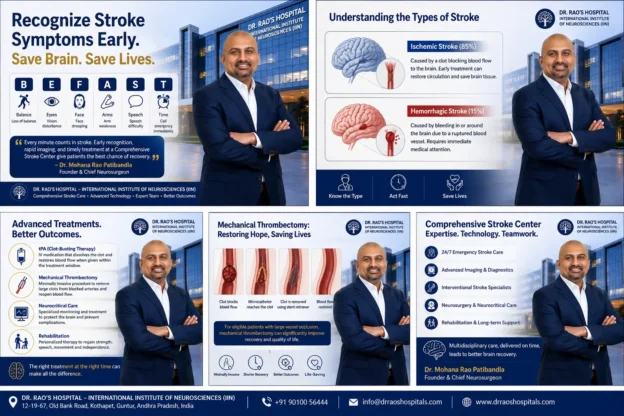
  8. FAST Stroke Recognition Guide
  9. Brain Emergency Centre: Why It Matters
  10. Artificial Intelligence in Stroke Diagnosis
  11. Stroke Prevention Checklist
  12. Frequently Asked Questions
 

Introduction


Every family knows someone who has experienced a heart attack. Most people immediately recognize chest pain as an emergency and rush to a hospital. However, when someone suddenly develops facial drooping, weakness of an arm, difficulty speaking, confusion, or collapses after a head injury, many families wait. They hope symptoms improve, visit multiple clinics, or mistake neurological symptoms for fatigue, dehydration, migraine, or low blood sugar.


This delay can permanently damage the brain.


The brain cannot wait. Stroke, brain haemorrhage and traumatic brain injury are true medical emergencies.
 
Immediate diagnosis with brain imaging, emergency neurological evaluation, and rapid treatment significantly improve recovery and reduce disability. Modern stroke treatment has transformed neurological care—but only if patients reach specialized brain emergency centers quickly. 


What is a Neurological Emergency?


A neurological emergency is any sudden condition affecting the brain, spinal cord, or nerves that requires immediate medical attention to prevent permanent disability or death.


Common Neurological Emergencies

  • Stroke (ischemic stroke).
  • Brain haemorrhage (bleeding inside the brain).
  • Traumatic brain injury after accidents or falls.
  • Subdural or epidural hematoma.
  • Brain aneurysm rupture.
  • Status epilepticus (continuous seizures).
  • Acute spinal cord injury.
  •  

Key Message

Unlike many illnesses that develop gradually, neurological emergencies evolve minute by minute. Brain tissue begins suffering damage almost immediately when blood flow stops or bleeding increases inside the skull.


What Happens During a Stroke?

Stroke occurs when blood supply to part of the brain is interrupted, preventing oxygen and nutrients from reaching brain tissue. Brain cells begin dying within minutes.


What Happens During a Brain Haemorrhage?

Brain haemorrhage occurs when a blood vessel ruptures, causing blood to accumulate inside or around the brain. Increasing pressure damages healthy brain tissue and can rapidly become life-threatening.


What Happens After a Head Injury?

Traumatic brain injury may cause bleeding, swelling, or bruising inside the skull. Importantly, patients may initially appear normal before deteriorating hours later.


Why Every Minute Matters — Understanding “Time is Brain”

The phrase “Time is Brain” is one of the most important concepts in emergency neurology. Every passing minute during an untreated stroke or brain haemorrhage results in irreversible brain injury.


Why Early Treatment Changes Outcomes

  • Preserves speech and language.
  • Protects movement and muscle strength.
  • Reduces paralysis.
  • Improves memory and thinking.
  • Increases independence after recovery.
  • Reduces long-term disability and mortality.
  •  

Why Families Should Never Wait


Many patients lose precious treatment time because symptoms are ignored or underestimated. Waiting at home or visiting multiple healthcare facilities before reaching a specialized neuroscience center can reduce treatment options.


Early CT scanning, MRI when indicated, neurosurgical consultation, thrombolysis for eligible stroke patients, thrombectomy for selected patients, emergency surgery for brain haemorrhage, and neurocritical care all depend on rapid arrival.


Who is at Risk of Stroke, Brain Haemorrhage and Head Injury?


Neurological emergencies can affect anyone—from young adults to elderly patients—but certain individuals have significantly higher risk.


Who is at Higher Risk of Stroke?

Risk Factor

Why It Matters

High Blood PressureMost important modifiable cause of stroke and brain haemorrhage.
DiabetesDamages blood vessels supplying the brain.
SmokingAccelerates vascular disease and increases stroke risk.
High CholesterolContributes to blocked brain arteries.
Heart Disease / Atrial FibrillationCan produce clots that travel to the brain.
Obesity & Physical InactivityIncrease cardiovascular and cerebrovascular risk.
Family HistoryMay increase inherited vascular risk.


Who is at Risk of Brain Haemorrhage?


  • Patients with uncontrolled hypertension.
  • Patients taking blood thinners.
  • Individuals with cerebral aneurysms or vascular malformations.
  • Elderly patients with fragile blood vessels.
  •  

Who is at Risk of Head Injury?


  • Road traffic accident victims.
  • Two-wheeler riders without helmets.
  • Elderly people after falls.
  • Children during sports or falls.
  • Industrial and workplace injuries.
  •  

Important Clinical Message


A patient may walk, talk, or appear completely normal immediately after a head injury. This does NOT exclude dangerous bleeding inside the brain.

Dr. Rao’s Hospital – International Institute of Neurosciences (IIN)

Advanced Stroke Care | Brain Haemorrhage Surgery | Neuro Trauma | Endovascular Neurosurgery | Neurocritical Care

📍 12-19-67, Old Bank Road, Kothapet,
Opp. Sravani Hospital, Guntur – 522001,
Andhra Pradesh, India.

📞 +91 90100 56444
🌐 www.drraoshospitals.com
✉️ info@drraoshospitals.com


When Should You Seek Emergency Medical Care?


One of the biggest mistakes families make is waiting for neurological symptoms to improve.
Unlike many illnesses, neurological emergencies worsen minute by minute.
Immediate evaluation can prevent permanent disability and improve survival.


Go to the Emergency Department Immediately if Any of These Symptoms Appear


  • Sudden weakness or numbness on one side of the body.
  • Sudden facial drooping.
  • Difficulty speaking or understanding speech.
  • Sudden loss of vision in one or both eyes.
  • Sudden severe headache unlike previous headaches.
  • Loss of consciousness.
  • Confusion after a fall or accident.
  • Repeated vomiting after head injury.
  • Seizures after a head injury or stroke symptoms.
  • Difficulty walking, imbalance, or dizziness with neurological symptoms.

The Golden Hour in Stroke Care


The first few hours after stroke symptoms begin are the most critical.
Patients who receive specialized treatment early have significantly better neurological outcomes.
Every minute saved means more brain tissue can potentially be preserved.


Do Not Wait for Symptoms to Improve


Seek emergency neurological evaluation immediately if symptoms last even a few minutes.

  • Do not sleep after sudden neurological symptoms.
  • Do not drive yourself if stroke symptoms begin.
  • Do not take painkillers hoping symptoms disappear.
  • Call emergency medical services or reach the nearest Brain Emergency Centre immediately.
  •  

Where Should Stroke, Brain Haemorrhage, and Head Injury Be Treated?


Every hospital is not equipped to provide comprehensive emergency brain care.
Neurological emergencies require coordinated evaluation by emergency physicians,
neurologists, neurosurgeons, neuroradiologists, neuro-anesthesiologists,
and neurocritical care specialists.


What is a Brain Emergency Centre?


A Brain Emergency Centre is a dedicated neuroscience emergency pathway where diagnosis,
imaging, intervention, surgery, and intensive care happen without unnecessary delays.

Brain Emergency Centre Facilities

Why They Matter

24×7 Emergency NeurosurgeryImmediate surgical treatment for brain haemorrhage and traumatic brain injury.
CT Scan Available ImmediatelyRapid diagnosis of stroke and intracranial bleeding.
MRI BrainIdentifies early ischemic stroke and complex neurological conditions.
Neuro ICUContinuous neurological monitoring and critical care.
Stroke PathwayRapid thrombolysis and thrombectomy evaluation.
Hybrid Operating TheatreAdvanced cerebrovascular and minimally invasive procedures.
Biplane Neuro Cath LabEndovascular stroke and aneurysm treatment.
Neuro RehabilitationEarly recovery planning from the first day of treatment.
 

 Why Dr. Rao’s Hospital – International Institute of Neurosciences (IIN)?


Dr. Rao’s Hospital in Guntur provides comprehensive emergency brain care including:

  • 24/7 Stroke & Brain Emergency Evaluation.
  • Emergency CT Brain and MRI Brain Imaging.
  • Microsurgery for Brain Haemorrhage.
  • Endovascular Stroke & Aneurysm Treatment.
  • Neurocritical Care ICU.
  • Advanced Neuro Trauma Surgery.
  • Minimally Invasive Neurosurgery.
  • Neuronavigation and Hybrid Neurosurgery.

How Does Emergency Brain Care Save Lives?


Modern neuroscience has dramatically improved outcomes after stroke, brain haemorrhage, and traumatic brain injury. The key is delivering the correct treatment without delay.


Emergency Brain Care Timeline


Time

Emergency Action

0–10 MinutesEmergency neurological assessment and stabilization.
10–25 MinutesImmediate CT Brain imaging to differentiate stroke from brain haemorrhage.
25–45 MinutesNeurosurgeon and stroke team evaluation.
45–60 MinutesTreatment decision — thrombolysis, thrombectomy, surgery, or ICU management.
First Few HoursBrain-saving intervention and neurocritical care.


What Happens During Emergency Stroke Treatment?

  1. Neurological examination.
  2. CT Brain immediately.
  3. MRI Brain if required.
  4. Blood investigations.
  5. Blood pressure stabilization.
  6. Stroke severity assessment.
  7. Thrombolysis eligibility assessment.
  8. Mechanical thrombectomy evaluation.
  9. Neuro ICU admission when necessary.

How Brain Haemorrhage is Managed

  • Emergency CT Brain confirms bleeding.
  • Control blood pressure.
  • Reverse blood-thinning medications when appropriate.
  • Emergency neurosurgery if indicated.
  • Neuro ICU monitoring for swelling and intracranial pressure.


How Head Injury is Managed

  • CT Brain for all significant head injuries.
  • Observation for delayed deterioration.
  • Emergency surgery for hematomas when indicated.
  • ICP monitoring in severe traumatic brain injury.
  • Neurocritical care and rehabilitation.

Stroke vs Brain Haemorrhage vs Head Injury


Condition


What Happens?


Common Symptoms


Emergency?


Ischemic StrokeBlood clot blocks blood supply to the brain.Weakness, facial droop, speech difficulty, vision loss.YES — Immediate Stroke Treatment.
Brain HaemorrhageBlood vessel ruptures causing bleeding inside the brain.Sudden severe headache, vomiting, seizures, confusion.YES — Immediate Neurosurgical Evaluation.
Traumatic Brain InjuryImpact damages the brain and may cause bleeding.Loss of consciousness, vomiting, headache, confusion, sleepiness.YES — Immediate CT Brain.
Subdural HematomaBleeding develops around the brain after injury.Initially normal, later confusion, headache, weakness.YES — Surgical Emergency in Selected Patients.
Epidural HematomaRapid bleeding between skull and dura after trauma.Brief recovery followed by deterioration.YES — Immediate Neurosurgery.


Important Clinical Message


A patient talking normally after a fall does not rule out brain bleeding.
The “lucid interval” is a dangerous period where bleeding continues silently.


FAST: Every Family Should Know These Stroke Warning Signs


FAST is the simplest way to recognize stroke symptoms and seek emergency treatment immediately.

F.A.S.T.

FASTMeaning
F — FaceAsk the person to smile. One side of the face droops.
A — ArmAsk the person to raise both arms. One arm drifts downward or feels weak.
S — SpeechSpeech becomes slurred, confused, or difficult to understand.
T — TimeCall emergency medical services and reach a Brain Emergency Centre immediately.


Additional Stroke Symptoms Families Should Never Ignore


  • Sudden numbness.
  • Sudden imbalance.
  • Sudden dizziness.
  • Sudden double vision.
  • Sudden difficulty swallowing.
  • Sudden confusion.
  • Sudden severe headache.

Remember

Even if symptoms improve after a few minutes, seek emergency evaluation immediately. A transient neurological episode may be a warning sign of a major stroke.


Five Brain Emergency Symptoms That Should Never Be Ignored


  1. Sudden Facial Drooping
    A crooked smile or uneven face may indicate stroke.
  2. Weakness in One Arm or Leg
    Sudden inability to lift an arm or walk normally requires emergency evaluation.
  3. Difficulty Speaking
    Slurred speech or inability to understand words is an emergency.
  4. Sudden Severe Headache
    The worst headache of life may indicate brain haemorrhage.
  5. Confusion or Loss of Consciousness After a Fall
    Never ignore sleepiness, repeated vomiting, or increasing confusion after head injury.

Emergency Care for Brain Haemorrhage


Brain haemorrhage is often mistaken for migraine, food poisoning, or general weakness because symptoms vary depending on the location of bleeding.


Symptoms of Brain Haemorrhage


  • Sudden severe headache.
  • Vomiting.
  • Drowsiness.
  • Confusion.
  • Seizures.
  • Weakness on one side.
  • Loss of consciousness.

Emergency Management Includes


  • Immediate CT Brain.
  • Blood pressure management.
  • Correction of coagulation abnormalities.
  • Emergency neurosurgery when required.
  • Neuro ICU monitoring.

Brain Haemorrhage is Treatable


Early diagnosis allows neurosurgeons to relieve pressure,
remove hematomas in selected patients,
and improve survival through timely intervention.


Head Injury Can Be More Dangerous Than It Looks


India reports millions of traumatic brain injuries every year, especially due to road traffic accidents and falls.


The Lucid Interval


One of the most dangerous phenomena after head injury is the lucid interval.


Immediately After Injury

Hours Later

Patient wakes up.Progressive headache develops.
Patient walks normally.Repeated vomiting begins.
Patient says “I am fine.”Increasing sleepiness and confusion occur.
Family assumes recovery.Brain bleeding enlarges inside the skull.
 
Persistent headache, vomiting, increasing sleepiness, or confusion after head injury always requires emergency CT Brain imaging.


Head Injury Safety Checklist

  • Wear ISI-certified helmets.
  • Use seat belts every journey.
  • Prevent falls in elderly family members.
  • Seek emergency care after significant head injury.
  • Do not ignore delayed symptoms.

Artificial Intelligence (AI) is Changing Stroke Diagnosis


Artificial Intelligence is becoming an important support tool in emergency stroke care.
Modern AI-assisted imaging systems help identify suspected stroke,
brain haemorrhage, and large vessel occlusion more rapidly,
helping emergency teams prioritize treatment.


How AI Helps Emergency Stroke Teams


AI Application

Clinical Benefit

CT Brain Image AnalysisRapid identification of suspected brain haemorrhage.
Stroke Detection AlgorithmsEarlier identification of ischemic stroke patterns.
Large Vessel Occlusion DetectionHelps identify thrombectomy candidates faster.
Emergency Workflow PrioritizationAlerts stroke teams quickly.
Tele-Neurosurgery SupportAllows remote expert review of CT scans.


AI Supports Doctors — It Does Not Replace Neurosurgeons


Artificial Intelligence can assist emergency physicians by rapidly analyzing imaging,
but final diagnosis and treatment decisions require experienced neurologists,
neurosurgeons, neuroradiologists, and neurocritical care specialists.


AI and Stroke Care at Dr. Rao’s Hospital


Dr. Rao’s Hospital – International Institute of Neurosciences (IIN)
combines advanced neuroimaging, neuronavigation, hybrid operating theatres,
endovascular stroke care, neurocritical care,
and evidence-based clinical decision-making to provide comprehensive emergency brain care.

Emergency Stroke, Brain Haemorrhage & Head Injury Care — Dr. Rao’s Hospital

Time is Brain. Don’t Wait.


✔ 24×7 Emergency Neurosurgery
✔ Stroke Evaluation & Treatment Pathway
✔ Brain Haemorrhage Surgery
✔ Neuro Trauma & Head Injury Surgery
✔ Neuro ICU & Rehabilitation


Dr. Rao’s Hospital – International Institute of Neurosciences (IIN)


12-19-67, Old Bank Road, Kothapet,
Opp. Sravani Hospital, Guntur – 522001,
Andhra Pradesh, India.

📞 +91 90100 56444
🌐 www.drraoshospitals.com
✉️ info@drraoshospitals.com


How to Prevent Stroke, Brain Haemorrhage, and Head Injuries


Prevention remains the most effective treatment for many neurological emergencies. The majority of stroke risk factors can be controlled through lifestyle changes,
early diagnosis, and regular medical care.


Brain Health Begins with Prevention


Healthy blood vessels mean a healthier brain. Protecting your heart also protects your brain.


Stroke Prevention Checklist


Prevention Strategy


Why It Matters


Control Blood PressureHigh blood pressure is the leading preventable cause of stroke and brain haemorrhage.
Control DiabetesReduces damage to blood vessels supplying the brain.
Quit SmokingSmoking significantly increases stroke, aneurysm, and vascular disease risk.
Reduce CholesterolHelps prevent artery blockage leading to ischemic stroke.
Exercise RegularlyImproves cardiovascular and cerebrovascular health.
Healthy DietReduces obesity, hypertension, and diabetes risk.
Maintain Healthy WeightReduces multiple vascular risk factors.
Regular Health Check-upsDetect silent hypertension, diabetes, and heart disease early.


Brain Haemorrhage Prevention Tips


  • Take blood pressure medications regularly.
  • Do not stop antihypertensive medication without medical advice.
  • Monitor blood pressure at home if advised.
  • Limit alcohol intake.
  • Avoid tobacco and smoking.
  • Seek evaluation for recurrent severe headaches.

  •  

Head Injury Prevention Tips


  • Wear ISI-certified helmets while riding two-wheelers.
  • Always wear seat belts.
  • Use child safety seats.
  • Prevent falls in elderly family members.
  • Install grab bars and improve home lighting.
  • Use protective equipment during sports.
  •  

Why Every City Needs a Brain Emergency Centre


A Brain Emergency Centre is designed to diagnose and treat stroke, brain haemorrhage, traumatic brain injury, aneurysm rupture, and other neurological emergencies without delay.


Essential Components of a Brain Emergency Centre


Facility


Importance


24×7 Emergency NeurosurgeryImmediate surgical care for life-threatening brain conditions.
CT Brain Within MinutesDifferentiates stroke from brain haemorrhage.
MRI Brain & Neuro ImagingAdvanced diagnosis for ischemic stroke and other disorders.
Neuro ICUContinuous neurological monitoring.
Stroke Team ActivationRapid evaluation for thrombolysis and thrombectomy.
Biplane Cath LabAdvanced endovascular stroke treatment.
Hybrid Neurosurgery Operating TheatreComplex cerebrovascular and minimally invasive surgery.
Neuro RehabilitationEarly recovery and functional rehabilitation.


Emergency Brain Care at Dr. Rao’s Hospital – International Institute of Neurosciences (IIN)


Dr. Rao’s Hospital provides a dedicated neuroscience emergency pathway for patients with stroke, brain haemorrhage, traumatic brain injury, aneurysms, brain tumors, spinal cord injury, epilepsy emergencies, and neurocritical care.


  • 24×7 Neurosurgical Emergency Services.
  • Advanced Stroke Evaluation.
  • Emergency Brain CT & MRI.
  • Neuro Cath Lab.
  • Endovascular Neurosurgery.
  • Microsurgery for Brain Haemorrhage.
  • Hybrid Operating Theatre.
  • Neuronavigation Technology.
  • Neuro ICU.
  • Comprehensive Rehabilitation.


Treatment Options for Stroke, Brain Haemorrhage, and Head Injury


Modern neuroscience offers multiple treatment options depending on the cause, severity, timing of presentation, and imaging findings. Early diagnosis helps doctors choose the safest and most effective treatment pathway.


Treatment Options for Ischemic Stroke


Treatment


Purpose


Emergency Stroke AssessmentDetermine stroke type and severity.
CT BrainRule out brain haemorrhage.
MRI BrainAssess early ischemic injury when indicated.
Intravenous ThrombolysisDissolve eligible blood clots in selected patients.
Mechanical ThrombectomyRemove large vessel clots in selected patients.
Neurocritical CareContinuous monitoring after stroke treatment.


Treatment Options for Brain Haemorrhage


  • Emergency CT Brain diagnosis.
  • Blood pressure control.
  • Reversal of anticoagulation when appropriate.
  • Emergency craniotomy in selected patients.
  • Minimally invasive hematoma evacuation in selected patients.
  • External ventricular drainage when indicated.
  • Neuro ICU monitoring.

Treatment Options for Traumatic Brain Injury


  • Emergency stabilization.
  • CT Brain imaging.
  • ICP monitoring for severe injury.
  • Emergency hematoma evacuation.
  • Decompressive craniectomy in selected patients.
  • Neurocritical Care ICU.
  • Neuro rehabilitation.

Advanced Neurosurgical Technologies


Modern neurosurgery combines advanced technology with minimally invasive techniques
for safer surgery and faster recovery.


Technology


Benefit


NeuronavigationPrecise brain surgery planning.
Operating MicroscopeBetter visualization during microsurgery.
Neuro EndoscopyMinimally invasive access to deep brain regions.
Hybrid Operating TheatreCombined surgical and endovascular procedures.
Biplane Cath LabAdvanced stroke and aneurysm intervention.


Caregiver’s Guide: What Families Should Do During a Brain Emergency


Families play a critical role in recognizing symptoms, transporting patients quickly, and communicating important medical information.


First Five Things Families Should Do


  1. Note the exact time symptoms started.
  2. Call emergency medical services immediately.
  3. Do not give food or water if swallowing is impaired.
  4. Do not allow the patient to sleep if neurological symptoms persist.
  5. Reach a Brain Emergency Centre without delay.

What NOT to Do


Avoid This


Why


Waiting for symptoms to improve.Loses valuable treatment time.
Driving long distances without evaluation.Symptoms may worsen during travel.
Giving aspirin before brain imaging.May worsen bleeding if brain haemorrhage is present.
Ignoring repeated vomiting after head injury.May indicate dangerous intracranial bleeding.
Ignoring confusion after a fall.Delayed brain bleeding is possible.


Questions Families Should Be Ready to Answer


  • When was the patient last seen normal?
  • What symptoms appeared first?
  • Is the patient taking blood thinners?
  • Does the patient have hypertension or diabetes?
  • Was there loss of consciousness?
  • Was there seizure activity?
  • Was there a recent fall or accident?


Recovery After Stroke and Brain Injury


Recovery begins immediately after emergency treatment.
Early rehabilitation improves independence,
mobility,
speech,
and quality of life.


Multidisciplinary Rehabilitation


  • Physiotherapy.
  • Speech therapy.
  • Occupational therapy.
  • Swallowing rehabilitation.
  • Neuropsychology and cognitive rehabilitation.
  • Caregiver education.


Recovery Goals


Early Recovery


Long-Term Recovery


Prevent complications.Improve walking.
Reduce brain swelling.Improve speech.
Control blood pressure.Improve independence.
Begin mobilization.Prevent recurrent stroke.
Nutrition support.Improve cognitive function.


Frequently Asked Questions 


1. What are the first warning signs of a stroke?

Sudden facial drooping, arm weakness, speech difficulty, vision loss, imbalance, or confusion require immediate emergency evaluation.


2. What is the FAST test for stroke?

FAST stands for Face drooping, Arm weakness, Speech difficulty, and Time to seek emergency medical care immediately.


3. Can a person talk normally after a head injury and still have brain bleeding?

Yes. Some patients experience a lucid interval before symptoms worsen due to delayed intracranial bleeding.


4. What causes brain haemorrhage?

Common causes include uncontrolled hypertension, aneurysm rupture, blood vessel abnormalities, blood-thinning medications, and traumatic brain injury.


5. Is every severe headache a brain haemorrhage?

No. However, a sudden severe headache accompanied by vomiting, confusion, seizures, or weakness requires emergency CT Brain imaging.


6. How quickly should stroke treatment begin?

Treatment should begin as early as possible after symptom onset because early intervention preserves brain tissue.


7. What should families do before reaching the hospital?

Note symptom onset time, avoid giving food or aspirin, and reach a Brain Emergency Centre immediately.


8. Can stroke happen in young adults?

Yes. Stroke can occur in younger individuals due to vascular disorders, heart disease, clotting disorders, hypertension, smoking, and other medical conditions.


9. Can artificial intelligence diagnose stroke?

AI can assist doctors by rapidly analyzing brain imaging and identifying suspected stroke patterns, but treatment decisions remain physician-led.


10. How can stroke be prevented?

Control blood pressure, diabetes, cholesterol, quit smoking, exercise regularly, maintain healthy weight, and undergo regular health screening.


11. When is surgery required for brain haemorrhage?

Emergency neurosurgery may be required depending on the location, size of bleeding, neurological status, and brain swelling.


12. Where should stroke and brain haemorrhage patients receive treatment in Andhra Pradesh?

Patients should be evaluated at a hospital with emergency stroke imaging, neurosurgery, neurocritical care, and advanced cerebrovascular treatment capabilities.

Protect Your Brain. Act FAST. Every Minute Matters.

24×7 Emergency Stroke, Brain Haemorrhage & Head Injury Care

✔ Emergency Brain CT & MRI
✔ Stroke Evaluation Pathway
✔ Brain Haemorrhage Surgery
✔ Neuro Trauma Surgery
✔ Endovascular Stroke Care
✔ Neuro ICU & Rehabilitation


Dr. Rao’s Hospital – International Institute of Neurosciences (IIN)
12-19-67, Old Bank Road, Kothapet,
Opp. Sravani Hospital, Guntur – 522001,
Andhra Pradesh, India.📞 +91 90100 56444
🌐 www.drraoshospitals.com
✉️ info@drraoshospitals.com


About the Author — Dr. Mohana Rao Patibandla 


Dr. Mohana Rao Patibandla

Founder, Chairman & Managing Director | Chief Neurosurgeon


Dr. Rao’s Hospital – International Institute of Neurosciences (IIN), Guntur, Andhra Pradesh, India.


Dr. Mohana Rao Patibandla is an internationally fellowship-trained neurosurgeon with more than 24 years of medical experience in advanced neurosciences. He specializes in cerebrovascular neurosurgery, minimally invasive brain surgery, skull base surgery, pediatric neurosurgery, neuro-oncology, functional neurosurgery, stereotactic radiosurgery, spine surgery, and endovascular neurosurgery.


After completing Neurosurgery training at Nizam’s Institute of Medical Sciences (NIMS), Hyderabad, Dr. Rao pursued multiple advanced fellowships in the United States in minimally invasive neurosurgery, pediatric neurosurgery, skull base surgery, neuro-oncology, cerebrovascular and endovascular neurosurgery, and stereotactic radiosurgery.


Areas of Expertise


  • Stroke & Cerebrovascular Neurosurgery
  • Brain Haemorrhage Surgery
  • Brain Aneurysm Surgery
  • Endovascular Neurosurgery
  • Neuro Trauma Surgery
  • Brain Tumor Surgery
  • Skull Base Surgery
  • Minimally Invasive Spine Surgery
  • Pediatric Neurosurgery
  • Epilepsy Surgery
  • Neurocritical Care

Why Patients Trust Dr. Rao’s Hospital


  • Dedicated International Institute of Neurosciences (IIN).
  • 24×7 Emergency Stroke & Brain Care.
  • Hybrid Neurosurgery Operating Theatre.
  • Biplane Neuro Cath Lab.
  • Advanced Neuro ICU.
  • Neuronavigation & Microsurgery Technology.
  • Comprehensive Rehabilitation Services.
  •  
  • Every Minute Matters. Save Brain. Save Life.
  •  

Recognise stroke, brain haemorrhage, and head injury symptoms early. Seek emergency neurological care immediately.


Emergency Brain Care Available 24×7


✔ Stroke Emergency Evaluation
✔ Brain Haemorrhage Surgery
✔ Endovascular Stroke Treatment
✔ Neuro Trauma Surgery
✔ Neuro ICU & Critical Care
✔ Brain Tumor & Skull Base Surgery


Dr. Rao’s Hospital – International Institute of Neurosciences (IIN)


12-19-67, Old Bank Road, Kothapet,
Opposite Sravani Hospital,
Guntur – 522001, Andhra Pradesh, India.

📞 +91 90100 56444
🌐 https://drraoshospitals.com
✉️ info@drraoshospitals.com


Medical Disclaimer

This article is intended for public education and awareness regarding neurological emergencies including stroke, brain haemorrhage, and traumatic brain injury.

It should not replace professional medical consultation, diagnosis, emergency evaluation, or treatment. If you or someone experiences sudden neurological symptoms, seek immediate emergency medical care.


Dr. Rao’s Hospital – International Institute of Neurosciences (IIN)

World-Class Neurosurgery, Stroke Care, Brain Haemorrhage Surgery, Neuro Trauma, Spine Surgery & Endovascular Neurosurgery in Guntur, Andhra Pradesh.

Serving patients from Andhra Pradesh, Telangana, Tamil Nadu, Karnataka, Odisha, and across India with advanced neuroscience care.


📍 12-19-67, Old Bank Road, Kothapet, Opposite Sravani Hospital, Guntur – 522001, Andhra Pradesh, India.

📞 +91 90100 56444
🌐 www.drraoshospitals.com
✉️ info@drraoshospitals.com


© 2026 Dr. Rao’s Hospital – International Institute of Neurosciences (IIN). All Rights Reserved.

This educational article is reviewed by Dr. Mohana Rao Patibandla for patient awareness and public health education.

Stroke comprehensive center

Early Warning Signs of Stroke in Elderly Patients: Every Minute Matters | Dr. Rao’s Hospital

Early Warning Signs of Stroke in Elderly Patients: Every Minute Matters

Reviewed by: Dr. Mohana Rao Patibandla, M.Ch (Neurosurgery), FAANS (USA), FMINS, FEVNS, FPNS, FNOSRS
Chief Neurosurgeon & Founder
Dr. Rao’s Hospital – International Institute of Neurosciences, Guntur, India

Last Updated: July 2026

Early warning signs of stroke in elderly patients showing FAST symptoms and emergency stroke care


Stroke Awareness Saves Lives


Stroke is one of the leading causes of death and long-term disability worldwide, particularly among older adults. Every year, millions of people experience a stroke, and the majority occur in individuals over the age of 60. While age is one of the strongest risk factors, recognizing the early warning signs of stroke and seeking immediate medical attention can dramatically improve survival and recovery.


Recent educational efforts have emphasized that “Time is Brain.” Every minute a stroke goes untreated, nearly 1.9 million brain cells are lost, making rapid diagnosis and treatment essential for preserving neurological function and quality of life. This message has been reinforced in recent educational initiatives highlighting the importance of recognizing stroke symptoms early and reaching a Comprehensive Stroke Center without delay.


At Dr. Rao’s Hospital – International Institute of Neurosciences, our comprehensive stroke team combines advanced neuroimaging, minimally invasive endovascular procedures, emergency neurosurgery, neurocritical care, and rehabilitation to provide evidence-based stroke care for patients across Andhra Pradesh and India.

Stroke Feature in Press


🚨 Stroke is a Medical Emergency

If you notice sudden weakness, facial drooping, slurred speech, loss of vision, or difficulty walking, do not wait for symptoms to improve.
Seek emergency medical attention immediately.

Every minute matters.


Table of Contents


What is a Stroke?


A stroke occurs when blood flow to a part of the brain is suddenly interrupted. Without oxygen and nutrients, brain cells begin dying within minutes. Depending on the area affected, stroke can impair movement, speech, memory, vision, swallowing, balance, or even consciousness.


Stroke is not simply a disease of aging—it is a neurological emergency that requires immediate diagnosis and treatment. Modern stroke care has evolved significantly over the last decade, and many patients who receive treatment within the appropriate time window can regain independence and return to normal life.


The most important determinant of recovery is how quickly treatment begins.


Key Fact

Every minute after a large vessel stroke begins, approximately:

  • 1.9 million neurons die
  • 14 billion synapses are lost
  • 12 km of nerve fibers are damaged

This is why neurologists and neurosurgeons often say:

“Time is Brain.”


Why Are Elderly Patients at Higher Risk of Stroke?


Although stroke can occur at any age, advancing age significantly increases the likelihood of both ischemic and hemorrhagic stroke. Aging causes structural and functional changes in blood vessels, while chronic medical conditions become more common over time.


Older adults also tend to have multiple risk factors occurring simultaneously, increasing both the likelihood of stroke and the severity of neurological injury.


Common reasons include:

  • High blood pressure (Hypertension)
  • Diabetes mellitus
  • High cholesterol
  • Atrial fibrillation
  • Coronary artery disease
  • Carotid artery narrowing
  • Smoking history
  • Obesity
  • Sedentary lifestyle
  • Chronic kidney disease
  • Sleep apnea


In addition, elderly patients often have reduced physiological reserve, making recovery more challenging if treatment is delayed.


The Three Main Types of Stroke


Understanding the different types of stroke helps patients appreciate why emergency imaging is necessary before treatment begins.


1. Ischemic Stroke


Approximately 87% of all strokes are ischemic strokes. They occur when an artery supplying blood to the brain becomes blocked by a clot.


Large vessel occlusions involving the internal carotid artery or middle cerebral artery often require advanced treatments such as mechanical thrombectomy.


Common causes include:

  • Atherosclerosis
  • Blood clots from the heart
  • Atrial fibrillation
  • Carotid artery disease
  • Small vessel disease


2. Hemorrhagic Stroke


A hemorrhagic stroke occurs when a blood vessel ruptures, causing bleeding inside or around the brain.


These strokes often require emergency neurosurgical intervention and intensive care management.


Common causes include:


  • High blood pressure
  • Brain aneurysm rupture
  • Arteriovenous malformation (AVM)
  • Blood-thinning medications
  • Head injury


3. Transient Ischemic Attack (TIA)


A transient ischemic attack, commonly called a mini-stroke, results from temporary interruption of blood flow to the brain.


Symptoms usually resolve within minutes, but a TIA should never be ignored. It is a warning sign that a major stroke may occur within hours or days.


Clinical Pearl

Many patients mistakenly wait for symptoms to disappear before seeking medical attention. Even if symptoms resolve completely, immediate evaluation by a stroke specialist is essential because early treatment can prevent a devastating future stroke.


Recognize Stroke FAST


The FAST method is the simplest and most effective way for families to recognize a stroke quickly.


FAST: The Four Most Important Stroke Warning Signs


The FAST acronym is recognized worldwide as a quick and reliable method for identifying the most common symptoms of stroke. It enables family members, caregivers, and bystanders to recognize a stroke within seconds and seek emergency medical care without delay.

🧠 F – Face Drooping

Ask the person to smile.

  • One side of the face droops
  • Uneven smile
  • Facial numbness
  • Difficulty closing one eye

💪 A – Arm Weakness

Ask the person to raise both arms.

  • One arm drifts downward
  • Sudden weakness
  • Numbness on one side
  • Loss of grip strength

🗣 S – Speech Difficulty

Ask the person to repeat a simple sentence.

  • Slurred speech
  • Difficulty finding words
  • Unable to speak
  • Confused language

⏰ T – Time to Call Emergency Services

If any of these signs are present—even if they disappear—seek emergency medical care immediately. Rapid transportation to a Comprehensive Stroke Center offers the best chance of preserving brain tissue and improving recovery.


BE-FAST: An Even Better Way to Recognize Stroke


Although FAST identifies many strokes, some patients—particularly those with posterior circulation strokes—may initially present with balance problems or sudden vision loss. To improve recognition, many stroke specialists recommend the BE-FAST approach.


LetterMeaningSymptoms
BBalanceSudden dizziness, loss of balance, inability to walk
EEyesSudden vision loss or double vision
FFaceFacial drooping
AArmsArm weakness or numbness
SSpeechDifficulty speaking or understanding
TTimeSeek emergency stroke care immediately


Additional Early Warning Signs of Stroke


Not every stroke presents with classic FAST symptoms. Some patients, particularly elderly individuals, experience less obvious neurological changes that are easily mistaken for fatigue, dehydration, or aging.


Other symptoms include:


  • Sudden confusion
  • Difficulty understanding conversations
  • Loss of vision in one eye
  • Double vision
  • Sudden severe headache
  • Persistent dizziness
  • Difficulty walking
  • Loss of coordination
  • Sudden numbness of the face, arm, or leg
  • Difficulty swallowing
  • Sudden loss of consciousness
  • Unexpected falls
  • Memory disturbance
  • Behavioral changes
  • Sudden urinary incontinence associated with neurological symptoms


Important Note for Families

Many elderly patients do not complain of pain during a stroke. Instead, they may simply appear confused, unusually sleepy, weak, or unable to communicate normally. These subtle symptoms should never be ignored.


Stroke Symptoms in Elderly Patients May Be Different


Compared with younger adults, older patients frequently present with atypical symptoms. Family members often attribute these changes to dementia, aging, or medication side effects, delaying treatment during the most critical therapeutic window.


Watch for:


  • Sudden personality change
  • New confusion
  • Unexpected falls
  • Difficulty following conversations
  • Reduced alertness
  • Inability to recognize family members
  • Sudden worsening of memory
  • Difficulty swallowing food or liquids
  • Unexplained imbalance
  • Generalized weakness affecting one side more than the other


Any sudden neurological change in an older adult should be treated as a potential stroke until proven otherwise.


Conditions That Can Mimic a Stroke


Several medical conditions produce symptoms similar to stroke. Although these disorders may not involve interrupted blood flow to the brain, distinguishing them from stroke requires urgent medical evaluation and brain imaging.


Stroke mimics include:


  • Low blood sugar (Hypoglycemia)
  • Seizures with postictal weakness (Todd’s paralysis)
  • Migraine with aura
  • Brain tumors
  • Inner ear disorders
  • Bell’s palsy
  • Medication toxicity
  • Electrolyte disturbances
  • Brain infections


Because these conditions may closely resemble stroke, emergency physicians perform neurological examinations and brain imaging before determining the correct diagnosis.


What Should You Do If Someone Has Stroke Symptoms?


Immediate action saves brain tissue. Never wait for symptoms to improve.


Follow these steps:


  1. Call emergency medical services immediately (9010056444).
  2. Note the exact time symptoms began.
  3. Keep the patient calm.
  4. Do not give food or water if swallowing is impaired.
  5. Do not allow the patient to drive.
  6. Bring previous medical records if readily available.
  7. Inform doctors about blood thinners or previous stroke history.


Why the Time of Onset Matters

Many stroke treatments, including intravenous thrombolysis and mechanical thrombectomy, are only effective within specific treatment windows. Knowing when symptoms started helps physicians determine which therapies are appropriate.


Emergency Stroke Diagnosis


Modern stroke care begins with rapid diagnosis. Within minutes of arriving at a Comprehensive Stroke Center, patients undergo neurological assessment and advanced imaging to determine the type, location, and severity of the stroke.


Initial Evaluation Includes:


  • Complete neurological examination
  • Blood pressure assessment
  • Blood glucose testing
  • Electrocardiogram (ECG)
  • Blood investigations


Advanced Brain Imaging


InvestigationPurpose
Non-contrast CT BrainDetects brain hemorrhage rapidly
CT Angiography (CTA)Identifies blocked blood vessels
CT PerfusionDetermines salvageable brain tissue
MRI BrainDetects early ischemic stroke with high sensitivity
Carotid DopplerEvaluates narrowing of neck arteries


Modern imaging enables physicians to distinguish ischemic stroke from hemorrhagic stroke and rapidly determine whether a patient is a candidate for advanced therapies such as intravenous thrombolysis or mechanical thrombectomy.


Modern Stroke Treatments That Save Lives

Stroke treatment has advanced dramatically over the past two decades. Today, many patients who once would have faced permanent disability can recover remarkably well when treated rapidly at a Comprehensive Stroke Center. The key to successful treatment is early diagnosis, rapid brain imaging, and timely intervention by an experienced multidisciplinary stroke team.


Treatment depends on:


  • Whether the stroke is ischemic or hemorrhagic
  • The location of the blocked or bleeding vessel
  • The time since symptoms began
  • The patient’s age and overall health
  • Brain imaging findings


Intravenous Thrombolysis (Clot-Busting Medication)


Intravenous thrombolysis for acute ischemic stroke

For eligible patients with an acute ischemic stroke, intravenous thrombolysis using tissue plasminogen activator (tPA) or tenecteplase can dissolve the blood clot and restore blood flow to the brain.


Who May Benefit?


  • Patients with ischemic stroke
  • Symptoms beginning within the recommended treatment window
  • No evidence of brain hemorrhage on CT scan
  • No major contraindications such as active bleeding


Timely administration of thrombolytic therapy significantly improves the likelihood of functional recovery and reduces long-term disability.


Mechanical Thrombectomy: A Revolutionary Stroke Treatment


Mechanical thrombectomy removing clot from brain artery


Mechanical thrombectomy has revolutionized the treatment of acute ischemic stroke caused by large vessel occlusion (LVO). This minimally invasive endovascular procedure physically removes the clot from the blocked artery, restoring blood flow to the brain.


The procedure is performed through a tiny puncture in the groin or wrist using advanced catheter-based technology under fluoroscopic guidance.


Benefits of Mechanical Thrombectomy


  • Rapid restoration of blood flow
  • Reduced disability
  • Improved independence after stroke
  • Higher survival rates
  • Minimally invasive approach
  • Shorter hospital stay in appropriate patients


Why Experience Matters

Mechanical thrombectomy requires highly specialized expertise in cerebrovascular and endovascular neurosurgery. Outcomes are best when patients are treated at centers equipped with dedicated neurointerventional specialists, advanced imaging, and comprehensive neurocritical care.


Treatment for Hemorrhagic Stroke

Emergency neurosurgery for hemorrhagic stroke

Unlike ischemic stroke, hemorrhagic stroke results from bleeding within or around the brain. Rapid diagnosis is critical because treatment focuses on controlling the bleeding, reducing pressure within the skull, and preventing secondary brain injury.


Available Treatments Include

  • Blood pressure control
  • Reversal of anticoagulant medications
  • Neurocritical care monitoring
  • Emergency craniotomy
  • Minimally invasive hematoma evacuation
  • Endoscopic clot evacuation
  • Brain aneurysm clipping
  • Endovascular coiling
  • Decompressive craniectomy


Each patient requires individualized treatment based on the location, size, and cause of the hemorrhage.


Why a Comprehensive Stroke Center Saves Lives


Comprehensive Stroke Center providing 24-hour stroke care


Not all hospitals provide advanced stroke care. A Comprehensive Stroke Center offers specialized expertise, technology, and around-the-clock availability to diagnose and treat both ischemic and hemorrhagic stroke rapidly.


A Comprehensive Stroke Center Offers:


  • 24/7 emergency stroke response
  • Stroke neurologists
  • Neurosurgeons
  • Endovascular neurosurgeons
  • Advanced CT and MRI imaging
  • CT Angiography and CT Perfusion
  • Mechanical thrombectomy capability
  • Hybrid operating theatre
  • Neurocritical care ICU
  • Dedicated stroke rehabilitation


Evidence consistently demonstrates that patients treated at Comprehensive Stroke Centers experience lower mortality, fewer complications, and better long-term functional outcomes.


Stroke Rehabilitation Begins on Day One

Stroke rehabilitation with physiotherapy and occupational therapy

Recovery from stroke does not end after emergency treatment. Early rehabilitation plays a vital role in restoring independence, mobility, communication, and quality of life.


Stroke Rehabilitation May Include


  • Physiotherapy
  • Occupational therapy
  • Speech and language therapy
  • Swallowing rehabilitation
  • Neuropsychological assessment
  • Cognitive rehabilitation
  • Balance training
  • Home exercise programs

The brain possesses an extraordinary ability known as neuroplasticity, allowing healthy brain regions to compensate for damaged areas through intensive rehabilitation.


Can Stroke Be Prevented?


The encouraging news is that many strokes are preventable. Managing vascular risk factors significantly lowers the likelihood of experiencing a first or recurrent stroke.


Stroke Prevention Checklist


  • ✔ Maintain blood pressure below recommended targets
  • ✔ Control diabetes
  • ✔ Treat high cholesterol
  • ✔ Stop smoking
  • ✔ Exercise regularly
  • ✔ Maintain a healthy weight
  • ✔ Follow a Mediterranean-style diet
  • ✔ Limit alcohol intake
  • ✔ Treat atrial fibrillation
  • ✔ Take prescribed medications consistently
  • ✔ Attend regular health checkups


Healthy Lifestyle Tip

Even modest improvements in blood pressure, physical activity, nutrition, and smoking cessation can substantially reduce stroke risk over time.


Why Choose Dr. Rao’s Hospital for Stroke Care?

Dr. Rao’s Hospital – International Institute of Neurosciences is dedicated to delivering advanced stroke care using evidence-based protocols and state-of-the-art technology. Our multidisciplinary team is committed to providing rapid diagnosis, minimally invasive treatment, comprehensive neurocritical care, and personalized rehabilitation.


Our Stroke Services Include

  • Emergency stroke evaluation
  • Advanced neuroimaging
  • Intravenous thrombolysis
  • Mechanical thrombectomy
  • Brain aneurysm treatment
  • Hemorrhagic stroke surgery
  • Neurocritical care ICU
  • Stroke rehabilitation
  • Long-term stroke prevention programs

Frequently Asked Questions


1. What are the first warning signs of stroke?

The earliest warning signs include facial drooping, arm weakness, slurred speech, sudden confusion, vision loss, severe dizziness, or loss of balance. These symptoms require immediate emergency medical evaluation.


2. Can elderly patients recover after a stroke?

Yes. Recovery depends on the severity of the stroke, how quickly treatment begins, and participation in rehabilitation. Many elderly patients regain significant independence with timely care.


3. What is the FAST test?

FAST stands for Face drooping, Arm weakness, Speech difficulty, and Time to call emergency services. It is a simple tool to recognize stroke symptoms quickly.


4. What is mechanical thrombectomy?

Mechanical thrombectomy is a minimally invasive endovascular procedure that removes blood clots from blocked brain arteries, restoring circulation in selected patients with acute ischemic stroke.


5. Is every stroke preventable?

Not every stroke can be prevented, but controlling blood pressure, diabetes, cholesterol, atrial fibrillation, and lifestyle factors can substantially reduce the risk.


🚨 Suspect a Stroke? Every Minute Matters.

Stroke is a true medical emergency. Early recognition and immediate treatment can save brain function, reduce disability, and save lives.

If you or a loved one develops sudden facial drooping, arm weakness, speech difficulty, loss of vision, severe dizziness, or sudden confusion, seek emergency medical attention immediately.

Dr. Rao’s Hospital – International Institute of Neurosciences

📍 12-19-67, Old Bank Road, Kothapet,
Beside AK Biryani Point,
Guntur, Andhra Pradesh – 522001

📞 +91 9010056444

📧 info@drraoshospitals.com

🌐 https://drraoshospitals.com


Authoritative References


Share This Article


People Also Ask (PAA)

  • What are the first symptoms of stroke in elderly people?
  • How do I know if someone is having a stroke?
  • Can stroke symptoms go away on their own?
  • What is the FAST test for stroke?
  • What is the BE-FAST stroke assessment?
  • Can stroke be prevented?
  • How effective is mechanical thrombectomy?
  • What is the treatment window for ischemic stroke?
  • Which hospital should I choose for emergency stroke treatment?
  • Can elderly patients fully recover after stroke?

stroke symptoms,
stroke treatment,
early warning signs of stroke,
stroke in elderly,
FAST stroke,
BE FAST,
mechanical thrombectomy,
brain stroke,
hemorrhagic stroke,
ischemic stroke,
neurologist,
neurosurgeon,
stroke rehabilitation,
stroke prevention,
stroke hospital India,
best stroke hospital,
best neurosurgeon in India,
Dr Rao Hospital,
stroke emergency,
brain health


  1. FAST Stroke Infographic
  2. Brain blood vessel illustration
  3. Mechanical thrombectomy procedure
  4. CT angiography of stroke
  5. Stroke neurologist examining elderly patient
  6. Comprehensive Stroke Center workflow
  7. Stroke rehabilitation physiotherapy session
  8. Blood clot removal illustration

  • Early warning signs of stroke in elderly patients
  • FAST stroke recognition infographic
  • Mechanical thrombectomy procedure illustration
  • Emergency CT scan for stroke diagnosis
  • Stroke rehabilitation after ischemic stroke
  • Comprehensive Stroke Center emergency care
  • Neurosurgeon treating acute stroke patient
  • Stroke prevention in older adults

Medical Disclaimer

This article is intended solely for educational and informational purposes and should not be considered medical advice. Stroke is a medical emergency. If you or someone you know develops sudden facial drooping, arm weakness, speech difficulty, vision changes, severe headache, loss of balance, or confusion, seek emergency medical care immediately. Diagnosis and treatment should always be provided by qualified healthcare professionals.


© 2026 Dr. Rao’s Hospital – International Institute of Neurosciences

Advancing Brain, Spine, Stroke & Endovascular Care Through Innovation, Expertise, and Compassion.

stroke-and-cerebrovascular-surgery - minimally invasive mechanical thrombectomy - at Dr Rao's by Dr Rao

Brain Stroke Treatment in the Golden Hour: What Families Must Know

Brain Stroke Treatment in the Golden Hour: What Families Must Know

బ్రెయిన్ స్ట్రోక్ గోల్డెన్ అవర్ చికిత్స: కుటుంబాలు తప్పక తెలుసుకోవాల్సిన విషయాలు

స్ట్రోక్‌ను సాధారణంగా బ్రెయిన్ అటాక్ అని అంటారు. ఇది అకస్మాత్తుగా వస్తుంది మరియు ప్రతి నిమిషం అమూల్యమైన మెదడు కణాలు నష్టపోతాయి.
అందుకే స్ట్రోక్ వచ్చిన మొదటి గంట (Golden Hour) లో సరైన చికిత్స అందితే జీవితం మారిపోతుంది.

ఈ వ్యాసంలో మీరు తెలుసుకుంటారు:
స్ట్రోక్ గోల్డెన్ అవర్ అంటే ఏమిటి, లక్షణాలను ఎలా గుర్తించాలి, కుటుంబ సభ్యులు వెంటనే ఏం చేయాలి,
ఆధునిక చికిత్సలు ఏమిటి, అలాగే చికిత్స తర్వాత రోగి కోలుకోవడంలో కుటుంబ పాత్ర ఏమిటి.


స్ట్రోక్ గోల్డెన్ అవర్ అంటే ఏమిటి?

స్ట్రోక్ వచ్చిన తర్వాత మొదటి కొన్ని గంటలను గోల్డెన్ అవర్ అంటారు.
ఈ సమయంలో చికిత్స అందితే మెదడు నష్టం గణనీయంగా తగ్గుతుంది.

  • 4.5 గంటల్లోపు: క్లాట్ కరిగించే ఇంజెక్షన్ (IV థ్రోంబోలైసిస్)
  • 6 గంటల్లోపు (కొన్ని కేసుల్లో 24 గంటల వరకు): క్లాట్ తొలగించే థ్రోంబెక్టమీ

ప్రపంచ ఆరోగ్య సంస్థ (WHO) ప్రకారం,
స్ట్రోక్‌లో ఆలస్యం జరిగితే శాశ్వత వైకల్యం లేదా మరణం ప్రమాదం పెరుగుతుంది.


స్ట్రోక్ లక్షణాలు – కుటుంబాలు తప్పక గుర్తించాలి (FAST)

  • F – Face Drooping: ముఖం ఒకవైపు వంగిపోవడం
  • A – Arm Weakness: ఒక చేయి పైకెత్తలేకపోవడం
  • S – Speech Difficulty: మాట సరిగా రావడం లేకపోవడం
  • T – Time: వెంటనే ఆసుపత్రికి తీసుకెళ్లాలి

ఇతర లక్షణాలు:

  • ఒకవైపు శరీరం మొద్దుబారడం లేదా బలహీనత
  • అకస్మాత్తుగా చూపు తగ్గడం
  • తీవ్రమైన తలనొప్పి
  • తల తిరగడం, నడవలేకపోవడం

స్ట్రోక్ అనుమానం వచ్చిన వెంటనే కుటుంబాలు ఏం చేయాలి?

  1. వెంటనే 112 కి కాల్ చేయండి
  2. లక్షణాలు మొదలైన సమయాన్ని గుర్తుంచుకోండి
  3. ఆహారం లేదా నీరు ఇవ్వకండి
  4. ఇంటి వైద్య చికిత్సలు లేదా ఆలస్యం చేయవద్దు

స్ట్రోక్‌కు సరైన CT/MRI సదుపాయం, న్యూరాలజీ మరియు న్యూరోసర్జరీ ఉన్న ఆసుపత్రికి మాత్రమే తీసుకెళ్లాలి.


స్ట్రోక్ రకాలు & గోల్డెన్ అవర్ చికిత్స

ఇస్కేమిక్ స్ట్రోక్ (క్లాట్ వల్ల)

  • IV థ్రోంబోలైసిస్ – 4.5 గంటల్లోపు
  • మెకానికల్ థ్రోంబెక్టమీ – పెద్ద నరాల్లో క్లాట్ ఉన్నప్పుడు

హెమరేజిక్ స్ట్రోక్ (రక్తస్రావం)

  • బీపీ నియంత్రణ
  • రక్తం గడ్డకట్టే మందుల ప్రభావాన్ని తగ్గించడం
  • అవసరమైతే న్యూరోసర్జరీ

స్ట్రోక్ చికిత్స తర్వాత కోలుకోవడం – కుటుంబాలు తెలుసుకోవాల్సినవి

స్ట్రోక్ చికిత్సతో ప్రయాణం ముగియదు – అక్కడే కోలుకునే ప్రయాణం మొదలవుతుంది.

మొదటి 72 గంటలు

  • మెదడు వాపు
  • మాట, కదలికల్లో మార్పులు
  • మింగే సామర్థ్యం

ఈ సమయంలో మార్పులు రావడం సాధారణం – భయపడాల్సిన అవసరం లేదు.


ఎర్లీ రిహ్యాబిలిటేషన్ ఎందుకు ముఖ్యం?

  • నడవడం తిరిగి నేర్చుకోవడం
  • మాట, మింగడం మెరుగుపడటం
  • శాశ్వత వైకల్యం తగ్గించడం

స్ట్రోక్ తర్వాత మొదటి 3–6 నెలలు అత్యంత కీలకం.


స్ట్రోక్ తర్వాత కుటుంబాల పాత్ర

  • మందులు సరిగ్గా వేయించడం
  • ఫిజియోథెరపీకి తీసుకెళ్లడం
  • మనోధైర్యం ఇవ్వడం
  • ఆహార నియమాలు పాటించించడం

కుటుంబ సహకారం ఉంటే కోలుకోవడం వేగంగా జరుగుతుంది.


రెండో స్ట్రోక్ నివారణ

  • బీపీ, షుగర్ నియంత్రణ
  • పొగత్రాగడం మానేయడం
  • డాక్టర్ చెప్పిన మందులు క్రమంగా తీసుకోవడం

డా. రావు హాస్పిటల్‌లో స్ట్రోక్ చికిత్స

డా. రావు హాస్పిటల్ లో
24/7 స్ట్రోక్ ఎమర్జెన్సీ సేవలు అందుబాటులో ఉన్నాయి.

స్ట్రోక్ చికిత్స మరియు రికవరీ
:contentReference[oaicite:0]{index=0}
నాయకత్వంలో బహుళ విభాగాల బృందం ద్వారా జరుగుతుంది.


స్ట్రోక్ అనుమానం వస్తే ఒక్క నిమిషం ఆలస్యం చేయవద్దు

ముఖం వంగిపోవడం, చేయి బలహీనత, మాట రాకపోవడం కనిపిస్తే
వెంటనే డా. రావు హాస్పిటల్ కు తీసుకురండి.

📞 090100 56444
📧 info@drraoshospitals.com
📍 ఎమర్జెన్సీ & అపాయింట్‌మెంట్

గుర్తుంచుకోండి: ఆలస్యం అంటే మెదడు నష్టం.


🌐 డా. రావు హాస్పిటల్ వెబ్‌సైట్
🧠 న్యూరాలజీ & స్ట్రోక్ సేవలు
🏥 న్యూరోసర్జరీ విభాగం
👨‍⚕️ డా. మోహన రావు పాటిబండ్ల గురించి


Facebook |
Instagram |
YouTube |
LinkedIn |
X (Twitter)

A stroke is a brain attack. Every minute counts. When a stroke happens, nearly 1.9 million neurons die each minute if blood flow isn’t restored. That’s why brain stroke treatment in the golden hour—the first critical window after symptom onset—can mean the difference between full recovery and lifelong disability.

This family-focused guide explains what the golden hour in stroke is, how to recognize FAST stroke symptoms, what to do immediately, and which emergency stroke treatments (thrombolysis and thrombectomy) save brain tissue. It also shows where to find 24/7 stroke care in Guntur.


What Is the Golden Hour in Stroke?

The golden hour refers to the earliest period after stroke onset when rapid diagnosis and treatment provide the best outcomes. For ischemic strokes (caused by a clot), two time windows are crucial:

  • Within 4.5 hours: IV thrombolysis (clot-busting medicine)
  • Up to 6 hours (and selected cases up to 24 hours): Mechanical thrombectomy for large vessel occlusion

According to the World Health Organization (WHO), early treatment dramatically reduces death and disability after stroke.


Why Speed Matters: “Time Is Brain”

Delays in stroke treatment increase the risk of paralysis, speech loss, memory problems, and death. Early reperfusion—restoring blood flow—limits brain damage and improves recovery.

Action TimeImpact
0–60 minutesHighest chance of full recovery
1–4.5 hoursEligible for IV thrombolysis
Up to 6–24 hours (selected)Mechanical thrombectomy possible

Stroke Warning Signs Families Must Know (FAST)

Teach every family member the FAST test:

  • F – Face drooping: One side of the face droops
  • A – Arm weakness: Cannot lift one arm
  • S – Speech difficulty: Slurred or unable to speak
  • T – Time to call emergency: Rush to hospital immediately

Other sudden stroke symptoms include:

  • Paralysis or numbness on one side
  • Vision loss or double vision
  • Severe headache (especially in hemorrhagic stroke)
  • Dizziness or loss of balance

What Families Should Do Immediately

If you suspect a stroke:

  1. Call emergency services immediately (India emergency number: 112)
  2. Note the exact time symptoms started
  3. Do not give food or drink
  4. Do not delay for home remedies or local clinics

Go straight to a 24/7 stroke center with CT/MRI, neurologists, and endovascular capability.


Types of Stroke and Golden Hour Treatment

Ischemic Stroke (Clot)

The most common type. Treatment focuses on reopening the blocked artery.

  • IV Thrombolysis (tPA): Given within 4.5 hours
  • Mechanical Thrombectomy: Clot removal for large vessel occlusion

Guidelines summarized by the NIH support early reperfusion to improve outcomes.

Hemorrhagic Stroke (Bleed)

Requires rapid blood pressure control, reversal of blood thinners, and neurosurgical evaluation.


Hyperacute Stroke Care: What Happens in Hospital?

At a dedicated stroke center, teams follow a rapid pathway:

  • Immediate triage and neurological exam
  • Urgent CT/MRI to differentiate clot vs bleed
  • Blood tests and cardiac monitoring
  • Decision for thrombolysis or thrombectomy

Door-to-needle times are optimized to minutes—not hours.


Mechanical Thrombectomy: Clot Removal That Saves Brain

For large vessel occlusion, thrombectomy physically removes the clot using a catheter. It can dramatically reverse paralysis when performed promptly.

Evidence from randomized trials summarized on PubMed shows significant improvement in independence at 90 days.


Transient Ischemic Attack (TIA): A Warning You Must Not Ignore

A TIA (“mini-stroke”) causes temporary symptoms that resolve within 24 hours. It is a medical emergency and a strong predictor of a major stroke.

Immediate evaluation and prevention can avert a catastrophic event.


Delay in Stroke Treatment: Risks

  • Permanent paralysis
  • Speech and swallowing problems
  • Cognitive decline
  • Higher mortality

Every 15-minute delay reduces the chance of a good outcome.


Stroke Recovery: Early Treatment Makes the Difference

Patients treated within the golden hour are more likely to:

  • Walk independently
  • Regain speech
  • Return to work
  • Avoid long-term care

Stroke Care at Dr. Rao’s Hospital, Guntur

Dr. Rao’s Hospital provides 24/7 stroke emergency care with rapid imaging, thrombolysis, and endovascular services. Care is coordinated by a multidisciplinary team led by Dr. Mohana Rao Patibandla, who is a two-year fellowship-trained endovascular neurosurgeon (UVA, USA).

Explore our departments:


What are the warning signs of stroke?

Sudden face drooping, arm weakness, speech difficulty, vision loss, severe headache, dizziness, or paralysis. Use FAST and rush to a hospital immediately.

How is stroke diagnosed?

Stroke is diagnosed urgently using CT or MRI brain imaging to determine clot versus bleed, followed by targeted blood tests and cardiac evaluation.

Why choose Dr. Rao’s Hospital for stroke treatment?

At Dr. Rao’s Hospital, led by Dr. Mohana Rao Patibandla, patients receive rapid, evidence-based stroke care with 24/7 emergency services.

Act Fast. Save Brain. Save Life.

If you notice stroke symptoms, do not wait. For expert golden hour stroke treatment in Guntur, go to Dr. Rao’s Hospital immediately.

📞 090100 56444
📧 info@drraoshospitals.com
📍 Contact Dr. Rao’s Hospital

Facebook |
Instagram |
YouTube |
LinkedIn |
X (Twitter)


What Families Should Ask at the Emergency Room

When you arrive at the hospital with a suspected stroke patient, families play a crucial role in speeding up care. Clear communication can save precious minutes.

Families should immediately inform the team about:

  • Exact time when symptoms were first noticed
  • Any sudden changes in speech, movement, or vision
  • History of high blood pressure, diabetes, heart disease
  • Use of blood thinners or recent surgeries

Knowing the last known well time helps doctors decide eligibility for thrombolysis or thrombectomy.


Why Not All Stroke Patients Get the Same Treatment

Families often ask why one patient receives clot-busting injections while another goes for a procedure. Stroke treatment is highly individualized.

Decisions depend on:

  • Type of stroke (ischemic vs hemorrhagic)
  • Time since symptom onset
  • Size and location of the clot or bleed
  • Overall medical condition

This personalized approach maximizes benefit and minimizes risk.


Stroke Ambulance Response: What Matters Most

Using an ambulance rather than private transport improves outcomes. Ambulance teams can:

  • Alert the hospital stroke team in advance
  • Monitor vital signs en route
  • Reduce door-to-imaging time

In India, calling 112 ensures faster coordination with emergency services.


Common Myths That Delay Stroke Treatment

“Symptoms will go away on their own”

Many strokes worsen over time. Waiting can permanently damage the brain.

“Let’s wait for the family doctor”

Stroke requires immediate hospital-based imaging and intervention.

“The patient is too old for treatment”

Age alone is not a barrier. Many elderly patients benefit greatly from timely stroke care.


Stroke Prevention Education for Families

Families of stroke patients should also focus on preventing recurrence.

Key preventive measures include:

  • Strict blood pressure and sugar control
  • Adherence to antiplatelet or anticoagulant therapy
  • Smoking cessation
  • Healthy diet and regular activity

Education and follow-up significantly reduce the risk of a second stroke.


The Role of a Comprehensive Stroke Center

Outcomes improve when patients are treated at hospitals with:

  • 24/7 CT and MRI availability
  • Neurology and neurosurgery teams on call
  • Thrombolysis and endovascular capability
  • Dedicated stroke protocols

This integrated system ensures no time is lost during the golden hour.


Stroke Care Philosophy at Dr. Rao’s Hospital

At Dr. Rao’s Hospital, stroke care is built around one principle: time-sensitive, evidence-based intervention.

Stroke emergencies are evaluated and managed under the guidance of Dr. Mohana Rao Patibandla, with close coordination between emergency medicine, neurology, neurosurgery, and critical care teams.

This approach ensures rapid diagnosis, correct treatment selection, and early rehabilitation planning.


Key Takeaway for Every Family

A stroke is not just a medical emergency—it is a race against time.

If families recognize symptoms early, call emergency services immediately, and reach a capable stroke center within the golden hour, disability can be prevented and lives can be saved.


Suspect a Stroke? Act Immediately.

If you notice sudden face drooping, arm weakness, speech difficulty, vision loss, or paralysis, do not wait.

For expert golden hour stroke treatment in Guntur, go immediately to Dr. Rao’s Hospital, a trusted 24/7 stroke center.

📞 090100 56444
📧 info@drraoshospitals.com
📍 Emergency & Appointments

Remember: Every minute counts. Time lost is brain lost.


🌐 Dr. Rao’s Hospital – Official Website
🧠 Neurology & Stroke Services
🏥 Neurosurgery Department
👨‍⚕️ About Dr. Mohana Rao Patibandla
📍 Contact & Emergency Care


Facebook |
Instagram |
YouTube |
LinkedIn |
X (Twitter)


Evidence-Based Treatment Methods for Stroke

Modern stroke treatment is no longer limited to supportive care. Today, evidence-based interventions can reverse or significantly reduce brain damage—if delivered on time. Understanding these treatment methods helps families appreciate why speed and the right hospital matter.


IV Thrombolysis (Clot-Busting Injection)

IV thrombolysis uses a clot-dissolving medication (commonly alteplase or tenecteplase) to restore blood flow in ischemic stroke.

Key facts families should know:

  • Must be given within 4.5 hours of symptom onset
  • Requires urgent CT/MRI to exclude bleeding
  • Most effective when given as early as possible
  • Can rapidly improve speech, movement, and paralysis

Thrombolysis is the cornerstone of golden hour stroke treatment and is time-sensitive.


Mechanical Thrombectomy (Clot Removal Procedure)

Mechanical thrombectomy is an advanced endovascular procedure used for large vessel occlusion strokes, where injections alone are insufficient.

How it works:

  • A catheter is passed through an artery (usually from the groin)
  • The clot is physically removed using specialized devices
  • Blood flow is restored immediately

Time window:

  • Best within 6 hours
  • Selected patients benefit up to 24 hours with advanced imaging

Thrombectomy can dramatically reverse paralysis when performed promptly.


Treatment for Hemorrhagic Stroke (Brain Bleed)

Hemorrhagic strokes require a different emergency approach focused on controlling bleeding and pressure.

Treatment may include:

  • Rapid blood pressure control
  • Reversal of blood thinners
  • Management of brain swelling
  • Emergency neurosurgical intervention when needed

Early neurosurgical decision-making is critical to prevent secondary brain injury.


Role of Neurosurgery in Acute Stroke Care

Neurosurgery plays a vital role in selected stroke patients, especially in:

  • Large brain hemorrhages
  • Life-threatening brain swelling
  • Decompressive surgery to save brain tissue
  • Removal of the clot from the blood vessel if neurosurgeon is endovascularly trained

Timely surgery can be life-saving and improve survival in critically ill patients.


Stroke Unit Care and Monitoring

After emergency treatment, patients are managed in a dedicated stroke unit or ICU.

Care includes:

  • Continuous neurological monitoring
  • Prevention of complications (aspiration, infections)
  • Early physiotherapy and speech therapy
  • Secondary stroke prevention planning

Stroke units significantly improve outcomes compared to general ward care.


Early Rehabilitation: Treatment Does Not End in the ER

Stroke treatment continues beyond the emergency phase. Early rehabilitation is essential for recovery.

This includes:

  • Physiotherapy for movement and balance
  • Speech and swallowing therapy
  • Occupational therapy for daily activities

Patients treated early in the golden hour respond better to rehabilitation.


Why Comprehensive Stroke Centers Achieve Better Results

Not all hospitals can provide the full spectrum of stroke care.

A comprehensive stroke center offers:

  • 24/7 imaging (CT, MRI)
  • Thrombolysis and thrombectomy
  • Neurology and neurosurgery on-call
  • Dedicated stroke protocols

This integrated approach minimizes delays and maximizes recovery.


Stroke Treatment at Dr. Rao’s Hospital

At Dr. Rao’s Hospital, stroke treatment follows internationally accepted protocols with rapid triage, imaging, and intervention.

Emergency stroke care is coordinated under the leadership of Dr. Mohana Rao Patibandla, ensuring seamless collaboration between emergency medicine, neurology, endovascular services, and neurosurgery.

The focus is always on doing the right treatment at the right time.


Key Message for Families

Stroke is treatable—but only if families act fast.

Knowing the treatment options helps families understand why immediate hospital transfer, imaging, and rapid decisions are essential. Early treatment saves brain, independence, and life.


Suspect a Stroke? Act Immediately.

If you notice sudden face drooping, arm weakness, speech difficulty, vision loss, or paralysis, do not wait.

For expert golden hour stroke treatment in Guntur, go immediately to Dr. Rao’s Hospital, a trusted 24/7 stroke center.

📞 090100 56444
📧 info@drraoshospitals.com
📍 Emergency & Appointments

Remember: Every minute counts. Time lost is brain lost.


🌐 Dr. Rao’s Hospital – Official Website
🧠 Neurology & Stroke Services
🏥 Neurosurgery Department
👨‍⚕️ About Dr. Mohana Rao Patibandla
📍 Contact & Emergency Care


Facebook |
Instagram |
YouTube |
LinkedIn |
X (Twitter)


Stroke Recovery: What Families Should Know

Stroke treatment does not end once the emergency is over. Recovery begins immediately after stabilization and continues for weeks to months. Families play a central role in determining how well and how fast a patient recovers.

Early treatment during the golden hour significantly improves recovery potential, but consistent rehabilitation and support are what translate survival into independence.


The First 72 Hours After Stroke

The initial days after a stroke are critical for neurological recovery and complication prevention.

During this phase, doctors closely monitor:

  • Brain swelling and blood pressure
  • Neurological improvement or deterioration
  • Swallowing safety and breathing
  • Risk of infection or aspiration

Families should understand that fluctuations in strength or speech can occur early and do not always indicate permanent damage.


Why Early Rehabilitation Matters

Recovery is fastest in the first 3–6 months after stroke, when the brain has maximum ability to reorganize and heal.

Early rehabilitation helps:

  • Restore movement and balance
  • Improve speech and swallowing
  • Prevent joint stiffness and muscle wasting
  • Reduce long-term disability

Patients treated early in the golden hour respond better and faster to rehabilitation.


Types of Stroke Rehabilitation

Physiotherapy

Focuses on regaining strength, coordination, and walking ability. Even bed-bound patients benefit from early guided movement.

Speech and Swallowing Therapy

Essential for patients with speech difficulty or swallowing problems. Early therapy reduces aspiration risk and improves communication.

Occupational Therapy

Helps patients relearn daily activities such as eating, dressing, and personal care, promoting independence.


What Recovery Looks Like (Setting Realistic Expectations)

Recovery after stroke is individual and unpredictable. Some patients improve rapidly, while others recover gradually.

Factors influencing recovery include:

  • Speed of initial treatment
  • Size and location of the stroke
  • Patient age and overall health
  • Consistency of rehabilitation

Families should focus on progress over weeks—not days.


Common Concerns Families Face During Recovery

“Why is the patient still weak even after treatment?”

Brain cells need time to recover. Improvement often continues for months with therapy.

“Will speech come back?”

Speech often improves gradually. Early and regular speech therapy makes a significant difference.

“Is full recovery possible?”

Many patients regain independence, especially when treated early. Even partial recovery can significantly improve quality of life.


Preventing a Second Stroke: A Family Responsibility

Stroke survivors are at higher risk of recurrence. Families must help ensure strict prevention.

Key preventive steps:

  • Regular intake of prescribed medicines
  • Blood pressure, sugar, and cholesterol control
  • Smoking and alcohol cessation
  • Healthy diet and supervised physical activity

Medication adherence is as important as the initial treatment.


Emotional and Psychological Recovery

Stroke affects emotions as much as the body.

Patients may experience:

  • Depression or anxiety
  • Mood swings or irritability
  • Loss of confidence

Family reassurance, patience, and psychological support are essential parts of recovery.


When Should Families Seek Medical Help During Recovery?

Contact the stroke team immediately if there is:

  • Sudden worsening of weakness or speech
  • New confusion or severe headache
  • Chest pain or breathlessness
  • Repeated falls or seizures

Early intervention prevents complications.


Stroke Recovery Care at Dr. Rao’s Hospital

At Dr. Rao’s Hospital, stroke recovery is integrated with acute care, ensuring a smooth transition from emergency treatment to rehabilitation.

Recovery planning is guided byDr. Mohana Rao Patibandla and the multidisciplinary team, focusing on:

  • Early mobilization
  • Individualized rehabilitation plans
  • Family education and follow-up

The goal is not just survival—but meaningful recovery.


Key Message for Families

Stroke recovery is a journey. With early treatment, structured rehabilitation, and family support, many patients regain independence and dignity.

Hope, patience, and persistence are powerful medicines.


Suspect a Stroke? Act Immediately.

If you notice sudden face drooping, arm weakness, speech difficulty, vision loss, or paralysis, do not wait.

For expert golden hour stroke treatment in Guntur, go immediately to Dr. Rao’s Hospital, a trusted 24/7 stroke center.

📞 090100 56444
📧 info@drraoshospitals.com
📍 Emergency & Appointments

Remember: Every minute counts. Time lost is brain lost.


🌐 Dr. Rao’s Hospital – Official Website
🧠 Neurology & Stroke Services
🏥 Neurosurgery Department
👨‍⚕️ About Dr. Mohana Rao Patibandla
📍 Contact & Emergency Care


Facebook |
Instagram |
YouTube |
LinkedIn |
X (Twitter)


People Also Ask: Stroke Recovery & Family Care

How long does it take to recover from a stroke?

Stroke recovery varies from person to person. Most improvement occurs in the first 3 to 6 months, but recovery can continue for a year or longer with consistent rehabilitation and medical follow-up.

Can a stroke patient fully recover?

Some stroke patients recover fully, especially when treated within the golden hour. Others may have partial recovery, but early treatment and rehabilitation significantly improve independence and quality of life.

Why is rehabilitation important after stroke?

Rehabilitation helps the brain relearn lost functions. Physiotherapy, speech therapy, and occupational therapy prevent complications, improve mobility, and enhance long-term recovery after stroke.

When should rehabilitation start after a stroke?

Rehabilitation should start as early as possible, often within 24–48 hours after stabilization. Early rehab leads to faster neurological recovery and better functional outcomes.

What role do family members play in stroke recovery?

Family members support medication adherence, therapy participation, emotional stability, and lifestyle changes. Active family involvement greatly improves recovery outcomes after stroke.

Is weakness after stroke permanent?

Weakness after stroke is not always permanent. Many patients regain strength over time, especially with early treatment, regular physiotherapy, and consistent follow-up care.

Will speech return after a stroke?

Speech often improves gradually. Early speech therapy, patience, and regular practice significantly increase the chances of recovering communication skills after stroke.

Can stroke patients walk again?

Many stroke patients regain walking ability with physiotherapy and balance training. Early mobilization and structured rehabilitation improve walking recovery.

How can families prevent a second stroke?

Preventing a second stroke involves strict control of blood pressure, diabetes, and cholesterol, taking prescribed medications regularly, stopping smoking, and following medical advice closely.

Are mood changes normal after stroke?

Yes. Depression, anxiety, and mood swings are common after stroke. Emotional support, counseling, and medical treatment help patients and families cope effectively.

When should families worry during stroke recovery?

Families should seek urgent medical care if there is sudden worsening of weakness, speech, confusion, severe headache, seizures, or new neurological symptoms.

Does early stroke treatment affect recovery?

Yes. Stroke treatment during the golden hour significantly improves recovery, reduces disability, and increases the chances of returning to an independent life.

Is stroke recovery possible in elderly patients?

Yes. Age alone does not prevent recovery. Elderly patients often benefit from early treatment and rehabilitation, achieving meaningful improvement in daily function.

Where can stroke patients get recovery care in Guntur?

Stroke recovery care in Guntur is available at Dr. Rao’s Hospital with integrated acute treatment, rehabilitation planning, and long-term follow-up.

Who oversees stroke recovery at Dr. Rao’s Hospital?

Stroke treatment and recovery are guided by :contentReference[oaicite:0]{index=0} along with a multidisciplinary neurology and rehabilitation team.


Suspect a Stroke? Act Immediately.

If you notice sudden face drooping, arm weakness, speech difficulty, vision loss, or paralysis, do not wait.

For expert golden hour stroke treatment in Guntur, go immediately to Dr. Rao’s Hospital, a trusted 24/7 stroke center.

📞 090100 56444
📧 info@drraoshospitals.com
📍 Emergency & Appointments

Remember: Every minute counts. Time lost is brain lost.


🌐 Dr. Rao’s Hospital – Official Website
🧠 Neurology & Stroke Services
🏥 Neurosurgery Department
👨‍⚕️ About Dr. Mohana Rao Patibandla
📍 Contact & Emergency Care


Facebook |
Instagram |
YouTube |
LinkedIn |
X (Twitter)

Dr. Rao receives award in EENADU: "ACT FAST SAVE BRAIN AND SPINE" - promoting urgent action for neurological health.

ACT FAST – Save Brain and Spine

ACT FAST – Save Brain and Spine: Every Second Matters

ACT FAST – Save Brain and Spine is more than a slogan; it is a life-saving principle. Brain and spine emergencies such as stroke and spinal cord injury require immediate medical attention. Delays of even minutes can result in paralysis, permanent disability, or death.

This comprehensive guide explains stroke symptoms, the FAST stroke symptoms, and critical spinal emergency signs. It also highlights advanced brain and spine emergency care in Guntur available at Dr. Rao’s Hospital, a leading 24-hour neuro emergency center in Andhra Pradesh.

Emergency care at Dr. Rao’s Hospital is led by Dr. Mohana Rao Patibandla, one of the best neurosurgeons in Guntur and a renowned brain and spine specialist in Andhra Pradesh.


Why Acting FAST Saves the Brain and Spine

The brain loses nearly 1.9 million neurons every minute during an untreated ischemic stroke. Similarly, untreated spinal cord compression can cause irreversible nerve damage.

According to the World Health Organization (WHO), stroke is one of the leading causes of death and long-term disability globally, with a rising burden in India.


Brain Stroke Is a Medical Emergency

A brain stroke emergency occurs when blood supply to the brain is blocked (ischemic stroke) or when a blood vessel ruptures (hemorrhagic stroke).

Common brain attack symptoms include:

  • Sudden weakness one side of the body
  • Face drooping stroke
  • Arm weakness stroke
  • Speech difficulty stroke
  • Sudden severe headache stroke
  • Loss of balance or vision

FAST Stroke Symptoms – Remember This, Save a Life

F – Face Drooping

Ask the person to smile. One side drooping suggests stroke.

A – Arm Weakness

Inability to raise one arm or sudden heaviness.

S – Speech Difficulty

Slurred or incoherent speech.

T – Time to Call Emergency

Time to call emergency stroke care immediately.

Act FAST stroke awareness significantly improves survival and recovery.


Advanced Stroke Treatment at Dr. Rao’s Hospital, Guntur

Dr. Rao’s Hospital stroke care provides comprehensive emergency management for both ischemic and hemorrhagic strokes.

  • IV thrombolysis (clot-busting injection)
  • Ischemic stroke thrombectomy using advanced endovascular techniques
  • Hemorrhagic stroke treatment including minimally invasive surgery
  • Dedicated stroke ICU and neuro-rehabilitation

This makes it a best stroke hospital in Guntur and a referral center for complex cases.

Explore Neurology Services and Neurosurgery Department.


Spine Emergencies: When Back Pain Is Not Just Pain

Not all back pain is an emergency, but some spine symptoms demand immediate care.

Spinal Cord Injury Symptoms

  • Sudden paralysis or weakness
  • Loss of sensation below a level
  • Loss of bladder or bowel control
  • Severe back pain emergency after trauma

These are signs of a neurological emergency in Guntur and require urgent evaluation.


Spine Trauma & Emergency Spine Surgery in Guntur

Spine emergency Guntur services at Dr. Rao’s Hospital include:

  • Emergency spine trauma surgery
  • Minimally invasive spine surgery in Guntur
  • Stabilization of spinal fractures
  • Advanced spinal cord decompression

Patients benefit from expert care by the best spine surgeon in Guntur with state-of-the-art facilities.

Learn more at Spine Surgery.


Brain Hemorrhage Emergency: Act Without Delay

Brain hemorrhage emergency presents with sudden headache, vomiting, altered consciousness, or paralysis.

At Dr. Rao’s Hospital, advanced techniques including minimally invasive hematoma evacuation are used to save brain tissue and improve outcomes.

Source: Mayo Clinic


Stroke Recovery and Spine Rehabilitation

Emergency treatment is only the first step. Long-term recovery focuses on:

  • Physiotherapy and mobility training
  • Speech and swallowing therapy
  • Occupational rehabilitation

Stroke recovery in Guntur and spine rehabilitation services at Dr. Rao’s Hospital aim to restore independence and quality of life.


Stroke Prevention Tips for Families

  • Control blood pressure
  • Manage diabetes and cholesterol
  • Stop smoking
  • Exercise regularly
  • Recognize early warning signs

Prevention combined with awareness can save lives.


Frequently Asked Questions

What are the warning signs of stroke?

Common signs include facial drooping, arm weakness, slurred speech, sudden numbness on one side, vision problems, and severe headache.

When is back pain a spine emergency?

Back pain with paralysis, numbness, bladder or bowel issues, or after trauma should be treated as a spine emergency.

Why choose Dr. Rao’s Hospital for brain and spine emergencies?

At Dr. Rao’s Hospital, led by Dr. Mohana Rao Patibandla, one of the best neurosurgeons in Guntur, patients receive advanced 24/7 brain and spine emergency care with minimally invasive techniques.

Call to Action: Brain and spine emergencies demand immediate action. If you notice any stroke symptoms or spinal emergency signs, do not wait.

For 24-hour neuro emergency care in Guntur, expert treatment by the best neurosurgeon and spine surgeon in Guntur, contact Dr. Rao’s Hospital.

📞 090100 56444
📧 info@drraoshospitals.com
📍 Contact Dr. Rao’s Hospital

Facebook |
Instagram |
YouTube |
LinkedIn |
X (Twitter) |
Google Maps

Golden Hour Timelines: What Families Should Do Minute by Minute

In neuro emergencies, outcomes are tightly linked to speed. Knowing what to do in the first hour can change a life.

  • 0–5 minutes: Identify symptoms, note exact onset time, keep the patient safe and seated.
  • 5–10 minutes: Call emergency services; do not give food, drink, or oral medicines.
  • 10–30 minutes: Transport to a 24/7 neuro-capable hospital; bring prior reports if available.
  • 30–60 minutes: Rapid imaging and specialist evaluation enable time-sensitive therapies.

Families who act decisively within this window markedly improve eligibility for advanced interventions.


What to Carry to the Emergency Room

Preparation saves time. Keep these ready when rushing to a neuro emergency center:

  • Patient ID and emergency contact details
  • List of current medications (especially blood thinners)
  • Known allergies and medical history
  • Previous scan reports, if any

This information accelerates safe decision-making.


Care Pathways After Stabilization

Once the emergency is controlled, structured pathways reduce complications and speed recovery:

  • Neuro-ICU monitoring: Blood pressure, oxygenation, and neurological checks
  • Early mobilization: Prevents pneumonia and clots
  • Swallow assessment: Reduces aspiration risk
  • Rehab planning: Starts within 24–48 hours when feasible

Coordinated care across teams is essential for durable outcomes.


Understanding Costs & Coverage (Transparent Planning)

Emergency neuro care can feel overwhelming. Transparent counseling helps families plan:

  • Itemized estimates for procedures and ICU care
  • Insurance coordination and cashless options when applicable
  • Phased billing aligned to recovery milestones

Early clarity reduces stress and supports timely consent.


Myths That Delay Life-Saving Care

  • “Symptoms will pass.” Many people do not seek treatment, and delays can result in the loss of brain and nerve tissue.
  • “Painkillers first.” Masking symptoms wastes precious time.
  • “Small weakness isn’t serious.” Minor signs can herald major events.

Trust warning signs, not assumptions.


Community Awareness: How Families Can Be Prepared

Prepared communities save lives. Simple steps help:

  • Teach FAST/BE FAST to elders and caregivers
  • Display emergency numbers at home and workplaces
  • Encourage routine health checks for high-risk members

Awareness turns bystanders into first responders.


Quality Metrics That Matter

When choosing a neuro emergency center, look for:

  • 24/7 specialist availability
  • Rapid imaging access
  • Defined emergency protocols
  • Integrated rehabilitation services

These metrics correlate with better functional recovery.


Long-Term Protection: Reducing Recurrence

After recovery, prevention is key:

  • Medication adherence and regular follow-ups
  • Blood pressure, sugar, and lipid control
  • Nutrition, exercise, and sleep hygiene
  • Fall prevention strategies at home

Consistency protects gains achieved in the emergency phase.


Closing Message

Neuro emergencies test families in moments. Preparation, speed, and the right destination make the difference between disability and recovery. Build readiness today—share awareness, keep contacts handy, and act without hesitation when seconds count.

How Technology Is Transforming Neuro Emergency Outcomes

Modern neuro emergency care goes far beyond speed alone. Precision technology now plays a decisive role in preserving brain and spinal function.

  • AI-assisted imaging: Rapid CT/MRI interpretation flags large vessel strokes and spinal cord compression within minutes.
  • Image-guided navigation: Enhances accuracy in emergency neurosurgery and spine stabilization.
  • Intraoperative neuromonitoring: Protects critical nerve pathways during urgent procedures.

These technologies reduce complications and improve functional recovery, especially in time-critical cases.


Special Considerations in Elderly and High-Risk Patients

Neuro emergencies in older adults or patients with diabetes, hypertension, or heart disease require tailored strategies.

  • Lower physiological reserve demands faster stabilization
  • Medication interactions (blood thinners) influence treatment choices
  • Early rehabilitation prevents rapid deconditioning

Personalized protocols help balance urgency with safety in vulnerable groups.


When Children Face Brain or Spine Emergencies

Pediatric neuro emergencies differ from adults and demand specialized expertise.

  • Head injury with vomiting or drowsiness
  • Sudden weakness, seizures, or altered behavior
  • Spinal injury after falls or road accidents

Early pediatric-focused intervention improves neurological development and long-term outcomes.


Nutrition, Hydration, and Recovery in Neuro Emergencies

Supportive care begins early and influences recovery:

  • Early nutritional assessment to support healing
  • Safe swallowing evaluation to prevent aspiration
  • Hydration management to maintain cerebral perfusion

These often-overlooked factors significantly affect rehabilitation success.


Role of Caregivers During Hospital Stay

Family involvement is crucial throughout the emergency and recovery phases.

  • Providing accurate history and onset timing
  • Assisting with communication for speech-impaired patients
  • Participating in rehabilitation education sessions

Informed caregivers become partners in recovery.


Preparing Homes for Safe Return After Neuro Emergencies

Before discharge, simple modifications can prevent setbacks:

  • Remove loose rugs and obstacles
  • Install handrails and anti-slip mats
  • Ensure adequate lighting, especially at night

Home safety planning reduces falls and re-injury risk.


Building a Culture of Rapid Response in the Community

Communities that respond quickly save more lives.

  • Workplace FAST-awareness sessions
  • School and college first-response education
  • Local transport and ambulance coordination

Collective readiness strengthens outcomes beyond hospital walls.


Future Directions in Brain and Spine Emergency Care

Looking ahead, neuro emergency care is moving toward:

  • Wider use of mobile stroke units
  • Expanded minimally invasive emergency spine procedures
  • Remote expert consultation via tele-neurosurgery

These innovations aim to bring expert care closer to patients, faster.


Final Empowerment Message

Knowledge, preparation, and decisive action save lives. By understanding warning signs, planning ahead, and choosing a facility equipped for 24/7 neuro emergencies, families can protect what matters most—brain and spinal function.

ACT FAST is not only about reacting to emergencies; it is about empowering families and communities to respond with confidence when seconds truly matter.

Call to Action: Brain and spine emergencies demand immediate action. If you notice any stroke symptoms or spinal emergency signs, do not wait.

For 24-hour neuro emergency care in Guntur, expert treatment by the best neurosurgeon and spine surgeon in Guntur, contact Dr. Rao’s Hospital.

📞 090100 56444
📧 info@drraoshospitals.com
📍 Contact Dr. Rao’s Hospital

Facebook |
Instagram |
YouTube |
LinkedIn |
X (Twitter) |
Google Maps