
Advancing Surgery with Intraoperative Neuromonitoring (IONM) in India
By Dr. Mohana Rao Patibandla, Chief Neurosurgeon, Dr. Rao’s Hospital, Guntur
Introduction: The Future of Neurosurgery Is Here
Brain and spine surgeries are among the most delicate and high-risk procedures in all of medicine. Surgeons work within millimeters of the structures that control movement, speech, vision, memory, and breathing. Even a minor surgical disruption can lead to paralysis, speech loss, or permanent disability.
For decades, neurosurgeons relied solely on their anatomical knowledge, experience, and the microscope to navigate these high-risk regions. But in the last few years, a revolutionary tool has transformed neurosurgical safety worldwide:
Intraoperative Neuromonitoring (IONM).
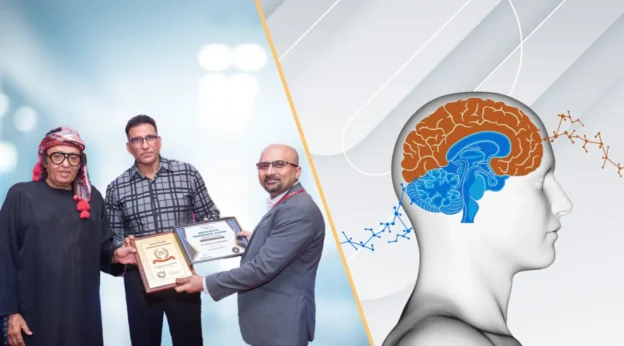
In November 2025, at SIONCON 2025, held at the prestigious NIMHANS Convention Centre, Bengaluru, I had the honor of presenting one of India’s most comprehensive IONM datasets—a 1008-case analysis covering diverse brain and spine surgeries performed over 5 years at Dr. Rao’s Hospital, Guntur.
Find the news on the Business World:
Guntur Neurosurgeon Presents India’s Largest IONM Dataset, Sets New Benchmark In Brain & Spine Safety
The presentation demonstrated how real-time neuromonitoring can significantly reduce neurological complications and improve outcomes, even in the most complex neurosurgical cases.
This blog explains the entire study in a clear, patient-friendly way, detailing how IONM protects patients, helps surgeons make safer decisions, and is shaping the future of neurosurgery in India.
Chapter 1: What Exactly Is Intraoperative Neuromonitoring (IONM)?
Imagine having a real-time safety system during surgery that continuously checks how your brain, spine, and nerves are functioning—even while under anesthesia.
That is the power of IONM.
IONM monitors:
Motor function
Sensory pathways
Cranial nerve function
Language and speech centers (in awake surgeries)
Brainstem responses
Electrical activity of nerves and muscles
If anything harmful begins to happen—such as nerve stretching or decreased blood supply—the system alerts the surgical team immediately.
It is like having a “nerve safety alarm” during surgery.
Why IONM Is Critical in Modern Neurosurgery
Without IONM, nerve injury might be detected only after surgery, when it is too late to reverse the damage.
With IONM, however, risks are identified immediately, allowing the surgeon to respond and prevent permanent injury.
This simple concept can save movement, speech, vision, swallowing ability, and quality of life.
Chapter 2: Why This 1008-Case Study Is a Landmark for India
IONM is still growing in India.
Most hospitals use it only for select cases.
Very few centers have standardized, protocol-driven multimodal IONM across multiple years of surgical work.
At Dr. Rao’s Hospital, we took a different approach:
We used IONM in over 1000 surgeries across:
Brain tumors (including eloquent cortex tumors)
Skull base and brainstem lesions
Spine surgeries
Pediatric neurosurgery
Epilepsy surgery
Awake craniotomy
Vascular and endovascular neurosurgery
We also implemented a strict, step-by-step protocol to ensure quality, accuracy, and meaningful intervention whenever signals changed.
This dataset is among the largest single-center IONM studies from India, and the presentation at SIONCON 2025 highlighted the clinical impact of every modality.
Chapter 3: Study Results Explained Simply
Below is a simplified explanation of the key results we presented at SIONCON:
1. Diagnostic Accuracy: IONM Predicts Danger Early
Sensitivity: 85.7%
This means IONM correctly detected 85.7% of cases where something was going wrong.
Specificity: 98.8%
This means IONM rarely gave false alarms.
These numbers show the system is both reliable and precise. Out of 1008 surgeries:
True Positives (TP): 186
True Negatives (TN): 781
False Positives (FP): 10
False Negatives (FN): 31
IONM accurately predicted neurological outcomes in 967 out of 1008 cases.
2. Neurological Recovery & Complication Reduction
Key highlights:
78.5% prevention rate for neurological deficits
94% of temporary deficits recovered within 3 months
Only 2.1% permanent deficits, mostly in complex eloquent tumors
Permanent signal loss: 0.7%
Functional independence (KPS ≥80): 91.6% at 3 months
These outcomes match or exceed global neurosurgical benchmarks—reinforcing that India can deliver world-class results.
Chapter 4: Pathology-Wise Outcomes
Eloquent Area Brain Tumors (Movement/Speech Regions)
Very high risk surgeries
Permanent deficits only 2.1%
Safe maximal tumor removal possible
Epilepsy Surgery
88.4% deficit prevention
Excellent long-term functional outcomes
Spine Surgery
83.1% deficit prevention rate
EMG and MEP monitoring prevented nerve-root injury
Brainstem and Posterior Fossa Surgeries
Extremely high-risk surgeries
76.9% neurological protection
Vascular Lesions (AVMs, Aneurysms)
74.2% prevention rate
This shows IONM’s benefit across all neurosurgical domains.
Chapter 5: Pediatric Neurosurgery—Why Children Benefit More
Children’s brains have an amazing ability to recover—known as neuroplasticity.
With IONM:
Surgeons can safely operate on epilepsy-causing lesions
Brain tumors near critical regions can be removed precisely
Early intervention improves long-term development
The study showed better recovery rates in children than adults.
Chapter 6: Awake Brain Surgery—Speaking or Moving During Surgery
Awake craniotomy is a specialized surgery where:
The patient is awake during part of the operation
They speak, count, or move their hands/legs
The surgeon maps critical functions using DES/DCS stimulation
Tumors near speech/motor regions can be removed more safely
Results from 227 Awake Surgeries:
11% transient problems
0% long-term complications
Best outcomes achieved with DES/DCS mapping
This is among the largest awake craniotomy series in the region.
Chapter 7: What Happens When the Signal Drops?
A small percentage of patients show irreversible signal loss during surgery.
At our hospital, we follow a 5-step Signal Loss Protocol:
Recheck connections, anesthesia, temperature
Increase blood pressure (MAP >90 mmHg)
Reduce traction, decompression
Re-monitor for 3–5 minutes
If no recovery → Staged closure
Results:
26 staged closures (2.6%)
Planned re-interventions
73% regained neurological function
This approach prevents permanent disability.
Chapter 8: Why Structured Protocols Matter
IONM isn’t just equipment—it’s a full system.
We use:
Standard stimulation thresholds
Validated alert criteria
Multimodal monitoring (MEP, SSEP, EMG, DES, BAER)
Collaboration with anesthesia
Checklists for every signal change
Our structured approach ensures maximum safety.
Chapter 9: Why India Needs Wider IONM Adoption
In India, many surgeries are still performed without IONM due to cost, lack of trained personnel, or limited awareness.
But the consequences of nerve injury—lifelong disability—are far more expensive.
Our study clearly shows:
Fewer complications
Better functional outcomes
Safer maximal resection
Higher quality of life
Lower long-term costs for families
IONM must become a standard of care, not a luxury.
Chapter 10: About Dr. Rao’s Hospital, Guntur
Dr. Rao’s Hospital is one of India’s leading centers for:
Advanced neurosurgery
Pediatric neurosurgery
Epilepsy surgery
Endoscopic skull base surgery
Minimally invasive spine surgery
Neuro-oncology
Endovascular neurosurgery
Full-scale IONM-supported neurosurgery
We strongly believe in precision, safety, and functional preservation.
With international training from the USA (UVA, OSU, NCH, Colorado), and over 70 publications and 50+ invited lectures,
Dr. Mohana Rao is widely known as:
The best neurosurgeon in Guntur
The best neurologist in Guntur
The best spine surgeon in Guntur
Conclusion: A New Era of Safe Neurosurgery in India
The 1008-case IONM study presented at SIONCON 2025 is more than just academic research—it is proof that:
Indian hospitals can match global neurosurgical standards
Structured IONM can prevent disability
Safe maximal resection is achievable
Pediatric and awake surgeries benefit enormously
Neuromonitoring must become routine across centers
At Dr. Rao’s Hospital, we continue to advance neurosurgical care with innovation, precision, and compassion.
Contact Us
📞 90100 56444
🌐 https://drraoshospitals.com
📧 info@drraoshospitals.com
📍 Guntur, Andhra Pradesh
For Consultations or Appointments
📍 Dr. Rao’s Hospital
12-19-67, Old Bank Road, Kothapet,
Opp. Sravani Hospital, Guntur, Andhra Pradesh
📞 Phone: +9190100 56444
📧 Email: info@drraoshospitals.com | drpatibandla@gmail.com
🌐 Website: https://drraoshospitals.com
📺 YouTube: https://www.youtube.com/user/mrpatiban
📘 Facebook: https://www.facebook.com/Dr.Raoshospital.Neurosurgeon/
📸 Instagram: https://www.instagram.com/dr_mohana_rao/
📍 Google Maps: https://g.page/r/CSzUiYw6Fj7IEBE
💼 LinkedIn: https://www.linkedin.com/in/drpatibandla/
🐦 X (Twitter): https://x.com/MohanaRaoPatib