cw-manager precheck https://test.com/ – https://test.com

cw-manager precheck https://test.com/ – https://test.com
ghstbuyer 2307 Mandating this type of extremely important health and fitness benefits guarantees complete coverage for those and you may household, dealing with the diverse health care requires. These types of benefits tend to be emergency characteristics, maternity and you may newborn proper care, psychological state and you can compound fool around with sickness features, prescribed drugs, and a lot more. The marketplace provides multiple choices to be sure medical insurance is accessible and you can affordable to have many anyone.
This web site doesn’t display the offered preparations. † CSRs variations out of Restricted and you will No can also be found for the most other metal level agreements for people in federally approved tribes and you will ANCSA corporation investors. You will find a supplementary premium recharged of these elective benefits.
COVID-19 is a contagious disease caused by the coronavirus SARS-CoV-2. In January 2020, the disease spread worldwide, resulting in the COVID-19 pandemic.
The symptoms of COVID‑19 can vary but often include fever,[7] fatigue, cough, breathing difficulties, loss of smell, and loss of taste.[8][9][10] Symptoms may begin one to fourteen days after exposure to the virus. At least a third of people who are infected do not develop noticeable symptoms.[11][12] Of those who develop symptoms noticeable enough to be classified as patients, most (81%) develop mild to moderate symptoms (up to mild pneumonia), while 14% develop severe symptoms (dyspnea, hypoxia, or more than 50% lung involvement on imaging), and 5% develop critical symptoms (respiratory failure, shock, or multiorgan dysfunction).[13] Older people have a higher risk of developing severe symptoms. Some complications result in death. Some people continue to experience a range of effects (long COVID) for months or years after infection, and damage to organs has been observed.[14] Multi-year studies on the long-term effects are ongoing.[15]
COVID‑19 transmission occurs when infectious particles are breathed in or come into contact with the eyes, nose, or mouth. The risk is highest when people are in close proximity, but small airborne particles containing the virus can remain suspended in the air and travel over longer distances, particularly indoors. Transmission can also occur when people touch their eyes, nose, or mouth after touching surfaces or objects that have been contaminated by the virus. People remain contagious for up to 20 days and can spread the virus even if they do not develop symptoms.[16]
Testing methods for COVID-19 to detect the virus’s nucleic acid include real-time reverse transcription polymerase chain reaction (RT‑PCR),[17][18] transcription-mediated amplification,[17][18][19] and reverse transcription loop-mediated isothermal amplification (RT‑LAMP)[17][18] from a nasopharyngeal swab.[20]
Several COVID-19 vaccines have been approved and distributed in various countries, many of which have initiated mass vaccination campaigns. Other preventive measures include physical or social distancing, quarantining, ventilation of indoor spaces, use of face masks or coverings in public, covering coughs and sneezes, hand washing, and keeping unwashed hands away from the face. While drugs have been developed to inhibit the virus, the primary treatment is still symptomatic, managing the disease through supportive care, isolation, and experimental measures.
YouTube is one of the most influential platforms in modern media, but its origin story is surprisingly simple: a small team wanted an easier way to share video online. In the early 2000s, uploading and sending video files was slow, formats were inconsistent, and most websites weren’t built for smooth playback. YouTube’s founders focused on removing those barriers—making video sharing as easy as sending a link.
Who Founded YouTube?
YouTube was founded by three former PayPal employees: Chad Hurley, Steve Chen, and Jawed Karim. They combined product thinking, engineering skills, and a clear user goal: create a website where anyone could upload a video and watch it instantly in a browser.
Chad Hurley — product/design focus and early CEO role
Steve Chen — engineering and infrastructure
Jawed Karim — engineering and early concept support
The Problem YouTube Solved
At the time, sharing video often meant emailing huge files or dealing with complicated players and downloads. YouTube made video:
Uploadable by non-experts (simple interface)
Streamable in the browser (no special setup)
Sharable through links and embedding on other sites
Early Growth and the First Video
YouTube launched publicly in 2005. One of the most famous early moments was the first uploaded video, “Me at the zoo,” featuring co-founder Jawed Karim. The clip was short and casual—exactly the kind of everyday content that proved the platform’s big idea: ordinary people could publish video without needing a studio.
Key Milestones Timeline
Year/Date Milestone Why It Mattered
2005 YouTube is founded and launches Introduced easy browser-based video sharing
2005 “Me at the zoo” is uploaded Became a symbol of user-generated video culture
2006 Google acquires YouTube Provided resources to scale hosting and global reach
Why Google Bought YouTube
By 2006, YouTube’s traffic was exploding. Video hosting is expensive—bandwidth and storage costs rise fast when millions of people watch content daily. Google’s acquisition gave YouTube the infrastructure and advertising ecosystem to grow into a sustainable business.
What YouTube’s Founding Changed
YouTube didn’t just create a popular website; it reshaped how people learn, entertain themselves, and build careers online. Its founding helped accelerate:
Creator-driven media and influencer culture
How-to education and free tutorials at massive scale
Music discovery, commentary, and global community trends
From a small startup idea to a global video powerhouse, YouTube’s founding is a classic example of a simple product solving a real problem—and changing the internet in the process.
YouTube is one of the most influential platforms in modern media, but its origin story is surprisingly simple: a small team wanted an easier way to share video online. In the early 2000s, uploading and sending video files was slow, formats were inconsistent, and most websites weren’t built for smooth playback. YouTube’s founders focused on removing those barriers—making video sharing as easy as sending a link.
Who Founded YouTube?
YouTube was founded by three former PayPal employees: Chad Hurley, Steve Chen, and Jawed Karim. They combined product thinking, engineering skills, and a clear user goal: create a website where anyone could upload a video and watch it instantly in a browser.
Chad Hurley — product/design focus and early CEO role
Steve Chen — engineering and infrastructure
Jawed Karim — engineering and early concept support
The Problem YouTube Solved
At the time, sharing video often meant emailing huge files or dealing with complicated players and downloads. YouTube made video:
Uploadable by non-experts (simple interface)
Streamable in the browser (no special setup)
Sharable through links and embedding on other sites
Early Growth and the First Video
YouTube launched publicly in 2005. One of the most famous early moments was the first uploaded video, “Me at the zoo,” featuring co-founder Jawed Karim. The clip was short and casual—exactly the kind of everyday content that proved the platform’s big idea: ordinary people could publish video without needing a studio.
Key Milestones Timeline
Year/Date Milestone Why It Mattered
2005 YouTube is founded and launches Introduced easy browser-based video sharing
2005 “Me at the zoo” is uploaded Became a symbol of user-generated video culture
2006 Google acquires YouTube Provided resources to scale hosting and global reach
Why Google Bought YouTube
By 2006, YouTube’s traffic was exploding. Video hosting is expensive—bandwidth and storage costs rise fast when millions of people watch content daily. Google’s acquisition gave YouTube the infrastructure and advertising ecosystem to grow into a sustainable business.
What YouTube’s Founding Changed
YouTube didn’t just create a popular website; it reshaped how people learn, entertain themselves, and build careers online. Its founding helped accelerate:
Creator-driven media and influencer culture
How-to education and free tutorials at massive scale
Music discovery, commentary, and global community trends
From a small startup idea to a global video powerhouse, YouTube’s founding is a classic example of a simple product solving a real problem—and changing the internet in the process.

Atualmente, com o crescimento da popularidade das criptomoedas, muitos cassinos online começaram a aceitar esse tipo de pagamento. Esta nova forma de transação, descentralizada e segura, tem atraído cada vez mais jogadores que buscam uma experiência de jogo mais privada e segura. Com a possibilidade de utilizar criptomoedas em dispositivos móveis, como smartphones e tablets, os jogadores têm ainda mais conveniência e flexibilidade para desfrutar de seus jogos favoritos a qualquer hora e em qualquer lugar. No entanto, é importante escolher com cuidado os cassinos que aceitam criptomoedas em dispositivos móveis, de forma a garantir uma experiência de jogo segura e satisfatória.
A seguir, apresentamos algumas dicas para ajudar os jogadores a escolher os melhores cassinos com criptomoedas em dispositivos móveis, levando em consideração expectativas realistas:
1. Segurança e reputação do cassino: Antes de se inscrever em um cassino que aceita criptomoedas em dispositivos móveis, é importante verificar a segurança do site e sua reputação no mercado. Certifique-se de que o cassino possui uma licença válida e que utiliza protocolos de segurança robustos para proteger as transações e dados dos jogadores.
2. Variedade de jogos disponíveis: Um bom cassino com criptomoedas em dispositivos móveis deve oferecer uma ampla variedade de jogos, como caça-níqueis, jogos de mesa e cassino ao vivo. Certifique-se de que o cassino escolhido possui os jogos de sua preferência para garantir uma experiência de jogo completa e divertida.
3. Facilidade de uso e compatibilidade com dispositivos móveis: Verifique se o cassino com criptomoedas escolhido possui um site responsivo e fácil de usar em dispositivos móveis. Além disso, certifique-se de que o cassino é compatível com o sistema operacional do seu dispositivo (iOS, Android, etc.) para garantir uma experiência de jogo sem complicações.
4. Bônus e promoções: Os cassinos com criptomoedas em dispositivos móveis costumam oferecer bônus e promoções exclusivas para atrair novos jogadores. Certifique-se de ler os termos e condições dos bônus oferecidos para garantir que são justos e realistas. Além disso, verifique se o cassino oferece um programa de fidelidade ou recompensas para jogadores frequentes.
5. Suporte ao cliente: É essencial que o cassino com criptomoedas em dispositivos móveis ofereça um suporte ao cliente eficiente e disponível 24/7. Certifique-se de que é possível entrar em contato com o suporte por meio de chat ao vivo, e-mail ou telefone, e verifique se o tempo de resposta é satisfatório.
6. Limites de depósito e saque: Verifique os limites de depósito e saque do cassino com criptomoedas em dispositivos móveis, para garantir que atendem às suas necessidades e expectativas. Além disso, certifique-se de que o cassino oferece métodos de pagamento rápidos e seguros para facilitar as transações.
Ao seguir essas dicas, os jogadores poderão escolher os melhores cassinos com criptomoedas em dispositivos móveis, com expectativas realistas e garantia de uma experiência de jogo segura e satisfatória. É importante lembrar que, assim como em qualquer forma de jogo, é fundamental jogar com responsabilidade e respeitar os limites pessoais.

Primary Source: India.com – From America’s Operating Rooms to Andhra’s Heartland: How Dr. Mohana Rao Patibandla Built a World-Class Neuroscience Hub in Guntur.
Healthcare transformation does not happen overnight. It requires vision, expertise, infrastructure, innovation, and a commitment to bringing advanced medical care closer to patients. Across India, a new generation of healthcare leaders is helping reshape how specialized treatment is delivered, ensuring that world-class medical services are no longer limited to metropolitan cities.
One remarkable example of this transformation can be found in Guntur, Andhra Pradesh. Through years of international training, clinical excellence, and institution building, Dr. Mohana Rao Patibandla has helped establish advanced neuroscience services that are changing how patients access neurological, neurosurgical, and spine care.
According to a recent India.com feature, Dr. Mohana Rao Patibandla returned to India after extensive neurosurgical training in the United States and chose to build advanced neuroscience infrastructure in Andhra Pradesh rather than pursue opportunities exclusively in larger metropolitan healthcare centers. This decision represents a broader movement toward strengthening healthcare access in regional India.
Neurological disorders are among the leading causes of disability and mortality worldwide. Conditions affecting the brain, spinal cord, nerves, and muscles impact millions of individuals every year and often require highly specialized diagnosis and treatment.
According to the World Health Organization (WHO), neurological disorders affect more than one billion people globally and account for a substantial portion of the global disease burden.
Source:
World Health Organization (WHO)
Many of these conditions require rapid intervention. Delays in diagnosis or treatment can lead to irreversible neurological damage, disability, or death. Access to experienced specialists and advanced healthcare facilities therefore plays a critical role in improving patient outcomes.
For many years, advanced neurological care in India remained concentrated in a small number of metropolitan centers. Patients from smaller cities frequently traveled to Delhi, Mumbai, Chennai, Bengaluru, or Hyderabad seeking specialized treatment.
This model created several challenges:
The India.com article highlights that patients from neighboring states and districts often had limited options when seeking advanced brain and spine care. This reality contributed to significant disparities in healthcare access across different regions.
One of the most significant trends shaping India’s healthcare future is reverse brain drain. Traditionally, many highly skilled physicians pursued advanced education and careers abroad. While this contributed to global medical progress, it also created challenges for countries seeking to retain specialized expertise.
Today, increasing numbers of internationally trained physicians are returning to India to establish advanced healthcare institutions and contribute to national healthcare development.
Reverse brain drain brings several advantages:
According to the India.com feature, the significance of this movement extends beyond individual physicians. It represents the transfer of knowledge, innovation, and institutional excellence back into Indian healthcare systems.
The India.com article describes how extensive international training across multiple neurosurgical subspecialties provided exposure to advanced treatment techniques, multidisciplinary care models, and sophisticated healthcare systems. Rather than remaining abroad or relocating exclusively to a major metropolitan center, Dr. Mohana Rao Patibandla chose to return to Andhra Pradesh and establish advanced neuroscience services closer to underserved communities.
This decision reflects an important healthcare principle: advanced medical care should not be determined by geography. Patients living in regional cities deserve access to the same level of expertise and technology available in major urban centers.
Modern neuroscience care increasingly depends on advanced technology. Diagnostic precision, surgical accuracy, and improved outcomes are often driven by innovations that were unavailable just a few decades ago.
The India.com article highlights several technologies that are reshaping neurology and neurosurgery, including advanced imaging systems, intraoperative navigation, minimally invasive techniques, and specialized monitoring systems.
These innovations enable surgeons to operate with greater precision, reduce complications, shorten recovery times, and improve patient outcomes.
Patients searching online for the best neurologist in Guntur are often looking for more than a physician. They seek comprehensive neurological care, access to advanced technology, multidisciplinary expertise, and a healthcare team capable of managing complex conditions.
Factors patients should consider include:
Stroke remains one of the leading causes of death and long-term disability worldwide. According to the World Stroke Organization, one in four adults over the age of 25 is expected to experience a stroke during their lifetime. Early diagnosis and immediate intervention are critical because every minute during a stroke can result in the loss of millions of brain cells.
Patients searching for the best neurologist in Guntur often do so because stroke symptoms require urgent evaluation and treatment. Rapid access to specialized stroke care can dramatically improve recovery and reduce long-term disability.
Modern stroke treatment includes advanced neuroimaging, clot-busting medications, mechanical thrombectomy, neurocritical care, and long-term rehabilitation. The availability of these services closer to home can significantly improve outcomes for patients across Andhra Pradesh and neighboring states.
The India.com feature highlights the importance of advanced neurovascular capabilities and specialized neuroscience infrastructure in improving healthcare accessibility beyond major metropolitan cities.
Spinal disorders are among the most common neurological and musculoskeletal problems affecting individuals across all age groups. Chronic back pain, neck pain, sciatica, spinal instability, and degenerative spine disease can significantly impact mobility, productivity, and overall quality of life.
Patients increasingly seek treatment from the best spine surgeon in Guntur to access modern surgical techniques that offer faster recovery and improved outcomes.
Advances in minimally invasive spine surgery have transformed patient care. These procedures often result in smaller incisions, reduced blood loss, shorter hospital stays, lower infection rates, and faster return to daily activities.
Learn more:
Spine Surgery Department
Artificial Intelligence (AI) is rapidly becoming one of the most influential technologies in modern medicine. Neurosciences, in particular, are benefiting from AI-driven diagnostic tools, predictive analytics, advanced imaging interpretation, and surgical planning systems.
According to the National Institutes of Health (NIH), AI has the potential to improve diagnostic accuracy, accelerate treatment decisions, and support personalized medicine approaches.
Source:
National Institutes of Health (NIH)
The future of neuroscience care will increasingly depend on integrating advanced technologies with expert clinical judgment. Regional centers capable of adopting these innovations will play a critical role in improving healthcare accessibility.
One of the key messages highlighted in the India.com article is that advanced healthcare should not be restricted to a few metropolitan locations. India’s healthcare needs require strong regional institutions capable of delivering world-class specialty care closer to patients’ homes.
Regional neuroscience centers provide several advantages:
Patients seeking the best neurologist in Guntur, the best neurosurgeon in Guntur, or the best spine surgeon in Guntur increasingly look for comprehensive neuroscience centers that combine expertise, technology, innovation, and compassionate patient care.
Dr. Rao’s Hospital – International Institute of Neurosciences (IIN) offers advanced neurological, neurosurgical, spine, stroke, and neurovascular services using modern technology and evidence-based treatment approaches.
The best neurologist in Guntur is typically identified based on experience, advanced training, technology, patient outcomes, and comprehensive neurological care services.
You should consult a neurologist if you experience persistent headaches, seizures, memory loss, dizziness, weakness, numbness, speech difficulties, or other neurological symptoms.
A neurosurgeon treats conditions involving the brain, spine, and nervous system, including brain tumors, stroke complications, spinal disorders, neurovascular diseases, and traumatic injuries.
Minimally invasive spine surgery often results in less pain, shorter hospital stays, faster recovery, reduced blood loss, and smaller incisions compared with traditional surgery.
Dr. Rao’s Hospital – International Institute of Neurosciences (IIN) offers advanced neurology, neurosurgery, spine surgery, stroke care, neurovascular interventions, and minimally invasive treatment options delivered by internationally trained specialists.
The future of healthcare in India depends on expanding access to advanced specialty services beyond traditional metropolitan centers. The development of world-class neuroscience infrastructure in regional cities demonstrates that excellence is not defined by geography but by vision, expertise, technology, and commitment to patient care.
As highlighted by the India.com feature, institution building, reverse brain drain, and investment in advanced healthcare infrastructure can help transform patient outcomes and strengthen regional healthcare systems.
For patients seeking the best neurologist in Guntur, the best neurosurgeon in Guntur, or the best spine surgeon in Guntur, access to comprehensive neuroscience care has never been more important. Advanced diagnostics, modern treatment technologies, multidisciplinary expertise, and compassionate patient-centered care continue to shape the future of neurological healthcare in Andhra Pradesh and beyond.
If you or a loved one is experiencing symptoms of stroke, epilepsy, brain tumors, spinal disorders, neurovascular disease, or other neurological conditions, early diagnosis and expert treatment can make a significant difference.
If you are searching for the best neurologist in Guntur, the best neurosurgeon in Guntur, or expert brain and spine care, visit Dr. Rao’s Hospital – International Institute of Neurosciences (IIN).
📧 [info@drraoshospitals.com](mailto:info@drraoshospitals.com)
Primary Source: From America’s Operating Rooms to Andhra’s Heartland: How Dr. Mohana Rao Patibandla Built a World-Class Neuroscience Hub in Guntur – India.com.

Reviewed by: Dr. Mohana Rao Patibandla, M.Ch (Neurosurgery), FAANS (USA), FMINS, FEVNS, FPNS, FNOSRS
Chief Neurosurgeon & Founder
Dr. Rao’s Hospital – International Institute of Neurosciences, Guntur, India
Last Updated: July 2026

Stroke is one of the leading causes of death and long-term disability worldwide, particularly among older adults. Every year, millions of people experience a stroke, and the majority occur in individuals over the age of 60. While age is one of the strongest risk factors, recognizing the early warning signs of stroke and seeking immediate medical attention can dramatically improve survival and recovery.
Recent educational efforts have emphasized that “Time is Brain.” Every minute a stroke goes untreated, nearly 1.9 million brain cells are lost, making rapid diagnosis and treatment essential for preserving neurological function and quality of life. This message has been reinforced in recent educational initiatives highlighting the importance of recognizing stroke symptoms early and reaching a Comprehensive Stroke Center without delay.
At Dr. Rao’s Hospital – International Institute of Neurosciences, our comprehensive stroke team combines advanced neuroimaging, minimally invasive endovascular procedures, emergency neurosurgery, neurocritical care, and rehabilitation to provide evidence-based stroke care for patients across Andhra Pradesh and India.
If you notice sudden weakness, facial drooping, slurred speech, loss of vision, or difficulty walking, do not wait for symptoms to improve.
Seek emergency medical attention immediately.
Every minute matters.
A stroke occurs when blood flow to a part of the brain is suddenly interrupted. Without oxygen and nutrients, brain cells begin dying within minutes. Depending on the area affected, stroke can impair movement, speech, memory, vision, swallowing, balance, or even consciousness.
Stroke is not simply a disease of aging—it is a neurological emergency that requires immediate diagnosis and treatment. Modern stroke care has evolved significantly over the last decade, and many patients who receive treatment within the appropriate time window can regain independence and return to normal life.
The most important determinant of recovery is how quickly treatment begins.
Every minute after a large vessel stroke begins, approximately:
This is why neurologists and neurosurgeons often say:
Although stroke can occur at any age, advancing age significantly increases the likelihood of both ischemic and hemorrhagic stroke. Aging causes structural and functional changes in blood vessels, while chronic medical conditions become more common over time.
Older adults also tend to have multiple risk factors occurring simultaneously, increasing both the likelihood of stroke and the severity of neurological injury.
In addition, elderly patients often have reduced physiological reserve, making recovery more challenging if treatment is delayed.
Understanding the different types of stroke helps patients appreciate why emergency imaging is necessary before treatment begins.
Approximately 87% of all strokes are ischemic strokes. They occur when an artery supplying blood to the brain becomes blocked by a clot.
Large vessel occlusions involving the internal carotid artery or middle cerebral artery often require advanced treatments such as mechanical thrombectomy.
A hemorrhagic stroke occurs when a blood vessel ruptures, causing bleeding inside or around the brain.
These strokes often require emergency neurosurgical intervention and intensive care management.
A transient ischemic attack, commonly called a mini-stroke, results from temporary interruption of blood flow to the brain.
Symptoms usually resolve within minutes, but a TIA should never be ignored. It is a warning sign that a major stroke may occur within hours or days.
Many patients mistakenly wait for symptoms to disappear before seeking medical attention. Even if symptoms resolve completely, immediate evaluation by a stroke specialist is essential because early treatment can prevent a devastating future stroke.
The FAST method is the simplest and most effective way for families to recognize a stroke quickly.
The FAST acronym is recognized worldwide as a quick and reliable method for identifying the most common symptoms of stroke. It enables family members, caregivers, and bystanders to recognize a stroke within seconds and seek emergency medical care without delay.
Ask the person to smile.
Ask the person to raise both arms.
Ask the person to repeat a simple sentence.
If any of these signs are present—even if they disappear—seek emergency medical care immediately. Rapid transportation to a Comprehensive Stroke Center offers the best chance of preserving brain tissue and improving recovery.
Although FAST identifies many strokes, some patients—particularly those with posterior circulation strokes—may initially present with balance problems or sudden vision loss. To improve recognition, many stroke specialists recommend the BE-FAST approach.
| Letter | Meaning | Symptoms |
|---|---|---|
| B | Balance | Sudden dizziness, loss of balance, inability to walk |
| E | Eyes | Sudden vision loss or double vision |
| F | Face | Facial drooping |
| A | Arms | Arm weakness or numbness |
| S | Speech | Difficulty speaking or understanding |
| T | Time | Seek emergency stroke care immediately |
Not every stroke presents with classic FAST symptoms. Some patients, particularly elderly individuals, experience less obvious neurological changes that are easily mistaken for fatigue, dehydration, or aging.
Many elderly patients do not complain of pain during a stroke. Instead, they may simply appear confused, unusually sleepy, weak, or unable to communicate normally. These subtle symptoms should never be ignored.
Compared with younger adults, older patients frequently present with atypical symptoms. Family members often attribute these changes to dementia, aging, or medication side effects, delaying treatment during the most critical therapeutic window.
Any sudden neurological change in an older adult should be treated as a potential stroke until proven otherwise.
Several medical conditions produce symptoms similar to stroke. Although these disorders may not involve interrupted blood flow to the brain, distinguishing them from stroke requires urgent medical evaluation and brain imaging.
Because these conditions may closely resemble stroke, emergency physicians perform neurological examinations and brain imaging before determining the correct diagnosis.
Immediate action saves brain tissue. Never wait for symptoms to improve.
Many stroke treatments, including intravenous thrombolysis and mechanical thrombectomy, are only effective within specific treatment windows. Knowing when symptoms started helps physicians determine which therapies are appropriate.
Modern stroke care begins with rapid diagnosis. Within minutes of arriving at a Comprehensive Stroke Center, patients undergo neurological assessment and advanced imaging to determine the type, location, and severity of the stroke.
| Investigation | Purpose |
|---|---|
| Non-contrast CT Brain | Detects brain hemorrhage rapidly |
| CT Angiography (CTA) | Identifies blocked blood vessels |
| CT Perfusion | Determines salvageable brain tissue |
| MRI Brain | Detects early ischemic stroke with high sensitivity |
| Carotid Doppler | Evaluates narrowing of neck arteries |
Modern imaging enables physicians to distinguish ischemic stroke from hemorrhagic stroke and rapidly determine whether a patient is a candidate for advanced therapies such as intravenous thrombolysis or mechanical thrombectomy.
Stroke treatment has advanced dramatically over the past two decades. Today, many patients who once would have faced permanent disability can recover remarkably well when treated rapidly at a Comprehensive Stroke Center. The key to successful treatment is early diagnosis, rapid brain imaging, and timely intervention by an experienced multidisciplinary stroke team.
Treatment depends on:

For eligible patients with an acute ischemic stroke, intravenous thrombolysis using tissue plasminogen activator (tPA) or tenecteplase can dissolve the blood clot and restore blood flow to the brain.
Timely administration of thrombolytic therapy significantly improves the likelihood of functional recovery and reduces long-term disability.

Mechanical thrombectomy has revolutionized the treatment of acute ischemic stroke caused by large vessel occlusion (LVO). This minimally invasive endovascular procedure physically removes the clot from the blocked artery, restoring blood flow to the brain.
The procedure is performed through a tiny puncture in the groin or wrist using advanced catheter-based technology under fluoroscopic guidance.
Mechanical thrombectomy requires highly specialized expertise in cerebrovascular and endovascular neurosurgery. Outcomes are best when patients are treated at centers equipped with dedicated neurointerventional specialists, advanced imaging, and comprehensive neurocritical care.

Unlike ischemic stroke, hemorrhagic stroke results from bleeding within or around the brain. Rapid diagnosis is critical because treatment focuses on controlling the bleeding, reducing pressure within the skull, and preventing secondary brain injury.
Each patient requires individualized treatment based on the location, size, and cause of the hemorrhage.

Not all hospitals provide advanced stroke care. A Comprehensive Stroke Center offers specialized expertise, technology, and around-the-clock availability to diagnose and treat both ischemic and hemorrhagic stroke rapidly.
Evidence consistently demonstrates that patients treated at Comprehensive Stroke Centers experience lower mortality, fewer complications, and better long-term functional outcomes.

Recovery from stroke does not end after emergency treatment. Early rehabilitation plays a vital role in restoring independence, mobility, communication, and quality of life.
The brain possesses an extraordinary ability known as neuroplasticity, allowing healthy brain regions to compensate for damaged areas through intensive rehabilitation.
The encouraging news is that many strokes are preventable. Managing vascular risk factors significantly lowers the likelihood of experiencing a first or recurrent stroke.
Even modest improvements in blood pressure, physical activity, nutrition, and smoking cessation can substantially reduce stroke risk over time.
Dr. Rao’s Hospital – International Institute of Neurosciences is dedicated to delivering advanced stroke care using evidence-based protocols and state-of-the-art technology. Our multidisciplinary team is committed to providing rapid diagnosis, minimally invasive treatment, comprehensive neurocritical care, and personalized rehabilitation.
The earliest warning signs include facial drooping, arm weakness, slurred speech, sudden confusion, vision loss, severe dizziness, or loss of balance. These symptoms require immediate emergency medical evaluation.
Yes. Recovery depends on the severity of the stroke, how quickly treatment begins, and participation in rehabilitation. Many elderly patients regain significant independence with timely care.
FAST stands for Face drooping, Arm weakness, Speech difficulty, and Time to call emergency services. It is a simple tool to recognize stroke symptoms quickly.
Mechanical thrombectomy is a minimally invasive endovascular procedure that removes blood clots from blocked brain arteries, restoring circulation in selected patients with acute ischemic stroke.
Not every stroke can be prevented, but controlling blood pressure, diabetes, cholesterol, atrial fibrillation, and lifestyle factors can substantially reduce the risk.
Stroke is a true medical emergency. Early recognition and immediate treatment can save brain function, reduce disability, and save lives.
If you or a loved one develops sudden facial drooping, arm weakness, speech difficulty, loss of vision, severe dizziness, or sudden confusion, seek emergency medical attention immediately.
📍 12-19-67, Old Bank Road, Kothapet,
Beside AK Biryani Point,
Guntur, Andhra Pradesh – 522001
stroke symptoms,
stroke treatment,
early warning signs of stroke,
stroke in elderly,
FAST stroke,
BE FAST,
mechanical thrombectomy,
brain stroke,
hemorrhagic stroke,
ischemic stroke,
neurologist,
neurosurgeon,
stroke rehabilitation,
stroke prevention,
stroke hospital India,
best stroke hospital,
best neurosurgeon in India,
Dr Rao Hospital,
stroke emergency,
brain health
This article is intended solely for educational and informational purposes and should not be considered medical advice. Stroke is a medical emergency. If you or someone you know develops sudden facial drooping, arm weakness, speech difficulty, vision changes, severe headache, loss of balance, or confusion, seek emergency medical care immediately. Diagnosis and treatment should always be provided by qualified healthcare professionals.
© 2026 Dr. Rao’s Hospital – International Institute of Neurosciences
Advancing Brain, Spine, Stroke & Endovascular Care Through Innovation, Expertise, and Compassion.

India’s healthcare system has witnessed remarkable transformation over the last decade, particularly in highly specialized fields such as neurosciences, spine surgery, minimally invasive neurosurgery, neuro-oncology, stroke care, and advanced neurological rehabilitation.
Historically, many advanced neurological and spine treatments remained concentrated primarily within metropolitan cities, limiting accessibility for patients living in regional and semi-urban areas.
Today, however, the expansion of advanced healthcare infrastructure, internationally trained specialists, minimally invasive technologies, and regional neuroscience systems is gradually reshaping neurological care across India.
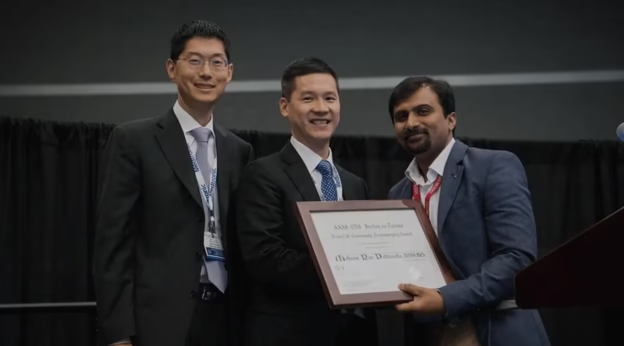
A recent Times of India feature highlighted this transformation through the national recognition received by Dr. Mohana Rao Patibandla and Dr. Rao’s Hospital – International Institute of Neurosciences at the prestigious Atal Achievement Awards 2023.
Primary Source: Times of India – Dr Mohana Rao Patibandla and Dr Rao’s Hospital Honoured at Atal Achievement Awards 2023
Healthcare awards are not merely symbolic achievements. They frequently represent years of dedication toward patient care, innovation, ethical medical practice, advanced treatment systems, and continuous improvement in healthcare delivery.
According to the Times of India article, the Atal Achievement Awards 2023 recognized excellence in healthcare by honoring Dr. Mohana Rao Patibandla as the Best Spine Surgeon and Neurosurgeon in India, while Dr. Rao’s Hospital received recognition as the Best Neurology and Neurosurgery Hospital.
The awards ceremony was attended by several distinguished dignitaries including:
The event celebrated institutions and healthcare professionals contributing significantly toward India’s evolving medical ecosystem.
Neurosciences remain among the most technically demanding branches of medicine because they involve disorders affecting:
Conditions such as:
often require highly specialized multidisciplinary treatment.
Even minor inaccuracies during surgery can potentially affect:
This level of complexity requires:
The Times of India article describes Dr. Mohana Rao Patibandla as a neurosurgeon deeply committed to advancing neurological care through innovation, compassion, and expertise.
His training spans multiple neurosurgical subspecialties both in India and internationally, including:
International fellowships often provide specialists exposure to:
Such global exposure frequently influences institutional vision and healthcare innovation.
According to the Times of India feature, Dr. Rao’s Hospital was recognized for comprehensive patient care, advanced medical technologies, and compassionate healthcare delivery.
The hospital was established with the broader vision of bringing advanced neurosciences and spine care closer to patients within regional India.
Historically, patients from smaller cities often traveled to metropolitan centers for:
Regional neuroscience systems help reduce:
Improved accessibility plays a major role in enhancing patient outcomes and long-term neurological recovery.
Modern neurosurgery increasingly focuses on minimizing tissue disruption while maximizing surgical precision.
Traditional surgeries often required:
Today, minimally invasive approaches allow selected procedures through:
These techniques may help reduce:
Minimally Invasive Neurosurgery at Dr. Rao’s Hospital
Mayo Clinic – Minimally Invasive Surgery
Advanced neurosciences increasingly depend on sophisticated technologies including:
These technologies improve:
Modern neuroscience centers combine technology with clinical judgment and multidisciplinary teamwork to improve long-term patient outcomes.
Neurological disorders affect not only anatomy but also emotions, families, livelihoods, and quality of life.
Patients facing neurological illnesses frequently experience:
The Times of India article repeatedly reflects themes of compassion, patient-centered care, and dedication toward improving lives.
Meaningful healthcare therefore depends not only on technical expertise but also on:
Modern neurosciences increasingly rely on collaborative multidisciplinary systems involving:
This collaborative approach helps optimize:
The article notes that Dr. Rao’s Hospital has consistently focused on comprehensive healthcare systems designed around patient-centered outcomes.
As healthcare technology advances rapidly, ethical medical practice becomes increasingly important.
Patients today seek:
Awards recognizing healthcare excellence often reflect institutional commitment toward these values.
The Times of India article emphasizes the hospital’s dedication toward serving patients with compassion and high-quality healthcare systems.
India’s neurosciences ecosystem continues evolving rapidly through:
At the same time, the future of healthcare will depend heavily on:
Healthcare institutions combining advanced technology with compassion and accessibility are likely to define the next generation of neurological care across India.
The recognition received by Dr. Mohana Rao Patibandla and Dr. Rao’s Hospital – International Institute of Neurosciences at the Atal Achievement Awards 2023 reflects a broader transformation occurring within India’s neurosciences ecosystem.
Modern neurological and spine care increasingly depends on:
As neurosciences continue evolving globally, institutions committed to innovation, ethics, accessibility, and meaningful patient outcomes are likely to shape the future of neurological healthcare in India.
The awards recognize excellence, innovation, and outstanding contributions across multiple sectors including healthcare.
Dr. Mohana Rao Patibandla is an internationally trained neurosurgeon and founder of Dr. Rao’s Hospital – International Institute of Neurosciences.
It involves advanced surgical systems using smaller corridors and reduced tissue disruption to improve recovery.
They improve access to specialized neurological and spine care while reducing travel burden and treatment delays.
Neuronavigation, advanced imaging, endoscopy, AI-assisted diagnostics, and minimally invasive systems are reshaping modern neurological care.
If you or your loved one is experiencing neurological symptoms such as headaches, seizures, spinal pain, weakness, stroke warning signs, or neurological disorders, timely expert evaluation is essential.
Dr. Rao’s Hospital – International Institute of Neurosciences
12-19-67, Old Bank Road, Kothapet, Besides AK Biryani Point, Guntur, Andhra Pradesh
Phone: +91 9010056444
Email: info@drraoshospitals.com
Website: https://drraoshospitals.com/