Neck Pain: Causes, Symptoms, Diagnosis, Treatment and Prevention
Neck pain is one of the most common musculoskeletal complaints worldwide and affects millions of people every year. While many episodes of neck pain resolve with rest and conservative treatment, persistent or progressive pain can significantly impact daily activities, work productivity, sleep, and overall quality of life. In some individuals, neck pain may indicate an underlying cervical spine disorder requiring specialized evaluation and treatment.
Modern lifestyles characterized by prolonged computer use, smartphone dependency, poor posture, sedentary habits, and increasing stress have contributed to a dramatic rise in cervical spine disorders across all age groups. Neck pain is no longer considered a condition affecting only older adults; it is increasingly seen in young professionals, students, healthcare workers, and individuals who spend extended hours using digital devices.
Fortunately, advances in spinal diagnostics, minimally invasive spine surgery, rehabilitation, and evidence-based treatment have significantly improved outcomes for patients with cervical spine disorders. Early diagnosis and appropriate management remain the key to preventing chronic pain and permanent neurological complications.
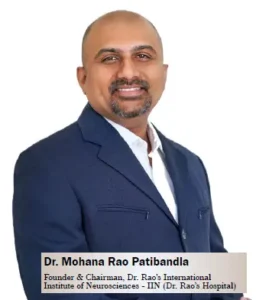
At Dr. Rao’s Hospital – International Institute of Neurosciences, Guntur, patients benefit from comprehensive cervical spine care provided by an experienced multidisciplinary team led by internationally trained neurosurgeon and spine surgeon Dr. Mohana Rao Patibandla. The hospital offers advanced diagnostic imaging, minimally invasive spine surgery, cervical disc replacement, microsurgical decompression, rehabilitation, and personalized treatment plans designed to restore function while preserving spinal mobility.
According to the World Health Organization (WHO), neck pain is among the leading causes of disability globally, emphasizing the importance of early diagnosis, rehabilitation, and appropriate specialist care.
Understanding the Cervical Spine
The cervical spine, commonly known as the neck, consists of seven vertebrae (C1–C7) that support the head, protect the spinal cord, and allow a wide range of movements including bending, rotation, and extension. Between these vertebrae are intervertebral discs that function as shock absorbers, while muscles, ligaments, tendons, facet joints, and nerves work together to provide stability and mobility.
The cervical spinal cord carries vital nerve signals between the brain and the rest of the body. Nerve roots exiting the cervical spine control sensation and movement in the shoulders, arms, and hands. Because of this complex anatomy, disorders affecting the cervical spine may produce symptoms extending far beyond the neck itself.
What Is Neck Pain?
Neck pain refers to discomfort arising from the cervical spine or surrounding soft tissues. It may be acute, developing suddenly after an injury or muscle strain, or chronic, persisting for more than three months. Pain can range from mild stiffness to severe, disabling discomfort associated with neurological symptoms.
Patients may experience:
- Dull aching pain
- Sharp stabbing pain
- Muscle tightness
- Reduced neck movement
- Pain radiating into the shoulder or arm
- Headaches originating from the neck
- Numbness or tingling
- Weakness in the upper limbs
The pattern of symptoms often provides valuable clues regarding the underlying cause and guides further evaluation.
Common Causes of Neck Pain
Neck pain may result from numerous conditions affecting bones, discs, muscles, ligaments, nerves, or joints. The most common causes include:
- Muscle strain due to poor posture
- Prolonged computer or smartphone use
- Cervical spondylosis (age-related degeneration)
- Cervical disc prolapse (slipped disc)
- Cervical spinal stenosis
- Cervical radiculopathy (pinched nerve)
- Cervical myelopathy (spinal cord compression)
- Whiplash injury
- Trauma or fractures
- Osteoporosis-related instability
- Inflammatory arthritis
- Spinal infections
- Primary or metastatic spinal tumors
- Congenital cervical spine abnormalities
Although many causes are benign and self-limiting, persistent pain or neurological symptoms require prompt evaluation by a spine specialist.
Risk Factors for Developing Neck Pain
Several factors increase the likelihood of cervical spine disorders:
- Prolonged desk work
- Excessive smartphone use (“Text Neck”)
- Poor workstation ergonomics
- Heavy lifting
- Smoking
- Obesity
- Lack of exercise
- Advancing age
- Previous neck injury
- Repetitive occupational activities
- Psychological stress
Maintaining good posture, regular exercise, ergonomic workstations, and a healthy lifestyle can substantially reduce the risk of chronic neck pain.
Why Early Diagnosis Matters
Ignoring persistent neck pain may allow underlying cervical spine disorders to progress. Conditions such as cervical disc herniation or cervical myelopathy can gradually compress nerve roots or the spinal cord, leading to irreversible neurological damage if left untreated.
Early evaluation allows physicians to identify the underlying cause before permanent nerve injury develops. Modern diagnostic tools—including MRI, CT scans, digital X-rays, and neurophysiological testing—enable accurate diagnosis and personalized treatment planning.
International guidelines from organizations including the North American Spine Society (NASS) recommend timely assessment of patients with persistent neck pain, arm weakness, gait disturbance, bowel or bladder symptoms, or progressive neurological deficits.
Why a Multidisciplinary Spine Team Improves Outcomes
Modern cervical spine care extends beyond surgery alone. Successful treatment often requires collaboration among spine surgeons, neurologists, neuroradiologists, physiotherapists, pain specialists, rehabilitation experts, anesthesiologists, and nursing teams.
At Dr. Rao’s Hospital, each patient’s condition is evaluated individually to determine the most appropriate treatment strategy. Many patients improve with conservative management, while others may benefit from minimally invasive procedures or advanced cervical spine surgery. The goal is always to relieve pain, preserve neurological function, restore mobility, and enable patients to return safely to their normal lives.
Symptoms of Neck Pain
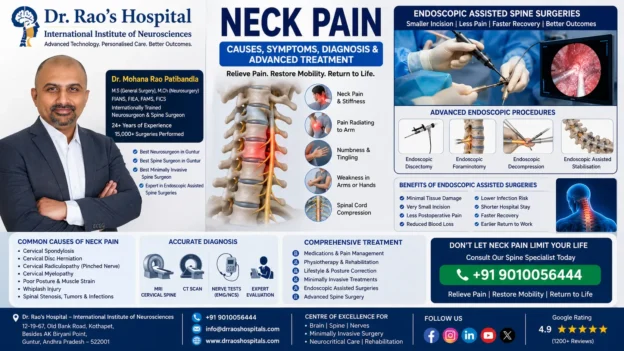
Neck pain can present in many different ways depending on the underlying condition. While some patients experience only localized discomfort, others develop symptoms involving the shoulders, arms, hands, spinal cord, or even balance and walking. Understanding these symptoms helps determine the severity of the problem and whether urgent medical attention is required.
Common symptoms include:
- Persistent pain in the neck
- Neck stiffness and reduced range of motion
- Pain radiating to the shoulders
- Arm pain
- Numbness or tingling in the fingers
- Weakness in the hands or arms
- Difficulty lifting objects
- Headaches originating from the neck (cervicogenic headaches)
- Muscle spasms
- Pain while turning the head
- Difficulty sleeping due to neck discomfort
- Loss of coordination in advanced spinal cord compression
Some symptoms indicate involvement of the spinal cord or nerve roots and require immediate evaluation by a spine specialist.
Warning Signs That Should Never Be Ignored
While many episodes of neck pain improve with conservative treatment, certain symptoms—commonly known as “red flag symptoms”—may indicate serious spinal disease requiring urgent medical attention.
Seek immediate medical evaluation if neck pain is associated with:
- Progressive weakness in the arms or legs
- Difficulty walking or loss of balance
- Loss of bowel or bladder control
- Persistent numbness affecting both hands
- Sudden paralysis
- History of significant trauma
- Fever associated with severe neck pain
- Unexplained weight loss
- Night pain that disturbs sleep
- Known history of cancer
- Severe pain following an accident
These symptoms may suggest cervical spinal cord compression, spinal infection, fracture, tumor, or other serious neurological disorders that require prompt diagnosis and treatment.
Cervical Spondylosis: The Most Common Cause of Chronic Neck Pain
Cervical spondylosis refers to age-related wear and tear affecting the cervical spine. Over time, the intervertebral discs lose water content and elasticity, resulting in disc degeneration, bone spur formation (osteophytes), thickening of ligaments, and narrowing of the spinal canal.
Although cervical spondylosis becomes more common with advancing age, modern lifestyle factors such as prolonged computer work, poor posture, and repetitive neck strain may accelerate degenerative changes.
Symptoms include:
- Chronic neck pain
- Morning stiffness
- Neck cracking sounds
- Shoulder pain
- Occasional headaches
- Reduced flexibility
Many patients improve with physiotherapy, posture correction, medications, and lifestyle modifications. However, advanced degeneration causing nerve or spinal cord compression may require surgical intervention.
Cervical Disc Herniation (Slipped Disc)
The cervical intervertebral discs function as cushions between the vertebrae. Injury, degeneration, or excessive mechanical stress can cause the soft inner portion of a disc to protrude through its outer layer, compressing nearby nerve roots or the spinal cord.
Common symptoms include:
- Sudden neck pain
- Sharp pain radiating into the arm
- Numbness in the fingers
- Weakness of the hand or arm
- Difficulty gripping objects
- Pain aggravated by coughing or sneezing
Most patients initially receive conservative treatment. Persistent neurological deficits or severe compression may require minimally invasive cervical spine surgery.
Internal Link: Minimally Invasive Spine Surgery
Cervical Radiculopathy (Pinched Nerve)
Cervical radiculopathy occurs when one of the cervical nerve roots becomes compressed by a herniated disc, bone spur, or narrowing of the neural foramen. Because each nerve root supplies specific muscles and areas of skin, symptoms vary according to the affected level.
Typical symptoms include:
- Radiating arm pain
- Burning sensation
- Tingling
- Hand numbness
- Loss of grip strength
- Reduced reflexes
- Muscle weakness
Early treatment often prevents permanent nerve damage and improves recovery.
Cervical Myelopathy: A Surgical Emergency in Many Patients
Unlike cervical radiculopathy, which affects individual nerve roots, cervical myelopathy results from compression of the spinal cord itself. It is one of the most serious cervical spine disorders and frequently requires surgical decompression to prevent permanent neurological deterioration.
Symptoms may include:
- Hand clumsiness
- Difficulty buttoning clothes
- Poor handwriting
- Loss of balance
- Frequent falls
- Difficulty walking
- Leg stiffness
- Weakness in all four limbs
- Bowel or bladder dysfunction (advanced cases)
Because spinal cord damage may become irreversible, early diagnosis is critical. International guidelines recommend timely referral to an experienced spine surgeon when cervical myelopathy is suspected.
External Reference: American Association of Neurological Surgeons (AANS)
Whiplash Injury
Whiplash is a soft tissue injury caused by sudden forward and backward movement of the neck, most commonly following motor vehicle accidents. Although many patients recover completely, some develop persistent pain and chronic disability.
Symptoms include:
- Neck pain
- Stiffness
- Headache
- Dizziness
- Shoulder pain
- Reduced neck movement
Most patients improve with conservative management including pain control, physiotherapy, posture correction, and gradual return to activity.
How Neck Pain Is Diagnosed
Accurate diagnosis begins with a detailed medical history and comprehensive neurological examination. The physician evaluates pain characteristics, neurological symptoms, muscle strength, reflexes, gait, balance, and cervical spine mobility.
Depending on the clinical findings, investigations may include:
- Digital X-rays
- MRI Cervical Spine
- CT Scan
- CT Myelography (selected patients)
- Electromyography (EMG)
- Nerve Conduction Studies (NCS)
- Laboratory investigations when infection or inflammatory disease is suspected
Magnetic Resonance Imaging (MRI) remains the gold standard for evaluating cervical discs, spinal cord compression, nerve root impingement, tumors, infections, and degenerative changes.
At Dr. Rao’s Hospital – International Institute of Neurosciences, advanced imaging and multidisciplinary evaluation help identify the precise cause of neck pain, allowing treatment plans to be tailored to each patient’s condition, lifestyle, and long-term goals.
Non-Surgical Treatment for Neck Pain
Fortunately, most patients with neck pain improve without surgery. Modern evidence-based treatment focuses on relieving pain, reducing inflammation, restoring mobility, strengthening the cervical spine, and preventing recurrence. Early intervention combined with patient education often leads to excellent outcomes and helps patients avoid chronic disability.
At Dr. Rao’s Hospital – International Institute of Neurosciences, treatment plans are individualized based on the underlying diagnosis, severity of symptoms, occupation, age, activity level, and patient expectations.
Conservative treatment options include:
- Short-term activity modification
- Pain-relieving medications
- Anti-inflammatory medicines (when appropriate)
- Muscle relaxants
- Physiotherapy
- Posture correction
- Ergonomic workplace modifications
- Heat or cold therapy
- Home exercise programs
- Lifestyle modification
The majority of patients experience significant improvement within a few weeks when conservative treatment is started early.
The Role of Physiotherapy
Physiotherapy plays a central role in the management of cervical spine disorders. A structured rehabilitation program not only reduces pain but also restores flexibility, strengthens supporting muscles, improves posture, and minimizes the risk of future episodes.
A comprehensive physiotherapy program may include:
- Gentle stretching exercises
- Cervical stabilization exercises
- Postural correction
- Shoulder strengthening
- Range-of-motion exercises
- Core muscle strengthening
- Manual therapy when appropriate
- Home exercise education
Patients are encouraged to continue prescribed exercises even after symptoms improve, as ongoing strengthening helps protect the cervical spine over the long term.
Lifestyle Changes That Reduce Neck Pain
Modern lifestyle habits are among the leading contributors to chronic neck pain. Small daily adjustments can significantly reduce stress on the cervical spine.
Helpful recommendations include:
- Maintain good sitting posture
- Keep computer monitors at eye level
- Avoid prolonged smartphone use
- Take stretching breaks every 30–45 minutes
- Sleep with appropriate cervical support
- Exercise regularly
- Maintain a healthy body weight
- Stop smoking
- Practice stress reduction techniques
These simple modifications often prevent recurrent episodes of neck pain and improve overall spinal health.
Interventional Pain Management
For patients whose symptoms persist despite medications and physiotherapy, minimally invasive pain management procedures may provide relief while avoiding major surgery.
Depending on the diagnosis, options may include:
- Cervical epidural steroid injections
- Selective nerve root blocks
- Facet joint injections
- Medial branch blocks
- Radiofrequency ablation for chronic facet pain
These procedures should be performed only after careful clinical evaluation and appropriate imaging to ensure the correct diagnosis.
When Is Surgery Necessary?
While most patients recover without surgery, certain cervical spine disorders require operative treatment to prevent permanent neurological damage or persistent disability.
Surgery may be recommended when patients have:
- Persistent pain despite adequate conservative treatment
- Progressive arm or hand weakness
- Cervical myelopathy
- Significant spinal cord compression
- Large cervical disc herniation with neurological deficit
- Spinal instability
- Tumors affecting the cervical spine
- Certain fractures or traumatic injuries
The primary goals of surgery are to decompress the spinal cord or nerves, relieve pain, preserve neurological function, restore spinal stability, and improve quality of life.
Minimally Invasive Cervical Spine Surgery
One of the most significant advances in spine surgery has been the development of minimally invasive techniques. These procedures use specialized instruments, operating microscopes, high-definition visualization, and smaller surgical corridors to minimize tissue disruption.
Potential advantages include:
- Smaller skin incisions
- Reduced muscle injury
- Less blood loss
- Reduced postoperative pain
- Lower infection risk
- Shorter hospitalization
- Faster recovery
- Earlier return to work
At Dr. Rao’s Hospital, minimally invasive techniques are used whenever appropriate, allowing many patients to recover more quickly while maintaining excellent surgical outcomes.
Internal Link: Minimally Invasive Spine Surgery
Anterior Cervical Discectomy and Fusion (ACDF)
Anterior Cervical Discectomy and Fusion (ACDF) remains one of the most commonly performed procedures for cervical disc disease, cervical radiculopathy, and selected cases of cervical myelopathy.
During the procedure:
- The damaged disc is removed.
- Pressure on the spinal cord or nerve roots is relieved.
- A bone graft or spacer is inserted.
- The vertebrae are stabilized using a plate and screws when necessary.
ACDF has demonstrated excellent long-term outcomes in carefully selected patients and remains the gold standard for many cervical spine disorders.
Cervical Artificial Disc Replacement
For selected patients, cervical disc replacement offers an alternative to fusion. Instead of permanently joining two vertebrae, the damaged disc is replaced with an artificial implant that preserves motion at the treated level.
Potential benefits include:
- Preservation of neck movement
- Reduced stress on adjacent discs
- Earlier return to activity
- Excellent pain relief
- Maintenance of normal spinal biomechanics
Not every patient is a candidate for cervical disc replacement. Careful clinical and radiological evaluation helps determine the most appropriate procedure.
Posterior Cervical Spine Surgery
Certain cervical spine conditions are better treated through a posterior (back of the neck) approach.
These procedures may include:
- Posterior cervical decompression
- Laminectomy
- Laminoplasty
- Foraminotomy
- Posterior cervical instrumentation and fusion
The choice of surgical approach depends upon spinal alignment, number of affected levels, location of compression, spinal stability, and the patient’s overall condition.
Recovery After Cervical Spine Surgery
Recovery varies depending on the procedure performed and the patient’s overall health. Most individuals are encouraged to begin walking shortly after surgery under medical supervision.
Recovery focuses on:
- Pain control
- Early mobilization
- Wound care
- Physiotherapy
- Strengthening exercises
- Posture correction
- Gradual return to work
- Long-term spinal protection
Patients who actively participate in rehabilitation generally experience faster recovery and better long-term functional outcomes.
According to the North American Spine Society (NASS) and the American Academy of Orthopaedic Surgeons (AAOS), individualized rehabilitation programs following cervical spine surgery improve mobility, reduce pain, and enhance overall quality of life.
Preventing Neck Pain: Protect Your Cervical Spine
Although not every cervical spine disorder can be prevented, many cases of neck pain are related to posture, repetitive strain, poor ergonomics, and unhealthy lifestyle habits. By adopting preventive measures, individuals can significantly reduce their risk of developing chronic neck pain and degenerative cervical spine disease.
Healthy cervical spine habits include:
- Maintain proper posture while sitting and standing.
- Keep computer monitors at eye level.
- Avoid prolonged smartphone use (“Text Neck”).
- Take frequent stretching breaks every 30–45 minutes.
- Use an ergonomically designed workstation.
- Sleep with a supportive cervical pillow.
- Exercise regularly to strengthen neck and shoulder muscles.
- Maintain a healthy body weight.
- Avoid smoking, which accelerates disc degeneration.
- Seek early medical evaluation for persistent symptoms.
Preventive care remains one of the most effective ways to maintain spinal health and avoid unnecessary surgery.
Why Choose Dr. Rao’s Hospital for Neck Pain Treatment in Guntur?
Neck pain may appear simple, but identifying its underlying cause requires specialized expertise. At Dr. Rao’s Hospital – International Institute of Neurosciences, every patient undergoes a comprehensive neurological and spinal evaluation before treatment recommendations are made.
Under the leadership of internationally trained neurosurgeon and spine surgeon Dr. Mohana Rao Patibandla, the hospital offers evidence-based cervical spine care using internationally accepted protocols and advanced technologies.
Patients benefit from:
- Internationally trained spine surgeon
- Comprehensive neurological evaluation
- High-resolution MRI and CT imaging
- Advanced cervical spine diagnostics
- Microscope-assisted spine surgery
- Neuronavigation-guided spinal procedures
- Minimally invasive cervical spine surgery
- Cervical Artificial Disc Replacement
- Anterior Cervical Discectomy and Fusion (ACDF)
- Posterior cervical decompression procedures
- Neurophysiological monitoring during surgery
- Dedicated Neuro ICU
- Comprehensive rehabilitation and physiotherapy
- Patient-centered multidisciplinary spine care
Our goal is not only to relieve pain but also to restore function, preserve spinal mobility whenever possible, and help patients return to work and daily life safely and confidently.
Conclusion
Neck pain is one of the most common reasons people seek medical attention, yet it should never be dismissed as a routine inconvenience when symptoms persist or worsen. While many cases are related to muscle strain or poor posture, others may indicate serious cervical spine disorders such as cervical disc herniation, cervical radiculopathy, cervical myelopathy, spinal stenosis, tumors, or traumatic injuries.
Fortunately, advances in diagnostic imaging, minimally invasive spine surgery, cervical disc replacement, microsurgical techniques, rehabilitation, and multidisciplinary spine care have transformed outcomes for patients with cervical spine disorders.
Early diagnosis, timely specialist evaluation, and personalized treatment remain the cornerstones of successful management. If neck pain is associated with arm pain, numbness, weakness, gait disturbance, or balance problems, consultation with an experienced spine specialist should not be delayed.
At Dr. Rao’s Hospital – International Institute of Neurosciences, our commitment is to deliver comprehensive, evidence-based, and patient-centered cervical spine care using advanced technology and internationally accepted treatment protocols to help every patient achieve the best possible outcome.
Frequently Asked Questions (FAQs)
1. What is the most common cause of neck pain?
The most common causes include muscle strain, poor posture, cervical spondylosis, cervical disc degeneration, and prolonged use of computers or smartphones.
2. Can neck pain cause arm numbness?
Yes. Compression of cervical nerve roots due to a herniated disc or cervical spondylosis can cause pain, numbness, tingling, and weakness that radiates into the shoulder, arm, or hand.
3. When is surgery recommended for neck pain?
Surgery may be necessary when conservative treatment fails or when patients develop progressive neurological deficits, cervical myelopathy, significant spinal cord compression, spinal instability, or severe cervical disc herniation.
4. What is cervical disc replacement?
Cervical disc replacement is a motion-preserving surgical procedure in which a damaged cervical disc is replaced with an artificial implant instead of performing spinal fusion.
5. Is minimally invasive spine surgery safe?
When performed by experienced spine surgeons in appropriately selected patients, minimally invasive spine surgery is a safe and effective technique associated with smaller incisions, less postoperative pain, reduced blood loss, and faster recovery.
6. How can I prevent neck pain?
Maintaining proper posture, exercising regularly, avoiding prolonged smartphone use, improving workplace ergonomics, and seeking early medical attention for persistent symptoms are among the most effective preventive measures.
Related Articles
Authoritative References
Contact Us
Dr. Rao’s Hospital – International Institute of Neurosciences
12-19-67, Old Bank Road,
Kothapet, Besides AK Biryani Point,
Guntur, Andhra Pradesh – 522001
📞 Phone: +91 9010056444
📧 Email: info@drraoshospitals.com
🌐 Website: https://drraoshospitals.com/
Schedule a consultation with our spine specialists for comprehensive evaluation, advanced imaging, minimally invasive cervical spine surgery, cervical disc replacement, rehabilitation, and personalized treatment for neck pain and cervical spine disorders.
Follow Us
Facebook | Instagram | LinkedIn | YouTube | X (Twitter) | Google Maps
Neck Pain Treatment in Guntur, Best Spine Surgeon in Guntur, Best Neurosurgeon in Guntur, Best Neurologist in Guntur, Cervical Spondylosis Treatment, Cervical Disc Herniation, Cervical Radiculopathy, Cervical Myelopathy, Cervical Spine Surgery India, Minimally Invasive Spine Surgery, Endoscopic Spine Surgery, Cervical Disc Replacement, ACDF Surgery, Neck Pain Specialist India, Spine Hospital in Guntur, Slipped Disc Treatment, Cervical Spine Disorders, Text Neck Syndrome, Spine Rehabilitation, Chronic Neck Pain, Neck Pain Causes, Neck Pain Symptoms, Neck Pain Prevention, Advanced Spine Care, Dr Mohana Rao Patibandla, Dr Rao’s Hospital, International Institute of Neurosciences
There are many different causes of neck pain, especially among adults and those who have spent a lot of time in front of a computer or phone. Consult the best spine doctor in Guntur, Dr. Mohana Rao Patibandla, who finished minimally invasive spine surgery fellowship in the USA, for a diagnosis and treatment plan for your neck pain.
Neck pain is caused by strain on your neck muscles and ligaments that occurs when you work out, lift objects, play sports, or do any other activities that require flexion.
As you may know, if you’re like most people, the tension in the nerves of your head often causes headaches. This can be caused by many factors including stress and depression but also by sleeping at odd times causing poor alignment.
A lot of people also suffer from persistent neck pain, which can be caused by several reasons such as accidents (such as whiplash), injuries at work, or degenerative diseases. Degenerative diseases include osteoarthritis and inflammatory diseases include Rhematoid Arthritis. While this type of chronic neck pain cannot be cured, it can be treated and managed so you can keep working and doing the things you enjoy. The spine surgeon in Guntur at Dr. Rao’s hospital, the best spine surgery hospital, best minimally invasive spine surgery hospital in Guntur, can help you with the treatment.
Neck pain can be the result of any number of things. One of the most common reasons is poor posture, especially among those who sit at a desk all day. If you’re working out and lifting weights, the strain on your neck muscles can also cause neck pain.
Another common cause is sleeping at odd postures causing poor alignment. A bad night’s sleep or lack of sleep can also cause neck pain. This is especially true for those who are depressed and stressed out.
The best way to relieve neck pain is to follow the Best minimally invasive or key hole spine surgeon’s (Dr. Mohana Rao Patibandla) instructions. These may include:
In most cases, no treatment is necessary. But if you have persistent neck pain that doesn’t respond to conservative measures, you should consider consulting a Spine specialist in Guntur, Dr. Mohana Rao Patibandla at Dr. Rao’s hospital, the best spine surgery hospital, a healthcare provider. who had extensive trainging in treating the spine disorders. There are many causes of neck pain, and difficulty discerning which specific cause caused your pain can be frustrating.
Sleep disorders: sleeping at odd times or too much can cause misalignment and contribute to neck pain. Staying awake all night can also trigger neck pain or stiffness in the morning.
Car accidents: whiplash injuries often cause neck pain. If you’ve been in a serious car accident, be sure to see a doctor as soon as possible if you have neck pain after the accident.
Back injuries: if you spend a lot of time bending your head back, tilting your head forward or lifting heavy objects which are difficult for your spine muscles to hold, this can strain your neck muscles or ligaments and can cause neck pain.
Weak muscles: if your neck muscles are weak, you may be more prone to back injury or strain. A good way to strengthen your neck muscles is to focus on the upper back.
Nerve injuries: muscle and nerve damage around the neck area can cause a lot of pain if they aren’t treated properly.
Many non-surgical options for treating a patient’s pain are available through interventional pain treatment. Physical therapy, medicines, anti-inflammatories, and lifestyle changes are among the most common treatments. It is virtually always a good idea to explore more conservative non-surgical methods before considering spine surgery.
If non-surgical treatments fail to relieve the back discomfort, our surgeons may recommend surgery. Our well-qualified and seasoned surgeons aim to provide the best spine surgery treatment in Guntur, Andhra Pradesh. Patients with ruptured discs, spondylolisthesis, spinal fractures, and degenerative disc disease are good candidates for surgery. The severity of your back surgery is determined by the type of surgery you had, Traditional open surgery or minimally invasive spine surgery (MISS) . Minimally invasive surgery has many advantages over the traditional surgery like less post operative pain, less blood loss, less scarring, less hospital stay, less time to resume work.
Besides, it is worth noting that, even in these cases, surgery should only be considered if the particular source of the discomfort has been identified, for example, herniated disc, scoliosis, or spinal stenosis. You may be a candidate for spinal surgery if the source of your pain has been identified and non-surgical treatments have failed.
If you have any neck pain or back pain you have the best neurosurgeon, spine surgeon or spine specialist available in Guntur, call 9010056444 or 9010057444 for appointment.