Tag Archives: brain surgery in Guntur

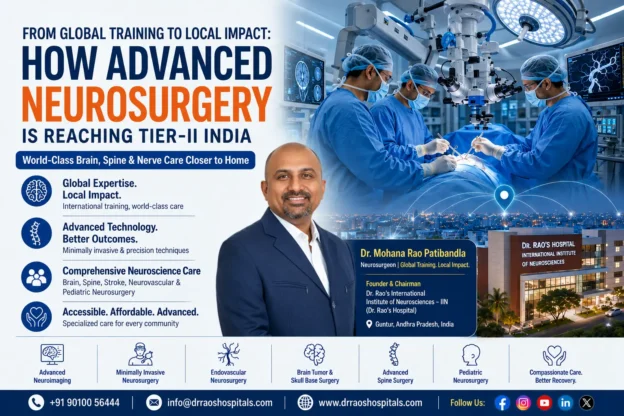
Dr. Mohana Rao Patibandla showcasing how advanced neurosurgery, minimally invasive brain surgery, spine surgery, and neuroscience innovation are transforming healthcare access in Tier-II India through Dr. Rao’s Hospital – International Institute of Neurosciences, Guntur.

Advanced Neurosurgery in Tier-II India


From Global Training to Local Impact: How Advanced Neurosurgery Is Reaching Tier-II India

SOURCE: INDIA.COM 

For decades, patients with complex neurological disorders often believed that the best treatment was available only in major metropolitan cities such as Delhi, Mumbai, Chennai, Bengaluru, or Hyderabad. Whether it was a brain tumor, aneurysm, spinal disorder, epilepsy, stroke, or pediatric neurological condition, families frequently traveled hundreds or even thousands of kilometers seeking specialized care.


This reality created significant challenges. Delayed diagnosis, financial burden, accommodation expenses, loss of income, and prolonged separation from family support systems often became part of the treatment journey.


Today, however, the landscape of neurological care in India is changing dramatically. Advanced neurosurgery is no longer limited to metropolitan hospitals. Through international training, technological innovation, and the development of specialized neuroscience centers, world-class brain, spine, and nerve care is increasingly available in Tier-II cities across India.


A recent India.com feature highlighted this transformation and emphasized how advanced neurosurgery is reaching Tier-II India, bringing sophisticated neurological care closer to patients than ever before.


This shift represents more than a healthcare trend—it is a healthcare revolution that is redefining accessibility, affordability, and quality of care for millions of Indians.


The Historical Challenge of Specialized Neurosurgical Care


SOURCE: INDIA.COM 


Neurosurgery is one of the most complex specialties in medicine. It requires extensive training, highly specialized equipment, multidisciplinary teams, and advanced infrastructure.


Traditionally, such resources were concentrated in major urban centers where academic medical institutions and tertiary hospitals had the funding and patient volume necessary to support sophisticated neuroscience programs.


As a result, patients from smaller cities and towns often faced significant barriers when seeking treatment for neurological disorders.


  • Brain tumors
  • Spinal cord compression
  • Cervical and lumbar disc disease
  • Stroke and aneurysms
  • Pediatric neurological disorders
  • Epilepsy
  • Neurovascular diseases
  • Movement disorders


Many patients delayed treatment because travel was difficult or financially burdensome. Others were diagnosed late because specialized evaluation was unavailable locally.


These challenges highlighted the urgent need to decentralize advanced neurological care and bring expertise closer to where patients live.


The Rise of Tier-II Healthcare Excellence


Over the last decade, India has witnessed remarkable growth in healthcare infrastructure beyond metropolitan regions.


Tier-II cities such as Guntur, Vijayawada, Coimbatore, Nagpur, Surat, Indore, Mysuru, and others have emerged as important healthcare destinations.


Several factors have contributed to this transformation:


  • Improved medical infrastructure
  • Greater availability of advanced technologies
  • Internationally trained specialists returning to India
  • Digital healthcare integration
  • Growing patient awareness
  • Government healthcare initiatives
  • Medical tourism growth


These developments have enabled regional centers to provide highly specialized services that were once available only in major cities.


Global Training, Local Impact


One of the most important drivers behind this transformation has been the return of highly trained specialists who pursued advanced education and fellowships abroad.


International training exposes neurosurgeons to cutting-edge technologies, innovative surgical techniques, multidisciplinary care models, and research-driven healthcare systems.


When these specialists return to India and establish practices in regional cities, they bring global standards of care closer to local communities.


According to the India.com article, this trend is helping bridge the gap between international expertise and regional healthcare access, making advanced neurosurgical treatment increasingly available outside major metropolitan centers.


Patients who once traveled to distant cities can now access sophisticated neurological care closer to home.


The Role of Technology in Neurosurgery


Modern neurosurgery is no longer defined solely by surgical skill. Technology has become an essential component of diagnosis, planning, treatment, and rehabilitation.


Advanced technologies now available in leading regional neuroscience centers include:


  • Neuronavigation systems
  • Intraoperative neuromonitoring
  • High-definition neuroendoscopy
  • Microsurgical operating microscopes
  • Advanced MRI and CT imaging
  • Hybrid operating rooms
  • Biplane neurovascular imaging systems
  • Stereotactic radiosurgery platforms


These technologies help improve surgical precision, reduce complications, and enhance patient outcomes.


External Source:
American Association of Neurological Surgeons (AANS)


Minimally Invasive Neurosurgery: A Major Shift


One of the most significant advancements highlighted in the India.com article is the increasing adoption of minimally invasive neurosurgical techniques.


Traditional neurosurgery often required larger incisions and extensive tissue exposure. Modern minimally invasive approaches enable surgeons to access pathology through smaller corridors while preserving surrounding structures.


Potential advantages include:


  • Smaller incisions
  • Reduced blood loss
  • Shorter hospital stay
  • Faster recovery
  • Reduced postoperative pain
  • Improved cosmetic outcomes


These techniques are transforming the patient experience and making advanced surgery more accessible and acceptable.


Internal Link:

Minimally Invasive Neurosurgery


Creating Comprehensive Neuroscience Ecosystems


Modern neuroscience care extends far beyond surgery.


Patients require comprehensive support across the continuum of care, including diagnosis, surgery, intensive care, rehabilitation, and long-term follow-up.


Leading neuroscience centers increasingly provide:


  • Neurology services
  • Neurosurgery
  • Neurocritical care
  • Stroke management
  • Neuro-oncology
  • Pediatric neurosciences
  • Endovascular neurosurgery
  • Rehabilitation programs


The development of these integrated neuroscience ecosystems is helping patients receive comprehensive care within their own regions.


Guntur as an Emerging Neuroscience Destination


SOURCE: INDIA.COM 

The emergence of specialized neuroscience centers in cities such as Guntur demonstrates how regional healthcare can achieve global standards.


Patients from Andhra Pradesh and neighboring states increasingly seek advanced neurological treatment closer to home rather than traveling to distant metropolitan hospitals.


This shift improves:


  • Accessibility
  • Affordability
  • Family support
  • Continuity of care
  • Long-term rehabilitation outcomes


It also strengthens regional healthcare infrastructure and contributes to broader economic development.


Stroke Care and Neurovascular Innovation


Stroke remains one of the leading causes of disability and death worldwide. Rapid diagnosis and timely intervention are critical because millions of brain cells can be lost every minute during an acute stroke.


Historically, comprehensive stroke treatment was primarily available in major metropolitan centers. Today, advanced stroke care is increasingly being delivered through specialized neuroscience hospitals in Tier-II cities.


Modern stroke management includes:


  • Advanced neuroimaging
  • CT Angiography
  • MRI Brain
  • Mechanical thrombectomy
  • Endovascular interventions
  • Neurocritical care
  • Stroke rehabilitation


The expansion of stroke centers outside metropolitan regions has significantly improved access to life-saving interventions.


External Source:
American Stroke Association


The Growth of Endovascular Neurosurgery


Endovascular neurosurgery represents one of the most rapidly evolving subspecialties in neurosciences.


Using minimally invasive catheter-based techniques, specialists can treat complex vascular conditions through blood vessels rather than traditional open surgery.


Conditions commonly treated include:


  • Brain aneurysms
  • Arteriovenous malformations (AVMs)
  • Acute ischemic stroke
  • Dural arteriovenous fistulas
  • Carotid artery disease


These procedures often result in shorter recovery times, reduced hospital stays, and improved patient comfort.


Internal Link:

Endovascular Neurosurgery


Pediatric Neurosurgery Closer to Home


Children with neurological disorders require highly specialized care tailored to their unique developmental needs.


Previously, many families traveled long distances to obtain pediatric neurosurgical treatment.


Today, specialized pediatric neuroscience programs are becoming increasingly available in regional centers.


Common pediatric neurosurgical conditions include:


  • Hydrocephalus
  • Brain tumors
  • Spinal dysraphism
  • Chiari malformations
  • Epilepsy
  • Craniosynostosis


Access to specialized pediatric care closer to home reduces emotional stress for families and improves continuity of care.


Advances in Brain Tumor and Skull Base Surgery


Brain tumor treatment has undergone remarkable transformation over the past two decades.


Advanced technologies now allow neurosurgeons to treat complex tumors with greater precision while preserving neurological function.


Modern approaches include:


  • Microsurgical tumor removal
  • Endoscopic skull base surgery
  • Neuronavigation-guided surgery
  • Functional brain mapping
  • Stereotactic radiosurgery


These innovations have significantly improved outcomes for patients with complex intracranial pathology.


Internal Link:

Brain Tumor Treatment in Guntur


The Economic Impact of Regional Healthcare Excellence


The development of advanced healthcare infrastructure in Tier-II cities generates benefits beyond patient care.


Regional centers contribute to:


  • Job creation
  • Medical education
  • Healthcare innovation
  • Research opportunities
  • Economic growth
  • Medical tourism


When patients receive treatment locally, they often spend less on travel, accommodation, and associated costs.


This improves healthcare affordability while supporting regional economic development.


Medical Tourism Beyond Metropolitan Cities


India has become a major destination for medical tourism because of its highly trained specialists and cost-effective healthcare.


While metropolitan cities have traditionally dominated this sector, Tier-II centers are increasingly attracting patients from across India and abroad.


Key advantages include:


  • Lower treatment costs
  • Reduced waiting times
  • Personalized care
  • Modern infrastructure
  • Specialized expertise


As healthcare infrastructure continues to expand, regional centers are expected to play an increasingly important role in India’s medical tourism ecosystem.


The Future of Neurosurgery in India


The future of neurosurgery is being shaped by rapid technological innovation and increasing accessibility.


Emerging developments include:


  • Artificial intelligence-assisted diagnostics
  • Advanced robotics
  • Enhanced neuroimaging
  • Precision medicine
  • Genomic-based therapies
  • Tele-neurosurgery collaboration
  • Expanded minimally invasive approaches


As these technologies become more accessible, patients across India will continue benefiting from improved neurological care regardless of geographic location.


The India.com article highlights that advanced neurosurgical expertise, once concentrated primarily in metropolitan centers, is increasingly reaching regional cities and improving healthcare access for millions of Indians.


Conclusion


India’s neurological healthcare landscape is undergoing a remarkable transformation.


Through international training, technological innovation, minimally invasive techniques, and the development of comprehensive neuroscience ecosystems, advanced neurosurgical care is becoming more accessible than ever before.


Patients in Tier-II cities no longer need to assume that world-class treatment exists only in major metropolitan centers.


The emergence of specialized neuroscience institutions in regional cities demonstrates that excellence in healthcare can thrive beyond traditional urban hubs.


As more internationally trained specialists establish advanced facilities across India, patients can increasingly access sophisticated brain, spine, stroke, and neurovascular care closer to home.


The story of Indian healthcare is no longer solely about excellence in metropolitan cities—it is increasingly about bringing excellence to every corner of the country. Neurosurgery is leading that transformation.


Frequently Asked Questions (FAQ)

1. Why are patients increasingly choosing Tier-II cities for neurosurgery?

Advanced technologies, internationally trained specialists, comprehensive neuroscience centers, and lower treatment costs are making Tier-II cities attractive healthcare destinations.


2. What is minimally invasive neurosurgery?

Minimally invasive neurosurgery uses smaller surgical corridors and advanced technologies to reduce tissue trauma and improve recovery.


3. Can stroke treatment be performed in Tier-II cities?

Yes. Many advanced neuroscience centers now provide comprehensive stroke care, including mechanical thrombectomy and neurocritical care services.


4. What conditions are treated by endovascular neurosurgery?

Brain aneurysms, AVMs, stroke, carotid artery disease, and several neurovascular disorders can often be treated through endovascular techniques.


5. Why is multidisciplinary neuroscience care important?

Complex neurological disorders often require collaboration between neurologists, neurosurgeons, neuro-oncologists, neuroradiologists, rehabilitation specialists, and critical care teams.


Related Internal Links


Keywords

best neurosurgeon in Guntur, advanced neurosurgery India, minimally invasive neurosurgery, brain surgery in Guntur, spine surgery in Guntur, Dr Mohana Rao Patibandla, neurosurgery in Tier II India, neuroscience hospital India, advanced brain surgery, endovascular neurosurgery, stroke treatment in Guntur, brain tumor surgery India, skull base surgery India, pediatric neurosurgery India, neurovascular surgery India, minimally invasive spine surgery, advanced neurological care, healthcare innovation India, international neurosurgery training, medical tourism India, neuroscience excellence, regional healthcare India, advanced stroke care, neuronavigation surgery, neuro oncology treatment, comprehensive neuroscience center, advanced spine surgery, healthcare accessibility India, best neurologist in Guntur, International Institute of Neurosciences


Contact Us

Dr. Rao’s Hospital – International Institute of Neurosciences (IIN)
12-19-67, Old Bank Road, Kothapet, Besides AK Biryani Point, Guntur, Andhra Pradesh

📞 +91 9010056444
📧 info@drraoshospitals.com
🌐 https://drraoshospitals.com/


Follow Us

Facebook |
Instagram |
LinkedIn |
YouTube |
X (Twitter) |
Google Maps

SOURCE: INDIA.COM 

“`

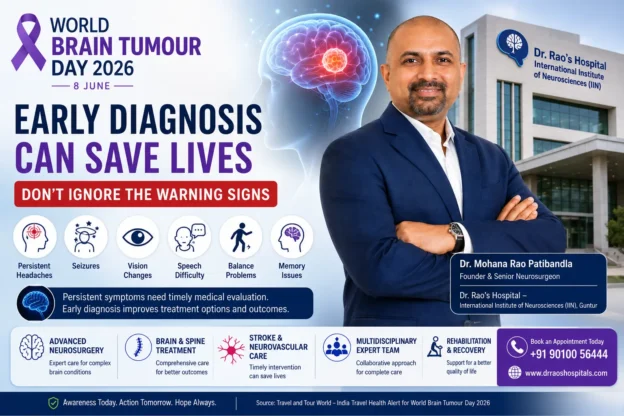
World Brain Tumour Day 2026 awareness campaign highlighting brain tumour symptoms, warning signs, and the importance of early diagnosis.

World Brain Tumour Day 2026: Early Diagnosis Can Save Lives

World Brain Tumour Day 2026: Early Diagnosis Can Save Lives

Primary Source: Travel and Tour World – India Travel Health Alert for World Brain Tumour Day 2026 as Dr. Mohana Rao Patibandla Sparks Life-Saving Early Diagnosis Call.


Every year, World Brain Tumour Day serves as a reminder that awareness, timely diagnosis, and access to expert medical care can make a significant difference in the lives of patients affected by brain tumours. In 2026, the message is particularly powerful: do not ignore persistent neurological symptoms, and do not delay seeking medical advice when warning signs appear.


A recent Travel and Tour World feature highlighted how World Brain Tumour Day 2026 has become an important public health awareness initiative in India. The article emphasized Dr. Mohana Rao Patibandla’s call for early diagnosis and urged patients, families, and travelers to take persistent neurological symptoms seriously rather than dismissing them as temporary health issues.


For many patients, symptoms such as headaches, dizziness, nausea, seizures, or vision changes are often attributed to stress, fatigue, travel, or lifestyle factors. However, persistent symptoms may sometimes indicate a more serious neurological condition requiring professional evaluation.


What Is World Brain Tumour Day?

World Brain Tumour Day is observed annually on June 8 to increase awareness about brain tumours, encourage early detection, support patients and caregivers, and promote access to quality neurological and neurosurgical care.


Brain tumours affect individuals of all ages, including children and adults. They can significantly impact neurological function, quality of life, and overall health. The goal of World Brain Tumour Day is to educate the public about symptoms, risk factors, diagnosis, treatment options, and the importance of seeking medical attention when symptoms persist.


The Travel and Tour World article emphasizes that awareness should not create fear. Instead, it should encourage individuals to recognize warning signs and seek timely medical evaluation. Early action often leads to better treatment planning and improved outcomes.


Understanding Brain Tumours

A brain tumour is an abnormal growth of cells within the brain or surrounding structures. Brain tumours may be benign (non-cancerous) or malignant (cancerous). Some originate in the brain itself, while others spread from cancers located elsewhere in the body.


The effects of a brain tumour depend on several factors:

  • Tumour size
  • Tumour location
  • Rate of growth
  • Tumour type
  • Impact on surrounding brain structures


Because different regions of the brain control different functions, symptoms can vary significantly from one patient to another.


Why Early Diagnosis Matters

One of the most important messages associated with World Brain Tumour Day 2026 is the value of early diagnosis. According to the Travel and Tour World report, Dr. Mohana Rao Patibandla emphasized that persistent neurological symptoms should not be ignored and that timely medical evaluation can help patients access appropriate care sooner.


Early diagnosis does not guarantee a cure in every case. However, it can:

  • Improve treatment planning
  • Expand available treatment options
  • Reduce delays in care
  • Improve quality of life
  • Support better decision-making for patients and families
  • Facilitate timely referral to specialists


Many neurological conditions can mimic one another. Therefore, a proper diagnosis requires evaluation by qualified healthcare professionals using clinical examination and appropriate diagnostic tests.


Common Brain Tumour Symptoms

Brain tumour symptoms can vary depending on the tumour’s location and size. Some symptoms may develop gradually, while others appear suddenly.


Symptoms Patients Should Not Ignore

  • Persistent headaches
  • Seizures
  • Vision problems
  • Speech difficulties
  • Balance problems
  • Weakness in the arms or legs
  • Numbness or tingling sensations
  • Memory difficulties
  • Personality or behavioral changes
  • Persistent nausea or vomiting
  • Excessive sleepiness
  • Confusion or cognitive decline


The Travel and Tour World article specifically highlights recurring headaches, seizures, vision changes, speech difficulties, balance problems, weakness, memory issues, personality changes, and persistent nausea as warning signs that warrant medical attention.


Warning Signs That Require Immediate Medical Attention

Certain neurological symptoms require urgent medical evaluation because they may indicate serious neurological conditions.


Red Flag Symptoms

  • A first-time seizure
  • Sudden weakness on one side of the body
  • Severe confusion
  • Sudden vision loss
  • Persistent vomiting with headache
  • Sudden difficulty speaking
  • Rapid changes in consciousness


According to the Travel and Tour World report, patients should not postpone medical evaluation simply because they are traveling, working, or managing other responsibilities. Timely assessment can be critical.


The Travel Health Perspective: Why Travelers Should Be Aware

One unique aspect of the World Brain Tumour Day 2026 discussion is its connection to travel health. The article points out that travelers frequently dismiss neurological symptoms as temporary discomfort associated with travel.


Examples include:

  • Headaches attributed to travel stress
  • Dizziness blamed on heat or fatigue
  • Nausea mistaken for motion sickness
  • Vision problems linked to lack of sleep
  • Weakness assumed to be exhaustion


While these explanations may sometimes be correct, persistent or worsening symptoms should never be ignored. Travelers often delay care because they are away from home, uncertain about local healthcare facilities, or focused on completing their journey.


The article emphasizes that health awareness should travel with the patient. Recognizing warning signs early and seeking timely medical evaluation can help prevent dangerous delays.


Global Statistics on Brain Tumours

Brain tumours remain a significant global health concern. According to the World Health Organization and international cancer registries:

  • Hundreds of thousands of new brain and central nervous system tumours are diagnosed globally each year.
  • Brain tumours affect both children and adults.
  • Early diagnosis improves access to treatment planning.
  • Advanced imaging technologies have improved diagnostic accuracy.
  • Multidisciplinary treatment approaches continue to improve patient outcomes.


Sources:


Expert Brain Tumour Care in Andhra Pradesh

Patients seeking specialized evaluation for brain tumours and other neurological conditions increasingly look for comprehensive neuroscience centers offering advanced diagnostic and treatment capabilities.


Learn more:


How Brain Tumours Are Diagnosed

Accurate diagnosis is the foundation of effective brain tumour treatment. While symptoms may raise suspicion, a definitive diagnosis requires a comprehensive neurological evaluation and advanced imaging studies.


The diagnostic process typically begins with a detailed medical history and neurological examination. Physicians assess symptoms, neurological function, cognitive abilities, vision, balance, coordination, muscle strength, and reflexes.


Common Diagnostic Tests for Brain Tumours

  • Magnetic Resonance Imaging (MRI)
  • Computed Tomography (CT Scan)
  • Functional MRI (fMRI)
  • MR Spectroscopy
  • Positron Emission Tomography (PET)
  • Neurological Examination
  • Biopsy when required


Advanced imaging technologies allow physicians to evaluate tumour size, location, growth characteristics, and potential involvement of surrounding brain structures. Early diagnosis enables more effective treatment planning and helps patients understand available treatment options.


Treatment Options for Brain Tumours

Brain tumour treatment is highly individualized. The best treatment strategy depends on the tumour type, location, size, growth rate, patient’s age, neurological condition, and overall health status.


Modern treatment often involves a multidisciplinary team that may include neurosurgeons, neurologists, neuro-oncologists, radiation oncologists, neuroradiologists, rehabilitation specialists, and nursing professionals.


Surgical Treatment

Surgery remains one of the most important treatment options for many brain tumours. Advances in microsurgical techniques, neuronavigation systems, intraoperative imaging, and minimally invasive approaches have improved surgical precision and safety.


The goals of surgery may include:

  • Removing the tumour completely when possible
  • Reducing tumour size
  • Relieving pressure within the skull
  • Obtaining tissue for diagnosis
  • Improving neurological function


Radiation Therapy

Radiation therapy uses carefully targeted radiation to destroy tumour cells while minimizing damage to surrounding healthy tissue. It may be used after surgery, as a primary treatment, or when surgery is not feasible.


Chemotherapy and Targeted Therapy

Certain brain tumours respond to chemotherapy or targeted medications. Treatment recommendations depend on tumour biology, molecular characteristics, and individual patient factors.


Advanced Treatment Technologies

  • Microsurgical techniques
  • Neuronavigation systems
  • Endoscopic neurosurgery
  • Intraoperative neuromonitoring
  • Precision radiation therapy
  • Molecular tumour profiling
  • Advanced neuroimaging


The Importance of Rehabilitation and Long-Term Follow-Up

Treatment does not end after surgery or radiation therapy. Many patients benefit from rehabilitation programs designed to improve neurological function, mobility, speech, cognition, and quality of life.


Depending on individual needs, rehabilitation may include:

  • Physical therapy
  • Occupational therapy
  • Speech and language therapy
  • Cognitive rehabilitation
  • Psychological support
  • Nutritional counseling


Long-term follow-up is also important because some tumours require ongoing monitoring through periodic imaging and neurological evaluations.


Why Awareness Campaigns Like World Brain Tumour Day Matter

World Brain Tumour Day helps bridge the gap between medical knowledge and public awareness. Many patients delay seeking care because they are unaware of warning signs or assume symptoms are minor.


The Travel and Tour World feature highlights how educational initiatives can empower patients to recognize neurological symptoms early and seek timely evaluation. Public awareness campaigns also support caregivers, encourage research, and promote access to specialized care.


By improving awareness, healthcare organizations can help reduce delays in diagnosis and ensure more patients receive appropriate treatment when it is most effective.


Why Choose Dr. Rao’s Hospital for Brain Tumour Treatment?

Patients searching for brain tumour treatment in Guntur, the best neurologist in Guntur, or the best neurosurgeon in Guntur often seek comprehensive neuroscience centers capable of providing advanced diagnosis, treatment, and rehabilitation services.


Dr. Rao’s Hospital – International Institute of Neurosciences (IIN) provides specialized brain, spine, nerve, and neurovascular care supported by advanced technology and multidisciplinary expertise.


Useful Internal Links


Frequently Asked Questions (FAQ)

What are the early symptoms of a brain tumour?

Common symptoms include persistent headaches, seizures, vision changes, weakness, balance problems, memory difficulties, personality changes, and persistent nausea or vomiting.


Can headaches always indicate a brain tumour?

No. Most headaches are not caused by brain tumours. However, persistent or unusual headaches accompanied by neurological symptoms should be evaluated by a healthcare professional.


How is a brain tumour diagnosed?

Diagnosis typically involves neurological examination, MRI scans, CT scans, and sometimes biopsy procedures to determine tumour type and characteristics.


Can brain tumours be treated successfully?

Many brain tumours can be effectively managed using surgery, radiation therapy, chemotherapy, targeted therapy, or combinations of these approaches depending on the tumour type.


Why choose Dr. Rao’s Hospital for brain tumour treatment?

Dr. Rao’s Hospital – International Institute of Neurosciences (IIN) provides advanced neurosurgical care, modern technology, multidisciplinary expertise, and patient-centered treatment for complex neurological conditions.


Image SEO Recommendations


Conclusion

World Brain Tumour Day 2026 serves as an important reminder that awareness, education, and early diagnosis can significantly influence patient outcomes. While not every headache or neurological symptom indicates a brain tumour, persistent symptoms should never be ignored.


As highlighted in the Travel and Tour World report, recognizing warning signs early and seeking prompt medical evaluation can help patients access appropriate care when it matters most. Increased awareness empowers individuals, families, and communities to make informed healthcare decisions.


Advances in diagnostic imaging, neurosurgery, radiation therapy, and multidisciplinary care continue to improve outcomes for patients with brain tumours. Access to specialized neuroscience services closer to home further strengthens the ability of patients to receive timely treatment and long-term support.


Call to Action

If you or a loved one experiences persistent headaches, seizures, vision changes, weakness, balance problems, or other neurological symptoms, do not delay seeking professional medical advice.


If you are searching for the best neurologist in Guntur, the best neurosurgeon in Guntur, or expert brain tumour treatment in Guntur, visit


Dr. Rao’s Hospital – International Institute of Neurosciences (IIN).

📞 +91 90100 56444

📧 [info@drraoshospitals.com]

🌐 https://drraoshospitals.com


Follow Dr. Rao’s Hospital


Keywords:
world brain tumour day 2026, brain tumour symptoms, brain tumour warning signs, brain tumour treatment in Guntur, best neurologist in Guntur, best neurosurgeon in Guntur, brain tumour diagnosis, brain surgery in Guntur, neurological symptoms, brain tumour awareness, Dr Mohana Rao Patibandla, advanced neurosurgery, neuroscience hospital Andhra Pradesh

Dr. Mohana Rao Patibandla explaining DTI neuronavigation technology for advanced brain surgery at Dr. Rao’s Hospital in Guntur.

Why India Needs Regional Neuroscience Centers Beyond Metro Cities | Dr. Mohana Rao Patibandla

Why India Needs Regional Centers of Neuroscience Excellence Beyond Metro Cities

India’s healthcare ecosystem has evolved dramatically over the past two decades. Advanced specialties such as cardiology, oncology, transplant medicine, and neurosciences have made remarkable progress. Yet despite this advancement, access to highly specialized neurological and neurosurgical care remains heavily concentrated in metropolitan cities like Delhi, Mumbai, Chennai, Hyderabad, and Bengaluru.
A recent feature published by DNA India highlighted this growing concern and emphasized the urgent need for regional neuroscience centers across India. The article discussed how millions of patients living in tier-2 and tier-3 cities continue to face barriers in accessing timely advanced brain and spine care. The report also highlighted the role of leaders such as Dr. Mohana Rao Patibandla in bringing world-class neurosciences closer to regional populations.


Primary Source:

DNA India – Dr. Mohana Rao Patibandla on Why India Needs Regional Centers of Neuroscience Excellence Beyond Metro Cities


The Growing Burden of Neurological Disorders in India

Neurological diseases are no longer uncommon conditions seen only in tertiary referral hospitals. Stroke, epilepsy, spinal disorders, brain tumors, traumatic brain injuries, dementia, Parkinson’s disease, and peripheral nerve disorders are increasing rapidly across India. Several factors contribute to this rising burden:


  • Increasing life expectancy
  • Rising lifestyle diseases such as diabetes and hypertension
  • Road traffic accidents
  • Urban stress and sedentary lifestyles
  • Improved awareness and diagnostics
  • An aging population


According to the World Health Organization and neurological health studies, stroke has become one of the leading causes of disability and death in India. Similarly, degenerative spine diseases and neurodegenerative conditions are increasing at an unprecedented rate.


External Reference: WHO – Neurological Disorders


Unfortunately, advanced neuroscience infrastructure has not expanded proportionately into regional India. Many districts still lack comprehensive stroke units, neurocritical care facilities, advanced neuroimaging, or trained neurosurgeons.


The Metro-Centric Healthcare Problem


One of the biggest healthcare inequalities in India is the concentration of super-specialty care in major metropolitan cities. Patients from smaller towns often travel hundreds of kilometers for advanced treatment.


For neurological emergencies, this delay can be devastating.


In stroke care, every minute matters. Neurosurgeons and neurologists often use the phrase “time is brain” because millions of brain cells die every minute during a stroke. Similarly, traumatic brain injuries require urgent intervention to reduce swelling, bleeding, and long-term neurological damage.


Patients traveling from rural or semi-urban areas frequently face:


  • Delayed diagnosis
  • Financial burden of travel and accommodation
  • Loss of income for caregivers
  • Emotional stress on families
  • Delayed surgeries and rehabilitation
  • Overcrowding in metro hospitals


This issue was strongly emphasized in the DNA India article, which noted that access to advanced neurological treatment remains difficult for millions of patients outside metro cities.


Why Regional Neuroscience Centers Matter

Regional neuroscience centers can transform healthcare accessibility in India. Instead of forcing patients to migrate temporarily to metro cities, advanced treatment can be made available closer to home.


Such centers can provide:


  • 24/7 stroke intervention services
  • Advanced brain and spine surgery
  • Endovascular neurosurgery
  • Neurocritical care
  • Epilepsy surgery
  • Neuro-oncology care
  • Rehabilitation and long-term follow-up
  • Pediatric neurosurgery


Importantly, regional centers improve continuity of care. Patients can receive diagnosis, surgery, rehabilitation, and follow-up within the same ecosystem, improving long-term outcomes significantly.


India’s future healthcare model cannot depend solely on a few urban institutions. Distributed excellence is essential.


The Rise of Advanced Neurosciences in Regional India


Technological advancements have made it increasingly feasible to deliver world-class neurosciences outside metropolitan cities.


Modern neurosurgery now relies on highly advanced tools such as:


  • Neuronavigation systems
  • Intraoperative neuromonitoring
  • Minimally invasive spine surgery
  • Endoscopic skull base surgery
  • Advanced MRI and CT imaging
  • Hybrid operating rooms
  • Endovascular stroke intervention
  • Microsurgical technologies


These technologies improve precision, reduce complications, shorten recovery times, and enhance patient safety.


When regional centers invest in such infrastructure alongside highly trained specialists, patients no longer need to compromise on quality simply because they live outside metropolitan areas.


Dr. Mohana Rao Patibandla and the Regional Neuroscience Movement


One of the examples highlighted in the DNA India report is the work being done by Dr. Mohana Rao Patibandla through

Dr. Rao’s Hospital – International Institute of Neurosciences 
in Guntur, Andhra Pradesh.

Dr. Mohana Rao Patibandla has consistently emphasized the importance of bringing advanced neurosciences to regional India rather than limiting specialized care to metros.


The article specifically mentions his international exposure and training in:


  • Minimally invasive skull base surgery
  • Pediatric neurosurgery
  • Neuro-oncology
  • Cerebrovascular neurosurgery
  • Endovascular neurosurgery
  • Functional neurosurgery


This approach demonstrates how regional institutions can evolve into advanced neuroscience ecosystems capable of handling highly complex neurological conditions.


Stroke Care and Time-Sensitive Neuroscience Emergencies


Stroke remains one of India’s biggest neurological healthcare challenges. Immediate intervention can dramatically improve survival and recovery.


Advanced stroke centers require:


  • Rapid neuroimaging
  • 24/7 neurologists and neurosurgeons
  • Catheter-based thrombectomy facilities
  • Intensive neurocritical care
  • Stroke rehabilitation teams


Without regional centers, many patients lose the critical treatment window while traveling to larger cities.


Similarly, traumatic brain injuries caused by road traffic accidents require immediate surgical and neurocritical intervention. India has one of the world’s highest road accident burdens, making decentralized neuroscience infrastructure even more necessary.


External Source: NIMHANS – National Institute of Mental Health and Neurosciences


The Importance of Neuro-Rehabilitation


Advanced neurosciences do not end with surgery alone. Rehabilitation is equally important for long-term neurological recovery.


Patients recovering from:


  • Stroke
  • Spinal cord injuries
  • Brain surgery
  • Parkinson’s disease
  • Traumatic brain injury


often require prolonged rehabilitation including physiotherapy, occupational therapy, speech therapy, neuropsychological support, and pain management.


Regional neuroscience ecosystems can provide these services closer to home, improving compliance and reducing financial hardship.


Medical Education and Research Beyond Metro Cities


Regional neuroscience centers are not merely hospitals. They can become hubs for:


  • Medical education
  • Research
  • Training programs
  • Fellowships
  • Public health initiatives
  • Community awareness programs


By building strong academic ecosystems outside metros, India can produce more neurologists, neurosurgeons, spine surgeons, neuroanesthetists, and rehabilitation specialists.


This decentralized approach also reduces excessive pressure on overcrowded metropolitan institutions.


Public Awareness is Equally Important


One of the biggest challenges in neurological healthcare is delayed recognition of symptoms.


Many patients ignore warning signs such as:

  • Sudden weakness
  • Speech difficulty
  • Severe headaches
  • Persistent seizures
  • Loss of balance
  • Chronic back pain
  • Behavioral changes


Public awareness campaigns at regional levels can improve early diagnosis and reduce long-term disability.


Hospitals, neurologists, neurosurgeons, healthcare workers, and local healthcare systems all play an important role in community education.


The Future of Indian Neurosciences


India’s future healthcare growth depends on equitable distribution of advanced medical infrastructure. Neurosciences, in particular, require urgent decentralization because delays in neurological care often result in irreversible disability.


The future should focus on:


  • Regional neuroscience hubs
  • Tele-neurology and tele-stroke systems
  • Advanced emergency response networks
  • Training local specialists
  • Government-private partnerships
  • Research and innovation
  • Affordable access to advanced care


The DNA India feature correctly highlights that the debate is no longer whether advanced neuroscience care can exist outside metro cities. The real question is how quickly India can scale such ecosystems to meet the growing neurological disease burden.


Conclusion


India stands at a critical turning point in neurological healthcare. The demand for advanced brain, spine, and nerve care is increasing rapidly, but access remains uneven.


Regional centers of neuroscience excellence represent the future of equitable healthcare delivery in India. By developing advanced infrastructure outside metropolitan cities, India can reduce treatment delays, improve outcomes, decrease healthcare inequality, and create sustainable neuroscience ecosystems for future generations.


The work being done by institutions such as Dr. Rao’s Hospital – International Institute of Neurosciences

demonstrates that world-class neurosciences can indeed thrive in regional India when expertise, technology, vision, and patient-centered care come together.


Frequently Asked Questions (FAQ)

1. Why is advanced neuroscience care important?

Advanced neuroscience care improves diagnosis and treatment for complex conditions affecting the brain, spine, and nervous system, reducing disability and mortality.

2. What is minimally invasive neurosurgery?

Minimally invasive neurosurgery uses smaller incisions and advanced imaging technologies to reduce surgical trauma, pain, and recovery time.

3. Why do stroke patients require urgent treatment?

Stroke causes rapid brain cell damage. Immediate treatment can save brain tissue and improve recovery outcomes.

4. Can advanced brain surgery be performed outside metro cities?

Yes. With advanced infrastructure, trained specialists, and modern technologies, high-quality brain and spine surgery can be successfully performed in regional centers.

5. What are the benefits of regional neuroscience centers?

Regional centers reduce travel burdens, improve emergency response, provide continuity of care, and make advanced treatment more accessible.


Internal Links


Call To Action

If you or your loved one is experiencing neurological symptoms such as stroke warning signs, persistent headaches, seizures, spinal pain, weakness, or neurological deficits, early consultation with a specialist can make a major difference.


Dr. Rao’s Hospital – International Institute of Neurosciences
Old Bank Road, Kothapet, Guntur, Andhra Pradesh
Phone: +91 9010056444
Email: info@drraoshospitals.com
Website: https://drraoshospitals.com/


Connect With Us


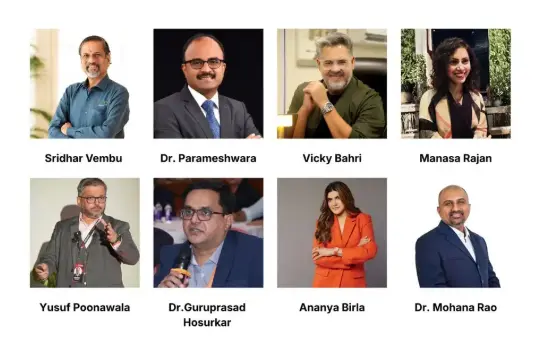
Dr Mohana Rao Patibandla with Sridhar Vembu and Ananya Birla in Mid-Day Entrepreneurs to Watch in 2026 list

Dr Mohana Rao Patibandla Featured in Mid-Day Entrepreneurs 2026 Along Side Sridhar Vembu

Dr Mohana Rao Patibandla Featured in Mid-Day Entrepreneurs 2026: A Defining Moment for Healthcare Innovation in India

In a significant recognition of healthcare entrepreneurship in India, Dr Mohana Rao Patibandla, a globally trained neurosurgeon and founder of Dr Rao’s Hospital (International Institute of Neurosciences – IIN), has been featured in the prestigious Mid-Day “Entrepreneurs to Look Forward in 2026” list. This recognition places him alongside leading entrepreneurs such as Sridhar Vembu, founder of Zoho Corporation, and Ananya Birla, highlighting the growing importance of healthcare innovation alongside technology and business sectors in India.

EINpresswire

The Rise of Healthcare Entrepreneurship in India

India’s healthcare ecosystem is undergoing a major transformation. Traditionally concentrated in metropolitan cities, advanced medical care is now expanding into tier-2 cities like Guntur. This shift is being driven by visionary clinician-entrepreneurs who are not only practicing medicine but also building scalable healthcare systems.

Dr Mohana Rao Patibandla represents this new generation of leaders who are redefining healthcare delivery by integrating advanced technology, global expertise, and patient-centered care models.

About Dr Rao’s Hospital (International Institute of Neurosciences – IIN)

Dr Rao’s Hospital (IIN) is one of the most advanced centers for neurology, neurosurgery, and spine care in Andhra Pradesh. Located in Guntur, the hospital was established with a vision to provide world-class brain, spine, and nerve care in a non-metro region.

The hospital is equipped with cutting-edge technologies including neuronavigation systems, intraoperative neuromonitoring (IONM), minimally invasive spine surgery platforms, and endoscopic skull base surgery capabilities.

These technologies enable precise surgical interventions, improved patient safety, and faster recovery times, making advanced neurosurgical care accessible to patients who would otherwise need to travel to metropolitan cities.

Global Training, Local Impact

Dr Mohana Rao Patibandla’s journey reflects a unique blend of global exposure and local commitment. After completing his neurosurgical training in India, he pursued advanced fellowships in the United States across multiple subspecialties including:

  • Minimally invasive skull base surgery
  • Pediatric neurosurgery
  • Neuro-oncology
  • Functional and stereotactic radiosurgery
  • Endovascular and cerebrovascular surgery
  •  

By bringing this expertise back to India, he has been instrumental in elevating the standards of neurosurgical care in Andhra Pradesh and beyond.

Recognition by Forbes India and Mid-Day

In addition to the Mid-Day feature, Dr Rao has also been recognized by Forbes India as a “Game-Changing Leader.” This dual recognition underscores his impact not only as a clinician but also as a healthcare entrepreneur.

Game-changing leaders featured in Forbes including Dr Mohana Rao Patibandla neurosurgeon India

Forbes India-featured game-changing leaders including Dr. Mohana Rao Patibandla, a leading neurosurgeon in India transforming brain and spine care.

The Mid-Day list highlights entrepreneurs across various sectors who are expected to shape India’s future. The inclusion of a neurosurgeon in this list reflects the growing importance of healthcare innovation in the national narrative.

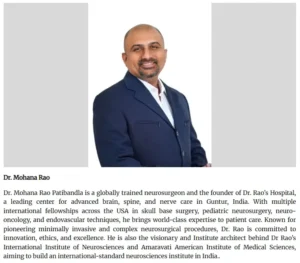
Dr Rao Midday listlce

Dr Mohana Rao Patibandla Featured in Mid-Day Entrepreneurs 2026 Along Side Sridhar Vembu and Ananya Birla

Advanced Neurosurgical Care in Guntur

At Dr Rao’s Hospital (IIN), patients have access to a wide range of advanced treatments, including:

  • Brain tumor surgery
  • Minimally invasive spine surgery
  • Stroke and vascular neurosurgery
  • Endoscopic brain surgery
  • Neurocritical care
  •  

The hospital’s multidisciplinary approach ensures comprehensive care, from diagnosis to rehabilitation.

Innovation and Academic Contributions

Dr Rao is actively involved in academic and research activities. He has presented advanced neurosurgical techniques at national and international conferences, contributing to the global neurosurgical community.

His work includes innovations in endoscopic skull base surgery, intraoperative neuromonitoring, and complex vascular procedures.

Why This Recognition Matters

Being featured alongside entrepreneurs like Sridhar Vembu and Ananya Birla highlights a broader shift in India’s innovation landscape. Healthcare is no longer just a service sector; it is becoming a key driver of innovation and economic growth.

This recognition validates the importance of building healthcare systems that are:

  • Accessible
  • Technology-driven
  • Patient-centric
  • Scalable

The Vision for the Future

Dr Rao’s vision extends beyond a single hospital. Through the International Institute of Neurosciences (IIN), he aims to build a globally recognized center for brain and spine care in India.

The goal is to create an ecosystem that combines clinical excellence, research, education, and innovation to improve patient outcomes at scale.

Connect with Dr Rao’s Hospital

For more information, visit:

Conclusion

The inclusion of Dr Mohana Rao Patibandla in the Mid-Day “Entrepreneurs to Look Forward in 2026” list marks a significant milestone not only for him but also for the field of healthcare in India.

It reflects a growing recognition of the role that clinician-entrepreneurs play in shaping the future of medicine. By combining global expertise with local commitment, Dr Rao is helping to redefine how advanced healthcare is delivered in India.

As India continues to evolve as a global hub for innovation, leaders like Dr Mohana Rao Patibandla are paving the way for a future where high-quality healthcare is accessible to all.

Dr. Mohana Rao Patibandla, M. Ch (NIMS), FESBSS (KIMS), FAANS (USA), FMINS (OSU, USA), FEVNS (UVA, USA), FPNS (UCD, USA), FNOSRS (UVA, USA).

Dr. Rao’s Hospital / Patibandla Narayana Swamy Neurosciences LLP

12-19-67, Old Bank Road, Kothapet, Besides AK Khan Biryani point, Guntur, Andhra Pradesh, India 522001

Phone: +91 9010056444

Email: info@drraoshospitals.com;  Website: https://drraoshospitals.com

TEDx banner featuring Dr. Rao highlighting his innovative ideas and expertise.

Dr Rao’s Hospital 2025 Year in Review | Guntur

Year in Review 2025: Advancing Neurosurgical Excellence at Dr. Rao’s Hospital, Guntur

As 2025 concludes, it marks a year of structured growth, academic engagement, and continued advancement in neurosurgical care at Dr. Rao’s Hospital, Guntur. Under the leadership of Dr. Mohana Rao Patibandla, the hospital strengthened its position as a dedicated center for brain, spine, and nerve disorders in Andhra Pradesh.

This year was not defined by expansion alone, but by measurable refinement — refinement of surgical protocols, refinement of patient safety systems, and refinement of data-driven clinical practice.


Strengthening Brain Tumor and Skull Base Surgery

Brain tumor and skull base procedures remained a major focus in 2025. Complex cases involving deep-seated lesions, eloquent cortex tumors, posterior fossa tumors, and skull base meningiomas were managed using advanced operative microscopy, endoscopic assistance, and structured intraoperative neuromonitoring (IONM).

Minimally invasive approaches were emphasized wherever appropriate to reduce tissue disruption and enhance recovery. Structured volumetric follow-up for skull base meningiomas and postoperative MRI surveillance protocols were further standardized during the year.

The integration of stereotactic radiosurgery planning into comprehensive treatment pathways allowed selected patients to benefit from non-invasive options for small tumors and vascular malformations.


Spine Surgery: Precision and Preservation

Spine surgery services at Dr. Rao’s Hospital saw continued refinement in 2025, particularly in:

  1. Minimally invasive lumbar decompression

  2. Cervical spine stabilization

  3. Complex thoracic procedures

  4. Tumor-related spinal interventions

  5. Instrumented fusion with neuromonitoring support

Intraoperative neuromonitoring protocols were applied more consistently during deformity correction and high-risk spine cases, reinforcing neurological preservation strategies.

Structured rehabilitation and early mobilization pathways were strengthened, improving postoperative recovery timelines and patient outcomes.


Stereotactic Radiosurgery and Vascular Neurosurgery

A significant academic and clinical highlight of 2025 was the continued emphasis on stereotactic radiosurgery (SRS) for complex intracranial pathologies.

Dr. Mohana Rao Patibandla’s contributions to international multicenter research on stereotactic radiosurgery for arteriovenous malformations (AVMs), skull base meningiomas, and dural arteriovenous fistulas continued to inform institutional protocols.

Published work in leading journals such as the Journal of Neurosurgery and Neurosurgery has provided outcome benchmarks for:

  • Spetzler-Martin Grade III–V AVMs

  •  
  • Posterior fossa meningiomas

  •  
  • Central skull base meningiomas

  •  
  • Foramen magnum meningiomas

  •  
  • Pediatric high-grade AVMs

  •  

In 2025, these evidence-based principles were further integrated into patient selection, treatment planning, and long-term volumetric monitoring at Dr. Rao’s Hospital.


Data-Driven Neurosurgical Practice

One of the defining themes of 2025 was structured data analysis. Outcome tracking systems were strengthened to ensure that every complex procedure contributed to institutional learning.

Key focus areas included:

  • Intraoperative neuromonitoring dataset analysis

  •  
  • Tumor volumetric response documentation

  •  
  • Complication rate tracking

  •  
  • Functional neurological outcome assessment

  •  
  • ICU protocol standardization

  •  

By maintaining structured records, the hospital reinforced its commitment to evidence-based neurosurgery rather than anecdotal practice.


Pediatric Neurosurgery and Functional Disorders

Pediatric brain tumors, hydrocephalus management, and selected epilepsy surgery evaluations continued to be managed with multidisciplinary input.

Functional neurosurgery and radiosurgical planning for endocrine-related conditions were also part of academic engagement during the year, reflecting Dr. Rao’s continued involvement in collaborative research initiatives.


Institutional Infrastructure and Technology Upgrades

2025 also saw continued infrastructure optimization at Dr. Rao’s Hospital. Upgrades included:

  • Enhanced high-resolution surgical microscopy

  •  
  • Advanced endoscopic systems

  •  
  • Improved neuro-navigation integration

  •  
  • Strengthened intraoperative neuromonitoring setup

  •  
  • Structured ICU workflow refinement

  •  

The focus remained on precision, reproducibility, and patient safety rather than expansion for visibility.


Academic Engagement and Global Visibility

During 2025, Dr. Mohana Rao Patibandla’s work was featured in multiple national and international editorial platforms. Participation in academic conferences and research collaborations reinforced the hospital’s connection to global neurosurgical discourse.

Such engagements contribute not only to professional visibility but to continuous learning and adaptation of best practices in patient care.


Commitment to Regional Healthcare Advancement

A defining institutional philosophy continues to be the strengthening of advanced neurological care within Andhra Pradesh. By maintaining comprehensive neurosurgical capability in Guntur, Dr. Rao’s Hospital reduces the need for patients to travel to distant metropolitan centers.

The hospital serves patients from:

  • Andhra Pradesh

  • Telangana

  • Coastal and Rayalaseema regions

  • Neighboring states

  •  

This regional strengthening of tertiary neurosurgical services remains central to long-term planning.


Patient-Centered Care and Ethical Governance

Beyond surgical milestones, 2025 reinforced core values:

  • Transparent patient communication

  • Structured informed consent processes

  • Ethical treatment planning

  • Multidisciplinary consultation

  • Rehabilitation-focused recovery pathways

  •  

Clinical excellence without ethical governance cannot sustain long-term trust. Institutional growth in 2025 remained anchored in this understanding.


Key Highlights of 2025

  • Expansion of minimally invasive brain and spine procedures

  •  
  • Structured integration of stereotactic radiosurgery protocols

  •  
  • Enhanced intraoperative neuromonitoring implementation

  •  
  • Continued participation in international multicenter research

  •  
  • Institutional consolidation and workflow refinement

  •  
  • Regional referral growth

  •  

Looking Ahead to 2026

As Dr. Rao’s Hospital moves into 2026, priorities include:

  • Further strengthening of minimally invasive spine surgery programs

  •  
  • Expanded radiosurgery planning integration

  •  
  • Advanced neuro-rehabilitation services

  • Structured outcome publication initiatives

  •  
  • Continued academic collaboration

  •  

The focus remains sustainable progress rather than rapid expansion.


Conclusion: A Year of Structured Progress

Reflecting on 2025, Dr. Rao’s Hospital describes the year as one of maturity and consolidation. Clinical excellence was reinforced through structured systems, research engagement, and technological refinement.

Under the leadership of Dr. Mohana Rao Patibandla, the hospital continues to advance as a dedicated center for neurology, neurosurgery, and spine surgery in Guntur, Andhra Pradesh — guided by precision, evidence, and patient-centered care.

Patients from across Andhra Pradesh seeking advanced brain and spine care often search for the best neurosurgeon in Guntur, reflecting the growing demand for specialized tertiary neurological services within the region.

CONTACT INFORMATION

Dr. Rao’s Hospital / Patibandla Narayana Swamy Neurosciences LLP

12-19-67, Old Bank Road, Kothapet, Besides AK Khan Biryani point, Guntur, Andhra Pradesh, India 522001

Phone: +91 9010056444

Email: info@drraoshospitals.com; drpatibandla@gmail.com; Website: https://drraoshospitals.com

YouTube

Facebook  

Instagram 

Google GMB 

LinkedIn 

X / Twitter

Press Link

Dr. Mohana Rao Patibandla receiving Times ICONs of Healthcare 2026 award from Andhra Pradesh Health Minister Satya Kumar Yadav

Advanced Brain & Spine Surgery in Tier-2 Cities India

Advanced Brain & Spine Surgery in Tier-2 Cities: What Patients Should Know

For decades, advanced brain and spine surgery in India was associated almost exclusively with
large metropolitan cities. Patients from smaller towns often felt they had no option but to
travel far, incur high costs, and stay away from family support systems.

That reality has changed dramatically. Today, advanced brain and spine surgery in tier-2 cities is not only possible but increasingly preferred by patients across India and abroad.
Cities like Guntur in Andhra Pradesh are emerging as trusted neuro hubs, offering world-class technology, experienced surgeons, and compassionate care— all closer to home.

This blog explains why tier-2 cities are redefining neurosurgical care in India, what patients should know before choosing a hospital, and how quality outcomes are now achievable outside metros.


What Is a Tier-2 City in India’s Healthcare Landscape?

Tier-2 cities are rapidly growing urban centers that sit between metros and smaller towns.
In healthcare, they represent a powerful shift:

  • Modern hospitals with advanced infrastructure
  • Specialists trained in premier Indian and international centers
  • Lower cost of care compared to metros
  • Greater accessibility for regional populations

In neurosurgery, this shift has been especially significant.


Are Brain and Spine Surgeries in Tier-2 Cities Truly Advanced?

A common patient concern is: “Is the quality in a tier-2 city as good as a metro hospital?”

The answer, increasingly, is yes. Many tier-2 hospitals now offer:

  • Neuronavigation systems
  • High-end operating microscopes
  • 4K Neuroendoscopy
  • Intraoperative neuromonitoring
  • Advanced ICUs and neurocritical care

According to global health data, clinical outcomes depend more on surgeon expertise and systems than on city size alone [Source: WHO].


Why Patients Are Choosing Tier-2 Cities for Neurosurgery

1. World-Class Treatment Without Metro Crowds

Tier-2 hospitals often provide more personalized care. Patients benefit from:

  • More direct interaction with the surgeon
  • Shorter waiting times for surgery
  • Continuity of care before and after surgery

2. Cost-Effective Brain and Spine Surgery

One of the biggest advantages is affordability.

  • Lower surgery and hospital charges
  • Reduced travel and accommodation costs
  • Better value for international patients

This makes affordable brain surgery in India and affordable spine surgery in India a reality without compromising safety.

3. Emotional Comfort of Treatment Near Home

Being close to family, language, and familiar surroundings has a measurable impact on recovery and mental well-being.


Advanced Brain Surgery Now Available Outside Metros

Modern tier-2 neurosurgical centers now routinely manage:

  • Complex brain tumor surgery
  • Endoscopic and minimally invasive brain surgery
  • Stroke and aneurysm treatment
  • Skull base surgeries

High-precision techniques ensure outcomes comparable to leading metro hospitals [Source: Mayo Clinic].


Minimally Invasive Spine Surgery in Tier-2 Cities

Spine surgery has seen remarkable evolution in tier-2 India.

  • Minimally invasive spine surgery
  • Endoscopic disc surgery
  • Navigation-assisted spinal fixation

Benefits for patients include:

  • Smaller incisions
  • Less pain and blood loss
  • Faster recovery and early mobilization

This has made spine surgery in Guntur a preferred option for patients across Andhra Pradesh.


Technology That Matches Global Standards

Leading tier-2 neuro hospitals invest in:

  • Neuronavigation and image guidance
  • Advanced operating microscopes
  • Neuroendoscopes
  • Neuromonitoring
  • 24×7 neuroemergency services
  • Dedicated neuro ICUs

Such infrastructure supports safe outcomes even in complex cases.


Indian Neurosurgeons: Globally Trained, Locally Rooted

A major strength of India’s healthcare system is its specialists.
Many neurosurgeons practicing in tier-2 cities:

  • Are trained at national institutes of excellence
  • Have international fellowships
  • Follow evidence-based neurosurgery protocols

This blend of global exposure and local commitment is redefining patient trust.


Medical Tourism and Tier-2 Cities

International patients are increasingly choosing tier-2 Indian cities for brain and spine surgery.

Reasons include:

  • Lower overall cost of treatment
  • High success rates
  • Personalized attention
  • Easier follow-up care

India’s reputation for high-quality, cost-effective neurosurgery continues to grow [Source: PubMed].


Rehabilitation and Long-Term Care in Tier-2 Cities

Advanced surgery is only part of the journey. Recovery depends heavily on rehabilitation.

  • Stroke rehabilitation services
  • Physiotherapy and gait training
  • Spine rehabilitation programs

Tier-2 centers often provide integrated rehab, making follow-up easier and more consistent.


Learn more at Dr. Rao’s Hospital Official Website, our Neurosurgery Department, Spine Surgery, Neurology Services, or Contact Dr. Rao’s Hospital.


Is advanced neurosurgery safe in tier-2 cities?

Yes. With modern technology, trained surgeons, and standardized protocols,
outcomes in tier-2 cities match leading metro centers.

Why is brain and spine surgery more affordable in tier-2 cities?

Lower infrastructure and living costs allow hospitals to offer
high-quality care at reduced prices.

Why choose Dr. Rao’s Hospital for brain and spine surgery?

At Dr. Rao’s Hospital, led by Dr. Mohana Rao Patibandla patients receive advanced brain and spine care with a patient-first approach.

World-Class Neurosurgery Is Now Close to Home

If you are looking for the best neurosurgeon in a tier-2 city or advanced brain and spine surgery in Andhra Pradesh, expert care is now closer than you think.

Consult Dr. Rao’s Hospital, led by Dr. Mohana Rao Patibandla for comprehensive, compassionate, and cost-effective treatment.

📞 Call: 090100 56444
📧 Email: info@drraoshospitals.com
🌐 Visit: https://drraoshospitals.com


Connect with Dr. Rao’s Hospital:

Facebook |
Instagram |
YouTube |
LinkedIn |
X (Twitter)

What Patients Should Check Before Choosing a Tier-2 City Neuro Hospital

Choosing a brain or spine surgery center outside a metro should still be a well-informed medical decision. Patients and families are advised to look beyond location and focus on quality indicators.

  • Availability of full-time neurosurgery and neurology services
  • 24×7 neuroemergency and stroke response systems
  • Advanced ICU with neuromonitoring facilities
  • Access to MRI, CT, and intraoperative imaging
  • Structured rehabilitation and follow-up care

A tier-2 city hospital that meets these criteria can safely deliver outcomes comparable to top metro institutions.


The Advantage of Easier Follow-Up and Long-Term Care

Brain and spine surgery does not end at discharge. Long-term success depends on follow-up, rehabilitation, and continuity of care.

Tier-2 cities offer a major advantage here:

  • Easy access for follow-up visits
  • Better compliance with rehabilitation schedules
  • Lower financial and travel burden on families

Patients treated closer to home are more likely to complete rehabilitation and report better quality-of-life outcomes.


Local Language, Cultural Comfort, and Emotional Support

Healthcare is not just technical—it is deeply human. Being treated in a familiar environment where patients can communicate in their own language adds immense emotional comfort.

In tier-2 cities like Guntur:

  • Patients interact directly with senior doctors
  • Families stay closely involved in care decisions
  • Stress associated with big-city hospitals is reduced

This emotional stability often reflects positively on recovery.


Tier-2 Cities Are the Future of Indian Neurosurgery

India’s healthcare growth story is no longer metro-centric. With technology, training, and talent reaching smaller cities, tier-2 centers are emerging as true centers of excellence.

For brain and spine conditions—where trust, outcomes, and long-term care matter— tier-2 cities now represent a smart, safe, and sustainable choice.


World-Class Brain & Spine Care Is Now Close to Home

If you or your loved one needs advanced brain or spine surgery and are exploring options beyond crowded metros, expert care is now available in Andhra Pradesh itself.

At :Dr. Rao’s Hospital, patients receive comprehensive brain and spine care using
modern technology, evidence-based protocols, and compassionate expertise.

Consult  Dr. Mohana Rao Patibandla for personalized guidance, second opinions, and safe surgical outcomes in a trusted tier-2 city setting.

📞 Call: 090100 56444
📧 Email: info@drraoshospitals.com
🌐 Website: https://drraoshospitals.com


Explore Our Services:

🧠 Neurosurgery Department |
🦴 Spine Surgery Services |
🧬 Neurology & Stroke Care |
👨‍⚕️ About Dr. Mohana Rao Patibandla |
📞 Contact Dr. Rao’s Hospital


Connect with Dr. Rao’s Hospital:

📘 Facebook |
📸 Instagram |
📺 YouTube |
💼 LinkedIn |
🐦 X (Twitter) |
📍 Google Maps

టియర్-2 నగరాల్లో అధునాతన బ్రెయిన్ & స్పైన్ సర్జరీ: రోగులు తెలుసుకోవాల్సిన విషయాలు

ఇంతకుముందు వరకు అధునాతన బ్రెయిన్ లేదా స్పైన్ సర్జరీ అంటే చాలామందికి మెట్రో నగరాలే గుర్తొచ్చేవి. పెద్ద నగరాలకు వెళ్లడం, ఎక్కువ ఖర్చులు, కుటుంబానికి దూరంగా ఉండటం —
ఇవన్నీ తప్పనిసరి అనిపించేవి.

కానీ నేటి భారతదేశంలో ఈ పరిస్థితి పూర్తిగా మారింది. ఇప్పుడు టియర్-2 నగరాల్లో కూడా ప్రపంచ స్థాయి బ్రెయిన్ & స్పైన్ సర్జరీ అందుబాటులో ఉంది. ప్రత్యేకంగా ఆంధ్రప్రదేశ్‌లోని గుంటూరు
లాంటినగరాలు అధునాతన న్యూరోసర్జరీకి నమ్మకమైన కేంద్రాలుగా ఎదుగుతున్నాయి.

ఈ బ్లాగ్‌లో టియర్-2 నగరాల్లో బ్రెయిన్ & స్పైన్ సర్జరీ ఎందుకు సురక్షితం, ఏ లాభాలు ఉన్నాయి,
మెట్రో నగరాలతో పోలిస్తే ఏమి భిన్నం, మరియు రోగులు ఎలాంటి విషయాలు గమనించాలో
సులభమైన భాషలో తెలుసుకుందాం.


టియర్-2 నగరాలు అంటే ఏమిటి?

టియర్-2 నగరాలు అంటే — మెట్రో నగరాల కంటే చిన్నవైనా, వైద్య సదుపాయాల పరంగా
వేగంగా అభివృద్ధి చెందుతున్న పట్టణాలు.

ఆరోగ్యరంగంలో టియర్-2 నగరాల ప్రాధాన్యత:

  • ఆధునిక ఆసుపత్రులు
  • అనుభవజ్ఞులైన స్పెషలిస్టులు
  • తక్కువ ఖర్చుతో ఉన్నత చికిత్స
  • ప్రాంతీయ ప్రజలకు సులభమైన అందుబాటు

న్యూరోసర్జరీ రంగంలో ఈ మార్పు మరింత స్పష్టంగా కనిపిస్తోంది.


టియర్-2 నగరాల్లో నిజంగా అధునాతన న్యూరోసర్జరీ ఉందా?

రోగులు తరచూ అడిగే ప్రశ్న: “టియర్-2 నగరాల్లో బ్రెయిన్ లేదా స్పైన్ సర్జరీ మెట్రో స్థాయిలోనే ఉంటుందా?”

సమాధానం — అవును. నేటి టియర్-2 నగరాల ఆసుపత్రుల్లో:

  • న్యూరోనావిగేషన్ సిస్టమ్స్
  • హైఎండ్ ఆపరేటింగ్ మైక్రోస్కోప్స్
  • ఇంట్రా ఆపరేటివ్ న్యూరోమానిటరింగ్
  • అడ్వాన్స్డ్ న్యూరో ICUలు

ఫలితాలు నగరం మీద కాకుండా సర్జన్ అనుభవం, టెక్నాలజీ, వ్యవస్థలపై ఆధారపడి ఉంటాయని
ప్రపంచ ఆరోగ్య సంస్థ (WHO) కూడా సూచిస్తోంది.


రోగులు టియర్-2 నగరాలను ఎందుకు ఎంచుకుంటున్నారు?

1. మెట్రో గందరగోళం లేకుండా ప్రపంచ స్థాయి చికిత్స

టియర్-2 నగరాల్లో:

  • డాక్టర్‌తో ప్రత్యక్ష సమయం ఎక్కువ
  • శస్త్రచికిత్సకు తక్కువ వేచిచూడాల్సిన సమయం
  • ఒకే డాక్టర్ ద్వారా నిరంతర చికిత్స

2. తక్కువ ఖర్చుతో బ్రెయిన్ & స్పైన్ సర్జరీ

టియర్-2 నగరాల్లో చికిత్స ఎందుకు తక్కువ ఖర్చుతో ఉంటుంది?

  • ఆసుపత్రి నిర్వహణ ఖర్చులు తక్కువ
  • ప్రయాణం, వసతి ఖర్చులు తగ్గుతాయి
  • ఇన్సూరెన్స్ & క్యాష్‌లెస్ సదుపాయాలు

అందుకే భారతదేశంలో ఖర్చు తక్కువ న్యూరోసర్జరీ కోసం రోగులు టియర్-2 నగరాలను ఎంచుకుంటున్నారు.

3. ఇంటి దగ్గరే చికిత్స అనే మానసిక ధైర్యం

కుటుంబం దగ్గర ఉండటం,
స్థానిక భాషలో మాట్లాడగలగటం
రికవరీపై సానుకూల ప్రభావం చూపుతుంది.


మెట్రో వెలుపల కూడా అధునాతన బ్రెయిన్ సర్జరీ

ఇప్పుడు టియర్-2 నగరాల్లో సాధ్యమవుతున్న బ్రెయిన్ సర్జరీలు:

  • క్లిష్టమైన బ్రెయిన్ ట్యూమర్ సర్జరీలు
  • ఎండోస్కోపిక్ & మినిమల్లి ఇన్వేసివ్ బ్రెయిన్ సర్జరీ
  • స్ట్రోక్ & అన్యూరిజం చికిత్స
  • 24×7 న్యూరో ఎమర్జెన్సీ సేవలు

ఫలితాలు మెట్రో నగరాల స్థాయిలోనే ఉంటాయి.


టియర్-2 నగరాల్లో ఆధునాతన స్పైన్ సర్జరీ

స్పైన్ సర్జరీ రంగంలో కూడా విప్లవాత్మక మార్పు వచ్చింది.

  • మినిమల్లి ఇన్వేసివ్ స్పైన్ సర్జరీ
  • ఎండోస్కోపిక్ డిస్క్ సర్జరీ
  • నావిగేషన్ సహాయంతో స్పైన్ ఫిక్సేషన్

దీని వల్ల:

  • చిన్న కట్లు
  • తక్కువ నొప్పి
  • త్వరిత రికవరీ

అందుకే గుంటూరులో స్పైన్ సర్జరీ ఆంధ్రప్రదేశ్ అంతటా నమ్మకంగా మారుతోంది.


గ్లోబల్ ట్రైనింగ్ పొందిన భారతీయ న్యూరోసర్జన్లు

టియర్-2 నగరాల్లో పనిచేస్తున్న చాలామంది న్యూరోసర్జన్లు:

  • జాతీయ, అంతర్జాతీయ శిక్షణ పొందినవారు
  • విదేశీ ఫెలోషిప్స్ పూర్తి చేసినవారు
  • ఎవిడెన్స్ బేస్డ్ న్యూరోసర్జరీ పాటించేవారు

ఈ కలయికే టియర్-2 నగరాల వైద్య రంగానికి బలంగా మారింది.


మెడికల్ టూరిజం & టియర్-2 నగరాలు

ఇప్పుడు అంతర్జాతీయ రోగులు కూడా భారతదేశంలోని టియర్-2 నగరాలను ఎంచుకుంటున్నారు.

  • తక్కువ ఖర్చు
  • అధిక విజయ శాతం
  • వ్యక్తిగత శ్రద్ధ
  • ఫాలో-అప్ సులభత

ఇది భారతదేశాన్ని బ్రెయిన్ & స్పైన్ సర్జరీలో ప్రపంచ స్థాయిలో నిలబెడుతోంది.


సర్జరీ తర్వాత రిహాబిలిటేషన్ కూడా కీలకం

సర్జరీతోనే చికిత్స ముగియదు.

  • స్ట్రోక్ రిహాబిలిటేషన్
  • ఫిజియోథెరపీ
  • స్పైన్ రికవరీ ప్రోగ్రామ్స్

టియర్-2 నగరాల్లో ఈ సేవలు ఒకే చోట లభించడం రోగులకు పెద్ద లాభం.


ప్రపంచ స్థాయి బ్రెయిన్ & స్పైన్ సర్జరీ – ఇప్పుడు మీ ఇంటి దగ్గరే

మీరు లేదా మీ కుటుంబ సభ్యులు బ్రెయిన్ లేదా స్పైన్ సమస్యకు మెట్రో వెలుపల సురక్షితమైన, నమ్మకమైన చికిత్స కోసం చూస్తున్నట్లయితే, టియర్-2 నగరాలు ఉత్తమ ఎంపిక.

Dr. Rao’s Hospital లో బ్రెయిన్ & స్పైన్‌కు సంబంధించిన సమగ్ర, ఆధునిక చికిత్సలు అందుబాటులో ఉన్నాయి.

నిపుణుల సలహా కోసం  Dr. Mohana Rao Patibandla ను సంప్రదించండి — ఆంధ్రప్రదేశ్‌లో విశ్వసనీయ న్యూరోసర్జన్.

📞 ఫోన్: 090100 56444
📧 ఈమెయిల్: info@drraoshospitals.com
🌐 వెబ్‌సైట్: https://drraoshospitals.com


ముఖ్యమైన లింకులు:

🧠 న్యూరోసర్జరీ విభాగం |
🦴 స్పైన్ సర్జరీ |
🧬 న్యూరాలజీ సేవలు |
👨‍⚕️ డా. మోహన రావు పటిబండ్ల గురించి |
📞 సంప్రదించండి

సోషల్ మీడియాలో మమ్మల్ని ఫాలో అవ్వండి:

📘 Facebook |
📸 Instagram |
📺 YouTube |
💼 LinkedIn |
🐦 X (Twitter) |
📍 Google Maps

టియర్-2 నగరాల్లో బ్రెయిన్ & స్పైన్ సర్జరీ – రోగులు ఎక్కువగా అడిగే ప్రశ్నలు (PAA)

టియర్-2 నగరాల్లో బ్రెయిన్ లేదా స్పైన్ సర్జరీ చేయించుకోవాలంటే రోగులు మరియు వారి కుటుంబ సభ్యుల్లో అనేక సందేహాలు, భయాలు, అలాగే ఆశ కూడా ఉంటాయి. ఈ PAA (People Also Ask) బ్లాగ్‌లో
గూగుల్‌లో ఎక్కువగా అడిగే ప్రశ్నలకు స్పష్టమైన, నమ్మకమైన సమాధానాలు ఇస్తున్నాం.


టియర్-2 నగరాల్లో బ్రెయిన్ & స్పైన్ సర్జరీ నిజంగా సురక్షితమేనా?

అవును. నేటి టియర్-2 నగరాల్లోని ఆధునిక ఆసుపత్రుల్లో బ్రెయిన్ & స్పైన్ సర్జరీ పూర్తిగా సురక్షితం.

సురక్షిత ఫలితాలకు నగరం కంటే ముఖ్యమైనవి:

  • సర్జన్ అనుభవం
  • ఆధునిక టెక్నాలజీ
  • న్యూరో ICU & ఎమర్జెన్సీ సదుపాయాలు

ఈ మూడు ఉన్న చోట మెట్రో నగరాల స్థాయి ఫలితాలు సాధ్యమే.


మెట్రో నగరాలకు వెళ్లకుండా టియర్-2 నగరంలోనే సర్జరీ చేయించుకోవచ్చా?

చాలా సందర్భాల్లో అవును. ఇప్పుడు టియర్-2 నగరాల్లో కూడా:

  • క్లిష్టమైన బ్రెయిన్ ట్యూమర్ సర్జరీలు
  • మినిమల్లి ఇన్వేసివ్ స్పైన్ సర్జరీ
  • స్ట్రోక్ & అన్యూరిజం చికిత్స

సురక్షితంగా నిర్వహించబడుతున్నాయి. మెట్రోకు వెళ్లాల్సిన అవసరం అన్ని సందర్భాల్లో ఉండదు.


టియర్-2 నగరాల్లో సర్జరీ ఎందుకు తక్కువ ఖర్చుతో ఉంటుంది?

ఇది రోగులు ఎక్కువగా అడిగే ప్రశ్న.

ఖర్చు తక్కువగా ఉండటానికి కారణాలు:

  • ఆసుపత్రి నిర్వహణ ఖర్చులు తక్కువ
  • ప్రయాణం, వసతి ఖర్చులు తగ్గుతాయి
  • కుటుంబ సభ్యులు దగ్గరే ఉండగలరు

ముఖ్యమైన విషయం — తక్కువ ఖర్చు అంటే తక్కువ నాణ్యత కాదు.


టియర్-2 నగరాల్లో ఆధునిక టెక్నాలజీ అందుబాటులో ఉందా?

అవును.
నమ్మకమైన టియర్-2 న్యూరో హాస్పిటల్స్‌లో:

  • న్యూరోనావిగేషన్ సిస్టమ్స్
  • హైఎండ్ ఆపరేటింగ్ మైక్రోస్కోప్స్
  • ఇంట్రా ఆపరేటివ్ న్యూరోమానిటరింగ్
  • అడ్వాన్స్డ్ న్యూరో ICU

ఇవన్నీ మెట్రో స్థాయి టెక్నాలజీయే.


టియర్-2 నగరాల్లో సర్జన్ అనుభవం ఎలా ఉంటుంది?

చాలామంది అనుకునేలా టియర్-2 నగరాల్లో సర్జన్లు తక్కువ అనుభవం ఉన్నవారు కాదు.

చాలా మంది న్యూరోసర్జన్లు:

  • జాతీయ స్థాయి సంస్థల్లో శిక్షణ పొందినవారు
  • విదేశీ ఫెలోషిప్స్ చేసినవారు
  • మెట్రో హాస్పిటల్స్‌లో పని చేసిన అనుభవం ఉన్నవారు

ఈ అనుభవాన్ని ఇప్పుడు ప్రాంతీయ ప్రజలకు అందిస్తున్నారు.


టియర్-2 నగరాల్లో ఫాలో-అప్ & రిహాబిలిటేషన్ సులభమా?

ఇది టియర్-2 నగరాల ప్రధాన లాభం.

  • ఫాలో-అప్ అపాయింట్‌మెంట్లు సులభం
  • ఫిజియోథెరపీ & రిహాబిలిటేషన్ దగ్గరే
  • దీర్ఘకాల చికిత్స కొనసాగించడం సులభం

ఇది బ్రెయిన్ & స్పైన్ సర్జరీ ఫలితాలను మరింత మెరుగుపరుస్తుంది.


అంతర్జాతీయ రోగులు కూడా టియర్-2 నగరాలను ఎందుకు ఎంచుకుంటున్నారు?

ఇప్పుడు విదేశీ రోగులు కూడా భారతదేశంలోని టియర్-2 నగరాలను ఎంచుకుంటున్నారు.

  • తక్కువ మొత్తం ఖర్చు
  • అధిక విజయ శాతం
  • వ్యక్తిగత శ్రద్ధ
  • ఫాలో-అప్ సులభత

ఇది భారతదేశాన్ని మెడికల్ టూరిజంలో ముందుకు తీసుకెళ్తోంది.


గుంటూరు టియర్-2 నగరాల్లో ఎందుకు ప్రత్యేకంగా నిలుస్తోంది?

గుంటూరు ఇప్పుడు ఆంధ్రప్రదేశ్‌లో ఎదుగుతున్న న్యూరో హబ్.

ఇక్కడ:

  • అధునాతన బ్రెయిన్ & స్పైన్ సర్జరీ
  • 24×7 న్యూరో ఎమర్జెన్సీ సేవలు
  • సమగ్ర రిహాబిలిటేషన్ సదుపాయాలు

ఈ సేవలు Dr. Rao’s Hospital లో అందుబాటులో ఉన్నాయి.


టియర్-2 నగరంలో బ్రెయిన్ లేదా స్పైన్ సర్జరీకి ఎవరిని సంప్రదించాలి?

సరైన ఆసుపత్రి మరియు సర్జన్ ఎంపిక అత్యంత ముఖ్యం.

గుంటూరులో
Dr. Mohana Rao Patibandla నేతృత్వంలో, బ్రెయిన్ & స్పైన్‌కు సంబంధించిన సమగ్ర చికిత్సలు అందుబాటులో ఉన్నాయి.

అనుభవం, ఆధునిక టెక్నాలజీ, మరియు రోగి కేంద్రిత దృష్టికోణం ఈ కేంద్రాన్ని ప్రత్యేకంగా నిలబెడుతున్నాయి.


టియర్-2 నగరంలోనే ప్రపంచ స్థాయి బ్రెయిన్ & స్పైన్ సర్జరీ సాధ్యమే

బ్రెయిన్ లేదా స్పైన్ సమస్యకు మెట్రో నగరాలకు తప్పనిసరిగా వెళ్లాల్సిన అవసరం ఇక లేదు.
సరైన కేంద్రాన్ని ఎంచుకుంటే, ప్రపంచ స్థాయి చికిత్స మీ ఇంటి దగ్గరే లభిస్తుంది.

📞 ఫోన్: 090100 56444
📧 ఈమెయిల్: info@drraoshospitals.com
🌐 వెబ్‌సైట్: https://drraoshospitals.com


Dr. Rao’s Hospital – గుంటూరు
టియర్-2 నగరంలోనే అధునాతన బ్రెయిన్ & స్పైన్ కేర్‌కు నమ్మకమైన చిరునామా.


టియర్-2 నగరాల్లో చికిత్స తీసుకోవడం – రోగులకు గర్వకారణం

ఇప్పటి టియర్-2 నగరాలు కేవలం “ప్రత్యామ్నాయం” కాదు — అవి నాణ్యత, భద్రత, ఫలితాల్లో ముందుండే కేంద్రాలు. స్థానికంగా ప్రపంచ స్థాయి వైద్యం లభించడం రోగులకు మాత్రమే కాదు,
ప్రాంతీయ ఆరోగ్య వ్యవస్థకూ గర్వకారణం.

గుంటూరు వంటి నగరాల్లో అధునాతన బ్రెయిన్ & స్పైన్ సర్జరీ అందుబాటులో ఉండటం మెడికల్ టూరిజం పరంగా కూడా ఆంధ్రప్రదేశ్‌కు ప్రత్యేక గుర్తింపునిస్తోంది.


సరైన నిర్ణయం = సరైన సమాచారం

బ్రెయిన్ లేదా స్పైన్ సర్జరీకి ముందు రోగులు భయపడటం సహజమే. కానీ నేటి వైద్య పరిజ్ఞానం చెబుతున్న విషయం ఒకటే — సరైన కేంద్రం, సరైన సర్జన్ ఉంటే నగరం పెద్దదా చిన్నదా అనేది ముఖ్యం కాదు.

అనుభవం, ఆధునిక సదుపాయాలు, నిరంతర ఫాలో-అప్ మరియు రిహాబిలిటేషన్ — ఈ నాలుగు ఉన్న చోట సురక్షితమైన న్యూరోసర్జరీ సాధ్యమే.


ఇక మెట్రోలకు మాత్రమే పరిమితం కావాల్సిన అవసరం లేదు

మీరు లేదా మీ కుటుంబ సభ్యులు బ్రెయిన్ లేదా స్పైన్ సమస్యతో బాధపడుతున్నట్లయితే,
టియర్-2 నగరంలోనే ప్రపంచ స్థాయి చికిత్స పొందవచ్చు.

Dr. Rao’s Hospital, లో బ్రెయిన్ & స్పైన్‌కు సంబంధించిన అధునాతన, సురక్షిత, రోగి కేంద్రిత చికిత్సలు ఒకే చోట అందుబాటులో ఉన్నాయి.

నిపుణుల సలహా కోసం  Dr. Mohana Rao Patibandla ను సంప్రదించండి — టియర్-2 నగరంలోనే
విశ్వసనీయ న్యూరోసర్జరీకి ప్రతీక.

📞 ఫోన్: 090100 56444
📧 ఈమెయిల్: info@drraoshospitals.com
🌐 వెబ్‌సైట్: https://drraoshospitals.com


ముఖ్యమైన సేవలు & సమాచారం:

🧠 న్యూరోసర్జరీ విభాగం |
🦴 స్పైన్ సర్జరీ |
🧬 న్యూరాలజీ & స్ట్రోక్ కేర్ |
👨‍⚕️ డా. మోహన రావు పటిబండ్ల గురించి |
📞 సంప్రదించండి


Dr. Rao’s Hospital ను సోషల్ మీడియాలో ఫాలో అవ్వండి:

📘 Facebook |
📸 Instagram |
📺 YouTube |
💼 LinkedIn |
🐦 X (Twitter) |
📍 Google Maps

Dr. Rao’s Hospital, Guntur టియర్-2 నగరంలోనే ప్రపంచ స్థాయి బ్రెయిన్ & స్పైన్ కేర్.

Dr. Mohana Rao Patibandla receiving Times ICONs of Healthcare 2026 award from Andhra Pradesh Health Minister Satya Kumar Yadav

Dr. Rao’s Hospital Wins Big at Times ICONs of Healthcare 2026

Dr. Rao’s Hospital Wins Big at Times ICONs of Healthcare 2026: A Milestone for Advanced Neurosurgery in Andhra Pradesh

Introduction

In a proud moment for healthcare in Andhra Pradesh, Dr. Rao’s Hospital, Guntur, achieved national recognition at the Times ICONs of Healthcare 2026 awards. The prestigious event, organised by The Times of India, celebrated excellence in healthcare leadership, innovation, and patient outcomes.

At the ceremony held at Taj Vivanta, Vijayawada, two senior neurosurgeons from Dr. Rao’s Hospital were honoured, reinforcing the institution’s reputation as home to the best neurosurgeon in Guntur, the best neurologist in Guntur, and the best spine surgeon in Guntur.


Times ICONs of Healthcare 2026: Recognising Medical Excellence

The Times ICONs of Healthcare awards are among the most respected recognitions in India’s healthcare ecosystem. Institutions and clinicians are evaluated based on:

  • Clinical outcomes

  • Innovation and advanced techniques

  • Ethical medical practice

  • Patient-centric care

  • Contribution to regional and national healthcare

The Vijayawada edition of the 2026 awards highlighted Andhra Pradesh’s growing role as a hub for tertiary and quaternary medical care.


Triple Honour for Dr. Mohana Rao Patibandla

At the centre of this achievement was Dr. Mohana Rao Patibandla, Founder, Chairman, and Chief Neurosurgeon of Dr. Rao’s Hospital, who received three major state-level honours:

  • Best Neurosurgeon of Andhra Pradesh

  • Best Spine Surgeon of Andhra Pradesh

  • Best Endovascular Neurosurgeon of Andhra Pradesh

The awards were presented by Shri Satya Kumar Yadav, Hon’ble Minister for Health, Family Welfare, and Medical Education, Government of Andhra Pradesh.

This rare triple recognition reflects Dr. Rao’s leadership in complex brain surgery, advanced spine surgery, and endovascular neurosurgical procedures such as stroke intervention and cerebrovascular treatments.

Today, Dr. Mohana Rao Patibandla is widely regarded by patients and peers alike as the best neurosurgeon in Guntur, known for combining global expertise with compassionate, ethical care.


Best Neurosurgeon Award for Dr. Amit Kumar Thotakura

Adding to the celebrations, Dr. Amit Kumar Thotakura, Senior Consultant Neurosurgeon at Dr. Rao’s Hospital, was honoured with the Best Neurosurgeon Award at the same event.

Dr. Amit Kumar Thotakura has been recognised for his expertise in cranial and spinal neurosurgery, precision-driven surgical techniques, and consistent patient outcomes. His recognition further strengthens Dr. Rao’s Hospital’s position as a centre with a strong, team-based neurosurgical practice.

The recognition of two neurosurgeons from the same hospital at the Times ICONs of Healthcare 2026 highlights the depth of clinical excellence and mentorship culture within Dr. Rao’s Hospital.

Dr Amit Kumar Thotakura receiving Times ICONs of Healthcare 2026 award from Andhra Pradesh Health Minister Satya Kumar Yadav

Dr. Amit Kumar Thotakura receives the Times ICONs of Healthcare 2026 Best Neurosurgeon Award in Vijayawada.


Why This Recognition Matters for Patients

For patients and families, awards like the Times ICONs of Healthcare are more than accolades—they are indicators of trust, quality, and safety.

Being recognised at a state and national level reassures patients that they are receiving care from:

  • The best neurosurgeon in Guntur

  • A hospital known for advanced brain and spine care

  • Specialists trained in global best practices

  • A team focused on ethical, evidence-based medicine

This recognition also reinforces Dr. Rao’s Hospital’s role in reducing the need for patients to travel to metro cities for complex neurological treatments.


Dr. Rao’s Hospital: A Centre for Advanced Brain and Spine Care

Located in Guntur, Andhra Pradesh, Dr. Rao’s Hospital is a dedicated centre for neurology, neurosurgery, spine surgery, and endovascular care. The hospital is among the first independent, state-of-the-art neuroscience facilities in the region.

Patients seek care at Dr. Rao’s Hospital for conditions such as:

  • Brain tumors

  • Stroke and cerebrovascular disorders

  • Spine degeneration and complex spine disorders

  • Epilepsy and seizure disorders

  • Pediatric neurosurgical conditions

  • Endovascular neurosurgery

The hospital’s multidisciplinary approach, advanced infrastructure, and experienced team have made it a trusted destination for patients from across Andhra Pradesh, India, and abroad.


Best Neurologist, Best Spine Surgeon, Best Neurosurgeon in Guntur

Over the years, Dr. Rao’s Hospital has earned a reputation for excellence across the full spectrum of neurosciences. Patients frequently choose the hospital when searching for:

  • Best neurosurgeon in Guntur

  • Best neurologist in Guntur

  • Best spine surgeon in Guntur

The Times ICONs of Healthcare 2026 awards further validate this trust and reaffirm the hospital’s commitment to delivering world-class outcomes close to home.


A Vision for the Future

Speaking after the awards, Dr. Mohana Rao Patibandla emphasised that the recognition reflects teamwork and long-term vision rather than individual achievement alone. The hospital remains focused on:

  • Expanding minimally invasive neurosurgical techniques

  • Advancing endovascular stroke care

  • Improving access to high-quality neurological treatment

  • Maintaining ethical, patient-first medical practice

As Andhra Pradesh continues to strengthen its healthcare infrastructure, institutions like Dr. Rao’s Hospital play a key role in shaping the future of advanced medical care in the state.

టైమ్స్ ఐకాన్స్ ఆఫ్ హెల్త్‌కేర్ 2026లో డా. రావోస్ హాస్పిటల్ ఘన విజయం: ఆంధ్రప్రదేశ్‌లో న్యూరోసర్జరీకి మైలురాయి

పరిచయం

ఆంధ్రప్రదేశ్ వైద్య రంగానికి గర్వకారణంగా నిలిచే ఘట్టంగా, డా. రావోస్ హాస్పిటల్, గుంటూరు ప్రతిష్టాత్మక టైమ్స్ ఐకాన్స్ ఆఫ్ హెల్త్‌కేర్ 2026 అవార్డ్స్‌లో విశేష గౌరవాన్ని అందుకుంది.
ది టైమ్స్ ఆఫ్ ఇండియా ఆధ్వర్యంలో నిర్వహించిన ఈ కార్యక్రమం, వైద్య రంగంలో ఉత్తమత, నవీనత మరియు రోగి కేంద్రిత సేవలను గుర్తించేందుకు ఉద్దేశించబడింది.

విజయవాడ – తాజ్ వివాంటాలో నిర్వహించిన ఈ వేడుకలో, డా. రావోస్ హాస్పిటల్‌కు చెందిన ఇద్దరు ప్రముఖ న్యూరోసర్జన్లు జాతీయ స్థాయిలో సత్కరించబడ్డారు. ఇది గుంటూరులో ఉత్తమ న్యూరోసర్జన్, ఉత్తమ న్యూరాలజిస్ట్, ఉత్తమ స్పైన్ సర్జన్గా డా. రావోస్ హాస్పిటల్‌కు ఉన్న విశ్వసనీయతను మరింత బలపరిచింది.

Neurosurgery & Neurology


టైమ్స్ ఐకాన్స్ ఆఫ్ హెల్త్‌కేర్ 2026: వైద్య ఉత్తమతకు గుర్తింపు

టైమ్స్ ఐకాన్స్ ఆఫ్ హెల్త్‌కేర్ అవార్డులు భారతదేశంలో అత్యంత ప్రతిష్టాత్మకమైన వైద్య గౌరవాలలో ఒకటి. ఈ అవార్డులు కింది ప్రమాణాల ఆధారంగా నిర్ణయించబడతాయి:

  • చికిత్స ఫలితాలు (Clinical Outcomes)

  • ఆధునిక వైద్య సాంకేతికతల వినియోగం

  • నైతిక వైద్య విధానం

  • రోగి కేంద్రిత సేవలు

  • సమాజానికి చేసిన సేవ

2026 విజయవాడ ఎడిషన్, ఆంధ్రప్రదేశ్‌ను అధునాతన వైద్య సేవల కేంద్రంగా అభివృద్ధి చెందుతున్న రాష్ట్రంగా మరింత ముందుకు తెచ్చింది.

Spine & Endovascular Care


డా. మోహన రావు పాటిబండ్లకు మూడు రాష్ట్రస్థాయి అవార్డులు

ఈ ఘనతలో ప్రధాన ఆకర్షణగా నిలిచింది డా. మోహన రావు పాటిబండ్ల, డా. రావోస్ హాస్పిటల్ వ్యవస్థాపకులు, చైర్మన్ మరియు చీఫ్ న్యూరోసర్జన్. ఆయనకు ఒకేసారి మూడు ప్రధాన అవార్డులు లభించాయి:

  • ఆంధ్రప్రదేశ్ ఉత్తమ న్యూరోసర్జన్

  • ఆంధ్రప్రదేశ్ ఉత్తమ స్పైన్ సర్జన్

  • ఆంధ్రప్రదేశ్ ఉత్తమ ఎండోవాస్కులర్ న్యూరోసర్జన్

ఈ అవార్డులను ఆంధ్రప్రదేశ్ ఆరోగ్య, కుటుంబ సంక్షేమం మరియు వైద్య విద్యా శాఖ మంత్రి శ్రీ సత్య కుమార్ యాదవ్ గారు ప్రదానం చేశారు.

ఈ అరుదైన త్రిపుల్ గౌరవం, డా. మోహన రావు పాటిబండ్ల గారి సేవలను స్పష్టంగా ప్రతిబింబిస్తుంది. బ్రెయిన్ సర్జరీ, క్లిష్టమైన స్పైన్ సర్జరీలు, స్ట్రోక్ చికిత్సలు మరియు ఎండోవాస్కులర్ న్యూరోసర్జరీ రంగాల్లో ఆయన చేసిన కృషి వల్ల నేడు గుంటూరులోనే ప్రపంచ స్థాయి చికిత్సలు అందుబాటులోకి వచ్చాయి.

నేడు అనేక మంది రోగులు ఆయనను గుంటూరులో ఉత్తమ న్యూరోసర్జన్గా విశ్వసిస్తున్నారు.

Doctors & Appointments


డా. అమిత్ కుమార్ థోటకూరకు ‘ఉత్తమ న్యూరోసర్జన్’ అవార్డు

డా. రావోస్ హాస్పిటల్‌కు మరొక గర్వకారణంగా, సీనియర్ కన్సల్టెంట్ న్యూరోసర్జన్ అయిన డా. అమిత్ కుమార్ థోటకూర గారికి కూడా ఉత్తమ న్యూరోసర్జన్ అవార్డు లభించింది.

క్రానియల్ మరియు స్పైనల్ న్యూరోసర్జరీలో ఆయన నైపుణ్యం, శస్త్రచికిత్సల్లో ఖచ్చితత్వం, రోగుల పట్ల చూపించే అంకితభావం ఈ గౌరవానికి కారణం.

ఒకే హాస్పిటల్‌కు చెందిన ఇద్దరు న్యూరోసర్జన్లు ఒకే వేడుకలో సత్కరించబడటం, డా. రావోస్ హాస్పిటల్‌లో ఉన్న బలమైన వైద్య బృందం మరియు మార్గదర్శకత్వాన్ని స్పష్టంగా చూపిస్తుంది.


రోగులకు ఈ గుర్తింపు ఎందుకు ముఖ్యము?

రోగులు మరియు వారి కుటుంబాలకు, ఇలాంటి అవార్డులు కేవలం ప్రశంసలే కాదు —
వీటి ద్వారా నమ్మకం, భద్రత, నాణ్యత స్పష్టంగా తెలుస్తాయి.

టైమ్స్ ఐకాన్స్ ఆఫ్ హెల్త్‌కేర్ వంటి గుర్తింపు అంటే:

  • గుంటూరులో ఉత్తమ న్యూరోసర్జన్ సేవలు

  • ఆధునిక బ్రెయిన్ & స్పైన్ చికిత్సలు

  • మెట్రో నగరాలకు వెళ్లాల్సిన అవసరం లేకుండా చికిత్స

  • నైతిక, శాస్త్రీయ ఆధారిత వైద్యం


డా. రావోస్ హాస్పిటల్: బ్రెయిన్ & స్పైన్ చికిత్సలో ప్రత్యేక కేంద్రం

గుంటూరు, ఆంధ్రప్రదేశ్లో ఉన్న డా. రావోస్ హాస్పిటల్, న్యూరాలజీ, న్యూరోసర్జరీ, స్పైన్ సర్జరీ మరియు ఎండోవాస్కులర్ చికిత్సలకు పూర్తిగా అంకితమైన ప్రత్యేక కేంద్రం.

ఇక్కడ చికిత్స పొందే ముఖ్య సమస్యలు:

  • బ్రెయిన్ ట్యూమర్లు

  • స్ట్రోక్ మరియు మెదడు రక్తనాళ సమస్యలు

  • వెన్నెముక వ్యాధులు

  • ఎపిలెప్సీ (Fits)

  • పిల్లల న్యూరోసర్జరీ సమస్యలు

ఆంధ్రప్రదేశ్‌తో పాటు దేశ విదేశాల నుంచి కూడా రోగులు ఇక్కడికి వస్తున్నారు.


గుంటూరులో ఉత్తమ న్యూరోసర్జన్ | ఉత్తమ న్యూరాలజిస్ట్ | ఉత్తమ స్పైన్ సర్జన్

కాలక్రమంలో డా. రావోస్ హాస్పిటల్‌కు లభించిన నమ్మకం వల్ల, రోగులు తరచుగా ఈ విధంగా వెతుకుతున్నారు:

  • గుంటూరులో ఉత్తమ న్యూరోసర్జన్

  • గుంటూరులో ఉత్తమ న్యూరాలజిస్ట్

  • గుంటూరులో ఉత్తమ స్పైన్ సర్జన్

టైమ్స్ ఐకాన్స్ ఆఫ్ హెల్త్‌కేర్ 2026 అవార్డులు ఈ విశ్వసనీయతకు మరింత ముద్ర వేశాయి.


భవిష్యత్తుపై దృష్టి

ఈ అవార్డులు వ్యక్తిగత గౌరవం కంటే, బృంద కృషికి గుర్తింపని డా. మోహన రావు పాటిబండ్ల గారు పేర్కొన్నారు. భవిష్యత్తులో డా. రావోస్ హాస్పిటల్ లక్ష్యాలు:

  • మినిమల్ ఇన్వేసివ్ న్యూరోసర్జరీ విస్తరణ

  • అధునాతన స్ట్రోక్ చికిత్సలు

  • అందరికీ అందుబాటులో ఉన్న నాణ్యమైన వైద్యం

  • రోగి కేంద్రిత వైద్య విధానం

Hospital Information


ముగింపు

టైమ్స్ ఐకాన్స్ ఆఫ్ హెల్త్‌కేర్ 2026లో లభించిన బహుళ అవార్డులు, డా. రావోస్ హాస్పిటల్ ప్రయాణంలో ఒక కీలక మైలురాయిగా నిలిచాయి.
ఆంధ్రప్రదేశ్‌లో బ్రెయిన్ మరియు స్పైన్ చికిత్సలకు డా. రావోస్ హాస్పిటల్ ఒక నమ్మకమైన చిరునామాగా నిలుస్తోంది.


సంప్రదించండి

మీకు లేదా మీ కుటుంబ సభ్యులకు గుంటూరులో ఉత్తమ న్యూరోసర్జన్,
ఉత్తమ న్యూరాలజిస్ట్,
ఉత్తమ స్పైన్ సర్జన్ అవసరమైతే, డా. రావోస్ హాస్పిటల్‌ను సంప్రదించండి.

🌐 వెబ్‌సైట్: https://drraoshospitals.com
📧 ఇమెయిల్: info@drraoshospitals.com
📍 స్థలం: గుంటూరు, ఆంధ్రప్రదేశ్


Conclusion

The multiple honours received at the Times ICONs of Healthcare 2026 mark a significant milestone for Dr. Rao’s Hospital and for neuroscience care in Andhra Pradesh. With national recognition for its leadership, expertise, and patient outcomes, the hospital continues to set benchmarks in brain and spine care.

For patients seeking trusted, advanced neurological treatment, Dr. Rao’s Hospital stands as a symbol of excellence, innovation, and compassionate care.


Call to Action

If you or your loved ones are looking for the best neurosurgeon in Guntur, the best neurologist in Guntur, or the best spine surgeon in Guntur, consult the expert team at Dr. Rao’s Hospital.

🌐 Website: https://drraoshospitals.com
📧 Email: info@drraoshospitals.com
📍 Location: Guntur, Andhra Pradesh

https://drraoshospitals.com

YouTube

Facebook  

Instagram 

Google GMB 

LinkedIn 

X / Twitter

The best neurosurgery medical tourism destination

Affordable Brain & Spine Care: Dr. Rao’s Neurosurgery Hospital”

Affordable Brain & Spine Care: Dr. Rao’s Neurosurgery Hospital


Hospital with Neurologist Near Me

Finding the right hospital with a neurologist near you can be a daunting task, especially when it involves complex conditions like brain tumors, strokes, or spinal issues. Dr. Rao’s Hospital in Guntur is a beacon of hope for patients seeking top-tier neurological care in India. With a team of highly qualified neurologists and neurosurgeons, including the renowned Dr. Mohan Rao, the hospital is well-equipped to handle everything from common neurological disorders to complex brain and spine surgeries. Whether you’re looking for a neurologist near you or need specialized treatment, Dr. Rao’s Hospital is a destination for world-class care at an affordable price. According to The Times of India coverage.


Dr. Rao Neurosurgeon

Dr. Mohan Rao, one of the leading neurosurgeons in India, is the driving force behind Dr. Rao’s Hospital in Guntur. With a wealth of experience in brain and spine surgeries, Dr. Rao has successfully treated thousands of patients from India and abroad. His expertise spans minimally invasive spine surgeries, brain tumor resections, and other complex neurosurgical procedures. His commitment to patient care and the use of advanced technology make Dr. Rao’s Hospital a top choice for patients seeking expert neurosurgical care.

Patients worldwide choose Dr. Mohan Rao because of his outstanding surgical success rates and his compassionate approach to treatment. The hospital also offers affordable medical tourism packages, attracting international patients looking for high-quality care at a fraction of the cost compared to Western countries.


Brain Hospital

As a specialized brain hospital, Dr. Rao’s Hospital has state-of-the-art facilities for diagnosing and treating various brain conditions, including tumors, aneurysms, and traumatic brain injuries. The hospital is renowned for its advanced neuroimaging techniques, cutting-edge surgical technology, and a dedicated team of specialists who work together to provide comprehensive brain care.

Patients can expect personalized treatment plans tailored to their specific needs, ensuring they receive the best possible care. The hospital’s reputation as a premier brain care center extends beyond India, making it a top destination for medical tourism, especially for those seeking affordable yet high-quality treatment.


Best Pediatric Neurosurgeon

Regarding pediatric neurosurgery, Dr. Rao’s Hospital is home to some of the best pediatric neurosurgeons in India. Pediatric neurosurgery requires specialized knowledge and a gentle approach to handle delicate cases involving children with neurological conditions. Dr. Mohan Rao’s team at Dr. Rao’s Hospital has a proven track record of successfully treating complex pediatric cases, such as congenital brain malformations, pediatric brain tumors, and spinal deformities.

The hospital’s child-friendly environment ensures that young patients receive the best medical care and emotional support during their treatment journey. International families looking for affordable pediatric neurosurgery find comfort in the expertise and care provided at Dr. Rao’s Hospital, with medical tourism services that streamline the entire process from consultation to recovery.


Specialist Neurologist Near Me

For patients searching for a specialist neurologist near them, Dr. Rao’s Hospital offers access to some of the top neurologists in India. These specialists diagnose and treat a wide range of neurological conditions, including epilepsy, multiple sclerosis, Parkinson’s disease, and neuropathies. With a multidisciplinary approach, Dr. Rao’s Hospital neurologists collaborate with neurosurgeons and rehabilitation experts to provide holistic patient care.

Whether you’re a resident or traveling from another country, Dr. Rao’s Hospital ensures you receive top-notch care from leading specialists at an affordable price. The hospital’s reputation for excellence in neurology makes it a go-to destination for those seeking specialized care without the financial burden.


Spine Care Specialists

Spine care is one of the key specialties at Dr. Rao’s Hospital. The spine care specialists here focus on treating various conditions, from degenerative disc disease and spinal stenosis to complex spinal deformities and injuries. Using minimally invasive techniques, the team at Dr. Rao’s Hospital can reduce recovery time and minimize pain for patients undergoing spine surgery.

The hospital’s dedication to spine care has made it a popular choice for medical tourists seeking affordable treatment options. With state-of-the-art facilities and expert surgeons like Dr. Mohan Rao, patients can expect world-class care at a fraction of the cost compared to Western countries. According to dnaindia


Spine and Nerve Doctor

Finding the right spine and nerve doctor can be crucial for those suffering from chronic back pain, nerve compression, or other spinal issues. At Dr. Rao’s Hospital, patients have access to some of India’s best spine and nerve specialists. These doctors use advanced diagnostic tools to pinpoint the root cause of pain and develop customized treatment plans that may include surgical and non-surgical options.

The hospital’s commitment to patient-centered care ensures that every patient receives individualized attention and treatment that addresses their needs. With the option of affordable medical tourism, international patients can benefit from high-quality spine and nerve care without the heavy price tag.


Brain and Spine Doctor

Brain and spine conditions often require the expertise of a highly skilled brain and spine doctor. Dr. Rao’s Hospital is home to leading experts in both fields, providing comprehensive care for conditions ranging from brain tumors to spinal cord injuries. The hospital’s integrated approach ensures that patients receive coordinated care from diagnosis to recovery, focusing on achieving the best possible outcomes.

Dr. Rao’s Hospital has become a preferred destination for medical tourists seeking affordable, high-quality brain and spine care. The hospital offers personalized medical tourism packages that include everything from travel arrangements to post-operative care, making it easier for international patients to access the care they need.


The Best Neurologist

When it comes to finding the best neurologist, Dr. Rao’s Hospital stands out. The hospital’s team of neurologists is among the best in the field, providing expert care for a wide range of neurological disorders. Whether you’re dealing with migraines, epilepsy, or more complex conditions like multiple sclerosis, the neurologists at Dr. Rao’s Hospital offer cutting-edge treatments tailored to your needs.

The hospital’s reputation for excellence in neurology care and its affordable medical tourism options make it a top choice for patients in India and abroad. International patients can access world-class care without the high costs associated with treatment in other countries.


Nerve and Spine Doctor

At Dr. Rao’s Hospital, nerve and spine doctors work together to provide comprehensive care for patients with nerve and spine-related issues. These specialists use the latest techniques to diagnose and treat conditions such as herniated discs, spinal stenosis, and nerve compression. With a focus on minimally invasive surgery, patients can expect faster recovery times and reduced pain.

The hospital’s dedication to affordable care extends to international patients through its medical tourism program. Patients worldwide choose Dr. Rao’s Hospital for its high-quality, cost-effective treatment options, making it one of the top destinations for nerve and spine care.


Affordable Medical Tourism at Dr. Rao’s Hospital, Guntur

One of the standout features of Dr. Rao’s Hospital is its commitment to providing affordable medical tourism services. Patients worldwide can access top-tier neurology and neurosurgery care at a fraction of the cost they would pay in their home countries. The hospital offers personalized medical tourism packages, including visa assistance, travel arrangements, post-operative care, and accommodation.

With world-class facilities and a team of highly qualified specialists, Dr. Rao’s Hospital in Guntur is an excellent choice for patients seeking affordable yet high-quality medical care. Whether you’re looking for brain surgery, spine care, or pediatric neurosurgery, Dr. Rao’s Hospital is equipped to meet all your needs.


Dr. Rao’s Hospital is located at Old Bank St, GV Thota, Beside AK Biryani Point, Guntur, Andhra Pradesh 522001. You can reach the hospital by phone at 9010056444 or 9010057444, or email them at info@drraoshospitals.comFor more information, visit their website at drraoshospitals.com.