Tag Archives: physiotherapy after spine surgery

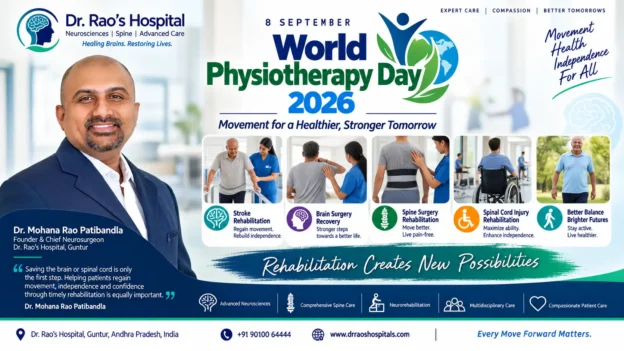
Dr. Mohana Rao Patibandla, Founder and Chief Neurosurgeon at Dr. Rao's Hospital, Guntur, highlighting the importance of early neurorehabilitation, stroke rehabilitation, brain surgery recovery, spine surgery rehabilitation, spinal cord injury rehabilitation, and neurological physiotherapy on World Physiotherapy Day 2026.

World Physiotherapy Day 2026: Dr. Mohana Rao Patibandla Highlights the Vital Role of Early Neurorehabilitation in Stroke, Brain, and Spine Recovery


World Physiotherapy Day 2026: Dr. Mohana Rao Patibandla Highlights the Vital Role of Early Neurorehabilitation in Stroke, Brain, and Spine Recovery


World Physiotherapy Day 2026

Dr. Rao’s Hospital
Neurorehabilitation

GUNTUR, Andhra Pradesh, India — September 8, 2026


On World Physiotherapy Day 2026, Dr. Mohana Rao Patibandla, Founder and Chief Neurosurgeon of Dr. Rao’s Hospital, Guntur, emphasized that early physiotherapy and specialized neurorehabilitation are among the most important factors determining recovery after stroke, brain surgery, spinal cord injury, traumatic brain injury, and complex spine surgery. He noted that rehabilitation should begin as early as medically appropriate and continue through a personalized multidisciplinary recovery program to maximize independence and quality of life.


Observed globally every year on September 8, World Physiotherapy Day raises awareness about the critical contribution of physiotherapists in preventing disability, restoring movement, and improving long-term health outcomes. The 2026 global campaign places particular emphasis on physiotherapy’s role in stroke recovery, cardiovascular health, and physical activity, making neurorehabilitation especially relevant for patients recovering from neurological illnesses and injuries.


Hawaii’s Leader in Stroke Rehabilitation | Rehabilitation Hospital of the Pacific
Stroke Care in Alberta | Alberta Health Services

Neuro Rehabilitation Chandler, AZ- Advanced Neurologic Rehabilitation


According to Dr. Mohana Rao Patibandla, recovery from neurological disease does not end after successful surgery or emergency treatment.


“Saving the brain or spinal cord is only the first step. Helping patients regain movement, balance, speech, confidence, and independence through timely neurorehabilitation is equally important.”


Dr. Rao explained that advances in neurosurgery, endovascular stroke treatment, minimally invasive spine surgery, and neurocritical care have significantly improved survival. However, long-term outcomes depend heavily on structured rehabilitation delivered by trained physiotherapists working alongside neurologists, neurosurgeons, rehabilitation physicians, speech therapists, occupational therapists, and nursing teams.


Conditions That Benefit from Neurological Physiotherapy


Neuro Rehabilitation Therapy in Burlington: Increase Recovery and Restore Independence
Brain Tumor Rehabilitation: What to Expect After Surgery

Spinal Cord Injury Rehabilitation | West Gables Rehabilitation Hospital


At Dr. Rao’s Hospital, physiotherapy forms an integral part of comprehensive neurosciences care for patients with:


Neurological Condition


Role of Physiotherapy


Stroke (Ischemic & Hemorrhagic)


Walking recovery, balance, strength, mobility, prevention of disability.


Brain Tumor Surgery


Improving coordination, gait, muscle strength, and functional recovery after surgery.


Traumatic Brain Injury


Balance retraining, mobility restoration, posture, and cognitive-functional rehabilitation.


Spinal Cord Injury


Strengthening, wheelchair mobility, standing programs, gait rehabilitation where appropriate.


Spine Surgery


Early mobilization, pain reduction, posture correction, and return to daily activities.


Parkinson’s Disease


Gait training, balance improvement, fall prevention, and mobility exercises.


Peripheral Nerve DisordersMuscle strengthening, nerve recovery support, and functional rehabilitation.


Stroke Recovery Begins Early


Un fisioterapeuta canario lidera la primera guía para tratar a pacientes con ictus | Canarias7
Vale Stroke Unit | ERGSY

Stroke patients ‘being failed every day’ due to rehabilitation gaps | ITV News


Stroke remains one of India’s leading causes of long-term disability. While emergency treatments such as clot removal and neurocritical care save lives, rehabilitation determines how well patients return to independent living.


Dr. Rao emphasized that, for many medically stable stroke patients, early mobilization and physiotherapy can begin within the first 24–48 hours under specialist supervision, depending on the patient’s neurological and medical condition. Early rehabilitation helps reduce complications associated with prolonged immobility and supports recovery of movement and balance.


Key goals of stroke physiotherapy include:


  • Restoring walking ability.

  • Improving balance and coordination.

  • Strengthening weakened limbs.

  • Preventing muscle stiffness and joint contractures.

  • Reducing the risk of falls.

  • Promoting independence in daily activities.


He added that every stroke patient requires an individualized rehabilitation program rather than a one-size-fits-all approach.


Rehabilitation After Brain Surgery Is Essential


Rachel Foster Boston Marathon: She ran the marathon soon after a traumatic brain injury
Physical therapy 'a constant puzzle to help solve'

Neurological Rehabilitation in Alpharetta | FYZICAL Alpharetta


Patients undergoing surgery for brain tumors, aneurysms, epilepsy, hydrocephalus, or traumatic brain injuries often experience temporary weakness, balance disturbances, or coordination difficulties.


Dr. Rao explained that postoperative physiotherapy helps patients:


  • Regain muscle strength.

  • Improve coordination and posture.

  • Restore gait and mobility.

  • Increase endurance.

  • Return safely to work and daily life.


  •  

Early rehabilitation also helps reduce postoperative complications related to prolonged bed rest.


Spine Surgery Recovery Is a Journey


臨床5年目までに押さえておきたい「腰椎術後のリハビリ」”いつから?”、”何を?”、”どこま?で”|Hitoshi & KZFM
Hospital Care After Spinal Fusion Surgery (2 to 4 Days)

Physio Meets Science (@PhysioMeScience) on X


Modern spine surgery allows many patients to mobilize much earlier than previously possible.


Following cervical and lumbar spine surgery, physiotherapy focuses on:


  • Safe mobilization.

  • Core strengthening.

  • Posture correction.

  • Flexibility exercises.

  • Functional movement training.

  • Return-to-work rehabilitation.


  •  

Dr. Rao emphasized that rehabilitation programs are tailored according to the type of surgery, neurological recovery, and patient-specific goals.


Spinal Cord Injury Rehabilitation Requires a Multidisciplinary Team


Un résumé de notre programme 'Activity-based therapy' pour les blessés médullaires
Innovative Exercise Physiology Strategies for Spinal Cord Injury Rehabilitation | Holistic Strength

Spinal Cord Injury Rehabilitation | Dignity Health Rehabilitation Hospital


Patients with spinal cord injuries often require prolonged rehabilitation involving multiple specialties.


Physiotherapy plays an important role in:


  • Preserving muscle function.

  • Improving mobility.

  • Preventing pressure injuries.

  • Managing spasticity.

  • Teaching transfers and wheelchair skills.

  • Maximizing independence.


  •  

Dr. Rao stressed that rehabilitation should begin during hospitalization whenever clinically appropriate and continue after discharge through structured follow-up.


Preventing Falls and Improving Balance


Troubles de l'équilibre après 65 ans : Prévenir les | Kinevir
Kinésithérapie neurologique à Genval - CareFit

Parkinson's Physiotherapy in Dubai | Physio Cure Dubai


Neurological physiotherapy is equally important for older adults with balance disorders, Parkinson’s disease, peripheral neuropathy, and vestibular dysfunction.


Balance rehabilitation helps:


  • Reduce fall risk.

  • Improve walking confidence.

  • Enhance coordination.

  • Maintain independence in older adults.


  •  

Dr. Rao encouraged families not to ignore recurrent falls or persistent imbalance, as these may indicate underlying neurological conditions requiring evaluation.


Physical Activity Is Brain Health


7 Exercises to Improve Walking Strength for Seniors
Stroke survivor: I had to seek rehab outside NHS to walk again | The latest National and International News - upday News

‘Definitive test’ finds exercise a potent weapon against colon cancer | Folio


World Physiotherapy Day also promotes physical activity as an essential component of long-term health.


Dr. Rao highlighted that regular physical activity can contribute to:


  • Better cardiovascular health.

  • Reduced stroke risk factors.

  • Improved brain function.

  • Better recovery after neurological illness.

  • Improved mental health and quality of life.


  •  

He encouraged patients recovering from neurological conditions to remain physically active under professional guidance rather than avoiding movement due to fear.


The Dr. Rao’s Hospital Neurorehabilitation Approach


Neuro Rehabilitation centre in hyderabad | Neuro care center - Brinnovacare
Facilities - NeuroGen BSI

Program enhances stroke care at nearly 3,000 U.S. hospitals: Newsroom - UT Southwestern, Dallas, Texas


At Dr. Rao’s Hospital, Guntur, neurorehabilitation is integrated into comprehensive neuroscience care through collaboration between neurosurgeons, neurologists, physiotherapists, neurocritical care specialists, rehabilitation experts, speech therapists, occupational therapists, and specialized nursing teams.


The hospital’s rehabilitation philosophy includes:


  • Early neurological assessment.

  • Individualized rehabilitation planning.

  • Goal-oriented physiotherapy.

  • Balance and gait training.

  • Strength and mobility rehabilitation.

  • Functional independence training.

  • Long-term follow-up and recovery monitoring.


  •  

This multidisciplinary approach aims to improve recovery and help patients return to independent daily living whenever possible.


A Message to Patients and Families


Dr. Rao advised patients and caregivers not to delay rehabilitation after neurological illness or surgery.


“Recovery is a process, not a single event. Early physiotherapy, consistent rehabilitation, family participation, and regular follow-up together provide patients with the best opportunity to regain independence.”


He encouraged individuals experiencing weakness after stroke, persistent back pain after spinal injury, difficulty walking, balance problems, or neurological disability to seek early evaluation by a neuroscience team rather than waiting for symptoms to worsen.


About Dr. Rao’s Hospital


Dr. Rao’s Hospital is a dedicated neuroscience hospital in Guntur, Andhra Pradesh, specializing in neurology, neurosurgery, spine surgery, stroke care, neuro-oncology, pediatric neurosurgery, cerebrovascular surgery, endovascular neurosurgery, epilepsy surgery, minimally invasive brain and spine surgery, and comprehensive neurorehabilitation.


The hospital provides advanced diagnosis, emergency neurological care, surgical treatment, intensive neurocritical care, and rehabilitation services for patients across Andhra Pradesh and India.


Frequently Asked Questions


What is World Physiotherapy Day?

World Physiotherapy Day is observed every year on September 8 to recognize the contribution of physiotherapists in improving health, mobility, rehabilitation, and quality of life worldwide.


Why is physiotherapy important after a stroke?

Physiotherapy helps stroke patients regain movement, balance, strength, walking ability, and independence while reducing long-term disability through structured rehabilitation.


When should physiotherapy begin after stroke?

For many medically stable patients, rehabilitation begins as early as clinically appropriate under specialist supervision, based on neurological and medical stability.


Is physiotherapy necessary after brain or spine surgery?

Yes. Rehabilitation after brain and spine surgery helps restore strength, mobility, posture, balance, coordination, and functional independence.


Can physiotherapy help patients with spinal cord injuries?

Physiotherapy is a key component of spinal cord injury rehabilitation and focuses on mobility, muscle preservation, balance, wheelchair skills, and maximizing independence.


Media Contact


Dr. Rao’s Hospital – International Institute of Neurosciences (IIN)

12-19-67, Old Bank Road, Kothapet, Guntur, Andhra Pradesh – 522001, India

Phone: +91 90100 64444

Website: Dr. Rao’s Hospital

Email: info@drraoshospitals.com


On World Physiotherapy Day 2026, Dr. Mohana Rao Patibandla emphasizes that recovery from stroke, brain surgery, spinal cord injury, and spine surgery depends not only on successful treatment but also on timely neurorehabilitation. Early physiotherapy, individualized rehabilitation, and multidisciplinary neuroscience care help patients regain mobility, independence, and quality of life. #WorldPhysiotherapyDay #StrokeRecovery #Neurorehabilitation #SpineRehabilitation #DrRaosHospital

#WorldPhysiotherapyDay2026, #WorldPhysiotherapyDay, #DrMohanaRaoPatibandla, #DrRaosHospital, #Neurorehabilitation, #StrokeRecovery, #StrokeRehabilitation, #BrainSurgeryRecovery, #SpineRehabilitation, #SpinalCordInjuryRehabilitation, #NeurologicalPhysiotherapy, #BrainHealth, #SpineHealth, #AdvancedNeurosciences, #Guntur, #AndhraPradesh, #HealingBrainsRestoringLives, #EveryMoveForwardMatters

YouTube

Facebook

Instagram

Google Business Page

LinkedIn

X / Twitter


Dr. Rao’s Hospital, Guntur

Dr. Mohana Rao Patibandla

About Dr. Rao’s Hospital

Advanced Neurosurgery in Guntur

Comprehensive Neurology Care in Guntur

Advanced Spine Surgery in Guntur

Minimally Invasive Brain and Spine Surgery

Pediatric Neurosurgery in Guntur

Advanced Epilepsy Surgery in Guntur

International Patients – Neurosurgery in India

Book an Appointment at Dr. Rao’s Hospital


Primary  Pages

Dr. Rao’s Hospital – International Institute of Neurosciences

About Dr. Rao’s Hospital

Dr. Mohana Rao Patibandla – Best Neurosurgeon in Guntur

World-Class Neurosurgery at Dr. Rao’s Hospital

Advanced Neurosurgery and Spine Care at Dr. Rao’s Hospital


Brain Surgery Internal Links

Brain Tumor Surgery

Minimally Invasive Brain Surgery

Brain Specialist in Andhra Pradesh

Neurosurgery Excellence at Dr. Rao’s Hospital


Spine Surgery Internal Links

Advanced Spine Surgery at Dr. Rao’s Hospital

Comprehensive Spine Surgery Services

Minimally Invasive Neurosurgery

Keyhole Brain and Spine Surgery


Stroke & Endovascular Internal Links


Stroke and Cerebrovascular Treatment

Hybrid Cath Lab and Endovascular Neurosurgery

Brain Aneurysm and Cerebrovascular Care


Functional Neurosurgery Internal Links


Functional Neurosurgery in Andhra Pradesh

Deep Brain Stimulation and Functional Neurosurgery

Epilepsy Surgery


Neuro-Oncology Internal Links


Brain Tumor Surgery

Minimally Invasive Neuro-Oncology

Advanced Brain Tumor Treatment in Andhra Pradesh


Hospital Technology Internal Links


Stealth 8 Neuronavigation System

Flat Panel Biplane Hybrid Cath Lab

Intraoperative Neuromonitoring (IONM)

Dedicated Neuro ICU

4K Neuroendoscopy Technology


Dr. Mohana Rao Patibandla 

Dr. Mohana Rao Patibandla – Biography

Dr. Mohana Rao Patibandla – Neurosurgeon in Guntur

Dr. Mohana Rao Patibandla’s Vision for Advanced Neurosurgery


Related Blog Links 


World Federation of Neurosurgical Societies (WFNS)

American Association of Neurological Surgeons (AANS)

Congress of Neurological Surgeons (CNS)

World Stroke Organization

National Institute on Aging – Alzheimer’s Disease

Alzheimer’s Disease International


World Physiotherapy

World Health Organization (WHO)

World Stroke Organization

Three individuals on stage at the ET Health Conclave 2025 award ceremony, with one holding a framed award. The backdrop features the event logo, "ET Health" and "Conclave 2025," along with the Lexus sponsorship branding. The scene is illuminated with purple and blue lighting.

What to Expect After Minimally Invasive Spine Surgery: A Recovery Timeline


What to Expect After Minimally Invasive Spine Surgery: A Recovery Timeline

Minimally invasive spine surgery (MISS) has revolutionized how we treat back and neck disorders, offering faster healing, smaller incisions, and shorter hospital stays compared to traditional open surgery. However, patients often wonder, “What can I expect during recovery?” Understanding your minimally invasive spine surgery recovery timeline helps set realistic expectations and ensures smoother healing.

At Dr. Rao’s Hospital, the leading center for spine surgery in Guntur, Dr. Mohana Rao Patibandla—the best spine surgeon in Guntur—specializes in endoscopic and keyhole spine surgery, helping patients return to active life faster with minimal pain.


Understanding Minimally Invasive Spine Surgery (MISS)

MISS involves performing spinal procedures through tiny incisions using an endoscope or microscope. Unlike open surgery, muscles and tissues are gently separated rather than cut, which reduces tissue damage, postoperative pain, and recovery time.

Common procedures include:

  • Endoscopic discectomy (for slipped or herniated discs)
  • Keyhole laminectomy (for spinal stenosis)
  • Minimally invasive lumbar fusion
  • Microsurgical decompression for nerve compression

According to the Mayo Clinic, most patients resume light activities within 2–4 weeks and full activities in 6–12 weeks, depending on the type of surgery and overall health.


Recovery Timeline After Minimally Invasive Spine Surgery

While recovery varies for each individual, the general healing process can be divided into stages. Here’s what most patients can expect during their journey back to mobility and comfort.

📅 Day of Surgery to 24 Hours: Hospital Stay and Immediate Recovery

  • Hospital stay is usually less than 24–48 hours for most minimally invasive procedures.
  • Patients are encouraged to sit, stand, and walk within a few hours after surgery.
  • Pain is managed with mild analgesics or muscle relaxants.
  • Vital signs and neurological function are monitored closely.

At Dr. Rao’s Hospital, patients benefit from enhanced recovery protocols and early mobilization guided by physiotherapists.


🗓️ Week 1: Early Home Recovery

During the first week, mild back stiffness, fatigue, or incision-site soreness is common. Follow the discharge instructions carefully to avoid complications.

  • Use prescribed pain medications as directed.
  • Walk short distances several times a day to improve circulation.
  • Avoid bending, twisting, or lifting heavy objects.
  • Keep the incision clean and dry.

Patients undergoing endoscopic spine surgery recovery or keyhole spine surgery recovery typically experience faster pain reduction than traditional surgery.


🗓️ Weeks 2–4: Regaining Strength and Mobility

By the second week, most patients notice a significant decrease in pain and improved movement. Gradually, walking distance and daily activities can increase under medical guidance.

  • Light stretching and walking exercises can begin.
  • Office-based or desk work may resume in 2–3 weeks.
  • Pain and inflammation continue to decrease.
  • Follow-up appointments confirm proper healing.

At this stage, physiotherapy after spine surgery becomes crucial to regain flexibility, core strength, and posture alignment. Dr. Rao’s Hospital Neurology Services supports personalized rehab programs.


🗓️ Weeks 4–8: Returning to Normal Activity

During this phase, patients often return to daily routines and low-impact physical activities. Healing tissues regain strength, and energy levels improve.

  • Gradual return to light sports or yoga (as advised).
  • Driving may resume at 4–6 weeks once pain is controlled and mobility restored.
  • Heavier work or lifting is delayed until at least 8–10 weeks.

For those undergoing lumbar spine surgery recovery or cervical spine surgery recovery, recovery timelines may vary slightly. Consistent physiotherapy ensures a safe and successful return to work.


🗓️ 3–6 Months: Full Recovery and Long-Term Care

By three months, most patients are pain-free and back to normal life. The surgical site is fully healed, and spine strength improves with continued exercise.

  • Resume full physical activity under guidance.
  • Maintain ergonomic habits and core exercises.
  • Schedule periodic follow-ups for long-term spine health.

Dr. Rao emphasizes the importance of lifestyle modifications, such as maintaining good posture, avoiding prolonged sitting, and strengthening back muscles to prevent recurrence.


Recovery Tips After Minimally Invasive Spine Surgery

  • Follow your surgeon’s instructions and attend all follow-ups.
  • Begin physiotherapy early to rebuild strength.
  • Eat a high-protein, fiber-rich diet for faster healing.
  • Use proper posture while sitting, standing, and walking.
  • Stay hydrated and get enough rest.

For expert-guided recovery, contact Dr. Rao’s Hospital—the top spine surgery hospital in Guntur—for personalized post-surgery rehabilitation.


Why Choose Dr. Rao’s Hospital for Minimally Invasive Spine Surgery?

At Dr. Rao’s Hospital, Dr. Mohana Rao Patibandla—a U.S.-trained and fellowship-certified neurosurgeon—specializes in minimally invasive and endoscopic spine surgery in Guntur. With advanced technology and compassionate care, patients enjoy:

  • Shorter hospital stay and faster recovery
  • Minimal scarring and blood loss
  • High success rates and lower complication risks
  • Comprehensive post-operative physiotherapy

As the best minimally invasive spine surgeon in Andhra Pradesh, Dr. Rao and his team have successfully treated thousands of patients with chronic back and neck pain using modern, patient-centric methods.


Call to Action

If you’re searching for the best spine surgeon in Guntur or need recovery guidance after spine surgery, visit Dr. Rao’s Hospital today. Contact us at 📞 090100 56444 or 📧 info@drraoshospitals.com to book an appointment.


Frequently Asked Questions

How long does it take to recover from minimally invasive spine surgery?

Most patients recover within 4–6 weeks for light activity and 3–4 months for full physical function. However, recovery time after minimally invasive spine surgery can vary based on procedure type, patient fitness, and adherence to post-op care.

When can I walk or drive after spine surgery?

Walking begins within 24 hours post-surgery. Driving is generally safe after 4–6 weeks, once pain and reflexes normalize.

Is pain normal after minimally invasive spine surgery?

Mild soreness or muscle fatigue is expected during early recovery, but severe or worsening pain should be evaluated immediately.

How long does it take to recover from minimally invasive spine surgery?

Recovery typically takes 4–6 weeks for light activity and up to 3–4 months for complete recovery. Early walking and physiotherapy help speed up healing.

When can I drive after spine surgery?

Driving can usually resume after 4–6 weeks once you are pain-free, off pain medication, and can move comfortably without restrictions.

Why choose Dr. Rao’s Hospital for spine surgery?

At Dr. Rao’s Hospital, led by Dr. Mohana Rao Patibandla, one of the best spine surgeons in Guntur, patients receive world-class care using minimally invasive and endoscopic techniques for faster recovery.


Follow Dr. Rao’s Hospital


India’s Best Neurosurgeon — Dr. Rao at Dr. Rao's Hospital

The Best Neurosurgeon in India: Dr. Rao at Dr. Rao’s Hospital

The Best Neurosurgeon in India: Dr. Rao at Dr. Rao’s Hospital

When it comes to neurosurgery and spine surgery, finding the right expert is crucial. Neurosurgery involves some of the most complex medical procedures and demands precision, expertise, and the latest technology. One of India’s most trusted and experienced neurosurgeons is Dr. Mohana Rao Patibandla at Dr. Rao’s Hospital, Guntur. Specializing in both minimally invasive spine surgeries and brain surgeries, Dr. Rao is highly regarded for his meticulous approach and a high success rate in treating various complex neurological and spine conditions.

Dr. Rao’s Hospital is known for offering top-notch neurosurgical care in India. The hospital boasts advanced technology, state-of-the-art infrastructure, and a compassionate medical team, making it a center of excellence for neurosurgery in India. Let’s explore some of the key areas in which Dr. Rao excels.

Pain After Surgery

Pain after surgery is a common concern for many patients, especially when it comes to spinal and brain surgeries. However, at Dr. Rao’s Hospital, patients can expect minimal post-operative pain due to the use of minimally invasive procedures and cutting-edge pain management protocols.

Post-surgical pain is often managed through a combination of medications, physiotherapy, and personalized rehabilitation plans. Dr. Rao and his team work tirelessly to ensure patients experience a quick recovery with the least amount of discomfort possible.

Scoliosis Surgery in India

Scoliosis surgery is a specialized procedure aimed at correcting spinal curvature, which can lead to significant pain and mobility issues if left untreated. Dr. Rao is among the top surgeons in India for treating scoliosis, using the latest surgical techniques to ensure optimal outcomes.

Dr. Rao’s Hospital is equipped with advanced technology for precise diagnosis and treatment planning, ensuring that the scoliosis surgery is as minimally invasive as possible. This results in reduced recovery times and fewer complications, making it one of India’s best places for scoliosis surgery.

Surgery for Vertebral Fracture

Vertebral fractures can result from trauma, osteoporosis, or other underlying conditions. Immediate surgical intervention is often necessary to prevent further complications, such as nerve damage or severe chronic pain. Dr. Rao is renowned for his expertise in performing vertebral fracture surgery, offering minimally invasive options like kyphoplasty and vertebroplasty, known for their success in treating fractures with minimal recovery time.

At Dr. Rao’s Hospital, every vertebral fracture case is carefully evaluated to determine the most appropriate treatment. With cutting-edge equipment and a team of specialists, the hospital ensures patients receive the best care possible for quick recovery and long-term relief.

Pain Surgery

Chronic pain can severely affect a person’s quality of life. Dr. Rao’s Hospital offers a wide range of pain surgery options for patients suffering from debilitating conditions such as herniated discs, spinal stenosis, and nerve compression. Using minimally invasive procedures ensures that pain surgery is done with minimal tissue damage and faster recovery times.

Pain management is a key focus at Dr. Rao’s Hospital, where personalized care plans are created to address each patient’s unique needs. Whether through surgery or non-surgical interventions, Dr. Rao’s team ensures that pain is alleviated effectively.

Back Hospital: Comprehensive Spine Care

Dr. Rao’s Hospital has earned a reputation as a top back hospital in India. It provides comprehensive care for all types of spine problems, from herniated discs to degenerative spine diseases. The hospital offers a wide array of treatments, both surgical and non-surgical, tailored to the individual needs of the patient.

Spine problems treatment at Dr. Rao’s Hospital includes conservative management such as physical therapy, medication, and pain relief injections, as well as more advanced surgical interventions like spinal fusion and disc replacement surgery. The goal is always to offer the least invasive treatment possible while ensuring the best outcomes for the patient.

Neuro Surgery Name: Complex Neurosurgical Procedures

Neurosurgery is among the most challenging medical fields, and Dr. Rao is well-versed in the full spectrum of neurosurgical procedures. Dr. Rao’s expertise ensures that patients are in safe hands, whether it’s for brain tumors, spinal cord injuries, or cerebrovascular conditions.

Some of the complex neurosurgery procedures performed at Dr. Rao’s Hospital include:

  • Brain tumor removal
  • Cerebrovascular surgeries like aneurysm clipping and arteriovenous malformation (AVM) repair
  • Cervical spine surgeries
  • Peripheral nerve surgeries

Dr. Rao’s ability to handle even the most complex neurosurgeries with precision makes him one of the top neurosurgeons in India.

After Spine Surgery: Recovery and Rehabilitation

A comprehensive rehabilitation plan is crucial after spine surgery for ensuring long-term success and avoiding complications. At Dr. Rao’s Hospital, patients benefit from a multidisciplinary team approach that includes physiotherapists, pain specialists, and rehabilitation experts. This ensures a smoother recovery process and helps patients immediately return to their daily activities.

Patients are provided with detailed post-surgery care instructions, including wound care guidelines, medications, and physical activity restrictions. Regular follow-ups ensure that any complications are addressed immediately, giving patients the best chance to recover fully.

Minimally Invasive Procedures

Minimally invasive surgery (MIS) has revolutionized spinal and neurological surgeries. Dr. Rao is a pioneer in minimally invasive procedures involving smaller incisions, reduced risk of infection, and quicker recovery times compared to traditional open surgeries. In a recent India today article.

Some of the minimally invasive techniques offered at Dr. Rao’s Hospital include:

  • Endoscopic discectomy
  • Kyphoplasty/Vertebroplasty
  • Minimally invasive spinal fusion

Patients who undergo minimally invasive surgery often experience less post-operative pain and can return to their normal activities much sooner.

Physiotherapy After Spine Surgery

Physiotherapy is a crucial component of recovery after spine surgery. The dedicated physiotherapy team at Dr. Rao’s Hospital works closely with patients to develop personalized rehabilitation plans that focus on restoring strength, flexibility, and mobility.

Physiotherapy after spine surgery can significantly enhance recovery by preventing stiffness, improving circulation, and reducing the risk of future injuries. Patients are guided through specific exercises designed to improve their range of motion and facilitate healing.

Neurosurgery Hospital in India: Why Dr. Rao’s Hospital is the Best Choice

When looking for a neurosurgery hospital in India, Dr. Rao’s Hospital stands out as one of the premier institutions. Offering comprehensive care for both spine and brain surgeries, the hospital is equipped with advanced technology, an experienced medical team, and a patient-centered approach. According to mid-day

The hospital’s success in handling complex neurosurgical cases, combined with its expertise in minimally invasive techniques, has made it one of the most sought-after destinations for both domestic and international patients.

Medical Doctor Surgeon: Expertise and Compassion

Dr. Rao is not just a highly skilled medical doctor surgeon, but he also brings a compassionate approach to his patients’ care. He understands the emotional and physical toll that neurosurgery can take on a patient, and his personalized approach ensures that each patient feels supported throughout their treatment journey.

His expertise, combined with a dedicated team of surgeons and medical staff, guarantees that patients receive the highest care possible at Dr. Rao’s Hospital.

Cervical Spine Treatments

Cervical spine problems, such as herniated discs or spinal stenosis, can cause severe pain and mobility issues. Cervical spine treatments at Dr. Rao’s Hospital include both non-surgical and surgical options, such as cervical discectomies, spinal fusion, and artificial disc replacement.

By using minimally invasive techniques, Dr. Rao ensures that patients experience a quicker recovery with less post-operative pain.

Affordable Medical Tourism in India

Dr. Rao’s Hospital is a top choice for medical tourism in India, especially for patients seeking affordable and high-quality neurosurgical care. The hospital provides a comprehensive package that includes consultation, surgery, hospital stay, and rehabilitation, all at a fraction of the cost compared to Western countries.

Patients worldwide, including the Middle East, Africa, and Southeast Asia, choose Dr. Rao’s Hospital for its excellence in neurosurgery, affordability, and personalized care.

Dr. Rao’s Hospital: The Best Brain, Spine, and Endovascular Center in India

Dr. Rao’s Hospital has established itself as a leading brain, spine, and endovascular center in India. It offers cutting-edge technology, world-class expertise, and a patient-first approach. Whether you need brain surgery, spinal surgery, or endovascular procedures, Dr. Rao’s Hospital is the place for exceptional care.

With a commitment to minimally invasive techniques and a high success rate, Dr. Rao’s Hospital is not just a medical facility; it’s a center for hope and healing.

Conclusion

If you’re searching for the best neurosurgeon in India or the best hospital for spine and brain surgeries, Dr. Rao and Dr. Rao’s Hospital in Guntur should be your top choice. With a track record of successful surgeries, cutting-edge techniques, and a compassionate approach, Dr. Rao’s Hospital stands out as a leader in neurosurgical care. From minimally invasive procedures to world-class rehabilitation, patients can trust they are in expert hands.

Is Dr. Rao board-certified?

Yes, Dr. Mohana Rao Patibandla is a highly qualified and board-certified neurosurgeon. He has an extensive educational background and numerous fellowships from prestigious institutions around the world, including:

  • M.Ch. in Neurosurgery from Nizam’s Institute of Medical Sciences (NIMS), India
  • Fellowships from renowned institutions in the USA, such as:
    • FAANS (Fellow of the American Association of Neurological Surgeons)
    • FMINS (Fellow in Minimally Invasive Neurosurgery) from Ohio State University
    • FEVNS (Fellow in Endovascular Neurosurgery) from the University of Virginia
    • FPNS (Fellow in Pediatric Neurosurgery) from UC Davis, USA
    • FNOSRS (Fellow in Neuro-Oncology and Stereotactic Radiosurgery) from the University of Virginia

Dr. Rao is known for his minimally invasive and endovascular neurosurgery expertise and has earned recognition for his contributions to the field. Being board-certified means that Dr. Rao meets rigorous standards of education, knowledge, and clinical expertise, ensuring his patients’ highest quality of care.

Is Dr. Rao affordable?

Yes, Dr. Mohana Rao Patibandla and Dr. Rao’s Hospital in Guntur are known for providing high-quality neurosurgical care at affordable rates, particularly when compared to other hospitals in India and abroad. Dr. Rao’s Hospital is a leading center for brain, spine, and endovascular treatments in India, offering advanced medical care while maintaining cost-effective solutions for patients. According to The Times of India coverage.

Here are some reasons why Dr. Rao’s care is considered affordable:

  1. Medical Tourism Options: Many international patients visit Dr. Rao’s Hospital due to the combination of top-tier care and reasonable pricing. India is known for offering world-class medical treatments at a fraction of the cost compared to countries like the US or UK, and Dr. Rao’s Hospital is a part of that trend.
  2. Comprehensive Packages: The hospital often provides treatment packages that include consultations, surgery, hospital stays, and post-op care, which helps patients manage costs effectively.
  3. Minimally Invasive Procedures: Dr. Rao is a specialist in minimally invasive neurosurgery, which generally leads to shorter hospital stays, faster recovery times, and lower overall costs for patients.
  4. Tailored Payment Plans: The hospital offers flexible payment options, which help in making treatments more accessible for a larger demographic of patients.

While affordability is subjective, Dr. Rao’s Hospital focuses on delivering exceptional outcomes at a reasonable cost, making it a popular choice for both domestic and international patients.