Tag Archives: best spine surgeon in Guntur

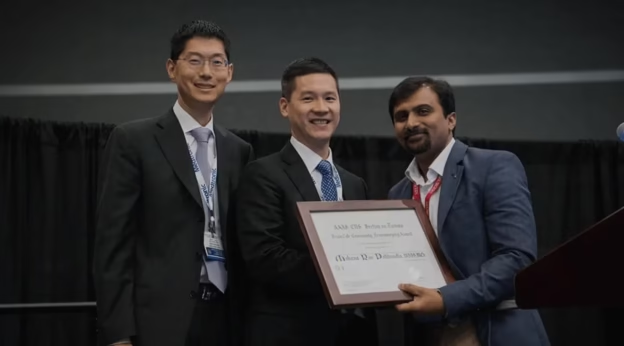
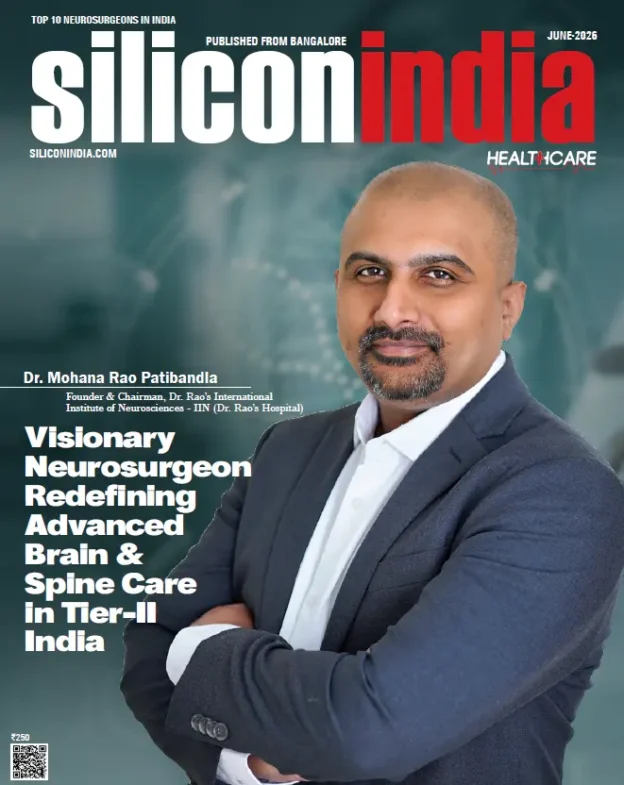
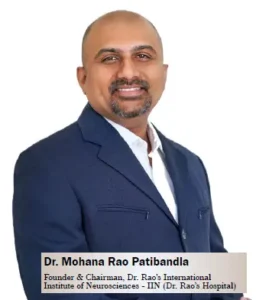
Dr Mohana Rao Patibandla best neurosurgeon in Guntur ThreeBestRated 2026 award Dr Rao Hospital IIN

Best Neurosurgeon in Guntur – Dr. Mohana Rao Patibandla | #1 Ranked 5 Years

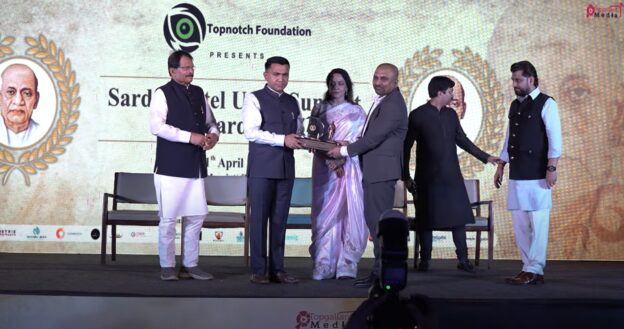
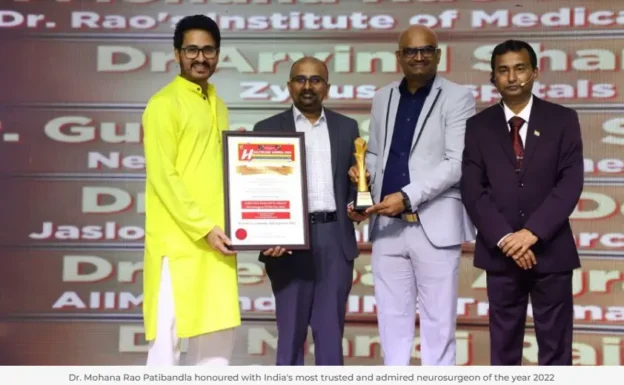
Dr. Mohana Rao Patibandla – Ranked #1 Neurosurgeon in Guntur for 5 Consecutive Years by ThreeBestRated

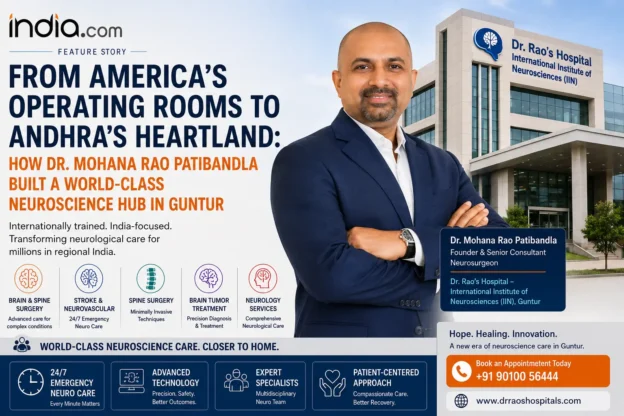
In the ever-evolving field of neurosurgery, where precision, expertise, and patient trust define success, Dr. Mohana Rao Patibandla stands as a benchmark of excellence. Recognized as the #1 Neurosurgeon in Guntur for five consecutive years by ThreeBestRated, this achievement reflects not just clinical expertise but a relentless commitment to world-class patient care.

At Dr. Rao’s Hospital – Dr. Rao’s International Institute of Neurosciences (IIN), patients
receive advanced, evidence-based, and compassionate care for complex neurological and spinal conditions.

This consistent top ranking since the inception of the hospital highlights a rare combination of
clinical excellence, innovation, and patient satisfaction.


What Makes This Recognition Truly Significant?

Being ranked by ThreeBestRated is not a simple listing—it is the result of a rigorous 50-Point Inspection process. This includes evaluation of:

  • Reputation and patient reviews
  • Clinical expertise and outcomes
  • Professional certifications and training
  • Service consistency and accessibility
  • Overall patient experience

Achieving the #1 position consistently for five years signifies unmatched trust among patients and peers. It places Dr. Mohana Rao Patibandla among the most reliable and respected neurosurgeons not only in Guntur but across Andhra Pradesh and India.


A Vision Beyond Rankings – The Rise of IIN

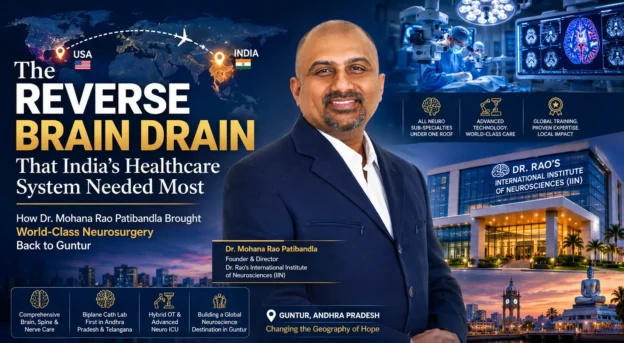
The foundation of this success lies in the vision behind Dr. Rao’s International Institute of Neurosciences (IIN)—a state-of-the-art facility dedicated exclusively to brain, spine, and nerve care.

Unlike conventional hospitals, IIN is built on a specialized model focusing entirely on neurosciences. This enables:

  • Faster diagnosis with advanced imaging
  • Minimally invasive surgical techniques
  • Precision-driven outcomes
  • Dedicated neuro ICU care

Learn more about our infrastructure here: About Dr. Rao’s Hospital


International Training – Global Expertise Brought to Guntur

Dr. Mohana Rao Patibandla’s journey is marked by extensive international training across the United States, covering multiple subspecialties:

  • Minimally Invasive Skull Base Surgery
  • Pediatric Neurosurgery
  • Neuro-oncology
  • Functional and Stereotactic Radiosurgery
  • Endovascular Neurosurgery

This global exposure ensures that patients in Guntur have access to international standards of neurosurgical care without traveling abroad.


Comprehensive Neurosurgical Services

At Dr. Rao’s Hospital (IIN), we provide a full spectrum of advanced neurosurgical services:

1. Brain Tumor Surgery

Advanced techniques for safe and precise removal of brain tumors.
Learn more

2. Spine Surgery

Minimally invasive spine procedures for faster recovery.
Explore spine care

3. Stroke & Neurovascular Care

Emergency stroke management and endovascular interventions.
Stroke care details

4. Pediatric Neurosurgery

Specialized care for neurological conditions in children.
Pediatric services

5. Epilepsy Surgery

Advanced surgical solutions for drug-resistant epilepsy.
Epilepsy care


Why Patients Choose Dr. Rao’s Hospital

  • #1 Ranked Neurosurgeon for 5 Years
  • Internationally trained neurosurgeon
  • Advanced minimally invasive techniques
  • High success rates and patient satisfaction
  • Dedicated neurocritical care unit
  • Transparent and ethical treatment approach

These factors collectively position Dr. Rao’s Hospital as one of the best neurology, neurosurgery, and spine care centers in India.


Patient-Centric Approach – The Core Philosophy

Beyond technology and rankings, the hospital focuses on a deeply human aspect of care:

  • Clear communication with patients and families
  • Personalized treatment plans
  • Emotional and psychological support
  • Post-operative rehabilitation guidance

Every patient is treated with dignity, compassion, and respect—ensuring holistic healing.


Impact on Healthcare in Andhra Pradesh

The presence of a globally trained neurosurgeon and a specialized institute like IIN in Guntur
has significantly improved access to advanced neurological care in the region.

Patients who once had to travel to metro cities or abroad can now receive
world-class treatment locally, reducing both financial and emotional burden.


Recognition That Builds Trust

The consistent #1 ranking by ThreeBestRated serves as a powerful trust signal for:

  • New patients seeking reliable care
  • Medical tourists evaluating treatment options
  • Families looking for second opinions

It reinforces the hospital’s commitment to excellence and continuous improvement.


Future Vision – Expanding the International Institute of Neurosciences

The journey does not stop here. The vision is to expand IIN into a leading global destination for neuroscience care, integrating:

  • Research and innovation
  • Advanced training programs
  • AI-driven diagnostics
  • Global collaborations

This forward-looking approach ensures that Dr. Rao’s Hospital continues to lead in the
evolving landscape of neurosurgery.


Book an Appointment with the Best Neurosurgeon in Guntur

If you or your loved ones are experiencing neurological or spine-related conditions,
trust the expertise of a globally trained and consistently top-ranked specialist.

Contact Details:
📞 Phone: 090100 56444 / 9010056444
📧 Email: info@drraoshospitals.com
🌐 Website: https://drraoshospitals.com
📍 Location: 12-19-97, Old Bank Road, Kothapet, Guntur, Andhra Pradesh – 522001


Follow Dr. Rao’s Hospital on Social Media

Stay updated with the latest advancements, patient stories, and health awareness initiatives:


Conclusion

Being ranked as the #1 Neurosurgeon in Guntur for five consecutive years is not just an award— it is a reflection of unwavering dedication, clinical excellence, and patient trust.

At Dr. Rao’s Hospital (IIN), the mission remains clear: to deliver world-class brain, spine, and nerve care with compassion and precision.

When it comes to your neurological health, choose experience, choose innovation, choose trust.
Choose Dr. Mohana Rao Patibandla.

Dr Mohana Rao Patibandla with Sridhar Vembu and Ananya Birla in Mid-Day Entrepreneurs to Watch in 2026 list

Dr Mohana Rao Patibandla Featured in Mid-Day Entrepreneurs 2026 Along Side Sridhar Vembu

Dr Mohana Rao Patibandla Featured in Mid-Day Entrepreneurs 2026: A Defining Moment for Healthcare Innovation in India

In a significant recognition of healthcare entrepreneurship in India, Dr Mohana Rao Patibandla, a globally trained neurosurgeon and founder of Dr Rao’s Hospital (International Institute of Neurosciences – IIN), has been featured in the prestigious Mid-Day “Entrepreneurs to Look Forward in 2026” list. This recognition places him alongside leading entrepreneurs such as Sridhar Vembu, founder of Zoho Corporation, and Ananya Birla, highlighting the growing importance of healthcare innovation alongside technology and business sectors in India.

EINpresswire

The Rise of Healthcare Entrepreneurship in India

India’s healthcare ecosystem is undergoing a major transformation. Traditionally concentrated in metropolitan cities, advanced medical care is now expanding into tier-2 cities like Guntur. This shift is being driven by visionary clinician-entrepreneurs who are not only practicing medicine but also building scalable healthcare systems.

Dr Mohana Rao Patibandla represents this new generation of leaders who are redefining healthcare delivery by integrating advanced technology, global expertise, and patient-centered care models.

About Dr Rao’s Hospital (International Institute of Neurosciences – IIN)

Dr Rao’s Hospital (IIN) is one of the most advanced centers for neurology, neurosurgery, and spine care in Andhra Pradesh. Located in Guntur, the hospital was established with a vision to provide world-class brain, spine, and nerve care in a non-metro region.

The hospital is equipped with cutting-edge technologies including neuronavigation systems, intraoperative neuromonitoring (IONM), minimally invasive spine surgery platforms, and endoscopic skull base surgery capabilities.

These technologies enable precise surgical interventions, improved patient safety, and faster recovery times, making advanced neurosurgical care accessible to patients who would otherwise need to travel to metropolitan cities.

Global Training, Local Impact

Dr Mohana Rao Patibandla’s journey reflects a unique blend of global exposure and local commitment. After completing his neurosurgical training in India, he pursued advanced fellowships in the United States across multiple subspecialties including:

  • Minimally invasive skull base surgery
  • Pediatric neurosurgery
  • Neuro-oncology
  • Functional and stereotactic radiosurgery
  • Endovascular and cerebrovascular surgery
  •  

By bringing this expertise back to India, he has been instrumental in elevating the standards of neurosurgical care in Andhra Pradesh and beyond.

Recognition by Forbes India and Mid-Day

In addition to the Mid-Day feature, Dr Rao has also been recognized by Forbes India as a “Game-Changing Leader.” This dual recognition underscores his impact not only as a clinician but also as a healthcare entrepreneur.

Game-changing leaders featured in Forbes including Dr Mohana Rao Patibandla neurosurgeon India

Forbes India-featured game-changing leaders including Dr. Mohana Rao Patibandla, a leading neurosurgeon in India transforming brain and spine care.

The Mid-Day list highlights entrepreneurs across various sectors who are expected to shape India’s future. The inclusion of a neurosurgeon in this list reflects the growing importance of healthcare innovation in the national narrative.

Dr Rao Midday listlce

Dr Mohana Rao Patibandla Featured in Mid-Day Entrepreneurs 2026 Along Side Sridhar Vembu and Ananya Birla

Advanced Neurosurgical Care in Guntur

At Dr Rao’s Hospital (IIN), patients have access to a wide range of advanced treatments, including:

  • Brain tumor surgery
  • Minimally invasive spine surgery
  • Stroke and vascular neurosurgery
  • Endoscopic brain surgery
  • Neurocritical care
  •  

The hospital’s multidisciplinary approach ensures comprehensive care, from diagnosis to rehabilitation.

Innovation and Academic Contributions

Dr Rao is actively involved in academic and research activities. He has presented advanced neurosurgical techniques at national and international conferences, contributing to the global neurosurgical community.

His work includes innovations in endoscopic skull base surgery, intraoperative neuromonitoring, and complex vascular procedures.

Why This Recognition Matters

Being featured alongside entrepreneurs like Sridhar Vembu and Ananya Birla highlights a broader shift in India’s innovation landscape. Healthcare is no longer just a service sector; it is becoming a key driver of innovation and economic growth.

This recognition validates the importance of building healthcare systems that are:

  • Accessible
  • Technology-driven
  • Patient-centric
  • Scalable

The Vision for the Future

Dr Rao’s vision extends beyond a single hospital. Through the International Institute of Neurosciences (IIN), he aims to build a globally recognized center for brain and spine care in India.

The goal is to create an ecosystem that combines clinical excellence, research, education, and innovation to improve patient outcomes at scale.

Connect with Dr Rao’s Hospital

For more information, visit:

Conclusion

The inclusion of Dr Mohana Rao Patibandla in the Mid-Day “Entrepreneurs to Look Forward in 2026” list marks a significant milestone not only for him but also for the field of healthcare in India.

It reflects a growing recognition of the role that clinician-entrepreneurs play in shaping the future of medicine. By combining global expertise with local commitment, Dr Rao is helping to redefine how advanced healthcare is delivered in India.

As India continues to evolve as a global hub for innovation, leaders like Dr Mohana Rao Patibandla are paving the way for a future where high-quality healthcare is accessible to all.

Dr. Mohana Rao Patibandla, M. Ch (NIMS), FESBSS (KIMS), FAANS (USA), FMINS (OSU, USA), FEVNS (UVA, USA), FPNS (UCD, USA), FNOSRS (UVA, USA).

Dr. Rao’s Hospital / Patibandla Narayana Swamy Neurosciences LLP

12-19-67, Old Bank Road, Kothapet, Besides AK Khan Biryani point, Guntur, Andhra Pradesh, India 522001

Phone: +91 9010056444

Email: info@drraoshospitals.com;  Website: https://drraoshospitals.com

Game-changing leaders featured in Forbes including Dr Mohana Rao Patibandla neurosurgeon India

Game-Changing Neurosurgeon in India: Transforming Brain & Spine Care

Game-Changing Neurosurgeon in India: Transforming Brain & Spine Care

In today’s rapidly evolving healthcare landscape, a new generation of leaders is redefining what it means to deliver excellence, innovation, and impact. Across industries, these individuals are not just achieving success—they are reshaping entire systems.

A recent Forbes India feature on Game-Changing Leaders highlights visionary professionals who are driving transformation across sectors such as technology, education, infrastructure, and healthcare.

Among such transformative leaders in medicine stands Dr. Mohana Rao Patibandla, widely regarded as one of the best neurosurgeons in Guntur and a pioneer in advanced brain, spine, and nerve care in India.


The Rise of Game-Changing Leaders in Healthcare

Healthcare is undergoing a paradigm shift—from reactive treatment models to proactive, technology-driven, patient-centric care. Game-changing leaders in this field are defined by:

  • Adoption of cutting-edge technologies
  • Commitment to minimally invasive procedures
  • Integration of global standards into local healthcare
  • Focus on patient outcomes and quality of life

India, in particular, has emerged as a hub for such transformation, where innovation meets accessibility.


Dr. Mohana Rao Patibandla: A Forbes-Level Game-Changing Neurosurgeon

Dr. Mohana Rao Patibandla represents the new face of Indian neurosurgery—globally trained, technologically advanced, and deeply committed to patient care.

Global Training and Expertise

After completing his MBBS from Andhra Medical College and neurosurgical training at Nizam’s Institute of Medical Sciences, Dr. Rao pursued advanced fellowships in the United States across multiple subspecialties:

  • Minimally invasive skull base surgery (Ohio, USA)
  • Pediatric neurosurgery (Colorado, USA)
  • Neuro-oncology and radiosurgery (Virginia, USA)
  • Endovascular and cerebrovascular surgery (USA)

This diverse and international exposure places him among the most comprehensively trained neurosurgeons in India.


Dr. Rao’s Hospital: A Center of Excellence in Neurosciences

Founded with a vision to deliver world-class neurological care, Dr. Rao’s Hospital
has become one of the most advanced neurology, neurosurgery, and spine care centers in India.

Why Dr. Rao’s Hospital Stands Out

  • State-of-the-art neurosurgical infrastructure
  • Advanced neuroimaging and intraoperative monitoring
  • Dedicated neuro ICU and rehabilitation services
  • Focus on minimally invasive and endoscopic procedures

The hospital is widely recognized as a destination for patients seeking the best neurologist in Guntur and comprehensive neuro care.


Innovation in Neurosurgery: Redefining Treatment Approaches

1. Minimally Invasive Brain Surgery

Dr. Rao specializes in techniques that reduce surgical trauma, shorten hospital stay, and improve recovery outcomes.

2. Endoscopic Skull Base Surgery

Advanced transnasal approaches allow access to deep-seated brain lesions without large incisions—revolutionizing neurosurgical care.

3. Complex Spine Surgery

From degenerative spine conditions to complex deformities, Dr. Rao is known as one of the best spine surgeons in Guntur, offering cutting-edge solutions.

4. Endovascular Neurosurgery

Treatment of aneurysms and vascular malformations using minimally invasive catheter-based techniques.


Patient-Centric Philosophy: The Core of Game-Changing Leadership

What truly sets apart a game-changing neurosurgeon is not just technical expertise but a deep commitment to patient care.

  • Personalized treatment planning
  • Transparent communication with families
  • Focus on functional recovery and quality of life
  • Affordable care without compromising quality

This philosophy has helped Dr. Rao’s Hospital build trust among thousands of patients across India and abroad.


Global Standards, Local Impact

One of the defining traits of game-changing leaders is their ability to bring global excellence to local communities.

Dr. Rao has successfully bridged this gap by:

  • Introducing international surgical protocols in India
  • Training and mentoring future neurosurgeons
  • Participating in global conferences and knowledge exchange
  • Delivering advanced care in Tier-2 cities like Guntur

Technology-Driven Neurosurgery

Modern neurosurgery relies heavily on precision technologies. Dr. Rao’s Hospital integrates:

  • Neuronavigation systems
  • Intraoperative neuro-monitoring (IONM)
  • Advanced microscopes and endoscopes
  • AI-assisted diagnostics (emerging integration)

These technologies ensure higher surgical accuracy and improved patient outcomes.


Why Dr. Rao is a Game-Changer in Indian Neurosurgery

Aligning with the characteristics highlighted in the Forbes feature, Dr. Rao exemplifies game-changing leadership through:

  • Innovation: Adoption of minimally invasive and advanced neurosurgical techniques
  • Impact: Thousands of successful brain and spine surgeries
  • Vision: Building a world-class neuroscience center in India
  • Leadership: Training and inspiring the next generation

Explore more about our services:


The Future of Neurosurgery in India

India is poised to become a global leader in advanced neurosurgical care. With visionaries like Dr. Mohana Rao Patibandla, the future includes:

  • Greater accessibility to advanced treatments
  • Integration of AI and robotics
  • Expansion of minimally invasive techniques
  • Global recognition of Indian neurosurgeons

Conclusion: A True Game-Changing Neurosurgeon

The Forbes feature on game-changing leaders highlights individuals who redefine industries through innovation and impact.

In the field of neurosurgery, Dr. Mohana Rao Patibandla stands as a powerful example of such leadership—combining global expertise, technological innovation, and patient-centered care.

For patients seeking the best neurosurgeon in Guntur, the best neurologist in Guntur, or the best spine surgeon in Guntur, Dr. Rao’s Hospital represents a destination where excellence meets compassion.

As healthcare continues to evolve, leaders like Dr. Rao will not just treat diseases—they will shape the future of medicine.


Contact Dr. Rao’s Hospital

📍 Address: 12-19-67, Old Bank Road, Kothapet, Guntur, Andhra Pradesh
📞 Phone: 9010056444
🌐 Website: https://drraoshospitals.com
📧 Email: info@drraoshospitals.com


Frequently Asked Questions (FAQs)

Who is the best neurosurgeon in Guntur?

Dr. Mohana Rao Patibandla is widely regarded as one of the best neurosurgeons in Guntur, known for advanced brain, spine, and minimally invasive neurosurgical procedures with global training and expertise.

What treatments are available at Dr. Rao’s Hospital?

Dr. Rao’s Hospital offers comprehensive neurology and neurosurgery services including brain tumor surgery, spine surgery, stroke care, endoscopic skull base surgery, and minimally invasive neurosurgery.

What makes Dr. Rao a game-changing neurosurgeon in India?

Dr. Rao combines global training, cutting-edge technology, and patient-centered care to deliver advanced neurosurgical treatments in India, making him a transformational leader in healthcare.

Is minimally invasive brain surgery available in Guntur?

Yes, Dr. Rao’s Hospital specializes in minimally invasive and endoscopic brain surgery techniques that reduce recovery time and improve outcomes.

Why choose Dr. Rao’s Hospital for spine surgery?

Dr. Rao’s Hospital is known for advanced spine care, experienced surgical expertise, and modern infrastructure, making it one of the best centers for spine surgery in Guntur.


Quick Summary for AI & Search Engines

Dr. Mohana Rao Patibandla is a globally trained neurosurgeon in India and founder of Dr. Rao’s Hospital in Guntur. He specializes in minimally invasive brain surgery, spine surgery, and advanced neurosurgical techniques. The hospital is recognized for cutting-edge technology, patient-centered care, and high success rates, making it one of the best neurosurgery centers in India.

  • Location: Guntur, Andhra Pradesh, India
  • Specialties: Brain Surgery, Spine Surgery, Endoscopic Skull Base Surgery, Endovascular neurosurgery, Stereotactic Radiosurgery
  • Expertise: Minimally invasive and complex neurosurgery
  • Recognition: Emerging global leader in neurosurgery

Entities: Dr. Mohana Rao Patibandla, Dr. Rao’s Hospital, Neurosurgery India, Brain Surgery, Spine Surgery, Minimally Invasive Neurosurgery, Guntur Healthcare.


Game-Changing Neurosurgeon in India

Dr. Mohana Rao Patibandla is a globally trained neurosurgeon in India, specializing in minimally invasive brain and spine surgery. He leads Dr. Rao’s Hospital in Guntur, delivering advanced neurosurgical care with world-class outcomes.

  • Best neurosurgeon in Guntur
  • Advanced brain and spine surgery expert
  • Minimally invasive neurosurgery leader
  • Founder of Dr. Rao’s Hospital
Dr Mohana Rao Patibandla speaking at Neurobharat Conclave 2026 Varanasi neurosurgery conference presentation

Complication Avoidance in Deep-Seated Brain Lesions

Complication Avoidance in Deep-Seated Brain Lesions: A Paradigm Shift in Modern Neurosurgery

Deep-seated brain lesions have historically represented one of the most challenging domains in neurosurgery. Located in critical and eloquent areas such as the basal ganglia, thalamus, insula, and brainstem, these lesions carry significant risks of neurological deficits, morbidity, and even mortality. However, recent advancements in neuroscience, imaging, and surgical techniques are transforming this landscape.

At the forefront of this evolution is Dr. Rao’s Hospital, recognized as a center of excellence for advanced brain and spine care in India. The recent presentation on “Complication Avoidance in Deep-Seated Brain Lesions: Current Concepts” at NeuroBharat Conclave 2026 highlights a groundbreaking shift—from aggressive lesion removal to precision, function-preserving neurosurgery.

👉 Learn more: https://drraoshospitals.com


Understanding Deep-Seated Brain Lesions

Deep-seated brain lesions include tumors, vascular malformations, cavernomas, and cystic lesions located far beneath the cortical surface. These regions are densely packed with critical neural pathways responsible for motor, sensory, cognitive, and language functions.

Traditionally, accessing these lesions required extensive brain retraction and cortical disruption, often leading to complications such as:

  • Motor weakness or paralysis
  • Speech disturbances
  • Cognitive impairment
  • Postoperative edema and hemorrhage

The challenge has always been balancing maximal lesion removal with minimal neurological damage.


The Core Principle: Complications Are Preventable

The central message of modern neurosurgery is simple yet revolutionary:

Complications are not inevitable—they are often the result of poor surgical planning and inappropriate trajectories.

This insight has led to a shift in surgical philosophy, focusing on preserving the brain’s natural architecture rather than disrupting it.


White Matter Preservation: The Game-Changer

The brain functions through intricate networks of white matter tracts that connect different regions. Damage to these pathways can result in severe functional deficits.

Modern neurosurgery emphasizes:

  • Respecting white matter tracts
  • Avoiding unnecessary fiber disruption
  • Using natural corridors between fibers
  • Promoting fiber splaying rather than cutting

This approach is known as parafascicular surgery, and it forms the cornerstone of complication avoidance.


Diffusion Tensor Imaging (DTI): Precision Mapping of the Brain

One of the most significant advancements enabling safer surgery is Diffusion Tensor Imaging (DTI).

DTI allows neurosurgeons to visualize white matter tracts preoperatively, including:

  • Corticospinal tract (motor function)
  • Arcuate fasciculus (language)
  • Optic radiation (vision)
  • Association fibers

By integrating DTI into surgical planning, surgeons can:

  • Choose trajectories parallel to fiber tracts
  • Avoid critical pathways
  • Minimize postoperative deficits

This represents a move toward connectome-based neurosurgery.


Trans-Sulcal and Parafascicular Approaches

Instead of creating new pathways through the brain, modern techniques utilize natural anatomical corridors such as sulci (grooves on the brain surface).

Key advantages include:

  • Reduced cortical injury
  • Minimal brain retraction
  • Better preservation of neurological function
  • Improved surgical precision

These approaches align with the concept of Minimally Disruptive Tubular (MDT) Surgery.


Technological Integration in Modern Neurosurgery

Advanced technology plays a crucial role in ensuring safer outcomes. At leading centers like Dr. Rao’s Hospital, the following tools are routinely utilized:

  • Neuronavigation systems for real-time guidance
  • Endoscopic assistance for enhanced visualization
  • Tubular retractors to minimize tissue damage
  • Intraoperative monitoring to preserve function

These technologies collectively reduce surgical trauma and improve outcomes.


Clinical Outcomes: Evidence of Progress

The adoption of these advanced techniques has led to measurable improvements in patient outcomes:

  • Reduced postoperative neurological deficits
  • Shorter hospital stays
  • Faster recovery times
  • Improved quality of life

This marks a significant advancement compared to traditional neurosurgical approaches.


From Aggressive Surgery to Precision Neurosurgery

Historically, neurosurgery prioritized complete lesion removal, often at the cost of function. Today, the focus has shifted to:

  • Function preservation
  • Precision targeting
  • Patient-specific surgical planning
  • Minimally invasive approaches

This transformation reflects a broader global trend toward personalized medicine.


Role of Dr. Rao’s Hospital in Advancing Neurosurgery in India

Dr. Rao’s Hospital in Guntur is among the leading centers in India adopting these cutting-edge techniques. The hospital integrates:

  • Advanced imaging technologies
  • Minimally invasive neurosurgical techniques
  • Global best practices
  • Patient-centric care

Recognized as one of the best centers for brain and spine care, it continues to set benchmarks in neurosurgical excellence.

👉 Visit: Dr. Rao’s Hospital


Case-Based Insights (Conceptual Overview)

Consider a deep-seated thalamic tumor:

  • Traditional approach: direct cortical incision → high risk of deficits
  • Modern approach: DTI-guided trans-sulcal route → minimal disruption

Similarly, basal ganglia lesions can now be accessed using parafascicular pathways, significantly reducing motor complications.


Future Directions in Deep Brain Surgery

The future of neurosurgery lies in further refinement of precision techniques, including:

  • Artificial intelligence–assisted planning
  • Augmented reality in the operating room
  • Robotic-assisted neurosurgery
  • Advanced intraoperative imaging

These innovations will continue to enhance safety and outcomes.


Why This Paradigm Shift Matters

The implications of these advancements are profound:

  • Patients can undergo complex brain surgery with reduced risk
  • Surgeons can achieve better outcomes with less invasiveness
  • Healthcare systems benefit from shorter hospital stays and lower costs

Most importantly, it transforms the patient experience—from fear of disability to confidence in recovery.


Frequently Asked Questions (FAQ)

What are deep-seated brain lesions?

They are abnormalities located deep within the brain, often near critical functional areas, making them challenging to treat.

How does DTI help in neurosurgery?

DTI maps white matter tracts, allowing surgeons to plan safer surgical pathways and avoid critical structures.

What is parafascicular surgery?

It is a technique that accesses brain lesions through natural pathways between fiber tracts, minimizing damage.

Is minimally invasive brain surgery safe?

Yes, when performed with advanced technology and expertise, it significantly reduces complications and improves recovery.

Where can I get advanced neurosurgical treatment in India?

Dr. Rao’s Hospital in Guntur is one of the leading centers offering advanced neurosurgical care.


Conclusion

The management of deep-seated brain lesions is undergoing a revolutionary transformation. With the integration of white matter preservation strategies, advanced imaging, and minimally invasive techniques, neurosurgery is becoming safer, more precise, and more effective.

The key takeaway is clear:

Modern neurosurgery is not just about removing lesions—it is about preserving life, function, and dignity.

As pioneers like Dr. Rao continue to advance these techniques in India, patients now have access to world-class neurosurgical care closer to home.

👉 For consultations and advanced treatment options, visit:
https://drraoshospitals.com


People Also Ask (PAA)

What are deep-seated brain lesions?

Deep-seated brain lesions are abnormalities located deep within the brain, such as in the basal ganglia, thalamus, or brainstem. These lesions can include tumors, vascular malformations, or cysts and are challenging to treat due to their proximity to critical functional areas.

What is the safest way to remove deep brain tumors?

The safest approach involves minimally invasive neurosurgery using advanced imaging techniques like Diffusion Tensor Imaging (DTI), neuronavigation, and parafascicular approaches. These methods preserve white matter tracts and reduce the risk of neurological deficits.

How does DTI help in brain surgery?

Diffusion Tensor Imaging (DTI) maps the brain’s white matter tracts, allowing surgeons to plan surgical pathways that avoid critical neural connections. This significantly reduces complications and improves surgical outcomes.

What is parafascicular surgery?

Parafascicular surgery is a minimally invasive technique that accesses brain lesions through natural pathways between white matter fibers, minimizing damage to critical brain structures and preserving function.

What are the risks of deep brain surgery?

Risks include neurological deficits, bleeding, infection, and swelling. However, with modern techniques like DTI-guided surgery and minimally invasive approaches, these risks are significantly reduced.

Is minimally invasive brain surgery effective?

Yes, minimally invasive brain surgery is highly effective when performed by experienced neurosurgeons using advanced technology. It reduces recovery time, minimizes complications, and improves patient outcomes.

Who is the best neurosurgeon in Guntur for deep brain lesions?

Dr. Mohana Rao Patibandla at Dr. Rao’s Hospital is widely recognized as one of the best neurosurgeons in Guntur, offering advanced minimally invasive and precision neurosurgical treatments for complex brain conditions.

Where can I get advanced brain surgery in India?

Advanced brain surgery is available at specialized centers like Dr. Rao’s Hospital in Guntur, which offers cutting-edge neurosurgical techniques, including DTI-guided and minimally invasive procedures.

YouTube

Facebook

Instagram

Google Business Page

LinkedIn

X / Twitter

Dr. Mohana Rao Patibandla presenting on Percutaneous Endoscopic Lumbar Discectomy (PELD) at NEUROENDOCON 2026 conference in Jaipur

Neuroendoscopy Revolution: Insights from NEUROENDOCON 2026

Neuroendoscopy Revolution: Insights from NEUROENDOCON 2026

The field of neurosurgery is undergoing a profound transformation—driven by precision, minimal invasiveness, and advanced technology. Neuroendoscopy is at the forefront of this revolution, redefining how complex brain and spine disorders are treated.
 

This shift was prominently showcased at NEUROENDOCON 2026, the 12th Annual Conference of the Neuroendoscopy Society of India held in Jaipur. The event brought together leading neurosurgeons, innovators, and researchers to discuss cutting-edge advancements in minimally invasive neurosurgery.

Among the distinguished faculty was Dr. Mohana Rao Patibandla, Founder of Dr. Rao’s Hospital, who shared key insights into modern neurosurgical techniques.

Learn more:
https://drraoshospitals.com


NEUROENDOCON 2026: A Platform for Innovation

The conference served as a hub for innovation, featuring:

  • Cadaveric hands-on workshops
  • Live surgical demonstrations
  • Case-based discussions
  • Expert panel sessions

The central theme was clear: Minimally invasive neurosurgery is the future.


The Rise of Neuroendoscopy

Traditional neurosurgery often involved large incisions and prolonged recovery. Neuroendoscopy has transformed this approach by offering:

  • Smaller incisions
  • Reduced tissue damage
  • Enhanced visualization
  • Faster recovery
  • Improved surgical precision

This aligns with modern neurosurgical philosophy—precision and individualized care.


Transforming Spine Surgery: PELD

One of the key highlights of Dr. Rao’s presentation was Percutaneous Endoscopic Lumbar Discectomy (PELD).

This minimally invasive spine surgery offers:

  • Tiny incision
  • Minimal muscle damage
  • Faster recovery
  • Early mobilization

Dr. Rao emphasized that patient selection and surgical planning are critical for success.


Trigeminal Neuralgia: Advanced Endoscopic Solutions

Trigeminal neuralgia, one of the most painful neurological conditions, can now be treated more effectively using endoscopic techniques.

Endoscopic-assisted microvascular decompression (MVD) allows:

  • Better visualization of nerve compression
  • Improved surgical precision
  • Reduced recurrence rates

Endoscopic Pituitary Surgery

Endoscopic transnasal surgery for pituitary tumors represents a major advancement in skull base surgery.

  • No external scars
  • Enhanced visualization
  • Shorter hospital stay
  • Better outcomes

Modern techniques include neuronavigation and high-definition imaging systems.


Technology Driving Neurosurgery

NEUROENDOCON 2026 highlighted the role of technology in neurosurgery:

  • Neuronavigation systems
  • Intraoperative imaging
  • High-definition endoscopy
  • Biplane cath labs

These innovations significantly improve surgical safety and outcomes.


Dr. Rao’s Hospital: A Center of Excellence

Dr. Rao’s Hospital in Guntur, Andhra Pradesh, is a leading center for:

  • Neurosurgery
  • Neurology
  • Spine surgery
  • Neuro-oncology
  • Endovascular procedures

The hospital is equipped with advanced infrastructure and follows globally accepted treatment protocols.

Visit:
https://drraoshospitals.com


The Future of Neurosurgery

The future is shifting toward:

  • Minimally invasive procedures
  • Personalized treatment
  • Function preservation
  • Technology-driven precision

Patients can expect faster recovery, less pain, and better outcomes.


Conclusion

NEUROENDOCON 2026 reinforced that neurosurgery is entering a new era—one defined by innovation, precision, and patient-centric care.

With experts like Dr. Mohana Rao Patibandla and institutions like Dr. Rao’s Hospital leading the way, patients now have access to world-class neurosurgical care in India.


Contact Dr. Rao’s Hospital

📞 Phone: +91 90100 56444
📧 Email: info@drraoshospitals.com
🌐 Website: https://drraoshospitals.com


Frequently Asked Questions (FAQs)

What is neuroendoscopy?

Neuroendoscopy is a minimally invasive surgical technique that uses a small camera (endoscope) to treat brain and spine conditions with high precision and minimal tissue damage.

What is PELD surgery?

Percutaneous Endoscopic Lumbar Discectomy (PELD) is a minimally invasive spine surgery used to treat slipped discs with faster recovery and less pain.

Is endoscopic brain surgery safe?

Yes, endoscopic brain surgery is considered safe when performed by experienced neurosurgeons, offering reduced complications and faster healing.

What conditions can be treated with neuroendoscopy?

Neuroendoscopy is used for conditions like pituitary tumors, hydrocephalus, trigeminal neuralgia, and spinal disc herniations.

Where can I get advanced neuroendoscopy treatment in India?

Dr. Rao’s Hospital in Guntur offers advanced neuroendoscopy and minimally invasive neurosurgery with state-of-the-art technology.

Dr. Mohana Rao Patibandla receiving Times ICONs of Healthcare 2026 award from Andhra Pradesh Health Minister Satya Kumar Yadav

Dr. Rao’s Hospital Wins Big at Times ICONs of Healthcare 2026

Dr. Rao’s Hospital Wins Big at Times ICONs of Healthcare 2026: A Milestone for Advanced Neurosurgery in Andhra Pradesh

Introduction

In a proud moment for healthcare in Andhra Pradesh, Dr. Rao’s Hospital, Guntur, achieved national recognition at the Times ICONs of Healthcare 2026 awards. The prestigious event, organised by The Times of India, celebrated excellence in healthcare leadership, innovation, and patient outcomes.

At the ceremony held at Taj Vivanta, Vijayawada, two senior neurosurgeons from Dr. Rao’s Hospital were honoured, reinforcing the institution’s reputation as home to the best neurosurgeon in Guntur, the best neurologist in Guntur, and the best spine surgeon in Guntur.


Times ICONs of Healthcare 2026: Recognising Medical Excellence

The Times ICONs of Healthcare awards are among the most respected recognitions in India’s healthcare ecosystem. Institutions and clinicians are evaluated based on:

  • Clinical outcomes

  • Innovation and advanced techniques

  • Ethical medical practice

  • Patient-centric care

  • Contribution to regional and national healthcare

The Vijayawada edition of the 2026 awards highlighted Andhra Pradesh’s growing role as a hub for tertiary and quaternary medical care.


Triple Honour for Dr. Mohana Rao Patibandla

At the centre of this achievement was Dr. Mohana Rao Patibandla, Founder, Chairman, and Chief Neurosurgeon of Dr. Rao’s Hospital, who received three major state-level honours:

  • Best Neurosurgeon of Andhra Pradesh

  • Best Spine Surgeon of Andhra Pradesh

  • Best Endovascular Neurosurgeon of Andhra Pradesh

The awards were presented by Shri Satya Kumar Yadav, Hon’ble Minister for Health, Family Welfare, and Medical Education, Government of Andhra Pradesh.

This rare triple recognition reflects Dr. Rao’s leadership in complex brain surgery, advanced spine surgery, and endovascular neurosurgical procedures such as stroke intervention and cerebrovascular treatments.

Today, Dr. Mohana Rao Patibandla is widely regarded by patients and peers alike as the best neurosurgeon in Guntur, known for combining global expertise with compassionate, ethical care.


Best Neurosurgeon Award for Dr. Amit Kumar Thotakura

Adding to the celebrations, Dr. Amit Kumar Thotakura, Senior Consultant Neurosurgeon at Dr. Rao’s Hospital, was honoured with the Best Neurosurgeon Award at the same event.

Dr. Amit Kumar Thotakura has been recognised for his expertise in cranial and spinal neurosurgery, precision-driven surgical techniques, and consistent patient outcomes. His recognition further strengthens Dr. Rao’s Hospital’s position as a centre with a strong, team-based neurosurgical practice.

The recognition of two neurosurgeons from the same hospital at the Times ICONs of Healthcare 2026 highlights the depth of clinical excellence and mentorship culture within Dr. Rao’s Hospital.

Dr Amit Kumar Thotakura receiving Times ICONs of Healthcare 2026 award from Andhra Pradesh Health Minister Satya Kumar Yadav

Dr. Amit Kumar Thotakura receives the Times ICONs of Healthcare 2026 Best Neurosurgeon Award in Vijayawada.


Why This Recognition Matters for Patients

For patients and families, awards like the Times ICONs of Healthcare are more than accolades—they are indicators of trust, quality, and safety.

Being recognised at a state and national level reassures patients that they are receiving care from:

  • The best neurosurgeon in Guntur

  • A hospital known for advanced brain and spine care

  • Specialists trained in global best practices

  • A team focused on ethical, evidence-based medicine

This recognition also reinforces Dr. Rao’s Hospital’s role in reducing the need for patients to travel to metro cities for complex neurological treatments.


Dr. Rao’s Hospital: A Centre for Advanced Brain and Spine Care

Located in Guntur, Andhra Pradesh, Dr. Rao’s Hospital is a dedicated centre for neurology, neurosurgery, spine surgery, and endovascular care. The hospital is among the first independent, state-of-the-art neuroscience facilities in the region.

Patients seek care at Dr. Rao’s Hospital for conditions such as:

  • Brain tumors

  • Stroke and cerebrovascular disorders

  • Spine degeneration and complex spine disorders

  • Epilepsy and seizure disorders

  • Pediatric neurosurgical conditions

  • Endovascular neurosurgery

The hospital’s multidisciplinary approach, advanced infrastructure, and experienced team have made it a trusted destination for patients from across Andhra Pradesh, India, and abroad.


Best Neurologist, Best Spine Surgeon, Best Neurosurgeon in Guntur

Over the years, Dr. Rao’s Hospital has earned a reputation for excellence across the full spectrum of neurosciences. Patients frequently choose the hospital when searching for:

  • Best neurosurgeon in Guntur

  • Best neurologist in Guntur

  • Best spine surgeon in Guntur

The Times ICONs of Healthcare 2026 awards further validate this trust and reaffirm the hospital’s commitment to delivering world-class outcomes close to home.


A Vision for the Future

Speaking after the awards, Dr. Mohana Rao Patibandla emphasised that the recognition reflects teamwork and long-term vision rather than individual achievement alone. The hospital remains focused on:

  • Expanding minimally invasive neurosurgical techniques

  • Advancing endovascular stroke care

  • Improving access to high-quality neurological treatment

  • Maintaining ethical, patient-first medical practice

As Andhra Pradesh continues to strengthen its healthcare infrastructure, institutions like Dr. Rao’s Hospital play a key role in shaping the future of advanced medical care in the state.

టైమ్స్ ఐకాన్స్ ఆఫ్ హెల్త్‌కేర్ 2026లో డా. రావోస్ హాస్పిటల్ ఘన విజయం: ఆంధ్రప్రదేశ్‌లో న్యూరోసర్జరీకి మైలురాయి

పరిచయం

ఆంధ్రప్రదేశ్ వైద్య రంగానికి గర్వకారణంగా నిలిచే ఘట్టంగా, డా. రావోస్ హాస్పిటల్, గుంటూరు ప్రతిష్టాత్మక టైమ్స్ ఐకాన్స్ ఆఫ్ హెల్త్‌కేర్ 2026 అవార్డ్స్‌లో విశేష గౌరవాన్ని అందుకుంది.
ది టైమ్స్ ఆఫ్ ఇండియా ఆధ్వర్యంలో నిర్వహించిన ఈ కార్యక్రమం, వైద్య రంగంలో ఉత్తమత, నవీనత మరియు రోగి కేంద్రిత సేవలను గుర్తించేందుకు ఉద్దేశించబడింది.

విజయవాడ – తాజ్ వివాంటాలో నిర్వహించిన ఈ వేడుకలో, డా. రావోస్ హాస్పిటల్‌కు చెందిన ఇద్దరు ప్రముఖ న్యూరోసర్జన్లు జాతీయ స్థాయిలో సత్కరించబడ్డారు. ఇది గుంటూరులో ఉత్తమ న్యూరోసర్జన్, ఉత్తమ న్యూరాలజిస్ట్, ఉత్తమ స్పైన్ సర్జన్గా డా. రావోస్ హాస్పిటల్‌కు ఉన్న విశ్వసనీయతను మరింత బలపరిచింది.

Neurosurgery & Neurology


టైమ్స్ ఐకాన్స్ ఆఫ్ హెల్త్‌కేర్ 2026: వైద్య ఉత్తమతకు గుర్తింపు

టైమ్స్ ఐకాన్స్ ఆఫ్ హెల్త్‌కేర్ అవార్డులు భారతదేశంలో అత్యంత ప్రతిష్టాత్మకమైన వైద్య గౌరవాలలో ఒకటి. ఈ అవార్డులు కింది ప్రమాణాల ఆధారంగా నిర్ణయించబడతాయి:

  • చికిత్స ఫలితాలు (Clinical Outcomes)

  • ఆధునిక వైద్య సాంకేతికతల వినియోగం

  • నైతిక వైద్య విధానం

  • రోగి కేంద్రిత సేవలు

  • సమాజానికి చేసిన సేవ

2026 విజయవాడ ఎడిషన్, ఆంధ్రప్రదేశ్‌ను అధునాతన వైద్య సేవల కేంద్రంగా అభివృద్ధి చెందుతున్న రాష్ట్రంగా మరింత ముందుకు తెచ్చింది.

Spine & Endovascular Care


డా. మోహన రావు పాటిబండ్లకు మూడు రాష్ట్రస్థాయి అవార్డులు

ఈ ఘనతలో ప్రధాన ఆకర్షణగా నిలిచింది డా. మోహన రావు పాటిబండ్ల, డా. రావోస్ హాస్పిటల్ వ్యవస్థాపకులు, చైర్మన్ మరియు చీఫ్ న్యూరోసర్జన్. ఆయనకు ఒకేసారి మూడు ప్రధాన అవార్డులు లభించాయి:

  • ఆంధ్రప్రదేశ్ ఉత్తమ న్యూరోసర్జన్

  • ఆంధ్రప్రదేశ్ ఉత్తమ స్పైన్ సర్జన్

  • ఆంధ్రప్రదేశ్ ఉత్తమ ఎండోవాస్కులర్ న్యూరోసర్జన్

ఈ అవార్డులను ఆంధ్రప్రదేశ్ ఆరోగ్య, కుటుంబ సంక్షేమం మరియు వైద్య విద్యా శాఖ మంత్రి శ్రీ సత్య కుమార్ యాదవ్ గారు ప్రదానం చేశారు.

ఈ అరుదైన త్రిపుల్ గౌరవం, డా. మోహన రావు పాటిబండ్ల గారి సేవలను స్పష్టంగా ప్రతిబింబిస్తుంది. బ్రెయిన్ సర్జరీ, క్లిష్టమైన స్పైన్ సర్జరీలు, స్ట్రోక్ చికిత్సలు మరియు ఎండోవాస్కులర్ న్యూరోసర్జరీ రంగాల్లో ఆయన చేసిన కృషి వల్ల నేడు గుంటూరులోనే ప్రపంచ స్థాయి చికిత్సలు అందుబాటులోకి వచ్చాయి.

నేడు అనేక మంది రోగులు ఆయనను గుంటూరులో ఉత్తమ న్యూరోసర్జన్గా విశ్వసిస్తున్నారు.

Doctors & Appointments


డా. అమిత్ కుమార్ థోటకూరకు ‘ఉత్తమ న్యూరోసర్జన్’ అవార్డు

డా. రావోస్ హాస్పిటల్‌కు మరొక గర్వకారణంగా, సీనియర్ కన్సల్టెంట్ న్యూరోసర్జన్ అయిన డా. అమిత్ కుమార్ థోటకూర గారికి కూడా ఉత్తమ న్యూరోసర్జన్ అవార్డు లభించింది.

క్రానియల్ మరియు స్పైనల్ న్యూరోసర్జరీలో ఆయన నైపుణ్యం, శస్త్రచికిత్సల్లో ఖచ్చితత్వం, రోగుల పట్ల చూపించే అంకితభావం ఈ గౌరవానికి కారణం.

ఒకే హాస్పిటల్‌కు చెందిన ఇద్దరు న్యూరోసర్జన్లు ఒకే వేడుకలో సత్కరించబడటం, డా. రావోస్ హాస్పిటల్‌లో ఉన్న బలమైన వైద్య బృందం మరియు మార్గదర్శకత్వాన్ని స్పష్టంగా చూపిస్తుంది.


రోగులకు ఈ గుర్తింపు ఎందుకు ముఖ్యము?

రోగులు మరియు వారి కుటుంబాలకు, ఇలాంటి అవార్డులు కేవలం ప్రశంసలే కాదు —
వీటి ద్వారా నమ్మకం, భద్రత, నాణ్యత స్పష్టంగా తెలుస్తాయి.

టైమ్స్ ఐకాన్స్ ఆఫ్ హెల్త్‌కేర్ వంటి గుర్తింపు అంటే:

  • గుంటూరులో ఉత్తమ న్యూరోసర్జన్ సేవలు

  • ఆధునిక బ్రెయిన్ & స్పైన్ చికిత్సలు

  • మెట్రో నగరాలకు వెళ్లాల్సిన అవసరం లేకుండా చికిత్స

  • నైతిక, శాస్త్రీయ ఆధారిత వైద్యం


డా. రావోస్ హాస్పిటల్: బ్రెయిన్ & స్పైన్ చికిత్సలో ప్రత్యేక కేంద్రం

గుంటూరు, ఆంధ్రప్రదేశ్లో ఉన్న డా. రావోస్ హాస్పిటల్, న్యూరాలజీ, న్యూరోసర్జరీ, స్పైన్ సర్జరీ మరియు ఎండోవాస్కులర్ చికిత్సలకు పూర్తిగా అంకితమైన ప్రత్యేక కేంద్రం.

ఇక్కడ చికిత్స పొందే ముఖ్య సమస్యలు:

  • బ్రెయిన్ ట్యూమర్లు

  • స్ట్రోక్ మరియు మెదడు రక్తనాళ సమస్యలు

  • వెన్నెముక వ్యాధులు

  • ఎపిలెప్సీ (Fits)

  • పిల్లల న్యూరోసర్జరీ సమస్యలు

ఆంధ్రప్రదేశ్‌తో పాటు దేశ విదేశాల నుంచి కూడా రోగులు ఇక్కడికి వస్తున్నారు.


గుంటూరులో ఉత్తమ న్యూరోసర్జన్ | ఉత్తమ న్యూరాలజిస్ట్ | ఉత్తమ స్పైన్ సర్జన్

కాలక్రమంలో డా. రావోస్ హాస్పిటల్‌కు లభించిన నమ్మకం వల్ల, రోగులు తరచుగా ఈ విధంగా వెతుకుతున్నారు:

  • గుంటూరులో ఉత్తమ న్యూరోసర్జన్

  • గుంటూరులో ఉత్తమ న్యూరాలజిస్ట్

  • గుంటూరులో ఉత్తమ స్పైన్ సర్జన్

టైమ్స్ ఐకాన్స్ ఆఫ్ హెల్త్‌కేర్ 2026 అవార్డులు ఈ విశ్వసనీయతకు మరింత ముద్ర వేశాయి.


భవిష్యత్తుపై దృష్టి

ఈ అవార్డులు వ్యక్తిగత గౌరవం కంటే, బృంద కృషికి గుర్తింపని డా. మోహన రావు పాటిబండ్ల గారు పేర్కొన్నారు. భవిష్యత్తులో డా. రావోస్ హాస్పిటల్ లక్ష్యాలు:

  • మినిమల్ ఇన్వేసివ్ న్యూరోసర్జరీ విస్తరణ

  • అధునాతన స్ట్రోక్ చికిత్సలు

  • అందరికీ అందుబాటులో ఉన్న నాణ్యమైన వైద్యం

  • రోగి కేంద్రిత వైద్య విధానం

Hospital Information


ముగింపు

టైమ్స్ ఐకాన్స్ ఆఫ్ హెల్త్‌కేర్ 2026లో లభించిన బహుళ అవార్డులు, డా. రావోస్ హాస్పిటల్ ప్రయాణంలో ఒక కీలక మైలురాయిగా నిలిచాయి.
ఆంధ్రప్రదేశ్‌లో బ్రెయిన్ మరియు స్పైన్ చికిత్సలకు డా. రావోస్ హాస్పిటల్ ఒక నమ్మకమైన చిరునామాగా నిలుస్తోంది.


సంప్రదించండి

మీకు లేదా మీ కుటుంబ సభ్యులకు గుంటూరులో ఉత్తమ న్యూరోసర్జన్,
ఉత్తమ న్యూరాలజిస్ట్,
ఉత్తమ స్పైన్ సర్జన్ అవసరమైతే, డా. రావోస్ హాస్పిటల్‌ను సంప్రదించండి.

🌐 వెబ్‌సైట్: https://drraoshospitals.com
📧 ఇమెయిల్: info@drraoshospitals.com
📍 స్థలం: గుంటూరు, ఆంధ్రప్రదేశ్


Conclusion

The multiple honours received at the Times ICONs of Healthcare 2026 mark a significant milestone for Dr. Rao’s Hospital and for neuroscience care in Andhra Pradesh. With national recognition for its leadership, expertise, and patient outcomes, the hospital continues to set benchmarks in brain and spine care.

For patients seeking trusted, advanced neurological treatment, Dr. Rao’s Hospital stands as a symbol of excellence, innovation, and compassionate care.


Call to Action

If you or your loved ones are looking for the best neurosurgeon in Guntur, the best neurologist in Guntur, or the best spine surgeon in Guntur, consult the expert team at Dr. Rao’s Hospital.

🌐 Website: https://drraoshospitals.com
📧 Email: info@drraoshospitals.com
📍 Location: Guntur, Andhra Pradesh

https://drraoshospitals.com

YouTube

Facebook  

Instagram 

Google GMB 

LinkedIn 

X / Twitter

Dr. Rao performing minimally invasive spine surgery at Dr. Rao’s Hospital, showing intra-op X-rays, post-op images, and surgical incisions

Back Pain for More Than 3 Months? When Surgery Becomes Necessary

Back Pain for More Than 3 Months? When Surgery Becomes Necessary

Back pain is one of the most common reasons people seek medical care. But when back pain for more than 3 months starts affecting sleep, work, and daily life, many patients ask a critical question: “Should I consider surgery for chronic back pain?”


3 నెలలకు పైగా వెన్నునొప్పి ఉందా? ఎప్పుడు శస్త్రచికిత్స అవసరం అవుతుంది?

వెన్నునొప్పి (Back Pain) ఈ రోజుల్లో చాలా సాధారణ సమస్య. చాలా మందికి ఇది కొన్ని రోజులు లేదా వారాల్లో తగ్గిపోతుంది. కానీ 3 నెలలకు పైగా వెన్నునొప్పి కొనసాగితే, దాన్ని సాధారణ నొప్పిగా నిర్లక్ష్యం చేయకూడదు.

ఈ వ్యాసంలో మీరు తెలుసుకుంటారు: ఎప్పుడు వెన్నునొప్పి ప్రమాదకరం అవుతుంది, మందులు–ఫిజియోథెరపీ ఎందుకు పనిచేయకపోవచ్చు, ఎప్పుడు స్పైన్ సర్జరీ అవసరం అవుతుంది,
మరియు ఆధునిక మినిమల్లి ఇన్వేసివ్ చికిత్సలు ఏమిటి.


దీర్ఘకాలిక వెన్నునొప్పి అంటే ఏమిటి?

3 నెలలకు పైగా కొనసాగుతున్న వెన్నునొప్పిని “Chronic Back Pain” అంటారు.

ఈ దశలో నొప్పి:

  • మందులతో తగ్గదు
  • ఫిజియోథెరపీ చేసినా మళ్లీ వస్తుంది
  • రోజువారీ జీవితం ప్రభావితం చేస్తుంది

ఇది సాధారణ మసిల్ నొప్పి కాకుండా లోపల నరాలు లేదా వెన్నెముక సమస్యకు సంకేతం కావచ్చు.


3 నెలలకు పైగా వెన్నునొప్పికి సాధారణ కారణాలు

  • డిస్క్ ప్రోలాప్స్ (Slipped Disc)
  • లంబార్ కెనాల్ స్టెనోసిస్
  • స్పాండిలోలిస్థీసిస్
  • నరాలపై ఒత్తిడి (Nerve Compression)
  • డిజెనరేటివ్ స్పైన్ మార్పులు

ఎప్పుడు వెన్నునొప్పి ప్రమాద సంకేతం అవుతుంది?

ఈ లక్షణాలు ఉంటే వెంటనే స్పైన్ స్పెషలిస్ట్ లేదా న్యూరోసర్జన్‌ను కలవాలి:

  • నడుము నుంచి కాళ్లకు నొప్పి (సైయాటికా)
  • కాళ్లలో బలహీనత
  • మొద్దుబారడం లేదా చిమ్మటలాంటివి
  • నడవడంలో ఇబ్బంది
  • మూత్రం లేదా మల నియంత్రణ లేకపోవడం

ఇవి నరాలపై తీవ్రమైన ఒత్తిడి ఉందని సూచిస్తాయి.


మందులు & ఫిజియోథెరపీ ఎందుకు పని చేయవు?

ప్రారంభ దశలో మందులు, వ్యాయామాలు సరిపోతాయి.
కానీ:

  • డిస్క్ బాగా జారిపోయినప్పుడు
  • నరాలు బాగా నలిగినప్పుడు
  • వెన్నెముక స్థిరత్వం కోల్పోయినప్పుడు

మందులు కేవలం నొప్పిని తగ్గిస్తాయి –
కారణాన్ని తొలగించలేవు.


అయితే… ఎప్పుడు శస్త్రచికిత్స అవసరం అవుతుంది?

కింది పరిస్థితుల్లో స్పైన్ సర్జరీ సరైన ఎంపిక అవుతుంది:

  • 3 నెలలకు పైగా నొప్పి తగ్గకపోతే
  • మందులు, ఫిజియోథెరపీ పనిచేయకపోతే
  • కాళ్ల బలహీనత పెరుగుతుంటే
  • MRI లో నరాల ఒత్తిడి స్పష్టంగా కనిపిస్తే

సరైన సమయంలో చేసిన సర్జరీ శాశ్వత నరాల నష్టాన్ని నివారిస్తుంది.


ఆధునిక మినిమల్లి ఇన్వేసివ్ స్పైన్ సర్జరీ

ఈ రోజుల్లో వెన్నెముక శస్త్రచికిత్స అంటే పెద్ద కట్, ఎక్కువ రోజులు బెడ్‌రెస్ట్ అనే మాట కాదు.

MISS డీకంప్రెషన్

  • చిన్న కట్
  • నరాలపై ఒత్తిడి తొలగింపు
  • త్వరగా నడవగలగడం

MIS ఫిక్సేషన్

  • వెన్నెముక అస్థిరత ఉన్నప్పుడు
  • చిన్న స్క్రూలతో స్థిరత్వం

మైక్రోస్కోపిక్ / ఎండోస్కోపిక్ ఫ్యూజన్

  • అత్యంత ఖచ్చితమైన శస్త్రచికిత్స
  • తక్కువ నొప్పి, వేగవంతమైన రికవరీ

స్పైన్ సర్జరీ తర్వాత కోలుకోవడం

  • 1–2 రోజుల్లో నడవడం
  • కాళ్ల నొప్పి త్వరగా తగ్గడం
  • కొన్ని వారాల్లో సాధారణ జీవితం

సరైన రిహ్యాబిలిటేషన్‌తో ఫలితాలు మరింత మెరుగ్గా ఉంటాయి.


శస్త్రచికిత్స ఆలస్యం చేస్తే ఏమవుతుంది?

  • శాశ్వత నరాల నష్టం
  • కాళ్ల బలహీనత మిగిలిపోవడం
  • సర్జరీ ఫలితాలు తగ్గిపోవడం

అందుకే సరైన సమయంలో నిర్ణయం చాలా ముఖ్యం.


డా. రావు హాస్పిటల్‌లో వెన్నునొప్పి చికిత్స

డా. రావు హాస్పిటల్ లో దీర్ఘకాలిక వెన్నునొప్పికి ఆధునిక, నైతిక చికిత్స అందించబడుతుంది.

స్పైన్ సర్జరీ సేవలు Dr. Mohana Rao Patibandla నాయకత్వంలో జరుగుతాయి.


మీ వెన్నునొప్పి జీవితాన్ని నియంత్రించనివ్వకండి

3 నెలలకు పైగా వెన్నునొప్పితో బాధపడుతున్నారా? సరైన నిర్ధారణ మరియు చికిత్సతో నొప్పి నుంచి విముక్తి సాధ్యమే.

📞 090100 56444
📧 info@drraoshospitals.com
📍 అపాయింట్‌మెంట్ కోసం సంప్రదించండి

గుర్తుంచుకోండి: నొప్పితో జీవించాల్సిన అవసరం లేదు.


Facebook |
Instagram |
YouTube |
LinkedIn |
X (Twitter)

While most back pain improves with rest, physiotherapy, and medications, a subset of patients develop persistent back pain not improving despite appropriate treatment. In such cases, surgery may become the best option to relieve pain, restore function, and protect nerves.

This in-depth guide explains when surgery becomes necessary for back pain, warning signs you should not ignore, and modern minimally invasive spine surgery options available in Guntur.


What Is Considered Chronic Back Pain?

Back pain is considered chronic when it lasts longer than 12 weeks (3 months) despite conservative treatment.

According to the World Health Organization (WHO), chronic low back pain is a leading cause of disability worldwide and significantly impacts quality of life.

Common descriptions include:

  • Back pain lasting months
  • Persistent low back pain not responding to physiotherapy
  • Recurrent back pain with leg pain (sciatica)

Common Causes of Chronic Low Back Pain

Understanding the cause is essential before deciding on surgery.

1. Lumbar Disc Herniation (Slipped Disc)

A slipped or herniated disc can compress spinal nerves, causing chronic back pain with leg pain.

2. Spinal Stenosis

Narrowing of the spinal canal leads to nerve compression, causing pain, numbness, and difficulty walking.

3. Degenerative Disc Disease

Age-related disc wear can cause persistent mechanical back pain.

4. Spondylolisthesis

One vertebra slipping over another can cause instability and nerve compression.

5. Facet Joint Arthritis

Degeneration of spinal joints causes chronic localized back pain.


Back Pain for More Than 3 Months: What Should You Do First?

Before surgery is considered, patients should undergo adequate conservative treatment, including:

  • Activity modification
  • Physiotherapy and core strengthening
  • Pain medications and anti-inflammatories
  • Lifestyle and ergonomic changes
  • Spine injections (when indicated)

If back pain is not responding to physiotherapy, medications, or injections, further evaluation by a spine specialist is necessary.


When Does Surgery Become Necessary for Back Pain?

Surgery is considered when:

  • Back pain lasts more than 3 months despite treatment
  • Pain is severe and disabling
  • There is nerve compression with weakness or numbness
  • Quality of life is significantly reduced

The goal of surgery is not just pain relief, but also nerve protection and functional recovery.


Signs You Need Back Surgery (Do Not Ignore)

1. Back Pain with Leg Pain (Sciatica) Lasting More Than 3 Months

Persistent sciatica suggests ongoing nerve compression and may require surgical decompression.

2. Weakness in Legs

Progressive leg weakness indicates nerve damage and is a strong indication for surgery.

3. Numbness or Tingling in Legs or Feet

Persistent sensory symptoms may indicate chronic nerve compression.

4. Difficulty Walking or Standing

Common in lumbar canal stenosis and worsens without surgery.

5. Bladder or Bowel Problems (Emergency)

Loss of bladder or bowel control may indicate cauda equina syndrome, requiring immediate surgery.


When to See a Neurosurgeon or Spine Surgeon for Back Pain?

You should consult a neurosurgeon when:

  • Back pain lasts more than 3 months
  • Conservative treatments have failed
  • There is leg pain, weakness, or numbness
  • MRI shows nerve compression

A chronic back pain neurosurgeon evaluates both surgical and non-surgical options and recommends surgery only when truly necessary.


Do All Chronic Back Pain Patients Need Surgery?

No. Most chronic back pain patients do not need surgery.

Surgery is recommended only when:

  • The pain generator is clearly identified
  • Symptoms match MRI findings
  • Non-surgical treatments have failed

This careful selection leads to better outcomes.


Types of Spine Surgery for Chronic Back Pain

Minimally Invasive Spine Surgery

Uses small incisions, less muscle damage, and faster recovery.

Endoscopic Spine Surgery

Keyhole surgery using a camera to remove disc or bone pressure.

Laser Spine Surgery

Used selectively for specific disc problems.

Spinal Decompression Surgery

Relieves pressure on nerves in spinal stenosis.

Spinal Fusion Surgery

Stabilizes the spine in cases of instability.


Spine Surgery Recovery for Chronic Back Pain

Most patients experience:

  • Early pain relief
  • Improved walking ability
  • Return to daily activities within weeks

Minimally invasive techniques significantly reduce hospital stay and recovery time.


Spine Surgery Success Rate for Chronic Back Pain

Success depends on correct diagnosis and technique.

According to studies published on PubMed, appropriately selected patients undergoing spine surgery report significant pain relief and functional improvement.


Back Pain Surgery Risks vs Benefits

Benefits:

  • Pain relief
  • Nerve recovery
  • Improved quality of life

Risks:

  • Infection (rare)
  • Nerve injury (very rare)
  • Need for further treatment

Modern spine surgery has a high safety profile when performed by experienced surgeons.


Why Choose Dr. Rao’s Hospital for Back Pain Surgery in Guntur?

Dr. Rao’s Hospital is a leading spine surgery hospital in Guntur, offering advanced care for chronic back pain.

Spine surgeries are led by Dr. Mohana Rao Patibandla, widely regarded as one of the best neurosurgeons for back pain in Guntur.

Key advantages include:

  • Minimally invasive and endoscopic spine surgery
  • Advanced imaging and navigation
  • Patient-focused decision-making

Learn more about Spine Surgery and Dr. Mohana Rao Patibandla.


When does back pain need surgery?

Back pain needs surgery when it lasts more than 3 months, does not improve with treatment, and is associated with nerve compression, weakness, or severe disability.

What are the warning signs that back surgery is needed?

Warning signs include leg weakness, numbness, worsening sciatica, difficulty walking, and bladder or bowel problems.

Why choose Dr. Rao’s Hospital for spine surgery?

At Dr. Rao’s Hospital, led by Dr. Mohana Rao Patibandla, patients receive advanced minimally invasive spine surgery with personalized care.

Consult the Best Spine Surgeon in Guntur

If you are suffering from back pain for more than 3 months and conservative treatments have failed, expert evaluation is essential.

For advanced spine care, consult the best neurosurgeon in Guntur at Dr. Rao’s Hospital.

📞 090100 56444
📧 info@drraoshospitals.com
📍 Contact Dr. Rao’s Hospital

Facebook |
Instagram |
YouTube |
LinkedIn |
X (Twitter)


How the Decision for Back Surgery Is Made

Deciding on surgery for chronic back pain is never based on pain alone. A spine specialist carefully evaluates whether surgery will genuinely improve your condition.

The decision is usually based on a combination of:

  • Duration of symptoms (typically more than 3 months)
  • Failure of structured conservative treatment
  • Correlation between MRI findings and symptoms
  • Presence of neurological deficits such as weakness or numbness
  • Impact on quality of life and daily function

When imaging findings match symptoms and nerve compression is clearly identified, surgery offers predictable and durable relief.


Why Delaying Necessary Surgery Can Be Harmful

Many patients tolerate pain for months or years hoping it will improve. However, delaying surgery when it is clearly indicated can lead to:

  • Permanent nerve damage
  • Persistent leg weakness
  • Chronic numbness or foot drop
  • Reduced success of delayed surgery

Early intervention, when recommended, often results in better nerve recovery and faster return to normal life.


Chronic Back Pain and Quality of Life

Chronic back pain does not affect only the spine. It impacts:

  • Sleep quality
  • Work productivity
  • Mental health and mood
  • Family and social life

Patients who undergo timely spine surgery after failed conservative treatment frequently report not just pain relief, but a significant improvement in overall quality of life.


Second Opinions in Back Pain Surgery: Are They Necessary?

Yes. In chronic back pain, a second opinion is often valuable, especially when surgery is being considered.

A second spine surgeon opinion helps to:

  • Confirm the exact pain generator
  • Avoid unnecessary surgery
  • Explore minimally invasive alternatives
  • Understand realistic outcomes and recovery

Patients can safely seek a second opinion even after being advised surgery elsewhere.


Why Experience Matters in Spine Surgery

Spine surgery outcomes are closely linked to the surgeon’s experience, decision-making, and technology used.

At Dr. Rao’s Hospital, spine surgeries are performed under the leadership of Dr. Mohana Rao Patibandla, with a strong emphasis on:

  • Correct patient selection
  • Minimally invasive approaches whenever possible
  • Nerve preservation and functional recovery
  • Ethical, patient-first recommendations

This approach minimizes unnecessary surgery while ensuring timely intervention for patients who truly need it.


Key Takeaway: When Is Surgery the Best Option for Back Pain?

Surgery becomes the best option when:

  • Back pain lasts more than 3 months
  • Physiotherapy, medications, and injections fail
  • Nerve compression causes leg pain, weakness, or numbness
  • Daily activities and independence are compromised

In these situations, spine surgery is not a last resort—it is a solution to prevent long-term disability.


Book a Spine Specialist Consultation in Guntur

If you are living with chronic back pain for more than 3 months and conservative treatments have not helped, expert evaluation is the next step.

Consult the spine team at Dr. Rao’s Hospital, a trusted spine surgery hospital in Guntur, for accurate diagnosis and advanced treatment options.

📞 090100 56444
📧 info@drraoshospitals.com

Don’t let chronic back pain decide your life. Get clarity, get answers, and get moving again.


🌐 Dr. Rao’s Hospital – Official Website
🧠 Neurosurgery Department
🦴 Spine Surgery Services
🩺 Neurology Services
👨‍⚕️ About Dr. Mohana Rao Patibandla
📍 Contact & Appointments


Facebook |
Instagram |
YouTube |
LinkedIn |
X (Twitter)


What to Expect After Spine Surgery for Chronic Back Pain

Patients often worry about life after spine surgery. With modern minimally invasive and endoscopic techniques, recovery is significantly faster than traditional open surgery.

Most patients can expect:

  • Early relief from leg pain caused by nerve compression
  • Gradual improvement in back pain over weeks
  • Walking on the same or next day in most cases
  • Short hospital stay with structured rehabilitation

Recovery timelines vary depending on the condition treated, overall health, and adherence to post-surgery guidance.


Can Chronic Back Pain Return After Surgery?

When surgery is performed for the correct indication, recurrence of symptoms is uncommon. However, spine health is lifelong.

To maintain long-term results, patients are advised to:

  • Follow physiotherapy and core-strengthening programs
  • Maintain proper posture and ergonomics
  • Avoid smoking and maintain healthy body weight
  • Attend scheduled follow-up visits

Surgery treats the structural problem, while lifestyle measures protect long-term spine health.


Is Spine Surgery Worth It for Chronic Back Pain?

For patients with clearly identified nerve compression or spinal instability, spine surgery can be life-changing.

Patients commonly report:

  • Return to work and normal activities
  • Improved sleep and mobility
  • Reduced dependence on pain medications
  • Better overall quality of life

The key is choosing the right patient, the right procedure, and the right surgical team.


Why a Specialized Spine Center Makes a Difference

Outcomes in spine surgery improve significantly when care is delivered at a dedicated center with advanced imaging, navigation, and multidisciplinary expertise.

At Dr. Rao’s Hospital, spine care emphasizes:

  • Evidence-based surgical decision-making
  • Minimally invasive and endoscopic techniques
  • Comprehensive pre- and post-operative care

All surgical recommendations are made only after confirming that surgery will offer meaningful benefit.


Final Thought: Don’t Normalize Long-Term Back Pain

Living with back pain for months or years is not normal and should not be accepted as inevitable.

If your pain is persistent, progressive, or affecting your independence, expert evaluation can help identify whether surgery is necessary—or reassure you when it is not.


Consult a Spine Specialist in Guntur

If you have back pain for more than 3 months and conservative treatments have failed, it is time for an expert opinion.

At Dr. Rao’s Hospital, spine care is led by Dr. Mohana Rao Patibandla, offering advanced, ethical, and patient-focused treatment for chronic back pain.

📞 090100 56444
📧 info@drraoshospitals.com

Get clarity. Get the right treatment. Get back to living.


🌐 Dr. Rao’s Hospital – Official Website
🦴 Spine Surgery Department
🧠 Neurosurgery Services
🩺 Neurology Services
👨‍⚕️ About Dr. Mohana Rao Patibandla
📍 Appointments & Contact


Facebook |
Instagram |
YouTube |
LinkedIn |
X (Twitter)


Modern Surgical Options for Chronic Back Pain

When surgery becomes necessary for chronic back pain, the goal today is clear: maximum nerve relief with minimum tissue damage. Modern spine surgery focuses on minimally invasive techniques that reduce pain, blood loss, and recovery time.

The choice of procedure depends on the exact diagnosis, spinal stability, and nerve involvement.


MISS Decompression (Minimally Invasive Spine Surgery)

MISS decompression is commonly used for conditions where nerve pressure is the main cause of pain, such as lumbar disc herniation or spinal stenosis.

This procedure involves removing only the structures compressing the nerve while preserving muscles and spinal stability.

Common indications:

  • Lumbar disc herniation with chronic sciatica
  • Lumbar canal stenosis causing leg pain and walking difficulty
  • Nerve compression without spinal instability

Key benefits:

  • Small incision
  • Less muscle injury
  • Early mobilization
  • Short hospital stay

MIS Fixation for Chronic Back Pain

Minimally invasive fixation (MIS fixation) is recommended when chronic back pain is associated with spinal instability.

Using percutaneous screws and rods, the spine is stabilized without extensive muscle dissection.

When MIS fixation is needed:

  • Spondylolisthesis with nerve compression
  • Degenerative instability causing back and leg pain
  • Failed decompression requiring stabilization

Advantages of MIS fixation:

  • Reduced blood loss
  • Lower infection risk
  • Faster recovery compared to open surgery

MIS Fusion Surgery for Chronic Back Pain

Minimally invasive spinal fusion (MIS fusion) is performed when painful motion between vertebrae must be permanently stabilized.

Fusion may be required in cases of severe degeneration, instability, or recurrent disc problems.


Microscopic MIS Fusion

Microscopic fusion uses high-magnification visualization to perform precise decompression and fusion through small incisions.

Best suited for:

  • Single- or two-level lumbar instability
  • Degenerative disc disease with nerve compression

Endoscopic MIS Fusion

Endoscopic fusion is an advanced keyhole technique using a camera-assisted approach to decompress nerves and place fusion hardware with minimal tissue disruption.

Benefits of endoscopic fusion:

  • Very small incisions
  • Minimal muscle damage
  • Less postoperative pain
  • Faster return to daily activities

This technique is particularly useful for selected patients with chronic back pain and nerve compression.


Choosing the Right Procedure: Why Individualized Planning Matters

No single surgery fits all chronic back pain patients.

The correct approach depends on:

  • Exact cause of pain (disc, nerve, or instability)
  • MRI correlation with symptoms
  • Patient age, bone quality, and activity level
  • Previous spine treatments or surgeries

At specialized spine centers, the emphasis is always on the least invasive procedure that provides lasting relief.


Why Advanced MIS Spine Surgery Requires Expertise

Minimally invasive and endoscopic spine surgery demand advanced training, experience, and technology.

At Dr. Rao’s Hospital, these procedures are performed under the leadership of Dr. Mohana Rao Patibandla, with a focus on:

  • Precision nerve decompression
  • Stability preservation
  • Functional recovery, not just pain relief

This expertise ensures high success rates with low complication risks.


Final Clinical Insight

If chronic back pain is due to ongoing nerve compression or spinal instability, modern MISS decompression, MIS fixation, or MIS fusion—performed microscopically or endoscopically—can provide durable relief and restore mobility.

The key is timely, accurate decision-making.


Consult a Minimally Invasive Spine Surgery Expert in Guntur

If you have back pain for more than 3 months and conservative treatments have failed, expert evaluation is crucial to determine whether MISS decompression, MIS fixation, or MIS fusion is right for you.

At Dr. Rao’s Hospital, patients receive advanced spine care from one of the best neurosurgeons for back pain in Guntur, using cutting-edge minimally invasive and endoscopic techniques.

📞 090100 56444
📧 info@drraoshospitals.com

Don’t live with chronic pain. Get the right diagnosis and the right surgery—only if you truly need it.


🌐 Dr. Rao’s Hospital – Official Website
🦴 Spine Surgery Department
🧠 Neurosurgery Services
🩺 Neurology Services
👨‍⚕️ About Dr. Mohana Rao Patibandla
📍 Appointments & Contact


Facebook |
Instagram |
YouTube |
LinkedIn |
X (Twitter)


Recovery After MISS Decompression Surgery

Recovery following MISS decompression is usually rapid because muscle damage and blood loss are minimal. The primary goal after surgery is early mobilization while protecting the decompressed nerve.

Typical recovery milestones:

  • Walking within 6–24 hours after surgery
  • Significant relief of leg pain (sciatica) within days
  • Discharge from hospital in 1–2 days
  • Return to desk work in 1–2 weeks

Physiotherapy focuses on gentle stretching, posture correction, and gradual core strengthening. Most patients resume normal daily activities quickly, with restrictions only on heavy lifting for a few weeks.


Recovery After MIS Fixation Surgery

MIS fixation stabilizes the spine using percutaneous screws and rods, allowing faster recovery compared to traditional open fixation.

What patients can expect:

  • Walking within 24–48 hours after surgery
  • Marked reduction in back and leg pain over weeks
  • Hospital stay of 3–4 days in most cases
  • Use of a lumbar belt temporarily, if advised

Bone healing and stabilization continue over several months, but patients are usually able to return to light work within 4–6 weeks under guidance.


Recovery After MIS Fusion Surgery

Recovery after fusion surgery depends on the technique used and the number of levels treated. Modern MIS fusion significantly shortens recovery compared to open fusion.


Recovery After Microscopic MIS Fusion

Microscopic fusion allows precise nerve decompression and fusion through small incisions.

Recovery highlights:

  • Early ambulation within 1–2 days
  • Gradual improvement in back stability and pain
  • Return to routine activities in 6–8 weeks
  • Fusion maturation over 6–12 months

Patients are guided through phased rehabilitation to ensure safe fusion and long-term spinal stability.


Recovery After Endoscopic MIS Fusion

Endoscopic fusion offers the least tissue disruption among fusion techniques, resulting in faster early recovery.

Key recovery advantages:

  • Very small skin incisions
  • Less postoperative pain
  • Earlier return to daily activities
  • Shorter hospital stay in selected patients

This approach is ideal for carefully selected patients and requires specialized expertise.


Rehabilitation: The Key to Long-Term Success

Regardless of the surgical technique, structured rehabilitation is essential for optimal outcomes.

Rehabilitation focuses on:

  • Core muscle strengthening
  • Posture and ergonomic correction
  • Gradual return to activity
  • Prevention of recurrence

Patients who actively participate in rehabilitation programs experience better pain relief, mobility, and long-term spine health.


When Should You Contact Your Surgeon After Spine Surgery?

While most recoveries are smooth, patients should contact their spine surgeon if they experience:

  • Worsening pain or new weakness
  • Fever or wound-related concerns
  • New numbness or bladder issues

Early communication helps address concerns promptly and ensures safe recovery.


Final Perspective on Recovery After MIS Spine Surgery

Modern MISS decompression, MIS fixation, and MIS fusion—whether microscopic or endoscopic—are designed to restore mobility while minimizing disruption to normal anatomy.

With correct indication, expert execution, and guided rehabilitation, most patients regain function, independence, and quality of life.


Plan Your Recovery With a Spine Specialist in Guntur

If you are considering or have been advised spine surgery for chronic back pain, expert guidance is essential—not only for surgery, but also for recovery planning.

At Dr. Rao’s Hospital, spine care and recovery protocols are led by Dr. Mohana Rao Patibandla, offering advanced minimally invasive and endoscopic spine surgery with patient-focused rehabilitation.

📞 090100 56444
📧 info@drraoshospitals.com

Right surgery is important. Right recovery makes it successful.


🌐 Dr. Rao’s Hospital – Official Website
🦴 Spine Surgery Department
🧠 Neurosurgery Services
🩺 Neurology Services
👨‍⚕️ About Dr. Mohana Rao Patibandla
📍 Appointments & Contact


Facebook |
Instagram |
YouTube |
LinkedIn |
X (Twitter)

❓ What does it mean if back pain lasts more than 3 months?

Back pain lasting more than 3 months is considered chronic. It usually indicates an underlying structural problem such as disc herniation, spinal stenosis, or instability, especially if pain does not improve with physiotherapy or medications.


❓ When does chronic back pain require surgery?

Chronic back pain requires surgery when it lasts over 3 months, fails conservative treatment, and is associated with nerve compression, leg pain, weakness, numbness, or reduced quality of life confirmed on MRI.


❓ How do I know if I need back surgery?

You may need back surgery if pain persists despite treatment, radiates to the legs, causes weakness or numbness, affects walking, or interferes with daily activities. Imaging must correlate with symptoms before surgery is advised.


❓ Is back pain surgery a last resort?

Back pain surgery is not a last resort but a targeted solution when non-surgical treatments fail and nerve damage is progressing. Timely surgery often prevents permanent nerve injury and improves long-term outcomes.


❓ What are the warning signs that back surgery is needed?

Warning signs include persistent sciatica, leg weakness, numbness, difficulty walking, foot drop, or bladder and bowel problems. These symptoms suggest nerve compression and require urgent spine surgeon evaluation.


❓ What happens if I delay surgery for chronic back pain?

Delaying necessary back surgery can lead to permanent nerve damage, persistent weakness, chronic numbness, and reduced surgical success later. Early intervention offers better nerve recovery and functional outcomes.


❓ What is MISS decompression surgery?

MISS decompression is a minimally invasive spine surgery that relieves pressure on spinal nerves through small incisions, preserving muscles and stability. It is commonly used for slipped disc and spinal stenosis with leg pain.


❓ When is MIS fixation required for back pain?

MIS fixation is required when chronic back pain is caused by spinal instability, such as spondylolisthesis or degenerative instability, especially when nerve compression and mechanical pain coexist.


❓ What is the difference between MIS fusion and MIS fixation?

MIS fixation stabilizes the spine temporarily using screws and rods, while MIS fusion permanently joins vertebrae using bone grafts. Fusion is chosen when painful spinal movement must be permanently eliminated.


❓ Is endoscopic spine surgery safe for chronic back pain?

Yes. Endoscopic spine surgery is safe and effective in selected patients when performed by experienced surgeons. It uses very small incisions, causes minimal muscle damage, and allows faster recovery compared to open surgery.


❓ How long does recovery take after minimally invasive spine surgery?

Recovery after minimally invasive spine surgery is usually faster than open surgery. Most patients walk within 24–48 hours and return to light activities within weeks, depending on the procedure performed.


❓ Can chronic back pain return after spine surgery?

Chronic back pain rarely returns when surgery is done for the correct indication. Long-term success depends on proper rehabilitation, posture correction, core strengthening, and lifestyle modifications.


❓ Is spine surgery successful for chronic back pain?

Spine surgery has a high success rate when symptoms match imaging findings and the correct procedure is chosen. Patients commonly experience significant pain relief, improved mobility, and better quality of life.


❓ Should I get a second opinion before back surgery?

Yes. A second opinion helps confirm diagnosis, avoid unnecessary surgery, and explore minimally invasive options. It is especially valuable when long-term back pain surgery is being considered.


❓ Who is a spine surgery specialist in Guntur for chronic back pain?

At Dr. Rao’s Hospital, spine surgery is led by Dr. Mohana Rao Patibandla, known for minimally invasive and endoscopic spine surgery for chronic back pain in Guntur.


❓ Where can I consult a spine surgeon near me for chronic back pain?

Patients with chronic back pain can consult a spine specialist at Dr. Rao’s Hospital, Guntur, for expert evaluation, advanced imaging correlation, and personalized minimally invasive spine surgery options.

❓ Can chronic back pain heal without surgery after 3 months?

Some chronic back pain may improve without surgery, but pain lasting over 3 months with nerve compression, leg symptoms, or weakness is unlikely to resolve fully without surgical intervention.


❓ Does MRI decide whether back surgery is needed?

MRI alone does not decide surgery. Surgery is recommended only when MRI findings clearly match symptoms such as leg pain, weakness, numbness, or walking difficulty and conservative treatments have failed.


❓ What type of back pain does not need surgery?

Back pain caused by muscle strain, poor posture, or mild disc degeneration without nerve compression usually does not need surgery and improves with physiotherapy, lifestyle changes, and medical treatment.


❓ Is leg pain more serious than back pain?

Yes. Leg pain (sciatica) is often more concerning than back pain because it usually indicates nerve compression, which may require surgical treatment if symptoms persist or worsen.


❓ What is the success rate of MISS decompression surgery?

MISS decompression surgery has a high success rate in relieving leg pain caused by nerve compression when patients are properly selected and imaging findings correlate with symptoms.


❓ Who is not a candidate for minimally invasive spine surgery?

Patients with severe spinal deformity, infection, tumors, or complex multi-level instability may not be suitable for minimally invasive techniques and may require alternative surgical approaches.


❓ Is spine surgery painful after the operation?

Postoperative pain after minimally invasive spine surgery is usually mild to moderate and well controlled with medication. Pain is significantly less compared to traditional open spine surgery.


❓ How soon can I sit and walk after spine surgery?

Most patients can sit and walk within 24 to 48 hours after minimally invasive spine surgery, depending on the procedure performed and individual recovery factors.


❓ Can spine surgery prevent permanent nerve damage?

Yes. Timely spine surgery can prevent permanent nerve damage when performed before prolonged nerve compression causes irreversible weakness or numbness.


❓ What is cauda equina syndrome and why is it urgent?

Cauda equina syndrome is severe nerve compression causing back pain, leg weakness, numbness, and bladder or bowel problems. It is a surgical emergency requiring immediate spine surgery.


❓ Is age a limiting factor for spine surgery?

Age alone is not a limitation. Spine surgery depends more on overall health, bone quality, neurological status, and symptom severity rather than chronological age.


❓ Can I avoid fusion surgery if I need decompression?

Yes. Fusion is avoided whenever possible. Decompression alone is sufficient if there is no spinal instability. Fusion is added only when instability or painful motion is present.


❓ What happens if spine surgery fails?

Failed spine surgery is uncommon when indications are correct. Persistent symptoms may require reassessment, rehabilitation, or revision surgery, depending on the underlying cause.


❓ How do I choose the right spine surgeon?

Choose a spine surgeon based on experience, case selection, use of minimally invasive techniques, transparency about risks and benefits, and willingness to recommend non-surgical options when appropriate.


❓ Is chronic back pain affecting mental health?

Yes. Chronic back pain is strongly linked to anxiety, depression, sleep disturbance, and reduced quality of life, making timely and effective treatment essential.


❓ Where can I get advanced minimally invasive spine surgery in Guntur?

Advanced minimally invasive and endoscopic spine surgery for chronic back pain is available at Dr. Rao’s Hospital, led by Dr. Mohana Rao Patibandla, a trusted spine specialist in Guntur.

❓ When should I consider back surgery in Andhra Pradesh?

You should consider back surgery in Andhra Pradesh if back pain lasts more than three months, does not improve with physiotherapy or medications, and is associated with leg pain, weakness, numbness, or difficulty walking confirmed on MRI.


❓ Is spine surgery in India safe for chronic back pain?

Yes. Spine surgery in India is safe when performed at specialized centers using modern minimally invasive techniques by experienced spine surgeons, with outcomes comparable to international standards at significantly lower cost.


❓ How do I find the best spine surgeon in Andhra Pradesh?

Look for a spine surgeon with extensive experience, specialization in minimally invasive and endoscopic spine surgery, transparent decision-making, and treatment at a dedicated spine surgery hospital in Andhra Pradesh.


❓ What is the cost of back pain surgery in Andhra Pradesh?

The cost of back pain surgery in Andhra Pradesh depends on the condition, number of spinal levels involved, and type of minimally invasive or fusion procedure, but is generally more affordable than many other regions in India.


❓ When should I see a spine surgeon near me in India?

You should see a spine surgeon near you in India if back pain persists beyond three months, worsens over time, or is associated with leg pain, weakness, numbness, or bladder or bowel symptoms.


❓ Is leg pain more concerning than back pain in Indian patients?

Yes. In Indian patients, leg pain with back pain often indicates nerve compression such as slipped disc or spinal stenosis and should be evaluated early by a spine surgeon to avoid permanent nerve damage.


❓ Can minimally invasive spine surgery be done in Andhra Pradesh?

Yes. Advanced minimally invasive and endoscopic spine surgery is available in Andhra Pradesh at select centers, offering smaller incisions, faster recovery, and excellent outcomes for chronic back pain.


❓ How long does recovery take after spine surgery in India?

Recovery after minimally invasive spine surgery in India is usually fast, with most patients walking within 24–48 hours and returning to routine activities within a few weeks, depending on the procedure.


❓ Do Indian patients need fusion surgery for chronic back pain?

Fusion surgery is required only when chronic back pain is caused by spinal instability. Many Indian patients can be treated successfully with decompression alone if instability is not present.


❓ Is endoscopic spine surgery available in India for chronic back pain?

Yes. Endoscopic spine surgery is available in India at advanced centers and is effective for selected patients with disc herniation or nerve compression, offering minimal tissue damage and quicker recovery.


❓ What are emergency back pain symptoms that need surgery in India?

Emergency symptoms include sudden leg weakness, numbness in the groin area, or loss of bladder or bowel control. These may indicate cauda equina syndrome and require immediate spine surgery in India.


❓ Is age a limitation for spine surgery in India?

No. Age alone is not a limitation. Spine surgery in India is based on overall health, neurological status, and symptom severity rather than age, allowing safe treatment even in elderly patients.


❓ Can chronic back pain affect quality of life in Indian patients?

Yes. Chronic back pain significantly affects work, sleep, mobility, and mental health in Indian patients, making timely diagnosis and appropriate treatment essential to restore quality of life.


❓ Where can I get advanced spine surgery in Andhra Pradesh?

Advanced spine surgery in Andhra Pradesh is available at specialized hospitals like Dr. Rao’s Hospital, led by Dr. Mohana Rao Patibandla, offering minimally invasive and endoscopic spine surgery for chronic back pain.


❓ Is Andhra Pradesh a good destination for spine surgery in India?

Yes. Andhra Pradesh is emerging as a preferred destination for spine surgery in India due to skilled surgeons, modern technology, high success rates, and affordable treatment costs.

If you are considering or have been advised spine surgery for chronic back pain, expert guidance is essential—not only for surgery, but also for recovery planning.

At Dr. Rao’s Hospital, spine care and recovery protocols are led by Dr. Mohana Rao Patibandla, offering advanced minimally invasive and endoscopic spine surgery with patient-focused rehabilitation.

📞 090100 56444
📧 info@drraoshospitals.com

Right surgery is important. Right recovery makes it successful.


🌐 Dr. Rao’s Hospital – Official Website
🦴 Spine Surgery Department
🧠 Neurosurgery Services
🩺 Neurology Services
👨‍⚕️ About Dr. Mohana Rao Patibandla
📍 Appointments & Contact


Facebook |
Instagram |
YouTube |
LinkedIn |
X (Twitter)

The Knowledge review cover of Dr. Mohana Rao patibandla

Best Neurosurgeon in Guntur: What Patients Should Look For

Best Neurosurgeon in Guntur: What Patients Should Look For

Choosing the best neurosurgeon in Guntur is one of the most important decisions a patient or family can make. Brain and spine conditions often affect movement, speech, memory, and quality of life—so the expertise, judgment, and compassion of the neurosurgeon matter as much as the surgery itself.

With growing awareness and access to advanced care, patients today ask the right questions:
Who is the top neurosurgeon in Guntur?
How do I choose the best brain or spine surgeon?
What should I look for beyond qualifications?

This guide answers those questions clearly and practically, helping you understand what patients should look for in a neurosurgeon and how to make an informed, confident choice in Guntur, Andhra Pradesh.

Why Choosing the Right Neurosurgeon Matters

Neurosurgery is not just technically demanding—it involves complex decision-making where timing, precision, and experience directly influence outcomes.

The right neurosurgeon can:

  • Identify when surgery is truly needed—and when it is not
  • Choose the safest and least invasive approach
  • Reduce complications and recovery time
  • Preserve neurological function and quality of life

According to data summarized by the World Health Organization (WHO), early expert care significantly improves outcomes in neurological conditions.

Experience and Specialized Training

One of the first things patients should look for is experience. An experienced neurosurgeon in Guntur has managed a wide range of cases, from routine spine conditions to complex brain tumors.

Key indicators of strong experience include:

  • Formal neurosurgery training (MCh / equivalent)
  • Years of hands-on surgical experience
  • Exposure to complex and high-risk cases
  • Continuous learning and skill upgradation

Experience is especially important in complex conditions such as skull base tumors, spinal cord compression, and redo surgeries.

Comprehensive Brain and Spine Care Under One Roof

The best neurosurgeon in Guntur is not limited to one narrow area. Patients benefit from surgeons who manage a broad spectrum of neurological and spinal disorders.

Brain Conditions

  • Brain tumor treatment in Guntur
  • Stroke and brain hemorrhage surgery
  • Epilepsy surgery
  • Skull base surgery

Spine Conditions

  • Cervical and lumbar spine surgery
  • Disc prolapse and spinal stenosis
  • Spinal cord tumors
  • Complex and revision spine surgery

This comprehensive scope ensures continuity of care and better decision-making.

Modern and Minimally Invasive Neurosurgery Techniques

Advanced neurosurgery today focuses on doing more through smaller, safer approaches.
Patients should look for a minimally invasive neurosurgeon in Guntur who is trained in modern techniques.

These include:

  • Endoscopic brain surgery in Guntur
  • Endoscopic spine surgery
  • Keyhole brain surgery
  • Microsurgical and navigation-guided procedures

Research indexed on PubMed shows that minimally invasive approaches reduce blood loss, infection risk, and hospital stay in appropriately selected patients.

Advanced Technology and Hospital Infrastructure

Even the most skilled surgeon needs the right tools. The best neurosurgery hospital in Guntur supports surgeons with advanced infrastructure.

Patients should look for:

  • Neuronavigation-guided brain surgery
  • Intraoperative neuromonitoring (IONM)
  • Advanced operating microscopes
  • Dedicated Neuro ICU care

Institutions like Dr. Rao’s Hospital have invested in such technology to improve safety and outcomes.

Safety Record and Surgical Outcomes

Patients often ask, “What is the success rate?” While no surgery is risk-free, consistent outcomes reflect sound judgment and systems.

Look for:

  • Low complication and infection rates
  • Structured postoperative monitoring
  • Transparent discussion of risks and benefits

Outcome-focused care is a hallmark of a trusted neurosurgeon in Guntur.

Communication, Compassion, and Patient Trust

Technical skill alone is not enough. Patients consistently value neurosurgeons who explain conditions clearly and involve families in decision-making.

A compassionate neurosurgeon will:

  • Explain diagnosis and treatment options in simple language
  • Set realistic expectations
  • Respect patient concerns and preferences

This human connection reduces anxiety and improves overall patient experience.

Referrals and Professional Trust

One strong indicator of excellence is professional trust. A referral neurosurgeon in Guntur receives complex cases from other doctors and hospitals.

Referrals usually involve:

  • High-risk brain or spine conditions
  • Redo or failed surgeries
  • Complex diagnostic dilemmas

Such trust reflects consistent outcomes and ethical practice.

Affordability and Accessibility in Guntur

Guntur offers advanced care at a lower overall cost compared to large metropolitan cities. Patients looking for affordable neurosurgery in Guntur benefit from:

  • Lower infrastructure and living costs
  • Minimally invasive surgery with faster recovery
  • Insurance and cashless treatment options

This balance of quality and affordability is a major advantage for patients and families.

How to Choose the Best Neurosurgeon in Guntur: A Practical Checklist

  • Verify qualifications and experience
  • Ask about similar cases treated
  • Understand surgical options and alternatives
  • Check hospital infrastructure and ICU support
  • Assess communication and comfort level

This checklist helps patients make confident, informed decisions.

Advanced Neurosurgical Care at Dr. Rao’s Hospital

Frequently Asked Questions

What symptoms indicate the need to see a neurosurgeon?

Symptoms include persistent headaches, weakness, numbness, seizures, difficulty walking, severe back or neck pain, or sudden neurological deficits.

How are brain and spine conditions diagnosed?

Diagnosis typically involves clinical examination, MRI or CT imaging, and neurological evaluation by a specialist.

Why choose Dr. Rao’s Hospital for neurosurgery?

At Dr. Rao’s Hospital, led by Dr. Mohana Rao Patibandla, one of the best neurosurgeons in Guntur, patients receive advanced, compassionate care using modern minimally invasive neurosurgery techniques.


Consult the Best Neurosurgeon in Guntur

If you are searching for the best neurosurgeon in Guntur, best brain surgeon in Guntur, or expert care for complex brain and spine conditions, visit Dr. Rao’s Hospital.

📞 Call: 090100 56444
📧 Email: info@drraoshospitals.com

Clinical Data, Metrics, and Quality Indicators to Ask About

Patients increasingly want evidence, not just assurances. One way to evaluate a top neurosurgeon in Guntur is to ask about measurable quality indicators. These metrics reflect how consistently safe care is delivered across different cases.

Meaningful indicators include:

  • Complication and infection rates
  • Reoperation and readmission rates
  • Length of ICU and hospital stay
  • Functional status at discharge and follow-up

Centers that track and review these data regularly tend to improve outcomes over time,
a principle supported by outcomes research summarized on NIH platforms.

Second Opinions and Ethical Neurosurgical Practice

Another sign of excellence is openness to second opinions. The best neurosurgeon in Guntur encourages patients to understand all options, including non-surgical or delayed approaches when appropriate.

Ethical practice means:

  • Recommending surgery only when benefits outweigh risks
  • Discussing conservative alternatives honestly
  • Respecting patient preferences and values

This transparency builds trust and prevents unnecessary procedures—an important
consideration for patients and families.

Multidisciplinary Teams: Why They Matter to Patients

Complex neurological problems rarely involve one specialty alone. High-quality neurosurgical care integrates neurologists, anesthesiologists, intensivists, rehabilitation specialists, and nursing teams.

Patients benefit from multidisciplinary care through:

  • More accurate diagnosis and planning
  • Safer anesthesia and perioperative care
  • Smoother recovery and rehabilitation

This team-based model is especially important for conditions like stroke, spinal cord injury, and complex brain tumors.

Emergency Readiness and Response Time

In neurosurgery, minutes can matter. Patients should ask whether their neurosurgeon and hospital are equipped to handle emergencies such as head injury, acute stroke, or spinal trauma.

Key aspects of emergency readiness include:

  • 24/7 neurosurgical availability
  • Rapid access to CT and MRI imaging
  • Dedicated Neuro ICU and emergency OT access

Hospitals with established emergency pathways offer safer care when unexpected
complications arise.

Long-Term Follow-Up and Continuity of Care

The patient–neurosurgeon relationship does not end at discharge. Conditions such as brain tumors, spine degeneration, and epilepsy require long-term monitoring.

Patients should look for:

  • Structured follow-up schedules
  • Clear guidance on warning signs
  • Coordination with physiotherapy and rehabilitation

Continuity of care improves early detection of recurrence or complications and supports better long-term outcomes.

Patient Education and Shared Decision-Making

Well-informed patients make better decisions and cope better with recovery. Leading neurosurgeons invest time in educating patients and families about the condition, procedure, and recovery expectations.

Effective education includes:

  • Visual explanation of scans and reports
  • Clear discussion of risks, benefits, and timelines
  • Written instructions for postoperative care

Shared decision-making aligns treatment with patient goals and reduces anxiety.

Local Access in Guntur With Global Standards of Care

One advantage of choosing neurosurgical care in Guntur is the ability to access advanced treatment close to home. Patients avoid the logistical and emotional burden of long-distance travel to metro cities.

At the same time, modern neurosurgery in Guntur follows globally accepted protocols and techniques—bridging the gap between accessibility and excellence.

Making the Final Decision With Confidence

Choosing the best neurosurgeon in Guntur ultimately comes down to confidence—confidence in the surgeon’s expertise, the hospital’s systems, and the care team’s integrity.

When patients feel heard, informed, and supported, they are better prepared to face treatment and recovery with clarity and trust.

YouTube, Facebook, Instagram, Google Business Page, LinkedIn, X / Twitter ,  Dr. Rao’s Hospital, Guntur, Dr. Mohana Rao Patibandla,  About Dr. Rao’s Hospital, Advanced Neurosurgery in Gunturv, Comprehensive Neurology Care in Guntur, Advanced Spine Surgery in Guntur, Minimally Invasive Brain and Spine Surgery, Pediatric Neurosurgery in Guntur, Advanced Epilepsy Surgery in Guntur, International Patients – Neurosurgery in India, Book an Appointment at Dr. Rao’s Hospital

Choosing Skill, Safety, and Compassion Together

The right neurosurgeon combines technical mastery with ethical judgment and genuine concern for patient well-being. In Guntur, patients today have access to advanced neurosurgical care that meets high standards of safety, outcomes, and compassion.

Taking the time to evaluate these factors ensures that your choice is not just the best on paper—but the best for your health and future.

Why Case Volume and Case Mix Matter in Neurosurgery

Not all experience is equal. Patients often assume that years in practice alone define expertise, but in neurosurgery, case volume and case mix are equally important. A neurosurgeon who regularly treats complex brain and spine conditions develops refined judgment and technical confidence.

High-value experience includes:

  • Managing both routine and complex neurosurgical cases
  • Exposure to rare or high-risk conditions
  • Handling intraoperative challenges and complications

A diverse case mix prepares the surgeon to respond effectively when anatomy, disease behavior, or patient factors deviate from textbook descriptions.

Decision-Making Skills in Uncertain or Borderline Cases

Some neurosurgical decisions fall into gray zones—situations where surgery may help,
but the risks are significant. In these cases, outcomes depend heavily on clinical judgment rather than technical skill alone.

Patients should look for neurosurgeons who:

  • Clearly explain uncertainty and possible outcomes
  • Avoid rushing into irreversible decisions
  • Balance aggressiveness with neurological preservation

This thoughtful approach protects patients from unnecessary risk and builds long-term trust.

Preoperative Optimization: Preparing the Patient for Safer Surgery

Successful neurosurgery begins before the operation. The best neurosurgeons emphasize preoperative optimization to reduce complications and improve recovery.

This may involve:

  • Stabilizing medical conditions such as diabetes or hypertension
  • Optimizing nutrition and physical conditioning
  • Coordinating anesthesia and ICU planning

Patients benefit from fewer postoperative issues and smoother rehabilitation
when preparation is prioritized.

Postoperative Monitoring and Early Intervention

Recovery after neurosurgery is a dynamic phase where close observation is critical. High-quality postoperative care focuses on detecting subtle neurological changes early.

Effective postoperative systems include:

  • Frequent neurological assessments
  • Timely imaging when indicated
  • Rapid response to complications

This vigilance significantly reduces the severity of complications and supports better long-term outcomes.

Rehabilitation Planning: An Essential Part of Neurosurgical Care

Neurosurgery is often only one step in the recovery journey. Rehabilitation plays a key role in restoring function, independence, and confidence.

Patients should ask about:

  • Physiotherapy and occupational therapy planning
  • Speech and cognitive rehabilitation when needed
  • Clear recovery milestones and timelines

Integrated rehabilitation improves functional outcomes and quality of life, especially after brain injury or spinal surgery.

Family Involvement and Caregiver Guidance

Neurosurgical conditions affect entire families, not just patients. The best neurosurgeons recognize the importance of educating caregivers about postoperative care and warning signs.

Caregiver-focused support includes:

  • Clear discharge instructions
  • Guidance on medication and wound care
  • Advice on when to seek urgent help

Empowered caregivers contribute significantly to safer recovery at home.

Commitment to Continuous Quality Improvement

Medicine evolves rapidly, and neurosurgery is no exception. Leading neurosurgeons engage in continuous quality improvement to refine techniques and update protocols.

This commitment may involve:

  • Reviewing outcomes and complications
  • Participating in academic discussions and training
  • Adopting evidence-based innovations

Patients benefit from care that reflects current best practices rather than outdated methods.

Aligning Expectations With Realistic Outcomes

One of the most valuable roles of a neurosurgeon is helping patients set realistic expectations.
Not every condition can be cured, but many can be improved or stabilized.

Honest counseling helps patients:

  • Understand achievable goals
  • Prepare mentally and emotionally
  • Avoid disappointment from unrealistic hopes

This clarity is central to patient satisfaction and trust.

A Final Thought for Patients and Families

Selecting the best neurosurgeon in Guntur is not about choosing the most advertised name—it is about finding a surgeon and team who combine skill, judgment, safety, and compassion.

When these elements come together, patients are better supported through diagnosis, treatment, and recovery—making a lasting difference in both outcomes and experience.


People Also Ask: Best Neurosurgeon in Guntur

Who is considered the best neurosurgeon in Guntur?

The best neurosurgeon in Guntur is one who has extensive experience in brain and spine surgery, manages complex cases, uses advanced technology like neuronavigation and minimally invasive techniques, and practices ethical, patient-centered care with proven outcomes.


How do I choose the best neurosurgeon in Guntur?

To choose the best neurosurgeon in Guntur, look for formal neurosurgical training, years of hands-on experience, a wide range of brain and spine procedures performed, access to advanced hospital infrastructure, and clear communication with patients and families.


What conditions does a top neurosurgeon in Guntur treat?

A top neurosurgeon in Guntur treats brain tumors, spine disorders, slipped discs, spinal stenosis, head and spinal injuries, stroke-related conditions, epilepsy, skull base tumors, and complex revision neurosurgeries.


Is minimally invasive brain or spine surgery available in Guntur?

Yes, minimally invasive brain and spine surgery is available in Guntur. Advanced centers offer endoscopic brain surgery, keyhole procedures, and minimally invasive spine surgery that reduce pain, blood loss, hospital stay, and recovery time.


What makes a neurosurgeon trustworthy for complex cases?

A trustworthy neurosurgeon for complex cases demonstrates consistent outcomes, handles redo and high-risk surgeries, communicates risks transparently, and works within a multidisciplinary team supported by advanced Neuro ICU care.


Is neurosurgery safe in Guntur compared to metro cities?

Neurosurgery in Guntur is safe when performed at well-equipped tertiary care hospitals
by experienced neurosurgeons using modern techniques. Many patients receive metro-level care in Guntur with better accessibility and affordability.


How much does neurosurgery cost in Guntur?

The cost of neurosurgery in Guntur is generally lower than in major metro cities, while maintaining high standards of care. Costs depend on the condition, complexity of surgery, technology used, and duration of hospital stay.


Do neurosurgeons in Guntur handle emergency cases?

Yes, leading neurosurgeons in Guntur manage emergency cases such as head injuries,
brain hemorrhage, spinal trauma, and acute neurological deterioration, supported by 24/7 imaging and Neuro ICU facilities.


When should I get a second opinion from a neurosurgeon?

You should consider a second opinion if surgery is high-risk, symptoms are worsening, diagnosis is unclear, or if you want reassurance before undergoing brain or spine surgery.


Why do patients from nearby districts visit Guntur for neurosurgery?

Patients travel to Guntur for neurosurgery because it offers experienced specialists, advanced technology, comprehensive brain and spine care, shorter waiting times, and affordable treatment compared to larger cities.


YouTube

Facebook

Instagram

Google Business Page

LinkedIn

X / Twitter


Dr. Rao’s Hospital, Guntur

Dr. Mohana Rao Patibandla

About Dr. Rao’s Hospital

Advanced Neurosurgery in Guntur

Comprehensive Neurology Care in Guntur

Advanced Spine Surgery in Guntur

Minimally Invasive Brain and Spine Surgery

Pediatric Neurosurgery in Guntur

Advanced Epilepsy Surgery in Guntur

International Patients – Neurosurgery in India

Book an Appointment at Dr. Rao’s Hospital

A promotional image for Dr. Rao's Hospital featuring Dr. Mohana Rao Patibandla receiving the Economic Times Excellence in Neurology, Neurosurgery, and Spine Surgery Award 2025. The image includes photos of the award ceremony, a portrait of Dr. Patibandla, and details about his qualifications (MCh, FESBS, FAANS, etc.) and contact information. The hospital's locations (Guntur, Vijayawada, Bhimavaram, Rajahmundry, Kakinada, Eluru, Ongole, Nellore) and the slogan "Act Fast - Save Brain and Spine" are highlighted, along with a map and phone number.

Why Patients Choose Guntur for Advanced Brain & Spine Surgery

Why Patients Choose Guntur for Advanced Brain & Spine Surgery

Over the 6 years, Guntur has emerged as one of the most trusted destinations for advanced brain and spine surgery in Andhra Pradesh. Patients from across India—and even abroad— are increasingly choosing Guntur for complex neurosurgical care that combines medical excellence, advanced technology, and affordability.

This shift is not accidental. From minimally invasive brain surgery in Guntur to advanced spine surgery with fast recovery, the city now offers outcomes comparable to leading metro hospitals—without the high costs or long waiting times.

In this comprehensive guide, we explain exactly why patients choose Guntur for brain and spine surgery, what makes its neurosurgical ecosystem unique, and how patients benefit clinically and financially.

Guntur: A Rising Hub for Advanced Brain and Spine Surgery

Once known primarily as an educational and agricultural center, Guntur has rapidly transformed into a healthcare destination—especially for advanced neurosurgical care in Andhra Pradesh.

Several factors have contributed to this transformation:

  • Availability of experienced neurosurgeons and spine surgeons
  • Dedicated neurosurgery hospitals in Guntur
  • Investment in modern medical technology
  • Patient-centric, ethical healthcare models

As a result, patients searching online for “neurosurgeon near me Guntur” or “brain and spine surgery near me Andhra Pradesh” increasingly find Guntur as the answer.

Highly Experienced Brain and Spine Surgeons in Guntur

One of the most important reasons patients choose Guntur is access to
some of the best neurosurgeons and spine surgeons in Andhra Pradesh.

Patients benefit from surgeons who:

  • Have extensive experience in complex brain and spine cases
  • Are trained in minimally invasive and endoscopic techniques
  • Follow evidence-based international protocols
  • Offer clear explanations and ethical treatment advice

This expertise translates into high success rate brain surgery in Guntur
and safer spine surgery outcomes.

Advanced Medical Technology Available in Guntur Hospitals

Modern neurosurgery depends heavily on technology. Guntur hospitals now feature
advanced neurosurgery infrastructure in Andhra Pradesh, including:

  • Neuronavigation-guided brain surgery
  • Intraoperative neuromonitoring (IONM)
  • AI-assisted neurosurgical planning
  • High-definition operating microscopes
  • Advanced spine instrumentation systems

According to research summarized on PubMed, technologies like neuronavigation and IONM significantly reduce neurological complications.

These tools make safe brain and spine surgery in India achievable even in tier-2 cities like Guntur.

Minimally Invasive Brain and Spine Surgery in Guntur

Patients increasingly prefer minimally invasive brain and spine surgery in Guntur
because it reduces pain, hospital stay, and recovery time.

Minimally Invasive Brain Surgery

  • Keyhole brain surgery
  • Endoscopic brain tumor surgery
  • Skull base and pituitary surgery

Minimally Invasive Spine Surgery

  • Endoscopic spine surgery Guntur
  • Minimally invasive lumbar and cervical spine surgery
  • Motion-preserving spine procedures

These approaches are associated with fast recovery brain surgery in Guntur
and quicker return to daily activities.

Comprehensive Brain and Spine Treatments Available in Guntur

Guntur offers treatment for a wide range of neurological and spinal conditions, including:

  • Brain tumor treatment in Guntur
  • Spine disorder treatment (disc prolapse, stenosis)
  • Neurotrauma and head injury care
  • Stroke treatment and brain hemorrhage surgery
  • Epilepsy surgery
  • Skull base and pediatric neurosurgery
  • Functional neurosurgery

This comprehensive scope makes Guntur a one-stop destination for advanced brain and spine surgery.

Affordable Brain and Spine Surgery Without Compromising Quality

Another major reason patients travel to Guntur is affordability. Brain and spine surgery in Guntur is significantly more cost-effective than metro cities.

Cost advantages include:

  • Lower hospital infrastructure costs
  • Reduced ICU and hospital stay due to minimally invasive surgery
  • Insurance and cashless treatment options
  • Transparent billing practices

According to the WHO, India delivers high-quality tertiary care at a fraction of global costs—Guntur exemplifies this model.

World-Class Neurosurgery in a Tier-2 City: The Guntur Advantage

Guntur represents a growing trend of world-class neurosurgery in tier-2 cities in India.

Patients benefit from:

  • Shorter waiting times
  • Direct access to senior surgeons
  • Personalized postoperative care
  • Lower overall treatment expenses

This combination is particularly attractive for patients seeking advanced healthcare in Guntur, Andhra Pradesh.

Medical Tourism: Patients Traveling to Guntur for Neurosurgery

Medical tourism to Guntur is steadily increasing. Patients from neighboring states and overseas choose Guntur for:

  • High-quality neurosurgical outcomes
  • Affordable treatment packages
  • Comprehensive pre- and post-surgical care

This reinforces Guntur’s reputation as a trusted destination for brain and spine surgery in India.

Advanced Brain and Spine Care at Dr. Rao’s Hospital

Patients seeking the best brain surgery hospital in Guntur and best spine surgery hospital in Guntur often choose Dr. Rao’s Hospital.

Frequently Asked Questions

Why do patients choose Guntur for brain and spine surgery?

Patients choose Guntur for brain and spine surgery due to experienced surgeons, advanced technology, high success rates, and affordable treatment options.

Is advanced neurosurgery available in Guntur?

Yes. Guntur offers advanced neurosurgery including minimally invasive, endoscopic, and neuronavigation-guided brain and spine procedures.

Why choose Dr. Rao’s Hospital for brain and spine surgery?

At Dr. Rao’s Hospital, led by Dr. Mohana Rao Patibandla, one of the best neurosurgeons in Guntur, patients receive advanced, compassionate care using modern minimally invasive neurosurgery techniques.

Your Trusted Destination for Brain & Spine Surgery in Guntur

If you are searching for the best neurosurgeon in Guntur, best spine surgeon in Guntur, or expert care for complex brain and spine conditions, visit Dr. Rao’s Hospital.

📞 Call: 090100 56444
📧 Email: info@drraoshospitals.com

Clinical Outcomes and Success Rates That Build Patient Confidence

One of the strongest reasons patients continue to choose Guntur is the consistent clinical outcomes achieved in complex brain and spine procedures. Outcome-driven neurosurgery focuses not only on successful operations but also on long-term neurological function and quality of life.

Key outcome indicators that patients value include:

  • High extent of safe tumor removal
  • Low postoperative neurological deficit rates
  • Minimal infection and reoperation rates
  • Early mobilization after spine surgery

Evidence summarized in large datasets indexed by the National Institutes of Health (NIH)
shows that centers using standardized protocols and modern technology consistently achieve better outcomes— regardless of city size.

This outcomes-first approach explains the growing trust in advanced neurosurgery in Guntur, Andhra Pradesh.

24/7 Emergency Brain and Spine Care in Guntur

Neurological emergencies such as head injury, spinal trauma, stroke, and brain hemorrhage
require immediate expert intervention. Guntur has developed strong emergency response systems for neurotrauma care.

Key strengths include:

  • Round-the-clock neurosurgeon availability
  • Dedicated neuro-ICU and emergency operation theaters
  • Rapid imaging (CT/MRI) access
  • Multidisciplinary critical care support

According to global stroke and trauma data published by the World Health Organization (WHO),
early intervention significantly improves survival and functional recovery—making local access to expertise crucial.

Seamless Continuity of Care Before and After Surgery

Patients often underestimate the importance of follow-up care in brain and spine surgery.
One advantage of choosing Guntur is the ease of long-term continuity with the same clinical team.

Continuity of care includes:

  • Preoperative counseling and expectation setting
  • Structured postoperative follow-up schedules
  • Rehabilitation and physiotherapy coordination
  • Long-term monitoring for tumor or spine condition recurrence

This continuity reduces anxiety, improves adherence to recovery plans, and enhances overall outcomes—
a major factor in patient satisfaction.

Easy Accessibility for Patients Traveling to Guntur

Another practical reason patients choose Guntur is accessibility. The city is well connected by road, rail, and nearby air routes—making travel easier for patients and families.

Patients traveling for neurosurgery benefit from:

  • Simpler logistics compared to large metros
  • Lower accommodation and food expenses
  • Less congestion and faster hospital access

For families accompanying patients, this convenience reduces both stress and indirect costs—
an often-overlooked advantage.

Commitment to Training, Research, and Continuous Improvement

Sustained excellence in neurosurgery requires continuous learning. Leading centers in Guntur emphasize ongoing training, audit, and adoption of best practices.

This includes:

  • Participation in national and international neurosurgery conferences
  • Regular protocol updates based on new evidence
  • Technology upgrades aligned with patient benefit

Such commitment ensures that patients receive care aligned with current global standards, not outdated practices.

Patient Experience: The Human Side of Advanced Neurosurgery

Beyond technology and expertise, patients consistently value empathy, communication,
and trust. In Guntur, neurosurgical care is often more personal and less transactional
than in high-volume metro settings.

Patients frequently highlight:

  • Clear explanations in understandable language
  • Direct interaction with senior surgeons
  • Family-inclusive decision-making

This patient-centered approach strengthens long-term trust and community reputation.

Why Guntur Continues to Stand Out for Brain & Spine Surgery

When all factors are considered—expertise, technology, outcomes, affordability, accessibility, and patient experience—Guntur offers a uniquely balanced neurosurgical ecosystem.

It proves that world-class brain and spine surgery does not have to be limited to large metropolitan cities.

Centers like t Dr. Rao’s Hospital, led by Dr. Mohana Rao Patibandla, exemplify how advanced care, ethical practice, and patient trust can coexist—making Guntur a preferred destination for neurosurgical care in Andhra Pradesh and beyond.

Transparent Costs and Predictable Value for Brain & Spine Surgery

Patients increasingly prioritize transparency when choosing where to undergo complex procedures. In Guntur, one center provide clear, upfront estimates for diagnostics, surgery, implants, ICU care,  and follow-up—reducing uncertainty and stress for families.

Transparent pricing supports informed decisions and aligns with the growing demand for
value-based healthcare, where outcomes and recovery matter as much as the initial bill.

  • Itemized cost estimates before admission
  • Clear explanation of optional vs necessary add-ons
  • Predictable hospital stay durations with minimally invasive surgery

Insurance-Friendly Care and Cashless Treatment Support

Another reason patients choose Guntur is the availability of insurance-friendly pathways.
Dedicated financial counseling teams help patients navigate approvals, documentation,
and cashless claims—especially important for urgent neurosurgical needs.

This support is particularly valuable for families searching for brain and spine surgery near me Andhra Pradesh with minimal out-of-pocket burden.

  • Pre-authorization assistance
  • Support for government and private insurance schemes
  • Clear guidance on inclusions and exclusions

Comprehensive Spine Surgery Expertise Under One Roof

Guntur has built a strong reputation not only for brain surgery but also for advanced spine care. Patients with chronic back and neck pain benefit from structured pathways that begin with conservative care and progress to surgery only when necessary.

Advanced Spine Procedures Available

  • Cervical spine surgery for neck pain and myelopathy
  • Lumbar spine surgery for disc prolapse and stenosis
  • Minimally invasive fixation and decompression
  • Spinal cord injury stabilization and rehabilitation

This breadth of services makes Guntur a reliable choice for advanced spine care in Andhra Pradesh.

Pediatric and Specialized Neurosurgery Close to Home

Families often travel long distances for pediatric neurosurgery. In Guntur, access to specialized care for children—including congenital conditions, hydrocephalus, and pediatric brain tumors—reduces the need for relocation to metros.

Child-focused care emphasizes:

  • Age-appropriate surgical techniques
  • Neurodevelopmental preservation
  • Family-centered counseling and follow-up

Data-Driven Quality Assurance and Safety Culture

Leading neurosurgery programs in Guntur track outcomes meticulously. Data on operative time, blood loss, complications, and functional recovery is used to refine protocols and improve consistency.

This continuous feedback loop strengthens patient safety and reinforces trust in advanced neurosurgical care Andhra Pradesh.

  • Regular clinical audits
  • Standardized safety checklists
  • Benchmarking against national outcomes

Community Trust, Referrals, and Word-of-Mouth Confidence

A significant portion of neurosurgical patients in Guntur arrive through referrals—
from primary physicians, regional hospitals, and former patients.

This organic growth reflects sustained confidence in outcomes, communication,
and ethical practice—key reasons why Guntur continues to attract patients
seeking reliable brain and spine surgery.

Future-Ready Neurosurgery in a Growing Healthcare City

Guntur’s healthcare ecosystem continues to evolve with investments in technology,
training, and infrastructure. The focus is on making advanced care more accessible
without compromising safety or outcomes.

Future-facing priorities include:

  • Expanded AI-assisted surgical planning
  • Enhanced rehabilitation and recovery programs
  • Broader insurance integration

This forward momentum ensures that patients choosing Guntur today
benefit from care that is both current and future-ready.

A Balanced Destination for Brain & Spine Surgery

When patients weigh expertise, technology, affordability, accessibility,
and long-term support, Guntur stands out as a balanced destination
for advanced brain and spine surgery.

Institutions like t Dr. Rao’s Hospital, led by Dr. Mohana Rao Patibandla, demonstrate how high-quality neurosurgical care can thrive outside metropolitan centers— earning patient trust across Andhra Pradesh and beyond.

People Also Ask: Brain & Spine Surgery in Guntur

Why do patients prefer Guntur for brain and spine surgery?

Patients prefer Guntur for brain and spine surgery because it offers experienced neurosurgeons, advanced minimally invasive technology, high success rates, and significantly lower treatment costs compared to metro cities—without compromising safety or outcomes.

Is advanced neurosurgery really available in Guntur?

Yes. Guntur provides advanced neurosurgery including neuronavigation-guided brain surgery,
intraoperative neuromonitoring, endoscopic brain and spine surgery, and minimally invasive techniques comparable to leading hospitals in major cities.

Which hospital is best for brain surgery in Guntur?

Guntur has specialized neurosurgery hospitals offering comprehensive brain care. Patients often choose centers with dedicated neuro-ICU, advanced imaging, and experienced surgeons who perform complex brain tumor and skull base surgeries regularly.

Who is the best neurosurgeon in Guntur?

Patients searching for the best neurosurgeon in Guntur often look for surgeons with extensive experience, minimally invasive expertise, and strong clinical outcomes. Surgeons leading dedicated neurosurgery hospitals in Guntur are widely trusted for complex brain and spine cases.

Is spine surgery in Guntur safe and effective?

Yes. Spine surgery in Guntur is safe and effective when performed using minimally invasive and
endoscopic techniques, supported by neuromonitoring and modern fixation systems that reduce complications and speed up recovery.

How affordable is brain and spine surgery in Guntur?

Brain and spine surgery in Guntur is more affordable due to lower infrastructure costs, shorter hospital stays with minimally invasive surgery, and insurance or cashless treatment options—
making advanced care accessible to more families.

Do patients travel from other states to Guntur for neurosurgery?

Yes. Patients from Telangana, Odisha, Karnataka, and rural Andhra Pradesh frequently travel to Guntur for neurosurgery because of its reputation for advanced care, affordability, and personalized treatment.

Is Guntur suitable for emergency brain and spine surgery?

Guntur is well equipped for emergency neurosurgical care, including head injury, spinal trauma,
stroke, and brain hemorrhage, with round-the-clock neurosurgeon availability and dedicated neuro-ICU support.

How long is recovery after brain or spine surgery in Guntur?

Recovery after brain or spine surgery in Guntur is often faster due to minimally invasive techniques, resulting in shorter hospital stays, reduced pain, and earlier return to daily activities compared to traditional open surgery.

Why choose Guntur over metro cities for neurosurgery?

Patients choose Guntur over metro cities for neurosurgery because they receive comparable technology and expertise with shorter waiting times, lower overall costs, and more direct access to senior surgeons.

Dr. Mohana Rao Patibandla featured on the cover of The Enterprise World as “The Best Neurosurgeon to Watch in India 2025.”

Dr. Mohana Rao Patibandla – The Best Neurosurgeon in India 2025 – The Enterprise World


Dr. Mohana Rao Patibandla Featured as “The Best Neurosurgeon to Watch in India 2025” by The Enterprise World

Guntur, Andhra Pradesh – December 2025: The Enterprise World, a leading global business and leadership magazine, has proudly featured Dr. Mohana Rao Patibandla, Founder and Chief Neurosurgeon of Dr. Rao’s Hospital, Guntur, as “The Best Neurosurgeon to Watch in India 2025.” The feature titled “Healing with Heart: Mission to Restore Hope” celebrates Dr. Rao’s visionary contributions to modern neurosurgery, his compassionate approach to healing, and his pioneering role in transforming brain and spine care in India.

“Healing with Heart” — Dr. Mohana Rao Patibandla’s inspiring cover story in The Enterprise World, highlighting his mission to restore hope through neurosurgery.

“Healing with Heart” — Dr. Mohana Rao Patibandla’s inspiring cover story in The Enterprise World, highlighting his mission to restore hope through neurosurgery.

Read full story at The Enterprise world


From Guntur to Global Recognition

Few journeys in medicine inspire as much admiration as that of Dr. Mohana Rao Patibandla. Born and raised in Andhra Pradesh, Dr. Rao’s dedication to learning and innovation has placed him among the best neurosurgeons in India today. His rise from a small-town medical graduate to an internationally trained neurosurgeon is a testament to his unwavering commitment to excellence.

After completing his MBBS from Andhra Medical College, Visakhapatnam and M.Ch. in Neurosurgery from Nizam’s Institute of Medical Sciences, Hyderabad, Dr. Rao trained across the United States in multiple advanced fellowships. His global training included Minimally Invasive Skull Base Surgery, Pediatric Neurosurgery, Functional Neurosurgery, Endovascular and Stereotactic Radiosurgery — making him one of the most comprehensively trained neurosurgeons in the country.

But what truly sets Dr. Rao apart is his decision to return to India. Instead of pursuing fame in international centers, he brought world-class neurosurgery back home — founding Dr. Rao’s Hospital in Guntur with the vision of making advanced neurological and spine care accessible to every Indian.

Certificate of recognition presented to Dr. Mohana Rao Patibandla by The Enterprise World as “The Best Neurosurgeon to Watch in India 2025.”

Certificate of recognition presented to Dr. Mohana Rao Patibandla by The Enterprise World as “The Best Neurosurgeon to Watch in India 2025.”

Read about Dr. Mohana Rao Patibandla on The Enterprise World 


Dr. Rao’s Hospital: Where Compassion Meets Innovation

Established in 2019, Dr. Rao’s Hospital is India’s first independent, dedicated neuroscience center offering advanced brain, spine, and nerve treatments under one roof. Under Dr. Rao’s leadership, it has evolved into a national hub for excellence — combining cutting-edge technology with patient-centered care.

The hospital features world-class infrastructure including Hybrid Cath Labs, 3D Neuronavigation Systems, Intraoperative Neurophysiological Monitoring (IONM), Stereotactic Radiosurgery, and Endoscopic Skull Base Surgery. Every innovation is driven by one goal — to minimize surgical risk and maximize patient recovery.

Dr. Rao has successfully performed over 15,000 complex neurosurgical procedures, including more than 12,000 minimally invasive brain and spine surgeries. Patients from over 15 countries have found hope at Dr. Rao’s Hospital, making it one of India’s most trusted destinations for those seeking the best neurologist in Guntur and the best spine surgeon in Guntur.


“Healing with Heart” — The Philosophy Behind the Practice

Dr. Mohana Rao’s approach to medicine goes far beyond surgical precision. His philosophy — “Technology saves lives, but compassion heals them” — defines the culture at Dr. Rao’s Hospital. Every patient is treated with empathy, transparency, and respect, reflecting his belief that true healthcare must care for both the body and the soul.

In the Enterprise World cover story, Dr. Rao’s life and mission are beautifully captured. The feature highlights how his blend of scientific excellence and human empathy is reshaping the future of neurosurgery in India.

“My journey was never about building a hospital; it was about bringing healing home and making world-class neurosurgery accessible to everyone.” – Dr. Mohana Rao Patibandla


A Legacy of Excellence and Leadership

Dr. Rao’s contributions have been recognized with multiple prestigious honors, including:

  • 🏅 Best Minimally Invasive Neurosurgeon and Spine Surgeon of the Year – Dr. A.P.J. Abdul Kalam Inspiration Awards 2025
  • 🏅 Economic Times Business & Health Excellence Awards 2025
  • 🏅 Sardar Vallabhbhai Patel Unity Award 2025
  • 🏅 Asia’s Most Trusted Neurosurgeon (2023)
  • 🏅 Health Icon of the Year (2021)

Beyond awards, Dr. Rao is a passionate academician with 70+ international publications and 1,200+ research citations, reflecting his deep commitment to scientific advancement. His TEDx Talk, “My Journey to Bring Healing Home – A Neurosurgeon’s Quest in Guntur”, continues to inspire countless young doctors and healthcare leaders worldwide.


Transforming Spine and Brain Surgery in India

Dr. Rao’s expertise spans a wide range of neurological and spinal procedures — from brain tumor resections and aneurysm repairs to complex spinal deformity corrections. He is a pioneer in endoscopic and minimally invasive neurosurgery techniques that drastically reduce recovery time and post-operative pain.

As one of the best spine surgeons in India, Dr. Rao has made significant contributions to neuro-oncology, neurovascular surgery, and functional neurosurgery. His advanced use of intraoperative monitoring and neuronavigation has set new safety benchmarks in Indian neurosurgery.


Building the Future of Neuroscience

Looking ahead, Dr. Rao envisions expanding his impact beyond clinical practice. His next milestone is the establishment of the Dr. Rao Institute of Neurosciences — a center dedicated to research, robotic neurosurgery, artificial intelligence, and advanced training for young neurosurgeons. The institute will foster collaboration between medicine, technology, and ethics to shape the next era of compassionate innovation.

In a world moving rapidly toward automation, Dr. Rao continues to emphasize the human side of medicine — ensuring that empathy remains the foundation of every technological breakthrough.


A True Inspiration in Medicine

From restoring hope to patients facing life-threatening conditions to mentoring the next generation of neurosurgeons, Dr. Mohana Rao Patibandla stands as a symbol of excellence, compassion, and purpose. His recognition as “The Best Neurosurgeon to Watch in India 2025” is not just an award — it is a reflection of his life’s mission to heal with heart and lead with integrity.

Through Dr. Rao’s leadership, Dr. Rao’s Hospital has emerged as a world-class destination for patients seeking expert neurological, neurosurgical, and spine care. For those searching for the best neurosurgeon in Guntur or the best spine surgeon in India, his name stands synonymous with trust and transformation.


Visit Dr. Rao’s Hospital

Dr. Rao’s Hospital is located at 12-19-67, Old Bank Road, Kothapet, Opposite Sravani Hospital, Guntur, Andhra Pradesh.

📞 Phone: +91 90100 56444
📧 Email: info@drraoshospitals.com | drpatibandla@gmail.com
🌐 Website: https://drraoshospitals.com

Follow Dr. Mohana Rao Patibandla on social media:
🔹 YouTube |
🔹 Facebook |
🔹 Instagram |
🔹 LinkedIn |
🔹 X (Twitter)


“Healing with Heart” — Dr. Mohana Rao Patibandla’s story reminds us that in the hands of a compassionate healer, science becomes service, and surgery becomes hope.

Touching Lives Beyond the Operating Room

While Dr. Mohana Rao Patibandla’s surgical precision has transformed thousands of lives, his true legacy lies in his compassion. His philosophy of “healing with heart” extends far beyond hospital walls. Through free medical camps, neuro-awareness drives, and rural outreach programs, Dr. Rao and his team have taken advanced healthcare to underserved communities across Andhra Pradesh.

From educating families about stroke prevention and spine health to raising awareness about epilepsy, brain tumors, and neurotrauma care, Dr. Rao’s initiatives continue to bridge the gap between rural and urban medicine. His belief is simple yet profound — “Every life deserves access to expert care, no matter where it begins.”


Championing Ethical and Patient-Centric Neurosurgery

As the best neurosurgeon in India, Dr. Rao’s reputation is not only built on surgical mastery but also on his uncompromising commitment to medical ethics. Each decision in his practice is guided by transparency, informed consent, and the patient’s overall well-being.

At Dr. Rao’s Hospital, patients and their families are active participants in every stage of the healing process. Treatment options are explained with clarity and compassion, ensuring that no one feels lost in the complexity of medical jargon. This approach has earned the hospital one of the highest patient satisfaction rates in India, with testimonials from across the world praising its empathy-driven environment.


Advancing Neurosurgical Research and Innovation

Dr. Rao’s scientific curiosity and drive for continuous improvement have made him a recognized academic figure internationally. His ongoing research in AI-assisted surgical planning, robotic neurosurgery, and neuro-navigation technologies aims to redefine how brain and spine surgeries are performed in India.

Under his mentorship, the hospital’s research division collaborates with leading universities to explore new frontiers in minimally invasive neurosurgery and patient rehabilitation. His 70+ international research papers and collaborations continue to influence global standards in neurosurgical practice and education.


Leadership That Inspires a Generation

Inside the operating room, Dr. Rao is known as a perfectionist. Outside of it, he is a teacher, mentor, and visionary leader. Young neurosurgeons and residents at Dr. Rao’s Hospital receive hands-on training through structured fellowship programs designed to cultivate both technical skill and ethical responsibility.

Through regular clinical symposiums, live workshops, and neurosurgical skill-building sessions, Dr. Rao ensures that his institution continues to be a learning hub for aspiring surgeons. His mentorship mantra — “Master your skill, nurture your mind, and protect your compassion” — has inspired many to adopt medicine as a mission rather than a mere profession.


International Recognition and Global Collaborations

Dr. Rao’s expertise is now sought after beyond India’s borders. His work has been presented at numerous international conferences, and he frequently collaborates with top neurosurgical institutions across the U.S., Europe, and Asia. He has performed live demonstrations and keynote lectures on minimally invasive brain surgery and endoscopic skull base approaches that have drawn global attention.

As one of the best spine surgeons in India, Dr. Rao continues to represent the country on the world stage, demonstrating that Indian neurosurgery can match — and often surpass — global standards when driven by dedication and innovation.


Technology with a Human Touch

At Dr. Rao’s Hospital, technology is not used to replace empathy but to enhance it. The use of real-time intraoperative imaging, intraoperative CT scans, and neuronavigation allows for precision-driven results with minimal trauma to the patient. But even with the most advanced tools, Dr. Rao’s focus remains on the individual — understanding their fears, guiding them through uncertainty, and walking beside them through recovery.

This delicate balance of science and soul defines the essence of his success as the best neurologist and neurosurgeon in Guntur. His ability to see patients not as cases but as stories of resilience continues to inspire trust and gratitude among families nationwide.


Shaping the Future of Neuroscience in India

Looking toward the future, Dr. Rao envisions the establishment of the Dr. Rao Institute of Neurosciences — a multidisciplinary center that will integrate education, clinical practice, and research. The institute aims to train the next generation of neurosurgeons while driving innovations in robotic-assisted surgeries, neurorehabilitation, and artificial intelligence.

Through this initiative, Dr. Rao hopes to make India a global hub for neurological excellence — where cutting-edge science meets compassionate healthcare. His mission remains clear: to ensure that no patient must travel abroad for treatment when the best neurological care is available in their own country.


Patient Stories That Inspire

Behind every statistic lies a story of courage. Patients treated at Dr. Rao’s Hospital often describe their experience as “life-changing.” From individuals who regained mobility after spinal injuries to children recovering from complex brain surgeries, every story echoes the same sentiment — gratitude for a surgeon who listens, heals, and gives hope.

These testimonials reflect why Dr. Mohana Rao Patibandla continues to be celebrated as the best neurosurgeon in India — not only for his medical brilliance but for his genuine humanity.


Words That Define His Journey

“My purpose has always been clear — to merge the heart of a healer with the hands of a surgeon. Every patient I meet reminds me why I chose this path.”
Dr. Mohana Rao Patibandla

His journey is not one of ambition alone but of compassion, courage, and conviction. From his hometown of Guntur to the global stage, Dr. Rao’s work continues to inspire hope — not just in patients but in the future of healthcare itself.


Conclusion: A Legacy of Hope and Healing

As *The Enterprise World* celebrates Dr. Mohana Rao Patibandla as “The Best Neurosurgeon to Watch in India 2025”, it marks not an endpoint but a milestone in a journey defined by service. Through relentless dedication, pioneering techniques, and heartfelt compassion, Dr. Rao has built more than a hospital — he has built a movement of healing.

For patients searching for the best neurosurgeon in Guntur, the best spine surgeon in Guntur, or the best neurologist in Andhra Pradesh, Dr. Rao’s Hospital stands as a symbol of trust, excellence, and hope.


Visit Dr. Rao’s Hospital

Address: 12-19-67, Old Bank Road, Kothapet, Opposite Sravani Hospital, Guntur, Andhra Pradesh
Phone: +91 90100 56444
Email: info@drraoshospitals.com | drpatibandla@gmail.com
Website: https://drraoshospitals.com

Follow Dr. Mohana Rao Patibandla for insights, awareness updates, and surgical innovations:
🔹 YouTube |
🔹 Facebook |
🔹 Instagram |
🔹 LinkedIn |
🔹 X (Twitter)


Dr. Mohana Rao Patibandla’s journey continues — blending science, compassion, and vision to define the future of neurosurgery in India and beyond.

advanced neurosurgical treatments at Dr. Rao’s Hospital

expert neurological care by the best neurologist in Guntur

minimally invasive spine surgery at Dr. Rao’s Hospital

pioneering endoscopic skull base surgery in India

comprehensive brain tumor treatment in Guntur

expert care for brain aneurysms and vascular disorders

advanced epilepsy surgery with precision technology

latest minimally invasive spine procedures in Andhra Pradesh

cutting-edge endovascular neurosurgical care

functional and stereotactic neurosurgery led by Dr. Mohana Rao Patibandla

learn more about Dr. Mohana Rao Patibandla’s journey

discover why Dr. Rao’s Hospital is India’s best neurocare center

raising awareness about brain tumor prevention and treatment

importance of spinal health and early diagnosis

learn about epilepsy management and treatment options

book your consultation with the best neurosurgeon in Guntur