Tag Archives: Dr. Mohana Rao Patibandla

A promotional image for Dr. Rao's Hospital featuring Dr. Mohana Rao Patibandla receiving the Economic Times Excellence in Neurology, Neurosurgery, and Spine Surgery Award 2025. The image includes photos of the award ceremony, a portrait of Dr. Patibandla, and details about his qualifications (MCh, FESBS, FAANS, etc.) and contact information. The hospital's locations (Guntur, Vijayawada, Bhimavaram, Rajahmundry, Kakinada, Eluru, Ongole, Nellore) and the slogan "Act Fast - Save Brain and Spine" are highlighted, along with a map and phone number.

Dr. Mohana Rao Patibandla — The Best Neurosurgeon to Watch in India 2025

Dr. Mohana Rao Patibandla — The Best Neurosurgeon to Visit in India

Dr. Mohana Rao Patibandla — Neurosurgeon at Dr. Rao's Hospital

Dr. Mohana Rao Patibandla, founder of Dr. Rao’s Hospital in Guntur, is widely recognized as the best neurosurgeon in Guntur and one of India’s most influential leaders in minimally invasive, endovascular, and stereotactic neurosurgery. With a career spanning advanced international fellowships and an expansive surgical portfolio, Dr. Rao combines precision technique with compassionate care.

Vision & Mission: Precision, Innovation, Compassion

Dr. Rao established Dr. Rao’s Hospital (Patibandla Narayana Swamy Neurosciences LLP) to bring world-class neurosurgical care to South India — a center where the latest technologies meet the human touch. The hospital’s mission focuses on three pillars: clinical excellence, innovation, and education.

Clinical Impact — By the Numbers

Innovation & Technology

Dr. Rao’s practice emphasizes minimally invasive skull base surgery, endoscopic spine approaches, neuronavigation, intraoperative neurophysiological monitoring (IONM), stereotactic radiosurgery, and endovascular care. The hospital continually invests in advanced imaging, hybrid operating suites, and training programs to keep patient safety and outcomes at the forefront.

“Technology saves lives; compassion heals them.” — Dr. Mohana Rao Patibandla

Awards, Publications & Academic Leadership

Dr. Rao’s accolades underscore a sustained commitment to clinical excellence and scholarship:

  • Economic Times Business Excellence Award (2025)
  • Economic Times Health Award (2025)
  • Sardar Vallabhbhai Patel Unity Award (2025)
  • Best Minimally Invasive Neurosurgeon / Best Spine Surgeon / Best Endovascular Surgeon / Best Stereotactic Radiosurgeon — multiple national & international honors
  • Invited speaker: SkullBaseCon 2025, NESICON 2025, AP MISSAB 2025, MISSABCON, SNVICON 2025, NSI YNF and many more
  • 60+ peer-reviewed publications in journals including Neurosurgery, Journal of Neurosurgery, Stroke, The Spine Journal, and more
  • 1,200+ citations in international literature

What This Means for Patients

Choosing Dr. Rao’s Hospital means access to a multidisciplinary team skilled in complex cranial, spinal, and vascular disorders — delivered with a patient-first philosophy. The hospital accepts national and international patients; for appointments and referrals, visit our Contact page.

Further Reading & Services

Learn more about our specialized services and clinical teams:

  • Neurosurgery Services
  • Spine Surgery
  • Endovascular & Cerebrovascular
  • Stereotactic Radiosurgery
  • Meet the Team

Contact & Appointments

For appointments, second opinions, or international patient coordination:

© Dr. Rao’s Hospital. All rights reserved.


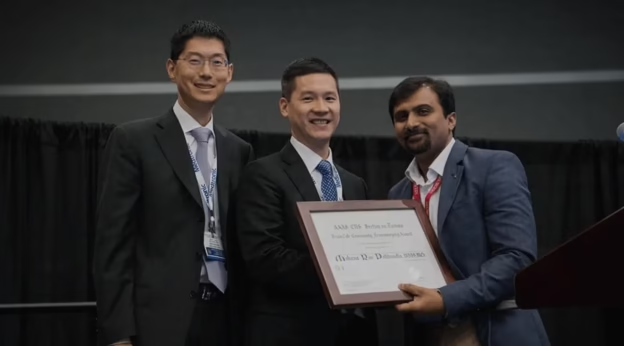
Dr Rao receiving the best minimally invasive neurosurgeon, spine surgeon and Stereotactic Neurosurgeon at APJ Abdul kalam Inspiration awards

Dr. Mohana Rao Patibandla Honored with Best Minimally Invasive Neurosurgeon Award 2025

Dr Mohana Rao Patibandla – Best Minimally Invasive Neurosurgeon Award

🏅 Dr. Mohana Rao Patibandla Honoured with Best Minimally Invasive Neurosurgeon Award at Abdul Kalam Inspiration Awards 2025

New Delhi, October 09, 2025:
In a proud moment for the field of neurosurgery, renowned neurosurgeon Dr. Mohana Rao Patibandla has been honoured with the Best Minimally Invasive Neurosurgeon, Spine Surgeon & Stereotactic Neurosurgeon award at the Dr. A.P.J. Abdul Kalam Inspiration Awards 2025.

The prestigious award ceremony was organized by Topnotch Foundation and held at Hotel The LaLiT, New Delhi, on October 09, 2025. The event was attended by several dignitaries, including Brij Bhushan and Bollywood actor Randeep Hooda, who felicitated the awardees.


🌿 Recognizing Excellence in Neurosurgery

Dr. Mohana Rao Patibandla was selected for this award in recognition of his contributions to minimally invasive brain and spine surgery, as well as stereotactic neurosurgical techniques in India.

Minimally invasive neurosurgery is a modern surgical approach that uses smaller incisions, precision imaging, and advanced navigation technology to operate on complex brain and spine conditions. This method reduces pain, blood loss, and recovery time for patients while ensuring safer and more accurate outcomes.

Dr. Patibandla’s work has played a key role in bringing advanced neurosurgical techniques to Andhra Pradesh and making high-precision brain and spine surgery accessible to patients across India and overseas.


📍 Event Details

  • Award: Best Minimally Invasive Neurosurgeon, Spine Surgeon & Stereotactic Neurosurgeon

  • Event: Dr. A.P.J. Abdul Kalam Inspiration Awards 2025

  • Organizer: Topnotch Foundation

  • Venue: Hotel The LaLiT, New Delhi

  • Date: October 09, 2025


🧠 The Importance of Minimally Invasive and Stereotactic Neurosurgery

Minimally invasive neurosurgery is transforming how brain and spine disorders are treated worldwide. By combining endoscopic or keyhole access with advanced surgical tools and real-time navigation, surgeons can address conditions like:

  • Skull base tumors and pituitary lesions

  • Trigeminal neuralgia and movement disorders

  • Aneurysms and AVMs (selected cases)

  • Degenerative spine diseases

Stereotactic neurosurgery allows neurosurgeons to precisely target deep-seated lesions in the brain or spine, often without the need for a traditional open craniotomy. This approach can minimize complications and speed up recovery.

Dr. Patibandla’s expertise in these fields has positioned him among the leading minimally invasive neurosurgeons in India, setting new standards of excellence.


🏥 A Collective Achievement

Upon receiving the award, Dr. Patibandla expressed gratitude to his entire clinical and surgical team, stating that such recognition is the result of multidisciplinary collaboration — involving skilled neurosurgeons, anesthesiologists, radiologists, neuro-ICU staff, and intraoperative neuro-monitoring experts.

He emphasized that this achievement not only celebrates individual excellence but also reflects the strength of India’s growing neurosurgical capabilities.


❓ FAQs

Q: What award did Dr. Mohana Rao Patibandla receive in 2025?
A: He received the Best Minimally Invasive Neurosurgeon, Spine Surgeon & Stereotactic Neurosurgeon award at the Dr. A.P.J. Abdul Kalam Inspiration Awards 2025.

Q: Where was the award ceremony held?
A: The ceremony was held at Hotel The LaLiT, New Delhi.

Q: Who organized the event?
A: The awards were organized by Topnotch Foundation.

Q: What is minimally invasive neurosurgery?
A: It’s a surgical technique that uses small incisions, endoscopic or image-guided tools, and advanced technology to treat brain and spine conditions with less pain, reduced recovery time, and greater precision.


🌐 About Dr. Rao’s Hospital

Dr. Rao’s Hospital in Guntur, Andhra Pradesh, is one of India’s leading centres for brain, spine and nerve care. Under the leadership of Dr. Mohana Rao Patibandla, the hospital has established itself as a hub for advanced neurosurgical services including minimally invasive brain and spine surgery, skull base procedures, stereotactic radiosurgery, and functional neurosurgery.

📍 12-19-67, Old Bank Road, Kothapet, Guntur, Andhra Pradesh
📞 +91 90100 56444
🌐 www.drraoshospitals.com
📧 info@drraoshospitals.com

🏅 అబ్దుల్ కలాం ఇన్‌స్పిరేషన్ అవార్డ్స్–2025లో డా. మోహనరావు పతిబండ్లకు “బెస్ట్ మినిమలీ ఇన్వేసివ్ న్యూరోసర్జన్” గౌరవం

న్యూ ఢిల్లీ, అక్టోబర్ 09, 2025:
భారత వైద్య రంగానికి గర్వకారణమైన ఘట్టంగా గుంటూరుకు చెందిన ప్రఖ్యాత న్యూరోసర్జన్ డా. మోహనరావు పతిబండ్లకు ఈ ఏడాది “బెస్ట్ మినిమలీ ఇన్వేసివ్ న్యూరోసర్జన్, స్పైన్ సర్జన్ & స్టీరియోటాక్టిక్ న్యూరోసర్జన్” అవార్డు లభించింది.

ఈ గౌరవాన్ని టాప్‌నాచ్ ఫౌండేషన్ ఆధ్వర్యంలో జరిగిన డా. ఏ.పి.జె. అబ్దుల్ కలాం ఇన్‌స్పిరేషన్ అవార్డ్స్ 2025 కార్యక్రమంలో ప్రదానం చేశారు. అవార్డు వేడుక న్యూ ఢిల్లీలోని హోటల్ ది లలిత్లో అక్టోబర్ 09న జరిగింది. కార్యక్రమానికి ప్రముఖులు బ్రిజ్ భూషణ్ మరియు బాలీవుడ్ నటుడు రందీప్ హుడా హాజరయ్యారు.


🌿 న్యూరోసర్జరీలో విశిష్ట కృషికి గుర్తింపు

డా. మోహనరావు పతిబండ్ల ఈ అవార్డును పొందడానికి ప్రధాన కారణం — ఆయన మినిమలీ ఇన్వేసివ్ బ్రెయిన్, స్పైన్ సర్జరీలు మరియు స్టీరియోటాక్టిక్ న్యూరోసర్జరీ రంగంలో చేసిన విశేష కృషి.

మినిమలీ ఇన్వేసివ్ న్యూరోసర్జరీ అనేది ఆధునిక శస్త్రచికిత్సా పద్ధతి. ఇది చిన్న చీలికల ద్వారా, అధునాతన ఇమేజింగ్ మరియు నావిగేషన్ టెక్నాలజీతో క్లిష్టమైన మెదడు, వెన్నెముక సమస్యలను తక్కువ నొప్పితో, తక్కువ కోలుకునే సమయంతో చికిత్స చేసే విధానం.

ఈ సాంకేతికతను ఆంధ్రప్రదేశ్‌లో విస్తృతంగా అందుబాటులోకి తీసుకురావడంలో డా. పతిబండ్ల కీలక పాత్ర పోషించారు.


📍 అవార్డు వివరాలు

  • అవార్డు పేరు: బెస్ట్ మినిమలీ ఇన్వేసివ్ న్యూరోసర్జన్, స్పైన్ సర్జన్ & స్టీరియోటాక్టిక్ న్యూరోసర్జన్

  • ఈవెంట్: డా. ఏ.పీ.జె. అబ్దుల్ కలాం ఇన్‌స్పిరేషన్ అవార్డ్స్ 2025

  • నిర్వాహకులు: టాప్‌నాచ్ ఫౌండేషన్

  • స్థలం: హోటల్ ది లలిత్, న్యూ ఢిల్లీ

  • తేదీ: అక్టోబర్ 09, 2025


🧠 మినిమలీ ఇన్వేసివ్ & స్టీరియోటాక్టిక్ న్యూరోసర్జరీ ప్రాముఖ్యత

మినిమలీ ఇన్వేసివ్ న్యూరోసర్జరీ ప్రస్తుతం ప్రపంచవ్యాప్తంగా మెదడు, వెన్నెముక శస్త్రచికిత్సల్లో కీలక పాత్ర పోషిస్తోంది. ఇది చిన్న చీలికలతో, ఆధునిక పరికరాలు మరియు ఇమేజింగ్ టెక్నాలజీ సహాయంతో నిర్వహించే పద్ధతి. దీని ద్వారా రోగుల కోలుకునే సమయం తక్కువగా ఉండి, సంక్లిష్టతలు తగ్గుతాయి.

ఈ పద్ధతిని ఎక్కువగా క్రింది పరిస్థితులలో ఉపయోగిస్తారు:

  • స్కల్ బేస్ ట్యూమర్లు, పిట్యూటరీ ట్యూమర్లు

  • ట్రైజెమినల్ న్యూరాల్జియా మరియు మువ్మెంట్ డిజార్డర్స్

  • కొన్ని రకాల AVMs మరియు అన్యూరిజమ్స్

  • వెన్నెముక సమస్యలు (డిజెనరేటివ్ స్పైన్)

స్టీరియోటాక్టిక్ న్యూరోసర్జరీ ద్వారా మెదడులో లోతుగా ఉన్న గాయాలను అత్యంత ఖచ్చితంగా లక్ష్యంగా చేసుకుని శస్త్రచికిత్స చేయవచ్చు. దీని వల్ల రోగి రికవరీ వేగంగా జరుగుతుంది మరియు సమస్యలు తగ్గుతాయి.


🏥 ఇది బృంద విజయం కూడా

ఈ గౌరవాన్ని స్వీకరిస్తూ డా. మోహనరావు పతిబండ్ల మాట్లాడుతూ — ఈ విజయానికి వెనుక మొత్తం వైద్య బృందం కృషి ఉందని చెప్పారు. న్యూరోసర్జన్స్, అనస్థీషియా టీమ్, రేడియాలజీ విభాగం, న్యూరో-ఐసీయూ మరియు ఇన్‌ట్రా ఆపరేటివ్ మానిటరింగ్ నిపుణుల సహకారంతో ఇది సాధ్యమైందని ఆయన తెలిపారు.

అలాగే, ఇటువంటి అవార్డులు వ్యక్తిగత విజయమే కాకుండా భారత వైద్య రంగం ఎదుగుదలకు గుర్తింపుగా భావించవచ్చని చెప్పారు.


❓ తరచుగా అడిగే ప్రశ్నలు (FAQ)

ప్రశ్న: డా. మోహనరావు పతిబండ్ల ఏ అవార్డు అందుకున్నారు?
సమాధానం: ఆయన “బెస్ట్ మినిమలీ ఇన్వేసివ్ న్యూరోసర్జన్, స్పైన్ సర్జన్ & స్టీరియోటాక్టిక్ న్యూరోసర్జన్” అవార్డును అబ్దుల్ కలాం ఇన్‌స్పిరేషన్ అవార్డ్స్ 2025లో అందుకున్నారు.

ప్రశ్న: ఈ అవార్డు కార్యక్రమం ఎక్కడ జరిగింది?
సమాధానం: న్యూ ఢిల్లీలోని హోటల్ ది లలిత్‌లో జరిగింది.

ప్రశ్న: ఎవరు ఈ కార్యక్రమాన్ని నిర్వహించారు?
సమాధానం: టాప్‌నాచ్ ఫౌండేషన్ ఈ కార్యక్రమాన్ని నిర్వహించింది.

ప్రశ్న: మినిమలీ ఇన్వేసివ్ న్యూరోసర్జరీ అంటే ఏమిటి?
సమాధానం: ఇది చిన్న చీలికల ద్వారా ఆధునిక పరికరాలతో మెదడు మరియు వెన్నెముక సమస్యలను చికిత్స చేసే పద్ధతి. దీని వల్ల నొప్పి తక్కువగా ఉండి, కోలుకునే సమయం వేగంగా ఉంటుంది.


🌐 డా. రావు హాస్పిటల్ గురించి

గుంటూరులోని డా. రావు హాస్పిటల్‌లో మెదడు, వెన్నెముక, నాడీ సంబంధిత వ్యాధుల కోసం ఆధునిక వైద్య సేవలు అందుబాటులో ఉన్నాయి. డా. మోహనరావు పతిబండ్ల నేతృత్వంలో ఈ ఆసుపత్రి మినిమలీ ఇన్వేసివ్ న్యూరోసర్జరీ, స్కల్ బేస్ సర్జరీలు, స్టీరియోటాక్టిక్ రేడియోసర్జరీ మరియు ఫంక్షనల్ న్యూరోసర్జరీలో ప్రత్యేక గుర్తింపు సాధించింది.

📍 చిరునామా: 12-19-67, ఓల్డ్ బ్యాంక్ రోడ్, కోతపేట, గుంటూరు, ఆంధ్రప్రదేశ్
📞 ఫోన్: +91 90100 56444
🌐 వెబ్‌సైట్: www.drraoshospitals.com
📧 info@drraoshospitals.com

with alt image, caption, description and name of the image

Understanding Epilepsy: Expert Insights from Dr. Rao

Understanding Epilepsy: Expert Insights from Dr. Rao’s Hospital

Epilepsy is a neurological disorder affecting millions worldwide, and finding expert care is crucial for managing it effectively. At Dr. Rao’s Hospital in Guntur, Andhra Pradesh, Dr. Mohana Rao Patibandla, a renowned neurosurgeon, leads a team dedicated to providing world-class epilepsy treatment. This blog answers common questions about epilepsy, including who it affects, its causes, driving regulations, symptoms that impair driving, risks of seizures while driving, safety tips, and liability in car accidents. Whether you’re seeking answers for yourself or a loved one, Dr. Rao’s Hospital is here to guide you toward a seizure-free life.

Who is Affected by Epilepsy?

Epilepsy can impact anyone, regardless of age, gender, or background. It affects approximately 65 million people globally, with about 1.1% of U.S. adults living with the condition. At Dr. Rao’s Hospital, we see a diverse range of patients, from children to seniors, seeking advanced epilepsy care.

  • Children: Epilepsy is common in minors, with over 450,000 U.S. children diagnosed.

  • Seniors: Adults over 60 are at higher risk due to age-related brain changes or complications like stroke.

  • Family History: Those with a family history of epilepsy may have an increased risk.

  • Other Groups: Males and females of all races and ethnicities are equally susceptible.

Dr. Mohana Rao Patibandla, recognized as one of India’s top epilepsy specialists, emphasizes personalized care to help patients manage their condition effectively.

Causes of Epilepsy

Epilepsy results from abnormal brain activity, leading to seizures. While the exact cause varies, Dr. Rao’s team uses state-of-the-art diagnostics to identify triggers and tailor treatments. Common causes include:

  • Genetic Factors: Inherited conditions or gene mutations can predispose individuals to epilepsy.

  • Brain Injuries: Traumatic brain injuries, concussions, or head trauma may trigger seizures.

  • Infections: Conditions like meningitis or encephalitis can cause epilepsy.

  • Stroke or Tumors: Vascular issues or brain tumors can disrupt normal brain function.

  • Developmental Disorders: Autism or other neurodevelopmental conditions may increase epilepsy risk.

  • Unknown Causes: In many cases, no specific cause is identified, requiring specialized evaluation.

At Dr. Rao’s Hospital, our Epilepsy Monitoring Unit (EMU) provides precise diagnostics to pinpoint causes, enabling targeted treatments like medication or minimally invasive surgery.

Laws and Regulations for Driving with Epilepsy

Driving with epilepsy involves strict regulations to ensure public safety, varying by region. In India, the Motor Vehicles Act 1988 currently prohibits individuals with epilepsy from obtaining a driver’s license, regardless of seizure frequency or control. In contrast, other countries have more flexible guidelines:

  • United States: Most states require a seizure-free period of 3–12 months, often with a doctor’s recommendation confirming seizure control. For example, Texas mandates a 3-month seizure-free period and a stable treatment plan.

  • Australia: A 6–12 month seizure-free period is typically required.

  • Exceptions: Some regions allow driving for those with nocturnal seizures, prolonged auras, or focal aware seizures that don’t impair consciousness, subject to medical evaluation.

Dr. Rao advises patients to consult local driving authorities and their neurologist to understand specific regulations. Noncompliance can lead to legal consequences, including license suspension.

Symptoms of Epilepsy That Can Impair Driving Abilities

Certain epilepsy symptoms can significantly affect driving safety. Dr. Mohana Rao Patibandla highlights the following symptoms that may impair driving:

  • Loss of Consciousness: Common in generalized seizures, this can cause a complete inability to control a vehicle.

  • Muscle Spasms or Jerking: Uncontrollable movements in arms or legs during seizures can hinder steering or braking.

  • Focal Impaired Awareness Seizures: These cause confusion, disorientation, or memory lapses, making it unsafe to respond to road conditions.

  • Auras: Sensory disturbances like tingling or hallucinations may signal an impending seizure, requiring drivers to pull over immediately.

  • Post-Seizure Effects: Fatigue, headaches, or nausea after a seizure can reduce alertness and reaction times.

At Dr. Rao’s Hospital, our team uses advanced testing, such as video-EEG monitoring, to assess how seizures affect patients, helping them make informed decisions about driving.

What Happens if a Seizure Occurs While Driving?

A seizure while driving can have severe consequences, posing risks to the driver, passengers, and others on the road. Potential outcomes include:

  • Loss of Vehicle Control: A seizure can lead to crashes with fixed objects, other vehicles, or pedestrians, causing property damage, injuries, or fatalities. Studies show 52% of epilepsy-related crashes involve single vehicles, often hitting fixed objects.

  • Legal Repercussions: Driving against medical advice or without reporting seizures to the DMV can result in fines, license suspension, or criminal charges if injuries occur.

  • Injury or Death: Seizure-related accidents can lead to life-altering injuries or, in rare cases, death for those involved.

If a seizure occurs while driving, Dr. Rao recommends:

  1. Pull Over Safely: If an aura is felt, stop the vehicle in a safe location immediately.

  2. Contact Emergency Services: Ensure safety and seek medical attention.

  3. Consult Your Doctor: Schedule a follow-up to reassess treatment and driving eligibility.

Safety Tips for Driving with Epilepsy

For individuals with epilepsy whose seizures are well-controlled, driving may be possible with precautions. Dr. Mohana Rao Patibandla and the team at Dr. Rao’s Hospital offer these safety tips:

  • Adhere to Medication: Take anti-seizure drugs as prescribed to maintain control. Noncompliance increases seizure risk.

  • Track Seizure Triggers: Keep a seizure diary to identify and avoid triggers like stress, sleep deprivation, or alcohol.

  • Regular Medical Checkups: Visit your neurologist to monitor seizure control and adjust treatment as needed.

  • Avoid Driving if Symptomatic: Refrain from driving if you experience auras, fatigue, or recent seizures.

  • Know Your Limits: Avoid driving during high-risk situations, such as after medication changes or during periods of stress.

  • Create a Seizure Action Plan: Share a plan with family or coworkers to manage seizures safely.

Dr. Rao’s Hospital provides comprehensive support, including counseling and minimally invasive epilepsy surgery, to help patients achieve seizure control and safely regain independence.

Liability in Car Accidents Involving Epilepsy

Liability in epilepsy-related car accidents depends on local laws and the driver’s compliance with regulations. Key considerations include:

  • Failure to Report: Not informing the DMV or driving against medical advice can lead to civil or criminal liability, especially if injuries occur.

  • Insurance Issues: Insurance companies may deny coverage for accidents during a seizure if the driver concealed their condition or was noncompliant with treatment.

  • Negligence: Drivers who knowingly drive with uncontrolled seizures may face lawsuits for negligence, particularly if they cause harm.

Dr. Rao advises patients to be transparent with their doctor and DMV to minimize legal risks. Proper documentation of seizure-free periods and medical clearance can protect against liability.

Why Choose Dr. Rao’s Hospital for Epilepsy Care?

Dr. Rao’s Hospital in Guntur is a Level 4 epilepsy center, accredited for its advanced resources and expertise in managing complex epilepsy cases. Led by Dr. Mohana Rao Patibandla, a top neurosurgeon in India, our hospital offers:

  • Cutting-Edge Technology: State-of-the-art Epilepsy Monitoring Units (EMUs) and minimally invasive surgical options.

  • Personalized Care: Tailored treatment plans, from medication to advanced procedures like vagus nerve stimulation or deep brain stimulation (DBS).

  • Affordable Treatment: Transparent pricing and medical tourism options for international patients.

  • Expert Team: A multidisciplinary approach with neurologists, neurosurgeons, and neuro-rehabilitation specialists.

Book an appointment today at Dr. Rao’s Hospital to explore the best epilepsy treatment options and regain control of your life. Visit drraoshospitals.com or contact us for a consultation.

Conclusion

Epilepsy is a manageable condition with the right care and precautions. At Dr. Rao’s Hospital, Dr. Mohana Rao Patibandla and his team are committed to helping patients achieve seizure control and navigate challenges like driving safely. By understanding who epilepsy affects, its causes, driving regulations, impairing symptoms, risks, safety tips, and liability concerns, patients can make informed decisions. Trust Dr. Rao’s Hospital for expert epilepsy care and a path to a seizure-free life.

A confident male doctor in white coat and stethoscope standing in a modern operation theater with the text "Best Spine Surgeon in India" alongside a spine illustration.

Who is the Best Spine Surgeon in India?

Who is the Best Spine Surgeon in India?

India has emerged as a global hub for medical tourism, especially for those seeking the best spine surgeon in India for complex procedures like spine surgery. Equipped with world-class hospitals, cutting-edge technology, and highly skilled best surgeons for back surgery, India provides top-tier care at a fraction of the cost compared to Western nations. However, choosing the best surgeons for back surgery depends on factors such as expertise, experience, patient outcomes, and specialization in specific spinal conditions. This blog explores some of India’s most renowned spine surgeons, their credentials, and what makes them stand out, while acknowledging that the “best” choice varies based on individual needs.

Why Spine Surgery Requires the Best Expertise

Spine surgery is a highly specialized field involving delicate structures like the spinal cord, nerves, and vertebrae. Procedures range from minimally invasive discectomies to complex spinal deformity corrections like scoliosis surgery. Only the best surgeons for back surgery can significantly impact recovery, reduce risks, and improve quality of life. When searching for the best spine surgeons in india, it’s essential to evaluate their training, success rates, and patient testimonials. Choosing the best spine surgeon in India ensures not only surgical expertise but also personalized care tailored to specific spinal conditions.

  • Experience: Number of surgeries performed and success rates.

  • Specialization: Expertise in specific procedures (e.g., minimally invasive surgery, robotic-assisted surgery, or pediatric spine disorders).

  • Training: International fellowships and certifications from prestigious institutions.

  • Patient Reviews: Testimonials and outcomes reflecting patient satisfaction.

  • Hospital Affiliation: Access to advanced technology like neuromonitoring, O-arm, or robotic systems.

Best Spine Surgeon in India

Below is a curated list of some of India’s best surgeons for back surgery, recognized for their expertise, innovation, and patient-centric care. This list of best spine doctor in India is not exhaustive, and the “best” surgeon depends on your specific condition and location preferences.

Explore: Best spine surgeon in Ongole | Best spine surgeon in Nellore | best spine surgeon in Vijayawada | Best spine surgeon in Visakhapatnam

1. Dr. Mohana Rao Patibandla

  • Location: Dr. Rao’s Hospital, Guntur, Andhra Pradesh

  • Experience: Over 21 years, with more than 10,000 spine surgeries.

  • Credentials:

    • MBBS, MCh (Neurosurgery).

    • Multiple international fellowships, including minimally invasive spine surgery.

  • Specializations: minimally invasive spine surgery, endoscopic spine procedures, and complex spinal reconstructions.

  • Why Stand Out?: Dr. Rao is recognized in major publications like The Times of India for his minimally invasive techniques, makinh him the best spine surgeons in India. His hospital is a preferred destination for affordable, high-quality spine care, especially for international patients.

2. Dr. Hitesh Garg

  • Location: Artemis Hospital, Gurgaon, Delhi NCR

  • Experience: Over 23 years, with more than 8,800 spine surgeries, including 2,500 spinal fusions, 1,000 deformity corrections, and 300 artificial disc replacements making him the best spine doctor India.

  • Credentials:

    • MBBS from AIIMS, New Delhi; MS (Orthopedics) from KEM Hospital, Mumbai.

    • Fellowships in spine surgery from Yale University and pediatric spine surgery from the University of Pennsylvania, USA.

  • Specializations: Minimally invasive spine surgery, scoliosis correction, cervical spine surgery, and pediatric spine disorders.

  • Why Stand Out?: Dr. Garg is One of the best doctor for spine surgery in India for using advanced technologies like neuromonitoring and O-arm navigation. He has received awards like the 2018 Healthcare Today “Best Spine Surgeon of the Year” and is praised for his patient-centric approach, making him a top choice for complex cases.

3. Dr. G. Balamurali

  • Location: Kauvery Hospital, Chennai

  • Experience: 27 years of surgical experience, with thousands of spine and neurosurgery procedures.

  • Credentials:

    • MBBS, MRCS (Edinburgh), MD (UK), FRCS (Neurosurgery).

    • Fellowships in complex spine surgery and minimally invasive techniques.

  • Specializations: Minimally invasive spine surgery, spinal deformity corrections, and neuro-oncology.

  • Why Stand Out?: Dr. Balamurali is celebrated for his innovative approaches and dedication to advancing spine surgery in India. His international training and academic contributions, including publications and textbook chapters, make him the best surgeons for back surgery.

4. Dr. Sajan K. Hegde

  • Location: Apollo Hospitals, Chennai

  • Experience: Over 44 years, with a focus on advanced spinal procedures.

  • Credentials:

    • MBBS, MS (Orthopedics).

    • Pioneer in robotic-assisted spine surgery in the Asia-Pacific.

  • Specializations: Robotic-assisted spine surgery, non-fusion scoliosis correction, and spinal deformity treatment.

  • Why Stand Out?: Dr. Hegde is the best doctor for spine surgery in india performing non-fusion scoliosis correction, preserving spinal mobility. His expertise in robotic surgery ensures precision and faster recovery, making him a trailblazer in spinal care.

5. Dr. Sandeep Vaishya

  • Location: Fortis Memorial Research Institute, Gurgaon

  • Experience: Over 36 years, with more than 15,000 brain and spine surgeries.

  • Credentials:

    • MBBS, MS, MCh (Neurosurgery).

    • Fellowship in minimally invasive and image-guided neurosurgery.

  • Specializations: Minimally invasive spine surgery, Gamma Knife surgery, and brachial plexus injuries.

  • Why Stand Out?: Dr. Vaishya’s vast surgical experience and international patient base (from over 110 countries) highlight his global reputation. His focus on minimally invasive techniques reduces recovery time and complications.

Explore More: Neurologist in Guntur  | Neurosurgeon in Tenali | Spine Surgery in Narasaraopet | Neurologist in Mumbai

Factors to Consider When Choosing Best Doctor for Spine Surgery in India

  1. Condition-Specific Expertise: Ensure the surgeon specializes in your condition (e.g., herniated disc, scoliosis, or spinal tumors). For instance, Dr. Hegde excels in scoliosis, while Dr. Garg is ideal for pediatric cases as the best spine doctor in India.

  2. Hospital Infrastructure: Best surgeons for back surgery are affiliated with hospitals equipped with advanced tools like robotic systems (e.g., Apollo Hospitals, Artemis Hospital, Ganga Hospital).

  3. Location: Best doctor for spine surgery in india are spread across cities like Delhi, Mumbai, Chennai, and Bangalore. Choose a location convenient for travel and follow-up care.

  4. Cost: Spine surgery in India is cost-effective, ranging from $5,000–$15,000 compared to $50,000–$100,000 in the US. Confirm costs with the hospital or medical tourism agencies like Dheeraj Bojwani Consultants.

  5. Patient Reviews and Referrals: Check testimonials on hospital websites or platforms like Credihealth. Personal referrals from past patients can also guide your choice.

Why Choose the Best Spine Surgeon in India for Your Surgery?

India’s rise as a medical tourism destination is driven by:

  • Affordable Care: Costs are 60–80% lower than in Western countries.

  • World-Class Facilities: Hospitals like Apollo, Max, and Ganga use cutting-edge technology, including BrainLab CT AIRO navigation and 3rd-generation spinal implants.

  • Highly Trained Surgeons: Many surgeons have international training from institutions in the US, UK, and Canada.

  • Comprehensive Support: Medical tourism firms assist with visas, accommodations, and post-operative care, ensuring a seamless experience.

How to Choose the Best Surgeons for Back Surgery in India

  • Consult Multiple Surgeons: Schedule video consultations with best spine surgeons in India to discuss your case. Many hospitals, like Max Healthcare, offer this service.

  • Review Credentials: Verify training, fellowships, and awards. For example, Dr. Yash Gulati, another notable surgeon, received the Padma Shri for his contributions.

  • Ask About Techniques: Inquire whether the surgeon uses minimally invasive or robotic methods, which reduce recovery time.

  • Check Hospital Reputation: Opt for accredited hospitals like Ganga Hospital, recognized as a top spine surgery center in Asia.

Conclusion

Determining the best spine doctor India depends on your specific condition, budget, and location preferences. Surgeons like Dr. Hitesh Garg, Dr. G. Balamurali, Dr. Sajan K. Hegde, Dr. Sandeep Vaishya, and Dr. Mohana Rao Patibandla are among the finest and best doctor for spine surgery in India, each excelling in different aspects of spine surgery. Research their expertise, consult with them, and choose a surgeon affiliated with a reputable hospital to ensure the best outcome and find the best spine doctor in India.

For further assistance, contact medical tourism agencies like IndiCure Health Tours or Dheeraj Bojwani Consultants, which connect patients with top hospitals and the best spine surgeons in India for their needs. Take the first step toward a pain-free life by reaching out to one of these experts today.

Disclaimer: Always consult a healthcare professional for personalized advice. This blog is for informational purposes only and does not endorse any specific surgeon.

Deep Brain Stimulation: Revolutionizing the Treatment of Movement Disorders

Deep Brain Stimulation: Transforming Lives with Advanced Neurosurgery

Deep Brain Stimulation: Transforming Lives with Advanced Neurosurgery—Dr. Rao at Dr. Rao’s Hospital

At the forefront of medical innovation, Dr. Rao and his team at Dr. Rao’s Hospital in Guntur, Andhra Pradesh, are pioneering advanced treatments for movement disorders through Deep Brain Stimulation (DBS). This revolutionary procedure has emerged as a beacon of hope for patients grappling with conditions like Parkinson’s disease, dystonia, and essential tremor.

Understanding Deep Brain Stimulation:

Deep Brain Stimulation is a cutting-edge neurosurgical technique that involves implanting electrodes into specific areas of the brain. These electrodes are connected to a small device called a neurostimulator, which is implanted under the skin, usually near the collarbone. The neurostimulator sends electrical impulses to the targeted brain regions, helping to regulate abnormal signals and alleviate symptoms.

The DBS Procedure:

  1. Pre-Surgical Evaluation: Dr. Rao conducts a comprehensive evaluation to determine if DBS is suitable for the patient. This includes neurological assessments, imaging studies, and discussions about the patient’s medical history and treatment goals.
  2. Surgical Planning: Precision is paramount in DBS. Using advanced imaging techniques, Dr. Rao meticulously plans the surgery to ensure accurate electrode placement. The goal is to target specific brain regions that control movement and other functions.
  3. Implantation: During the procedure, Dr. Rao implants the electrodes into the brain through small openings in the skull. The patient may be awake during part of the surgery to provide feedback, ensuring optimal electrode placement. The neurostimulator is then implanted under the skin.
  4. Programming and Follow-Up: After surgery, the neurostimulator is programmed to deliver the appropriate electrical impulses. Dr. Rao and his team provide ongoing support and adjustments to optimize the patient’s outcomes.

Life-Changing Benefits:

For many patients, DBS has been a life-altering treatment. It can significantly reduce symptoms such as tremors, stiffness, and difficulty with movement. Patients often experience improved quality of life, greater independence, and renewed hope for the future.

Meet Dr. Rao – A Pioneer in Neurosurgery:

Dr. Mohana Rao Patibandla is a highly respected neurosurgeon with extensive expertise in minimally invasive techniques. His commitment to patient care and surgical excellence has made him a trusted name in the field. At Dr. Rao’s Hospital, he leads a dedicated team that is passionate about delivering world-class medical care. According to The Times of India coverage.

Why Choose Dr. Rao’s Hospital?

  • State-of-the-Art Facilities: Dr. Rao’s Hospital is equipped with the latest technology and advanced surgical tools, ensuring the highest standards of care.
  • Personalized Care: Every patient is treated with compassion and respect, receiving individualized attention and support throughout their treatment journey.
  • Multidisciplinary Approach: Collaboration among specialists in neurology, neurosurgery, and rehabilitation ensures comprehensive care for each patient.

Contact Dr. Rao’s Hospital:

Discover the transformative power of Deep Brain Stimulation with Dr. Rao. Take the first step towards a brighter future and schedule your consultation today.

Epilepsy surgery by Dr Rao at Dr Rao's Hospital, ECOG based

Epilepsy Surgery: Advanced Treatment in Guntur

Epilepsy Surgery: Advanced Treatment in Guntur

Epilepsy is a neurological disorder characterized by recurrent seizures. When medications fail to control seizures, epilepsy surgery may be an effective treatment option. At Dr. Rao’s Hospital in Guntur, Dr. Mohana Rao Patibandla, a renowned minimally invasive neurosurgeon, performs advanced epilepsy surgeries to help patients achieve better seizure control and improve their quality of life.

Understanding Epilepsy Surgery

Epilepsy surgery aims to remove or alter the area of the brain where seizures originate. This procedure is considered when patients do not respond to anti-epileptic drugs and experience frequent, debilitating seizures. There are several types of epilepsy surgeries, including resective surgery, laser interstitial thermal therapy (LITT), and responsive neurostimulation (RNS). In a recent mayoclinic.

Why Choose Dr. Rao’s Hospital for Epilepsy Surgery?

  • Expertise: Dr. Mohana Rao Patibandla is a highly experienced neurosurgeon specializing in minimally invasive techniques for treating complex neurological conditions.
  • Advanced Technology: Our hospital has state-of-the-art surgical tools and imaging systems, ensuring precise and effective treatment.
  • Patient-Centered Care: We provide personalized care tailored to each patient’s unique needs, ensuring optimal outcomes and a smooth recovery process.

The Epilepsy Surgery Procedure

  1. Pre-Operative Assessment: A comprehensive evaluation using advanced imaging techniques (MRI, PET scans) and electroencephalography (EEG) to pinpoint the seizure focus.
  2. Surgical Process: The patient is anesthetized, and the neurosurgeon performs the selected surgical technique, such as removing the epileptogenic zone or using laser therapy to ablate the problematic area.
  3. Post-Operative Care: The patient is monitored for recovery, focusing on seizure control, pain management, and rehabilitation to restore normal function.

Types of Epilepsy Surgery

Epileptic seizures occur due to irregular activity in specific brain cells called neurons. The type of surgery used to treat epileptic seizures depends on the area of the brain where the seizures originate and the age of the patient. The different types of epilepsy surgeries include:

Resective Surgery

This is the most common type of epilepsy surgery. During this procedure, the surgeon removes brain tissue from the area where seizures occur, which may be the site of a tumor or brain injury. Resective surgery most often targets the temporal lobes, which control visual memory, language comprehension, and emotions.

Laser Interstitial Thermal Therapy (LITT)

LITT is a less invasive procedure than resective surgery. It uses a laser to target and destroy a small portion of brain tissue precisely. Magnetic resonance imaging (MRI) guides the surgeon’s laser to ensure accuracy.

Deep Brain Stimulation

This procedure involves implanting electrodes deep within the brain. A device similar to a pacemaker is placed under the skin in the chest, and a wire connects this device to the electrodes in the brain. The electrodes send electrical impulses to disrupt seizure-causing activity. Like LITT, this procedure is guided by MRI.

Corpus Callosotomy

This surgery involves wholly or partially severing the part of the brain that connects the right and left hemispheres, called the corpus callosum. It is often performed on children who experience irregular brain activity that spreads from one side of the brain to another.

Check out – Spine surgery in Guntur | Ataxia treatment in Guntur | Image-Guided Surgery in Guntur | Craniopharyngioma in Guntur | Paralysis treatment in Andhra Pradesh | Vascular Malformations | Meningitis Treatment in Guntur

Hemispherectomy

This procedure involves removing one hemisphere of the brain, which includes the cerebral cortex. Hemispherectomy is usually performed on children who have seizures originating from multiple areas within one hemisphere, often due to conditions present at birth or early infancy.

Functional Hemispherectomy

This procedure removes the connecting nerves without extracting actual brain tissue. This surgery is primarily performed on children to minimize the impact on brain function.

Benefits of Epilepsy Surgery

  • Seizure Reduction: Significant decrease in the frequency and severity of seizures.
  • Improved Quality of Life: Enhanced ability to perform daily activities and participate in social and occupational functions.
  • Minimally Invasive Options: Smaller incisions lead to less scarring and quicker recovery times.
  • Increased Independence: Patients often experience greater independence and reduced reliance on anti-epileptic medications.

Recovery and Follow-Up

Recovery from epilepsy surgery involves a brief hospital stay, followed by a tailored rehabilitation program to restore cognitive and physical functions. Regular follow-up appointments are essential to monitor seizure activity and ensure a smooth recovery.

Conclusion

Choosing Dr. Rao’s Hospital in Guntur for your epilepsy surgery ensures access to advanced medical technology and expert surgical care. Dr. Mohana Rao Patibandla and his dedicated team are committed to improving patient outcomes and quality of life through specialized neurological procedures.

SEO Optimized Tags: epilepsy surgery, Dr. Rao’s Hospital Guntur, seizure control surgery, minimally invasive neurosurgery, Dr. Mohana Rao Patibandla, advanced epilepsy treatment, neurological surgery Guntur, seizure reduction, quality of life improvement, expert neurosurgeon Guntur

Dr. Rao’s Contact Information:

chiari-malformations-the-best-treatment-is-at-dr-raos-guntur

Foramen Magnum Decompression: Relieving Skull Pressure at Dr. Rao’s Hospital Guntur

Chiari Decompression Surgery: Relieving Skull Pressure at Dr. Rao’s Hospital Guntur

Meta Description: Learn about Chiari decompression surgery (FMD) at Dr. Rao’s Hospital, Guntur. Dr. Rao relieves brain pressure with Foramen Magnum Decompression.

Chiari Decompression: Relieving Pressure by Removing Bone in the Skull at Dr. Rao’s Hospital Guntur

Foramen Magnum Decompression—also known as Chiari decompression surgery—is a critical procedure aimed at relieving pressure on the brain caused by Chiari malformations. This condition occurs when brain tissue extends into the spinal canal, leading to a range of symptoms such as headaches, neck pain, and balance issues. At Dr. Rao’s Hospital in Guntur, Dr. Mohana Rao Patibandla, a highly skilled minimally invasive neurosurgeon, leads this advanced surgical procedure with precision and expertise, ensuring optimal outcomes for patients.

Understanding Chiari Decompression

Chiari malformations can cause significant discomfort and neurological issues. Chiari decompression surgery involves removing a small section of bone at the back of the skull to enlarge the foramen magnum, thereby reducing pressure on the brain and restoring the normal flow of cerebrospinal fluid. In a recent mayoclinic.

Why Choose Dr. Rao’s Hospital for Chiari Decompression?

  • Expertise: Dr. Mohana Rao Patibandla is a renowned neurosurgeon specializing in minimally invasive techniques for complex brain and spine conditions.
  • Advanced Technology: Our hospital has state-of-the-art surgical tools and imaging systems, ensuring precise and effective treatment.
  • Patient-Centered Care: We provide personalized care tailored to each patient’s unique needs, ensuring the best possible outcomes.

The Chiari Decompression Procedure

  1. Pre-Operative Assessment: Comprehensive evaluation using MRI and CT scans to diagnose the Chiari malformation and plan the surgery accurately.
  2. Surgical Process: The patient is anesthetized, and a small section of bone at the back of the skull is carefully removed. The brain’s covering (dura) may also be opened and expanded with a graft to ensure proper decompression.
  3. Post-Operative Care: The patient is monitored for recovery, focusing on pain management and rehabilitation to restore normal function.

Benefits of Chiari Decompression

  • Symptom Relief: Alleviates headaches, neck pain, balance issues, and other neurological symptoms caused by Chiari malformations.
  • Improved Cerebrospinal Fluid Flow: Restores normal circulation of cerebrospinal fluid, reducing pressure on the brain.
  • Minimally Invasive Options: Smaller incisions lead to less scarring and quicker recovery.
  • Reduced Recovery Time: Patients typically experience faster recovery compared to traditional open surgery.

Recovery and Follow-Up

Recovery from Chiari decompression involves a brief hospital stay, followed by a tailored rehabilitation program to restore strength and function. Regular follow-up appointments are essential to monitor progress and ensure a smooth recovery.

Conclusion

Foramen Magnum Decompression is a specialized surgical procedure primarily used to treat Chiari malformation, a condition where brain tissue extends into the spinal canal. Choosing Dr. Rao’s Hospital in Guntur for your Chiari decompression surgery ensures access to advanced medical technology and expert surgical care. Dr. Mohana Rao Patibandla and his team are dedicated to improving patient outcomes and quality of life through specialized neurological procedures like Foramen Magnum Decompression.

SEO Optimized Tags: Chiari decompression surgery, Dr. Rao’s Hospital Guntur, relieving skull pressure, Chiari malformation treatment, minimally invasive neurosurgery, Dr. Mohana Rao Patibandla, advanced brain surgery Guntur, cerebrospinal fluid flow restoration, headache relief surgery, expert neurosurgeon Guntur

Dr. Rao’s Contact Information:

anterior-cervical-discectomy-and-fusion-acdf-the-best-at-dr-raos-guntur

Anterior Cervical Discectomy: Expert Neck Pain Relief at Dr. Rao’s Hospital Guntur

Anterior Cervical Discectomy: Expert Neck Pain Relief at Dr. Rao’s Hospital Guntur

Meta Description: Learn about anterior cervical discectomy at Dr. Rao’s Hospital in Guntur, performed by Dr. Mohana Rao Patibandla. Discover how this surgery can relieve neck pain caused by herniated discs.

Anterior Cervical Discectomy: Removing Herniated Discs in the Neck at Dr. Rao’s Hospital Guntur

Anterior cervical discectomy is a highly effective surgical procedure aimed at removing herniated discs in the neck to relieve nerve pressure and alleviate pain. At Dr. Rao’s Hospital in Guntur, Dr. Mohana Rao Patibandla, a distinguished minimally invasive neurosurgeon and spine surgeon, performs this procedure with precision and expertise.

Understanding Anterior Cervical Discectomy

A herniated disc in the cervical spine can cause significant pain, numbness, and weakness in the neck, shoulders, and arms. Anterior cervical discectomy involves removing the damaged disc through a small incision in the front of the neck, relieving pressure on the spinal nerves, and restoring normal function.

Why Choose Dr. Rao’s Hospital for Anterior Cervical Discectomy?

  • Expertise: Dr. Mohana Rao Patibandla is a highly experienced neurosurgeon specializing in minimally invasive spine surgery.
  • Advanced Technology: Our hospital has state-of-the-art surgical tools and imaging systems, ensuring precise and effective treatment.
  • Patient-centered Care: We provide personalized care tailored to each patient’s unique needs, ensuring the best possible outcomes.

The Anterior Cervical Discectomy Procedure

  1. Pre-Operative Assessment: Comprehensive evaluation using MRI and CT scans to diagnose the herniated disc and plan the surgery accurately.
  2. Surgical Process: The patient is anesthetized, and a small incision is made in the front of the neck. The herniated disc is carefully removed, and a spinal fusion or artificial disc replacement may be performed to maintain spine stability.
  3. Post-Operative Care: The patient is monitored for recovery, focusing on pain management and rehabilitation to restore strength and function.

Benefits of Anterior Cervical Discectomy

  • Pain Relief: Alleviates chronic neck, shoulder, and arm pain caused by herniated discs.
  • Improved Mobility: Enhances the ability to perform daily activities without discomfort.
  • Minimally Invasive: Smaller incisions lead to less scarring and quicker recovery.
  • Reduced Recovery Time: Patients typically experience faster recovery compared to traditional open surgery.

Recovery and Follow-Up

Recovery from anterior cervical discectomy involves a brief hospital stay, followed by a tailored rehabilitation program to restore spinal strength and flexibility. Regular follow-up appointments are essential to monitor progress and ensure a smooth recovery.

Conclusion

Choosing Dr. Rao’s Hospital in Guntur for your anterior cervical discectomy ensures access to advanced medical technology and expert surgical care. Dr. Mohana Rao Patibandla and his team are dedicated to improving patient outcomes and quality of life through specialized spinal procedures.

SEO Optimized Tags: anterior cervical discectomy, Dr. Rao’s Hospital Guntur, neck pain relief surgery, herniated disc removal, minimally invasive spine surgery, Dr. Mohana Rao Patibandla, advanced spinal surgery Guntur, cervical spine surgery, pain relief surgery, expert neurosurgeon Guntur

Dr. Rao’s Contact Information:

Illustration of a microdiscectomy procedure showing a patient's skull partially opened to expose the brain, performed in a modern operating room.

Microdiscectomy: Relieving Nerve Pressure with Precision at Dr. Rao’s Hospital Guntur

Microdiscectomy: Relieving Nerve Pressure with Precision at Dr. Rao’s Hospital Guntur

Meta Description: Discover the advanced microdiscectomy procedure at Dr. Rao’s Hospital in Guntur, led by Dr. Mohana Rao Patibandla. Learn about this minimally invasive surgery to relieve nerve pressure and improve patient outcomes.

Microdiscectomy: Removing Herniated Disc Fragments to Relieve Nerve Pressure

Microdiscectomy is a minimally invasive surgical procedure that involves removing fragments of a herniated disc to relieve pressure on the spinal nerves. At Dr. Rao’s Hospital in Guntur, Dr. Mohana Rao Patibandla, a renowned neurosurgeon and spine surgeon, performs this procedure with precision and expertise, providing significant relief for patients suffering from debilitating back and leg pain.

Why Choose Dr. Rao’s Hospital for Microdiscectomy?

Dr. Rao’s Hospital offers exceptional care and cutting-edge technology for patients requiring microdiscectomy. Dr. Mohana Rao Patibandla’s extensive experience and dedication to minimally invasive techniques ensure optimal outcomes and faster patient recovery times.

Understanding Microdiscectomy

A herniated disc occurs when the soft inner gel of the disc leaks out and compresses nearby nerves, causing pain and discomfort. Microdiscectomy involves removing the herniated disc fragments to decompress the affected nerves, alleviating pain and improving mobility.

The Microdiscectomy Procedure

  1. Pre-Operative Assessment: Comprehensive evaluation using MRI or CT scans to diagnose the herniated disc and plan the surgery accurately.
  2. Surgical Process: The patient is anesthetized, and a small incision is made to access the spine. The surgeon carefully removes the herniated disc fragments using a microscope or endoscope.
  3. Post-operative Care: The patient is monitored for recovery, emphasizing pain management and rehabilitation to restore strength and function.

Benefits of Microdiscectomy

  • Minimally Invasive: Smaller incisions lead to less scarring and quicker recovery.
  • Pain Relief: Alleviates chronic back and leg pain caused by nerve compression.
  • Improved Mobility: Enhances the ability to perform daily activities without discomfort.
  • Reduced Recovery Time: Patients typically experience faster recovery compared to traditional open surgery.

Recovery and Follow-Up

Recovery from a microdiscectomy involves a brief hospital stay, followed by a tailored rehabilitation program to restore spinal strength and flexibility. Regular follow-up appointments are essential to monitor progress and ensure a smooth recovery.

Conclusion

Choosing Dr. Rao’s Hospital in Guntur for your microdiscectomy ensures access to advanced medical technology and expert surgical care. Dr. Mohana Rao Patibandla and his team are dedicated to improving patient outcomes and quality of life through specialized spinal procedures.

SEO Optimized Tags: Microdiscectomy surgery, Dr. Rao’s Hospital Guntur, herniated disc removal, nerve pressure relief, minimally invasive spine surgery, Dr. Mohana Rao Patibandla, advanced spine surgery Guntur, spinal decompression, pain relief surgery, expert neurosurgeon Guntur

Dr. Rao’s Contact Information:

minimally-invasive-spine-surgery-all-you-need-to-know

Spinal Fusion: Stabilizing Your Spine at Dr. Rao’s Hospital Guntur

Spinal Fusion: Stabilizing Your Spine at Dr. Rao’s Hospital Guntur

Meta Description: Learn about spinal fusion surgery at Dr. Rao’s Hospital in Guntur, led by Dr. Mohana Rao Patibandla. Discover how this procedure stabilizes the spine and improves patient outcomes.

Spinal Fusion: Joining Vertebrae to Stabilize the Spine

Spinal fusion is a surgical procedure designed to join two or more vertebrae, eliminating movement between them and providing stability to the spine. At Dr. Rao’s Hospital in Guntur, Dr. Mohana Rao Patibandla, a highly skilled minimally invasive neurosurgeon and spine surgeon, provides this essential surgery. In a recent mayoclinic.

Why Choose Dr. Rao’s Hospital for Spinal Fusion?

Dr. Rao’s Hospital offers unparalleled expertise and advanced technology, ensuring optimal outcomes for patients requiring spinal fusion. Dr. Mohana Rao Patibandla’s extensive experience in neurosurgery and spine surgery and the hospital’s state-of-the-art facilities guarantee comprehensive and compassionate care.

Understanding Spinal Fusion

Spinal fusion is often recommended for patients suffering from conditions such as degenerative disc disease, scoliosis, spinal stenosis, or spinal fractures. Fusing the affected vertebrae stabilizes the spine, reduces pain, and improves overall function.


Read more:  Spine Surgery in Guntur | Neurologist in Narasaraopet


The Spinal Fusion Procedure

  1. Pre-Operative Assessment: A thorough evaluation, including imaging tests like X-rays, MRIs, and CT scans, to plan the surgery.
  2. Surgical Process: The patient is anesthetized, and an incision is made to access the spine. Bone grafts, metal rods, screws, or cages are used to fuse the vertebrae.
  3. Post-Operative Care: The patient is monitored for recovery, focusing on pain management, physical therapy, and rehabilitation.

Benefits of Spinal Fusion

  • Pain Relief: Alleviates chronic back pain caused by unstable vertebrae.
  • Improved Stability: enhances the structural integrity of the spine.
  • Increased Functionality: Enables better movement and daily activities.
  • Minimally Invasive Options: Reduces recovery time and surgical risks.

Recovery and Follow-Up

Recovery from spinal fusion involves a hospital stay for initial monitoring and a comprehensive rehabilitation program to restore strength and mobility. Regular follow-up appointments are essential to track progress and ensure a smooth recovery.

Conclusion

Choosing Dr. Rao’s Hospital in Guntur for your spinal fusion ensures access to advanced medical technology and expert surgical care. Dr. Mohana Rao Patibandla and his team are dedicated to improving patient outcomes and quality of life through specialized spinal procedures.

SEO Optimized Tags: Spinal fusion surgery, Dr. Rao’s Hospital Guntur, spinal stability, neurosurgery Guntur, Dr. Mohana Rao Patibandla, minimally invasive spine surgery, pain relief spine surgery, degenerative disc disease treatment, scoliosis surgery, advanced spine care Guntur

Dr. Rao’s Contact Information: