Category Archives: Brain hemorrhage

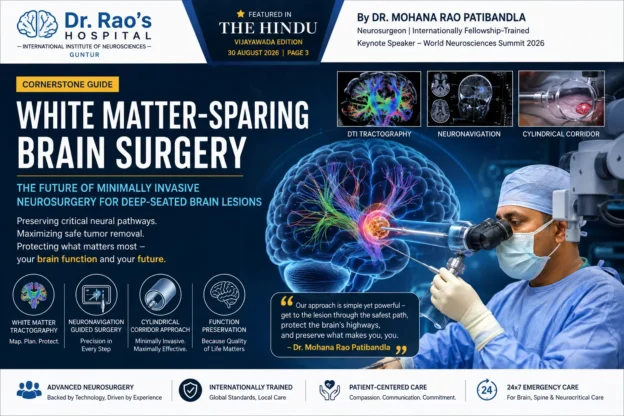
Dr. Mohana Rao Patibandla demonstrating White Matter-Sparing Brain Surgery using minimally invasive cylindrical corridor surgery and neuronavigation for deep brain lesions.

White Matter-Sparing Brain Surgery: Minimally Invasive Brain Surgery for Deep-Seated Brain Lesions | Dr. Mohana Rao Patibandla

White Matter-Sparing Brain Surgery: The Future of Minimally Invasive Neurosurgery for Deep-Seated Brain Lesions

Featured in The Hindu (Vijayawada Edition, 30 August 2026) following Dr. Mohana Rao Patibandla’s keynote presentation at the World Neurosciences Summit (WNS) 2026, New Delhi.

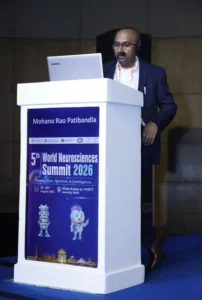
Dr. Mohana Rao Patibandla delivering the keynote lecture on White Matter-Sparing Brain Surgery at the 5th World Neurosciences Summit 2026 in New Delhi, India.

Dr. Mohana Rao Patibandla presenting his keynote lecture, “Minimally Invasive Cylindrical Corridor Surgery – Modern Microsurgery Strategy for Deep-Seated Brain Lesions,” at the 5th World Neurosciences Summit 2026 in New Delhi, highlighting advanced White Matter-Sparing Brain Surgery techniques for preserving critical neural pathways.

Cornerstone Article

White Matter-Sparing Brain Surgery: The Future of Minimally Invasive Neurosurgery for Deep-Seated Brain Lesions

Author: Dr. Mohana Rao Patibandla, Neurosurgeon, Founder & Chief Neurosurgeon, Dr. Rao’s Hospital – International Institute of Neurosciences, Guntur, Andhra Pradesh, India

Published: September 2026

Reading Time: 18–22 minutes

Target Keywords: White matter sparing surgery, minimally invasive brain surgery, cylindrical corridor surgery, deep-seated brain tumor surgery, brain lesion surgery, neurosurgeon India, Dr. Mohana Rao Patibandla.

Executive Summary

The human brain contains billions of neurons connected through highly organized white matter tracts—the communication highways that allow movement, speech, memory, vision, sensation, and cognition. Traditional surgery for deep-seated brain tumors or lesions often requires passing through healthy brain tissue, increasing the risk of neurological deficits.

White Matter-Sparing Surgery, also called Minimally Invasive Cylindrical Corridor Surgery, represents a transformative advancement in neurosurgery. Instead of cutting through healthy brain tissue, surgeons navigate between natural white matter pathways, preserving critical neural connections while reaching tumors or lesions deep inside the brain.

This technique was the focus of Dr. Mohana Rao Patibandla’s keynote lecture at the World Neurosciences Summit 2026, where he presented modern microsurgical strategies for safely treating deep-seated brain lesions. The approach was subsequently highlighted by The Hindu in a feature article discussing the future of minimally invasive brain surgery.

This comprehensive guide explains everything patients, families, neurologists, and neurosurgeons need to know about white matter-sparing surgery.

Table of Contents

  • What is White Matter-Sparing Brain Surgery?
  • Understanding White Matter and Brain Networks.
  • Why Traditional Brain Surgery Can Damage White Matter.
  • Evolution of Minimally Invasive Cylindrical Corridor Surgery.
  • How White Matter-Sparing Surgery Works.
  • Neuronavigation and Brain Mapping.
  • Who Needs White Matter-Sparing Surgery?
  • Conditions Treated.
  • Benefits Compared to Conventional Brain Surgery.
  • Surgical Planning and Technology.
  • Risks and Limitations.
  • Recovery After White Matter-Sparing Surgery.
  • Frequently Asked Questions.

Understanding White Matter: The Brain’s Information Highway

White matter tracts in the brain [IMAGE] | EurekAlert! Science News Releases

Diffusion Tensor Imaging 101 | Diffusion Imaging; Introduction, tutorials and background on diffusion tensor imaging and techniques

European Journal of Translational and Clinical Medicine

Most people think of the brain as a gray organ filled with neurons. However, white matter is equally important.

What is White Matter?

White matter consists of millions of insulated nerve fibers called axons. These fibers connect different brain regions and enable rapid communication.

White Matter Controls

Brain Function

Major White Matter Pathway

MovementCorticospinal tract
Speech productionArcuate fasciculus
Language comprehensionSuperior longitudinal fasciculus
VisionOptic radiations
MemoryFornix and cingulum
EmotionUncinate fasciculus

Damage to these pathways may result in:

  • Paralysis

  • Speech difficulty

  • Vision loss

  • Memory impairment

  • Cognitive dysfunction

  • Personality changes

Protecting these pathways has become one of the central goals of modern neurosurgery.

Why Traditional Brain Surgery Isn’t Always Enough

Neuroinfo Japan�F�J����p

Brain Pterional approach | UpSurgeOn

Minimally Invasive Brain Surgery | Keyhole Surgery | Pacific Brain Tumor Center

Historically, surgeons approached deep tumors by creating a path through the brain.

The Challenge

Deep lesions may lie:

  • Near motor pathways.

  • Adjacent to speech centers.

  • Beneath healthy cortex.

  • Close to visual pathways.

  • Near memory circuits.

Traditional surgery may require:

  • Brain retraction.

  • Cortical incision.

  • Traversing healthy tissue.

Even with excellent technique, these maneuvers may increase neurological risk.

Potential Consequences

Potential Injury

Possible Deficit

Motor tract injuryWeakness or paralysis
Language tract injurySpeech impairment
Visual tract injuryVisual field loss
Frontal network injuryBehavioral or cognitive changes

Modern neurosurgery seeks to avoid these injuries rather than simply treat them afterward.

What is White Matter-Sparing Surgery?

Our Integrated System - NICO Corporation

Surgical Neurology International

Frontiers | Minimally invasive treatment for glioblastoma through endoscopic surgery including tumor embolization when necessary: a technical note

Definition

White Matter-Sparing Surgery is a minimally invasive microsurgical technique that uses:

  • Natural anatomical corridors.

  • Cylindrical tubular retractors.

  • Advanced neuronavigation.

  • White matter tractography.

  • High-definition operating microscopy.

Instead of retracting large portions of the brain, surgeons gently separate white matter fibers along their natural orientation.

The Philosophy

Preserve normal brain. Remove abnormal tissue. Protect neural connectivity.

This is fundamentally different from older approaches focused primarily on lesion access.

The Science Behind Cylindrical Corridor Surgery

A New Way into the Brain | Johns Hopkins Medicine

Sobre Dr. Alexis Palpán

courses:456:2021:projects:456-2021-01:project-01 – CIIS Wiki

Why a Cylinder?

A cylindrical corridor distributes pressure evenly.

Traditional Retractor

Tumor retractor: a simple and novel instrument for brain tumor surgery | World Journal of Surgical Oncology | Springer Nature Link

Brain Pterional approach | UpSurgeOn

Principles of Intraventricular Surgery | Cohen Collection | Volumes | The Neurosurgical Atlas

  • Flat blades.

  • Uneven pressure.

  • Greater cortical retraction.

Cylindrical Corridor

  • Gentle circumferential dilation.

  • Less tissue distortion.

  • Smaller surgical footprint.

  • Better preservation of white matter fibers.

This concept has become increasingly adopted in minimally invasive neurosurgery worldwide.

How White Matter-Sparing Surgery Works

Step-by-Step Surgical Strategy

Stereotactic neurosurgery | MedLink Neurology

How Can New Imaging Modalities Help in the Practice of Radiology? - PMC

O nás | FNOL

Step

Purpose

1Advanced MRI with tractography identifies functional white matter pathways.
2Neuronavigation selects the safest trajectory.
3Small craniotomy is created.
4Tubular corridor gently separates white matter fibers.
5Microsurgical instruments remove lesion through the corridor.
6Hemostasis is achieved while preserving surrounding tissue.

The result is maximal safe lesion removal with minimal disruption.

White Matter Tractography: GPS for the Brain

Visualização Multimodal de Imagens de Tensores de Difusão | Visualização de Imagens de DTI

#mri #dti #corticospinal | Vahid Shahmaei

Correlation between language function and the left arcuate fasciculus detected by diffusion tensor imaging tractography after brain tumor surgery – Neurosurgery Blog

What is DTI Tractography?

Diffusion Tensor Imaging (DTI) visualizes white matter pathways before surgery.

It Helps Identify

  • Motor tracts.

  • Speech tracts.

  • Visual pathways.

  • Sensory pathways.

  • Memory networks.

Why It Matters

Surgeons can:

  • Avoid eloquent pathways.

  • Choose safer entry points.

  • Predict postoperative risks.

  • Tailor surgery to each patient.

This represents precision neurosurgery rather than generalized anatomy.

Neuronavigation: GPS Inside the Brain

Home - Neurochirurgie | Uniklinikum Erlangen

Удаление опухолей головного мозга с применением нейронавигации

Vall d'Hebron: un navegador para mejorar el diagnóstico con ecógrafo

Neuronavigation provides real-time anatomical guidance.

It Allows Surgeons To

  • Locate lesions accurately.

  • Avoid blood vessels.

  • Maintain surgical trajectory.

  • Navigate deep structures safely.

Combined with tractography, neuronavigation creates a personalized surgical roadmap.

Brain Mapping: Protecting Function During Surgery

Neurosurgeons are really good at removing brain tumors—they're about to get even better

Low Grade Glioma and Glioblastoma Outcomes Research | Brain Tumor Center

神经电生理监测在胶质瘤手术中的意义|运动|功能|神经|监测|手术|-健康界

Modern white matter-sparing surgery often incorporates:

Intraoperative Monitoring

  • Motor evoked potentials.

  • Somatosensory evoked potentials.

  • Cranial nerve monitoring.

  • Speech mapping when required.

This provides continuous feedback about neurological function.

Which Brain Conditions Can Be Treated?

Deep-Seated Brain Tumors

PPT - Clinical MRI Insights by Dr. Ravichandra: Brain and Vascular Imaging PowerPoint Presentation - ID:9635346

a, b Preoperative axial and sagittal T1-weighted MRI of posterior type... | Download Scientific Diagram

Examples include:

  • Gliomas

  • Metastatic tumors

  • Low-grade glioma

  • High-grade glioblastoma

  • Thalamic tumors

  • Basal ganglia tumors

Goal

Maximal safe resection while preserving neurological function.

Cavernomas

cerebral cavernous venous malformation | pacs

Brainstem Cavernoma - Neuropedia

海綿状血管腫 | 社会医療法人寿会 富永病院(大阪)

White matter-sparing corridors are valuable for:

  • Thalamic cavernoma.

  • Brainstem cavernoma.

  • Deep cerebral cavernomas.

Colloid Cysts

Checking your browser - reCAPTCHA

Surgical management of colloid cysts of the third ventricle: a single-institution comparison of endoscopic and microsurgical resection – Neurosurgery Blog

Checking your browser - reCAPTCHA

Small minimally invasive approaches reduce brain manipulation around the ventricles.

Intraventricular Tumors

intraventricular neoplasms and lesions | pacs

Central neurocytoma | Radiology Reference Article | Radiopaedia.org

Examples include:

  • Central neurocytoma.

  • Ependymoma.

  • Choroid plexus tumors.

  • Subependymoma.

Brain Abscesses

New Page 1

Infections of Brain Parenchyma I Flashcards | Quizlet

Intracranial Infections: Bacterial, Viral, Fungal, Parasitic -

Targeted tubular access allows drainage with limited cortical injury in selected patients.

Epilepsy Lesions

Displasia cortical focal en 7 Tesla - Mayo Clinic

Minimally Invasive Surgery for Cerebral Cavernous Malformations

Let the Lesion Do the Talking :: Behance

Certain deep epileptogenic lesions can be approached through white matter-preserving techniques.

Advantages Over Conventional Brain Surgery

Why White Matter-Sparing Surgery Matters

Traditional Surgery

White Matter-Sparing Surgery

Larger craniotomySmaller craniotomy
More brain retractionMinimal brain retraction
Cortical disruptionNatural white matter corridor
Greater tissue manipulationTargeted microsurgical access
Higher postoperative swellingReduced tissue trauma
Longer recoveryFaster recovery in selected patients

Key Patient Benefits

East Carolina Heart Institute at ECU Health Medical Center - Greenville, NC 27834

Dr. Alejandro Ceja Espinosa Neurocirujano, Morelia - Agenda cita | Doctoralia.com.mx

I've been diagnosed with a brain tumor. Now what? | Michigan Medicine

Potential benefits include:

  • Smaller incision.

  • Less pain.

  • Reduced blood loss.

  • Less brain swelling.

  • Better cosmetic outcome.

  • Earlier mobilization.

  • Shorter ICU stay in selected cases.

  • Preservation of neurological function.

These benefits depend on careful patient selection and surgical expertise.

Who is a Candidate?

Ideal Candidates

Suitable Patients

Why

Deep brain tumorsAccessible through safe anatomical corridors.
Small-to-medium lesionsMinimal disruption possible.
Functional area lesionsWhite matter preservation is especially valuable.
Selected hemorrhagesTubular evacuation may be appropriate in selected cases.
Deep cavernomasNatural corridor approach.

Patients Who May Need Conventional Surgery

  • Very large tumors.

  • Diffuse infiltrative lesions.

  • Extensive vascular malformations.

  • Multiple compartment lesions.

Every patient requires individualized evaluation.

Surgical Planning at Dr. Rao’s Hospital

Equipment and medical devices in modern operating room

3T MRI | Book Your Scan Today — Rezolut

Grupo Policlínica incorpora el microscopio más avanzado del mercado en su unidad de neurocirugía | Onda Cero Radio

A white matter-sparing operation begins long before entering the operating room.

Comprehensive Planning Includes

Advanced Imaging

3 Tesla MR Fiyatları 2026 | Fulya Açık Emar

브런치

How Can New Imaging Modalities Help in the Practice of Radiology? - PMC

  • MRI Brain

  • Contrast MRI

  • DTI tractography

  • Functional MRI when indicated.

  • MR angiography/venography.

Digital Planning

Frontiers | Neuronavigation in glioma resection: current applications, challenges, and clinical outcomes

Stryker Launches Q Guidance System with Cranial Guidance Software | OR Today

Brain Tumor Program | Neurosurgery

  • Surgical trajectory simulation.

  • White matter tract preservation.

  • Vascular avoidance.

  • Cortical entry planning.

Microsurgical Technology Used

High-End Neurosurgical Equipment

Doctors Hospital installs the first Kinevo 900 microscope in Mexico. - Doctors Hospital

M720 OH5 Operationsmikroskop der Spitzenklasse - Medien | Produkte | Leica Microsystems

Neurokirurgi: sätter standarden inom modern neurokirurg

Technology may include:

  • Operating microscope.

  • Neuronavigation.

  • Ultrasonic aspirator.

  • Endoscope-assisted visualization.

  • Neurophysiological monitoring.

  • High-definition imaging.

Each tool contributes to safer microsurgery.

White Matter-Sparing Surgery in Brain Tumor Management

Low-Grade Gliomas

The silent phase of diffuse low-grade gliomas. Is it when we missed the action? – Neurosurgery Blog

Subject-Specific Automatic Reconstruction of White Matter Tracts | Journal of Imaging Informatics in Medicine | Springer Nature Link

MRI Tractography - Brain Tumor

Goal:

  • Preserve language.

  • Preserve cognition.

  • Maximize tumor removal.

High-Grade Glioblastoma

Glioblastoma, IDH-wildtype | Radiology Reference Article | Radiopaedia.org

Checking your browser - reCAPTCHA

Brain Tumour Resection Surgery Johannesburg

Goal:

  • Maximal safe resection.

  • Protect functional pathways.

  • Improve quality of life.

White Matter Preservation in Pediatric Neurosurgery

Tumores cerebrales en niños | Pediatría integral

Zabieg usunięcia olbrzymiego guza mózgu u miesięcznego dziecka w IPCZD - Aktualności - Centrum Zdrowia Dziecka

Pediatric Hemato-Oncology Department – TAMC

Children have developing neural pathways.

Advantages include:

  • Better developmental preservation.

  • Reduced tissue injury.

  • Smaller surgical footprint.

  • Functional protection during growth.

White Matter-Sparing Surgery for Brainstem Lesions

Cavernomas do Sistema Nervoso Central :: Clinica Maddalozzo

511-2018-09-05-anatomy-II

【北总神外论道 】经安全区切除脑干海绵状血管瘤系列2 - 脑医汇

Brainstem surgery is among the most challenging areas in neurosurgery.

The technique focuses on:

  • Safe entry zones.

  • Natural fiber orientation.

  • Cranial nerve preservation.

  • Microsurgical precision.

Recovery After White Matter-Sparing Surgery

What Patients Can Expect

Patient’s ER visit turns into brain surgery, cancer diagnosis - UNC Lineberger

Post-Craniotomy Recovery & Care in Pune

Consultation after MRI examination in medical clinic. MRI Doctor is showing x-ray and of brain tumors in the patient head.

Hospital Stay

Stage

Typical Course

ICU1 day in many selected cases.
Ward2–5 days depending on condition.
WalkingOften within 24 hours if neurologically appropriate.
Return HomeDepends on recovery and pathology.

Recovery varies by diagnosis, lesion location, age, and overall health.

Rehabilitation

Speech Therapy After Stroke - Sheltering Arms Institute

Fisioterapia Neuro Funcional: Restaure a Qualidade de Vida com Corpo Ativo

Neurologie — Ergothérapie de la Prévôté

Some patients benefit from:

  • Physiotherapy.

  • Speech therapy.

  • Occupational therapy.

  • Cognitive rehabilitation.

Risks and Limitations

No brain surgery is risk-free.

Potential Risks

EPOS™

Continuous EEG Monitoring | Nihon Kohden

Checking your browser - reCAPTCHA

  • Bleeding.

  • Infection.

  • Seizures.

  • Neurological deficits.

  • Brain swelling.

  • CSF leak.

The goal of white matter-sparing surgery is to reduce unnecessary injury—not eliminate all surgical risk.

Evidence Supporting White Matter-Sparing Approaches

Why This Technique is Growing Worldwide

Modern literature supports:

  • Less cortical injury.

  • Improved preservation of white matter tracts.

  • Better functional outcomes in selected lesions.

  • Reduced surgical morbidity in carefully chosen patients.

International adoption continues to increase alongside advances in imaging and neuronavigation.

Dr. Mohana Rao Patibandla’s Keynote at World Neurosciences Summit 2026

NeuroScience Frontiers Symposium 2025 | Neurogen Therapeutic

Groundbreaking Research on Minimally Invasive Brain Tumor Surgery Presented by Dr. Rao at Andhra Pradesh Neuroscientists Association Conference

Society for Neuroscience - Neuroscience 2026

At the World Neurosciences Summit 2026, Dr. Mohana Rao Patibandla presented a keynote lecture titled:

“Minimally Invasive Cylindrical Corridor Surgery – Modern Microsurgery Strategy for Deep-Seated Brain Lesions.”

The presentation emphasized:

  • White matter preservation.

  • Modern microsurgical planning.

  • Neuronavigation-guided access.

  • Safe treatment of deep brain lesions.

  • Functional outcome optimization.

The lecture highlighted the growing importance of minimally invasive microsurgical corridors in contemporary neurosurgery.


Featured in The Hindu: National Recognition of White Matter-Sparing Surgery

The Hindu reported Dr. Mohana Rao Patibandla’s press conference explaining how preserving normal brain tissue and neural pathways has become a key objective of modern minimally invasive microsurgery. The article also described cylindrical corridor surgery as a white matter-sparing strategy for deep-seated brain lesions.


This coverage reflects growing public awareness of advanced brain-preserving surgical techniques in India.

Why This Matters for Patients in India

Advanced Brain & Spine Neurosurgery Treatments in Chennai

Competent medical expert explaining diagnosis

Neurologist in Pimpri & Brain Specialist in Pimpri-Chinchwad

Patients increasingly seek:

  • Safer surgery.

  • Smaller incisions.

  • Faster recovery.

  • Preservation of neurological function.

  • International-standard neurosurgical care within India.

White matter-sparing surgery aligns with these goals when clinically appropriate.

Why Choose Dr. Rao’s Hospital for White Matter-Sparing Brain Surgery?

Best Neurosurgery & Spine Care at Dr. Rao’s Hospital, Guntur

Brain Surgery in Pune | Dr. Jaydev Panchawagh, Neurosurgeon

Home - Neurochirurgie | Uniklinikum Erlangen

Dr. Rao’s Hospital – International Institute of Neurosciences, Guntur, offers comprehensive brain and spine care with advanced neurosurgical technology and internationally trained expertise.

Areas of Expertise

  • Brain Tumor Surgery

  • Skull Base Surgery

  • Endoscopic Brain Surgery

  • Pediatric Neurosurgery

  • Cerebrovascular Surgery

  • Epilepsy Surgery

  • Functional Neurosurgery

  • Minimally Invasive Neurosurgery

Advanced Technologies

  • Operating Microscope

  • Neuronavigation

  • Neuroendoscopy

  • Neurophysiological Monitoring

  • Advanced MRI Planning

  • Minimally Invasive Brain Surgery

Frequently Asked Questions (FAQ)

1. What is White Matter-Sparing Brain Surgery?

White matter-sparing brain surgery is a minimally invasive microsurgical approach that reaches deep brain lesions through natural white matter corridors while minimizing injury to healthy neural pathways.

2. What is Cylindrical Corridor Surgery?

It is a minimally invasive technique using a tubular retractor to create a gentle corridor through the brain, allowing surgeons to access deep lesions with less tissue disruption.

3. Is White Matter-Sparing Surgery safer than traditional brain surgery?

It may reduce disruption to healthy brain tissue in carefully selected patients, but safety depends on lesion type, location, patient health, and surgical expertise.

4. Which brain tumors can be treated?

Selected gliomas, metastases, intraventricular tumors, cavernomas, colloid cysts, and certain deep-seated lesions may be suitable candidates.

5. What is tractography?

Tractography is an MRI technique (DTI) that maps white matter pathways before surgery to help surgeons avoid critical neural connections.

6. Does every patient need tractography?

Not always. It is especially useful when lesions are close to eloquent brain pathways.

7. Is recovery faster?

Many selected patients experience smaller incisions, less pain, and earlier mobilization, although recovery varies with the underlying disease and surgery performed.

8. Is this surgery available in India?

Yes. Advanced minimally invasive white matter-sparing brain surgery is available in specialized neuroscience centers including Dr. Rao’s Hospital in Guntur.

9. Can brain function be preserved completely?

The goal is maximal preservation of neurological function, but outcomes depend on lesion location, disease biology, and individual patient factors.

10. How do I know if I’m a candidate?

A neurosurgical consultation with MRI review, tractography when indicated, and individualized surgical planning is necessary.

Key Takeaways

White matter tracts in the brain [IMAGE] | EurekAlert! Science News Releases

A team of surgeons performing brain surgery to remove a tumor.

Elements Fibertracking | Brainlab

White Matter-Sparing Surgery represents one of the most significant advances in modern neurosurgery because it shifts the surgical philosophy from simply reaching a lesion to protecting the brain’s communication networks while treating disease.

For carefully selected patients with deep-seated brain tumors, cavernomas, intraventricular lesions, and other complex pathologies, minimally invasive cylindrical corridor surgery offers a highly precise approach centered on preserving neurological function whenever possible.

As highlighted during Dr. Mohana Rao Patibandla’s keynote lecture at the World Neurosciences Summit 2026 and subsequently featured in The Hindu, the future of neurosurgery lies in combining advanced imaging, neuronavigation, microsurgical precision, and white matter preservation to achieve better patient outcomes.


About the Author

Dr. Mohana Rao Patibandla is an internationally fellowship-trained neurosurgeon and the Founder & Chief Neurosurgeon of Dr. Rao’s Hospital – International Institute of Neurosciences, Guntur, Andhra Pradesh, India.

His advanced training includes skull base surgery, pediatric neurosurgery, minimally invasive brain surgery, neuro-oncology, cerebrovascular and endovascular neurosurgery, and functional neurosurgery in India and the United States. He regularly serves as invited faculty at national and international neuroscience conferences and delivered a keynote lecture at the World Neurosciences Summit 2026 on White Matter-Sparing Minimally Invasive Cylindrical Corridor Surgery.


Authoritative Neurosurgical Resources

Patients with deep-seated gliomas, meningiomas, metastatic tumors, and other complex lesions may benefit from

Brain Tumor Surgery 
performed using modern white matter-sparing microsurgical techniques. Many lesions located near the skull base require specialized Skull Base Surgery 
combined with advanced neuronavigation and minimally invasive approaches.

Our comprehensive Neuro-Oncology Program focuses on personalized treatment for benign and malignant brain tumors. Children with deep-seated brain tumors may benefit from advanced Pediatric Neurosurgery that prioritizes preservation of developing neural pathways.

Selected intraventricular tumors and colloid cysts can often be treated using Endoscopic Brain Surgery or minimally invasive cylindrical corridor techniques.

White matter-sparing surgery relies heavily on Neuronavigation-Guided Brain Surgery 
to identify the safest surgical pathway while protecting eloquent brain regions.

Patients with epilepsy caused by cavernomas or focal cortical lesions may also be candidates for Epilepsy Surgery using minimally invasive neurosurgical strategies.

Learn more about the international training, experience, research, and surgical philosophy of Dr. Mohana Rao Patibandla Founder of Dr. Rao’s Hospital – International Institute of Neurosciences.

YouTube

Facebook

Instagram

Google Business Page

LinkedIn

X / Twitter

Need Expert Care for a Brain Tumor or Deep-Seated Brain Lesion?

At Dr. Rao’s Hospital – International Institute of Neurosciences (IIN),
we provide advanced White Matter-Sparing Brain Surgery,
Minimally Invasive Brain Tumor Surgery,
Skull Base Surgery, Endoscopic Brain Surgery,
Neuro-Oncology, Pediatric Neurosurgery,
Stroke Care, and Spine Surgery using internationally
recognized technology and evidence-based treatment protocols.

Every patient receives a personalized surgical plan based on advanced MRI,
neuronavigation, white matter tractography, intraoperative neuromonitoring,
and minimally invasive microsurgical techniques designed to preserve neurological function whenever possible.


Why Choose Dr. Rao’s Hospital?

  • Internationally Fellowship-Trained Neurosurgeon – Dr. Mohana Rao Patibandla
  • Dedicated Super-Specialty Neurosciences Hospital in Guntur, Andhra Pradesh.
  • Advanced White Matter-Sparing & Minimally Invasive Brain Surgery.
  • Brain Tumor, Skull Base, Pediatric, Spine, Stroke & Endovascular Neurosurgery.
  • Neuronavigation, Neurophysiological Monitoring & High-End Microsurgical Technology.
  • Comprehensive Neuro-Oncology, Neurocritical Care and Rehabilitation.
  • 24×7 Emergency Brain, Stroke and Spine Care.

Contact Dr. Rao’s Hospital

Dr. Rao’s Hospital – International Institute of Neurosciences (IIN)
12-19-67, Old Bank Road, Kothapet,
Opposite Sravani Hospital, Besides AK Biryani point,
Guntur – 522001, Andhra Pradesh, India.

📞 +91 90100 56444
✉️ info@drraoshospitals.com
🌐 www.drraoshospitals.com

India’s Best Neurosurgeon — Dr. Rao at Dr. Rao's Hospital

Are Spine Surgeons at Risk Through Innovation?

Are spine surgeons at risk through innovation?

In the ever-evolving field of medicine, innovation is a double-edged sword. Spine surgery, a discipline once dependent on open surgical techniques, has seen tremendous technological advancements. From robotic-assisted procedures and minimally invasive techniques to artificial intelligence (AI) and 3D-printed implants, these innovations promise better outcomes, reduced recovery times, and fewer complications. But as these cutting-edge tools continue to shape the future of spine surgery, they raise an important question: Are spine surgeons themselves at risk of being overshadowed or rendered obsolete by these technological advancements? According to The Times of India coverage.

The Role of Innovation in Spine Surgery

Over the past few decades, spine surgery has undergone significant transformation.

Minimal invasive techniques:

These reduce the physical toll on patients by limiting incision size and muscle damage, leading to faster recovery times.

Robotics and Navigation Systems:

Tools like robotic-assisted surgery systems enhance precision, enabling surgeons to perform complex procedures more accurately.

Artificial Intelligence:

AI-driven diagnostics and surgical planning are making preoperative decision-making faster and more accurate.

3D Printing:

Customized implants and anatomical models help surgeons tailor procedures to individual patients.

These advancements empower spine surgeons to offer safer, more efficient procedures but also demand adaptation and continuous learning.

Are spine surgeons at risk?

1. Job Displacement vs. Role Evolution
While innovations like robotics and AI have automated some aspects of surgery, they cannot replace the expertise and judgment of a skilled spine surgeon. These tools are designed to assist, not replace, the surgeon. However, surgeons who fail to adapt to these advancements risk becoming less competitive.

2. The Learning Curve
Technological progress demands a continuous upgrade in skills. Surgeons must invest significant time and resources to master these new tools. Those unwilling or unable to embrace these changes may find their roles marginalized.

3. Ethical and Legal Challenges
Innovations come with ethical considerations, such as patient consent for AI-guided procedures or the risks of relying too heavily on technology. Spine surgeons must navigate these challenges to remain at the forefront of patient care.

4. Financial Pressures
Adopting new technology often involves substantial financial investment. Surgeons and hospitals must weigh the costs of acquiring and maintaining cutting-edge equipment against the benefits for their patients.

The Value of the Human Element

Despite these challenges, the human touch remains irreplaceable. Spine surgery often involves nuanced decision-making considering a patient’s unique anatomy, medical history, and personal preferences. Surgeons bring empathy, communication, and adaptability—qualities no machine can replicate.

Moreover, innovations like robotics require skilled operators, and AI-generated insights are only as good as the data they’re based on. Spine surgeons are the ultimate authority, interpreting technology-driven recommendations and making critical decisions.

Embracing Innovation for the Future

To thrive in this age of rapid advancement, spine surgeons must:

Commit to Lifelong Learning: Attend training sessions, workshops, and conferences to stay updated on the latest tools and techniques.
Collaborate with Innovators: Partner with engineers, AI specialists, and medical technology developers to ensure that new tools align with clinical realities.
Advocate for Balanced Integration: Use technology as an aid, not a substitute, ensuring that the surgeon remains central to patient care.
Focus on Holistic Patient Care: Maintain strong patient relationships by emphasizing empathy and trust, which technology alone cannot provide.

Conclusion

Innovation in spine surgery is not a threat but an opportunity. While technology continues to evolve, it does not diminish the importance of skilled surgeons who can adapt and integrate these tools into their practice. Spine surgeons who embrace innovation while staying grounded in their clinical expertise and human connection will remain relevant and lead the way in delivering exceptional patient care.

The key to success is understanding that technology is a tool, not a replacement. By leveraging innovation wisely, spine surgeons can enhance their practice, improve patient outcomes, and secure their role as indispensable professionals in the healthcare landscape.

Dr. Rao’s Hospital continues to pioneer the integration of innovation and expertise in spine surgery, ensuring that our patients benefit from the best of both worlds. For more information, visit us at drraoshospitals.com or contact us at 9010056444.

Dr. Rao’s Contact Information:

Dr. Rao’s Hospital: Medical Tourism for Economical Neurosurgery in India

Best Hospital for Brain Surgery in India: Dr. Rao’s Hospital, Guntur

Best Hospital for Brain Surgery in India: Dr. Rao’s Hospital, Guntur

When it comes to Brain Surgery, choosing the right hospital and neurosurgeon is crucial for ensuring the best outcomes and care. In India, Dr. Rao’s Hospital in Guntur has emerged as a leading center for brain surgery, known for its exceptional medical expertise, advanced technology, and compassionate patient care. According to The Times of India coverage.

Why Dr. Rao’s Hospital Stands Out

1. Expertise of Dr. Mohana Rao Patibandla

Dr. Mohana Rao Patibandla, the Chief Neurosurgeon at Dr. Rao’s Hospital, is a highly qualified and experienced neurosurgeon. With extensive training in brain surgery and a proven track record of successful procedures, Dr. Rao is renowned for his precision and expertise in treating complex brain conditions. According to dnaindia

2. Comprehensive Range of Brain Surgeries

Dr. Rao’s Hospital offers a wide range of brain surgeries, including: In a recent India today article.

  • Brain Tumor Surgery: Utilizing advanced techniques to remove brain tumors while preserving neurological function safely.
  • Stereotactic Radiosurgery: A non-invasive option for treating brain tumors and other abnormalities with high precision.
  • Aneurysm Clipping and Coiling: Effective treatments for brain aneurysms to prevent rupture and manage complications.
  • Epilepsy Surgery: Procedures to control seizures and improve the quality of life for epilepsy patients.
  • Traumatic Brain Injury (TBI) Surgery: Specialized care for patients with severe head injuries.

3. State-of-the-Art Technology

Dr. Rao’s Hospital is equipped with the latest medical technology, ensuring patients receive the most advanced and effective treatments. This includes high-resolution imaging systems, intraoperative MRI, neuronavigation systems, and minimally invasive surgical tools, all of which contribute to better surgical outcomes and faster recovery times.

4. Personalized Patient Care

At Dr. Rao’s Hospital, patients receive personalized care tailored to their conditions and needs. The multidisciplinary team collaborates with neurologists, neurosurgeons, radiologists, and rehabilitation specialists to develop comprehensive treatment plans. This holistic approach ensures that all patient health aspects are addressed.

5. High Success Rates and Patient Satisfaction

Dr. Rao’s Hospital boasts high success rates for brain surgeries, with numerous patients reporting significant improvements in their condition and quality of life. Patient testimonials highlight the hospital’s commitment to excellence, compassionate care, and the positive outcomes achieved under Dr. Rao’s expertise.

6. Accessibility and Convenient Location

Dr. Rao’s Hospital is located in the heart of Guntur, Andhra Pradesh, and is easily accessible to patients from across India and abroad. The hospital’s efficient services and streamlined processes ensure minimal wait times and a smooth patient and family experience.

7. Comprehensive Support and Aftercare

Recovery from brain surgery requires ongoing support and rehabilitation. Dr. Rao’s Hospital provides comprehensive aftercare services, including physical therapy, occupational therapy, and psychological support, to help patients regain their independence and improve their overall well-being.

Testimonials from Satisfied Patients

Mr. Suresh Kumar: “I was diagnosed with a brain tumor and was terrified. Dr. Rao and his team at Dr. Rao’s Hospital provided exceptional care and support throughout my treatment. The surgery was successful, and I am now tumor-free. I am grateful for the expertise and compassion shown by Dr. Rao and the entire staff.”

Ms. Anjali Verma: “After suffering from debilitating seizures for years, I underwent epilepsy surgery at Dr. Rao’s Hospital. The results have been life-changing. I am now seizure-free and can lead a normal life. Dr. Rao is truly a life-saver.”

Contact Information

Dr. Rao’s Hospital in Guntur offers unparalleled expertise and advanced treatment options for those seeking the best care in brain surgery.

Contact Information:

Choosing the right hospital for brain surgery can significantly improve outcomes and quality of life. With its expert team, state-of-the-art technology, and patient-centered approach, Dr. Rao’s Hospital in Guntur is the best hospital for brain surgery in India. Trust your health to the best and take the first step towards recovery with Dr. Rao’s Hospital.

Stroke Care: The best stroke treatment by Dr. Raos Hospital

Neurovascular Disorders: Diagnosis, Treatment, and Prevention

Neurovascular Disorders: Diagnosis, Treatment, and Prevention

Discover the latest advancements in diagnosing, treating, and preventing neurovascular disorders at Dr. Rao’s Hospital, the best neurosurgery hospital for cerebrovascular disorders.

Learn about the expertise of Dr. Rao, the best dural-trained cerebrovascular surgeon, and how their multidisciplinary approach ensures optimal patient care. According to The Times of India coverage

Introduction

Neurovascular disorders encompass a wide range of conditions affecting the blood vessels of the brain and spinal cord. These disorders, such as aneurysms, arteriovenous malformations (AVMs), and strokes, can have severe consequences if left untreated. In this blog, we will explore the diagnosis, treatment, and prevention strategies for neurovascular disorders, highlighting the expertise of Dr. Rao, the best dural-trained cerebrovascular surgeon, and the exceptional care provided at Dr. Rao’s Hospital, the best neurosurgery hospital for cerebrovascular disorders.

Diagnosis

diagnosis of neurovascular disorders is a critical step in understanding the nature and extent of the condition. Dr. Rao, with his extensive experience and expertise in cerebrovascular surgery, leads a comprehensive evaluation process at Dr. Rao’s Hospital, ensuring a meticulous assessment of each patient’s condition.

Detailed medical history

The diagnostic journey begins with a detailed medical history review, where Dr. Rao and his team gather information about the patient’s symptoms, previous medical conditions, and family history. This step is crucial in identifying any potential risk factors or underlying conditions that may contribute to the development of neurovascular disorders.

physical examination

A thorough physical examination allows Dr. Rao to assess neurological function, identify visible abnormalities, and evaluate the patient’s overall health. During this examination, special attention is given to neurological signs and symptoms, including sensory deficits, motor function, coordination, and reflexes. These findings provide valuable insights into the affected areas and help guide further diagnostic investigations.

Traditional imaging techniques

Advanced imaging techniques play a pivotal role in accurately diagnosing neurovascular disorders. Dr. Rao utilizes state-of-the-art diagnostic tools such as magnetic resonance imaging (MRI), computed tomography (CT), and angiography to visualize the brain’s and blood vessels’ intricate structures. These imaging modalities provide detailed information about the location, size, and characteristics of any abnormalities, such as aneurysms, AVMs, or narrowed blood vessels.

Advanced imaging techniques

In addition to traditional imaging methods, Dr. Rao employs cutting-edge technologies like 3D reconstruction and functional MRI (fMRI) to understand better the brain’s intricate network and its relationship with neurovascular disorders. These advanced techniques help map the eloquent areas of the brain responsible for critical functions such as speech, motor skills, and cognition. By identifying these areas, Dr. Rao can develop a precise surgical plan that minimizes the risk of damage to vital brain functions.

Dr. Rao’s expertise in cerebrovascular surgery

Dr. Rao’s expertise in cerebrovascular surgery enables him to interpret and analyze these diagnostic findings with precision. He considers the unique characteristics of each patient’s condition, combining clinical judgment and advanced imaging data to determine the most suitable treatment approach. Dr. Rao’s goal is to provide personalized care that addresses each patient’s specific needs, considering their overall health, age, lifestyle, and preferences.

The comprehensive evaluation and state-of-the-art diagnostic tools

The comprehensive evaluation and state-of-the-art diagnostic tools employed by Dr. Rao ensure an accurate understanding of the neurovascular disorder, guiding subsequent treatment decisions. This meticulous approach and Dr. Rao’s exceptional surgical skills set the foundation for successful outcomes and improved quality of life for patients with neurovascular disorders.

Remember, early diagnosis and intervention are vital in managing neurovascular disorders. If you or a loved one are experiencing symptoms or concerns, seeking medical attention promptly is crucial. At Dr. Rao’s Hospital, you can trust in the expertise and dedication of Dr. Rao and his team to provide the highest level of care and support throughout your neurovascular journey.

Treatment options for neurovascular disorders

Treatment options for neurovascular disorders vary depending on the specific condition and its severity. Dr. Rao, a dural-trained cerebrovascular surgeon, is highly skilled in both open surgical procedures and minimally invasive techniques, such as endovascular procedures. This comprehensive range of treatment options allows him to tailor the approach based on each patient’s unique needs.

Open Surgery

In cases where open surgery is the most suitable option, Dr. Rao utilizes his exceptional surgical skills and expertise to perform intricate procedures. These may include microsurgical techniques to access and repair blood vessels, remove abnormal growths, or address vascular malformations. Open surgical procedures are often recommended for complex cases or when the location and nature of the neurovascular disorder require a more direct and precise approach.

Endovascular Neurosurgery

For less invasive treatment options, Dr. Rao employs advanced endovascular procedures. These procedures involve accessing the affected blood vessels through a small incision or catheterization guided by imaging technology. Endovascular techniques offer numerous advantages, including shorter recovery times, a reduced risk of complications, and the ability to treat delicate or hard-to-reach brain areas. Dr. Rao’s expertise in endovascular procedures allows him to effectively perform treatments such as embolization, angioplasty, stenting, and using coiling techniques to manage aneurysms and vascular malformations.

The success of neurovascular surgery

The success of neurovascular surgery relies not only on the surgeon’s skills but also on the infrastructure and technology available. At Dr. Rao’s Hospital, state-of-the-art facilities and advanced equipment are seamlessly integrated into the treatment process. The hospital has cutting-edge imaging systems, including high-resolution angiography units and intraoperative navigation technology, enabling Dr. Rao to visualize the neurovascular structures with exceptional precision and accuracy. These resources and Dr. Rao’s expertise contribute to optimal outcomes and improved patient safety.

The multidisciplinary approach

Furthermore, Dr. Rao’s Hospital’s multidisciplinary approach ensures comprehensive care for patients with neurovascular disorders. Dr. Rao collaborates closely with experts, including interventional neuroradiologists, neurologists, anesthesiologists, and critical care specialists. This collaborative approach ensures that patients receive the highest level of care throughout their treatment journey. The Dr. Rao’s Hospital team collaborates to develop a personalized treatment plan tailored to each patient’s specific needs, aiming to achieve the best possible outcomes and long-term success.

Dual-trained vascular neurosurgeon

In summary, Dr. Rao, as a dural-trained cerebrovascular surgeon, offers a wide range of treatment options for neurovascular disorders. Whether it requires open surgical procedures or minimally invasive techniques, Dr. Rao’s exceptional surgical skills, combined with the advanced infrastructure and technology at Dr. Rao’s Hospital, ensure the highest level of care and successful patient outcomes. If you or a loved one is facing a neurovascular disorder, trust in Dr. Rao and his team’s expertise and dedication to providing exceptional care and support throughout the treatment process.

Prevention

Prevention plays a crucial role in managing neurovascular disorders, and Dr. Rao and his team at Dr. Rao’s Hospital are committed to promoting preventive measures to reduce the risk and impact of these conditions. They emphasize the importance of lifestyle modifications and provide education and support to empower patients and their families to prevent the occurrence or recurrence of neurovascular disorders.

Maintaining a healthy lifestyle

Maintaining a healthy lifestyle is essential in preventing neurovascular disorders. Dr. Rao and his team encourage patients to follow a nutritious diet low in saturated fats, cholesterol, and sodium while rich in fruits, vegetables, whole grains, and lean proteins. A balanced diet helps control weight, blood pressure, and cholesterol levels, reducing the risk of atherosclerosis and stroke.

Regular exercise

Regular exercise is another crucial component of prevention. Physical activity helps improve cardiovascular health, lower blood pressure, maintain a healthy weight, and enhance overall well-being. Dr. Rao and his team work closely with patients to develop personalized exercise plans suitable for their needs and abilities.

Managing risk factors

Managing risk factors is paramount in preventing neurovascular disorders. Dr. Rao and his team focus on identifying and addressing conditions like hypertension and diabetes, which significantly contribute to the development and progression of neurovascular diseases. They work closely with patients to develop individualized management plans that may include medication, lifestyle modifications, and regular monitoring to ensure optimal control of these risk factors.

Education and Awareness

Education and awareness are vital in preventing neurovascular disorders. Dr. Rao and his team provide comprehensive information about these conditions’ warning signs and symptoms, empowering patients and their families to recognize potential problems and take appropriate action promptly. They educate patients about the importance of seeking immediate medical attention if they experience sudden, severe headaches, difficulty speaking, numbness or weakness in the face, arms, or legs, or any other signs of a neurovascular event.

Early detection and screening 

Furthermore, Dr. Rao and his team offer early detection and screening guidance. Regular check-ups, including blood pressure measurements, cholesterol screenings, and evaluation of other risk factors, can help identify potential issues at an early stage. Timely detection allows for early intervention and management, reducing the risk of developing severe neurovascular disorders.

Prevention is a lifelong commitment.

Dr. Rao and his team understand that prevention is a lifelong commitment. They provide ongoing support and follow-up care to help patients stay motivated and make sustainable lifestyle changes. This includes regularly monitoring risk factors, medication management, and counseling on healthy habits and preventive measures.

CONCLUSION

In conclusion, prevention is vital to managing neurovascular disorders, and Dr. Rao and his team at Dr. Rao’s Hospital are dedicated to promoting preventive strategies. Through lifestyle modifications, management of risk factors, education, and early detection, they strive to empower patients and their families to take control of their health and reduce the risk of neurovascular disorders. By emphasizing prevention, Dr. Rao and his team aim to improve the overall well-being and quality of life of their patients.

At Dr. Rao’s Hospital, patients with neurovascular disorders receive comprehensive, multidisciplinary care. The hospital is equipped with cutting-edge technology and a dedicated team of experts who work collaboratively to provide personalized treatment plans and support throughout the patient’s journey. Dr. Rao’s expertise in cerebrovascular surgery and his commitment to patient-centered care have earned him a reputation as the best cerebrovascular surgeon in India.

If you or a loved one is dealing with a neurovascular disorder, don’t hesitate to reach out to Dr. Rao’s Hospital for a consultation. The combination of Dr. Rao’s expertise, the hospital’s exceptional infrastructure, and the comprehensive care provided will ensure the best possible outcomes for patients with neurovascular disorders. Call 9010056444 or 9010057444 for an appointment.

Dr. Rao’s Contact Information:


Hashtags: #NeurovascularDisorders #CerebrovascularSurgery #DrRaosHospital #BestNeurosurgeon #AdvancedTreatmentOptions #PreventionStrategies

Stroke Care: The best stroke treatment by Dr. Raos Hospital

The Role of Neurosurgery in Stroke Management and Recovery: Dr. Rao’s Hospital Leading the Way

The Role of Neurosurgery in Stroke Management and Recovery: Dr. Rao’s Hospital Leading the Way

Introduction 

stroke is a devastating condition that requires prompt medical attention and specialized care. In recent years, neurosurgery has emerged as a critical component in the management and recovery of stroke patients. In this blog, we explore the significant role of neurosurgery in stroke care, specifically focusing on Dr. Rao’s Hospital, recognized as the best comprehensive stroke center. The hospital excels at offering cutting-edge neurosurgical interventions that optimize outcomes and improve patients’ quality of life under the direction of Dr. Rao, a renowned endovascular and cerebrovascular neurosurgeon with dural training.

Understanding Stroke: Causes, Types, and Impact

To comprehend the role of neurosurgery in stroke management, it is essential to first understand the causes, types, and impact of strokes. Ischemic strokes, caused by blocked blood vessels, and hemorrhagic strokes, resulting from ruptured blood vessels, require different treatment approaches. Dr. Rao’s expertise in cerebrovascular neurosurgery enables precise diagnosis and tailored interventions to address the specific type and location of the stroke.

Comprehensive Stroke Center: A Hub for Specialized Care :

Dr. Rao’s Hospital is a comprehensive stroke center, offering a multidisciplinary approach to stroke care. The hospital’s state-of-the-art facilities, advanced imaging technologies, and dedicated stroke teams ensure swift and accurate diagnosis, allowing for timely intervention. Dr. Rao‘s leadership and expertise in dural-trained cerebrovascular neurosurgery further enhance the hospital’s capabilities in providing specialized care for stroke patients.

Benefits of a Dural-Trained Cerebrovascular Neurosurgeon :

The presence of a dural-trained cerebrovascular neurosurgeon, such as Dr. Rao, within the stroke center brings invaluable benefits to patients. Dural-trained neurosurgeons have extensive experience in managing complex cerebrovascular conditions, including stroke. Their specialized training equips them with the expertise to perform delicate procedures, such as endovascular interventions, aneurysm repair, and arteriovenous malformation (AVM) treatment, with exceptional precision and minimal risk.

Endovascular Interventions: Advancing Stroke Treatment :

Endovascular interventions have revolutionized stroke treatment, allowing neurosurgeons to access and treat affected blood vessels from within using minimally invasive techniques. Dr. Rao’s proficiency in endovascular procedures enables him to remove blood clots, restore blood flow, and minimize brain damage in stroke patients. This advanced approach offers benefits such as reduced procedural risks, shorter recovery times, and improved long-term outcomes.

Rehabilitation and Recovery Strategies :

While acute stroke care is vital, post-stroke rehabilitation is equally critical for patients’ recovery. Dr. Rao’s Hospital adopts a comprehensive approach encompassing neurosurgical interventions, rehabilitation services, and ongoing support. Rehabilitation programs, including physical therapy, speech therapy, and occupational therapy, aim to restore functionality, promote independence, and improve the overall quality of life for stroke survivors.

Empowering Patients and Caregivers :

Dr. Rao’s Hospital empowers patients and their caregivers throughout the stroke care journey. Educational resources, support groups, and counseling services are provided to ensure that individuals and their families understand the condition, treatment options, and strategies for long-term management. Dr. Rao’s Hospital fosters a patient-centric environment that prioritizes individualized care and improved outcomes by fostering open communication and collaboration.

Conclusion: Neurosurgery is pivotal in stroke management and recovery, offering advanced interventions that optimize outcomes and enhance patients’ quality of life.

Dr. Rao’s Hospital Leading the Way

Dr. Rao’s Hospital, recognized as the best comprehensive stroke center, stands at the forefront of stroke care. Dr. Rao is a renowned dural-trained endovascular and cerebrovascular neurosurgeon who leads the way. With his expertise and specialized training, Dr. Rao brings many benefits to stroke patients, ensuring the highest standard of care and optimal treatment outcomes.

By combining the latest advancements in neurosurgical techniques with a multidisciplinary approach, Dr. Rao’s Hospital offers a comprehensive range of interventions for stroke management. This includes endovascular procedures, where Dr. Rao’s skills shine. These allow him to navigate the intricate blood vessels of the brain with exceptional precision. Through techniques such as thrombectomy, stent placement, and coiling, he can effectively restore blood flow, minimize brain damage, and improve patient outcomes.

One significant advantage of having a dural-trained cerebrovascular neurosurgeon like Dr. Rao is his ability to handle complex cerebrovascular conditions that may accompany strokes, such as aneurysms and arteriovenous malformations (AVMs). With his specialized training and expertise, Dr. Rao can offer targeted interventions, including surgical clipping or endovascular coiling, to effectively treat these conditions and prevent future complications.

The role of rehabilitation and recovery cannot be understated in the journey of stroke patients. Dr. Rao’s Hospital recognizes the importance of comprehensive rehabilitation strategies tailored to individual needs. Collaborating with a team of skilled therapists and rehabilitation specialists, the hospital provides physical, speech, and occupational therapy to aid recovery. This integrated approach ensures stroke survivors regain functionality, improve mobility, and regain independence, ultimately enhancing their overall quality of life.

Dr. Rao’s Hospital prioritizes patient and caregiver empowerment throughout the stroke care journey. By providing educational resources, support groups, and counseling services, the hospital ensures that individuals and their families can access the knowledge and support necessary to navigate stroke-related challenges. Dr. Rao’s team fosters a compassionate and patient-centric environment where open communication and shared decision-making empower patients to participate actively in their recovery.

In conclusion

the best comprehensive stroke center’s neurosurgery department is crucial in stroke management and recovery. Patients who suffer from stroke receive the best care possible thanks to the knowledge of a cerebrovascular neurosurgeon with dural training and the comprehensive approach provided by Dr. Rao’s Hospital. They also gain access to cutting-edge interventions, effective rehabilitation techniques, and ongoing support. With Dr. Rao at the helm, the hospital remains dedicated to improving the lives of stroke patients and their families, driving positive outcomes in stroke management and enhancing overall well-being.

Dr. Rao’s Contact Information:

#Neurosurgery #StrokeManagement #StrokeRecovery #DrRao #DrRaosHospital #ComprehensiveStrokeCenter #DuralTrainedNeurosurgeon #EndovascularInterventions #Rehabilitation #PatientCare #OptimalOutcomes #NeurologicalConditions #BrainHealth #MedicalAdvancements

Dr. Rao’s Hospital in Guntur, a dedicated center for advanced neurology, neurosurgery, and spine care

Discover the Best Hospital for Neurology Near You: Dr. Rao at Dr. Rao’s Hospital

Discover the Best Hospital for Neurology Near You: Dr. Rao at Dr. Rao’s Hospital

Finding a hospital that offers expert care, advanced treatments, and compassionate support is crucial for neurology. If you’re searching for the best hospital for neurology near you, look no further than Dr. Rao’s Hospital. Renowned for its excellence in neurological care, Dr. Rao’s Hospital stands out as a beacon of hope and healing for patients with neurological conditions. According to The Times of India coverage.

Why Choose Dr. Rao’s Hospital for Neurology?

1. Expertise and Experience:

Dr. Rao’s Hospital is home to some of the region’s most experienced and skilled neurologists. Dr. Rao, a leading neurologist with years of experience, heads the neurology department. His expertise and a dedicated team of specialists ensure that patients receive the highest standard of care. In a recent India today article.

2. Comprehensive Neurological Services:

At Dr. Rao’s Hospital, patients have access to a wide range of neurological services, including:

Diagnosis and treatment of neurological disorders such as epilepsy, Parkinson’s disease, multiple sclerosis, and migraines.

Advanced neuroimaging and diagnostic techniques to accurately identify neurological conditions.

Surgical interventions for complex neurological cases, including brain and spine surgeries,.

Rehabilitation programs are needed to support recovery and improve the quality of life for patients with neurological impairments.

3. Cutting-Edge Technology:

Dr. Rao’s Hospital has state-of-the-art technology and facilities that enable precise diagnosis and effective treatment of neurological conditions. The hospital continuously invests in the latest advancements in medical technology to provide patients with the best possible care.

4. Personalized Patient Care:

Dr. Rao’s Hospital prioritizes personalized care because each patient is unique. From the initial consultation to the treatment plan and follow-up care, every aspect of the patient experience is tailored to meet individual needs. The compassionate staff ensures patients feel supported and informed throughout their medical journey.

5. Multidisciplinary Approach:

Neurological conditions often require a multidisciplinary approach to treatment. At Dr. Rao’s Hospital, neurologists work closely with neurosurgeons, physical therapists, occupational therapists, and other specialists to develop comprehensive treatment plans. This collaborative approach ensures that patients receive holistic care that addresses all aspects of their condition.

6. Patient Success Stories:

Dr. Rao’s Hospital has a proven track record of successful outcomes in treating neurological conditions. Numerous patients have shared their positive experiences and success stories, highlighting the hospital’s commitment to excellence in neurological care.

Patient-Centered Facilities

Dr. Rao’s Hospital is designed with patient comfort and convenience in mind. The hospital features modern, well-equipped patient rooms, advanced surgical suites, and comfortable rehabilitation areas. The serene environment and friendly staff provide a positive healing experience for patients and their families.

Community Involvement and Education

Dr. Rao’s Hospital is not just a healthcare facility; it’s an active community member. The hospital regularly organizes health awareness programs, seminars, and workshops to educate the public about neurological health. Dr. Rao and his team are dedicated to raising awareness about neurological conditions and promoting early diagnosis and treatment.

Conclusion

If you’re searching for the best hospital for neurology near you, Dr. Rao’s Hospital is the answer. Dr. Rao’s Hospital is a leader in neurological care with its expert team, advanced technology, personalized care, and commitment to excellence. Trust your neurological health to Dr. Rao and his dedicated team, and experience the difference that compassionate and expert care can make.

For more information or to schedule a consultation, visit Dr. Rao’s Hospital or call us at [hospital contact number]. Neurological health is our priority; we are here to provide you with the best possible care.

Dr. Rao receives award in EENADU: "ACT FAST SAVE BRAIN AND SPINE" - promoting urgent action for neurological health.

Discover Expert Brain and Spine Care Near You: Meet Dr. Rao at Dr. Rao’s Hospital

Discover Expert Brain and Spine Care Near You: Meet Dr. Rao at Dr. Rao’s Hospital

Finding the right specialist is crucial when it comes to brain and spine Care health. Whether you’re dealing with chronic back pain, a complex neurological condition, or seeking preventive care, having access to expert medical professionals is essential. Dr. Mohana Rao Patibandla and his team at Dr. Rao’s Hospital offer top-notch care for brain and spine conditions for residents in and around Guntur, Andhra Pradesh. According to The Times of India coverage.

Why Choose Dr. Rao’s Hospital?

Dr. Rao’s Hospital is renowned for its comprehensive and advanced neurology, neurosurgery, and spine surgery care. Located at 12-19-67, Old Bank Road, Kothapet, opposite Sravani Hospital, Guntur, Andhra Pradesh, this state-of-the-art facility is the first of its kind in the region, dedicated to providing the best brain, spine, and nerve care. As reported by ahmedabadmirror

Meet Dr. Mohana Rao Patibandla

Dr. Mohana Rao Patibandla is a highly respected neurosurgeon with extensive training and experience. His impressive qualifications include: According to dnaindia

  • M.Ch. in Neurosurgery: Nizam’s Institute of Medical Sciences (NIMS), Hyderabad
  • Fellowships:
    • Skull Base and Epilepsy Surgery (FESBSS) from KIMS
    • American Association of Neurological Surgeons (FAANS), USA
    • Minimally Invasive Neurosurgery (FMINS) from Ohio State University (OSU), USA
    • Endovascular Neurosurgery (FEVNS) from the University of Virginia (UVA), USA
    • Pediatric Neurosurgery (FPNS) from the University of Colorado (UCD), USA
    • Neuro-Oncology and Stereotactic Radiosurgery (FNOSRS) from UVA, USA

Dr. Rao’s commitment to excellence and passion for advancing neurosurgical techniques ensure patients receive the highest quality care.

Comprehensive Brain and Spine Care Services

At Dr. Rao’s Hospital, patients have access to a wide range of services for brain and spine conditions, including:

  • Neurosurgery: Advanced surgical procedures for brain and spine disorders, including minimally invasive techniques.
  • Neurology: Expert diagnosis and treatment of neurological conditions such as epilepsy, stroke, multiple sclerosis, and Parkinson’s disease.
  • Spine Surgery: Cutting-edge treatments for spinal disorders, including degenerative diseases, tumors, trauma, and minimally invasive spine surgery.
  • Neuro-Oncology: Specialized care for patients with brain and spinal tumors, utilizing the latest in radiosurgery and chemotherapy.

Minimally Invasive Spine Surgery

One of the critical specialties at Dr. Rao’s Hospital is minimally invasive spine surgery. This approach involves smaller incisions, less tissue damage, and a faster recovery than traditional open surgery. Conditions treated using minimally invasive techniques include herniated discs, spinal stenosis, and cauda equina syndrome (CES). In a recent India today article.

Minimally invasive spine surgery offers several benefits:

  • Reduced Pain: Smaller incisions and less tissue disruption result in less postoperative pain.
  • Faster Recovery: Patients typically experience shorter hospital stays and quicker return to daily activities.
  • Lower Risk of Infection: Smaller wounds reduce the risk of infection and other complications.

Real-Life Success Stories

Patients who have received treatment at Dr. Rao’s Hospital consistently share positive experiences. Here are a few testimonials:

  • Ravi Kumar: “Dr. Rao’s expertise in minimally invasive spine surgery changed my life. I was back on my feet in no time, and the pain relief was immediate.”
  • Sita Devi: “After years of suffering from back pain, I finally found relief at Dr. Rao’s Hospital. I received exceptional care, and Dr. Rao’s team made the entire process smooth and stress-free.”

Accessible Care for Everyone

Dr. Rao’s Hospital is committed to making high-quality neurological care accessible to everyone. The hospital offers:

  • Convenient Location: Easily accessible for residents in and around Guntur.
  • Patient-Centered Approach: Personalized care plans tailored to each patient’s unique needs.
  • Advanced Technology: state-of-the-art equipment and cutting-edge techniques.

How to Reach Dr. Rao’s Hospital

If you or a loved one needs expert brain and spine care, don’t hesitate to contact Dr. Rao’s Hospital. You can visit their website at drraoshospitals.com or call them at 090100 56444 for more information or to schedule an appointment.

In conclusion, finding the right brain and spine care specialist is crucial for achieving the best possible outcomes. Dr. Mohana Rao Patibandla and his team at Dr. Rao’s Hospital offer unparalleled expertise, compassionate care, and advanced treatments, making them the top choice for patients in Guntur and beyond. Trust Dr. Rao’s Hospital for all your neurological needs and take the first step towards better health today.

Dr Rao's Hospital the best neurosurgery and spine surgery hospital in India

Spine and Neuro Near Me: Discover Excellence with Dr. Rao at Dr. Rao’s Hospital

Spine and Neuro Near Me: Discover Excellence with Dr. Rao at Dr. Rao’s Hospital

Looking for a trusted spine and neuro near me to address your back pain and neurological concerns?When it comes to spine and neurohealth, finding a trusted and experienced specialist nearby is crucial. Dr. Mohana Rao Patibandla at Dr. Rao’s Hospital stands out as a beacon of hope and excellence in neurosurgical and spine care for residents in and around Guntur, Andhra Pradesh. According to The Times of India coverage.

Know Your Doctor: Dr. Mohana Rao Patibandla – Spine and Neuro Near Me

Dr. Mohana Rao Patibandla is a distinguished neurosurgeon with impressive qualifications and fellowships from prestigious institutions worldwide. His commitment to providing top-notch care is evident in his extensive training and expertise:

  • M.Ch. in Neurosurgery from Nizam’s Institute of Medical Sciences (NIMS), Hyderabad
  • Fellowship in Skull Base and Epilepsy Surgery (FESBSS) from KIMS
  • Fellow of the American Association of Neurological Surgeons (FAANS), USA
  • Fellowship in Minimally Invasive Neurosurgery (FMINS) from Ohio State University (OSU), USA
  • Fellowship in Endovascular Neurosurgery (FEVNS) from the University of Virginia (UVA), USA
  • Fellowship in Pediatric Neurosurgery (FPNS) from the University of Colorado (UCD), USA
  • Fellowship in Neuro-Oncology and Stereotactic Radiosurgery (FNOSRS) from UVA, USA

Dr. Rao’s dedication to advancing neurosurgical techniques ensures patients receive the most effective and innovative treatments. According to dnaindia

Dr. Rao’s Hospital: A Hub of Advanced Spine and Neuro Care

Located at 12-19-67, Old Bank Road, Kothapet, opposite Sravani Hospital, Guntur, Andhra Pradesh, Dr. Rao’s Hospital is a state-of-the-art facility specializing in brain, spine, and nerve care. As the first independent hospital in Andhra Pradesh, it has quickly become a center of excellence for patients seeking specialized neuro and spine treatments.

Modern technology is present in the hospital, and a group of highly qualified professionals work under Dr. Rao’s expert direction. Their comprehensive services include:

  • Neurosurgery: Advanced surgical procedures for brain and spine disorders, including minimally invasive techniques.
  • Neurology: Diagnosis and treatment of various neurological conditions such as epilepsy, stroke, and multiple sclerosis.
  • Spine Surgery: Cutting-edge treatments for spinal disorders, including degenerative diseases, tumors, and trauma.
  • Neuro-Oncology: Specialized care for patients with brain and spinal tumors, utilizing the latest in radiosurgery and chemotherapy.

Innovative Treatments and Personalized Care

Dr. Rao’s Hospital focuses on providing personalized care tailored to each patient’s unique needs. From the initial consultation through treatment and follow-up, Dr. Rao and his team ensure that every patient receives compassionate and comprehensive care. In a recent India today article.


Read more:  Spine Surgery in Guntur | Neurologist in Narasaraopet

Minimally Invasive Neurosurgery

Dr. Rao is renowned for his expertise in minimally invasive neurosurgery, which offers several benefits over traditional surgery, including smaller incisions, reduced pain, shorter hospital stays, and quicker recovery times. This approach is highly effective for treating conditions such as cauda equina syndrome (CES), a severe neurological condition requiring prompt surgical intervention. As reported by ahmedabadmirror

Spine Surgery Excellence

Dr. Rao’s Hospital provides state-of-the-art treatments for patients suffering from spine-related issues. Whether it’s spinal decompression, fusion, or minimally invasive spine surgery, patients can expect the highest standard of care.

Testimonials from Grateful Patients

Patients and their families consistently praise Dr. Rao and his team for their expertise, kindness, and dedication. Here are a few testimonials:

  • “Dr. Rao’s minimally invasive spine surgery changed my life after years of struggling with chronic back pain. The care I received was exceptional.” Ramesh Kumar
  • “Dr. Rao’s expertise in neurosurgery is unparalleled. His compassionate approach and advanced techniques gave me a new lease on life.” Sita Devi

How to Reach Dr. Rao’s Hospital

If you or a loved one needs spine or neuro care, don’t hesitate to contact Dr. Rao’s Hospital. You can visit their website at drraoshospitals or call them at 090100 56444 for more information or to schedule an appointment.

In conclusion, finding the right spine and neuro care specialist is essential for effective treatment and recovery. Dr. Mohana Rao Patibandla at Dr. Rao’s Hospital offers unparalleled expertise, compassionate care, and cutting-edge treatments, making him a top choice for patients in Guntur and beyond. Don’t compromise your health; trust the experts at Dr. Rao’s Hospital for all your spine and neuro needs. Find top-rated specialists by searching for spine and neuro near me to ensure your treatment is in capable hands.

Dr. Rao, top neurosurgeon at Dr. Rao's Hospital, Guntur, performing surgery with precision and expertise, leading healthcare in India.

Expert Spine Neurosurgeon: Dr. Rao at Dr. Rao’s Hospital

Expert Spine Neurosurgeon: Dr. Rao at Dr. Rao’s Hospital

When it comes to spine health, finding a skilled and experienced spine neurosurgeon is crucial. Spine conditions can be complex and debilitating, often requiring expert intervention to alleviate pain and restore function. Dr. Mohana Rao Patibandla at Dr. Rao’s Hospital is the go-to specialist for comprehensive spine care for residents of Guntur, Andhra Pradesh, and surrounding areas. In a recent India today article.

Meet Dr. Mohana Rao Patibandla

Dr. Mohana Rao Patibandla is a distinguished spine neurosurgeon with extensive training and experience treating various spine disorders. His impressive credentials include:

  • M. Ch in Neurosurgery from Nizam’s Institute of Medical Sciences (NIMS), Hyderabad
  • Fellowship in Skull Base and Epilepsy Surgery (FESBSS) from KIMS
  • Fellow of the American Association of Neurological Surgeons (FAANS), USA
  • Fellowship in Minimally Invasive Neurosurgery (FMINS) from Ohio State University (OSU), USA
  • Fellowship in Endovascular Neurosurgery (FEVNS) from the University of Virginia (UVA), USA
  • Fellowship in Pediatric Neurosurgery (FPNS) from the University of Colorado (UCD), USA
  • Fellowship in Neuro-Oncology and Stereotactic Radiosurgery (FNOSRS) from UVA, USA

Dr. Rao’s dedication to advancing neurosurgical techniques and his commitment to patient care make him a leading figure in spine surgery. According to dnaindia

Dr. Rao’s Hospital: A Premier Center for Spine Care

Located at 12-19-67, Old Bank Road, Kothapet, opposite Sravani Hospital, Guntur, Andhra Pradesh, Dr. Rao’s Hospital is a state-of-the-art facility specializing in brain, spine, and nerve care. The hospital has the most recent technology and a staff of highly qualified professionals working under Dr. Rao’s expert direction. As reported by ahmedabadmirror

Comprehensive Spine Services

Dr. Rao’s Hospital offers a full spectrum of spine care services, including:

Minimally Invasive Spine Surgery:

Advanced techniques that reduce recovery time and minimize postoperative pain.

Spinal Fusion:

Procedures to stabilize the spine and relieve pain from conditions such as degenerative disc disease.

Disc Replacement:

Innovative solutions for disc problems that preserve motion and function.

Scoliosis Surgery:

Corrective surgeries for spinal curvature are needed to improve posture and reduce pain.

Spinal Tumor Surgery:

Treatment of benign and malignant tumors affecting the spine.

Management of Spinal Trauma:

Emergency and long-term care for spinal injuries.

Treatment for Spinal Infections:

Comprehensive care is needed for infections that affect the spine.

Personalized Patient Care

At Dr. Rao’s Hospital, patient care is personalized and patient-centric. Dr. Rao and his team understand that every patient’s condition is unique and requires tailored treatment plans. From the initial consultation through surgery and rehabilitation, Dr. Rao ensures that each patient receives the highest standard of care. According to The Times of India coverage.

One of the standout aspects of Dr. Rao’s approach is his use of minimally invasive techniques. These methods involve smaller incisions, less tissue damage, and a quicker recovery than traditional open surgery. Conditions like herniated discs, spinal stenosis, and cauda equina syndrome (CES) can often be treated with these advanced procedures, resulting in better outcomes and less disruption to the patient’s life.

Why Choose Dr. Rao?

  • Expertise: Dr. Rao’s extensive training and experience in spine surgery ensure top-quality care.
  • Advanced Techniques: Utilization of the latest minimally invasive surgical techniques.
  • Comprehensive Care: From diagnosis to treatment and rehabilitation, complete spine care under one roof.
  • Patient-Centered Approach: Personalized treatment plans and compassionate care.

Testimonials from Satisfied Patients

Patients consistently praise Dr. Rao and his team for their expertise, kindness, and dedication. Here are a few testimonials:

  • “Dr. Rao’s Hospital gave me my life back. Dr. Rao’s minimally invasive surgery was a game-changer for someone who had endured years of back pain. I can now move freely and enjoy life again.” Ravi Kumar
  • “I was terrified when I was diagnosed with a spinal tumor, but Dr. Rao’s expertise and compassionate care made all the difference. The surgery was a success, and I am now tumor-free.” Anjali Devi

How to Reach Dr. Rao’s Hospital

If you or a loved one needs expert spine care, don’t hesitate to contact Dr. Rao’s Hospital. Visit their website at drraoshospitals or call 090100 56444 for more information or to schedule an appointment.

In conclusion, spine health is essential for overall well-being, and finding the right spine neurosurgeon is vital. Dr. Mohana Rao Patibandla at Dr. Rao’s Hospital offers unparalleled expertise, advanced surgical techniques, and compassionate care, making him the top choice for spine surgery in Guntur and beyond. Trust Dr. Rao and his team for all your spine care needs and take the first step towards a pain-free life.

Brain and Spine Center - Dr. Rao at Dr. Rao's Hospital

Brain and Spine Center—Dr. Rao at Dr. Rao’s Hospital

Brain and Spine Center—Dr. Rao at Dr. Rao’s Hospital

Regarding specialized medical care for neurological conditions, Dr. Rao’s Hospital stands out as a beacon of excellence. Located in Guntur, Andhra Pradesh, Dr. Rao’s Hospital is home to one of India’s premier Brain and Spine Centers. Under the expert leadership of Dr. Mohana Rao Patibandla, a renowned neurosurgeon with extensive training and experience, the Brain and Spine Center offers world-class care for a wide range of neurological disorders. As reported by ahmedabadmirror

Expertise and Excellence

Dr. Mohana Rao Patibandla, the founder and chief neurosurgeon at Dr. Rao’s Hospital, brings a wealth of knowledge and expertise to the Brain and Spine Center. With specializations in various subspecialties of neurosurgery, including minimally invasive skull base surgery, pediatric neurosurgery, neuro-oncology, and functional and stereotactic radiosurgery, Dr. Rao’s extensive training in the USA has equipped him with cutting-edge skills and techniques. His commitment to patient care and innovation has made Dr. Rao’s Hospital a leading institution for neurological care. According to dnaindia

Comprehensive Services

At Dr. Rao’s Hospital’s Brain and Spine Center, patients receive comprehensive care for a broad spectrum of neurological conditions, including but not limited to:

  • Brain Tumors: Advanced diagnostic and surgical techniques for effectively treating brain tumors.
  • Spinal Disorders: Expertise in treating spinal cord injuries, herniated discs, spinal stenosis, and other spinal conditions.
  • Stroke Management: Rapid response and treatment for stroke patients, including clot retrieval and advanced neuro-interventional procedures.
  • Epilepsy: specialized care for epilepsy patients, including surgical options for drug-resistant epilepsy.
  • Pediatric Neurosurgery: Tailored care for neurological conditions affecting children, focusing on minimally invasive techniques.

Cutting-Edge Technology

Dr. Rao’s Hospital is equipped with state-of-the-art technology, enabling the Brain and Spine Center to offer the latest and most effective treatments. The hospital boasts advanced imaging facilities, intraoperative MRI and CT scanners, and minimally invasive surgical equipment. These technologies allow for precise diagnosis, planning, and execution of complex neurosurgical procedures, ensuring the best possible outcomes for patients.

Patient-Centered Approach

A patient-centered approach to care is at the core of Dr. Rao’s Hospital’s philosophy. The Brain and Spine Center prioritizes the well-being and comfort of each patient, offering personalized treatment plans tailored to individual needs. The multidisciplinary team of specialists, including neurologists, neurosurgeons, physiotherapists, and rehabilitation experts, works collaboratively to provide holistic care and support throughout the patient’s journey.

Innovation and Research

Dr. Rao’s commitment to advancing the field of neurosurgery extends beyond clinical practice. The Brain and Spine Center is actively involved in research and innovation, participating in clinical trials and studies to explore new treatments and improve existing ones. This dedication to research ensures that patients at Dr. Rao’s Hospital have access to the latest advancements in neurological care.

Community Engagement and Education

Dr. Rao’s Hospital is dedicated to raising awareness about neurological health and educating the community. Regular health camps, seminars, and workshops are organized to inform the public about the prevention, early detection, and treatment of neurological disorders. The hospital also offers training programs for medical professionals, fostering the next generation of neurosurgeons and neurologists.

Testimonials and Success Stories

The Brain and Spine Center at Dr. Rao’s Hospital has transformed the lives of countless patients. Testimonials and success stories from patients and their families highlight the exceptional care and positive outcomes achieved at the center. These stories testify to Dr. Rao and his team’s unwavering commitment to excellence in neurological care.

Conclusion

Dr. Rao’s Hospital’s Brain and Spine Center is a leading institution for treating neurological disorders, offering expert care, cutting-edge technology, and a patient-centered approach. Under the leadership of Dr. Mohana Rao Patibandla, the center continues to set new standards in neurological care, ensuring that patients receive the best possible treatment and support. Whether it’s a complex brain surgery or a delicate spinal procedure, patients can trust Dr. Rao’s Hospital for world-class care and compassionate support.

For more information or to schedule a consultation, visit Dr. Rao’s Hospital or call 9010056444.