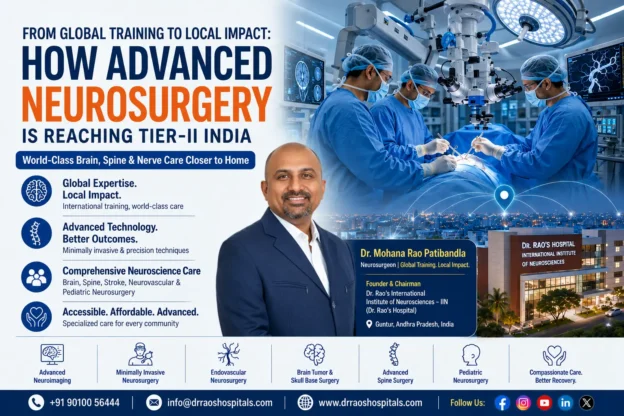
From Global Training to Local Impact: How Advanced Neurosurgery Is Reaching Tier-II India
For decades, patients with complex neurological disorders often believed that the best treatment was available only in major metropolitan cities such as Delhi, Mumbai, Chennai, Bengaluru, or Hyderabad. Whether it was a brain tumor, aneurysm, spinal disorder, epilepsy, stroke, or pediatric neurological condition, families frequently traveled hundreds or even thousands of kilometers seeking specialized care.
This reality created significant challenges. Delayed diagnosis, financial burden, accommodation expenses, loss of income, and prolonged separation from family support systems often became part of the treatment journey.
Today, however, the landscape of neurological care in India is changing dramatically. Advanced neurosurgery is no longer limited to metropolitan hospitals. Through international training, technological innovation, and the development of specialized neuroscience centers, world-class brain, spine, and nerve care is increasingly available in Tier-II cities across India.
A recent India.com feature highlighted this transformation and emphasized how advanced neurosurgery is reaching Tier-II India, bringing sophisticated neurological care closer to patients than ever before.
This shift represents more than a healthcare trend—it is a healthcare revolution that is redefining accessibility, affordability, and quality of care for millions of Indians.
The Historical Challenge of Specialized Neurosurgical Care
Neurosurgery is one of the most complex specialties in medicine. It requires extensive training, highly specialized equipment, multidisciplinary teams, and advanced infrastructure.
Traditionally, such resources were concentrated in major urban centers where academic medical institutions and tertiary hospitals had the funding and patient volume necessary to support sophisticated neuroscience programs.
As a result, patients from smaller cities and towns often faced significant barriers when seeking treatment for neurological disorders.
- Brain tumors
- Spinal cord compression
- Cervical and lumbar disc disease
- Stroke and aneurysms
- Pediatric neurological disorders
- Epilepsy
- Neurovascular diseases
- Movement disorders
Many patients delayed treatment because travel was difficult or financially burdensome. Others were diagnosed late because specialized evaluation was unavailable locally.
These challenges highlighted the urgent need to decentralize advanced neurological care and bring expertise closer to where patients live.
The Rise of Tier-II Healthcare Excellence
Over the last decade, India has witnessed remarkable growth in healthcare infrastructure beyond metropolitan regions.
Tier-II cities such as Guntur, Vijayawada, Coimbatore, Nagpur, Surat, Indore, Mysuru, and others have emerged as important healthcare destinations.
Several factors have contributed to this transformation:
- Improved medical infrastructure
- Greater availability of advanced technologies
- Internationally trained specialists returning to India
- Digital healthcare integration
- Growing patient awareness
- Government healthcare initiatives
- Medical tourism growth
These developments have enabled regional centers to provide highly specialized services that were once available only in major cities.
Global Training, Local Impact
One of the most important drivers behind this transformation has been the return of highly trained specialists who pursued advanced education and fellowships abroad.
International training exposes neurosurgeons to cutting-edge technologies, innovative surgical techniques, multidisciplinary care models, and research-driven healthcare systems.
When these specialists return to India and establish practices in regional cities, they bring global standards of care closer to local communities.
According to the India.com article, this trend is helping bridge the gap between international expertise and regional healthcare access, making advanced neurosurgical treatment increasingly available outside major metropolitan centers.
Patients who once traveled to distant cities can now access sophisticated neurological care closer to home.
The Role of Technology in Neurosurgery
Modern neurosurgery is no longer defined solely by surgical skill. Technology has become an essential component of diagnosis, planning, treatment, and rehabilitation.
Advanced technologies now available in leading regional neuroscience centers include:
- Neuronavigation systems
- Intraoperative neuromonitoring
- High-definition neuroendoscopy
- Microsurgical operating microscopes
- Advanced MRI and CT imaging
- Hybrid operating rooms
- Biplane neurovascular imaging systems
- Stereotactic radiosurgery platforms
These technologies help improve surgical precision, reduce complications, and enhance patient outcomes.
External Source:
American Association of Neurological Surgeons (AANS)
Minimally Invasive Neurosurgery: A Major Shift
One of the most significant advancements highlighted in the India.com article is the increasing adoption of minimally invasive neurosurgical techniques.
Traditional neurosurgery often required larger incisions and extensive tissue exposure. Modern minimally invasive approaches enable surgeons to access pathology through smaller corridors while preserving surrounding structures.
Potential advantages include:
- Smaller incisions
- Reduced blood loss
- Shorter hospital stay
- Faster recovery
- Reduced postoperative pain
- Improved cosmetic outcomes
These techniques are transforming the patient experience and making advanced surgery more accessible and acceptable.
Internal Link:
Minimally Invasive Neurosurgery
Creating Comprehensive Neuroscience Ecosystems
Modern neuroscience care extends far beyond surgery.
Patients require comprehensive support across the continuum of care, including diagnosis, surgery, intensive care, rehabilitation, and long-term follow-up.
Leading neuroscience centers increasingly provide:
- Neurology services
- Neurosurgery
- Neurocritical care
- Stroke management
- Neuro-oncology
- Pediatric neurosciences
- Endovascular neurosurgery
- Rehabilitation programs
The development of these integrated neuroscience ecosystems is helping patients receive comprehensive care within their own regions.
Guntur as an Emerging Neuroscience Destination
Patients from Andhra Pradesh and neighboring states increasingly seek advanced neurological treatment closer to home rather than traveling to distant metropolitan hospitals.
This shift improves:
- Accessibility
- Affordability
- Family support
- Continuity of care
- Long-term rehabilitation outcomes
It also strengthens regional healthcare infrastructure and contributes to broader economic development.
Stroke Care and Neurovascular Innovation
Stroke remains one of the leading causes of disability and death worldwide. Rapid diagnosis and timely intervention are critical because millions of brain cells can be lost every minute during an acute stroke.
Historically, comprehensive stroke treatment was primarily available in major metropolitan centers. Today, advanced stroke care is increasingly being delivered through specialized neuroscience hospitals in Tier-II cities.
Modern stroke management includes:
- Advanced neuroimaging
- CT Angiography
- MRI Brain
- Mechanical thrombectomy
- Endovascular interventions
- Neurocritical care
- Stroke rehabilitation
The expansion of stroke centers outside metropolitan regions has significantly improved access to life-saving interventions.
External Source:
American Stroke Association
The Growth of Endovascular Neurosurgery
Endovascular neurosurgery represents one of the most rapidly evolving subspecialties in neurosciences.
Using minimally invasive catheter-based techniques, specialists can treat complex vascular conditions through blood vessels rather than traditional open surgery.
Conditions commonly treated include:
- Brain aneurysms
- Arteriovenous malformations (AVMs)
- Acute ischemic stroke
- Dural arteriovenous fistulas
- Carotid artery disease
These procedures often result in shorter recovery times, reduced hospital stays, and improved patient comfort.
Internal Link:
Endovascular Neurosurgery
Pediatric Neurosurgery Closer to Home
Children with neurological disorders require highly specialized care tailored to their unique developmental needs.
Previously, many families traveled long distances to obtain pediatric neurosurgical treatment.
Today, specialized pediatric neuroscience programs are becoming increasingly available in regional centers.
Common pediatric neurosurgical conditions include:
- Hydrocephalus
- Brain tumors
- Spinal dysraphism
- Chiari malformations
- Epilepsy
- Craniosynostosis
Access to specialized pediatric care closer to home reduces emotional stress for families and improves continuity of care.
Advances in Brain Tumor and Skull Base Surgery
Brain tumor treatment has undergone remarkable transformation over the past two decades.
Advanced technologies now allow neurosurgeons to treat complex tumors with greater precision while preserving neurological function.
Modern approaches include:
- Microsurgical tumor removal
- Endoscopic skull base surgery
- Neuronavigation-guided surgery
- Functional brain mapping
- Stereotactic radiosurgery
These innovations have significantly improved outcomes for patients with complex intracranial pathology.
Internal Link:
Brain Tumor Treatment in Guntur
The Economic Impact of Regional Healthcare Excellence
The development of advanced healthcare infrastructure in Tier-II cities generates benefits beyond patient care.
Regional centers contribute to:
- Job creation
- Medical education
- Healthcare innovation
- Research opportunities
- Economic growth
- Medical tourism
When patients receive treatment locally, they often spend less on travel, accommodation, and associated costs.
This improves healthcare affordability while supporting regional economic development.
Medical Tourism Beyond Metropolitan Cities
India has become a major destination for medical tourism because of its highly trained specialists and cost-effective healthcare.
While metropolitan cities have traditionally dominated this sector, Tier-II centers are increasingly attracting patients from across India and abroad.
Key advantages include:
- Lower treatment costs
- Reduced waiting times
- Personalized care
- Modern infrastructure
- Specialized expertise
As healthcare infrastructure continues to expand, regional centers are expected to play an increasingly important role in India’s medical tourism ecosystem.
The Future of Neurosurgery in India
The future of neurosurgery is being shaped by rapid technological innovation and increasing accessibility.
Emerging developments include:
- Artificial intelligence-assisted diagnostics
- Advanced robotics
- Enhanced neuroimaging
- Precision medicine
- Genomic-based therapies
- Tele-neurosurgery collaboration
- Expanded minimally invasive approaches
As these technologies become more accessible, patients across India will continue benefiting from improved neurological care regardless of geographic location.
The India.com article highlights that advanced neurosurgical expertise, once concentrated primarily in metropolitan centers, is increasingly reaching regional cities and improving healthcare access for millions of Indians.
Conclusion
India’s neurological healthcare landscape is undergoing a remarkable transformation.
Through international training, technological innovation, minimally invasive techniques, and the development of comprehensive neuroscience ecosystems, advanced neurosurgical care is becoming more accessible than ever before.
Patients in Tier-II cities no longer need to assume that world-class treatment exists only in major metropolitan centers.
The emergence of specialized neuroscience institutions in regional cities demonstrates that excellence in healthcare can thrive beyond traditional urban hubs.
As more internationally trained specialists establish advanced facilities across India, patients can increasingly access sophisticated brain, spine, stroke, and neurovascular care closer to home.
The story of Indian healthcare is no longer solely about excellence in metropolitan cities—it is increasingly about bringing excellence to every corner of the country. Neurosurgery is leading that transformation.
Frequently Asked Questions (FAQ)
1. Why are patients increasingly choosing Tier-II cities for neurosurgery?
Advanced technologies, internationally trained specialists, comprehensive neuroscience centers, and lower treatment costs are making Tier-II cities attractive healthcare destinations.
2. What is minimally invasive neurosurgery?
Minimally invasive neurosurgery uses smaller surgical corridors and advanced technologies to reduce tissue trauma and improve recovery.
3. Can stroke treatment be performed in Tier-II cities?
Yes. Many advanced neuroscience centers now provide comprehensive stroke care, including mechanical thrombectomy and neurocritical care services.
4. What conditions are treated by endovascular neurosurgery?
Brain aneurysms, AVMs, stroke, carotid artery disease, and several neurovascular disorders can often be treated through endovascular techniques.
5. Why is multidisciplinary neuroscience care important?
Complex neurological disorders often require collaboration between neurologists, neurosurgeons, neuro-oncologists, neuroradiologists, rehabilitation specialists, and critical care teams.
Related Internal Links
- Dr. Rao’s Hospital – International Institute of Neurosciences
- Minimally Invasive Neurosurgery
- Brain Tumor Treatment in Guntur
- Endovascular Neurosurgery
- Best Neurologist in Guntur
Keywords
best neurosurgeon in Guntur, advanced neurosurgery India, minimally invasive neurosurgery, brain surgery in Guntur, spine surgery in Guntur, Dr Mohana Rao Patibandla, neurosurgery in Tier II India, neuroscience hospital India, advanced brain surgery, endovascular neurosurgery, stroke treatment in Guntur, brain tumor surgery India, skull base surgery India, pediatric neurosurgery India, neurovascular surgery India, minimally invasive spine surgery, advanced neurological care, healthcare innovation India, international neurosurgery training, medical tourism India, neuroscience excellence, regional healthcare India, advanced stroke care, neuronavigation surgery, neuro oncology treatment, comprehensive neuroscience center, advanced spine surgery, healthcare accessibility India, best neurologist in Guntur, International Institute of Neurosciences
Contact Us
Dr. Rao’s Hospital – International Institute of Neurosciences (IIN)
12-19-67, Old Bank Road, Kothapet, Besides AK Biryani Point, Guntur, Andhra Pradesh
📞 +91 9010056444
📧 info@drraoshospitals.com
🌐 https://drraoshospitals.com/
Follow Us
Facebook |
Instagram |
LinkedIn |
YouTube |
X (Twitter) |
Google Maps
“`